
Best used cars under £15,000 2026: Our top 10 pre-owned choices for £15k
.jpg?width=620)
| Written by: Keith WR Jones | Last updated: 16th April 2026 |
If you’re planning on buying a car with a budget of £15,000 then you may need to sit down for this – your choice of brand-new models for that outlay is limited to the entry-level version of the Dacia Sandero. It’s not all bad news because £15k also buys you fabulous choice from a wide assortment of excellent pre-owned models.
Top picks at a glance
- Best overall: Volkswagen Golf
- Best EV: Hyundai Ioniq 5
- Best for luxury: Volvo XC90
- Best for fun: Toyota GT86
- Best for value: BMW 5 Series
- See the full top 10
There are tens of thousands of used cars available for a budget of £15,000, many of which are available through manufacturers’ approved used programmes with benefits including a full year’s warranty rather than the usual three-months' cover. That’s reassuring for additional peace of mind when not buying brand new.
That doesn’t excuse you from doing your homework before buying used, of course. It’s important to create a shortlist of needs and wants, drive a few examples of cars that meet your requirements and ensure a full background check has been carried out before parting with your cash. That way you're far more likely to own a used car that's right for you.
To help get you started we’ve rounded up 10 of the best used cars you can buy for less than £15,000. To make life simple we've chosen models that are Euro 6 emissions-compliant for clean air zones regardless of fuel type and readily available having covered fewer than 10,000 miles per year.
- Browse used cars for sale at under £15,000 at HonestJohn.co.uk
1. Volkswagen Golf (2012-2020): best overall under £15k
.jpg?rmode=max&width=600&height=400)
Why buy it
- Ingrained excellence whichever version you choose to buy
Why avoid it
- Perhaps too obvious a choice for individualists to consider
When motoring history books are written which cover the period the previous-generation Volkswagen Golf was on sale, it will be listed as one of the best cars available full stop – a sentiment we wholeheartedly agree with.
Regardless of the version you choose to go for, the car known in VW circles as the Mk7 Golf – or Mk7.5 if you opt for one built after its mid-life facelift – our testers say it will do all you ask of it brilliantly. Looking for a long-distance hauler? Buy a TDI-engined Golf diesel. Fancy a hot hatch? Buy a Golf GTI or Golf R? Need a practical load-carrier? Buy a Golf Estate. There was even a fully electric Volkswagen e-Golf, although we’ll concede the modest size of its battery limits its appeal.
Whichever you go for, the Golf looks more upmarket than equivalent the equivalent Ford Focus and Vauxhall Astra alternatives, while our testers think its interiors are positively sumptuous, mixing high-grade squidgy plastics with physical dashboard buttons, reducing the need to use the multimedia touchscreen for everything. We say it feels more special inside than today’s VW Golf.
As a sound all-rounder, we’d go for a 2019 Mk7.5 Golf hatchback in sporty R-Line specification with its generous equipment roster and the punchy-yet-economical 1.5-litre TSI Evo petrol engine and the DSG automatic gearbox. In fact, we’re browsing the classifieds right now…
Real MPG v Official MPG
Honest John readers who own 1.5-litre TSI-powered automatic VW Golfs rave about their fuel efficiency – with them recording Real MPG averages of 104% of the official WLTP Combined cycle figures, it’s easy to see why.
Our pick: 2019 R-Line 1.5 TSI Evo
Read our full Volkswagen Golf (2012-2020) review.
2. Skoda Octavia Estate (2013-2020): best estate under £15k
.jpg?rmode=max&width=600&height=400)
Why buy it
- It’s a Golf underneath, but you get even more car for your money
Why avoid it
- Sadly, there’s still some unwarranted anti-Skoda snobbery
To all intents and purposes, the Skoda Octavia is a larger, less fancy take on the Volkswagen Golf’s platform and engines, delivering even greater value for money. Unfortunately, for some people the Skoda name still is a euphemism for cheap and nasty – that’s their loss for being blinkered, but it does mean the otherwise excellent Mk3 Octavia’s appeal isn’t quite as broad as the VW's.
Although it was available as a hatchback, it’s the capacious Skoda Octavia Estate we’re recommending here, in no small part to its enormous boot. With the rear seats in use it can swallow 610 litres of luggage, expanding to 1740 litres when they’re folded over and the cargo’s loaded to roof height.
Jump into an Octavia of this generation from the Golf we’ve placed ahead of it and you’ll immediate realise that the Skoda’s cabin quality isn’t significantly behind that of its VW-badged cousin, again with plenty of high quality buttons and knobs to ensure it’s a doddle to use on the move.
While there’s a broad suite of petrol and diesel engines to choose between, our pick is the 184PS 2.0-litre TDI found in the sportier Octavia vRS Estate range from around 2018. We’d ignore the pricier, thirstier 4x4 version, but pick the DSG automatic transmission for effortless cruising.
Real MPG v Official MPG
Despite how quickly the Skoda Octavia vRS Estate diesel can be driven, our readers report an average Real MPG of 76% of the official claimed economy figure. Go for a non-vRS version for higher scores of 81% and over.
Our pick: 2018 vRS 2.0 TDI 184PS
Read our full Skoda Octavia Estate (2013-2020) review.
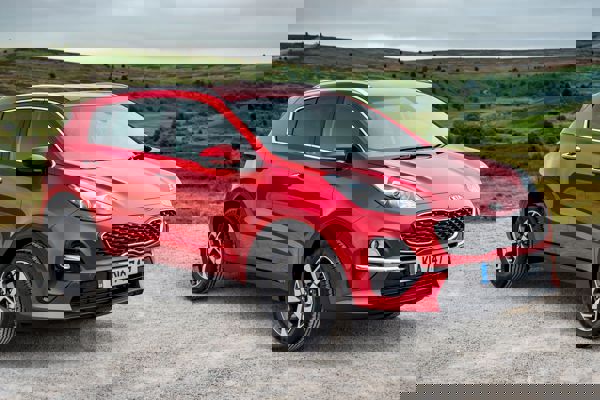
3. Kia Sportage (2016-2021): best family SUV under £15k
Why buy it
- Reliability is in-built to every aspect of the Sportage
Why avoid it
- More interesting to look at than it is to drive
Okay, so while we’ll be the first to acknowledge that the fourth-generation Kia Sportage isn’t the most thrilling to drive used car you can sink £15,000 into, that rather misses the point of what it’s all about.
Yes, we’re extolling the virtues of the sporty-looking GT-Line specification in particular, but the whole point of an SUV such as the Sportage is to provide safe, dependable family transport which is unlikely to leave you and your loved ones in the lurch with a roadside malady.
High-quality materials are well-assembled, with all versions benefiting from super-generous levels of standard equipment, plus plenty of room for the kids and their collective detritus. There’s also plenty of choice on the engine front, from which we’re championing the 2019 1.6-litre T-GDi petrol in front- rather than all-wheel drive, for its sensible blend of performance and efficiency.
Real MPG v Official MPG
Honest John readers who drive 1.6-litre T-GDi engined Kia Sportages of this generation report a Real MPG average of an impressive 87% of the manufacturer’s claim, suggesting real-world efficiency is a strong point.
Our pick: 2019 GT-Line 1.6 T-GDi
Read our full Kia Sportage (2016-2021) review.
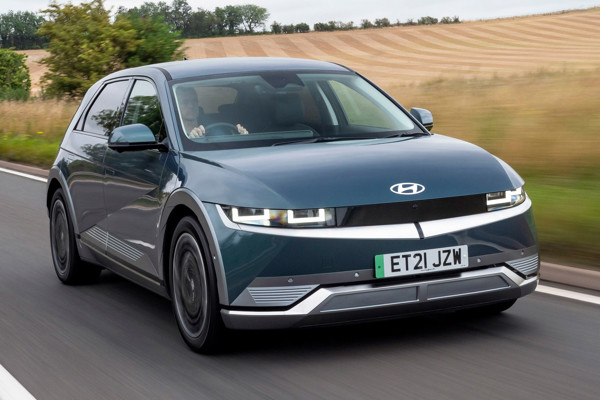
4. Hyundai Ioniq 5 (2021-date): best EV under £15k
Why buy it
- One of the very best electric cars available used or new
Why avoid it
- If you can’t charge at home or work, owning an EV isn’t as easy
Although there are retro overtones to the Hyundai Ioniq 5’s overall shape and sharp-edged styling, amplified by the dot-matrix LED light detailing, it’s a thoroughly up-to-date electric SUV that’s larger in real life than it appears to be in pictures. Dainty little hatchback this isn’t.
It’s not massive, but the Ioniq 5’s tall, broad dimensions mean its vast interior is spacious enough for five adults, with 527 litres of boot space behind for their luggage. For the most part the interior’s very slick and minimalist, but despite the deep-dive multimedia touchscreen’s multiple submenus, there’s still a useful amount of physical controls for functions such as the air-con and audio systems.
Whichever trim level you go for, equipment levels are generous, which is why for our pick we’d go for the 2022 model in Premium specification for this budget. Its kit roster includes LED headlights, an electrically operated tailgate plus heated front seats and steering wheel.
Real-world driving range
People with little or no experience of EVs often cite a small range as the main reason for not making the switch, often without a realistic sense of how far their petrol or diesel car will travel on a full tank let alone how frequently they drive more than 25 miles a day.
With the 72.6kWh battery, the Hyundai Ioniq 5 Premium has a claimed range of 298 miles, which typically means in excess of 250 real-world miles on a full charge. Not bad when you also consider that on an EV-friendly electricity tariff, a 0-100% charge will cost you less than £7. See how far you’d get in a super-economical diesel by putting that value of fuel in its tank.
Our pick: 2022 Premium 72.6kWh
Read our full Hyundai Ioniq 5 (2021-date) review.
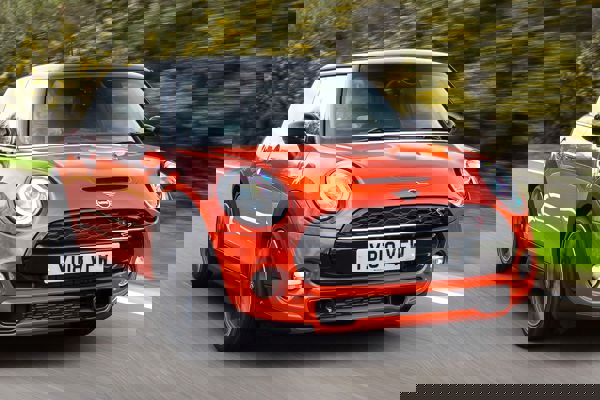
5. MINI Hatch (2013-2024): best small car under £15k
Why buy it
- Nimble, fun, economical, characterful,.. Need we go on?
Why avoid it
- Oh yes, very tight in the back
Aaah, the ubiquitous MINI – an icon of the British motoring scene, despite the newer models’ German family background. Still, what works for the Royal Family…
Yes, modern MINIs focus much more on driving dynamism and generating fun than the original 1959 model’s more virtuous origins of thrifty, space-efficient motoring, but the character of the newer models is much more in keeping with today’s consumer tastes, hence their popularity.
Now replaced by the MINI Cooper, we’re concentrating here on its immediate predecessor simply known as the MINI Hatch, where Cooper – along with One and Cooper S – are trim levels. Three-door models are by far the more plentiful in number, but be aware that rear seat space is chronically tight for adults and taller kids. The longer MINI Hatch five-door version can snugly ferry four grown-ups around, but its styling isn’t as cutesy.
We’d recommend sticking with a petrol engine over a diesel, with the zesty 2.0-litre in the Cooper S being a fine choice, but the three-door body was shared with the MINI Electric, which was also a hoot to drive, if short on driving range. Fifteen grand will get you a very nice Cooper S Exclusive with all the bells and whistles.
Real MPG v Official MPG
Despite its performance potential, running a MINI Cooper S isn’t ruinously expensive. According to our readers, you can expect a Real MPG average of 87% of MINI’s official claim for this perky hot hatchback.
Our pick: 2020 Cooper S Exclusive
Read our full MINI Hatch (2013-2024) review.
You may also like
- On the hunt for an even cheaper used car? Here are our top 10 pre-owned bargains
- Fancy a load-lugger that isn't SUV-shaped? These are the 10 best estate cars on sale
- Looking for a fuel-efficient diesel alternative? Check out our 10 favourite used hybrids
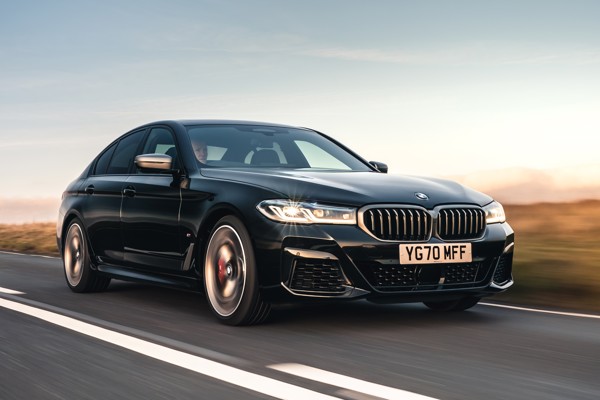
6. BMW 5 Series (2016-2023): best upmarket car under £15k
Why buy it
- So much excellence for the money
Why avoid it
- PHEVs aren’t especially efficient if you don’t charge the battery
Whatever the budget, there’s always a temptation to push the boat out and go for the glitziest, most special car you can find for the money, frequently with the pain of spending more than the purchase price again on servicing and reparations in the years after.
While the G70-generation BMW 5 Series isn’t risk-free, it’s a far more sensible upmarket choice for £15,000 than most other cars would be. Four-door saloon versions tend to be better value as used buys than the estate-bodied 5 Series Touring, although the separate boot does limit its practicality – we’d argue it’s a price worth paying if you’re intending to run the BMW as a plush barge.
It needn’t prove costly to run either if you stick with our recommendation of avoiding the petrol and diesel choices by plumping for the plug-in hybrid 530e version. This budget will get you a 2018 model in sellable M Sport specification. Like all PHEVs, it works best when you keep the battery pack charged, allowing you to take advantage of its 29-mile electric only driving range claim.
Real MPG v Official MPG
Official fuel consumption tests flatter plug-in hybrids, hence the BMW 530e’s highly unlikely claim of 128.4mpg on the Combined cycle. So, who better to ask than our readers who happen to drive 530es day in, day out about how they perform in the real world? Well, while it’s significantly shy of the official figure, a Real MPG average of 47.1mpg for a 252PS sports saloon is still very impressive.
Our pick: 2018 530e M Sport
Read our full BMW 5 Series (2016-2023) review.
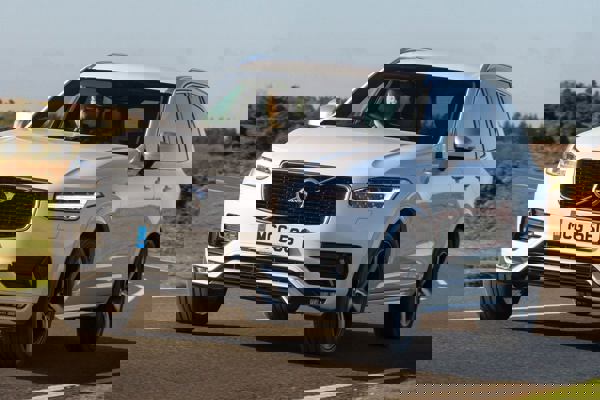
7. Volvo XC90 (2014-date): best 7-seater SUV for under £15k
Why buy it
- Space, safety, comfort and refinement for seven adults
Why avoid it
- An MPV would be even more accommodating
With its enviable safety reputation, the Volvo XC90 has become the default upmarket seven-seater SUV of choice for families who favour flexibility and function over flashy form. For all the Volvo’s a luxurious choice, there’s a restraint to it, so it’s unlikely to appear brash, despite its bodywork’s upright nature.
That perpendicularity ensures plenty of interior space, with room in all three rows of seats for adult-sized passengers. Nevertheless, access to the rearmost row is trickier than it would be in a comparably-sized van-based MPV, while the boot space with all the seats in use is a paltry 262 litres. For comparison, when the third row chairs are folded flush into the floor, that volume expands to 640 litres.
Due to how well XC90s hold their value, we’re concentrating on the earliest examples of this second-generation model, with the D5 diesel engine instead of the plug-in hybrids which have subsequently become more popular among customers buying these new.
Specification-wise, we’d recommend the subdued sportiness offered by R-Design trim, but the flagship Inscription versions are tasteful in their use of chrome. Either way, our testers advise hunting out a used model that was fitted new with Volvo’s optional Four Corner air suspension package as that makes the ride quality much more supple than the standard-fit metal coil springs.
Real MPG v Official MPG
Our readers report a Real MPG for the Volvo XC90 D5 of 71% of the official claim. That doesn’t sound particularly strong, but note that it’s compared with the less realistic, older NEDC testing protocol, not the newer WLTP methodology. Ultimately, a 33.8mpg average for a large, seven-seater SUV is decently respectable.
Our pick: 2015 D5 R-Design
Read our full Volvo XC90 (2014-date) review.
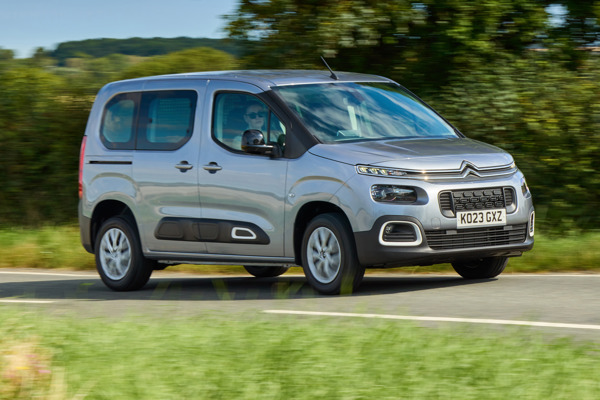
8. Citroen Berlingo (2018-date): best MPV for under £15k
Why buy it
- So much space and convenience for the money
Why avoid it
- There’s little going on to disguise its commercial vehicle origins
Vans are shaped the way they are in order to maximise their cargo-carrying potential, so by the same token, van-based MPVs, such as the our choice of the Citroen Berlingo have oodles of room for passengers and their belongings.
If you can happily embrace its van-with-windows styling honesty, the Berlingo is an excellent family car, especially for those where the junior members of the tribe are still young. Resilient interior plastics, sliding side doors which prevent car park dings and flexible seating that can accommodate three Isofix-mounted child seats side-by-side. Plus, providing you stick with the shorter M for medium body length, the option when-new of the Modutop roof, comprising various overhead storage solutions is one our testers regard as a Godsend..
There’s a longer XL bodywork option with seven adult-sized seats, but unless you really need that many pews, the shorter five-seater’s cabin is as vast as it is practical. It’s also super-comfy to ride in, but that’s about as far as any upmarket pretentions stretch.
We’d steer you towards a 2019 Flair specification version with the frugal – if a tad noisy – 1.5-litre BlueHDi 130 diesel engine, which can be paired with an eight-speed automatic transmission if you’re so inclined – either will deliver a real-world 45mpg minimum average. As well as more refined but thirstier petrol versions, there’s also the electric Citroen e-Berlingo, but the car’s bluff aerodynamics hinder its driving range potential.
Those familiar with these Stellantis van-derived cars will also be aware that essentially the same product was also sold in this era as the Peugeot Rifter and the Vauxhall Combo Life – each will perform the same duties for around the same outlay. The Berlingo got the nod from us by dint of its front-end styling being completely different from its van counterpart.
Our pick: 2019 Flair 1.5 BlueHDi 130
Read our full Citroen Berlingo (2018-date) review.
9. Audi A5 Cabriolet (2017-2022): best convertible under £15k
.jpg?rmode=max&width=600&height=400)
Why buy it
- Superb quality hood makes it feel like a coupe inside when raised
Why avoid it
- But you will have the roof down on every non-rainy day, right?
Classical elegance, usable performance and exquisite refinement are among the qualities you could be enjoying by spending your £15,000 budget on the desirable Audi A5 Cabriolet. That sort of financial input will net you an early example of the second-generation model in the coveted S Line specification.
From its array of engines, we’d opt for the additional refinement afforded by the 190PS 2.0-litre TFSI petrol over the similarly powerful TDI diesel alternative, particularly when paired with the slick-shifting S Tronic automatic gearbox.
Build quality is first-rate, with less flexing through the bodywork – known as scuttle shake – when the electric roof’s been lowered and stowed neatly beneath its flush cover, preserving the Audi’s graceful styling.
If you’re buying a convertible, it only makes sense to do so if you’re planning on driving it roof-down most of the time – by which we mean whenever it isn’t raining – but for those inclement occasions, the A5 Cabriolet’s multilayer soft-top not only seals snugly to keep out draughts and precipitation, it’s so well-insulated that you could easily assume you’re in the contemporary A5 Coupe instead.
Real MPG v Official MPG
Our readers suggest that despite its Hollywood looks, the Audi A5 Cabriolet 2.0 TFSI 190PS S Tronic can be run at Holyhead prices, reporting a Real MPG of that’s a fine 85% of the official claim.
Our pick: 2017 S Line 2.0 TFSI 190PS
Read our full Audi A5 Cabriolet (2017-2022) review.
10. Toyota GT86 (2012-2021): best coupe under £15k
.jpg?rmode=max&width=599&height=399)
Why buy it
- One of the finest-handling sports cars of recent times
Why avoid it
- Be aware of its practicality limitations before you buy
Old-school sports cars are thought of so fondly because they’re blessed with an intoxicating combination of enough power to feel quick, entertaining and engaging handling and don’t cost a fortune to buy or run. Ticks in every box there for the Toyota GT86, rightly one of the most celebrated coupes of the 21st century.
We’ve opted for the Toyota despite the presence of the near-identical Subaru BRZ, primarily because there are more GT86s available to choose from, but should you opt for its facsimile, you’re unlikely to be disappointed. Providing you stick with the standard manual gearbox, that is.
Not only is the stick shift far more engaging, the action of snicking its gear lever to and fro is especially satisfying and complements the well-weighted steering and the sense of communication it gives through your hands. Our testers love how the GT86 will playfully wiggle its tail when you provoke it, while enabling it to be quickly righted again without undue dramas.
While practicality isn’t usually at the forefront of coupe buyers’ minds, be aware that the GT86’s scalloped-out rear seats are more child- than adult-sized and the boot opening is relatively small due to being a conventional lid and not a large, glazed tailgate.
Real MPG v Official MPG
Good news from Honest John readers who drive Toyota GT86s as they report a Real MPG average of 35.6mpg, which equates to 103% of the official claim. Presumably Subaru BRZ drivers are even gentler with their accelerators – despite being mechanically identical, its Real MPG figure is 36.9mpg, or 111% of the lab-based test.
Our pick: 2014 2.0 D-4S manual
Read our full Toyota GT86 (2012-2021) review.
Frequently asked questions about used cars under £15,000
Can I buy a brand-new car for under £15,000?
Yes, but only one – the entry-level Dacia Sandero Essential TCe 100 has an on-the-road price of £14,765 making it the only brand new car on sale for under £15,000.
What should I look for when buying a used car?
It doesn’t matter if you're spending £150 or £15,000 on a used car, the same rules apply. Do your homework before parting with your cash, take a test drive and carry out the necessary checks to ensure the car wasn’t stolen, written-off or have outstanding finance against it.
A full service history is preferable, but don’t worry about the odd mark on the bodywork or scuff on the alloy wheels. There are plenty of used cars available, so shop around for the best deals.
Is it better to buy a used car with a personal loan or car finance?
It all comes down to the interest rates on offers, ultimately. Using car finance means the vehicle won’t be yours until you’ve made the final payment, but you might be able to negotiate a better deal via the salesperson as they receive commission on the finance package. The car is yours immediately when you use a personal loan.
There is one advantage to choosing hire purchase on an older car - if the vehicle develops a major fault or your circumstances change, the option for voluntary termination exists where you can hand the car back without penalty once 50% of the loan amount has been repaid.
While this applies to PCP schemes as well, usually a large amount of the loan value remains outstanding until the final payment. Although PCPs are very popular with new car purchases, the APR rates can be significantly higher on used versions, making them far less attractive.
Why are used electric cars less expensive than their petrol- and diesel-engined equivalents?
It’s largely due to used car buyers’ collective suspicion that they will face calamitously high bills for replacement battery packs or usually ungrounded fears of them having insufficient driving ranges.
Most people drive fewer than 25 miles per day, so even with an earlier EV that would likely manage 100 miles of range on a full charge at best, you’re only likely to need to plug it in every third or fourth day. Most used EVs will comfortably achieve over 200 miles of real-world driving.
The battery concern is far less likely to become a real issue. So far, the vast majority of older electric cars are still happily zipping about using their original batteries. Also remember that most EVs were sold new with an eight-year/100,000-mile battery warranty guaranteeing at least 70% of the original usable charging capacity. Most still comfortably exceed that minimum.
Is it worth spending a little extra on an Approved Used car?
It can be, yes, but be very thorough in checking exactly what extra piece of mind the inflated price is buying you before making a decision about whether to go for an Approved Used car or not. You may decide the stated benefits are not consideration you feel are worthwhile paying a premium for.
