
Best small SUVs 2026: Top 10 compact SUVs for value and Real MPG
| Written by: Keith WR Jones | Last updated: 9th April 2026 |
Small SUVs are everywhere these days — and with good reason. These compact crossovers provide a welcome degree of extra space and practicality over most small hatchbacks, yet their desirable dinkiness ensures they’re inexpensive to run.
Top picks at a glance
- Best overall: Ford Puma
- Best EV: Kia EV3
- Best for poshness: Volvo EX30
- Best for sportiness: MINI Aceman
- Best for value: Dacia Duster
- See the full top 10
Proving that downsizing to a small SUV doesn’t mean downgrading your life, the best models are packed with more tech than your nearest branch of Currys, super-strong for keeping your wee ones safe, plus their extra height makes getting in and out easier for parents with child seats and for those with restricted mobility.
Factor-in how smaller cars are inherently a hoot to drive with the added comfort afforded by SUVs’ loftier suspension and — let’s face it — these are as much car as most of us really need.
- Find out how we test small SUVs at HonestJohn.co.uk
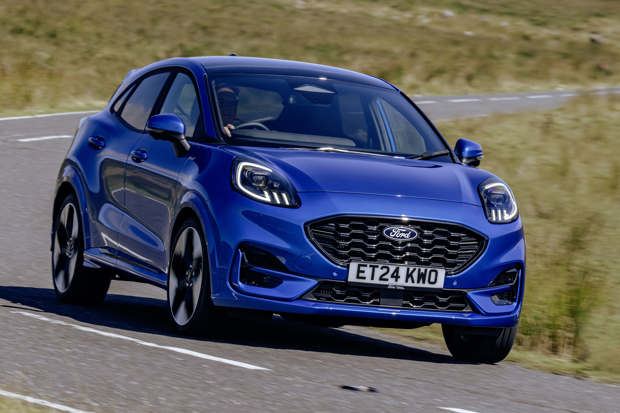
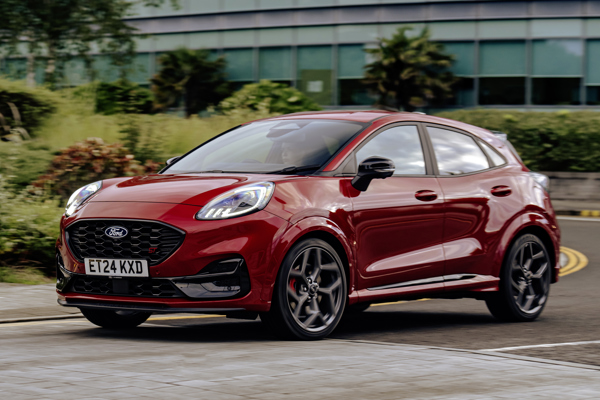
1. Ford Puma: best small SUV for all-round excellence
Why buy it
- Fun to drive at any speed yet inexpensive to run
Why avoid it
- Tight rear seat space, sportier models ride firmly
We really rate the Ford Puma and it's clear that Britain does, too — it's been the nation's best-selling car since 2023, assuming the popularity void created by the Ford Fiesta’s demise.
Despite being based on the Fiesta, the Puma’s much more practical, thanks to 145 litres of extra boot space. We're big fans of the Puma's MegaBox — that's Ford's name for the clever 80-litre waterproof and washable cubby under the boot floor. We found it perfect for wet and muddy sports gear. We also like the fact it's roomier in the Puma’s rear seats than the Fiesta’s, yet it’s still claustrophobic. During our test it was fine for kids but most adults will feel less squished in the back of a Skoda Kamiq.
Powered by a trio of mild hybrid-assisted petrol engines, the smallest Ford's cheap to run even in its sportiest — and firmest-riding — Puma ST guise. Just pray for your fillings. Kia's EV3 can drive further on a charge than the electric Puma Gen-E, but we know you'll have less fun doing so. Plus the Ford's £3750 less expensive than before courtesy of its Electric Car Grant (ECG) discount.
Among the assortment of small SUV talent, the Ford Puma's our overall pick. It put a smile on our face every time we drove it.
Real MPG v Official MPG
Officially, the most frugal Ford Puma 1.0 Ecoboost mHEV 125PS is capable of 52.3mpg with our readers reporting an impressive Real MPG that’s 92% of that at 48.1mpg.
Read our full Ford Puma review.
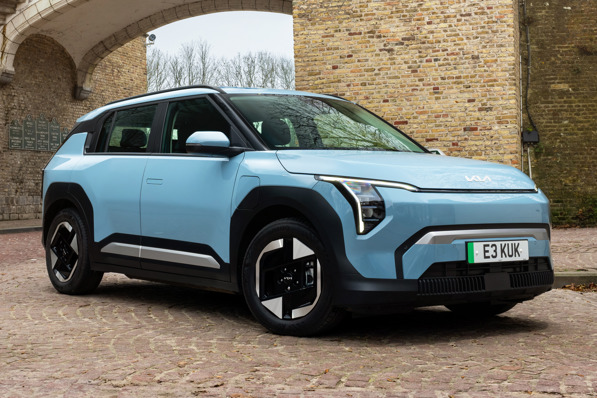
2. Kia EV3: best small electric SUV for long distances
Why buy it
- Long driving range and commodious cabin
Why avoid it
- Cheapest version misses out on coolest features
Despite its modest size, we found a mass of space for people and paraphernalia inside the Kia EV3. We like the fact it’s comfy and a doddle to drive. In fact, we reckon that if you're planning on switching to a small electric SUV, this is the easiest and best way to make that transition.
While there's much in the EV3's favour, it's somewhat soulless — if you fancy something with more character, we'd point you in the Renault 4 E-Tech's direction.
All Kia EV3s are jam-packed with high-end standard features including LED head and tail lights, keyless entry, plus heated front seats and steering wheel. Still, we think it's a shame that the coolest features, such as the sliding centre console picnic table and the V2L adapter which can be used to power all manner of other electrical devices, only come with the priciest versions.
Kia EV3 Real EV Range
Despite the Kia EV3's daintiness, it has two of the largest battery packs available with a compact electric SUV.
With an official claim of 267 miles, the 58.3kWh battery gives the EV3 greater driving range potential than most of its rivals, yet the best-performing 81.4kWh version boasts a 372-mile claim. In the real world, 200-220 miles is more than achievable with the smaller battery, with the larger one being closer to 310-330 miles. We'd recommend swapping an EV-friendly electricity tariff to make running the Kia EV3 incredibly cheap.
Read our Kia EV3 review.
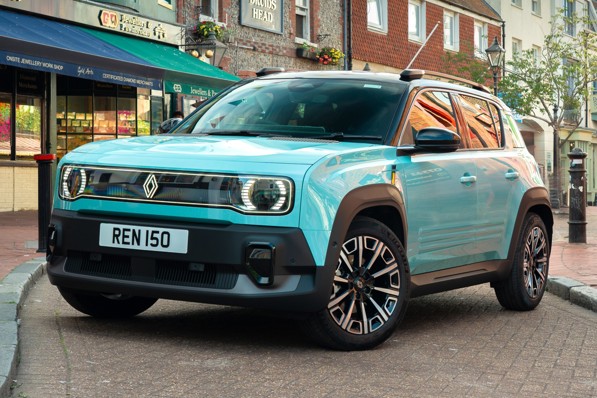
3. Renault 4 E-Tech: best small SUV for retro coolness
Why buy it
- Yesteryear wrapping for a modern compact SUV
Why avoid it
- Not the roomiest or rangiest car of its type
Retrofuturism is piled high with the dainty-yet-rugged Renault 4 E-Tech. It shares its platform with the headline-grabbing Renault 5 E-Tech, an electric hatch we adore in all ways barring its cramped rear seats — but as the R4's that bit longer and taller, that's largely remedied here. Okay, the Renault 4 E-Tech's not as cutesy as its smaller sibling, but it's got character in spades, if not the interior space of Kia's EV3 or the agility or Ford's Puma.
We really like how the dashboard's contemporary dual-screen dashboard doesn't feel overwhelmingly tech-heavy — how could it if you spend £120 on the centre console's optional wicker baguette holder? And yes, it's amply sized for a folding brolly.
As desirable as the Renault 4 is anyway, we reckon that by being £3750 cheaper — thanks, ECG discount — it's even trickier to ignore, especially in a bold, two-tone colour scheme.
Renault 4 E-Tech Real EV Range
All Renault 4 E-Techs use the same Comfort Range battery with a 52kWh capacity providing a best official driving range of 249 miles. Realistically over mixed driving speeds, that should equate to 190-210 miles in the milder months of the year. That's plenty for most people's needs, but way short of what the Kia EV3 manages. Then again, the R4 is around £10k less expensive.
Read our Renault 4 E-Tech review.
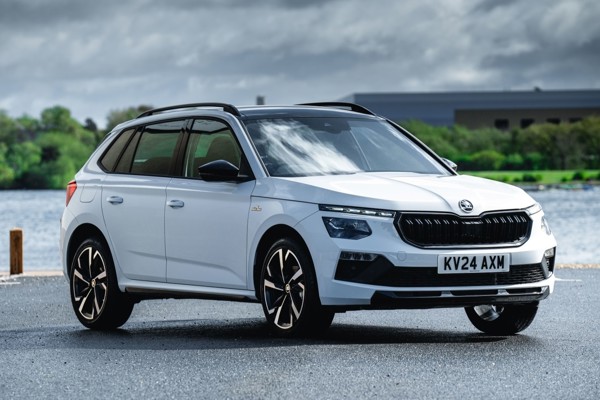
4. Skoda Kamiq: best small SUV for a "big-car" feel
Why buy it
- Feels far plusher than its price tag suggests
Why avoid it
- Lacks any hybrid efficiency-boosting tech
Few cars feel greater than the sum of their parts in the way the Skoda Kamiq does — we love that it gives you far more than you were expecting for your money. A close cousin of the Volkswagen T-Cross, it’s an SUV spin-off of the Skoda Scala hatchback, sharing its platform, engines and dashboard.
The result is a roomy crossover that's the pick of the bunch if you'll regularly have adult passengers in the back. We're big fans of Skoda’s Simply Clever touches such as the Rolls-Royce-style umbrella hidden in the driver's door that we found useful during our testing when there was a sudden downpour.
As the Kamiq's an older design, there are positives in that niggling issues have long-since been ironed out, but it lacks any kind of hybrid assistance for the engine. During our time with the Kamiq, its fuel efficiency was decent rather than remarkable. We know the Toyota Yaris Cross sips unleaded at a much slower rate.
Plus there's more internal competition coming in 2026 when the similarly sized, electric Skoda Epiq joins the line-up — we suspect the Kamiq will be the less expensive to buy, if not run.
Real MPG v Official MPG
According to official tests, the least thirsty Skoda Kamiq 1.0 TSI 116PS is capable of 52.4mpg, which compares impressively with our readers’ Real MPG figure of 48.0mpg — 95% of the manufacturer’s claim.
Read our full Skoda Kamiq review.
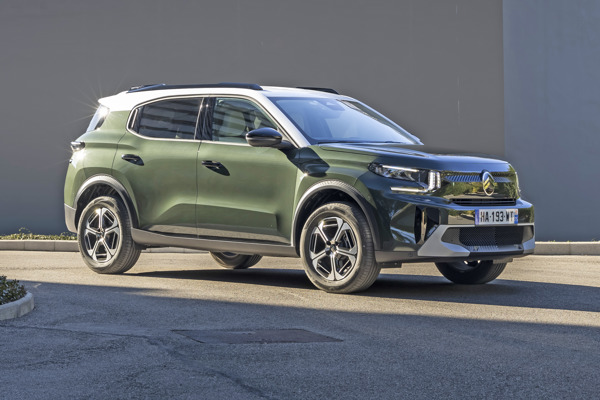
5. Citroen C3 Aircross: best small SUV for comfort
Why buy it
- Impressive comfort and seven-seater option
Why avoid it
- Small third-row seats are are unavailable on EV versions
Despite being one of the least expensive new cars on sale, we think that the Citroen C3 Aircross is also one of the most aspiration models you can buy. How come? None of the cars here ride as comfortably as the Citroen. It gobbles up long journeys across crummy roads with ease — if slipping on some fleecy jim-jams and sipping a massive hot chocolate was a car, the C3 Aircross would be it.
You can also buy it in super-smooth battery-powered guise as the Citroen e-C3 Aircross, for an even quieter drive. The downside is that you can’t opt for the third-row seats with the EV to make it a diddy seven-seater.
Useful? We found them on the small side — they're fine for kids on short drives, or grown-ups you don't like on longer ones. There's only one other compact SUV that offers the same accommodation as the C3 Aircross and that's its Vauxhall Frontera cousin. It doesn’t ride with the same aplomb and we didn't find its interior as welcoming, hence the Citroen gets the nod.
Real MPG v Official MPG
As this range is so new we’ve yet to receive a sufficient number of reader-submitted figures to validate the Real MPG rating. According to the official fuel consumption tests, the Citroen C3 Aircross Hybrid 136 returns up to 57.4mpg — impressive if true.
Read our full Citroen C3 Aircross review.
You may also like
- Unsure how to charge an EV at home? Here's your guide to the best wallbox solutions
- Need a load-lugger that's not an SUV? These are the 10 best estate cars on sale
- Will 2028's pay-per-mile EV tax affect you? Everything you need to know about eVED
6. Toyota Yaris Cross: best small SUV for fuel efficiency
Why buy it
- Virtually impossible to drive uneconomically
Why avoid it
- Little real-world benefit of pricey all-wheel drive
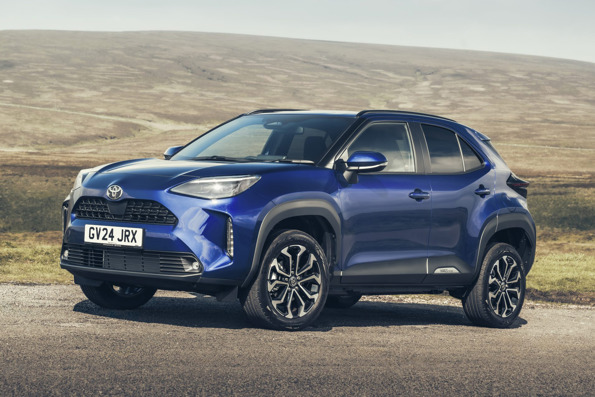
Small by 2026 standards it may be, but the Toyota Yaris Cross isn’t far of the size of the original 1994 Toyota RAV4, one of the pioneers of the on-road-biased SUV scene.
It has a rugged air about it, but we wouldn't bother blowing big bucks on an all-wheel drive version — our testing shows you'll be better off in all senses by spending a fraction of the money saved by fitting a front-drive Yaris Cross with some super-grippy winter tyres.
Unsurprisingly, its self-charging hybrid-assisted engines are shared with the smaller Toyota Yaris hatchback. While its little sibling is more efficient with its fuel, we found the Yaris Cross easier to live with when baby seats and other related gear are involved, thanks to its more generous rear seat space and larger boot.
If you fancy the Yaris Cross package in a more upmarket wrapper, you might be tempted by the Lexus LBX, but we don't think its plushness is worth the extra dosh.
Real MPG v Official MPG
Officially, the Toyota Yaris Cross 1.5 Hybrid 116hp can return a Combined cycle best of 63.0mpg, yet our readers have trumped that — according to their submitted Real MPG data, an average of 67.2mpg is the norm. That’s a massive 113% of Toyota’s result and demonstrative of how efficient the hybrid system is. We can't help but think that Toyota's missing a trick not advertising the Yaris Cross with the strapline: We DARE you to average worse than 45mpg.
Read our full Toyota Yaris Cross review.
7. Hyundai Kona: best small SUV for a stress-free life
Why buy it
- Dependability is baked-in with the Kona
Why avoid it
- Exotic styling aside, the Kona's vanilla
Although the current Hyundai Kona is too new to have pooled a sufficient number of reader responses for the Honest John Satisfaction Index, its predecessor made the overall top reliability scoring an impressive 9.6 out of 10 — we fully expect more of the same with the Mk2 Kona.
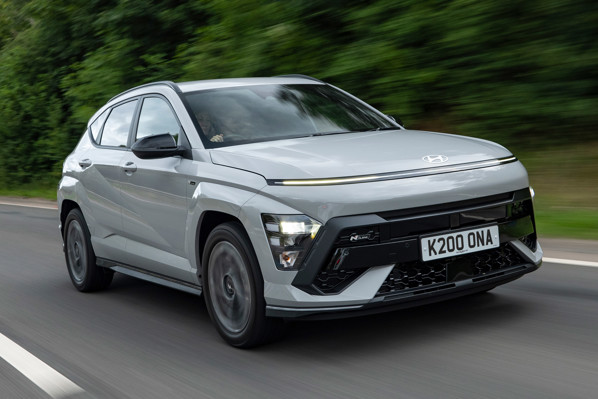
Its striking styling will certainly get you noticed, what with its full-width light bars at either end, but aside from its sci-fi looks, our testers found the Hyundai unexciting. Highly competent in terms of spaciousness, comfort and so forth, but we wish the exterior's fizz was more apparent in all aspects of the Hyundai.
Where we do applaud Hyundai is for offering a range of propulsion types rather than funnelling buyers one way or another — nice and easy, with no pressure to adopt a technology you don't fancy. A pair of turbocharged petrols, a self-charging hybrid and a very slick battery-powered Kona Electric are all available.
We like the impressively smooth EV while its 65kWh battery delivers a claimed driving range of up to an impressive 319 miles. All Konas are packed with standard equipment, so while they’re not cheap to buy in the way Hyundais of old were, they deliver strong value for money.
Real MPG v Official MPG
As the current model is too new for a viable Real MPG data sample, we can only rely on the official Combined cycle test figures. Of the versions fitted with combustion engines, it’s the Hyundai Kona 1.6 Hybrid 138PS which has the smallest thirst for unleaded, averaging a best 60.1mpg of.
Read our full Hyundai Kona review.
8. MINI Aceman: best small SUV for sportiness
Why buy it
- It's giggle to drive — a grown-up mini MINI
Why avoid it
- Not the roomiest or most practical small SUV
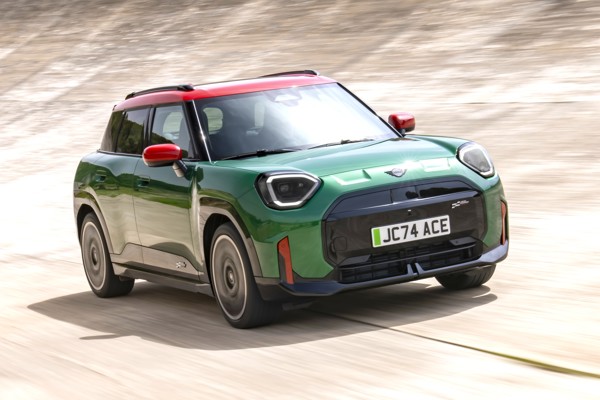
Few small SUVs come close to touching the MINI Aceman when it comes to driving entertainment. You could say that in terms of smiles per mile that it's ace, man...
We found it to be a bigger version of the little MINI Cooper in terms of its nimble fun, plus it's a useful stepping stone between the tiny hatchbacks and the now much larger MINI Countryman. It’s similar to the Cooper in that the Aceman’s rear seats and boot are on the small side compared with others on this roster — we think the Ford Puma's roomier than the Aceman, which is saying something.
Unlike other MINIs, the Aceman is solely available in battery-powered format, with three levels of power topped by the 258PS John Cooper Works. It’s surprisingly affordable for a MINI, with prices starting at less than £30k, although we'd struggle to not increase that by at least 20% by plundering the array of extra-cost options.
MINI Aceman Real EV Range
Based on the official Combined cycle figures, MINI Aceman SE versions have the greatest driving range potential with claims of up to 252 miles, with the Aceman E’s smaller batter restricting it to a best of 192 miles. In the real world? Expect around 220 and 165 miles respectively.
Read our MINI Aceman review.
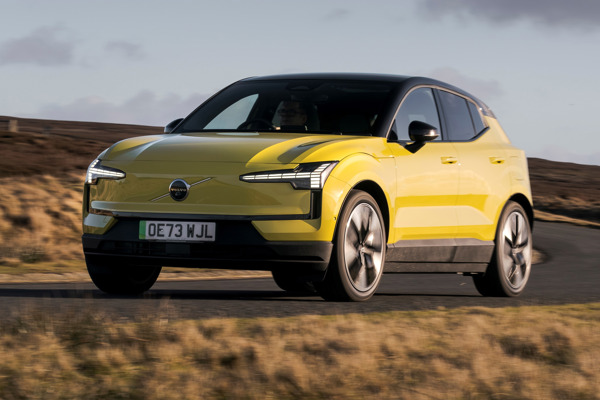
9. Volvo EX30: best small SUV for upmarket classiness
Why buy it
- Only Volvo geeks will know if you buy the cheapest EX30
Why avoid it
- Touchscreen-centric dashboard is a retrograde step for safety
The Volvo EX30 shares its platform with the Smart #1 and Zeekr X, but it’s the Volvo that feels the most cohesive. And it’s easy to see why the Volvo EX30 has become a 2026 bestseller.
While many premium EVs nudge £50,000, Volvo has managed to pack its "Scandi-cool" DNA into a compact package that starts at a much more palatable £33,000. It doesn't feel like a "cheap" Volvo, either; it feels like a concentrated one, offering 272PS of near-silent power even in its most basic form.
We think the Smart's a good small SUV, but it feels more cartoon-like next to the classier Volvo's Scandi vibe. Inevitably, that associated minimalism extends to the EX30's cabin — a lack of physical buttons means everything is operated via the multimedia touchscreen.
Our testers were less enamoured with the interface. When we tried to adjust the door mirrors or the steering wheel reach, we were forced to dig through the central touchscreen while stationary. It’s a "clean" design that feels like it was designed by software engineers rather than car drivers.
Volvo EX30 Real EV Range
Volvo EX30 Single Motor versions have the smallest battery, with a claimed range of up to 209 miles, but it’s the Single Motor Extended Range that hits the sweetest spot with a best range claim of 295 miles. Its larger battery is also fitted to the EX30 Twin Motor Performance, pulling its official range down to 279 miles. In the real world expect nearer 175 miles, 260 miles and 240 miles respectively.
Read our Volvo EX30 review.
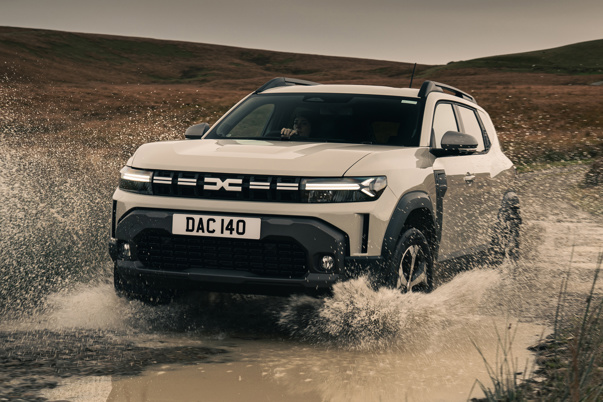
10. Dacia Duster: best small SUV for value-for-money
Why buy it
- So much car for not so much money
Why avoid it
- Lacklustre Euro NCAP three-star safety rating
When does a small SUV become a medium-sized one? We're calling it at 4400mm, which means that at 4343mm long the Dacia Duster is one of the biggest compact SUVs you can buy, despite the fact you can pick up a brand new one for around £22,000.
Not only is it big outside, the Duster's cavernous within — that makes the Dacia an ideal long-term ownership prospect, because as your kids outgrow their baby seats and edge ever-closer to their teens, family trips won't suddenly feel like a game of mobile sardines.
While that’s great, the Duster’s lacklustre three-star overall rating from Euro NCAP isn’t. It’s not so much the Dacia’s structural strength that's the issue, but its lack of sophisticated driver aids. Their absence means the Duster's price is kept below that of its smaller Renault Captur relation.
Since the end of 2025, all Dusters are hybrid-assisted, reducing running costs with improved fuel efficiency. That's great, but it also means that all-wheel drive is no longer available — unlike with the Yaris Cross, it's lamentable in the Dacia's case as it proved capable of tackling surprisingly tricky terrain when so equipped.
Real MPG v Official MPG
Because the latest Dacia Duster is too new to have pooled a sufficient sample of Real MPG data for, it’s impossible to know at this stage how our readers are faring with theirs. What we can say is that of the currently available engines, it’s the Dacia Duster Hybrid 155 which has the best official fuel consumption figures with up to 61.4mpg.
Read our full Dacia Duster review.
How we test cars: the small SUV method
Fastidiously testing cars is the Honest John way. Our editorial team's expertise hasn't been acquired by clicking through online configurators all day — we get under the skin of all cars, not just small SUVs, for an unrivalled knowledge about what separates excellence from the everyday. To determine the 10 best small SUVs for 2026, our expert editorial team has:
-
Driven over 10,000 miles: From tiny city streets to motorways, with cross-country A- and B-roads in between, we test every car across the best — and worst — of what Britain's roads can offer.
-
Prodded and parked: We spend hours checking real-world flexibility and practicality, from school runs to tip runs, as well as determining how well each car zips in and out of multi-storey and supermarket car parks.
-
Real MPG Data: Unlike other car websites, we combine our test results with thousands of reader-supplied data points curated in our unique Real MPG database. Laboratory fuel efficiency figures are one thing, those from the real world are quite another.
-
Owner Feedback: We integrate owners' reliability scores from the Honest John Satisfaction Index into our reviews — whatever reputation for dependability cars are earning in the real world, it's only right you know about it.
Our reviews are 100% independent. We don't take money from car manufacturers to influence our rankings. Our only priority is helping you find the right car.
Frequently asked questions about small SUVs
Which small SUV has the most comfortable ride?
The Citroen C3 Aircross is the class leader for comfort in 2026, thanks to its Advanced Comfort suspension. While many small SUVs like the Ford Puma feel quite firm and sporty, the Citroen is designed to soak up potholes and speed bumps, making it the best choice for urban driving and long motorway trips.
What is the best small SUV for dog owners?
The Ford Puma is our top recommendation for dog owners because of its MegaBox. This is an 80-litre waterproof storage compartment under the boot floor with a drainage plug, making it perfect for hosing out after a muddy walk. For larger dogs, the Skoda Kamiq offers one of the lowest boot lips in the class, making it easier for older pets to jump in and out.
Are small SUVs actually bigger than hatchbacks?
Not always. Many small SUVs (often called crossovers) are based on the same platforms as hatchbacks but sit higher. For example, a Ford Puma has a larger boot than a Ford Fiesta, but a Toyota Aygo X actually has less rear legroom than many traditional hatchbacks. Always check the litres of boot space and Real MPG data to see if the extra height is worth the extra running costs.
Which small SUV is best for seniors and easy access?
The Skoda Kamiq and Hyundai Kona are excellent choices for drivers with restricted mobility. They feature high H-points (the height of the seat base), which allows you to slide into the seat rather than lowering yourself down. We also recommend the Suzuki Ignis for its exceptional visibility and simple, physical dashboard controls that aren't hidden behind a touchscreen.
Is it worth buying an electric small SUV in 2026?
With the 2026 Electric Car Grant (ECG) offering a £3750 discount on models like the Renault 4 E-Tech, the price gap between petrol and electric has closed significantly. If you can charge at home, an electric small SUV like the Kia EV3 will be significantly cheaper to run. However, if you do mostly motorway miles, a self-charging hybrid like the Toyota Yaris Cross may still be more convenient.
Which small SUV is the cheapest to insure?
The Volkswagen T-Cross and SEAT Arona consistently sit in the lower insurance groups (usually Group 8–12), making them the most affordable options for younger drivers or those looking to reduce their premiums. Avoid the higher-spec ST or N-Line versions if your primary goal is low-cost insurance.
Which is the most reliable small SUV?
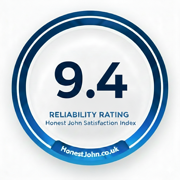
Based on data provided by our readers in the most recent Honest John Satisfaction Index, the Skoda Karoq came out on top for small SUV reliability scoring 9.8 out of 10. Other high-performers were the previous-generation Hyundai Kona on 9.6, the Toyota Yaris Cross rated at 9.4 and the much-missed Skoda Yeti, also on 9.4 out of 10.
At the opposite end of the scale, the previous-model MG ZS picked up the wooden spoon with its 8.4 out of 10 result, while the current Dacia Duster's predecessor was only slightly better at 8.7, with the Vauxhall Mokka just ahead on 8.8 out of 10.
Can you get a small SUV with all-wheel drive?
Most small SUVs are two-wheel drive, primarily to bolster fuel efficiency, reduce CO2 emissions and enable more interior space to be provided for passengers and luggage.
In truth, all-wheel drive is likely to be of less use to most small SUV drivers than having their two-wheel drive model fitted with a traction-enhancing set of grippy winter tyres — they are more likely to keep you securely on the road and away from danger than an all-wheel drive model shod with regular, summer tyres.
Of the small SUVs which made this top 10, the only ones currently available new with all-wheel drive are the Toyota Yaris Cross and the Volvo EX30.
How much does a good small SUV cost?
Eight of the top 10 small SUVs we've listed are available from less than £30,000 new in their least expensive forms. Of our top 10 small SUVs, it's the Citroen C3 Aircross which is the least expensive to buy outright brand new with an on-the-road price of £21,455.
