
Best cheap used cars 2026: Top 10 pre-owned models for value and Real MPG
.jpg?width=620)
| Written by: Bear Kilpatrick | Last updated: 20th April 2026 |
The cost of driving in Britain has gone up but if you're looking for a cheap used car there's good news. While the cheapest new models mean you'll need £16,000 for even the least expensive option, a budget from £2000 to £6000 gives you a wide selection of used models that keep costs down without feeling like you've gone back in time.
Top picks at a glance
- Best overall: Skoda Octavia
- Best EV: Renault Zoe
- Best for luxury: Mercedes E-Class Cabriolet
- Best for sportiness: Ford Fiesta ST
- Best for practicality: Volkswagen Touran
- See the full top 10
We're drivers ourselves and the feeling of looking at price lists, finance figures and lease deals, realising a perfectly reasonable specification new car has drifted out of budget is familiar to us. There are still some good new deals to be had, but if you want something bigger, more powerful or from an upmarket brand then you have a dilemma.
Do you spend anything from £2000 up to £6000 of cash up-front to pay a deposit on a new car followed by monthly instalments when you can buy a good pre-owned for the value of that deposit alone and own it outright?
Advances in car design and quality mean that 2010s and even early 2000s models are safe, refined and efficient – and often in very good condition if they've been maintained well. There are plenty of cars on the used market that under the metalwork are closely related to the new models you can buy today – and if you shop carefully, they can be cheap to tax and environmentally responsible as well.
We've selected the best cheap used cars to look for in 2026 to suit a variety of tastes, lifestyles and needs, along with a couple of alternatives to consider, all of which can be found easily for £6000 or less with below-average miles and potentially, from dealers with some degree of warranty available.
Every car featured is available in a form that can be used in clean-air zones or ULEZ without penalties and should be easy to maintain at any independent garage or even DIY.

1. Skoda Octavia (2013-2020): best cheap used car overall
.jpg?rmode=max&width=600&height=400)

Why buy one
- Space-efficient packaging and economical engines, good build quality
Why avoid it
- Reliability means neglect is common at high mileage, some early diesel models are Euro 5
If you want an affordable, versatile used car then the third-generation Skoda Octavia covers all the bases. It's a little larger than the Volkswagen Golf but offers considerably more space and is available with low VED options, all-wheel drive plus luxurious and fast models.
Though they may not always be cheap, they're invariably good value. A budget of around £4000 will secure a low mileage petrol model and £2500 will get higher-mileage diesels.
In every version we tested the Octavia has offered advantages over rivals such as the Ford Focus, the Renault Megane and the SEAT Leon, be that the rear legroom, large boot or affordable all-wheel drive options. We even rate it higher than the Golf for drivers looking for a smaller estate car.
Skoda's utilitarian approach doesn't mean basic or crude. Instead, its Simply Clever philosophy provides features such as parking ticket holders, ice-scrapers hidden in the fuel flap and umbrella storage in the driver's door. The sort of details that make a difference to daily life, rather than large alloys that thud into potholes or complex apps that never get used.
Take time choosing your Octavia, as there are plenty on the market and some have hard a hard life as taxis or working vehicles. Don't be afraid of ex-police or paramedic models if you're buying them as the next owner – they may have high miles and trim holes but they're usually maintained well. The DSG automatic is often standard and if it's had scheduled servicing, should be reliable – but you want to see tyres changed in sets of four and transmission servicing every 40,000 miles, if looking at the 4x4 models.
Real MPG v Official MPG
We already know the Octavia is a no-nonsense car. It's equally sensible when it comes to claimed and actual MPG. Our readers report a couple of notable surprises though – the small-engine 1.0 TSI achieves 114% Real MPG, suggesting it's more than enough for most drivers' needs. 48-53mpg on petrol means running costs to challenge the best diesel – the 1.6 TDI 110 GreenLine. It can manage 62mpg – but that's just 77% of its official figure.
Read our full Skoda Octavia (2013-2020) review.
2. Vauxhall Ampera (2012-2014): best cheap used PHEV
.jpg?rmode=max&width=600&height=400)
Why buy one
- Genuinely versatile, capable plug-in hybrid, refined and economical
Why avoid it
- It's a strict four-seater, parts supply means shabby ones are hard to improve
The Vauxhall Ampera – and all but identical Chevrolet Volt – marked an early appearance of two concepts for Britain's eco-conscious drivers. Marketed as a range-extended EV, the Ampera is really the first truly effective plug-in hybrid car. Vauxhall's first error with the Ampera was selling it as an electric car and implying it must be charged to work. If the battery is flat the 1.4-litre engine operates as a series or parallel hybrid and does so with reasonable fuel economy. Like any PHEV, it's definitely better when regularly charged.
When we tested the Ampera in 2013 it was almost unique. The nearest used rival is the BMW i3 Range Extender, which is an EV with an on-board generator and can't come close to the Vauxhall's 300-mile combined range and ease of use away from the plug.
The Ampera is closer to the Mitsubishi Outlander PHEV or the Toyota Prius Plug-in, neither of which can be found for the same bargain price as the Ampera, which can be found from around £4000 for good, clean low-mileage examples. We've had one of the cheapest used Amperas around on the fleet, with over 160,000 miles covered. Despite rough cosmetics it still offered around 30 miles of EV range and a surprisingly refined, comfortable experience.
The main downside to this otherwise practical family car is that it's a strict four-seater. Look for models with a fold-down centre armrest in the back – it's the easiest way to spot the improved 2014 tech – and find a good independent specialist who knows where to get parts. Weak points include front hubs, rear springs and CV boots – but the EV battery and motor that caused so much uncertainty in 2012? They've put contemporary Vauxhall diesel and petrol models to shame.
Real MPG v Official MPG
Vauxhall Amperas use a mixture of electric power and combustion, and how efficient they are varies a lot with user behaviour. Plug in regularly and do short trips and you may never burn any fuel – on a long run, you can expect 46-65mpg once the battery is depleted. A mix of users and habits means a very fair Real MPG score of 69% or 161mpg.
Read our full Vauxhall Ampera (2012-2014) review.
3. Chevrolet Spark (2010-2016): best cheap used car for new drivers
.jpg?rmode=max&width=600&height=400)
Why buy one
- Cheap tax, cheap insurance, robust and reasonably economical
Why avoid it
- Narrow cabin, bouncy ride, unrefined at motorway speeds
If you're shopping for a cheap-to-run commuter car or a first car for a learner or new driver, the competition can be fierce for good examples of the obvious choices. There's no doubt that the Citroen C1, the Kia Picanto and the Toyota Aygo are at the forefront of everyone's minds when they want cheap insurance. Dealers know this, driveway traders know this, and private sellers do too – the budget end of the market from £1000 to £2500 is full of tarted up, bodged popular first cars.
However, there is a surprisingly common yet overlooked alternative – the Chevrolet Spark. This Korean Chevy is essentially the third-generation Daewoo Matiz – and a direct rival for the Hyundai i10 and Kia Picanto. As part of General Motors, it was also sold as the Vauxhall Viva albeit with different bodywork. Chances are the Spark you find won't be a young driver's cast-off - it's more likely to be a careful older driver's low-mileage runaround. Don't just look on Autotrader or approved-used forecourts – you'll find more Sparks on eBay, Gumtree and Facebook Marketplace.
Among the team's cars we've got a 1.0-litre Spark+ that's covered well over 100,000 miles, the timing chain-equipped four-cylinder engine being unfazed by 4000rpm at 70mph motorway speeds or countless short trips.
Benefits include Group 1 insurance, cheap tax and wide tyres on 13-inch steel wheels that minimise the stress of potholed urban roads considerably. You could reduce stress further by checking out the 1.2-litre models if you do a lot of motorway miles, but as a robust cheap to run car the Spark is likely to be in better condition and more honest than any of the popular alternatives.
Real MPG v Official MPG
There are no big surprises with the Chevy Spark's Real MPG of 80-85%, other than the discovery that it's the 1.0-litre model that delivers the better result. The claimed 56.5mpg for both models is typical pre-WLTP fantasy, but 47.5mpg is impressive for a car that lacks stop-start features and has to work hard to keep up on motorways.
Read our full Chevrolet Spark (2010-2016) review.
4. Ford Fiesta ST (2013-2018): best cheap used hot hatch
.jpeg?rmode=max&width=600&height=400)

Why buy one
- One of Ford's best hot-hatch efforts, and surprisingly versatile
Why avoid it
- Insurance may be high for some drivers, three door only may limit appeal
As Britain's best-selling new small car for much of its life, the Ford Fiesta is a safe choice when looking for a used small car – with a couple of points worth watching for on newer models. We're looking at the seventh generation models, which marked a high point for the Fiesta in terms of refinement, quality and performance leaving clear ground between it, and rivals such as the Peugeot 208, the SEAT Ibiza and the Vauxhall Corsa.
With a budget of £6000 you can get the excellent Fiesta ST – a classic hot hatch that is already beginning to go up in value for the best, cherished examples. It impressed our reviewers with sharp handling and versatile performance from its 1.6-litre turbo engine, eclipsing Peugeot's excellent 208 GTI as an all-rounder thanks to low-speed manners and overall refinement and ride quality.
You may find Mountune-enhanced models with more than 200PS, but the standard 183PS is ample for a car this size. Watch out for accident damage and neglected examples, but most Fiesta ST buyers were enthusiasts and quite likely to have taken care of their cars. With the demise of both the Fiesta, and the 200PS Ford Puma ST, this is the best value for that classic 'Fast Ford' recipe you'll find without taking on a project.
Real MPG v Official MPG
You don't buy a hot-hatch for the fuel economy. Or do you? A big engine in a small car can be surprisingly efficient, but being able to resist using the power and burning fuel is very difficult when the car is as much fun as a Fiesta ST. Claimed figures are 46.3-47.9mpg, but our readers report getting 79% Real MPG. Do you have the self-control to do better?
Read our full Ford Fiesta ST (2013-2018) review.
5. Renault Zoe (2013-2024): best cheap used EV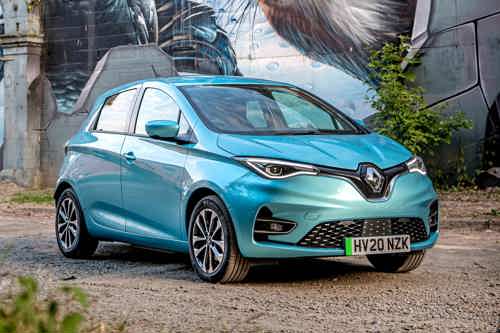
Why buy one
- Cheap, proven and simple EV from Renault is popular in the trade as well
Why avoid it
- Battery lease is a false economy, can be picky about chargers
Anyone considering joining the electric car revolution on a budget should begin their search with a Renault Zoe. As one of the first genuinely usable EVs in Britain supply is plentiful and independent garages and traders are getting familiar with the battery technology, with maintenance, upgrades and hacks becoming part of the wider knowledge around second hand Zoes. That makes the risk of battery failure less worrying and also ensures greater support for the rest of the car.
It's possible to get a 40kWh low mileage battery owned example for less than £5000 relatively easily, and some 2019-on facelift 52kWh models with battery lease are getting close to this budget. We'd pay a bit extra to avoid leased batteries – unless you have very cheap electricity, the battery lease is poor value as very few cars lose enough capacity to benefit from a replacement under the scheme.
Regardless of model, expect to pay half the price you would for a BMW i3 of similar age and mileage, for a practical five-door, five-seater electric supermini that we liked for its comfortable ride and safe handling, accurate range predictions, and overall simplicity.
You could consider a Nissan Leaf – but the same budget won't get as much range, likewise the Kia Soul EV is likely to be the 27kWh version and it's considerably rarer. The Renault Zoe remained on sale too long after it was outclassed as a new EV – but as a used buy, it's a simple way to get behind the wheel of a dependable and cheap electric car.
Real-world EV Range
We don't have the same depth of data for electric cars as we do for combustion engines, but our experience of the Renault Zoe is that it's very close to the claimed range, if you look at all the data Renault give. That means that the headline figures are usually only achievable in summer, at slower speeds.
For example, a Zoe ZE50 driven on a mix of motorways, dual carriageways and urban roads will usually return 160 miles rather than the claimed 254. Renault themselves show that the Zoe ZE50's range at 70mph is 149 miles. The good news is that owners of even early, small battery Zoes report very few cases of the battery capacity falling below 80%.
Read our full Renault Zoe (2013-2024) review.
You may also like
- £20k for a used car burning a hole in your pocket? These are our picks for that budget
- Need a pre-owned family car? These are the 10 best used SUVs available
- Fancy something used but unusual? Here are the best Japanese grey imports
6. Mercedes C-Class Estate (2008-2014): best cheap used car for motorways
.jpg?rmode=max&width=600)
Why buy it
- Sophisticated, refined and comfortable, good parts availability, easy to maintain
Why avoid it
- Neglected examples can be costly to put right, rust is still a concern
A Mercedes, in the cheapest used cars? Absolutely! In our experience Mercedes provides the best support for older models and parts are rarely hard to find either genuine, OEM or second-hand. This means keeping a used Mercedes in good health is straightforward and the rear-wheel drive models such as the C-Class are generally very easy to work on for DIYers and independent garages.
We would stick with petrol models where possible for the best reliability and refinement. Nearly all petrol Mercedes cars sold since 2001 are ULEZ-compliant well ahead of the 2006 recommendation, even the more powerful and automatic options. BlueEfficiency models have many detail differences aimed at saving fuel at cruising speed and in congestion – but the direct-injection petrol engine can suffer from carbon deposits in the intake.
While it's possible to pick up working Mercedes C-Class Saloons and three-door CLCs for under £1000 the estate offers more flexibility. We'd take a budget closer to £3000 and shop around for the best history and overall condition, taking into account the usual used-car considerations of tyre age and condition, recent services and any desirable upgrades.
If clean-air zones and ULEZ aren't a concern then pre-AdBlue Mercedes diesels can offer impressive reliability and economy, though the preferred choice for easy maintenance is the 2.1-litre. What it lacks in refinement, it makes up for in durability whereas the 3.0-litre V6 has a few well-documented weaknesses. When buying a used Mercedes check the MOT history (and the car) for subframe corrosion and bear in mind the March 2006 to April 2017 high VED bands.
Real MPG v Official MPG
Perhaps unsurprisingly, the official MPG for the Mercedes C-Class Estate leans towards diesel versions – which officially return 37.7mpg (C320 CDI) to 65.7mpg (C220 CDI BlueEfficiency). They generally achieve 81-87% Real MPG.
We recommend a petrol C-Class for reliability and clean air zone compliance and there's one outstanding figure – the unstressed 3.5-litre V6 petrol C350 apparently returns 127% Real MPG. It's claimed 28mpg translates into 35.4mpg according to our readers. We can believe it, if it's used for long motorway journeys.
Read our full Mercedes C-Class Estate (2008-2014) review.
7. Dacia Duster (2012-2018): best cheap used 4x4
.jpg?rmode=max&width=600&height=400)

Why buy one
- Rugged, simple engineering, a £6000 budget will get the best facelift example
Why avoid it
- Build quality is variable, trim is crude – this is Dacia before quality improved
We have no hesitation recommending the Dacia Duster to anyone looking for a low-cost family SUV, particularly if they want one with 4x4. However, to get a cheap Duster, you do need to go back a generation to the 2012-2018 models. These are very capable and easy to maintain, but the build quality (particularly on models from the Indian factory's early production run) can be poor with rust and paint issues common. Avoid the cheapest Access trim level – it's really spartan.
At launch the Duster was one of the cheapest SUVs you could buy and we liked the ability of the 4x4 system to handle fairly challenging off-road situations plus the suspension's generous travel and overall comfort, which is well-suited to crumbling urban streets.
Like a dungeon made of brittle-sounding plastic, the interior didn't impress as much. The dashboard and equipment is where a used Duster feels like you've bought an old, cheap car.
Even facelifted models lack Apple CarPlay and the infotainment system felt slow and dated when the car was new – don't pay extra for MediaNav as you'll have a better experience fitting a new Android-based aftermarket system. If you like functional and robust, then the Duster is perfect.
As a used car the Duster's price advantage when new is less relevant. You won't find anything like it at the same age and mileage, but if you're shopping on budget alone up to £3000 you might consider mid-2000s Honda CR-V, Kia Sportage or Toyota RAV4.
You could even consider risking a high-mileage, luxury model with a good reputation, such as the Lexus RX 400h. A budget between £2000 and £4000 will get a low mileage Duster in reasonable specification – once you approach £6000 for the last of this generation and higher-spec models, you might find a new Duster on finance is better value and more reliable.
Real MPG v Official MPG
The Dacia Duster isn't expensive to buy, but it would be a false economy if it drinks fuel like a traditional 4x4. Fortunately, our readers report it's rather better than average – some models can claim 104% Real MPG against WLTP figures (the 1.5 dCi 4x2). Dusters officially return from 44-57mpg, and they deliver in the real world with no model below 80% Real MPG.
Read our full Dacia Duster (2012-2018) review.
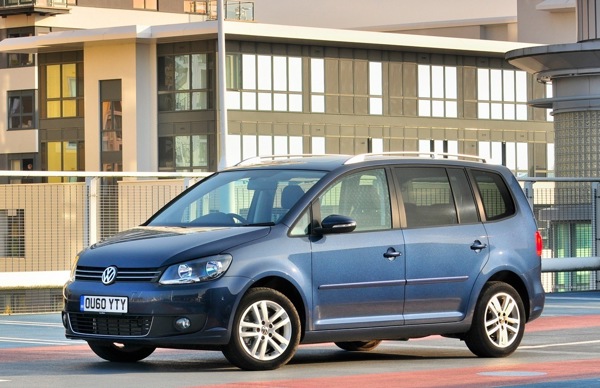
8. Volkswagen Touran (2010-2015): best cheap used seven-seater
Why buy one
- Compact seven-seater with Golf-like handling and optional DSG automatic
Why avoid it
- Cheaper ones are likely to be well used, 1.6 petrol is thirsty
Let's cut to the chase – if you want a seven-seater family car on a tight budget and can get the financing, go and get a new Dacia Jogger. At this end of the market the majority of seven-seater MPVs are either worn-out, former taxis or depressingly unreliable. Nobody wants to learn about PureTech wet belts or hydraulic rear axles the hard way after spending everything on what looked like a good car, after all.
However, there are some reliable options around the £6000 mark. We'd choose the Volkswagen Touran as it's well-made and not overly complicated, plus it's less likely to have been a private hire vehicle than the larger SEAT Alhambra or its VW Sharan twin.
Against rivals such as the Vauxhall Zafira Tourer the Touran's build quality and reliability are the main benefit, with strong diesel options if you don't need to drive in emission-controlled zones. Handling is safe rather than fun, but ultimately it's a big Golf – with all the family-car benefits that implies.
You can get the 1.4 TSI with DSG gearbox and well under 100,000 miles for less than £4000 if you shop around, The previous-generation Touran can be found for as little as £2500 – and petrol models should be ULEZ and CAZ compliant.
Real MPG v Official MPG
With plenty of Volkswagen Tourans on the road, our readers have given lots of feedback about how achievable the claimed 41.5-61.4mpg is. The worst Real MPG returned by the Touran is 35.6mpg for the 1.2-litre TSI BlueMotion – the best, 50.8mpg from the 1.6-litre TDI BlueMotion. But the most accurate? 97% for the 2.0-litre TDI 177PS, returning 48mpg against a claimed 49.6mpg.
Read our full Volkswagen Touran (2010-2015) review.
9. SsangYong Rexton (2014-2017): best cheap used car for towing
.jpg?rmode=max&width=600&height=400)
Why to buy one
- Very capable towing vehicle at a low price for the age and mileage
Why to avoid it
- Towing is about all it excels at, and it feels a bit crude otherwise
Towing heavy loads, such as car trailers or large caravans, needs a strong vehicle. For the sake of simplicity and easy maintenance we recommend the SsangYong Rexton if the budget doesn't stretch to a used pickup. It's the newest option you'll find around for £6000 – competing with much older Audi Q7s, Range Rovers and Volkswagen Touaregs. Those are undeniably capable, but usually approaching 20 years old so you're buying a cheap used car with potential for very expensive repairs and maintenance.
Where the Rexton and its related pickup sibling, the SsangYong Korando Sports, wins over rivals is the separate chassis and strong part-time 4x4. The 2.2-litre diesel engine produces 178PS and meets Euro 6 requirements, the earlier 2.0-litre is rated for 155PS and falls foul of ULEZ and CAZ limits.
The Rexton an tow up to 3000kg, but recommended at 2600kg if the vehicle is fully laden with people and luggage. Ride and refinement are not class-leading, but comparable with similarly-engineered alternatives – in other words, about two decades behind the year the Rexton was sold new.
A dated car that didn't make the cut in 2015 as an all-rounder has become a very unusual blend of affordability, age and ULEZ-compliance that answers a very specific question – and it does have seven seats and reasonable fuel economy for a car of this type. If ULEZ doesn't matter to you, the older Rexton is even cheaper and just as capable.
Real MPG v Official MPG
Official figures claim the SsangYong Rexton 2.2-litre Auto should return 38.1-40.4mpg. Our readers say it's a more realistic 31.9mpg – so the Rexton's Real MPG is 81% of the official figure.
Read our full SsangYong Rexton (2014-2017) review.
10. Mercedes E-Class Cabriolet (2010-2017): best cheap used convertible
.jpg?rmode=max&width=600&height=400)

Why buy one
- Big, refined and safe-feeling convertible with a broad selection of engines
Why avoid it
- Maintenance can be expensive, and it doesn't feel very agile or sporty
Fans of open-air motoring are spoiled for choice with a budget of £6000. The Mercedes E-Class Cabriolet offers the best blend of refinement, quality and space for four adults, but you may also consider the Audi A5 Cabriolet, the BMW 3 Series Convertible, or even the older Mercedes CLK Cabriolet that this car replaced alongside the C-Class Cabriolet.
For families who want to enjoy open-air motoring, the E-Class is by far the best option. Older models feature less tech, but the space and refinement is consistent. Choose a petrol model and you'll enjoy relatively low-cost maintenance as well, though most on the market are diesel and ULEZ compliance isn't guaranteed.
The E-Class Cabriolet offers more boot space and rear legroom than the BMW 3 Series, the cabin feels more spacious than the Audi A5, while adaptive damping is a welcome compromise to allow good ride quality without wallowing in bends.
The biggest advantage over rivals is the Aircap system Mercedes developed alongside Airscarf which blows warm air from the front headrests. The Aircap's odd-looking spoiler above the windscreen effectively cuts buffeting by directing air over passengers' heads. Compared with its CLK Cabriolet predecessor, this is the biggest improvement. Watch out for subframe corrosion and avoid the larger wheels if you drive on potholed roads.
Real MPG v Official MPG
Official MPG figures for the Mercedes E-Class Cabriolet span 31.0mpg for the E500 petrol V8 to 59.8mpg for the E220 CDI automatic, which is also one of the easiest models to find. Our readers report Real MPG around 78% for that version – whereas, the ULEZ-friendly E200 Automatic achieves an impressive 98% of its claimed 44.8mpg.
Read our full Mercedes E-Class Cabriolet (2010-2017) review.
Frequently asked questions about small cheap used cars
How do I know if a cheap used car is good value?
A used car costs less than a new car to buy for cash, but it might cost you more if you consider it a monthly cost. All cars are a cost over time, whether that's depreciation or maintenance – the trade-off is the knowledge that a new car should not break down or incur large bills over that monthly figure.
We look at leasing and PCP deals, the qualities of the car chosen and the potential repair costs of a used model to work out which vehicles represent good value. It is entirely possible, at the cheapest end of the market, to have and run a car that costs very little – but it is also a gamble and you'll need to use some of your time on 'the car'.
The baseline is that there are usually a couple of cars on the market that cost around £170 to £250 per month, and that's where the cheap used car makes sense. If it will last two years and cost less than £6000 including expected maintenance, it's better value than a new car. That figure goes up if you want a 4x4, luxury or sports model – many of which you'll struggle to find new for less than £500 per month with a substantial deposit.
What should I look out for when buying a cheap used car?
People rarely change cars for fun and British used cars are cheap because it's often easier to sell the car and buy another than get some things repaired. Your tolerance for things not working might be different to the seller's expectations, or the seller might just be hoping that a wash, polish and glowing description means you miss some obvious faults. So the short answer is to look at everything.
That doesn't mean you should expect a flawless car, so be clear with the seller that you want to know what you're buying – not that you're trying to find faults. You are, but you want to find the wear and faults you can either budget to repair, or decide are not important.
At the cheapest end of the market with worn interiors and battered bodywork, you should ask yourself why the cheap used car is for sale at all. If the MOT is due in a couple of months what has the owner been told might be needed?
Is the automatic gearbox, or the clutch, working as it should? What are the tyres, brakes and suspension like? Are there problems with the heater, cooling system, or expensive options such as a panoramic roof? Check everything, because if you rely on a mechanic to repair things you might find out why that slight coolant loss is really a four-figure bill in waiting and not a simple hose clip or radiator.
Are some cheap cars more reliable than others?
To get a reliable cheap used car, you should favour models that have a good reputation in the first place. Hyundai, Kia and Toyota are known for their long warranties and robust engineering, but once a car is over ten years old how it has been cared for is just as important.
Do some research around common issues for the type of car you're looking for and why those issues arise, such as the wet timing belts used on many models, common weaknesses with all-wheel drive or a reputation for timing chain or gearbox failure. While there are cases of built-in problems such as faulty timing chains on BMWs or degrading belts on early Ecoboost and PureTech engines, the majority of 'unreliable' used cars are simply not maintained properly.
This can be used to your advantage. Find a good example of a car that is undervalued by reputation, spend a little on proactive maintenance such as gearbox servicing, replacing emissions components before they fail and you'll probably find it's more reliable than a neglected and abused example of the most bulletproof alternatives.
What is depreciation and how can it help me?
Depreciation is why used cars get to be cheap. Most new car buyers are simply paying for the depreciation on their vehicle through the deposit and monthly payments, adhering to restricted mileages and responsible for repairing any damage before it's returned for another new model.
The cars in this guide are, for the most part, available in good working and cosmetic order for less than the deposit on the new equivalent. But depreciation is still a factor – your £6000 retail car could easily be worth £1500 trade value after just 18 months if bought at the wrong time. Look at private and dealer prices for cars a couple of years older to see if they drop off suddenly.
Remember that maintenance costs and interest on finance are a factor – if you buy a car that needs all the tyres and shock absorbers replacing due to age and wear, you should do it to get the best experience and safety. However, that cost is unlikely to make the car worth more in asking price, just easier to sell. If you're buying a car for short-term use, such as waiting for a new order being delivered – avoid anything that has obvious consumables due for replacement.
