
Best 4x4s and off-roaders 2026: Rugged SUVs for towing and all-terrain driving
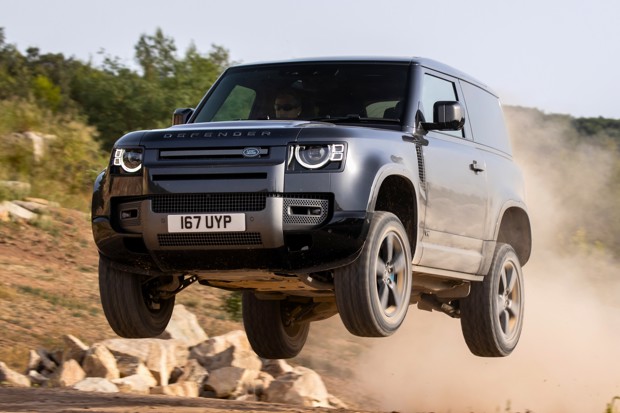
| Written by: Bear Kilpatrick | Last updated: 20th April 2026 |
The popularity of SUVs is down to a blend of lofty aspirations and lofty driving positions. Yet most 'off-roaders' are all show – mud and mountains are no-gos. For green lanes, towing and serious grip you want a proper 4x4 – and most are up to the arduous tasks of school runs and commutes as well.
Blame Land Rover and Jeep for taking a perfectly good tractor and making it desirable. The crude 4x4 working vehicles were made more comfortable in the 1970s to suit the needs of upmarket buyers and the Sports Utility Vehicle was born. Something you could use every day, take off road for adventures and country sports, and didn't need to compromise on refinement or performance with.
Top picks at a glance
- Best overall: Land Rover Defender 90
- Best for poshness: Range Rover
- Best for utility: Ford Ranger
- Best for value: Dacia Duster
- See the full top 10
Choosing a Range Rover or Jeep for your daily driver may feel upmarket, but there's a price to pay. They cost far more to run in fuel and maintenance, and the majority of manufacturers started offering lighter, more conventional car-like models with less capable all-wheel drive systems or even two-wheel drive. The 'proper' off-roader has therefore become a specialist vehicle again – but not necessarily, an upmarket one.
Hallmarks of a good 4x4s include the ability to ensure both axles are driven regardless of traction, high ground clearance with lots of suspension travel and wheels close to the bumpers at each end for steep climbing and clearing large obstacles. A strong body, and excellent all-round visibility are also essential. You don't need to special order a Foers Ibex, either – there are mainstream models that fit the bill.
Just make sure that you really need a 4x4 because these cars are more expensive to buy and run than their two-wheel drive equivalents. If your lifestyle warrants it, these are the best 4x4s you can buy right now.
- Find out how we test 4x4s at HonestJohn.co.uk
1. Land Rover Defender 90: best 4x4 for brand loyalists
Why buy one
- It's genuinely capable, much better on road than its ancestors and very versatile
Why avoid it
- Reliability lags behind rivals, it's expensive and complex to repair
Land Rover is, for many people around the world, a byword for off-road ability. That reputation was built on a robust and innovative design from the 1940s, which remained in production until 2015.
Now the company has evolved into making lightweight, two-wheel drive versions of the Range Rover Evoque and courting controversy with the Land Rover Discovery's styling. They lost their forebears' tractor-like strength and repairability in favour of comfort and more conventional handling.
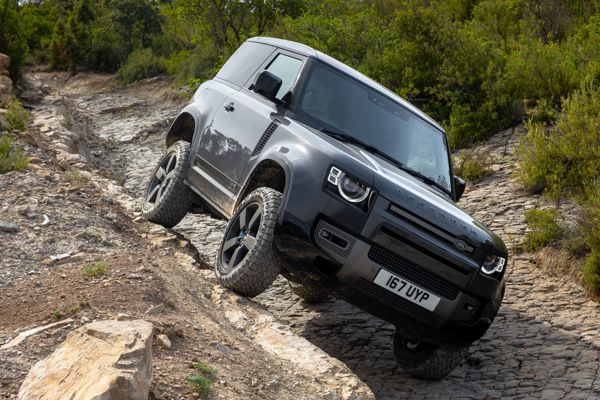
We particularly like the way the engineers have taken modern engineering from the Discovery and Range Rover and upgraded the hardware to match the rugged appearance and off-road bias required for the Land Rover Defender. Independent suspension means that on coils or air suspension the Defender is much better than its ancestors on the road, while the interior feels robust and functional, but not basic.
Some quirks, such as poor low-beam visibility, have been addressed in the latest facelift. But it's off-road that the Defender has a clear advantage over rivals, proving easier to drive and control than most SUVs and 4x4 pickups we've driven.
As a family car the Defender 110 and Defender 130 are the ones to have – access for the third row of seats is good compared with the Hyundai Santa Fe or Kia Sorento.
The Land Rover Defender 90 is less practical, but that's the key to its appeal. It's almost as versatile as the original Land Rover Defender with options for commercial models and utilitarian or luxury trim. None of them are particularly cheap, but the rugged style has as much luxury cred as a Range Rover.
When it's possible to spend over £150,000 on a Defender, the space occupied by the original Land Rover remains vacant – and there are plenty of challengers in this list.
Read our full Land Rover Defender 90 review.
2. Ford Ranger PHEV: best 4x4 for eco warriors
Why buy one
- 4x4 double-cab pickup with 690Nm strength and undiminished towing capacity
Why avoid it
- It's big, it's expensive and it's yet to prove its long-term durability
A few years ago, the Ford Ranger comprehensively overtook sales of most rivals in the UK's pickup market, meaning the Nissan Navara and Mercedes X-Class vanished and Mitsubishi stopped offering L200s. Even the latest Volkswagen Amarok is now a Ranger clone.
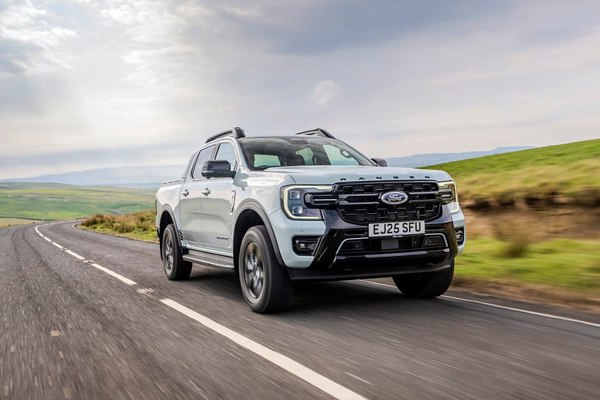
The Ranger had become so capable and refined after big improvements in steering and interior comfort in 2019, that it made other pickups almost irrelevant. The latest Ranger capitalises on those improvements, and now features full-time 4x4 on automatic models.
Compared with the rather basic, crude nature of the otherwise strong Isuzu D-Max and the high cost yet rather spartan options for the Toyota Hilux, it's hard to find a pickup that saves money over the Ford without big compromises.
The GWM POER 300 has potential to challenge the lower end – we've been impressed with early test drives – but it's yet to prove itself as a hard working vehicle in the UK. For eco-conscious buyers the Ranger PHEV is also a much better choice than the Maxus T90EV electric pickup, in almost every regard.
We found the Ranger PHEV impressive – it's quick and refined without the compromises of the Raptor and also has the potential for reduced emissions and running costs in urban environments. Few rivals we've driven can come close to this experience and ability. It's almost uncanny feeling it move without the fuss of a big diesel.
As a workhorse for traditional 4x4 buyers it's expensive, but for the lifestyle pickup market it's the only one remaining that can deliver the kind of tax advantages that attracted buyers in the first place. It's also the most effective attempt yet at cleaning up the pickup.
Read our full Ford Ranger PHEV review.
3. Jeep Wrangler: best 4x4 for off-road, online life
Why buy one
- Classic Jeep style, versatile design, impressive off-road technology
Why avoid it
- Compromised driving position, very expensive, outclassed on asphalt
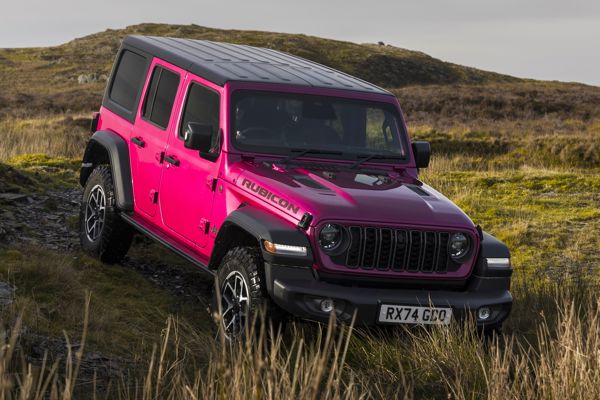
The Jeep Wrangler has been offered in the UK on and off since the brand established an official presence in 1993. With the Jeep Avenger and Grand Cherokee covering the other buyer's needs, the Wrangler is very focused on off-road ability. It retains solid axles front and rear, up to three differential locks and on Rubicon versions, the ability to remote-disconnect the anti-roll bars for extra axle articulation and ground clearance.
When we first tested the Wrangler it was roughly comparable with a high-end, double-cab pickup such as the Ford Ranger Raptor. At that price, it made a good case for itself if you didn't want the Ford's carrying capacity, but now the Jeep starts at well over £60,000, the Wranger's shortcomings are harder to overlook.
We can't fault its capability as a serious off-roader, but on the road the narrow body and cramped right-hand footwell make it uncomfortable for long drives – exacerbated by road and wind noise and a choice of twitchy, bouncy ride in the two-door, or a tendency to wander in the four-door.
All Wranglers are convertibles in that the roof – plus windscreen and doors – can be removed, but the sliding fabric roof option is the most convenient for British weather and still allows for the rear side windows to be detached.
In America the Wrangler is a relatively cheap vehicle, starting at $35,000. The UK gets a narrower range of engine options, with no V6s or V8s and fewer accessories available – meaning this Jeep's spartan origins are a foundation for a car costing as much as some highly sophisticated luxury models.
With poor road manners, refinement and economy the Jeep Wrangler is very much for the committed off-road enthusiast and if it suits your style you won't want to settle for anything less. For everyone else it's a case of easy to love, but difficult to live with.
Real MPG v Official MPG
While Jeep Wranger-driving Honest John readers tell us their 2.0-litre petrol-engined version deliver an average of 25.8mpg, the represents an impressive Real MPG that's 99% of the official fuel consumption figures.
Read our full Jeep Wrangler review.
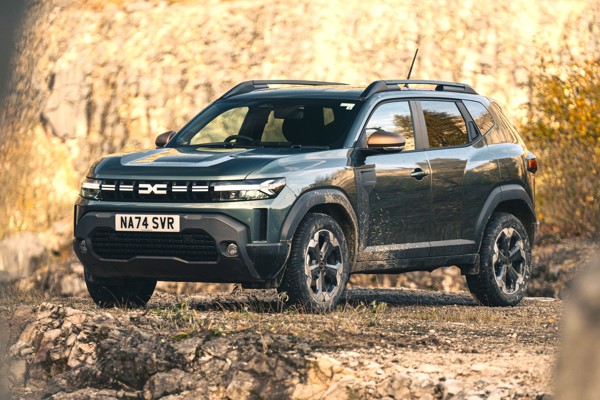
4. Dacia Duster: best 4x4 for a modest budget
Why buy one
- It's the cheapest 4x4 you can buy, and it's better than some more expensive ones
Why avoid it
- Manual gearbox only for now, not very useful for towing
In a group of old-school 4x4 thinking, here's some old-school SUV thinking – the Dacia Duster 4x4 is one of the few 'mainstream friendly' SUVs to retain an all-wheel drive option aimed at off-road use, where most rivals have elected to go electric for assistance in snow, or lost their all-wheel drive options entirely.
Despite the low list price the Duster's 4x4 system is remarklably sophisticated, with drive modes and automatic torque distribution. It can be useful on-road in poor conditions but is also very capable off-road for green lanes, fields and building sites.
We've been impressed with the improvements from the crude-but-effective earlier Dacia Duster models. Even ignoring the almost unique offering of 4x4 here, next to the related Renault Captur as well as the Nissan Juke and Qashqai, the Duster proves just as pleasant as a family car.
It's better value and better to drive than base-level Honda HR-V and Hyundai Kona rivals, though obviously, not as well equipped. Those alternatives do offer a better experience at the high end, but the Duster's latest revision includes a 1.8-litre 155PS hybrid that closes the gap in refinement and overtaking ability, although not in conjunction with all-wheel drive.
Prices for the 4x4 version have not increased dramatically – you'll still get one for less than £25,000, and £30,000 will get the top of the range Extreme with the innovative InNature camping pack and a roof rack included. There's a more sophisticated hybrid 4x4 with electric motor for the rear axle offered in other countries – time may be running out for the simple and affordable small 4x4 SUV with traditional hardware and a manual gearbox.
Read our full Dacia Duster review.
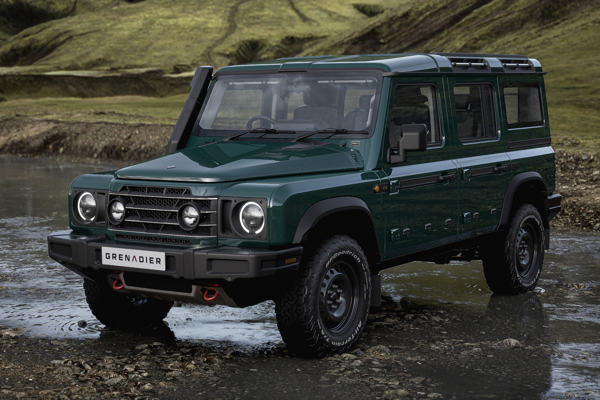
5. Ineos Grenadier: best 4x4 if you miss your old Defender
Why buy one
- It's a tribute act tour de force backed by the same session musicians behind classics
Why avoid it
- Times, tech and fashions have changed – and it feels dated
Almost as controversial as the firm's founder, the Ineos Grenadier is an attempt to continue the legacy of the classic Land Rover Defender, with a separate chassis, live axles and a rather familiar shape as well.
Although Ineos is a relatively new brand, the engineering comes from the top of the 4x4 world. Forget the 'British icon' nonsense, though – it's built on the same Austrian off-road expertise as the Mercedes G-Class, powered by BMW and made in France.
Unlike the classic 4x4 it mimics, the body is steel and not bolt-together versatile. Comfort is a little better than a classic Land Rover Defender, but far from the latest G-Class or more car-like 4x4s, with thin seats and a rather upright driving position. We found the on-road experience – both handling and refinement – inferior to the new Defender, G-Class and Toyota Land Cruiser largely down to those live axles. These should prove dependable for off-road and towing duties, however.
The interior is relatively original with an aesthetic rather like a helicopter control panel. Like a 1980s Amstrad stereo, the nuts and lines implying true modularity are decorative. However the the rails and racks cleverly integrated into the body are totally functional, rather than for show.
When people are prepared to pay £35,000 for the Suzuki Jimny, the Grenadier's £62,500-and-up price doesn't seem too bad. It's significantly lower than the G-Class and undercuts the modern Land Rover Defender, albeit without coming close to the latter's refinement on-road.
Residuals are relatively poor and you'll pick up approved-used models for less than £40,000 without much shopping around. Of more concern for buyers is the ownership experience, with leaks and build quality issues needing rectification being commonplace. Perhaps it has more in common with the classic Land Rover after all.
Read our full Ineos Grenadier review.
You may also like
- Need an SUV that's more geared towards on-road use? These are the 10 best family SUVs
- Looking for a load-lugger that's not an SUV? Here are the 10 best estate cars on sale
- In the market for an upmarket high-rise car? Your guide to the best luxury SUVs is here
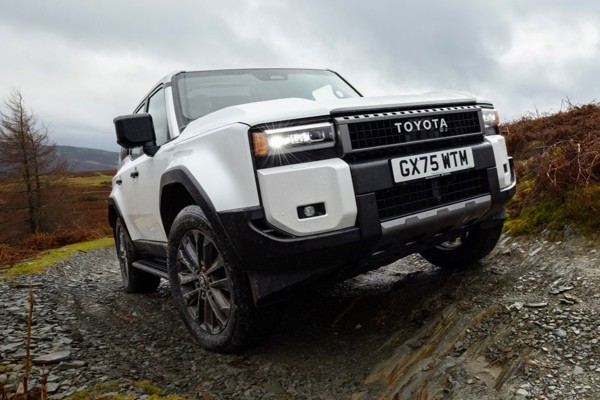
6. Toyota Land Cruiser: best 4x4 for world domination
Why buy it
- Strong 4x4 with a reputation for reliability earned from desert tracks to ice roads
Why avoid it
- It has become very expensive if you want a working vehicle and Toyota reliability
The Toyota Land Cruiser is guaranteed to get you anywhere in the world and to earn respect when you get there. At least, that's the theory – and it's certainly applied to the previous generations.
The UK's Land Cruiser is what's sold in other parts of the world as the lighter-duty Prado, sharing some components with the brilliant Hilux pickup. There's also a slightly more affordable Land Cruiser van version with rugged simplicity and a few luxury concessions to compete with the Land Rover Discovery Commercial.
With the new Toyota Land Cruiser that balance has shifted and our comparisons suggest that the Land Rover Discovery or Defender may be a better choice for new buyers. Why? The Land Cruiser now costs over £80,000 in civilian form, and £54,000 plus VAT for the commercial – or a third more than a Hilux. You don't get much choice of power either – just a 204PS mild hybrid 2.8-litre diesel.
Off-road ability is undiminished, with full-time four-wheel drive and a limited-slip centre differential for use on mixed surfaces, and the combination of Land Cruiser reputation and Toyota's 10-year warranty is very reassuring.
Retaining a separate chassis and that highly-repairable engineering, the Land Cruiser should shrug off serious off-road use with less anxiety about suspension wear, residual value and cosmetic repairs than a Defender, and it's more refined with better handling than before.
If you're only thinking until the end of the next lease deal, the Ford Ranger or GWM POER 300 are better value as a working 4x4 and a Land Rover Defender or Discovery offers plug-in hybrid power and more flexibility and refinement for a similar price.
Read our full Read our full Toyota Land Cruiser review.
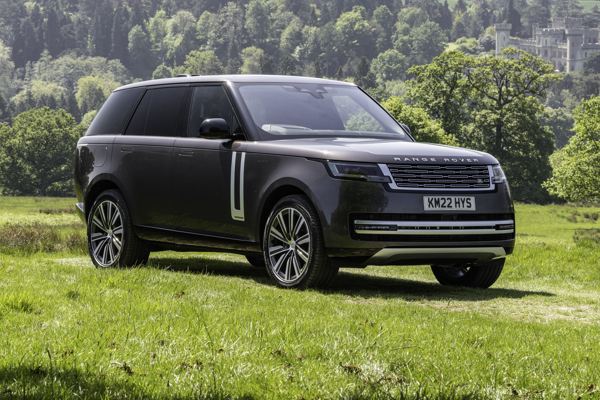
7. Range Rover: best 4x4 luxury car
Why buy one
- Uncompromising ability on and off road, focused on luxury and comfort
Why avoid it
- Very expensive new with heavy depreciation, used models costly to run
The only reason the Range Rover isn't at the top of this list is its price. Having defined the genre of the luxury off-roader in 1970, the Range Rover has steadily gained features and technology that can rival a Bentley or Rolls-Royce for lavish comfort, without sacrificing the original's ability to go anywhere.
In context, it's also better value than it appears – despite the big upgrades in kit and efficiency the price has merely risen with inflation. In relative terms it's become better value for 2026 buyers, than for 2002's well-heeled customers.
We mention the 2002 Range Rover because it was the first monocoque version. With air suspension and the first iteration of the now familiar low-dash, big-windows interior design it feels remarkably close to the latest model. Not much else does – neither the Mercedes G-Class or Ineos Grenadier can come close to the refinement and stability of the Range Rover as a long-distance cruiser.
Off-road ability is undiminished, though the more extreme situations are more likely to be limited by your fear for damaging he paintwork. Even then, the most vulnerable panels are designed to be relatively easy to replace or repair.
We wouldn't recommend buying a used Range Rover unless you've got an appropriate budget for maintenance but as a new or approved-used buy with a warranty it's a luxury experience that goes beyond just fancy trim and specifications.
Real MPG v Official MPG
One thing we couldn't help but notice was the progress made at the fuel pumps. Where older models were ruinous to run, the latest D350 mild hybrid can achieve well over 40mpg in real-world motorway driving and the plug-in hybrid models can significantly cut the cost for short trips if plugged in regularly.
D350-driving Honest John readers are impressed by its fuel efficiency, reporting an average of 35.7mpg, representing a Real MPG figure that's 97% of Range Rover's official claim.
Read our full Range Rover review.
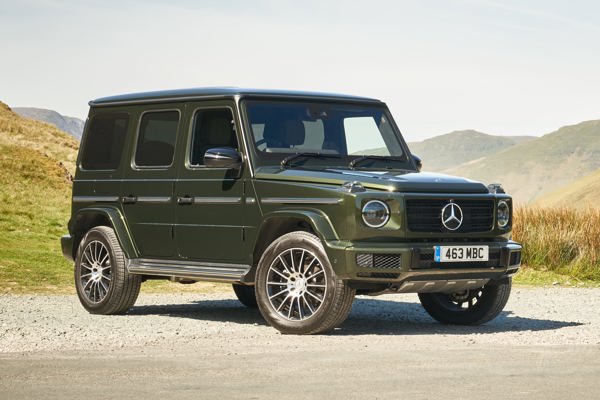
8. Mercedes G-Class: best 4x4 for uncompromising ability
Why buy one
- There is nothing else that offers the same image, ability or strength - at any price
Why avoid it
- Depreciation can be high, but used models are often tarted up and overpriced
In recent years you could be forgiven for thinking the 'G' in Mercedes G-Class stands for 'gangster' seeing as this military-derived 4x4 has been adopted by rappers and footballers as a show of wealth rather than the original civilian version being aimed at farmers and utility companies.
An extensive refresh smoothed the original G-Wagen's 1970s design and solid-axle ride in 2018 and consolidated the G-Class's role as a luxury 4x4 rather than a utility vehicle. It hasn't been cheapened or simplified however. Even with independent front suspension, adaptive cruise control and a fully-electric model the G-Class is above all, an off-road vehicle that will keep going long after others have run out of talent or grip.
We found it really easy to like the G-Class. Despite the dated, boxy body – it's been smoothed, but remains close to the original including thick steel and vault-like doors – it's easy to get a comfortable driving position, though it's not as lounge-like as the Range Rover.
For most purposes the G450d is adequate but the iconic Mercedes-AMG G63's howling V8 soundtrack is as addictive as its performance – and utterly inappropriate for the boxy, tall and narrow vehicle producing it. No matter which model you choose, three differential locks, advanced stability control and cameras mean you'll be able to tackle any off-road course in confidence.
If there's a fast charger nearby you'll even be able to tackle it in silence. The Mercedes Electric G-Class achieves four wheel drive through four independent motors. That flexibility means it can spin on its own axis and has precise control over every wheel. Relying on a massive 116kWh battery, the heavy and powerful electric 4x4 can still claim a range over 280 miles. If you've got £160,000 for a school run commuter, it'll probably exceed that when crawling in traffic.
Real MPG v Official MPG
Mercedes G-Class-driving Honest John readers have so far only shared their fuel efficiency findings for the AMG G63 versions. While the collective average is just 19.2mpg, that's an astonishing Real MPG figure of 110% of Mercedes' official claim.
Read our full Mercedes G-Class review.
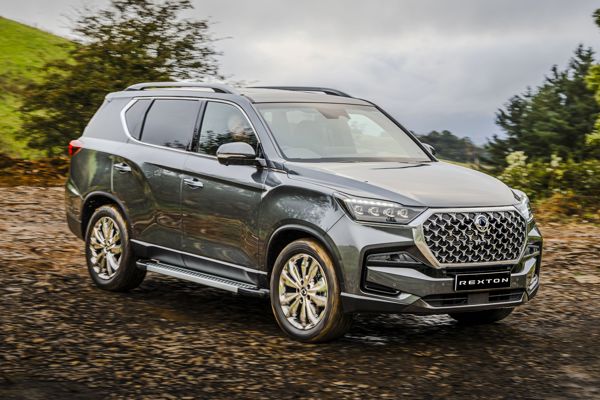
9. KGM Rexton: best 4x4 for value for families and towing
Why buy one
- Amazing value for the space and 4x4 ability on offer
Why avoid it
- More sophisticated SUVs feel nicer on-road, off-road limited by wading depth
Formerly known as SsangYong, Korea's KGM offers a modern yet old-school 4x4 at a competitive price and an almost unique blend of family-friendly comfort and classic off-roader strength. Closely related to the KGM Musso pick-up, the Rexton has been on the market since 2017, with a couple of upgrades and facelifts to keep it fresh.
At £42,500 on the road for the entry-level K30, rising to less than £49,000 for the fully-loaded K50, it offers seven seats, separate chassis strength, 3500kg towing ability and rugged part-time four-wheel drive with low range and stability control as standard.
We found the comfort and overall feel of the interior surprisingly good for the budget, but the pickup-derived chassis mean a compromised ride on poor surfaces, body-roll, and poor feedback in corners. Our main concern was the over-light steering, which feels at odds with the bulk and weight of the Rexton – but that does make it accessible for more drivers.
Anyone considering a Rexton to replace an older Land Rover Discovery Series II or Mitsubishi Shogun will appreciate the upgrade in many areas – but the modern SUV looks set up expectations the Rexton can't meet for anyone hoping to upgrade the Hyundai Santa Fe to a more 'off-road' equivalent. Off-road enthusiasts will appreciate the predictable ability on poor tracks, but won't be as impressed by the 350mm wading depth.
At this price, against a landscape of increasingly expensive and two-wheel drive SUVs, the KGM Rexton is worth making some compromises for if you need proper off-road and towing capacity – if you don't want a sunroof or surround cameras, the entry-level K30 is well enough equipped for most comparison shoppers and the 202PS diesel has plenty of power with a smooth automatic gearbox.
Real MPG v Official MPG
Honest John readers with first-hand experience of the former SsangYong-badged Rexton report a fine 92% Real MPG of the official figure for versions pairing the 2.2-litre diesel engine with the automatic gearbox.
Read our full KGM Rexton review.
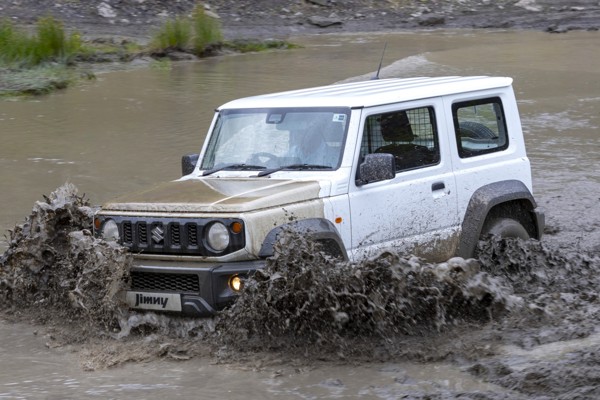
10. Suzuki Jimny: best 4x4 for small adventures
Why buy one
- Traditional chassis and strong axles, light weight, minuscule dimensions
Why avoid it
- Very expensive, an ordeal for long motorway drives, difficult to find
Don't it always seem to go you don't know what you've got 'til it's gone? In 2018 the new Suzuki Jimny brought devastatingly effective and Instagrammable style to the direct descendant of the 1980s Suzuki SJ 4x4s – and if paradise hadn't already been paved this would be the default car for people everywhere.
Almost as soon as it arrived, CO2 targets meant Suzuki had to remove the Jimny from sale in the UK and Europe – though commercial van version sales continued until 2025. It's available as a 'grey import' through specialists nowadays. J-PN offers both three- and five-door models, with OTR prices around £25,000 for new cars, Greenacres 4x4 offers a four-year warranty with slightly higher prices.
We loved the current Suzuki Jimny when it first appeared – cheap, fun and endearing, the limitations of its 1.5-litre engine, brick-like aerodynamics, and simple live axles were easy to accept at the original launch price. As an alternative to a supermini it's completely outclassed, but as a small 4x4 it's in a class of its own.
Best viewed as a two-seater with 'occasional' seats in the boot – there is next to no boot space with the rear seats up – there is a long-wheelbase Nomade version available for personal imports.
Poor economy, cramped and basic interior, part-time 4x4 limited to off-road use only? None of that matters when you get a highly capable 4x4 for less than £18,000. Demand outstripped supply and the Jimny is now priced like a luxury item – approved-used UK examples can be over £30,000 for a five-year old, 13,000-mile example.
The grey imports offer better value for serious rock-crawling off-roading, while less taxing off-road excursions can be handled by Suzuki's new e-Vitara for a much lower monthly cost.
Real MPG v Official MPG
Honest John readers who drive the Suzuki Jimny regularly are understandably fans of its fuel efficiency. They report a very impressive Real MPG of 101% of the official claim for versions fitted with the standard manual transmission.
Read our full Suzuki Jimny review.
How we test cars: the 4x4s method
Most of the Honest John team has some experience driving off-road, including advanced courses and personal enthusiasm for legal, responsible Green Laning. This means we're able to assess the performance beyond mere specifications. All-wheel drive SUVs with limited axle articulation and ground clearance have not been included, but these may be more suitable for families who just want security in poor weather and on unpaved tracks.
- Driven over 10,000 miles: Each vehicle mentioned here has been driven both off- and on-road. Unlike some groups of cars, choosing the best 4x4s can be driven by a single purpose – off-road driving ability. For the majority of 4x4s in use in Britain, that's still a relatively small aspect of how they're used however, so we also consider the main reasons a driver, business or family might choose an off-road-focused 4x4 over an all-wheel drive SUV.
- Pulling, prodded and parked: A key ability of durable off-road vehicles is towing. Additional traction for fields and beaches, or building sites and forestry land, is particularly useful when moving a heavy trailer and the additional weight of traditional axles and separate chassis construction generally leads to a more stable combination for caravans and box trailers adhering to the 85% rule. Most serious 4x4s are rated to tow more than their own weight. Given the high cost of 4x4s currently, we've looked at how suitable they are as the only vehicle for a family. Safety and handling expectations are lower than they would be for a family car, but going back to the experience of a 1980s Land Rover Station Wagon isn't really acceptable in an era of lane-keeping, airbags and adaptive cruise control.
-
Real MPG Data: Unlike other car websites, we combine our test results with thousands of reader-supplied data points curated in our unique Real MPG database. Laboratory fuel efficiency figures are one thing, those from the real world are quite another.
-
Owner Feedback: We integrate owners' reliability scores from the Honest John Satisfaction Index into our reviews — whatever reputation for dependability cars are earning in the real world, it's only right you know about it.
Our reviews are 100% independent. We don't take money from car manufacturers to influence our rankings. Our only priority is helping you find the right car.
Frequently asked questions about small 4x4s
Why aren't there many genuinely off-road capable 4x4s sold new these days?
It's something of a chicken and egg situation but essentially fewer are available because consumer demand is higher for SUVs that look rugged, but which are predominantly front-wheel drive and not especially capable off-road. For many car buyers it's that aesthetic which is more important than the go-anywhere agility, which is understandable as people want ever-more fuel efficiency, which isn't a strength of traditional 4x4s.
Which 4x4 is the best value for money?
If you don't need to tow heavy things, but want a family car with some all-wheel drive ability and off-road potential, the Dacia Duster 4x4 is the clear winner at around £25,000. For serious towing, large families, and more challenging off-road situations the KGM Rexton offers a rare combination of separate chassis strength, car-like interior comforts, and generous spec from £42,500
While buying used the Rexton – with a SsangYong badge – is tempting, but the permanent 4x4 of the 2019-21 Shogun Sport is easier to live with. Both have relatively poor residual values, but there is not a large supply – where the Ineos Grenadier and Land Rover Defender offer more choice. If you're considering older used models it's best to buy on condition rather than recommending a specific model to look for.
What is the most reliable 4x4?
There's a great deal of evidence that the Toyota Land Cruiser is the most reliable. It also has the advantage that if you're buying used and low mileage, it may have some Toyota warranty left if it qualifies for the 10-year service activated warranty. Bear in mind that much older models with air suspension can be difficult and expensive to repair if they go wrong, old Toyota reliability is often taken as an excuse to skip maintenance.
If you want a 4x4 vehicle that will almost certainly never break down, choose the Land Cruiser or its pickup equivalent, the Toyota Hilux. The more compact and affordable Toyota RAV4 is also a safe bet for gentler environments, and it's particularly capable in low-CO2 PHEV form.
Reliability isn't just about keeping going and a good warranty – for serious off-roading we'd also consider Land Rovers and Range Rovers a good bet. They will break down if neglected, but parts availability and numerous specialists mean that you'll be up and running again in no time. That's not always the case for Japanese and Korean models.
What is the best 4x4 on the market?
Do you mean the best 4x4xFar? Land Rover did earn that marketing slogan, and it holds onto it thanks to the Range Rover. Now in its fifth generation, the car that defined the genre of luxury SUVs has become a technical tour-de-force, with impressive driver assistance on- and off-road and on-road manners that shame many high-end models. The air-soft ride and commanding driving position are complemented by low instruments, and the airy cabin is great for passengers in the back seats as well.
This design has gently evolved since the 2002 L322 generation. Good examples can be found from around £5000 and as little as £2000 for running projects – you don't need a six-figure budget to enjoy a Range Rover.
It's worth giving the used models the same maintenance budget you'd give a new one, for the best reliability. New models are also considerably better on fuel – on long drives, we've seen over 43mpg from the D350 diesel – previous generations would struggle to deliver half that figure.
Glossary of 4x4 terminology
We mention some of the technology used in 4x4 vehicles in this article and you can read a full explanation of four-wheel drive systems if you want in-depth info. To help with this article here are the most common things you'll hear about with off-road driving and vehicles, and might not have thought about before.
Four-wheel drive technology
- Full-time: a four-wheel drive system you can leave engaged all the time
- Part-time: a four-wheel drive system that you engage when the vehicle has low traction
- Auto-locking: part of the four-wheel drive system that senses slip and engages for you
- Differential: part of the system that divides power between axles or wheels
- Locking differential: a means of forcing both wheels or axles to turn if one is spinning freely
- Low-range: a special low gear for very slow, precise manoeuvring or moving heavy items
- Drive modes: a sophisticated set of presets to tailor the vehicle to different conditions
- Separate chassis: mechanical parts on a strong self-supporting frame, with the body attached above
Independent suspension or live axles?
A live axle is the simplest form of attaching two driven wheels to a vehicle - a hollow tube, with a hub on each end, containing a differential and two driveshafts inside. You will have seen these on lorries and pickups, and on older classic cars. The wheels are always perpendicular to the axle's angle and one side moving affects the other. Steering is usually a simple pivot.
These are heavy and a big contributor to the vehicle's unsprung weight, which affects handling and refinement on the road, but they are strong and easy to repair. Many off-road vehicles can be fitted with different axle types for specific purposes. Old-fashioned 4x4s used live axles front and rear, but most now use independent suspension at the front for better steering and safety, as do most pickups.
Independent suspension usually attaches the differential to the vehicle chassis or body, and allows the wheels to move independently for clearance and absorbing bumps. The number of moving points means these systems are often less durable or more expensive to maintain, but they give a better ride and in conjunction with height adjustable suspension can also be better off-road. Most SUVs use independent rear suspension when fitted with four-wheel drive, and it's a significant factor in the Range Rover's on-road refinement.
Green-Laning and BOATs
For most off-road drivers in the UK without private land they need to use the vehicle to access, the ancient network of established rights of way is the place to use those 4x4 skills. These roads are officially recognised routes and highways, and are subject to bylaws and restrictions at times. The best place to learn about using green lanes and access the most up to date information about legal access and route condition is to join the Green Lane Association or GLASS.
Members get access to a live route map and live updates on environmental factors or maintenance, and the association advocates to keep lanes open and available for responsible off-road users on two wheels or more.
The main route classification to look for if you want to know if there are interesting and suitable routes near you is a Byway Open to All Traffic or BOAT. Bear in mind these are often popular routes for walkers, cyclists and horse riders, and respectful behaviour is key to keeping the freedom to drive off-road accessible to all – routes are often gated or deliberately neglected by authorities when a pattern of abuse by motor vehicle users is identified.
