10 best family cars to buy in 2026: Top-rated models ranked
.jpg?width=620)
The modern car is a success because it was designed for families, and households – a role that remains at the forefront of diverse designs today. Yet the family car feels overshadowed by SUVs, MPVs, large or small, premium or budget. Where is the family car that's 'just right' for you?
It's here, in this list. The perfect family car has to do many things. It should be cheap to run, reliable, and offer good value for the specification and performance, it should have room for at lest four adults and children in addition to the driver, and a big enough boot to carry anything from pushchairs and changing bags to mountain bikes and gym bags.
Yet it should also be flexible enough to deal with a daily short drive to school and work, or a family holiday on another continent – and easy to park in crowded streets, supermarket car parks and city centres.
The answer, in the 1960s, was to get rid of the 'three box' tradition of 'engine, people, stuff' defined by saloons, and fit a nice big tailgate onto nice, small cars – creating the hatchback, and paving the way for versatile, trusted models such as the Volkswagen Golf. After decades of being considered the class benchmark against rivals from every manufacturer the Golf now stands apart with the most credible alternatives being, in essence, based on the Volkswagen original.
Driving and families changed, and in the 21st century the hatchback's generalism has been challenged by small estates, multi-purpose vehicles and aspirational off-roaders. Yet even in the era of tall, fake-4x4 style and heavy, battery-toting EVs, the hatchback seems to be the ideal shape for a car that can do it all well enough. Doesn't it feel like rather than all cars becoming big 4x4s, the big 4x4s are getting closer to becoming small family hatchbacks?
Skoda Octavia: best for being prepared
.jpg?rmode=max&width=500)
Why buy it
- You really like the VW Golf, but don't want to leave anything behind
Why avoid it
- You still think Skoda is a budget brand, and you deserve better
Here's a great case of 'the student has become the teacher'. One of the first examples of Volkswagen stretching the VW Golf's platform to suit other brands in the group, the Skoda Octavia has always been the sensible grown-up next to its popular sibling. Perhaps apt, for a car that once had a model called the Scout, the Octavia's traded the Golf's trendy pockets for a backpack. It's still compact enough for every day use, but the boot is much bigger. Wherever your family goes, you can pack to be prepared for anything.
That practicality does not take away the fun, precise handling and sense of security behind the wheel that the Golf offers, and we've found the Octavia to be just as rewarding to drive. Economy and build quality are also very close, though you'll find that when you choose options and spec to match the Volkswagen, the Skoda costs roughly the same and may have slightly higher monthly finance costs – easily avoided by choosing cars from stock, rather than your own build-to-order model.
We appreciate and found ourselves using the Simply Clever features, such as hidden ice-scraper and umbrella storage, more than the 'upmarket' options often loaded onto cars to justify a higher price – and that's why the Octavia is a strong candidate for best family car overall. It's not just good at what it does, it's designed to be a step ahead of daily frustrations and be as helpful as a car can be.
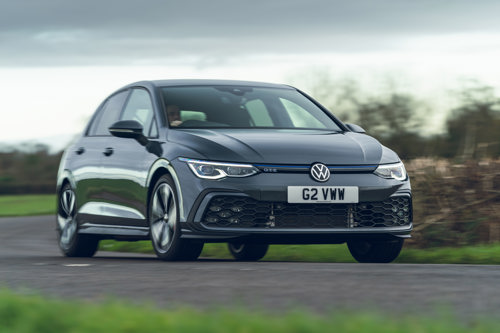
Volkswagen Golf: the best (sm)all-rounder
Why buy it
- Consistent quality, proven tech, covers minimalist, luxury and performance well
Why avoid it
- Relatively expensive, in-house rivals have stronger identity
Chances are, you've grown up with the Volkswagen Golf somewhere in your life, and over eight generations the Volkswagen Golf has grown up as well. Back in the 1970s the original Golf aimed to be the modern car for the people, replacing the Beetle's vintage technology with a thoroughly modern front-wheel drive small hatchback at a time when many rivals were still selling crude, cramped rear-wheel drive saloons in the same length.
Made to a high standard, and impressively space efficient, the Golf's core values have remained intact as the car itself has got bigger, more sophisticated and diverse. Small doesn't mean basic or last-generation – luxury trim and details, high-tech features are all on offer. It also doesn't mean cheap, but the Golf's reputation means resale values are strong and leasing or PCP deals can be competitive. If the VW brand doesn't appeal, the Audi A3 and SEAT Leon offer different remixes of the familiar classic.
Regardless of option, the Golf is designed to be efficient and reliable, with space for five people and a boot capable of carrying the average amount of 'stuff' – and if that's not enough, you can fold the seats down. When looking at approved-used options you'll find the Golf Estate which offers considerably more bootspace, and the unusual Volkswagen Golf SV for more versatile passenger space.
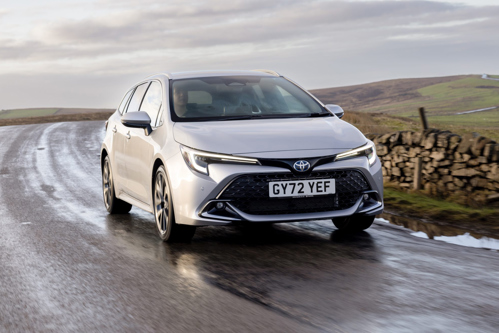
Toyota Corolla TS: best for long-term planners
Why buy one
- Long warranty, good handling, practical space and low costs
Why avoid it
- Smaller engine can be intrusive, some rivals feel more luxurious
Toyota's Corolla surpassed the Volkswagen Beetle as 'the worlds' best-selling vehicle name' years ago, though technically that spanned several generations to the Beetle's 65-year span. You'll still see those early generations in less salty climates, working hard, because the Corolla has always been a byword for dependability. These days, British buyers get the benefit of Toyota backing that reputation with a 10-year service-activated warranty, making the Corolla a car that is worth buying new and looking after rather than changing every three years.
Unlike some previous Corollas, it's unlikely you'll want to change – as long as you get the 2.0-litre. While Toyota ha improved the handling and feedback to make it almost sporty, and very reassuring to drive, the 1.8-litre option has to rev high to charge the hybrid powertrain or drive though the CVT gearbox. The 2.0-litre is not only quicker – it's more relaxed, and no worse on fuel in the real world.
There is a Corolla hatchback, but we think the £2000 premium for the Corolla TS (Touring Sports) estate is worth spending for its long, flat load area and extra practicality. There's a Suzuki-badged option as well, the Swace, which is worth seeking out when buying used. It also qualifies for a similar warranty. Downsides for the Corolla, which costs between £30,000 and £40,000 new, are few. Lacklustre infotainment and an absence of premium trim materials can make it look dull alongside rivals. It will probably outlive all of them, though.
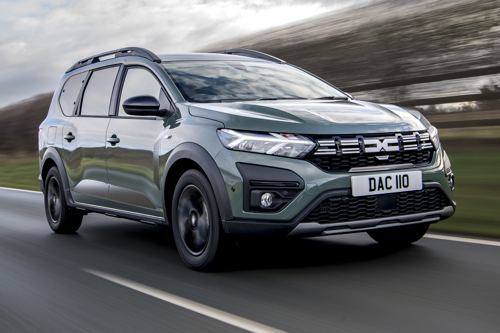
Dacia Jogger: best for big families and small roads
Why buy one
- Amazing value, good ride quality, huge interior space and seven seats
Why avoid it
- Limited choice of engines, may be too long for some tastes
Dacia's image as a budget brand has been relatively easy to shape into a no-nonsense but good brand, thanks in part to the excellent Duster and well-judged Sandero Stepway. The Dacia Jogger epitomises Dacia's focus on making solid cars that are not cutting edge, but are put together well and thoughtfully styled. Affordable doesn't need to mean sub-standard, and Dacia's all but perfected the art of making a low-cost interior feel better made than some premium cars.
With seven seats across three rows it's easy to forget that the Jogger is a stretched Sandero. High ground clearance and compliant suspension inspired confidence on poor roads, and a long wheelbase combined with notable rear overhang result in a practical, 2.1-metre long box capable of carrying over 2000 litres of stuff. As with the Sandero the price – from £19,000 – is the headline. Yet the Jogger doesn't feel like a budget car, it's not unlike a 1990s Volvo estate in practicality and surprisingly, refinement. That long wheelbase helps ensure a smooth ride and stability even in crosswinds. Unlike those old Volvos the removable third row seats are forward facing and suitable for young adults – but they don't have Isofix.
What's the catch? You can't get the latest tech, though standard equipment includes air conditioning or climate control, Apple CarPlay, and cruise control. The 1.0-litre models have adequate power until you want to fill all seven seats, when economy and performance suffer. The hybrid is the better choice – particularly the latest 1.8-litre model with 155PS. For many drivers the biggest drawback is also the main benefit however – the Jogger is long enough to dissuade anyone used to a smaller hatchback. If you need seven seats or 1900 litres of space, however, you won't find it in anything smaller or cheaper.
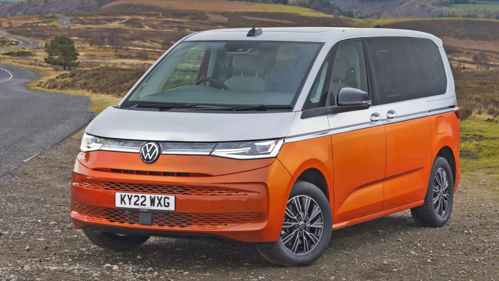
Volkswagen Multivan: best for family adventures
Why buy one
- The same footprint as a Passat Estate with twice the space, and panoramic views
Why avoid it
- There's no denying that it's an expensive option, despite strong residual values
Before the invention of the MPV, large families often chose a minibus such as a VW Caravelle. Now Ford and VW share their vans the Transit Tourneo Custom fills that role, and Volkswagen offers something altogether better. The VW Multivan looks like a van - but it's based on a car, and feels like it fell out of another dimension. One where SUVs stayed off-road, and the original Renault Espace evolved into a well-made, modern and luxurious car without losing the crisp, unobtrusive interior and large windows with slim pillars.
Two lengths are available, with the longer model offering up to 4035 litres of interior space with the seats removed. The extra space is in the rear overhang rather than the wheelbase – unlike the electric equivalent Volkswagen ID.Buzz. As the floor is flat it doesn't mean legroom is compromised, just that there's a bit more behind the back wheel to be aware of when turning. Up to seven adults can sit in the Multivan in comfort and it's also blessed with plenty of Isofix points, but if you don't need as many seats the interior can be reconfigured and includes a sliding, height adjustable table on some models.
On the road, it's surprisingly nimble and refined, with excellent visibility all-round, and the standard length is under five metres so should fit in most parking spaces without drama. Sliding side doors help with tighter spots. It's not cheap, but it can be cheap to run – most are plug-in hybrids, including the all-wheel drive eHybrid 4Motion. Despite prices starting at over £50,000 strong residual values could make a new one on low-rate finance better value than a used example.
BMW 2 Series Active Tourer: best for work (and homework)
.jpg?rmode=max&width=500)
Why buy one
- Professional image and brand, better value than you expect, versatile
Why avoid it
- Relatively poor residuals, expensive main dealer servicing, slightly awkward looks
There are several good cars that can families can fit into in BMW's non-SUV range, but the 2 Series Active Tourer is designed to fit around families. It's BMW's only MPV, and it's available from around £37,000 for the 170ps 220 Sport. The best 2 Series Active Tourer, however, is the plug-in hybrid 225e xDrive, which not only saves fuel with a realistic 40-50 miles of EV range when it can be plugged in regularly, it has all-wheel drive and fairly impressive performance as well.
Get a 225e xDrive Luxury with the nicest gadgets, and you'll still have change from £50,000 when buying new and pothole-absorbing 17-inch wheels with higher profile tyres. There's a good choice of colours and interior trims when many manufacturers simply don't provide a choice at all. You'll pay a lot for a bespoke order, but it's worth shopping around the nearly new and approved-used cars on the market in case someone else shares your unique taste.
A lot of the technology is shared with the MINI Countryman, but in a style that's surprisingly, more functional and practical. That''s not a bad thing. BMW designs its front-wheel drive cars to be as good to drive as the traditional rear-wheel drive models, and you get easy loading and access to a huge amount off interior space with great visibility. The top of the range 230e xDrive can reach 62mph in 5.5 seconds, but the 225's 6.7 seconds will save you money without sacrificing much real-world capability.
Ford Puma: best for young families
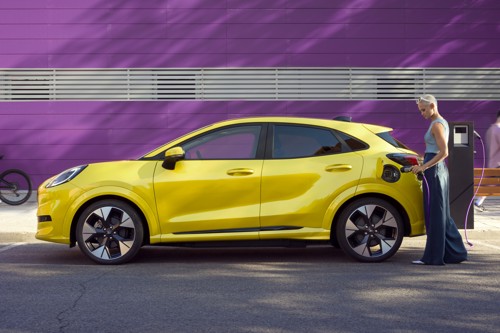
Why buy one
- Making the most out of the Fiesta platform, the Puma is a fusion of practicality and stylish fun
Why avoid it
- Rear headroom poor for young adults, EV battery a little small, ST not as fierce as before
It's a cliché, but the Ford Puma is an opportunity to prove that having children doesn't mean giving up your individual wild side – the rest of the family can be part of it too. For driving enthusiasts the Puma ST has been tamed a little in its most recent, automatic flavour but is still great fun on a twisty road, and the clever use of space within a Ford Fiesta-sized footprint pretty much stamped out the reason for the Fiesta to exist at all. Yes, the Puma is, for now, Ford's smallest and cheapest car.
Some interior details highlight the cheapest aspect but it doesn't feel too small in either front or rear seats, if you consider it a four seater. Behind the seats, the boot – often a weakness on small SUVs or hatchbacks – shows the kind of attention to family life that won Ford so many fans for decades. It's got an 80-litre plastic box, with drain plug, below the boot floor (and the boot is already bigger than a Golf's). The electric model has even more space, despite the need to package batteries in the design.
Cheap, practical, good to drive – and the best bit is that Ford managed to fit the small SUV style guide without aping the style of rivals. It retains good proportions and enough hints of the 1990s Ford Puma coupe that you'll probably catch yourself glancing at it in windows and dreaming of the 200PS manual ST. Which you can always buy used, if the temptation of the latest electric version and its torquey urban sprinting ability is too refined. After all, your new arrival can probably provide all the pop-bang exhaust noises you'l ever need if you're trading in the three-door Fiesta for a family-friendly alternative.
Kia PV5 Passenger: best for carpooling
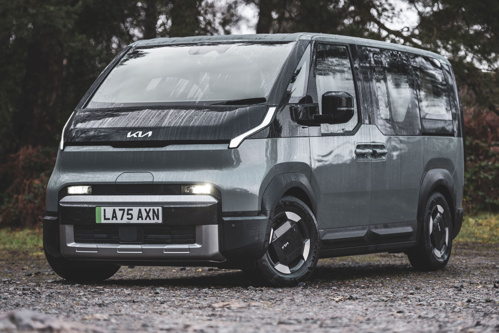
Why buy it?
- Remarkably spacious and practical MPV based on an electric van is surprisingly affordable
Why avoid it?
- Van origins are not disguised inside or out, so feels a little too functional in places
Kia offer a massive electric MPV already in the EV9, but it's designed with ASAEN sensibilities to compete with the Toyota Alphard (Lexus LM) and similar hyper-luxury private-jet style people carriers. If you're rushing kids to class more often than in Business Class, the Kia PV5 Passenger is strikingly different, and it starts from £32,955 on the road (including VAT) undercutting some rather dated rivals.
Offered in standard and long-range models with five seats – the PV7 is due next year – there's a massive 1320 litre boot behind the three-seater, split-folding second row bench seat. The Kia PV5's boxy, rugged body looks straight out of an Apple TV sci-fi drama, and it's well suited to shuttling your troupe around congested city streets. The standard PV5 offers around 180 miles of range at urban speeds, and a sedate 12.8 second 0-62 from its 122PS motor. The long-range model upgrades the 51.4kWh battery to 71.2kWh for a range closer to 280 miles – which you'll cover without taxing the upgraded 163PS motor in that version.
Despite its van origins the PV5 features more standard equipment than some cars at this price – though we found the trim less luxurious than Kia's mainstream EVs. It's robust, suiting the lifestyle potential of this van-derived car as a bike and dog carrier or general workhorse, and accessibility is excellent (it forms the basis of the PV5 WAV). That quirky appearance and seven year warranty gives it character and dependability that could easily lead to the PV5 becoming part of the family.
Citroen e-Berlingo: best for crowded spaces
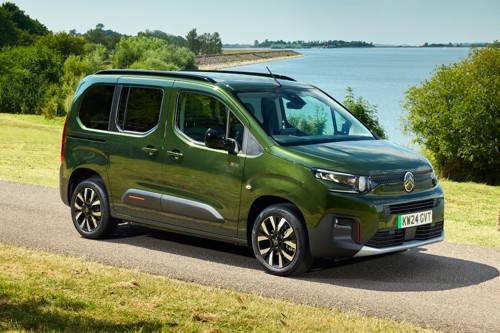
Why buy one
- Proven practicality and generally good performance and comfort, competitively priced
Why avoid it
- Range falls short of expectations, newer alternatives feel more sophisticated
It's a favourite of families who put practicality and what the car is used for ahead of what the car says about your status. The Citroen Berlingo, along with its badge-engineered Peugeot Rifter and Vauxhall Combo Life siblings, occupies an almost unique spot in the landscape with its family hatchback footprint and van-like interior space. We've found it to be a thoroughly likeable and sensible car in every generation, but it's getting on a bit – despite a facelift for 2026.
The biggest benefit of the Berlingo, electric or not, is how it doubles as a piece of furniture, an organiser, a shed. Look at recent used models and you'll find options such as an appealing glass-roof, ambient-lighting and aircraft-style overhead storage, and a choice of petrol, diesel, manual and automatic versions as well as the electric model. No room to open the tailgate? Open the back window. Got a load of plants in the back? Put the shopping in the overhead box. Many versions have a centre cubby you could lose a laptop in (with a closing lid, of course) and three individual rear seats – and all of them have sliding rear doors.
Anyone with independent and excitable young children will know how relaxing it is knowing that not only will you be able to open the door if someone's parked touching the mirror, if your kids get ahead and fling the door open themselves, it's not going anywhere but backwards. It's a shame the front doors don't slide too (Peugeot tried that with the 1007, and it was not a success). Prices start from just under £30,000 for the e-Berlingo, and if you do want an EV, you will want the latest 136PS, 50kWh e-Berlingo's improvements. Poor residuals mean finance deals are expensive – we'd stick to approved-used offers that have already endured the first wave of depreciation and offer the widest choice of specifications.
Ford Focus: best for bargain hunters
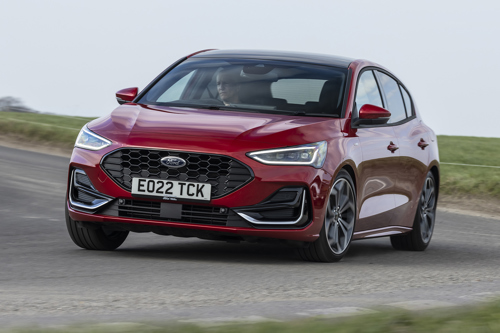
Why buy one?
- Popular Ford is versatile, good to drive, and family-friendly
Why avoid it?
- It won't be available new for much longer, fewer variants are on offer
If Ford cancelling the Fiesta was shocking, the news that the Ford Focus is going without a direct replacement seems like a sign that Ford UK is not a priority for the American firm. Ford is not going anywhere – it still tops the UK sales charts. Buyers have expressed a clear preference for SUVs, so the excellent Fiesta-based Puma and Focus-based Kuga remain, consolidating their position as strong sellers in each class.
Drivers who don't want an SUV are right to be frustrated that the only way to buy a Focus will be picking up a second hand one soon. Distinctly different from its arch rival the VW Golf, the Focus has a low, deceptive long body that's spacious and feels secure and agile on the road – even in jacked-up Focus Active form. Respecting Fast Ford tradition, the ST and RS pushed the boundaries of hot-hatch performance and value for money as well – you may find an unregistered final edition 280PS Focus ST in stock, but don't expect discounts.
Family-life practical details include pop-out door protectors, and on many cars, handy connected services and over-the-air updates for navigation and infotainment. In typical Ford style, driver controls fall easily to hand and are well-weighted and responsive, making it easy to feel confident behind the wheel very quickly. If you can find a car with them, the optional comfort seats offer plenty of adjustment for long-distance drivers – but time is almost up for any build-to-order personalisation. Discounts on remaining stock could be very appealing and worth compromising for.
Which cars offer more than three Isofix points?
Most family cars offer two or three Isofix points for child seats, infant carriers or boosters. These are a vital feature for safety, but you'd be surprised by how many seven-seater cars, SUVs and off-roaders don't offer Isofix in every row, or have other compromises.
The usual practice of putting Isofix on the outer second-row seats is particularly frustrating in cars where access to the third row often involves tilting or folding one of those seats when there's a child seat occupying it. It's very rare to find Isofix in the centre seat, too – despite that being the obvious choice for small occupants who don't need as much legroom.
You don't have to use Isofix. The market for child booster seats and infant seats offers plenty of choice for belt and tether attachment as well. It's understandable that the convenience and security of the metal loops and secure locking is preferred by many parents as it removes some uncertainty about feeding belts through guides and adjusting tension.
Inevitably the biggest and most expensive SUVs on the market offer the widest selection for families who need to carry more than a couple of infants in safety. The Audi Q7, Land Rover Discovery and long-wheelbase Defender, the long-wheelbase Volkswagen ID. Buzz and the BMW X7 aim for four or five depending on specification, with the Audi Q7 offering three Isofix points on the second two and two in the third.
Kia's Sorento and the related Hyundai Santa Fe also offer four Isofix points, though these aren't the budget models they once were. The EV9 MPV surprisingly also offers just four despite the generous dimensions – if you want an electric MPV that will give the most choice of Isofix location you'll want the Citroen e-Spacetourer, which offers six potential locations – two of which are central. It's a rather niche choice due to the short real-world range and style and handling that's a little too similar to it's commercial counterpart.
What's the best used family car for almost every lifestyle?
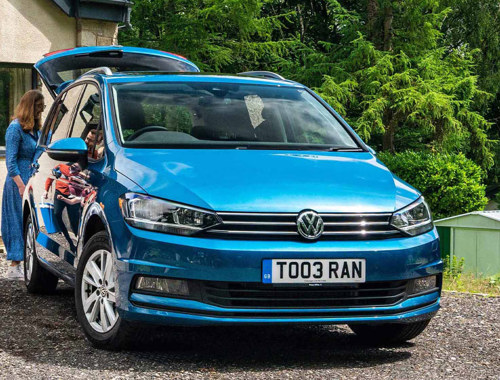
For used and nearly-new buyers, the Volkswagen Touran sets the standard for an affordable, family-friendly car that can carry five adults or five infants with the same safety and comfort for all. At less than 4.6 metres long it's easy to park and drives well thanks to its Golf-based platform.
Despite the compact dimensions suggesting the third row may be an afterthought, it has Isofix on both rearmost seats and all three second row positions – but is no longer available to order, having been replaced by the Tayron in Volkswagen's catalogue.
Used stock is plentiful and an approved-used two-year old Touran could be a better deal than a new Dacia Jogger – and that only has two Isofix points for its seven seats.
Can you buy an electric family car?
It's hard to find a manufacturer that doesn't offer an electric family car now. Volkswagen's ID.Buzz established a presence for the classic MPV to complement the Golf-sized ID.3. Ford's latest electric models such as the Capri share technology with Volkswagen, while Stellantis has an electric version for almost every bodystyle from Alfa Romeo to Vauxhall. BMW, Renault, Nissan, Toyota – even Subaru – the choice is significantly greater than it was just five years ago.
Korean brands Kia and Hyundai offer everything from a versatile supermini to a limousine-like luxury MPV, and some of the best real-world efficiency figures we've seen in testing. If you have a big budget, you can even choose between three electric Porsches suitable for family life.
It's growing beyond familiar names, as well. Chinese brands – nearly all of which have focused on launching EVs first for the UK market – are generally focused on the family, rather than sports or luxury cars. Most are Qashqai or Kuga-sized SUVs with just a couple of traditional hatchback or estate options are on offer.
Which is the most popular style of family car?
Trends have tipped towards the SUV for new models. It's hard to tell if that's because buyers went there first, or manufacturers stopped offering the smaller option taking away the choice. From Ford dropping the Fiesta and Focus to leave the Puma and Kuga, to the chunky styling of Volkswagen's Touran replacement in the Tayron, it feels like the market is being steered away from the once definitive small-but-spacious hatchback format of VW Golf, Ford Focus and Renault Megane that once served millions of busy lifestyles.
You can still buy a Golf, and in many cases the absence of such models is temporary while the wider industry adapts to an electrified future. On the other hand, SUVs mean less bending to lift small children into child seats, a higher driving position less vulnerable to headlight glare, and few compromises in economy or handling thanks to modern technology, tyres and aerodynamics. We still think hatchbacks and MPVs offer a better use of space – and the latter may be making a comeback.
How safe are family cars?
Since EuroNCAP highlighted all aspects of safety, family cars – cars in general – have become incredibly safe for their occupants, and a little safer for everyone around them as well. One of the most important areas of improvement has been around safety for passengers and children. From the introduction of Isofix standardised child seat attachments over 20 years ago, to testing that includes infant and young child dummies and a variety of seats, designs introduced in the last 10-15 years are among the safest cars ever made for families.
The only downside is that the SUV trend means cars are taller, bulkier and have thicker pillars, reducing visibility in town centres and for drivers seeing pedestrians. Technology to detect pedestrians and automatically stop the car is now part of the EuroNCAP rating, and some vehicles include night-vision alerts highlighting hidden hazards – but the impact on the landscape, around schools and villages is ultimately a less-safe environment for children and families when they're on foot, which leads to greater car use.
How we choose the best family cars
We've driven all of the cars in this guide, and most of the team have families with children across all ages and relatives and friends to get a wider range of opinions from every seat in the car. It's tempting to exclude 'specialist' categories such as MPVs, SUVs and so forth and focus on the middle ground – but the reality is that new cars on the market are becoming a range of SUV-styled vehicles of differing sizes, and MPVs came about to give families a purpose-built car in the first place.
So we've looked at the real concerns of many modern drivers. Budget, time, and resilience. For a car that suits a family, we want good value for money and low running costs, with the lowest risk of unexpected repair or maintenance bills. Long warranty and proven reliability mean not needing to make the car a priority in budgeting or home admin.
To separate the 'family car' from just 'a car', we've taken into account the practicality of life with infants, young children and growing families, and potential responsibility for caring for older relatives or family members with different needs. We include accessibility for disabled users when considering ease of use, particularly around passenger seating and luggage. It also means the boot needs to be capable of carrying a typical pushchair or infant carrier, and unlikely to be blocked when parking in a standard space (which has not grown in line with typical family cars).
Finally, whether the driver is an enthusiastic pilot behind the wheel or just wants to get from A to B with the least stress, good car controls and feedback are important. There's no reason for a family car to be unpleasant to drive in any way, and we look for precise and well-weighted steering, good all-round visibility, and confidence-inspiring brakes and grip in corners. At the same time, we've taken into account the realities of British roads and the experience for passengers, so anything with low-profile tyres, harsh suspension or an unsettled or wallowing ride is excluded.
Not all of the cars listed will forgive you driving at 30mph over a crumbling speed bump, but they should let you tackle a badly-repaired road without gritting your teeth and subjecting your family to an urban slalom.
Are all of the best family cars cheap to buy or finance?
Families come in all shapes and sizes – and incomes. We've avoided the money-no-object path of air-suspended gargantuan 4x4s, but a couple of the vehicles in this list can cost more than £60,000 when specified with desirable options. Most cars in this class cost around £30,000 for the entry-level and just below the luxury tax threshold of £40,000 with some nice options, reflecting the middle ground of price lists in the post-covid economy.
While they are not the cheapest new cars to buy, they are often among the ones offering the best value on leasing or finance because of their strong residual values. That's before considering approved used models – we've excluded cars that are earning a poor reputation for reliability on the used market, where appropriate.
Where a car is significantly cheaper, we've been more forgiving about other aspects – for example, the Dacia Jogger's low price as a spacious seven-seater option means the potential need to remove an Isofix child seat before accessing the third row is an acceptable compromise. Less so on cars costing three times as much.
What's the most reliable, economic family car?