
10 best hatchbacks to buy in 2026: Top family cars ranked
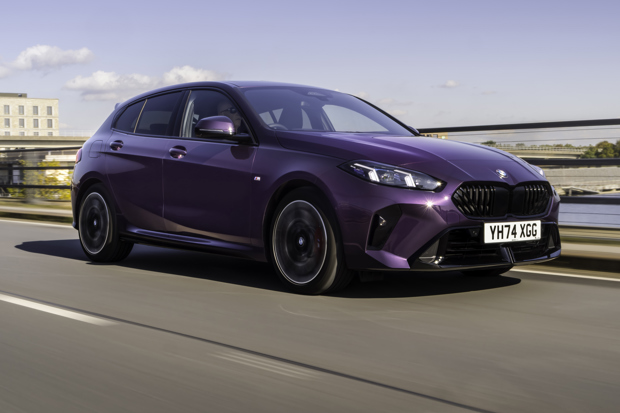
| Written by: Matt Robinson | Last updated: 4th February 2026 |
In these SUV-obsessed times, we still reckon a lot of car buyers would be better off with a traditional family hatchback. And even with the market shifting towards higher-riding vehicles, there are still plenty of great options to pick from.
Yes, the Ford Focus is sadly no longer with us and the current Mercedes A-Class won't be replaced when it's eventually discontinued, But thankfully most of the heavy-hitters of the class are still very much here and are well worth your attention.
Top picks at a glance
- Best overall: Toyota Corolla
- Best EV: Cupra Born
- Best premium: Mercedes A-Class
- Best for comfort: Honda Civic
- Best value: Skoda Octavia
- See the full top 10
But why should you consider a hatchback in the age of the SUV? Well, they're likely to be cheaper to run, better to drive, easier to park and, in most cases, more affordable than their high-riding counterparts. We also reckon they look better, but that's a subjective opinion.
We've extensively tested these hatchbacks over several months and many thousands of miles in multiple engine configurations, so you can trust us when we say that these are the best hatchbacks you can currently buy.
Best hatchbacks for 2026 compared
| Model | Drive | Boot space min/max (litres) | Length (mm) |
| Volkswagen Golf | Petrol, diesel, PHEV | 381/1237 | 4258 |
| Toyota Corolla | Hybrid | 352/1052 | 4370 |
| Mercedes A-Class | Petrol, diesel, PHEV | 355/1195 | 4419 |
| Peugeot 308 | Petrol, diesel, PHEV, EV | 412/1323 | 4365 |
| Cupra Born | EV | 385/1267 | 4322 |
| Mazda 3 | Petrol | 334/1026 | 4460 |
| Renault Megane E-Tech | EV | 440/1322 | 4200 |
| Skoda Octavia | Petrol, diesel, PHEV | 600/1555 | 4689 |
| BMW 1 Series | Petrol | 380/1200 | 4361 |
| Honda Civic | Hybrid | 410/1220 | 4551 |
1. Toyota Corolla: best hatchback for reliability
 Why buy it
- Highly efficient hybrid engines, excellent reliability record
Why avoid it
- CVT can take some getting used to, there are more exciting options
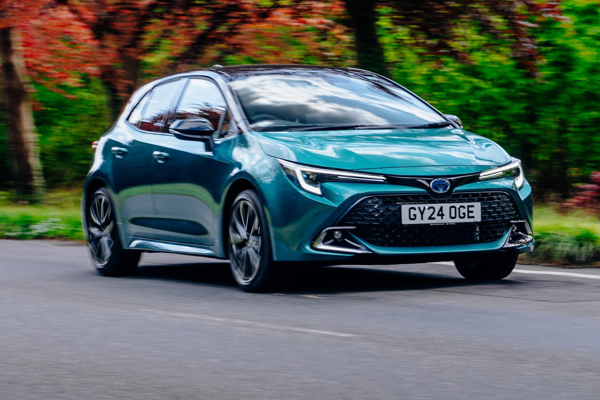
The latest Corolla has a far more interesting look than previous models, as Toyota looks to inject more verve into its model line-up. This carries through to the interior, which is as impeccably built as you’d expect. We found it roomy, with good passenger space and a decent boot – and that’s despite the Corolla being a ‘self-charging’ hybrid.
You can choose from either 1.8-litre or 2.0 models and we were amazed at how much driving can be conducted in zero-emissions electric mode, particularly around town.
Each engine is exclusively available with a continuously variable transmission (CVT), which doesn't have proper ratios like a conventional automatic or a manual. If you've never driven a car with one before, you might find it a bit strange, but Toyota has made its CVT much more refined in recent years, with those wild spikes in revs you used to get now largely tamed.
It's also the most reliable hatchback on this list. In the most recent HonestJohn.co.uk Satisfaction Index ownership survey, it placed third on the reliability table. In the highly unlikely even something will go wrong, Toyota now provides up to 10 years’ manufacturer warranty, provided you get the car serviced at Toyota retailers.
Real MPG v Official MPG
You can get up to 62.8mpg in the 1.8-litre version according to the official WLTP combined figure, with HonestJohn.co.uk Real MPG users showing that this is very much achievable in real-world driving scenarios with an average of 61.6mpg.
Read our full Toyota Corolla review
2. Volkswagen Golf: best all-round hatchback
 Why buy it
- Class-less image, lots of engine choice
Why avoid it
- Deleted physical climate controls is a backwards step
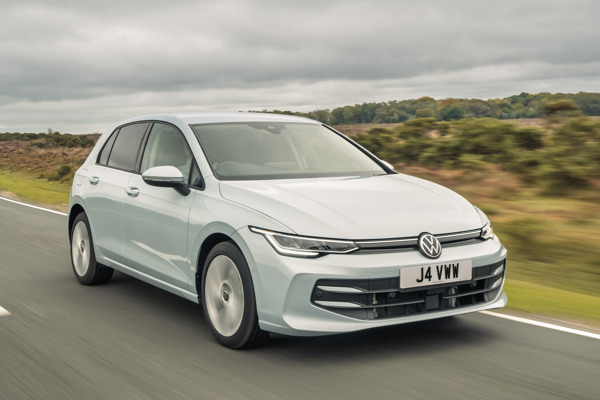
The Volkswagen Golf is a family hatchback icon. It is the defining silhouette of the sector and still one of the most recognisable cars on the road. It’s also one of the most popular, regularly appearing high up in the sales charts both in the UK and across Europe.
When the latest Golf 8 came out, the model slipped back from the competition a bit, not helped by its new infotainment system, which could be buggy on earlier cars. The Golf has steadily improved over the course of its life though and a raft of improvements came with the 2024-on facelifted car, including a bigger infotainment screen and the replacement of the touch-sensitive steering wheel button pads which we found fiddly - with proper buttons in most models. We've certainly found the more recent Golf models to be far more usable.
It's still plenty versatile on the engine front. You can have a basic 1.5-litre petrol engine with a manual which we tested extensively and found it to be smooth yet more than quick enough. There is an economical TDI-badged diesel, but sadly no longer a GTD. There are also plug-in hybrids, no less than three GTI hot hatch models, including the new GTI Edition 50 and the all-wheel drive Golf R.
Read our full Volkswagen Golf review
3. BMW 1 Series: best hatchback for handling
 Why buy it
- Fun to drive, solid and premium-feeling interior
Why avoid it
- Limited engine line-up, rear legroom isn't great
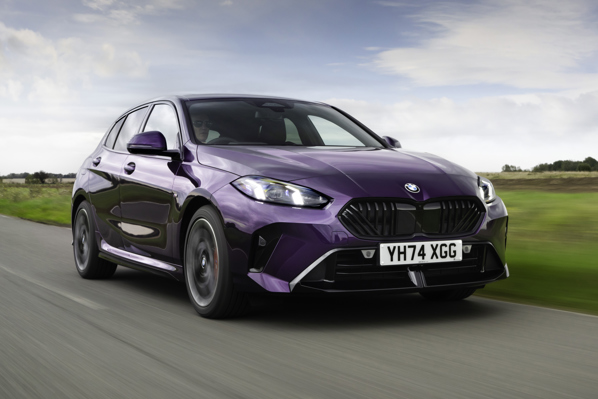
It should probably come as no surprise that the most satisfying hatchback to drive is a BMW. True, the latest BMW 1 Series is no longer rear-wheel drive, but that hasn't stopped the German manufacturer from making even the base 120 from being a hoot behind the wheel.
That model name might look like a typo, but it's correct – this is the first car to adopt BMW's new naming convention, which drops the 'i' which is usually the designation for petrol models. We can see that causing a bit of confusion, but don't let that distract you from some of the 1 Series's other attributes, one of the biggest of which is its excellent interior.
BMW seems to be nailing its cabins at a time when rivals Audi and Mercedes have fallen behind, and even though the 1 Series is the entry point to the brand's range, it's no poor relation in this regard. We like the well-designed cabin made from plush materials which has a general sense of solidity.
It's not all good news, though. Despite switching from rear to front-wheel drive a few years ago, which should free up more interior space (a rear-wheel drive car's longitudinal engine and gearbox isn't an easy thing to accommodate), we still found it cramped for those in the rear seats.
Read our full BMW 1 Series review
4. Peugeot 308: best hatchback for engine choice
 Why buy it
- Stylish inside and out, comfortable driving attitude
Why avoid it
- i-Cockpit driving position can feel awkward
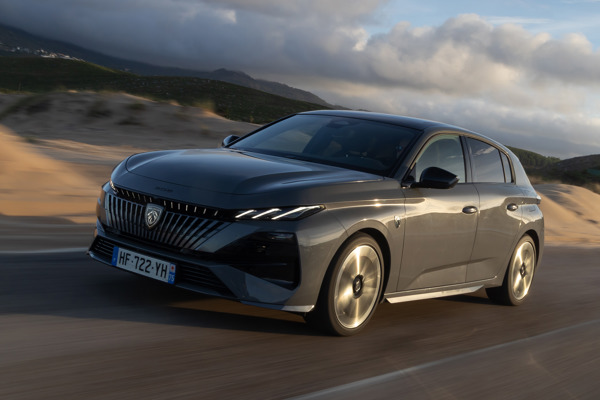
We think the Peugeot 308 might just be Peugeot's best car right now. Like many of the vehicles in the French brand's current line-up, it's super stylish, enhanced further with a recent facelift. Although some might be a bit sad about the loss of its lion's 'claw' daytime running lights.
Its appeal goes more than skin deep, though. We think it feels properly premium inside, with a snazzy design and plenty of plush materials. We like the comfort-focused nature of the way it drives. What's more, there's a wide choice of engines, encompassing petrol, plug-in hybrid, fully electric in the form of the Peugeot E-308 and even a diesel. We found the boot a decent size, too.
Downsides? The biggest one might not be a problem for everyone – Peugeot's unique i-Cockpit dashboard layout. This places the instrument cluster high above a small steering wheel, but we've always found it tricky to get a driving position we're happy with that still gives a clear view of all the dials. It's also not the best hatchback for rear legroom either.
Read our full Peugeot 308 review
5. Honda Civic: the hatchback that will surprise you
 Why buy it
- Economical hybrid engine, more fun than you might think
Why avoid it
- Quite expensive now, infotainment system feels dated
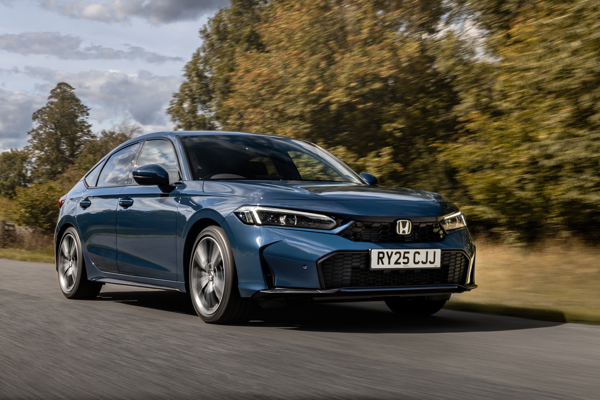
There's something quietly brilliant about the current, 11th-generation Civic. It flies under the radar thanks to its more restrained design, with Honda having gone for some pretty out-there styling choices with the previous few versions.
The cabin quality is superb and we laud Honda's common-sense approach to providing proper buttons and dials for things rather than shoving a lot of controls into the central touchscreen. On that subject, its infotainment system isn't exactly the most technologically advanced, but it gets the job done just fine.
There's only one engine on offer - and it's an unusual one. It's a 2.0-litre, four-cylinder unit that goes without a turbocharger. And a lot of the time, it doesn't actually power the wheels directly. Instead, it tops up a hybrid battery, which powers a motor to keep you moving. During our tests we found it works smoothly and economically.
Although the engine doesn't feel remotely sporty, the Honda Civic is great to drive, deftly balancing comfort with a feeling of composure and even a bit of fun. All sounds good, right? Unfortunately, you are paying a fairly high price for it, with even the cheapest version costing the best part of £34,000 and the top-spec version nudging £40k.
Read our full Honda Civic Review
You may also like
- Want performance? The best hot hatchbacks on sale in 2026
- Need more space? 10 best estate cars for families who need a big boot
- Going electric? Best electric cars for 2026: top EVs for range and value
6. Mercedes A-Class: best hatchback for upmarket feel
 Why buy it
- Impressive technology, upmarket image
Why avoid it
- BMW 1 Series has a more solid-feeling cabin
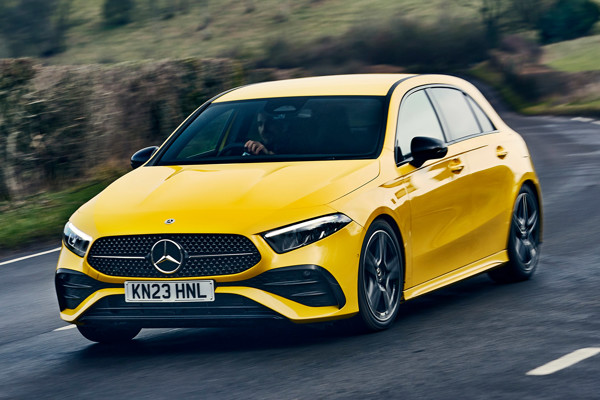
The latest Mercedes A-Class is proving to be a real hit here in the UK. It’s a premium car that’s a regular in the best-selling cars chart, helped by enviable retained values that keep monthly finance payments competitive. The good-looking A-Class has a standout interior that feels modern and upmarket, while we love the array of screens – including the option of augmented reality sat-nav. Add in the deep-down feeling of integrity you get from all Mercedes-Benz cars and it’s easy to see why the A-Class is so popular.
The flagship A 35 AMG and A 45 AMG models sit at the top of the range and offer the performance to rival a six-figure sports car. As for the less spicy stuff which we tested, there's a healthy array of petrol engines, a diesel option and a plug-in hybrid giving a handy 48 miles of electric-only running.
It's a shame that this is set to be the last A-Class hatchback. Once the current model dies off, it won't be directly replaced. You still have plenty of time to buy one, though, with Mercedes extending its production life.
Read our full Mercedes A-Class review
7. Mazda 3: the best-looking hatchback
.jpg?rmode=max&width=600&height=400)
Why buy it
- Great to drive, looks fabulous inside and out
Why avoid it
- Entry-level engine needs to be worked hard
The Mazda 3 is a top choice for enthusiasts and design aficionados alike. The company that gives us the Mazda MX-5 sports car has injected some of that spirit into its five-door hatchback, which we think handles in an engaging way and has some really effervescent engines.
Our favourite is the Skyactiv-X, a revolutionary 186PS motor that delivers 30% fewer emissions than a traditional petrol engine. The entry-level 140PS works well. But if, like us, you're used to torquey turbocharged engines, you'll feel like you're having to work it quite hard.
As for design, the Mazda 3 is an undoubted beauty. Its body is beautifully sculpted, with almost concept car-like surfaces, while the high-quality, tactile interior is more premium than some genuine premium brands. We also love that there's still an emphasis on physical buttons and dials when so many rivals are hiding things in touchscreens. Finally, of course, there’s Mazda’s promise of strong reliability as the icing on the cake.
Read our full Mazda 3 review
8. Cupra Born: best electric hatchback
 Why buy it
- Looks better than the related Volkswagen ID.3 and decent value
Why avoid it
- Touch-sensitive 'buttons' are annoying, not quite the electric hot hatch it claims to be
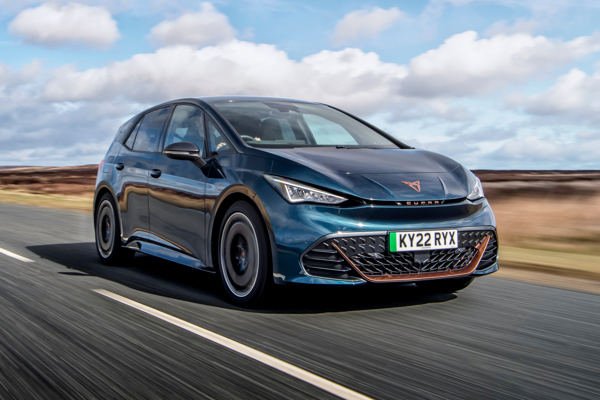
The Cupra Born shares much in common with the Volkswagen ID.3, but we've always found it much more desirable. We think it looks better from the outside and the cabin is more stylish too. Unfortunately, some of the same frustrations are there, particularly the lack of dedicated switches for the rear electric windows on the driver's door. You use the same pair for both ends of the car, with a button switching between front and rear. Who signed off on that?
We'll let that slide, because the Cupra Born offers a lot of range and performance for the money. Choose the larger battery and you're looking at up to 345 miles of running on a full charge. Most versions make a respectable 230PS, which allows for 0-62mph in 6.6 seconds with the smaller battery and seven seconds with the bigger one.
Not enough? The top-spec VZ ups the ante considerably with a 326PS motor, dropping the 0-62mph time to 5.6 seconds. It has hot hatch performance, but don't expect it to be as exciting as a traditional hot hatch to drive.
Read our full Cupra Born review
9. Skoda Octavia: Best hatchback for space
Why buy it
- Excellent boot space and lots of 'Simply Clever' features
Why avoid it
- New infotainment still annoying, longer than the average hatchback
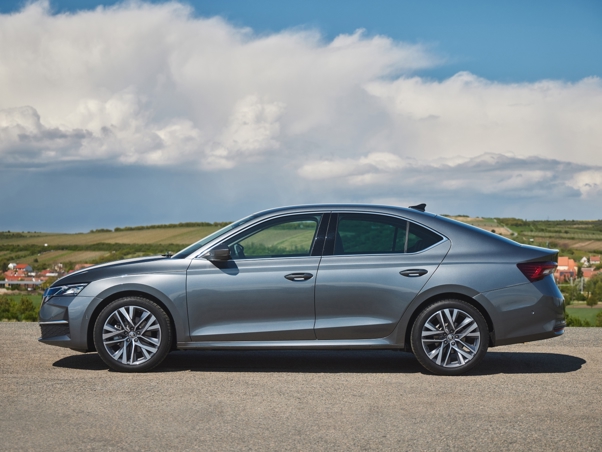
We've always been big fans of the Skoda Octavia. It's a commodious family hatchback with an enormous 600-litre boot, even with the rear seats up. Not only is that bigger than any other hatchback in this sector, but it’s also a match for many estate car alternatives.
The Octavia manages this by not being a traditional hatchback shape, with an elongated rear that makes it look a bit like a saloon car. That does make it longer and thus more difficult to park and fit on your driveway, but it's not big enough to feel unwieldy.
There are plenty of Skoda Simply Clever design touches, such as the ice scraper inside the fuel flap, which make it easy to use. And it's not all about practicality, with the acclaimed Skoda Octavia vRS sitting at the top of the range as a genuine alternative to the Volkswagen Golf GTI.
Lower down the pecking order, there's a good mix of engines, including petrols, diesels and a plug-in hybrid. Of these we'd recommend the Skoda Octavia 1.4 iV plug-in hybrid which makes an excellent used buy. The newer 1.5 model (badged e-TEC) is only a mild hybrid.
Read our full Skoda Octavia review
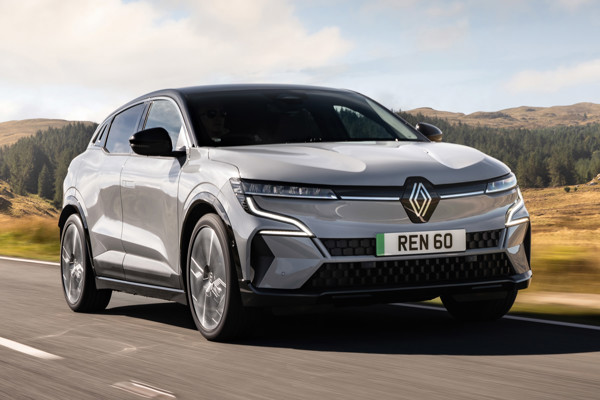
10. Renault Megane E-Tech: Best for infotainment
 Why buy it
- Android-based infotainment system works well and cabin design is great
Why avoid it
- Range figures starting to look underwhelming
The latest generation of Renault Megane is an all-electric machine that marries up Renault’s considerable expertise in EVs with a new standard of interior and a sleek design. Where the old Megane was an also-ran to the Ford Focus and Vauxhall Astra, the Megane E-Tech is now a top choice.
All models are loaded with features and the cabin is the best that Renault has ever made, helped further by its excellent infotainment system. It's one of a growing number of setups that use Google's Android operating system. We found we could load all our favourite apps straight onto it rather than faffing with a connection to our smartphone.
There's only one battery available. It's a 60kWh unit, which gives 280 miles from a single charge. That seemed decent when the Megane E-Tech first came out, but a lot of rivals have started to pull ahead. Not all of them drive quite as well as the Renault, though.
Read our full Renault Megane E-Tech review
How we test cars: the hatchback method
The family practicality test: We don't just measure the boot in litres, we see how many supermarket bags it can hold and whether a bulky pushchair actually fits. We also test how easy it is to install Isofix child seats in the back without straining your back.
Real MPG: While manufacturers provide lab-tested fuel figures, we use our own Real MPG database—driven by thousands of real owners—to tell you exactly how much petrol the car will use in stop-start UK traffic.
The comfort check: British roads are famous for potholes. We test every hatchback on various surfaces to see if the suspension is supple enough for city ruts or if it feels too crashy on large alloy wheels.
Visibility and parking: A family hatchback needs to be easy to park. We test the visibility over the shoulder and check how much you’ll have to rely on sensors and cameras in a tight multi-storey car park.
Infotainment & connectivity: We live with the car's tech, testing how quickly Apple CarPlay and Android Auto connect and whether the climate controls are easy to use while driving or hidden in a frustrating touchscreen menu.
Long-Term reliability: We factor in data from the Honest John Satisfaction Index. A car that is great to drive is only a best buy if it stays out of the workshop and treats its owner fairly over three or more years.
Common hatchback buying questions & FAQs
What is the most reliable hatchback to buy in 2026?
According to our reader feedback and the HonestJohn.co.uk Satisfaction Index, the Toyota Corolla is the most reliable hatchback. It consistently ranks at the top for dependability and comes with a manufacturer warranty of up to 10 years. Other highly reliable options include the Mazda 3 and the Honda Civic.
Can I get an electric hatchback?
Full-electric hatchbacks are starting to fill up the showrooms, and there are more to choose from than we’ve listed here. While we love the Cupra Born and Renault Megane E-Tech, you could also check out the Volkswagen ID.3, along with the new Vauxhall Astra Electric, Peugeot E-308 and Citroen e-C4 Electric.
Which hatchback has the largest boot space?
The Skoda Octavia offers the largest boot in its class, with an enormous 600 litres of space with the rear seats up. This is significantly larger than its rivals and even competes with many larger estate cars. The Peugeot 308 (412 litres) and Honda Civic (410 litres) also offer generous luggage capacity.
What is the best hatchback for fuel economy?
For the best real-world fuel economy, the Toyota Corolla 1.8 Hybrid is the top performer, achieving an average of over 61mpg in Real MPG tests. For those who can charge at home, plug-in hybrid (PHEV) versions of the Volkswagen Golf and Mercedes A-Class offer even higher potential efficiency for short commutes.
Are there any good electric hatchbacks available?
Yes, there are several excellent electric options. The Cupra Born is our top pick for a stylish and fun-to-drive EV, while the Renault Megane E-Tech offers one of the best infotainment systems on the market. Other notable electric hatchbacks include the Volkswagen ID.3 and the Peugeot E-308.
Why should I buy a hatchback instead of an SUV?
Hatchbacks generally offer better value for money, lower running costs, and a more engaging driving experience than SUVs. They are also typically easier to park and more aerodynamic, which leads to better fuel efficiency or electric range compared to a higher-riding SUV.
What is the best premium hatchback?
The Mercedes A-Class remains the leader for an upmarket feel and cutting-edge interior technology. However, if you prioritise driving dynamics and build solidity, the BMW 1 Series is often considered the superior premium choice.
What hybrid hatchback do you recommend?
What hatchback do you suggest for mainly motorway driving ?

What hatchback should I buy for 15,000+ miles a year?
What's the most fun hatchback for £10,000?
