
The 10 best small cars to buy in 2026: From budget heroes to premium EVs
| Written by: Mark Nichol | Last updated: 2nd February 2026 |
You might be old enough to remember when "small car" was essentially a euphemism for "not very good car." But today, small cars really are some of the best cars you can buy, full stop.
Cheap to run, comfortable and packed with the sort of kit you'd associate with a larger car, downsizing doesn't mean having to downgrade.
Top picks at a glance
- Best overall: Toyota Yaris
- Best EV: Renault 5
- Best premium: MINI Cooper
- Best for comfort: Citroen C3
- Best value: Dacia Sandero
- See the full top 10
While SUVs may dominate the market, that's not to say small cars have had their day. True we have seen the sad demise of the Ford Fiesta, previously our favourite small hatchback, but there are still plenty of quality small cars on the market.
The best are packed with the latest tech, refined on the move and fun to drive. And yet they’re cost-effective to buy and run. Find out how we test cars.
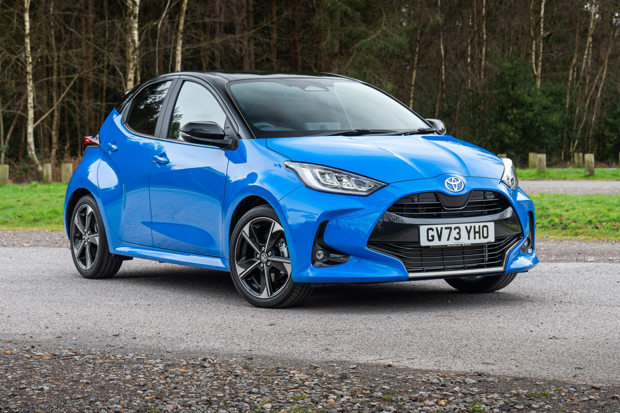
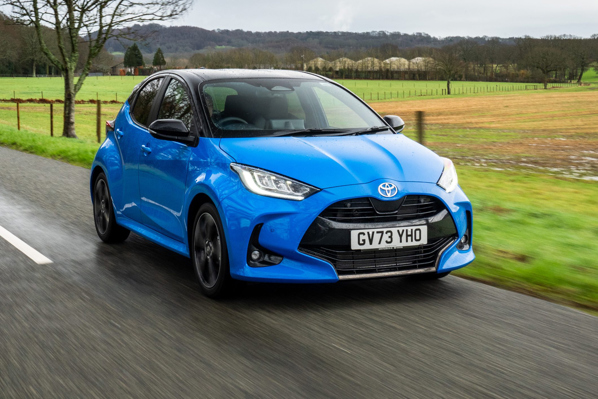
1. Toyota Yaris: best small car for bulletproof reliability
Why buy it
- Bulletproof reliability and hybrid fuel economy
Why avoid it
- Tight rear seats and dated infotainment software
What sets the Toyota Yaris apart from its rivals is that it's hybrid only. Combining a 1.5-litre petrol engine with Toyota's well-proven self-charging hybrid technology means it's smooth to drive and economical too. And of course being a Toyota, it is also one of the most reliable cars on sale. So while it's a sensible choice, we say it's also an excellent choice.
In all our testing the Toyota proved to be a class leader in pretty much every respect but what may surprise you is just how enjoyable we found it to drive - not something that can be said of all Toyota models. It's not cheap as a new buy with prices starting at £23,445 but when it comes to value for money, we can't think of much better.
Real MPG v Official MPG
The Toyota Yaris 1.5 Hybrid claims up to 68.9mpg with our readers reporting an impressive Real MPG of 67.4mpg.
Read our full Toyota Yaris review.
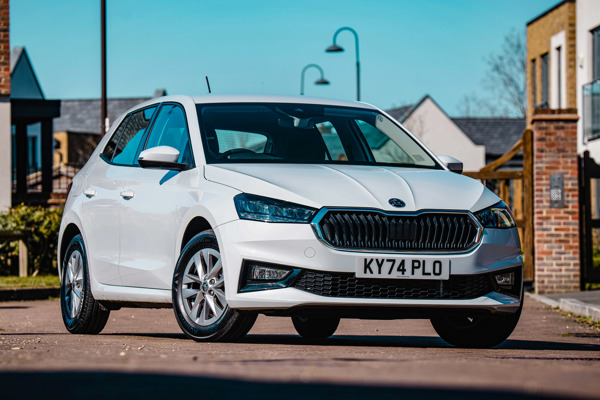
2. Skoda Fabia: best for boot space and practicality
Why buy it
- Big boot and "big car" refinement
Why avoid it
- Lacks excitement and manual options on top engines
The Skoda Fabia may seem about as exciting as having Dairylea on crackers for dinner, but it's one of the best all-rounders you can buy. The latest Skoda Fabia is bigger than ever and we love the spacious cabin. We found rear space is especially good for a car this size and the boot is a massive 380 litres – as big as the Volkswagen Golf - which is great if you have a pushchair.
Yet the Skoda Fabia still feels car-park-friendly to drive. We're also fans of Skoda's ‘Simply Clever’ design innovations - including an ice scraper inside the fuel filler flap. A five-star safety rating from Euro NCAP shows that it's safe while prices start at £21,000 for the Skoda Fabia SE Edition. Only a below average reliability rating lets it down.
On the road we found the Skoda Fabia to be safe rather than exciting to drive. Not that there's anything wrong with that of course. But if you want fun, we'd suggest looking elsewhere. However, it's very refined for a small car with good sound insulation while we were impressed with the comfortable ride quality.
Real MPG v Official MPG
Skoda's official figures say the popular Fabia 1.0 TSI 110 will average 55.4mpg while our readers are seeing a Real MPG of 50.1mpg.
Read our full Skoda Fabia review.
3. Renault 5: best small car for value-to-range ratio
Why buy it
- Retro looks and superb Google-based tech
Why avoid it
- Cramped rear legroom and high boot lip
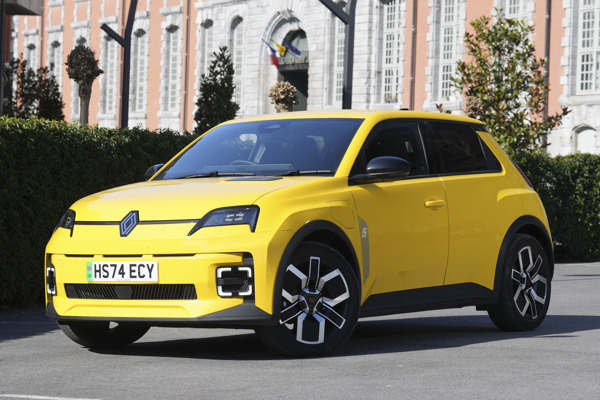
One of the most hotly anticipated cars of recent years, Renault has really caught the public's imagination with the new Renault 5. The looks may be retro inspired but under the skin, the Renault 5 is a cutting edge EV that's well set up for comfort - not a common trait on electric cars, especially small ones. No surprise we think it's one of the best electric cars around.
We love the French design quirks such as the wicker baguette holder - a tongue-in-cheek nod to the car’s French heritage. It is a hand-woven wicker basket designed specifically to hold a standard French baguette. It was created with the help of French master basket-maker Marguerite Herlant and costs £120.
The entry-level model is the 120PS Urban Range battery which has a 40kWh capacity sufficient for claimed range of 192 miles which starts at £21,495 including the Government Electric Car Grant. There are also some good leasing and PCP deals around. This is the model we'd recommend. In fact, we think the Renault 5 is one of the best cars on sale full stop.
Renault 5 Real EV Range
Renault says the Renault 5 Urban will cover up to 192 miles while the Comfort version will go further at up to 252 miles. In real world terms that means a range of about 170 miles for the Urban and roughly 220 miles in the Comfort. As ever, this will drop considerably in the winter...
Read our full Renault 5 review.
4. Fiat 500 Electric: best small car for chic style
.jpg?rmode=max&width=601&height=400)
Why buy it
- Iconic Italian style and effortless for city parking
Why avoid it
- Very short range and tiny, token rear seats
The modern petrol Fiat 500 immediately went into the same 'future classic' pantheon as the first BMW-era MINI, so spot-on was its styling. Want proof? It came out in 2007 and was STILL going strong until 2025, on sale alongside the new fully electric version.
During our extensive testing, we found the Fiat 500 Electric to be a MUCH better car. By tidying up the interior styling, giving it a driving position fit for humans over 5ft tall, powering it with silent electric power and offering two battery options, this Fiat 500 is appealing for more than just its looks. We think it's great.
Fiat 500 Electric Real EV Range
The Fiat 500 Electric's EV range reflects its age - it's considerably less than the much newer Renault 5. Although given both are designed for round town, this shouldn't be too much of an issue for most buyers. The smaller 24kWh will do up to 115 miles according to official figures, so be prepared for 90 miles. The 42kWh battery version has an official range of between 186 and 199 miles so in the real world you're looking at 160 to 170 miles.
Read our full Fiat 500 Electric review.
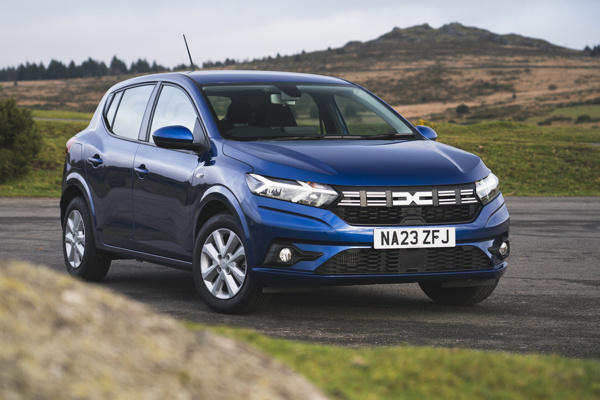
5. Dacia Sandero: best small car for under £15,000
Why buy it
- Unbeatable value and surprisingly spacious for the price
Why avoid it
- Disappointing safety ratings and basic interior materials
The Dacia Sandero has long held the title of Britain’s cheapest new car, albeit it no longer looks like the eye-widening bargain it once was. The first Dacia Sandero came to the UK in 2012, priced from £5995. Hard to imagine these days with prices starting at £14,765 but we think it still represents exceptional value for money.
Today's Dacia Sandero is considerably more sophisticated than the original. Honed and improved in every way, we were impressed by its vastly better refinement, a sturdier feel through corners and excellent performance from its tiny turbocharged engine. The only stumbling block is a poor two-star safety rating from Euro NCAP, albeit that's largely owing to a lack of active safety systems. Its actual crash protection rating (70-72%) is okay.
Real MPG v Official MPG
Dacia says the popular Dacia Sandero 0.9 TCe engine should return 53.3mpg with our readers seeing a Real MPG figure of 46.0mpg.
Read our full Dacia Sandero review.
You may also like
- Prefer an automatic? The best small cars for smooth city driving
- Need a lower price? These are the 10 best city cars under £18k
- Buying your first car? 10 small cars that are cheap to insure
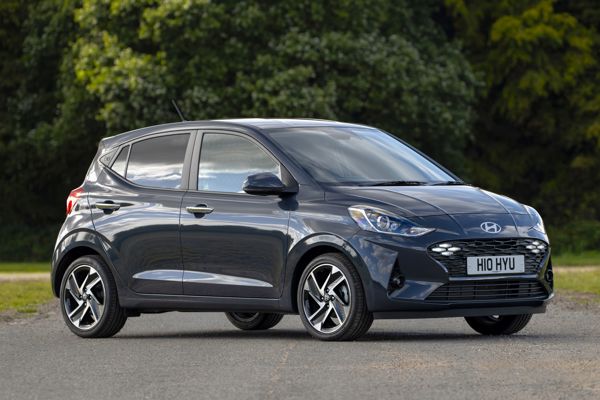
6. Hyundai i10: best small car for big car tech
Why buy it
- Best visibility and easiest car for new drivers
Why avoid it
- Gutless entry-level engine and jerky automatic gearbox
The Hyundai i10 is a great all-round hatchback, with sharp looks, room for four adults and class-leading boot space. Our biggest plus is that it features luxuries like cruise control, a heated steering wheel and wireless smartphone mirroring AND charging - although that does depend on what trim you choose.
We found it refined enough (as in, it's quiet at town speed but a bit noisy and uncouth at motorway speed), but the real fun of the Hyundai i10 comes from its driving charm. We really like the manual gearbox with the basic 63PS 1.0-litre petrol engine. The thin tyres and generally unassisted feel of everything make it good fun to drive in our opinion.
Real MPG v Official MPG
The Hyundai i10 is an economical small car and the impressive 1.0 MPI engine will return a claimed average of between 50.4mpg and 56.5mpg. Owners are seeing a Real MPG of 48.9mpg.
Read our full Hyundai i10 review.
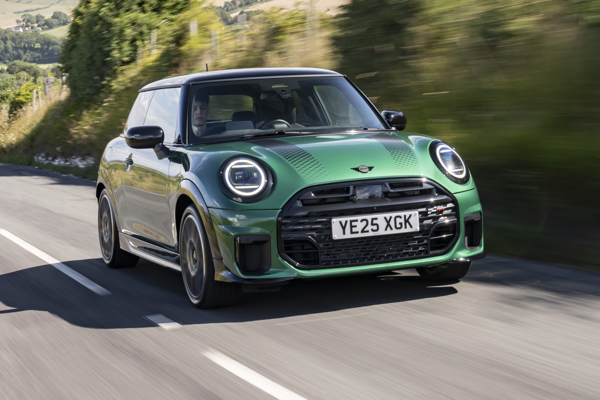
7. MINI Cooper: best small car for a premium car feel
Why buy it
- Great MINI handling and high-end OLED interior
Why avoid it
- Very expensive options and firm ride quality
BMW’s curation of the MINI brand couldn’t have gone any better. For more than two decades now, a MINI has been the default high-quality small car, yet somehow every single MINI feels like an individual choice... that sounded snarky, but it's a genuinely impressive trick to pull off.
The latest MINI Cooper can be yours with either petrol or electric power. The electric version probably edges it for us. Mainly because it takes all the MINI qualities - driving fun, high quality, that ostensible sense of individuality - and makes it even quieter and more responsive to drive. We were impressed by the premium feel of the interior - the MINI feeling a cut above the others here.
Real MPG v Official MPG
We haven't got quite enough data for the new MINI Cooper but its predecessor, the MINI Cooper Hatch had a claimed WLTP range of between 44.8mpg and 51.4mpg with our reader seeing a Real MPG of 43.7mpg.
Read our full MINI Cooper review.
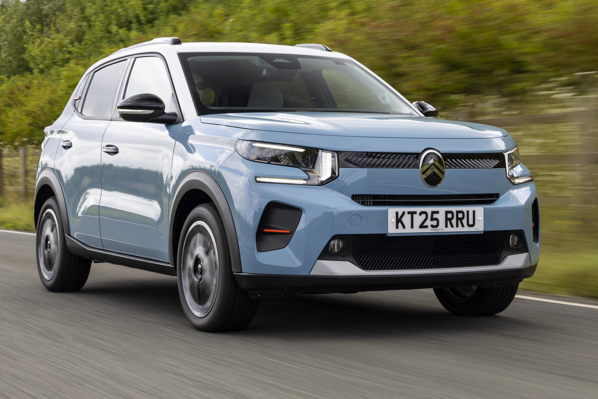
8. Citroen C3: best small car for cloud-like comfort
Why buy it
- Best-in-class comfort and lowest price for the EV version
Why avoid it
- Wallowy handling
If you want a small car whose main quality is squidgy ride comfort, look no further. On top of that, the Citroen C3 is an interesting-looking and spacious small hatchback whose cabin quality is miles ahead of the small Citroens of yore.
We found the touchscreen to be a bit frustrating and the handling isn't a match for a MINI. However, it costs from £22,000 for an electric version which is the version we’d recommend due to its low running costs and smooth power delivery. It’s a great value way to go electric and will cost pennies to take to work and back.
Thanks to its more upright (almost SUV) design you sit 10cm higher than in the previous model, providing an excellent view of the road, which is ideal for city drivers. We liked the higher roofline and wide doors which make it much easier to get in and out of compared to the low-slung Toyota Yaris.
Real MPG v Official MPG
The Citroen C3 is too new for us to have Real MPG data on yet but the previous Citroen C3 fitted with the popular 1.2 Puretech 82 had an official MPG figure of 51.3mpg with drivers seeing a Real MPG of 44.3mpg.
Read our full Citroen C3 review.
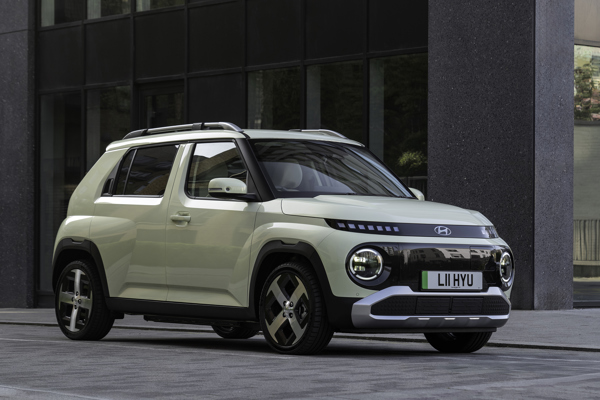
9. Hyundai Inster: best small car for versatility
Why buy it
- Clever sliding seats and massive interior flexibility
Why avoid it
- Strictly four seats and below par acceleration
One of the great things about Hyundai these days is that it's not making cookie-cutter cars. Walk into a Hyundai showroom and you'll find a Hyundai Ioniq 6 alongside a Hyundai i10, parked next to a Hyundai Inster - a diverse selection of cars but from one brand.
A fantastically flexible small EV, the Hyundai Inster blends dinky, manoeuvrable proportions with loads of interior space. We were very impressed with the clever seating system which means the front seats can fold fully forward, making a totally flat loading area. And the boot is impressively large for such a small car. It looks great too.
The V2L (Vehicle-to-Load) function is the Hyundai Inster’s most unique feature, effectively turning the car into a massive power bank. While most V2L tech is found in expensive EVs like the Ioniq 5, the Inster brings it to small cars. Inside there's a 230V household socket which we found ideal for for charging a laptop or you could also power a portable fridge.
Hyundai Inster Real EV Range
The Hyundai Inster with the 42kWh Standard Range battery can cover 203 miles according to official figures. This extends to 229 miles if you go for the 49kWh Long Range battery. In real world driving you're looking at 180 miles and 200 miles.
Read our full Hyundai Inster review.
10. Peugeot 208: best small car for interior design
Why buy it:
- Striking interior and smooth refined ride
Why avoid it:
- Driving position doesn't suit all
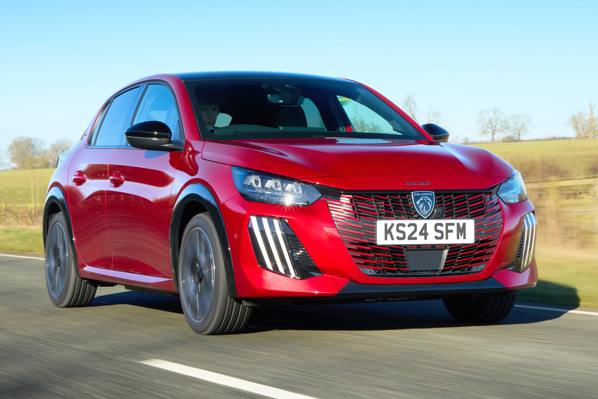
The Peugeot 208 is getting on a little now, released alllllllll the way back in 2019. But the sharp exterior styling still looks fresh and the interior is among the most distinctive and delightful in the sector in our opinion.
We found that the Peugeot ‘i-Cockpit’ layout takes a bit of getting used to, but once you’re familiar with the teensy steering wheel (and assuming you're not too tall for the whole thing, which is a possibility), you'll love it.
Neat handling and sweet engines mean the Peugeot 208 is fun to drive and cheap to run. As per the Fiat 500 and the Citroen C3, the electric version is best, albeit Peugeot's pricing structure means it's expensive. Daft expensive, actually, at more £30,000. Ouch.
Real MPG v Official MPG
We think the Peugeot 208 is at its best with a petrol engine and the official MPG figures for the popular 1.2 Puretech 100 range from 50.3mpg to 58.2mpg. Our readers report a reasonable if not oustanding Real MPG of 45.2mpg.
Read our full Peugeot 208 review.
How we test cars: the small car method
At Honest John, we don’t just read the brochures - we live with the cars. To determine the 10 best small cars for 2026, our expert editorial team has
-
Driven over 10,000 miles: we test every car on this list across motorways, narrow city streets, and rural lanes to see how they handle real British roads.
-
Prodded and parked: We spend hours testing real-world practicality, from fitting a child seat and loading a week's worth of shopping to seeing how easily they slide into tight supermarket bays.
-
Real MPG Data: Unlike other sites, we combine our test results with thousands of data points from our unique Real MPG database, giving you the honest truth about fuel economy, not just laboratory figures.
-
Owner Feedback: We factor in long-term reliability scores from the Honest John Satisfaction Index, ensuring a car that looks good today won't let you down in three years.
Our reviews are 100% independent. We don't take money from car manufacturers to influence our rankings. Our only priority is helping you find the right car.
Small car FAQs
Should you buy a small electric car or a hybrid in 2026?
This is a question we get asked a lot by readers. Prices of electric cars may be dropping and cheap running costs (assuming you have a home EV charger) make a small electric car appealing but many people are reluctant to make the change. A hybrid car is more familiar and if it's a self-charging model, it's pretty much the same as owning a conventional petrol.
EVs are ideal for town driving and shorter distances, it's where they make the most sense. So if you're deciding between a small electric car or a hybrid, we'd suggest going for the EV. It will be cheaper to run if you get a dedicated EV tariff but do be aware that it will be more expensive to insure.
But ultimately it's all down to price. Yes EVs are coming down in price, but they are often still more expensive than hybrid rivals (a Fiat 500e is around £2000 more than the Fiat 500 Hybrid).
How safe are the best small cars?
Euro NCAP safety tests are tough enough to ensure car manufacturers don't cut corners. Even the smallest cars are thoroughly crash-tested and most buyers expect a four- or five-star score from the European safety agency. All but one of the small cars here performs well, bolstering their credentials as safe small cars. The Dacia Sandero is the standout exception, scoring just two stars out of five.
That's more to do with equipment choices than a fundamental lack of crash protection. In fact, if you've ever driven a car with over-enthusiastic driver monitoring, you might be grateful for a lack of it.
Which small car is the best value for money?
The default answer on this question was always the Dacia Sandero but that's no longer the case. Enter... Citroen, technically. The Citroen Ami is the cheapest 'car' in the UK, but actually it's neither a car (it's an electric quadricycle) nor great value for money (it's tighter than Robert Plant's trousers and has a smaller battery than a Casio watch). So, we're back to the Sandero, which around £16,000 remains the cheapest new car on sale in the UK.
Value is actually a slightly different thing, of course and there are plenty of cars that hover around that price that you might feel, all things considered, will offer you better value. The Leapmotor T03, for instance, costs about the same but is electric, so it will cost far less to run. But as an unknown, it's unlikely to hold its value as well.
Are small cars cheap to insure?
Small cars tend to be cheap to insure because they’re offered with low-power engines, are cost-effective to repair and generally don’t attract car thieves in the same way sportier and more luxurious cars do. Insurance costs will rise as you move up the range into more powerful models, though, so keep things sensible if you want to find a small car that’s cheap to insure. It explains why such cars are so popular among younger and newly-qualified drivers, who are most sensitive to car insurance prices.
