Best city cars to buy in 2026: Top 10 small cars for urban driving
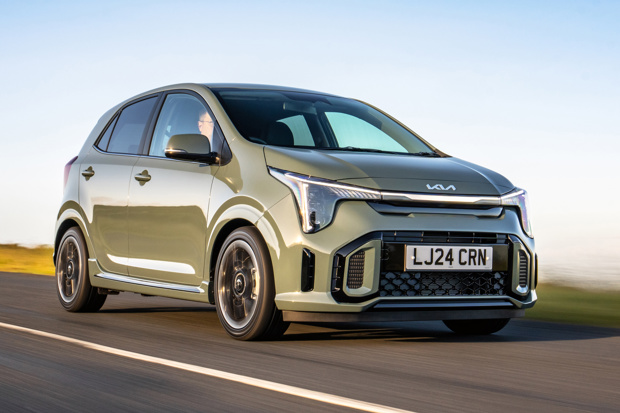
Making a good city car isn't easy. It needs to be cheap, small yet still safe and reasonably practical - and ideally just a little bit desirable. You don't want to be seen getting out of something uncool on a crowded street now, do you?
Pulling all of that off only to end up with a wafer-thin profit margin isn't something car manufacturers much like, so it's not a surprise to see a lot of major brands simply not bothering anymore. Some of the true modern greats, like the Volkswagen Up (and SEAT Mii and Skoda Citigo) have disappeared with no replacement in sight, giving a much smaller pool of options.
There are still some great 'true' city cars out there, but to give you a wider range to choose from, we've broadened our search and included some slightly bigger vehicles which are considered a class up but still make great cars for urban areas.
Best city cars |
You may also like
1. Kia Picanto
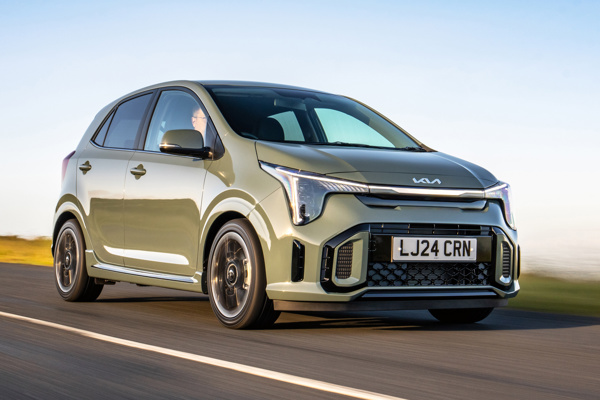
- Facelifted versions look sharp
- One of the most affordable new cars around
- Fun to drive
The Picanto is one of Kia’s best-selling cars and has won legions of fans over the years. Prices new start from less than £17,000, yet all models come with air conditioning, an eight-inch touchscreen infotainment system, electric windows and alloy wheels. We'd recommend paying a bit more for GT-Line spec, which adds bigger wheels, electric mirrors and smarter styling.
The Picanto comes with a 1.0-litre engine, which develops all of 67PS, so some patience will be required if you're venturing away from town and need to get up to the national speed limit. There used to be a more powerful turbocharged engine option, but that's been discontinued. You do still get a choice between a manual gearbox and an automated manual, though.
The boot is a passable 255 litres, swelling to more than 1000 litres with the rear seats folded, and the Picanto is a stable, solid-feeling and straightforward car to drive. A seven-year warranty is an added bonus.
2. MINI Cooper
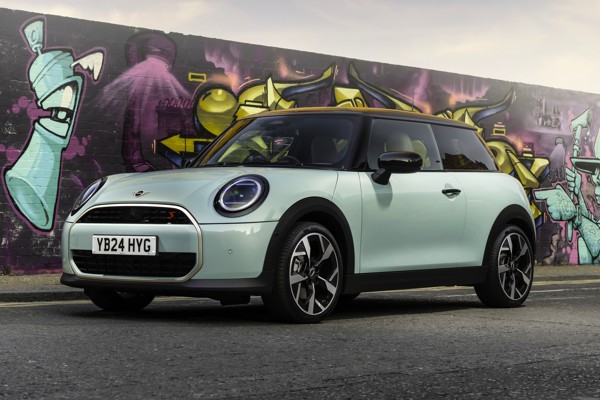
- Iconic MINI looks are present and correct
- Still the option of a compact and cool three-door MINI
- Petrol and electric versions available
Despite enduring tired jokes about 'not being very Mini' compared to the original, the BMW-built MINI hatchback has stayed relatively small while everything around it has gotten much bigger. Although it's in the same small car class as the likes of the Vauxhall Corsa, it's quite compact in its three-door form and so we reckon you can absolutely count it as a great city car.
The MINI Cooper is available in two forms – as an all-electric Cooper E and as a petrol-powered Cooper C. There are more powerful Cooper S/SE and John Cooper Works versions of each, but for urban environments, the 156PS developed by the Cooper C's 1.5-litre three-cylinder engine and the 184PS generated by the Cooper E's electric motor will be more than enough.
The MINI brand has long liked to talk about these cars' 'go-kart feel', which is more than just marketing. The MINI Cooper genuinely is as fun as going go-karting, without the risk of your mate Dave punting you off into a tyre wall and leaving you with bruised ribs.
The downside is the price. Even the cheaper MINI Cooper C is over £25,000 new and there are myriad ways to customise your MINI in the configurator and push that price very far north.
3. Hyundai i10
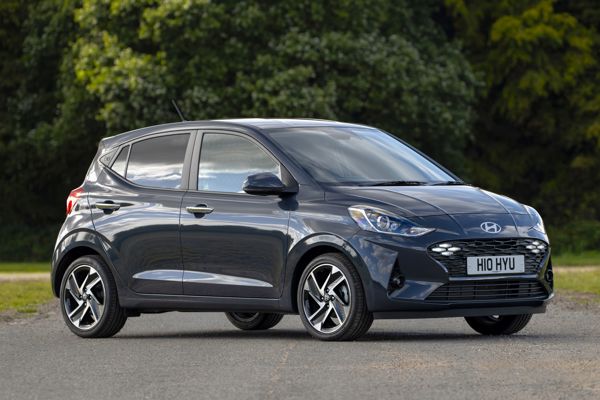
- High levels of standard equipment
- More engine choice than related Kia Picanto
- N Line features sporty styling
The Hyundai i10 shares much in common with the Kia Picanto we were looking at earlier, but there are some key differences, not just in terms of styling. For one thing, it's more expensive, starting at over £18,000, but you are getting a much higher level of equipment across the board. Even the entry-level Advance version gets 15-inch alloy wheels, a rear parking camera and cruise control fitted as standard.
You also get a choice of engines. There's a 63PS 1.0-litre available in both the Advance and Premium grades, a 72PS 1.2 for the Premium, and a 90PS turbocharged 1.0-litre in the sportily styled N Line. That's a little less than before, though – it used to be good for 100PS.
It's still practical considering its small footprint, offering 252 litres of boot space, which expands to 1050 litres with the rear seats down. On that subject, the rear bench accommodates three, making the i10 a five-seater. The same can't be said for the i10's electric cousin, the Hyundai Inster, which is only a four-seater.
Unfortunately, there's one big downside compared to the Picanto – Hyundai has stopped making it. There will be some new and nearly new stock available for a little while, so if you want a fresh one, there's still time.
4. Fiat 500 Hybrid
- Just as cool-looking as the last one
- Choice of electric and petrol versions
- Decent level of standard equipment
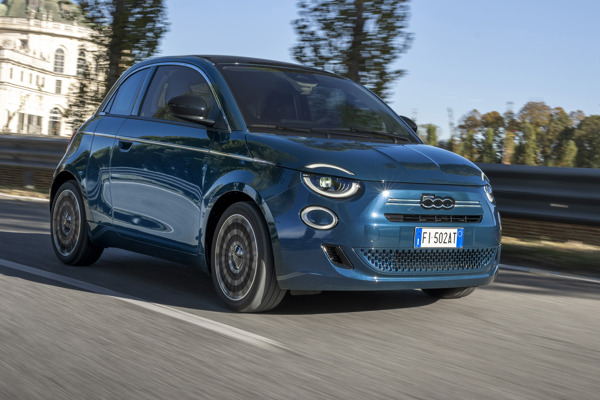
Here's a car we didn't think we'd ever get – a new, petrol-powered Fiat 500. It's been some five years since the Fiat 500 Electric first arrived and it was supposed to remain available only as an EV. The existing petrol version clung on until 2024 having been on sale the best part of two decades.
Under the original plan, that was supposed to be the end of it. The only problem is, Fiat 500 Electric sales haven't exactly been stellar. While the industry grapples with lower-than-expected EV demand, Fiat has done the kind of U-turn that would see the average politician taking notes, making an all-new, petrol-powered Fiat 500 based on the same platform as the electric one.
It's called the Fiat 500 Hybrid but that's overselling the engine a bit, which is more of a mild-hybrid with only very limited electric-only running. It also doesn't come with a whole lot of performance, with a 1.0-litre three-cylinder engine producing just 65PS, making for leisurely performance out of town.
It definitely looks the part, though, retaining those classic 500 looks. It's also fun to drive, even with that low-powered, non-turbo engine and comes with a decent level of standard equipment.
5. Toyota Aygo X
- Still reasonably compact
- New hybrid engine is powerful and efficient
- Smart SUV-inspired looks
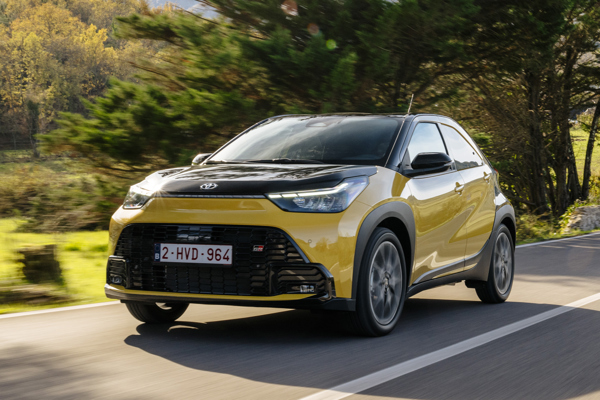
The Toyota Aygo was one of the best city cars around, so it was a big shame to see Toyota discontinue it without a direct replacement. Its indirect successor is still a great car and although it's bigger, this SUV-inspired machine is relatively compact with a length of 3776mm in its facelifted guise.
It's gotten a little bit longer as part of its mid-life update, gaining extra front-end overhang to accommodate the excellent and extremely efficient 1.5-litre hybrid engine from the bigger Yaris. This answers one of our main criticisms about the earlier version of the Aygo X – its underpowered 1.0-litre engine.
The difference in performance is dramatic, with a 61% increase in power. And yet, fuel economy has increased, with the current Aygo X managing up to 74mpg according to the official figures. Impressive, but with all that hybrid tech comes a big increase in cost, with prices now starting at over £21,000.
6. Fiat Grande Panda
- A real sense of fun in its design and trim choices
- Electric and petrol power available
- Very affordable
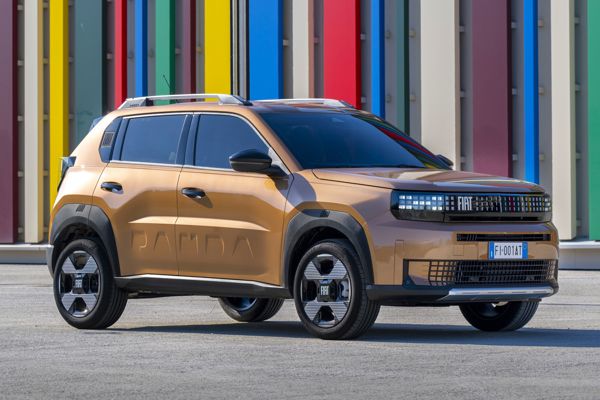
There are already several cars using Stellantis' 'Smart Car' platform (not to be confused with that Smart Car), but the Grande Panda is perhaps our favourite. It evokes the boxy charm of the original Panda and is packed with fun details both inside and out.
We love the embossed Panda lettering that stretches across both doors, the recycled bamboo interior trim pieces and the retro video game-inspired pixel headlamps. These elements make up for the fact that the Hybrid version (which, like the aforementioned Fiat 500 Hybrid, is not a 'proper' hybrid) is a bit lacking in terms of driving fun.
Also offsetting this is the car's practical nature. At four metres in length, it's much longer than the old Panda, helping provide an impressive 412 litres of boot space. Despite this, it still feels plenty compact on the road and starting at well under £20,000, it's certainly priced like a city car.
7. BYD Dolphin Surf
- Low-ish starting price
- Choice of batteries and motors
- Surprisingly grown-up feeling interior
There are three small, very cheap EVs we considered for this particular spot on our list. One is the Dacia Spring, which is the cheapest electric car you can currently buy in the UK (we're not counting the Citroen Ami, which isn't a car at all), but significantly compromised and not something we can recommend. Its close rival, the Leapmotor T03, is more like it, but we still think it's worth spending a little more on the car we ended up picking, the BYD Dolphin Surf.
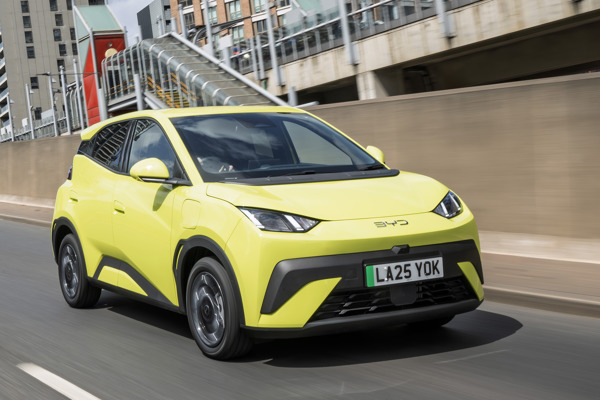
Yes, Dolphin Surf is a silly name (BYD has form in this area, sadly), but if you can get past that, there's a lot to like here. You get a decent amount of equipment, a starting price under £19,000 and compact dimensions. At four metres in length, it's longer than what we'd normally consider a city car, but it makes up for this by being super narrow, making it ideal for tight city streets.
There are a few downsides. For starters, the entry-level motor isn't particularly powerful, only putting out 88PS. There's an annoying pause between putting your foot down and that power arriving plus the brake pedal calibration could be smoother. Hopefully, an improved version will be here soon, because the fundamentals of the Dolphin Surf are already well-sorted.
8. Abarth 500e
- Similar handling to the petrol-powered Abarth 500s
- Looks fantastic in Acid Green
- Much cheaper now thanks to price cuts
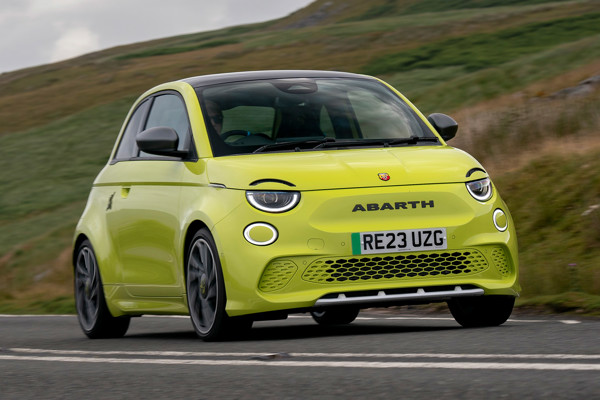
If you fancy a Fiat 500 Electric with a sting in its tail, look no further than the Abarth 500e. It shares a lot in common with the Fiat and although the 164 miles of range is less than the Fiat's official 199 miles (in the 42kWh version), it's much more fun to drive.
It can sprint to 62mph in seven seconds, but that's only half the story, because it also features a sound generator to give it the soundtrack of an old Abarth exhaust system. It can get annoying if you leave it on and have it droning away on a long motorway cruise, though and it's not the easiest thing to turn off.
In better news, the Abarth 500e also has three driving modes, one of which makes it feel like a little terrier. If that's not enough, check out some of the paint options, including the lurid Acid Green (pictured). If you ask us, that's the one you want.
Originally, the Abarth 500e had a frankly obscene price tag of around £34,000, but the price keeps on getting cut, with the most recent reduction dropping it to a far more palatable £28k.
9. Suzuki Swift
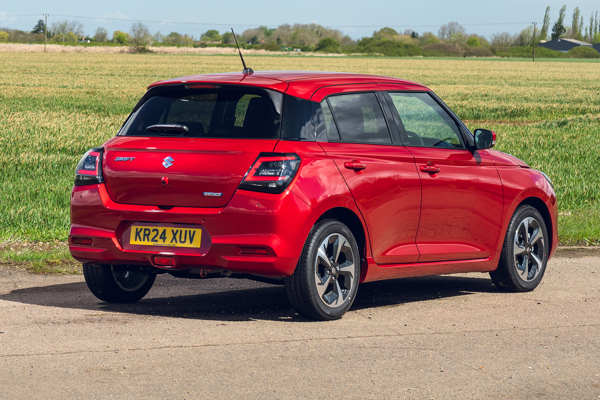
Much like the MINI, the Suzuki Swift has stayed compact relative to its competitors and is also extremely light by modern-car standards, with some versions coming in at under a tonne. The big difference between this and the MINI though, is the price – the Suzuki starts at under £19,000.
We reckon, then, that the Swift has all the right credentials to be considered a city car, even before you factor in how fun it is to drive. It's also very economical and there's even a four-wheel drive version. Super niche, but we love that Suzuki offers it.
That low starting price is reflected in the Swift's plasticky interior, but everything here is screwed together well. Another downside is the compact boot, but if you're buying one as a city car, its 265 litres of cargo space should be fine for most.
10. Renault Twingo
- Uses proven tech from Renault 5 E-Tech
- Very efficient according to official figures
- Expected to cost less than £20,000
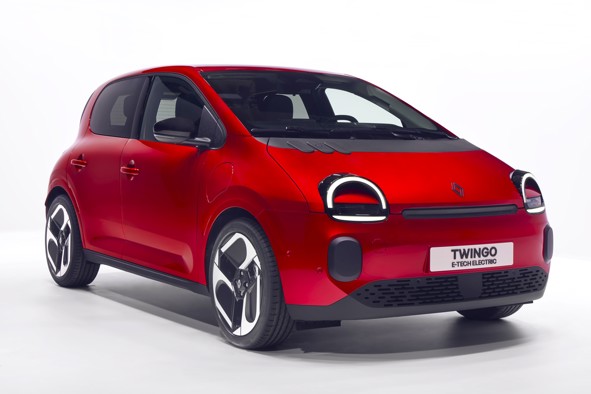
We're jumping the gun a bit with this one, given that it's not yet on sale and at the time of writing, but we have good reason to be so hopeful about the new Renault Twingo. It shares a lot in common with the Renault 5, which is one of the best EVs around and one of the best small cars of any propulsion type.
Using a lot of the same bits and pieces to make something smaller and even better value (the expectation is for a starting price under £20,000) surely means Renault is onto a winner. And, of course, we have to consider the way it looks, with the styling of the iconic original Twingo translated brilliantly for the modern age.
It'll only have a 27.5kWh battery, but thanks to incredible efficiency of nearly six miles per kWh, it should still do over 160 miles on a full charge. That's thanks in no small part to Renault picking such a small battery for the car, which keeps the weight to around 1200kg.
After years of expensive, heavy and needlessly powerful EVs, the Twingo is a breath of fresh air, and has all the makings of a great city car.
How big are the best city cars?
City cars are generally about 3.6 metres in length, but there are now so few cars of that size that we've had to include a few that are closer to four metres to give a decent number of cars to pick from. Some, like the BYD Dolphin Surf, are also quite narrow, making them great for squeezing past parked cars on tight streets.
Are city cars safe?
Euro NCAP is as strict with city cars as it is with all other types of vehicle. This is why the Fiat Panda was castigated a few years ago and awarded a zero-star crash-test score: if motors don’t measure up, they get called out. Thankfully, where tested, the cars we've listed here have done much better, mostly achieving between four and five stars. It was a bit disappointing to see the Suzuki Swift manage only three stars, though.
Are city cars cheap to run?
City cars don’t generally have complex hybrid or plug-in hybrid systems. Arguably, though, they don’t need exotic tech: city cars are ideally small, light and cleverly designed. It means their efficient engines generally sip fuel rather than guzzle it. You should have no trouble seeing 50mpg or more with a bit of forward-planning. And as such, tiny motors also come with low insurance groups and competitive servicing costs, it all adds up to a car that should be very cheap to run.
Meanwhile, there's a growing number of small, affordable electric cars that can be very cheap to run if you can keep them charged at home. That's easier said than done for a lot of people living in cities, mind.
What city cars with auto gearboxes do you recommend?