
Best tow cars 2026: Top 10 cars for towing trailers and caravans over 2000kg
| Written by: Keith WR Jones | Last updated: 23rd March 2026 |
There are over half a million touring caravans in use across the UK, all of which require capable tow cars to pull them from one holiday hotspot to another. Traditionally tow cars tended to be either large estates or rugged, off-road-biased SUVs, but not everyone who wants to haul caravans or heavy trailers wants or needs such a vehicle.
That’s why for our top 10 tow cars for 2026 we’ve chosen a mixture of bodystyles across an assortment of models at various price points which can legally pull along at least 2000kg – which is around the typical mass of a spacious, four-berth caravan.
Top picks at a glance
- Best overall: Land Rover Defender 110
- Best for family life: Volkswagen Multivan
- Best for luxury: Mercedes E-Class Estate
- Best for performance: Polestar 3
- Best for value: KGM Rexton
- See the full top 10
Our pick of 2026’s best tow cars also dispels commonly held misconceptions that hybrid and fully electric cars can’t be used for hauling duties. Sure, several such models can’t even be specified with a tow bar, but among our top 10 you will find a self-charging hybrid, two plug-in hybrids and a pair of EVs.
With petrol and diesel prices on the rise, we recognise that many motorists who want a capable tow car undertake most of their journeys without anything hitched to the back of their vehicles, so require a model that suits their other needs and is cost-effective to run.
- Find out how we test tow cars at HonestJohn.co.uk
1. Land Rover Defender 110: best tow car for all-round excellence
Why buy it
- Civilised to drive on-road, hauls heavy loads easily
Why avoid it
- Expensive to buy and not the cheapest to run
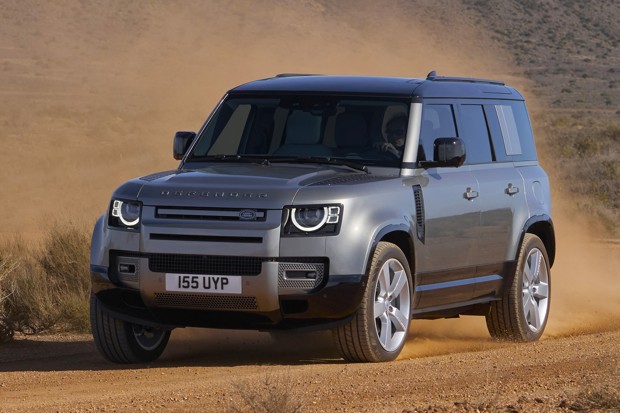
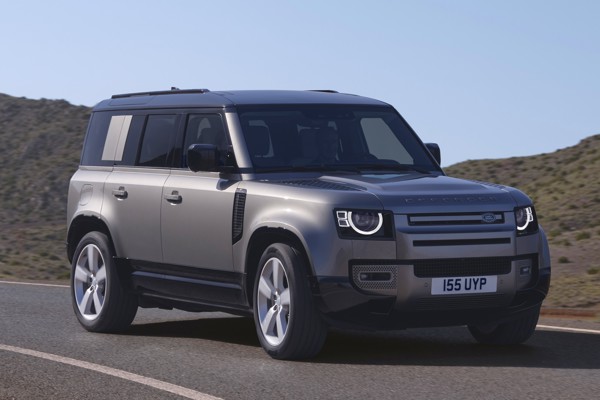
Super-practical as a family car with space for up to seven people, our testers found the mid-length Land Rover Defender 110 made light work of towing heavy loads thanks to its 3500kg maximum capacity and its 2070kg limit when pulling 85% of its own weight.
You’ll find the shorter Defender 90 far less roomy and flexible and while it lacks the longest Defender 130’s capaciousness, the 110’s towing capacity is 500kg greater and our testers found its more moderate dimensions make it easier to live with day-to-day when you’re not towing, helped by available 360-degree cameras.
We’d advise taking your caravan or trailer when you go for a test drive as the Defender’s spare wheel mounted on its side-hinged rear door can be a hindrance when hitching onto the tow bar.
On test we found the entry-level D250 diesel has ample grunt for swift and safe progress onto roundabouts and out of junctions when towing, feeling secure and stable when running at higher speeds.
Overall, we reckon the Land Rover Defender 110’s a great family car regardless of whether you’re towing or not.
Real MPG v Official MPG
Given the Land Rover Defender 110 D250 weighs upwards of 2436kg, it’s not going to be the most economical car to run, even with a cutting-edge diesel engine. Officially it returns an average of 33.1mpg, but our testers found it needs driving considerately to best 30mpg.
| Our pick: D250 from £62,795 | 85% of kerb weight: 2070kg |
Read our full Land Rover Defender 110 review.
2. Polestar 3: best tow car for electric performance
Why buy it
- Air suspension makes it exceptionally comfortable and stable
Why avoid it
- Frameless door mirrors make attaching extended towing ones tricky
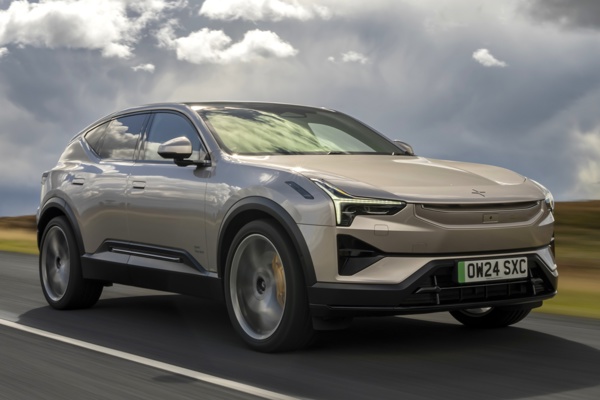
Proving that EVs can make great tow cars, the Dual Motor all-wheel drive version of the exceptionally roomy Polestar 3 can pull a maximum load of up to 2200kg. More impressive is that its 85% of kerb weight figure isn’t too far removed from its highest figure at 2116kg.
Our testers found the Polestar’s air suspension system blesses this electric SUV with a cosseting ride, with the additional benefit of keeping it stable and level when you’ve got something hitched on the back.
We loved the ease at which it gathers speed thanks to oodles of torque from the moment you dab the accelerator, enabling you to safely go for gaps in traffic you might otherwise pass up with a caravan behind you.
If you favour using extended towing mirrors which clamp onto the car’s own door mirror housings we suggest you take them with you before signing up for a Polestar 3 – its mirrors are frameless, so you may need an alternative solution. Manoeuvring is generally made that bit easier with all-round parking cameras.
Real-world driving range
Despite packing a 544PS punch and weighing at least 2490kg, the Polestar 3 cleaves the air gracefully thanks to spoilers cleverly integrated into the bonnet and tailgate. Officially its capable of a 394-mile range between charges thanks to its 106kWh battery – in the real world you can reliably expect 340-350 miles when you’re not towing.
| Our pick: Dual Motor from £84,540 | 85% of kerb weight: 2116kg |
Read our full Polestar 3 review.
3. Mercedes E-Class Estate: best tow car for luxurious practicality
Why buy it
- Diesel plug-in hybrid drive system combines the best of both worlds
Why avoid it
- Glitzy technofest dashboard won’t be to everyone’s tastes
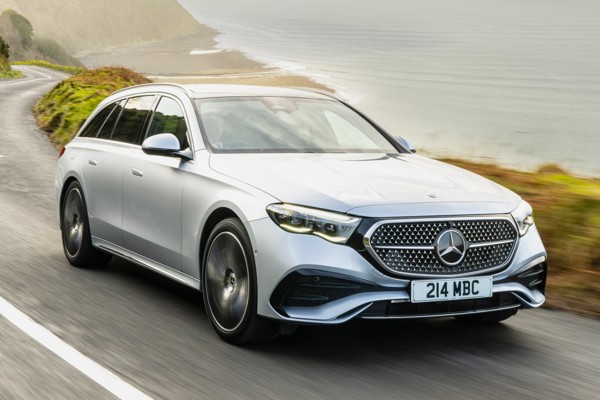
A long-time favourite of carvanners, the latest-iteration of the Mercedes E-Class Estate offers the best of both worlds if you plump for the plug-in hybrid E300de version. Our testers rate impressive electric driving range of up to 67 miles, making local drives very inexpensive, while the torquey diesel and electric motor combination make for fuel efficient cruising and effortless towing prowess up long inclines.
We reckon you’ll also appreciate the E300de’s 2100kg upper towing capacity, common to all E-Class Estates, but boosted here because its chunkier kerb weight means its 85% ceiling is elevated to 2068kg, compared with the diesel-only E220d’s 1793kg limit.
Inside, the E-Class wagon feels almost as plush as the far pricier Mercedes S-Class, with the additional flexibility of the Estate’s bodywork. Although this PHEV version loses 155 litres of boot space relative to the non-plug-in E-Classes, our experts still rated the practicality of its 1675-litre total volume.
What’s less likely to find lots of friends is the E-Class Estate’s showy interior featuring up to three dashboard screens and a whole rainbow of animated ambient lighting. Our testers would much rather be trumpeting Mercedes bringing back physical controls for the air-con system.
Real MPG v Official MPG
Official fuel consumption tests have historically given wildly optimistic figures for PHEVs, hence the E300de’s barmy best of 166.2mpg. Keep its battery topped with charge and generally stick to shorter distances and it’s possible to use little, if no diesel at all, but on a longer, steadier run when the battery power’s assisting the engine, a real-world 50-55mpg remains a possibility.
| Our pick: E300de from £69,970 | 85% of kerb weight: 2068kg |
Read our full Mercedes E-Class Estate review.
4. Range Rover Evoque: best tow car for chic style
Why buy it
- Upmarket appeal in a shrink-wrapped package
Why avoid it
- Rivals have more appeal away from towing
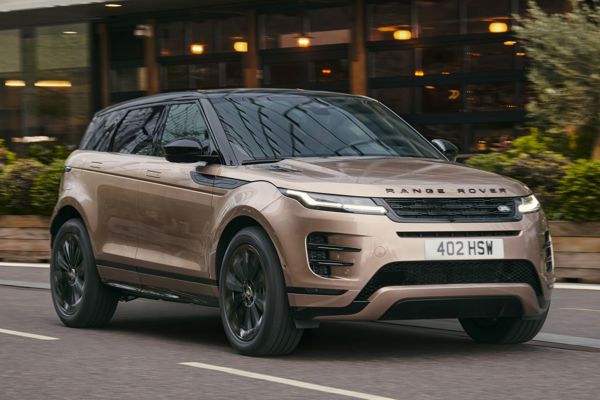
It’s far from the freshest face among the upmarket compact SUV crowd, but that doesn’t mean the Range Rover Evoque is past its prime – when it comes to towing, our testers consider it to be the best among this type of car. Its 2000kg maximum limit isn’t the highest, but thanks to its sturdy kerb weight, the D200 diesel version can still two 1650kg at an 85% load, usefully more than rivals including the excellent BMW X1.
While we rate the BMW as also being more entertaining to drive than the smallest Range Rover, the Evoque’s not too far off, being far more than simply acceptably comfortable with tidy handling. It still feels a special place to be inside, particularly in more expensive trim levels, if snugger for passengers than likes of the Volkswagen Tiguan and the Volvo XC40.
Performance from the mild hybrid-assisted D200 diesel engine is sufficiently sprightly – our testers felt its extra oomph is worth the additional £1100 outlay over the Range Rover Evoque D165, a welcome benefit when hauling two tonnes of caravan behind you.
Land Rover products haven’t always enjoyed cast iron reliability records, but the Range Rover Evoque is one of its better products, scoring 8.7 out of 10 among our readers who rated its dependability in the most recent Honest John Satisfaction Index.
Real MPG v Official MPG
Officially the Range Rover Evoque D200 can return an average of 43.9mpg, but what’s the story away from the lab? Our readers report they’re seeing 39.4mpg typically, which equates to a decent 90% Real MPG rating.
| Our pick: D200 from £45,435 | 85% of kerb weight: 1649kg |
Read our full Range Rover Evoque review.
5. Volkswagen Multivan: best tow car for larger families
Why buy it
- Not van-based, despite its name and looks, for car-like handling
Why avoid it
- Leisurely pace when fully loaded and towing
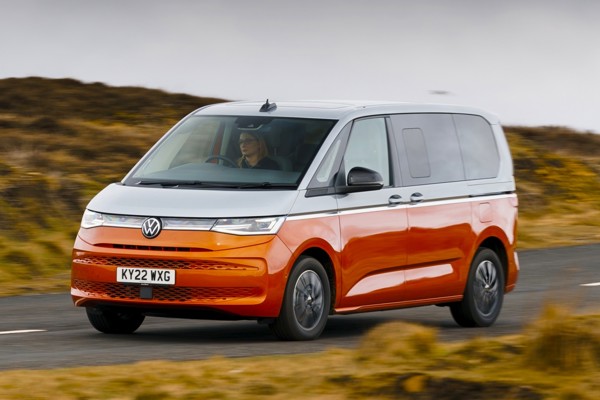
Our testers love the Volkswagen Multivan’s cavernous and flexible interior space, which makes ferrying seven people and their stuff around a doddle. It’s also a useful tow car, with a maximum capacity of 2000kg and an 85% kerb weight figure of 1813kg.
That’s fine, but remember the VW’s gross train weight if 4850kg, so if your caravan’s right at the Multivan’s maximum capacity and you’ve packed the car with the 717kg payload limit, the 2.0-litre 150PS diesel under the bonnet means you may find it wanting when you’re eyeing-up gaps in traffic or about to tackle a stiff ascent.
When the Multivan is up to speed, we found it stable as a tow car – its tall bodywork and bluff front end cuts the air more effectively for the caravan behind than a lower, more conventional height car would. All-round visibility’s also great, so you’ll have no issues keeping tabs on your load at the back.
If you’re considering a VW Multivan as your next tow car, we’d strongly suggest taking your caravan along before you buy it to check the clearance between its enormous tailgate and the bulkhead on your hitch’s A-frame. Its low loading sill is a real bonus when you’re not towing, but could be a frustration if you can’t open the boot with your ‘van hooked-up.
Real MPG v Official MPG
The Volkswagen Multivan 2.0 TDI 150PS is at its best when driven gently where our testers’ experience indicates around 38mpg is likely to be your norm, which isn’t significantly short of the official 43.5mpg figure.
| Our pick: 2.0 TDI 150PS from £50,633 | 85% of kerb weight: 1813kg |
Read our full Volkswagen Multivan review.
You may also like
- Looking for the roomiest cars for a large family? Here are 10 great van-based MPVs
- Looking for an efficient diesel alternative? These are the 10 best hybrids on sale
- Fancy a load-hauler that's not an SUV? Here are the 10 best estates available
6. Skoda Superb: best tow car for upmarket feel at a low cost
Why buy it
- A lot of practical, comfortable and plush family car for the money
Why avoid it
- Modest 85% of kerb weight load limit
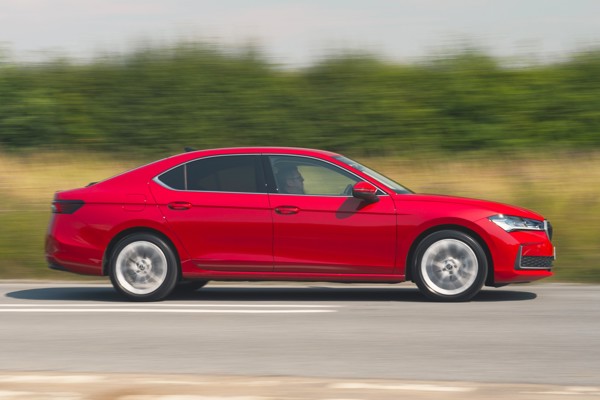
If you’re looking for a particularly sensible choice of tow car, look no further than the Skoda Superb when equipped with a 193PS 2.0-litre TDI engine and all-wheel drive traction, particularly useful when getting up to speed with a 2200kg caravan bringing up your rear.
Our testers rate the no-nonsense way the Superb goes about its business delivering strong performance, big-car stability and loads of space for people and luggage within its surprisingly upmarket feeling and cavernous cabin. In the unlikely event you’ll need even more space in the boot, the Skoda Superb Estate is also available with the same engine.
One fly in the Superb’s ointment is its low kerb weight means that in spite of the 4x4 hardware its platform’s supporting, the Skoda’s 85% towing weight figure is a modest 1478kg. Before you think the Superb Estate must be significantly better, a word to the wise – it’s only an 18kg improvement yet costs around £1400 more.
While it does the job of a tow car admirably, we couldn’t help but wish it wasn’t just a bit more interesting, particularly for those more usual occasions where the Superb’s being driven without anything attached to its tow bar.
Real MPG v Official MPG
How does the Skoda Superb 2.0 TDI 193PS 4x4 perform in the real-world compared with its 47.1mpg official average? Our testers found that’s not far removed from the 45mpg achieved on test – on steady motorway runs, you may even top 50mpg without trying to be economical with the throttle.
| Our pick: 2.0 TDI 193PS 4x4 from £44,460 | 85% of kerb weight: 1478kg |
Read our full Skoda Superb review.
7. Volvo V60: best tow car for petite and punchy practicality
Why buy it
- Speed, efficiency and spaciousness in a manageable size
Why avoid it
- All of that comes at a significant purchase price
If the Mercedes E-Class Estate represents one bookend of the traditional tow car scene, the Volvo V60 surely is its opposite, but all isn’t quite as it seems. You see, the V60 was the smaller of the most recent Swedish estates, but is now the only one following the end of Volvo V90 production.
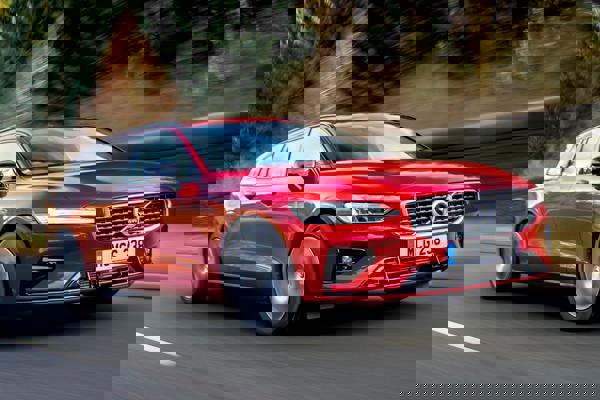
Not that a 4778mm long car could be described as small, but relatively speaking it is, yet it doesn’t feel short on space inside for people and their belongings. Its 2000kg maximum towing capacity is only 5% shy of the aforementioned Mercedes, nor is the Volvo’s far behind it at the 85% of kerb weight point, either, pulling along a very respectable 1759kg. Incidentally, that’s only 5kg less than the V90 managed.
This estate’s another plug-in hybrid, albeit petrol-fuelled here. Our testers love the V60 T6’s zesty performance – a 0-62mph time of 5.4 seconds is available when you’re not towing – but there’s plenty of low-down torque and all-wheel drive traction from the Volvo when you are. We found it to be a stable, reassuring car to drive, giving you plenty of confidence to tackle long-haul caravan towing.
Officially the V60 can average up to 61 miles of electric-only driving – our experiences suggest that if you can reach the low-50s, you’re doing alright. If you regularly drive short distances that can be covered on battery power alone, you’ll be pleased as the savings will help ease swallowing the Volvo’s £52,760 price.
Compared with its newer, electric models, such as the Volvo EX30, the V60 feels older – make no mistake, we very much regard this as a positive trait because it means there’s a greater count of physical buttons and controls. More would be even better, but we’ll take this model’s age as a virtue.
Real MPG v Official MPG
Honest John readers who own Volvo V60 T6 PHEV models report a Real MPG figure that’s just 26% of the official figure published by the manufacturer. While that sounds woeful, remember that plug-in hybrids are positively discriminated in the testing methodology hence why Volvo claims the V60 can theoretically achieve 470mpg. That’s nonsensical, whereas our readers Real MPG average of 66.9mpg is very impressive for a 335PS estate.
| Our pick: T6 AWD Plug-in Hybrid from £52,760 | 85% of kerb weight: 1759kg |
Read our full Volvo V60 review.
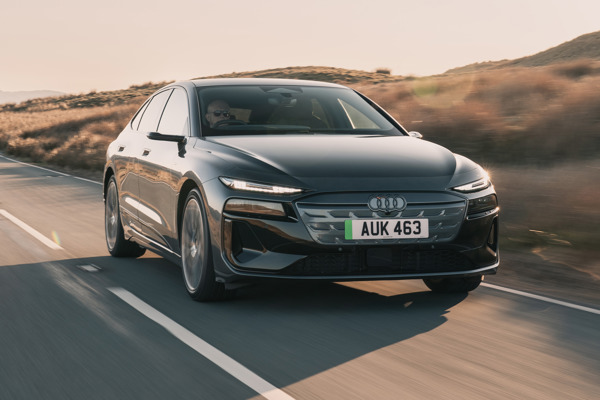
8. Audi A6 e-tron: best tow car for effortless cruising
Why buy it
- Comfortable, refined , comfortable and more practical than it looks
Why avoid it
- Screen-dominated dashboard lacks Audi’s previous classiness
Another electric car in our top 10 best tow cars, but this time in the guise of the slinky Audi A6 Sportback e-tron? No, we’ve not made a mistake, because this is proof positive that some unlikely cars can make great load-haulers.
Our testers have picked out the A6 e-tron quattro version as its two-motor drive system gives the Audi all-wheel drive and a wealth of torque to surging into gaps in traffic when you’ve got your caravan in tow. All A6 e-trons can pull up to 2100kg, but what cinched it for the quattro version was its superior 85% of kerb weight advantage over its less powerful siblings – at 1942kg that’s 137kg more than the entry-level choice.
Don’t be fooled by the Audi’s svelte coupe-like appearance, either – there’s loads of room inside for passengers, the 502-litre boot’s accessed via an enormous tailgate and there’s further storage under the bonnet. It’s appropriately upmarket inside, but we can’t imagine the screen-heavy wrap-around dashboard will be everyone’s cup of tea.
Strong performance is one thing, but the impressive way the A6 e-tron cruises comfortably is something we admire, particularly on smaller wheel-sizes. Sure-footed and stable handling is a boon when towing a heavy caravan.
Real-world driving range
The Audi A6 Sportback e-tron’s no slouch yet its aerodynamic efficiency enables it to eke out every last zap of juice from its battery pack. Officially it will average 444 miles between recharges, but our experiences suggest between 380-400 miles is a reasonable real-world expectation.
| Our pick: e-tron quattro from £73,960 | 85% of kerb weight: 1942kg |
Read our full Audi A6 Sportback e-tron review.
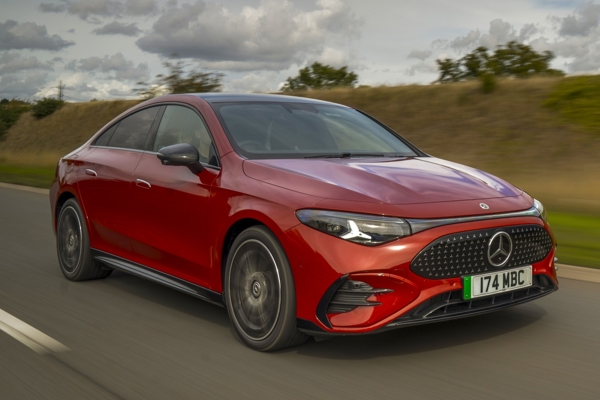
9. Mercedes CLA: best tow car for in a small-ish package
Why buy it
- It’s a slinky coupe with four-door practicality
Why avoid it
- ...Although interior spaciousness isn’t its strongest suit
Small? Okay, we’re pushing it a little bit, but the latest-generation Mercedes CLA is 7cm shorter than the larger C-Class Saloon – plus it’s the most compact non-SUV available which can still tow 2000kg or more.
We were very impressed by the electric Mercedes CLA, but the drive system here is somewhat more traditional in the CLA220 4Matic. It’s a petrol-powered, mild hybrid assisted engine with drive directed to the front and rear wheels ensuring plenty of traction when you’re getting your caravan up to speed from a standing start.
Note that its overall heft results in an 85% towing capacity of 1574kg, which is superior to the Skoda Superb, although our testers weren’t enamoured by the CLA’s tight rear legroom or the plasticky nature of its dashboard which houses up to three display screens.
What we were fans of were the Mercedes’ comfort-focused ride quality which feels relaxed without being wallowy, as befitting a stable tow car. It might only be packing a 1.5-litre engine beneath its slinky bonnet but the CLA220 has ample gusto, generating 300Nm of torque for strong performance from a standing start.
Less in the CLA’s favour as a tow car is its low-slung bodywork and thick roof pillars, which our testers found obstructed visibility even without a caravan hitched to its tail. Parking sensors are fitted front and rear as is a reversing camera, but you need the priciest AMG Line Premium Plus trim if you crave a 360-degree camera package.
Real MPG v Official MPG
According to official testing figures, the Mercedes CLA220 4Matic can average an impressive 51.4mpg – in the real-world we’d expect that to translate to around 45mpg.
| Our pick: CLA220 4Matic from £43,500 | 85% of kerb weight: 1574kg |
Read our full Mercedes Electric CLA review.
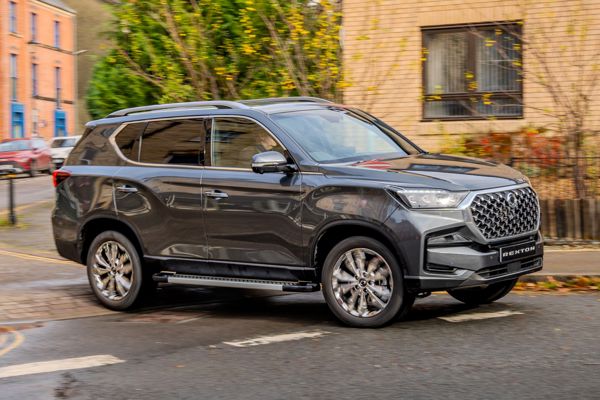
10. KGM Rexton: best tow car for outright value
Why buy it
- An awful lot of car for your money
Why avoid it
- It’s behind the curve in almost every other respect
Chances are that you’ve never heard of the KGM Rexton, which is a rebranded version of the nigh-on identical seven-seater SUV sold here previously under the SsangYong name. Aah, that doesn’t ring any bells either…
Okay, KGM is a value-focused SUV brand from Korea and the diesel-engined Rexton is its largest model. How much value are we talking? Well, this one’s similar in size to the likes of the Hyundai Santa Fe and the Mazda CX-80, but it’s also the cheapest car in this top 10. Crazy, right?
If you need to tow 3500kg in the most cost-effective way possible with a new car, this is it. Even at an 85% of kerb weight limit, you can still pull along 1853kg with the Rexton, so it outranks most other cars in this list in that regard as well.
That value for money push makes itself known in most other areas, though. The KGM might be great off-road, but on it our testers noted its lack of handling sophistication, not least compared with the Defender 110 heading this list, its engine lacks refinement and the Rexton’s whole aura is akin to a tough pick-up truck with enclosed bodywork at the back instead of an open load-bay.
Despite that, the Rexton feels well-assembled and of decent quality, but it lacks finesse in its execution – yes, the boot’s enormous when the rear seats are folded, but why don’t they lie flat to make the most of it? If you’re prepared to accept the Rexton’s shortcomings and honesty, we reckon its value as a tow car will shine brightly.
Real MPG v Official MPG
According to the official testing protocols, the KGM Rexton’s 2.2-litre diesel engine will return 32.9mpg, which is worse than the Land Rover Defender 110 D250 despite it being 250kg heavier. Our readers report their Rextons return a Real MPG figure that’s 92% of the official number, averaging 30.4mpg.
| Our pick: 2.2 Diesel from £42,495 | 85% of kerb weight: 1853kg |
Read our full KGM Rexton review.
How we test cars: the tow car method
At Honest John, we only know how to test cars one way – thoroughly. Our team of experts gets under the skin of hundreds of cars each year, determining the best from the beasts, sharing our findings in straightforward, no-nonsense terms. To select the 10 best tow cars for 2026, our editorial experts have:
-
Driven over 10,000 miles: Whether along tight city streets, long motorway schlepps or winding ribbons of A- and B-roads across all manner of inclines and flatlands, we test every car across the best – and worst – of what the nation’s roads offer.
-
Prodded and parked: We spend hours assessing real-world practicality of each car, seeing how the cope with the rigours of school and tip runs as well as ferrying about infants and elderly relatives. We also judge how convenient they are to zip in and out of double-length bays in car parks when there’s a caravan attached.
-
Real MPG Data: Unlike other online car review sites, we collate and curate our readers’ fuel efficiency data to provide you with our unique Real MPG feature. You can instantly discover what to realistically expect from different engine and gearbox combinations within each model range.
-
Owner Feedback: Our long-standing Honest John Satisfaction Index is integral to our comprehensive reviews, sharing our readers’ reliability experiences with cars once the shiny novelty has worn off.
Our reviews are 100% independent. We don't take money from car manufacturers to influence our rankings. Our only priority is helping you find the right car.
Frequently asked questions about tow cars
Why are so many good tow cars on the heavy side?
By ‘good’ we take it that you mean a higher towing capacity rating. In short, the heavier the car, the more likely it will be able to provide stable, assured handling which won’t be drastically affected when it has a substantial caravan or trailer hitched to its rear.
Lighter cars are more likely to be negatively influenced when towing a heavier load, hence their maximum capacities are significantly reduced.
Heavier cars also raise the recommended 85% of kerb weight limit for safe towing, particularly for those inexperienced in the art of hauling caravans.
What is the maximum weight limit cars can tow?
When the trailer or caravan is equipped with brakes, the maximum towing capacity has been set at 3500kg for many years, but only a relatively small assortment of cars is legally capable of towing such a heavy load, all of which are large and brawny SUVs.
Without brakes, the maximum weight any car can legally tow is 750kg.
Regardless of what weight your car can tow up to, it’s vital you’re aware of the combined car and trailer Gross Train Weight (GTW). That figure minus the kerb weight of the car with the weight of what you’re towing also deducted leaves the car’s payload figure. That’s essentially the maximum legal weight of all passengers and any luggage you can carry.
Why are hybrids and electric cars rubbish at towing?
This is something of a misconception. While it’s true that many hybrids and EVs are homologated to tow lower weight caravans and trailers than equivalent petrol and diesel models – if they can be fitted with a tow bar at all – this is often a deliberate move by the manufacturers to preserve the efficiency of the electrical drive system as hauling trailers and caravans will have a detrimental effect on potential driving range.
Which EV has the highest towing capacity?
With a maximum braked trailer weight of 3000kg, the greatest EV tow car is the latest-generation Porsche Cayenne Electric. Each version has the same capacity, with the least expensive version costing £83,200.
Which is the cheapest car on sale which can tow 2000kg of braked trailer or caravan?
That will be the petrol-engined MINI Countryman S All4, the least expensive of which is £35,100.
The cheapest plug-in hybrid car which can tow 2000kg is the Cupra Terramar 1.5 e-Hybrid 272PS at £47,815, while the least costly EV able to haul 2000kg along is the £55,100 Mercedes GLB 350 4Matic electric.
Which is the cheapest car on sale which can tow 3500kg of braked trailer or caravan?
As featured in 10th place on our list it’s the £42,495 KGM Rexton 2.2 Diesel.
If you want a plug-in hybrid that can haul 3500kg along, the cheapest one is the Audi Q7 TFSI e quattro 394PS at £78,845.
