
Longest electric range plug-in hybrid cars 2026: Top 10 PHEVs with long EV ranges
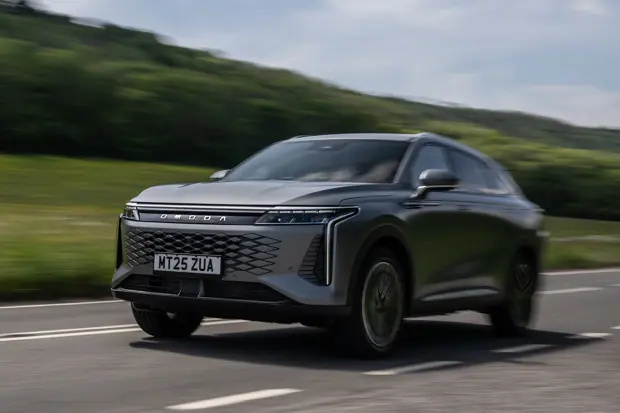
| Written by: Keith WR Jones | Last updated: 8th May 2026 |
Plug-in hybrids – or PHEVs for short – represent a huge opportunity for car manufacturers – demand for them among UK buyers is increasing at a faster rate than for either full EVs or regular hybrids. It’s not only interest in PHEVs that’s growing – so are the distances they are able to travel using electric power alone.
Today’s longest electric range PHEVs have ranges that aren’t far short of what EVs from the early 2010s were capable of. Although none can yet reach 100 miles of battery-powered driving, we suspect that achievement isn’t far away.
Top picks at a glance
- Longest electric range: Omoda 9 SHS-P
- Best for family life: Skoda Superb Estate iV
- Best for driving enjoyment: Audi A3 Sportback TFSI e
- Best for value: Geely Starray EM-i Ultra
- See the full top 10
So why are sales of plug-in hybrids increasing faster than those of fully electric cars? Unsurprisingly, the reasons are as nuanced as they are varied, but the most common reason relates to consumers who want to go electric but with the additional security of a combustion engine to prevent them from running out of charge.
That’s something of a moot point given that most of today’s electric cars can cover 250 miles with a full battery. That distance would take something approaching four hours to undertake, meaning it would be prudent to have a sensible break for a coffee and something to eat – plenty of time enough for an EV’s battery to have also been recharged.
For those buyers and company car drivers who have decided they make the most sense for their needs, the lengthier electric-only driving ranges of newer PHEVs is especially welcome considering the rising costs of petrol and diesel.
All of the top 10 longest electric driving range plug-in hybrids have a WLTP Combined cycle rating of 70 miles or over, ensuring that they fall within the 7% Benefit-in-Kind (BiK) taxation bracket for company car drivers in the 2026-27 financial year.
- Find out how we test plug-in hybrid cars at HonestJohn.co.uk
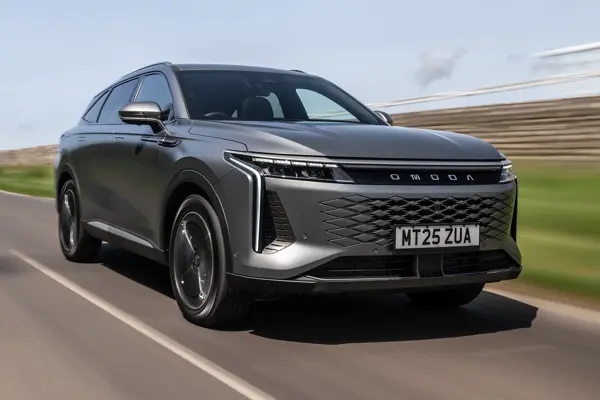
1. Omoda 9 SHS-P: up to 93 miles electric range
Why buy one?
- Luxury SUV vibes for a modest price
Why avoid it?
- Overall package falls short on finesse
Our testers don’t dish out praise lightly, so the fact they say the Omoda 9 is like a cut-price Range Rover Velar should make you sit up and take notice.
It’s an impressive, large and plush SUV, with levels of interior material quality, overall fit and finish and a generous standard of equipment which would be appropriate in a car significantly north of its £45k price tag. We just hope Omoda spends time polishing its over-sensitive driver aids very soon.
The Omoda 9 is also a conventional plug-in hybrid – marketed as the Super Hybrid System Plug-in, or SHS-P for convenience. Despite the system’s 449PS punch we feel its 1.5-litre petrol engine could do with further refinement to further enhance its appeal, as could its ride quality.
Storing the 9’s electrical energy is a 34kWh battery which can be charged at an 80kW rate when using a DC connection. While coy about the exact figure, Omoda claims its flagship model can travel over 700 miles in total before you visit a filling station or plug it back in – assuming you’ve started your journey with 100% charge, of course.
Our pick: 9 SHS-P
Price: £44,990
AC charging time: N/Q
DC charging time: 30-80% @ 80kW in 28 minutes
Read our full Omoda 9 review.
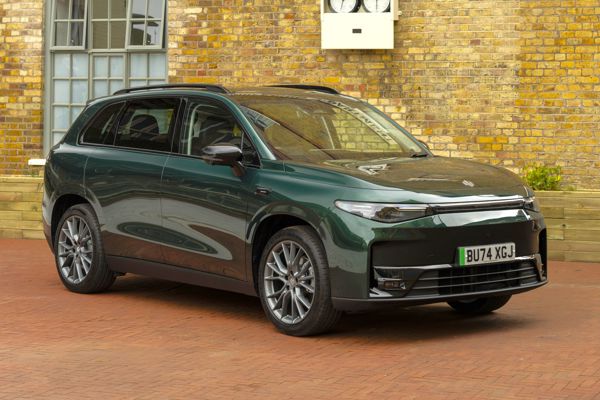
2. Leapmotor C10 Hybrid EV: up to 90 miles electric range
Why buy one?
- Lots of equipment – and EV range – for the money
Why avoid it?
- Infuriating driver aids and unsettled ride
Okay, okay – we admit it. Strictly speaking, the Leapmotor C10 Hybrid EV isn’t a plug-in hybrid – it’s a range extender EV. The difference? Its engine is there solely to operate as an on-board generator and not directly driving the wheels. However, as far as HMRC is concerned for BiK tax purposes, it is a PHEV, hence its inclusion at the top of our list.
Leapmotor’s system brings advantages because we found it more like an EV to drive, being smooth and refined. That’s relative to the electric-only C10, which isn’t a particularly well-honed example of the breed, thanks in large part to its ride quality which never settles down.
More positively, we think consumers will be impressed by the amount of standard equipment and space on offer in this family sized SUV considering its price, but that kit roster includes all manner of overly sensitive and maddening driver assistance systems. Aargh!
Still, up to 90 miles of electric-only driving from its 28.4kWh battery can’t be ignored. Factor-in a full tank of fuel and the C10 Hybrid EV can cover up to 602 miles without needing petrol or plugging in.
Our pick: C10 Hybrid EV
Price: £36,500
AC charging time: 0-100% @ 6.6kW in 4 hours 30 minutes
DC charging time: 30-80% @ 65kW in 18 minutes
Read our full Leapmotor C10 review.
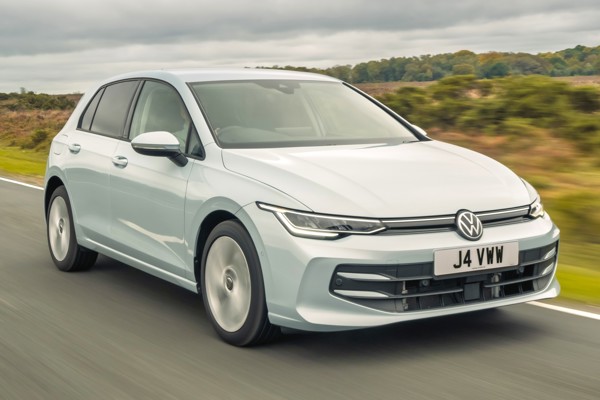
3. Volkswagen Golf eHybrid: up to 88 miles electric range
Why buy one?
- All-round excellence with broad appeal
Why avoid it?
- Current Golf still isn’t that much better than its predecessor
For decades, ‘Volkswagen Golf’ has been the default answer to the question ‘what’s a good family car to buy?’. While that’s largely true of the current generation – and more so since its over-fiddly dashboard touchscreen was made less frustrating to operate – the previous-shape Golf was so good that today’s model only feels like a minor improvement.
Far more positively, we were impressed by the efficiency of the Golf eHybrid – that’s VW’s name for its PHEV models. Despite being just five miles short of the first place Omoda’s electric-only driving range, it manages it with a much smaller battery with a 19.7kWh capacity. While VW’s eHybrid system supports DC charging, it’s limited to a 40kW rate – best stick to plugging in at home, anyway.
It’s well-made, decently equipped and is surprisingly compact for a family hatchback – in fact, our testers reckon the Golf’s modest dimensions are virtuous in blessing it with nimble handling where its generous performance can be enjoyed.
If you want to go quicker still, VW will sell you the Golf GTE with power increased from 204PS to 272PS, although its electric range figure drops to 81 miles as a result. Just don’t expect it to feel quite as entertaining as the petrol-only Golf GTI, though.
Our pick: Golf Match 1.5 TSI eHybrid 204PS DSG
Price: £36,490
AC charging time: 0-100% @ 7kW in circa 3 hours 55 minutes
DC charging time: 5-80% @ 40kW in 26 minutes
Read our full Volkswagen Golf review.
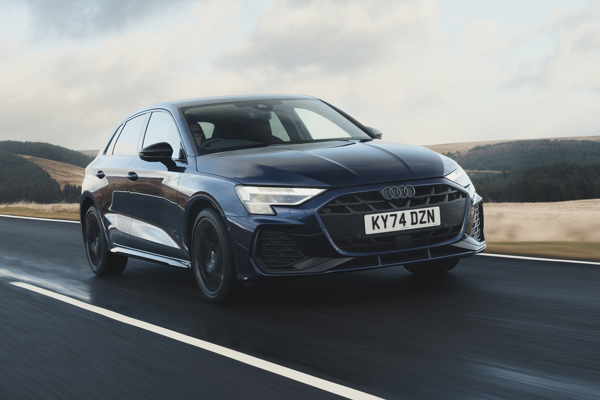
4. Audi A3 Sportback TFSI e: up to 88 miles electric range
Why buy one?
- Just like the VW Golf, with plushness dialled up to 11
Why avoid it?
- Its price has been similarly augmented
No matter how good a product is, consumers with a greater degree of disposable income will inevitably be prepared to pay more for the same thing elevated by a level or two – and that’s exactly what the Audi A3 Sportback TFSI e represents.
Strip away its dramatically styled bodywork and remove its expensive-feeling, squidgier plastics interior and the Audi is to all intents and purposes a VW Golf eHybrid. The same engine. The same electric motor. The same gearbox. The same battery… You get the picture. And yes, the same electric-only driving range.
Our testers have placed the Audi one rung down the ladder from its Volkswagen cousin purely on price difference, with the cheapest A3 being almost £3000 more than the Golf. Yes, that includes a more generous level of equipment, slightly more engaging handling characteristics and it should be worth around £2k more at the end of a typical four-year finance agreement.
Pragmatically speaking, we’d say stick with the Golf, but if funds permit and the Audi image feels more ‘brand you’, do so safe in the knowledge that there’s no driving range penalty.
Our pick: A3 Sportback Sport 204PS TFSI e S tronic
Price: £39,345
AC charging time: 0-100% @ 7kW in circa 3 hours 55 minutes
DC charging time: 5-80% @ 40kW in 26 minutes
Read our full Audi A3 Sportback review.
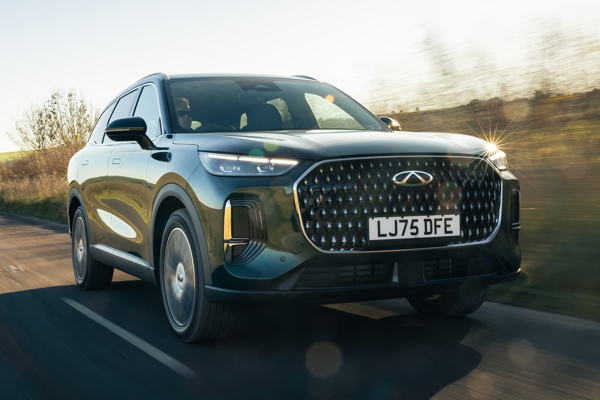
5. Chery Tiggo 9 CSH: up to 87 miles electric range
Why buy one?
- Longest electric range seven-seater PHEV available
Why avoid it?
- The smaller Tiggo 8’s cheapness may prove too tempting
While not quite to the same extent as the A3 and Golf above, there’s much commonality between this Chery Tiggo 9 and the Omoda 9 heading this top 10 rundown of long electric range PHEVs. For those unfamiliar with the influx of new Chinese marques available in the UK, Chery is both a brand and a manufacturing group – Omoda and Jaecoo are among other brands which are part of the same combine.
Among the key differences between the top-line Chery and the mechanically similar flagship Omoda is that the Tiggo 9 is a seven-seater with an interior finish that, while decent, our testers noted wasn’t as upmarket. That said, the Chery’s also the thick end of two grand less expensive.
One potential reason to ignore the Tiggo 9 is the existence of the slightly smaller Chery Tiggo 8 – it still has seven seats, albeit not as spacious in the third row, plus its electric-only range is a chunky 31 miles shorter, but it is also £10k cheaper. You pays your money and all that…
Unsurprisingly, we found that the Tiggo 9 is blighted by similar frustrations with its over-zealous electronic driver aids, an unnecessarily convoluted multimedia touchscreen and a general lack of overall driving refinement. But for buyers willing to overlook those compromises, this represents an awful lot of car for the money.
Our pick: Tiggo 9 CSH Summit PHEV
Price: £43,105
AC charging time: N/Q
DC charging time: 30-80% @ 71kW in 18 minutes
Read our full Chery Tiggo 9 review.
You may also like
- Looking for a long-range fully electric car? Here are the top 10 EVs which can travel furthest
- Will your PHEV affected by 2028’s pay-per-mile EV tax? Our guide to eVED explains all
- Don’t want the hassle of plugging in? Check out our 10 favourite self-charging hybrids
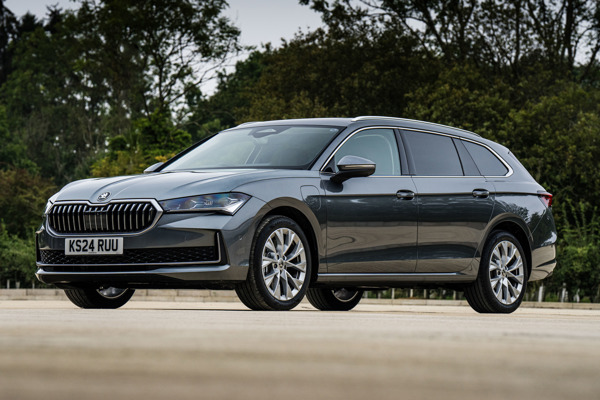
6. Skoda Superb Estate iV: up to 85 miles electric range
Why buy one?
- All of Skoda’s pragmatism in an enormous estate
Why avoid it?
- Only to avoid others’ car brand prejudices
If common sense prevailed, family car buyers looking for a long electric range plug-in hybrid would steer clear of the SUVs and their taller, efficiency-blunting bodywork and instead plump for a capacious, low-slung wagon. Our testers point out that they can – very literally – do far worse than the Skoda Superb Estate iV.
It employs more or less the same mechanical package as the Golf eHybrid, albeit with a much roomier passenger compartment and a positively cavernous load bay providing 510 litres of boot space with the rear seats in use and up to 1770 litres when they’re folded over. The range penalty is just three miles for choosing the Superb Estate over the Golf.
Comfort is a strong point for the Skoda, our testers point out, both in terms of the seats themselves and its supple ride. Much of the interior finish feels of substantial quality, with only a few elements falling short of the closely related VW Passat’s cabin. Oh and why Skoda’s installed a rectangular driver’s display screen in front of a curved instrument cowl looks like a last minute decision to save a few pence.
You may still struggle to convince naysayers that there’s nothing of substance linking today’s Skodas with its cheap-and-uncheerful rear-engined models of 50 years ago, but let them revel in their ignorance, because the Superb Estate iV is where the smart money goes.
Our pick: Superb Estate SE Technology 1.5 TSI iV 204PS DSG
Price: £41,580
AC charging time: 0-100% @ 7kW in circa 3 hours 55 minutes
DC charging time: 5-80% @ 40kW in 26 minutes
Read our full Skoda Superb Estate review.
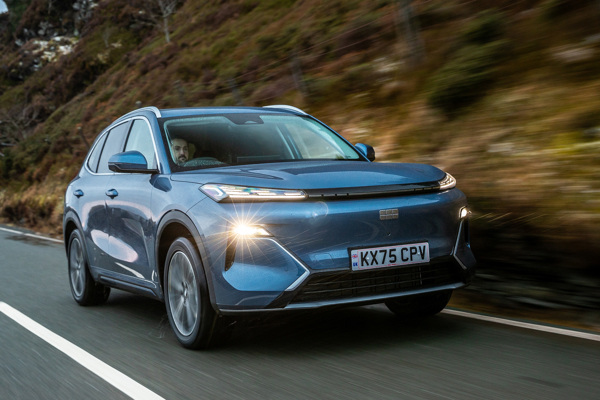
7. Geely Starray EM-i Ultra: up to 84 miles electric range
Why buy one?
- Lots of car – and electric driving range – for the money
Why avoid it?
- Annoying driver-assistance tech and unsettled ride quality
If the Geely Starray’s name may be unfamiliar to many of you, we expect that to change over the coming year – it has the potential to following in Chery, Jaecoo and Omoda’s tyre tracks.
Although Geely is another Chinese-origin brand, it’s unrelated to the aforementioned trio and has a greater understanding of European markets thanks to its ownership of Lotus, Polestar and Volvo. Our testers believe Geely should rely more on its European engineers to hone the Starray, because its disappointingly jiggly ride quality and over-sensitive driver aids are evidently more tuned to Chinese road conditions.
Car buyers may be willing to tolerate those given the Starray’s value – £30k gets you behind the wheel of one with an electric range of 51 miles from an 18.4kWh battery pack, but we’re focusing here on the line-up topping Ultra version. Its larger 29.8kWh battery expands the battery’s potential to 84 miles for just £5k more.
We were impressed by the amount of rear seat space and generous equipment levels in the Starray, but while some of the interior finishes felt surprisingly upmarket, there are plenty of others which don’t.
Our pick: Starray EM-i Ultra
Price: £34,990
AC charging time: N/Q
DC charging time: 30-80% @ 60kW in 16 minutes
Read our full Geely Starray review.
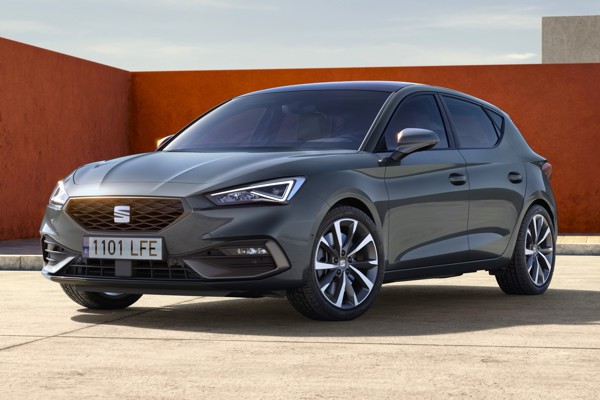
8. SEAT Leon e-Hybrid: up to 83 miles electric range
Why buy one?
- A sportier take on the Golf eHybrid theme
Why avoid it?
- No tangible advantages over the VW otherwise
Given the brand’s position within the Volkswagen Group hierarchy, you’d be forgiven for thinking that the SEAT Leon e-Hybrid would be a more budget-focused derivative of the Golf eHybrid’s mechanical components and platform, but, erm, it’s not.
That’s because in the UK the 204PS e-Hybrid drive system is only available with the sportier FR trim levels, making it £600 pricier than the least-costly Golf equivalent. Sportiness also means wider tyres on larger diameter wheels, which nibble away at efficiency, which explains why the SEAT’s best electric range figure is five miles down on the VW’s.
Still, it broadens the choice of models available – even more so than might be initially obvious. SEAT also offers the spacious Leon Estate e-Hybrid, with an 82-mile electric-only potential range plus both bodywork options are also available as even sportier Cupra Leons, with both 204PS and 272PS power outputs. Inevitably the range figures drop further still, but only to a low of 76 miles.
Interior quality is impressive, equipment levels are decent and the Leon now also has the Golf’s improved, less fiddly multimedia touchscreen system. Hurrah! We reckon you’ll even have fun driving it and we especially liked how the ride quality doesn’t suffer in the pursuit of sating enthusiasts’ wishes. Whether that’s worth paying the extra over the VW for is a personal choice.
Our pick: Leon FR 1.5 e-Hybrid DSG 204PS
Price: £37,185
AC charging time: 0-100% @ 7kW in circa 3 hours 55 minutes
DC charging time: 5-80% @ 40kW in 26 minutes
Read our full SEAT Leon review.
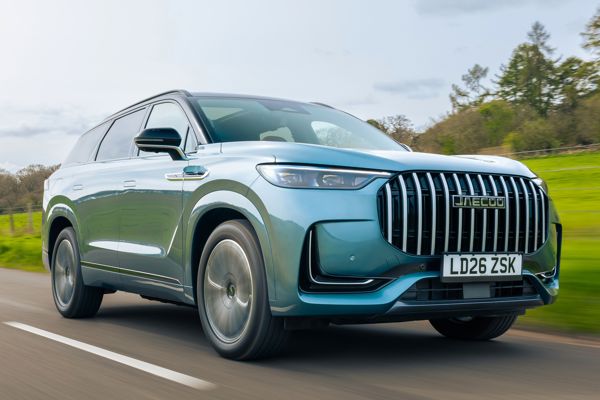
9. Jaecoo 8 SHS-P: up to 83 miles electric range
Why buy one?
- Very impressive interior quality and comfort
Why avoid it?
- Plushness price penalty over its Chery cousin
Mechanically closely related to both the Chery Tiggo 9 and the Omoda 9, the box fresh Jaecoo 8 is our favourite of this large Chinese SUV trio. Why? Because it feels the most accomplished in terms of its comfort and ride quality, although there’s evidently refinement still required make its driver-assistance technology less nannying.
In fact, our testers rated the Jaecoo so highly that it would still be their pick of the threesome despite its electric-only driving range potential being 10 miles lower than the Omoda. After all, its 83-mile figure remains among the best here, with it only being one position lower than the SEAT Leon due to being more expensive to buy.
Our pick of the two Jaecoo 8 models is the less expensive seven-seater Luxury version – spending an extra £2k buys you the six-seater Executive, where the middle-row bench has been swapped for two reclining, massaging captain’s chairs. Less evidently is more… At least there’s no drop in its EV range figure.
Our pick: 8 SHS-P Luxury 7-seat
Price: £45,500
AC charging time: N/Q
DC charging time: 30-80% @ 40kW in 20 minutes
Read our full Jaecoo 8 review.
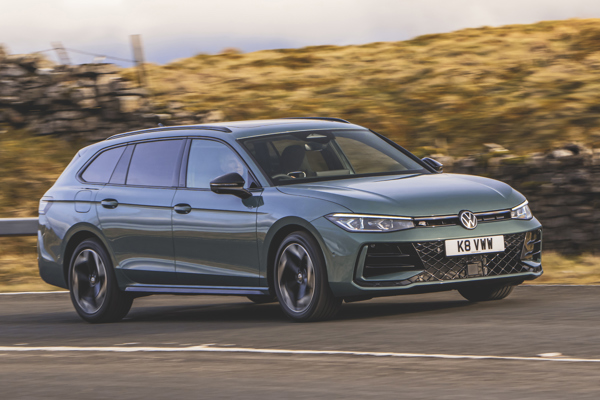
10. Volkswagen Passat eHybrid: up to 82 miles electric range
Why buy one?
- It’s an enormous VW Golf
Why avoid it?
- Is the Skoda name really that off-putting?
Imagine the VW Golf eHybrid but bigger. No, bigger than that. No, even more… Yes, you’re there – it’s the Volkswagen Passat eHybrid, which rounds-out the top 10 longest electric range PHEVs with its 82-mile potential.
But wait, haven’t we seen this car already? Almost, yes – the Skoda Superb Estate iV four places higher not only shares the Passat’s mechanical layout, but also a significant amount of its bodywork, meaning they have the same interior and boot space.
Where the VW differs from the Skoda is predominantly in terms of its interior being finished to a slightly higher standard, with an alternative dashboard layout. Oh, and the Superb ekes out up to three more miles of electric range.
Okay, you may prefer the Passat’s interior or the styling of its front end, which is where the external alternations are largely confined to, but we suspect the key reason people will pay £2k extra not to have the Superb is simply down to any lingering whiff of the Skoda name being associated with its bargain basement past. Their loss.
Our pick: Passat Match 1.5 TSI eHybrid 204PS DSG
Price: £43,740
AC charging time: 0-100% @ 7kW in circa 3 hours 55 minutes
DC charging time: 5-80% @ 40kW in 26 minutes
Read our full Volkswagen Passat review.
How we test cars: the plug-in hybrid car method
Analysing the fundamentals of cars is how we go about testing them here at Honest John. Our editorial team's expertise and knowledge has been garnered by understanding know cars of all types thoroughly. To determine our 10 longest electric range plug-in hybrid cars for 2026, our experts have:
-
Driven over 10,000 miles: Everywhere from narrow urban streets, winding A- and B-road cross-country jaunts, motorways – you name it, we've driven long electric range PHEVs on the best and worst that British roads can offer.
-
Prodded and parked: In order for us to accurately tell you how different cars fit into your life, we see how well they do or don't fit into ours. That means there's plenty of folding the back seats up and down, installing Isofix child seats, zooming up and down multi-storey car parks and anything else you can think of – including seeing how much stuff rubbish we can fit inside for a tip run.
-
Real EV Range: In order to understand how far PHEV cars can be driven in realistic conditions under electric power alone, that's exactly what we do. Plus we test what they're like to charge, both at home using wallboxes and out and about connected to both domestic AC and public DC facilities.
-
Owner Feedback: Our readers share their experiences with us every year confirming the best and the worst cars when it comes to their personal reliability experiences with the Honest John Satisfaction Index. And when we know which are the star performers and which are best left alone, we make sure that you do, too.
Our reviews are 100% independent. We don't take money from car manufacturers to influence our rankings. Our only priority is helping you find the right car.
Frequently asked questions about the longest electric range PHEV cars
Do PHEVs offer tax advantages for company car drivers?
Yes, they can do. Long electric range plug-in hybrids make the most sense for company car drivers who don’t want to – or can’t – go full EV thanks to their low rates of Benefit-in-Kind (BiK) taxation.
While all EVs face a 4% BiK rate for 2026-27, that only modestly increases to 7% for PHEVs which can travel 70-129 miles using battery power alone. Incidentally, a plug-in hybrid which can travel at least 130 miles on a charge is also taxed at 4%, but no such model is available. Yet.
PHEVs capable of 40-69 miles of electric-only driving face a 10% BiK rate, rising to 14% for models with a 30-39-mile electric range, hiked to 16% if it’s 29 miles or lower.
If you plan on having a PHEV as a company car for a three-year stint, keep in mind that from the 2028-29 financial year, all of them will have a blanket 18% BiK rate applied, regardless of their electric driving range. For that same period, full EVs will attract a rate of just 7%.
Which other currently available PHEVs have an electric driving range of 70 miles or over?
It’s quite a long list of models, so we won’t list them all exhaustively down to derivative level – instead we’ll share the longest electric driving ranges from each model range where it’s 70 miles or higher, essentially representing 11th place downwards.
The sportier Cupra Leon has a potential electric driving range of 81 miles, beating its mechanically identical Formentor sibling, the BYD Seal U and the Mercedes GLC all of which are WLTP Combined cycle rated at 78 miles.
Chalking-up 76 miles of battery-powered driving are the five-seater Skoda Kodiaq iV, one mile ahead of its Volkswagen Tiguan cousin as well as the MG HS and the new Toyota RAV4, while the larger Volkswagen Tayron weighs in at 74 miles.
A diverse assortment of PHEVs boast a claimed electric driving range of 73 miles, consisting of the Audi Q3 and its Cupra Terramar cousin, the van-derived Ford Tourneo Connect, both Mercedes C-Class and E-Class as well as the Range Rover Sport. The full-size Range Rover falls one mile short of its smaller sibling’s tally.
Finishing off the 70 miles and over group is something of a rarity among new cars full stop, let alone within the confines of plug-in hybrids – a two-door coupe, in the guise of the Mercedes CLE.
Can PHEVs be driven without plugging them in?
Yes they can, but that really doesn’t get the best out of them. To make the most of a PHEV, it’s vital that you can keep the battery topped up either at home or your workplace. Not plugging them in will likely mean they are less fuel efficient than a regular, self-charging hybrid, which would have been cheaper to buy in the first place.
When a PHEV’s battery has reached a low level of charge – typically under 25% – it then operates as a regular hybrid would, so it still endeavours to maximise its fuel efficiency, flicking to EV mode for short bursts low-speed driving. The downside is that you’re also hauling around the weight of a much larger battery pack and extra cabling to reach the charging port.
Recharging them using public facilities makes little economic sense, plus many PHEVs can’t accept a DC charging plug anyway, although all of the top 10 here will do.
Why are so few plug-in hybrids fitted with a diesel engine?
While a handful of other brands have previously offered diesel-engined hybrids, today only Mercedes persists in combining it with PHEV technology. It’s worth noting that each of the models it sells in diesel PHEV format is also available with a petrol engined alternative.
You can spot diesel-engined Mercedes PHEVs thanks to the 'de' suffix on the badges of the relevant models in the C-Class, E-Class, GLC and GLE ranges.
The reason they aren’t commonplace is predominantly down to refinement, with smoother petrol engines generally being more smooth-running and closer aligned with electric-driving refinement.
Diesel-engined PHEVs do tend to be more fuel efficient in hybrid driving modes, though.
Why are there no Korean PHEVs in the top 10 longest electric range plug-in hybrids?
Hyundai and Kia have been rather successful with their broad arrays of electric models, most of which are among the better EVs for their sizes and bodystyles. None of them are currently capable of covering at least 400 miles on a single charge, though, with the focus instead being on maximising the efficiency with more modestly sized batteries, delivering ranges in the high-300-mile ballpark.
Both brands still do sell a small number of PHEVs, but with smaller batteries – the Kia Sorento has a potential for just 34 miles of electric-only running, marginally ahead of the Hyundai Santa Fe’s 33.6-mile range.
Ultimately, both brands don’t feel the demand for PHEVs is sufficiently strong to warrant investing more in spreading the technology across their model ranges, while at the same time each sells EVs from city cars up to seven-seater luxury SUVs.
Which is the cheapest PHEV with an electric driving range of over 50 miles?
The least expensive 50 electric miles-capable plug-in hybrid currently on sale is the £29,990 Geely Starray EM-i with a WLTP Combined cycle of 51 miles. In fact, it’s the cheapest PHEV on sale regardless of range.
Just five pounds more buys you the Chery Tiggo 7, upping the ante to 55.9 miles.
Do plug-in hybrids really make sense over fully electric cars?
That’s the industry’s billion-dollar question.
On most levels, no, they don’t. Most people’s daily driving needs don’t warrant the massive range potential that plug-in hybrids can deliver. As PHEVs are typically more expensive than EVs to buy in the first place, it rather seems counterintuitive to purchase one simply because it could drive 700 miles or more without needing to be plugged in or brimmed with fuel.
Of course, not everyone can plug an EV in at home to charge it, but as you really need to plug PHEVs in to maximise their efficiency, for those car buyers a conventional self-charging hybrid will invariably be a more sensible option than a plug-in type – and again, be less expensive.
At present, PHEVs make the most sense for company car drivers due to their lower BiK taxation rates, providing that they’re capable of at least 70 miles of electric running. But given that from the 2028-29 financial year that advantage is effectively being wiped out, it’s tricky to determine who will then be keen to get their hands on one, especially with EV driving ranges continuing to climb.
