
Cheapest electric cars 2026: Top 10 least expensive EVs to buy
| Written by: Matt Robinson | Last updated: 5th March 2026 |
Electric car prices have fallen significantly recently — a major bonus for those who had previously been put off buying them because of their up-front cost.
The major factor behind the price drop is the government's Electric Car Grant (ECG) introduced on 11 August 2025. Manufacturers whose EVs fall outside the scope of the ECG have lowered their prices in order to remain competitive, hence the good news for electric car buyers.
Top picks at a glance
- Cheapest overall: Dacia Spring
- Best for spaciousness: Vauxhall Frontera Electric
- Best for comfort: Citroen e-C3
- Best regardless of price: Renault 5 E-Tech
- Best for value: Leapmotor T03
- See the full top 10
All of the cheapest electric cars currently on sale fall way under the ECG's nominal £37,000 price ceiling, yet only four of the ten are currently subject to the government's discount scheme. Even they have only been reduced by £1500 by being rated in the ECG's Band 2 level - no cars have yet been awarded Band 1 status for the full £3750 discount.
The application process for electric car manufacturers is rigorous and takes time. In the interim, many brands have started their own discount schemes, labelling them as 'grants', which in some cases match the maximum £3750 ECG deduction.
It's a rapidly changing situation, so we've based the order of this list of the cheapest electric cars on the least expensive version's on-the-road (OTR) price, including the government's ECG but not manufacturers' short-term finance deals. As always, we urge you to shop around for the best deal before choosing any car.
A final spot of housekeeping before we delve in — you won't see the Citroen Ami in this list despite it often being dubbed the UK's cheapest electric car. From a legal perspective it's not a car but a quadricycle. If you're considering an electric quadricycle because of their low cost, you're likely to be better served by a used electric car instead.
So, with that out of the way, here's our rundown of the cheapest electric cars available in the UK:
- Find out how we test electric cars at HonestJohn.co.uk
1. Dacia Spring: from £15,990

Why buy it
- The Kwik-Save of the electric car world
Why avoid it
- Other cheap EVs are better in almost every respect
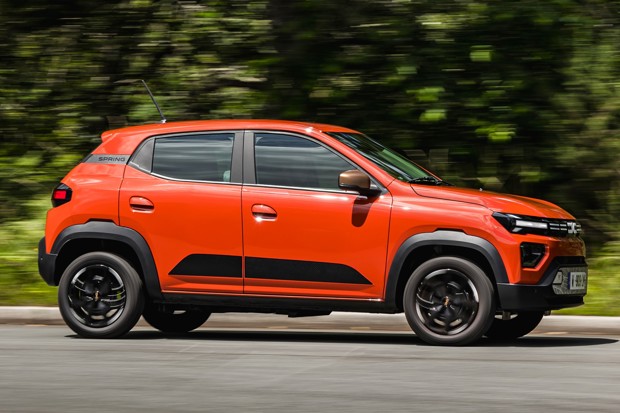
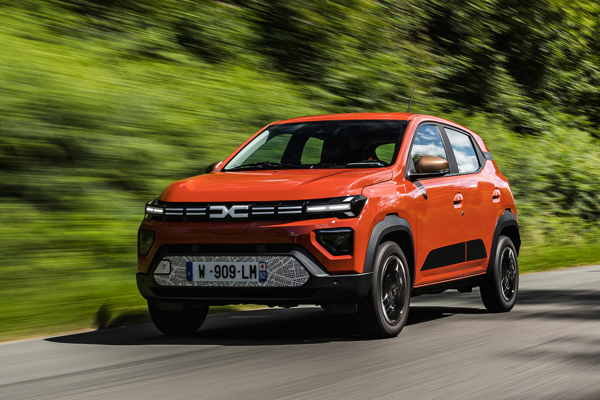
Here it is, the cheapest electric car in the UK which is... actually a car. At £15,990, the Dacia Spring drastically undercuts most of the options on this list. Unfortunately, to achieve that rock-bottom price some compromises have been made.
First off, for that lowest price you're only getting a paltry 70PS of power to play with. If you want the 100PS version it's an extra £1000 plus another grand on top of that for the better-equipped Extreme trim level.
A bigger issue than the lack of power is the car the Dacia Spring is based upon — a 10-year-old Renault which was originally designed for emerging markets. This is painfully obvious in the Dacia Spring's low-quality feel and the way it drives. Its handling is iffy and refinement is poor.
So much so that even at £16k the Dacia Spring is a a hard sell. Not that you need spend anywhere near that, as there are some staggeringly good pre-registration deals available — we've seen as much as £6000 off, at which point the Dacia Spring starts to make more sense.
Dacia Spring Real EV Range
Don't expect to travel more than 100 real-world miles in whichever version of the Dacia Spring you choose.
Read our Dacia Spring review.
2. Leapmotor T03: from £15,995
Why buy it
- Packed to the rafters with standard equipment...
Why avoid it
- ...But not Apple CarPlay – limited boot space, too
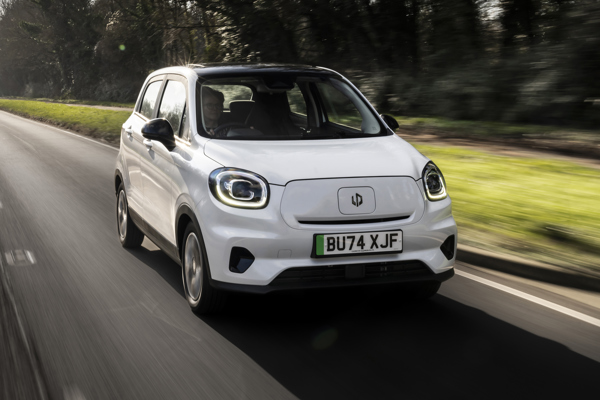
It might only be £1000 more expensive than the cheapest Dacia Spring but the Leapmotor T03 is a much more convincing low-cost EV effort.
Interior quality is significantly higher in the Leapmotor and with 95PS available from its motor, it's a rocketship in comparison with the Dacia. It will also travel up to 165 miles on a full charge, which is 25 more than the Spring manages.
Not that the T03 is compromise-free. Its handling is best described as 'basic' and there are some glaring specification omissions, including the lack of Apple CarPlay or Android Auto connectivity. You don't even get DAB radio — we can't remember the last time we tested a car without it.
Leapmotor T03 Real EV Range
You should easily beat the Leapmotor T03's official 165-mile Combined cycle driving range easily if you stick primarily to city driving, but brave the motorways and it will plummet closer to 100 miles.
Read our Leapmotor T03 review.
3. Citroen e-C3: from £18,495 with ECG
Why buy it
- Cheap to buy but doesn't feel cheap to be in or drive
Why avoid it
- Modest driving range for a family-focused EV
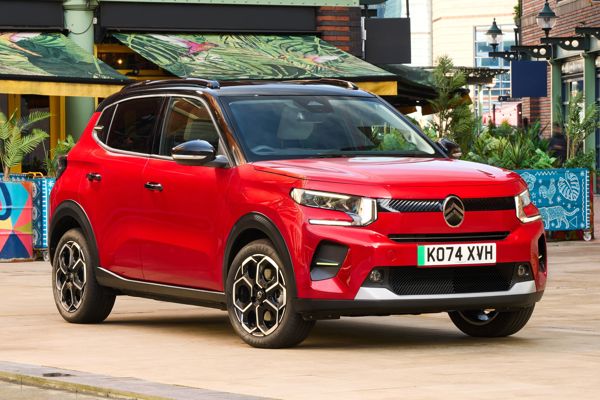
Before the government's £1500 ECG discount was applied, the Citroen e-C3 was around a grand more expensive than its Fiat Grande Panda Electric cousin, although it does have more standard equipment to compensate. As and when the Fiat receives the same level of grant, the price difference will be restored in its favour.
As much as as there's lots to like about the Grande Panda's colourful touches, they won't be for everyone, making the more subtle Citroen a good alternative for those wanting to fly under the radar. Yet beneath the bodywork the two cars are much the same, which means there's a 44kWh battery pack powering a 113PS motor and providing a 201-mile range according to the WLTP Combine cycle test.
Citroen e-C3 Real EV Range
While the Citroen e-C3's official driving range with the Standard Range battery is 202 miles, we reckon the real-world potential is closer to 150 miles.
Read our Citroen e-C3 review.
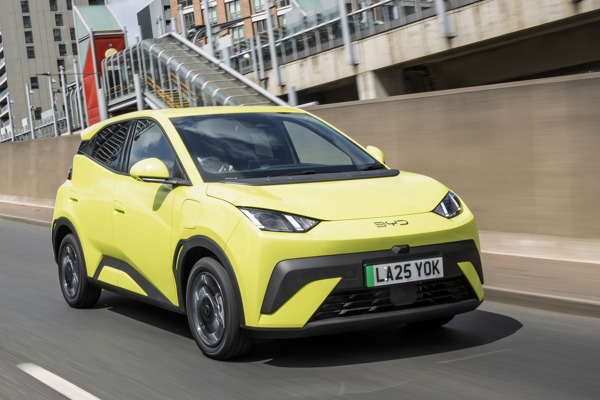
4. BYD Dolphin Surf: from £18,675
Why buy it
- Spacious and well-equipped for an inexpensive, small EV
Why avoid it
- Active version is woefully underpowered
If you can get past the daft and frankly confusing name — there's little relationship here to the larger BYD Dolphin, let alone gnarly water sports — the BYD Dolphin Surf has a lot going for it. At £18,675 the entry-level version isn't drastically more expensive than the Dacia Spring and Leapmotor T03, yet the difference between them and the BYD is big.
The interior quality feels like an improvement not just on those two but also over the more expensive Fiat Grande Panda Electric. There's also a decent amount of boot space, although it is quite a narrow car which means it's only possible to squeeze four seats into it, not five.
The only problem is that the entry-level Dolphin Surf is sluggish. Its 88PS output might have been fine if it actually picked up speed quickly when you put your foot down but there's a weird delay before it finally gets a move on. A pokier motor is available but only in conjunction with available with a larger battery — that increases the driving range to 200 miles on the WLTP Combined cycle with the price correspondingly rising to £21,950.
BYD Dolphin Surf Real EV Range
As a city car, that's where the BYD Dolphin Surf will reward you with its highest driving range potential – venture onto motorways regularly and the Active version hasn't got much chance of cracking 100 miles.
Read our BYD Dolphin Surf review.
5. Fiat 500e: from £20,995
.jpg?rmode=max&width=600&height=400)
Why buy it
- Cutesy retro looks wrapping a far better car than the previous one
Why avoid it
- Rear seats are tighter than a wetsuit
While there was no debating how much charm the old combustion-engined Fiat 500 had, the reality was we never thought it was as great to drive as it was to look at. That's been substantially resolved with this newer take on it, although space in the back is best used by contortionists.
Originally marketed as the 500 Electric, it was rebranded as Fiat 500e at the start of 2026 ahead of it being joined by... a new combustion-engined 500. Not only that, it was made significantly cheaper, too fall into line with the more practical Grande Panda Electric, although a word of caution because the cheapest 500e only has a 24kWh City Range battery with a claimed range of 118 miles.
We reckon the Long Range's 42kWh power pack is far more useful, but at £23,995 that makes it more expensive than the Renault 4 E-Tech, the priciest of this top 10. Oh and if you fancy the 500e Convertible version and we can see why you would, then there's more bad news – that only comes with the larger battery and is another £3k more expensive. Still, it's the cheapest electrically driven soft-top currently on sale.
Fiat 500e Real EV Range
A brilliant city car the refreshed Fiat 500e may be, but if you're going to plump for the entry-level model because you've fallen for its looks and personality, remember you're only going to get the best from it if you rarely go above 30mph. Spend time driving at 60mph or more and you'll be lucky if a full charge will give you a real-world range of 70 miles. Ouch.
Read our Fiat 500e review.
You may also like
- Not yet ready to make the switch to electric? Here are the 10 best small hybrids on sale
- Confused about different types of charger? Everything you need to know about charging EVs
- Need a more spacious and practical EV? These are the 10 best electric family cars on sale
6. Fiat Grande Panda Electric: from £20,995
Why buy it
- Proof that cheap EVs don't have to look and feel bargain basement
Why avoid it
- Its Citroen cousin is comfier to drive
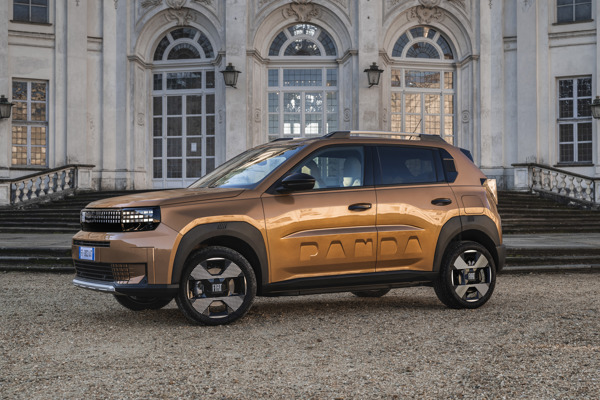
Costing £20,995 but packing in much more of a sense of fun than any car on this list, the Fiat Grande Panda Electric proves that cheap can indeed also mean cheerful.
While sharing a lot in common with the Citroen e-C3, right down to its basic shape, the Fiat still has a real sense of its own identity thanks to neat details including the massive PANDA lettering stamped into the lower section of the doors. Its interior benefits from use of bamboo-derived materials and vibrant, translucent plastics.
It offers up to 199 miles of driving on a full charge — one less than the BYD Dolphin Surf's best — for a good chunk of change less. Plus we expect the Fiat to follow other similar Stellantis models and soon be confirmed as being in receipt of the Band 2 ECG discount, reducing its starting price down to £19,495.
Fiat Grande Panda Electric Real EV Range
Are you going to see close to 200 miles of range driving the Fiat Grande Panda Electric in the real world? You'll probably better it if you stick to city driving, but across a mixture of road types 150 miles is more likely.
Read our Fiat Grande Panda Electric review.
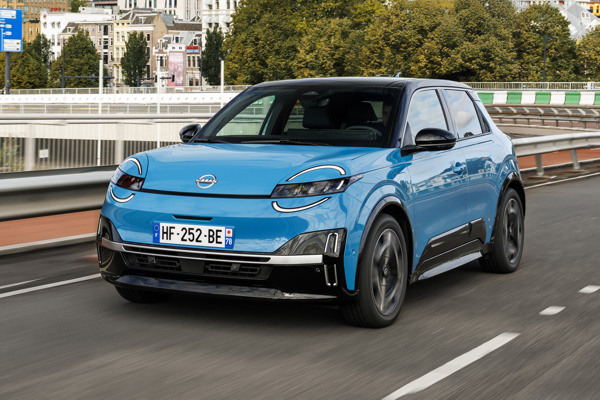
7. Nissan Micra: from £21,495 with ECG
Why buy it
- Based on the best small EV currently on sale...
Why avoid it
- ...but doesn't offer anything over the Renault 5
Once again, Nissan has a small car in its range wearing its long-serving Micra badge, albeit owing much to its corporate partner Renault. Despite bodywork which is predominantly unique to the Micra, its platform, motors, battery packs and the bulk of the interior are shared with the retro-cutesy Renault 5 E-Tech. The pair are even built alongside one another in France.
Yet Nissan has eked some efficiency advantages for the Nissan Micra over its Renault counterpart — despite starting at the same price of £21,495 with the £1500 government grant discounted. That's for the 40kW Standard Range battery which has a 198-mile WLTP Combined cycle range in the Nissan, trumping the Renault by six miles.
It's the same story with the 52kWh Extended Range alternative — a best of 252 miles in the Renault 5 E-Tech yet 260 miles here in the Micra, with prices starting at £25,495 inclusive of ECG for that version.
Nissan Micra Real EV Range
With the larger battery size, the Nissan Micra should mirror the R5 and comfortably manage a 200-mile journey across mixed types of roads and speeds during the milder months.
Read our Nissan Micra review.
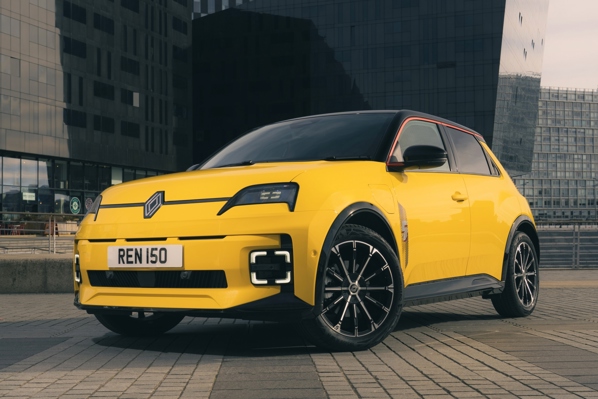
8. Renault 5 E-Tech: from £21,495 with ECG
Why buy it
- The best small EV you can buy... Right now, anyway
Why avoid it
- Space in the back is tight for adult passengers
It's hard to believe one of the coolest-looking EVs is also one of the cheapest but you can indeed buy a Renault 5 E-Tech for a mere £21,495 after it became one of the first models announced to be in receipt of a £1500 ECG discount.
Yes, you'll have to settle for the smaller 40kWh Urban Range battery with the more modestly powerful 120PS motor, but that's comparable with the Citroen e-C3 in terms of performance and a similar range (up to 192 miles), yet the whole Renault package is lot more desirabile.
You can spend a lot more than that, with the range-topping Roland Garros model costing £28,495 inclusive of the grant discount. Somewhere in the middle is the Renault 5 Techno with the bigger 52kWh Comfort Range battery and more powerful 150PS motor — we think it represents the sweet spot of the range and it won't break the bank at £24,495.
Renault 5 E-Tech Real EV Range
We tested the Renault 5 E-Tech with the larger Comfort Range battery in springtime – across a motorway-heavy drive it still managed 200 miles on a single charge.
Read our Renault 5 E-Tech review.
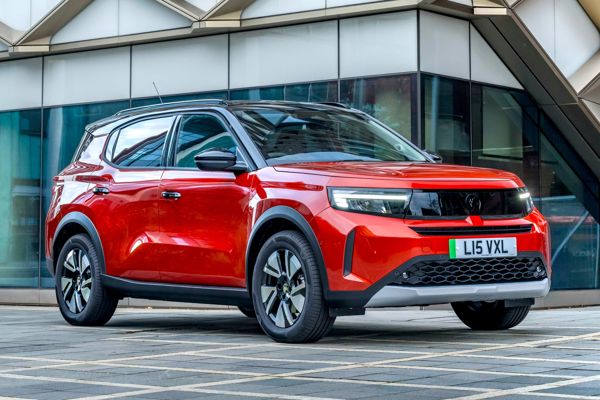
9. Vauxhall Frontera Electric: from £22,495 with ECG
Why buy it
- Looks slightly like a Land Rover Defender with the white wheel option
Why avoid it
- Feels very ordinary inside compared with the e-C3 Aircross
Proving that Stellantis is starting to rule the roost in the affordable EV world, here's yet another entry from the car manufacturing giant. The Vauxhall Frontera Electric is based on the same underpinnings as the Citroen e-C3 Aircross with the pair also sharing some body panels. Stellantis has named this small vehicle platform Smart Car, although there's no association between them and the unrelated models sold under the Smart brand.
No surprise to find that the Vauxhall and Citroen have near-identical vital statistics. You can have the Frontera Electric it with either a 44kWh or a 52kWh longer range battery pack — the larger one costs from £25,995 inclusive of its £1500 discount or £28,395 for the best 253-mile range version.
Vauxhall Frontera Electric Real EV Range
With the larger battery pack option, we found the Vauxhall Frontera Electric was capable of a real-world range of around 210-220 miles over a mixture of road types and speeds, which hints at a winter range 180-190 miles.
Read our Vauxhall Frontera Electric review.
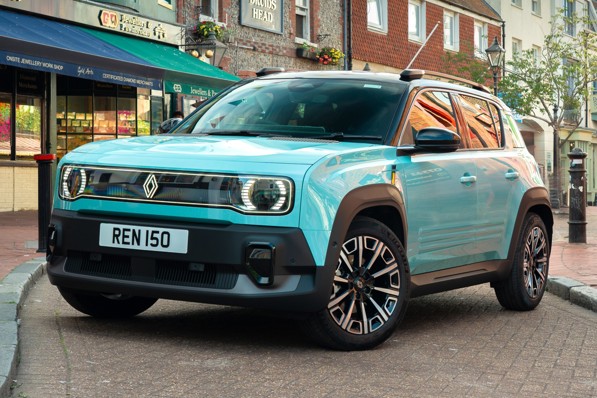
10. Renault 4 E-Tech: from £23,445 with ECG
Why buy it
- Superior in many ways to the Renault 5...
Why avoid it
- ...but its styling isn't as easy to love
Our primary gripe with the otherwise excellent Renault 5 E-Tech is that its rear seat space is a bit snug for adult passengers. So, by stretching the wheelbase to provide more room in the back, the larger Renault 4 E-Tech – yep, bigger car, smaller number – should be a runaway success, right? Erm...
The R4's problem is that whereas the R5 looks immediately 'right', this is more of a grower, assuming you might be persuaded to consider it in the first place. We think it's great and we love the various nods to the original Renault 4, a basic utility car to rival the Citroen 2CV. While both were popular in post-WW2 France, here in the UK, they were seen as barely a step up from public transport.
Anyway, enough of the history lesson because the latest fully electric Renault 4 is fab, with that bit more practicality while still being tiny. Not only that, since it became eligible for the maximum £3750 ECG discount, it's now one of the cheapest EVs available, making a number of battery powered small hatchbacks look surprisingly expensive – yes, Peugeot E-208, we're talking about you.
Renault 4 E-Tech Real EV Range
As the 52kWh Comfort Range battery is the only one you can buy with the Renault 4 E-Tech in the UK, there's plenty of range available according to the official figures – 249 miles in fact. We think that in the real world, due to being a touch heavier and less aerodynamic than the R5, it's going to fall a little short of its little bro's potential, but 190-210 miles is still decent.
Read our Renault 4 E-Tech review.
How we test cars: the electric car method
There's only one way to test cars and that's as thoroughly as possible. Honest John's team of editorial experts knows no other way than to pore over each car in detail, racking-up mileage and building our collective understanding of what separates the best cars from those we wouldn't recommend. Models in our 10 cheapest electric cars for 2026 have been:
-
Driven over 10,000 miles: EVs, especially smaller ones, excel at urban driving, but not all of them will be used exclusively in towns and cities, so we also find out how they perform on windier country roads as well as motorways.
-
Prodded and parked: Cars are not appliances from getting between the proverbial points A and B, even when they're relatively inexpensive. We see how they cope with the rigours of typical family life from shorter school runs to weekend days away. That also means we experience what they're like to park by the kerb in and multistoreys.
-
Real EV Range: Some car review sites happily quote the manufacturers' official driving range and that's that. At HJ we see how far EVs really go push the cars we're testing to see how far they will really go. Then, when the batteries' energy reserves are close to exhausted, we see what they're like recharging using public facilities as well as domestic wallboxes
-
Owner Feedback: There's nothing else as detail rich and anecdotal as our readers' reliability ratings from the Honest John Satisfaction Index. You live with your cars for the long-term and are the experts at what's great and what's grating, so share your experiences so that everyone else can see which models are likely to give them the least grief.
Our reviews are 100% independent. We don't take money from car manufacturers to influence our rankings. Our only priority is helping you find the right car.
Frequently asked questions about cheap electric cars
What is the cheapest electric car currently on sale in the UK?
The Dacia Spring is currently the UK’s cheapest electric car, with a starting price of £14,995. While it undercuts its nearest rivals by thousands, it is a basic vehicle with a 140-mile range and a focus on city driving. If you need more refinement and range, the Leapmotor T03 (£15,995) and the BYD Dolphin Surf (£18,650) are the next most affordable options.
Can I get a government grant for a cheap electric car in 2026?
Yes, the Electric Car Grant (ECG), reintroduced in August 2025, provides a discount of up to £3750 for qualifying EVs. Currently, many of the cheapest models like the Citroen e-C3, Renault 5 E-Tech, and Nissan Micra qualify for a Band 2 discount of £1500. This is often applied directly to the OTR (on-the-road) price by the manufacturer.
Is the Citroen Ami the cheapest electric car?
While the Citroen Ami is significantly cheaper than the cars on this list, it is legally classified as a quadricycle, not a car. This means it has a restricted top speed of 28mph and does not have to meet the same stringent safety standards as a full M1-category vehicle. For most drivers, a "proper" electric car like the Dacia Spring is a safer and more versatile choice.
Do cheap electric cars have enough range for long journeys?
Most affordable EVs now offer a range of between 140 and 200 miles on a single charge. While models like the Renault 5 E-Tech and Fiat Grande Panda are perfect for commuting and city use, they also support rapid charging (CCS). This allows you to top up the battery to 80% in around 30 minutes at motorway service stations, making longer trips more feasible.
Are budget electric cars safe?
Safety varies across the budget sector. Modern entries like the Renault 5 E-Tech, Nissan Micra and Hyundai Inster have achieved solid four-star Euro NCAP ratings. However, ultra-low-cost models like the Dacia Spring have previously received lower scores, so it is worth checking the specific safety equipment and crash-test data for each model before buying.
Why are Chinese electric cars so much cheaper?
Brands like BYD and Leapmotor are able to offer lower prices because they often own their entire supply chain, including battery manufacturing — the most expensive part of an EV. This vertical integration allows them to produce high-tech cars like the BYD Dolphin Surf at a lower cost than many traditional European manufacturers.
Are the cheapest electric cars proper cars?
Unlike the the Citroen Ami quadricycle, the electric models listed above are 'proper' cars, categorised by the DVLA as M1 vehicles. Sure, the Ami is cheaper, but it’s an extremely basic machine, with a tiny range and few creature comforts. That’s a compromise too far for British car buyers, which is why you might want to look at the proper cars on our list.
Do the cheapest electric cars have tiny EV ranges?
Although the Ami isn't designed for venturing the beyond the city limits, the other cheap electric cars should have enough range to handle a typical driver's week's worth of commuting — and maybe even a trip to the coast. Some can be specified with larger battery packs, although doing so can increase the purchase price significantly.
Are the cheapest electric cars safe?
Most small EVs are only capable of achieving a satisfactory rather than standout four-star Euro NCAP crash-test rating under the latest, more stringent standards.
Then there's the Dacia Spring, the pre-facelift version of which — a model not sold in the UK — scored just one star in its Euro NCAP test.The Citroen Ami is classified as a quadricycle and therefore doesn't need to meet the same safety standards as the proper cars here.
