
Best Chinese electric cars 2026: Top 10 EVs from Chinese brands
| Written by: Bear Kilpatrick | Last updated: 17th April 2026 |
One of the bigger surprises of 2026 is how well some of the new Chinese brands are selling in the UK. In March – the first month of 26-plate registrations – the Jaecoo 7 topped the charts, outselling the popular Ford Puma. We've covered the influx of new brands since the first cars appeared, but the anticipation that electric cars would drive demand is wide of the mark, with hybrids being the winning formula – so far, at least.
Top picks at a glance
- Best overall: MG S5 EV
- Best spaciousness: XPeng G6
- Best for luxuriousness: Denza Z9GT
- Best for sportiness: MG Cyberster
- Best for value: Jaecoo E5
- See the full top 10
Although there are many new brands appearing in showrooms, China's strongest brand in the UK used to be British. MG was acquired by SAIC 20 years ago, evolving from selling modified old MG Rover models to a new range of cutting-edge electric cars. These are unashamedly Chinese technology, internationally styled, and not just sold as budget models.
The most prominent Chinese brand is BYD. Forget 'build your dreams' - BYD is a meaningful and recognised brand now, earning respect with British buyers. Not a surprise given that it's the world's largest electric vehicle manufacturer.
Newcomers Jaecoo and Omoda – related through their parent group Chery – are making headway as good value, rather than budget, brands. We've yet to see the full scope of their electric models, as sales are largely driven by their petrol and plug-in hybrid models.
Despite China's electric vehicle technology leading the market, driving innovation from many global brands – we're yet to see the impressive high-end, powerful and incredibly advanced models that grab headlines online, but they aren't far away as BYD's Denza off-shoot illustrates.
Undercutting on price can't hide the demand, and competition, for sales in China – or the attributes those consumers demand for a brand to thrive. Even the cheapest Chinese electric cars may surprise you with their sophistication and quality.
- Find out how we test all electric cars at HonestJohn.co.uk
1. MG S5 EV: best for Chinese electric car overall

Why buy one?
- An inexpensive family SUV that has a real sense of depth and quality for the price
Why avoid it?
- It's well priced rather than cheap; lesser cars with stronger brands are within reach
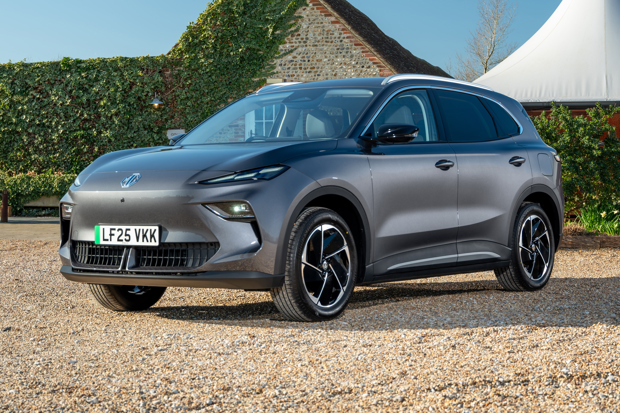
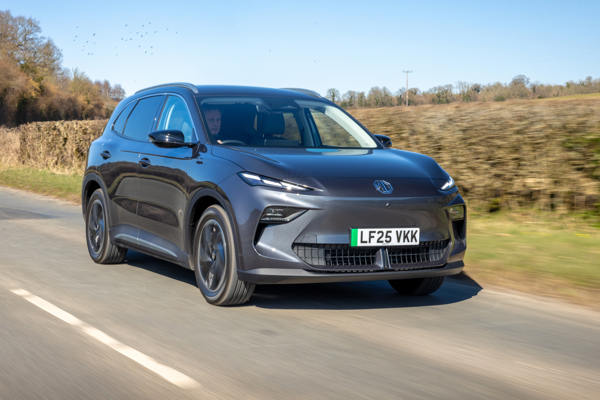
Coming in at less than £30,000 with a very established brand and a strong track record of selling electric cars in the UK, the MG S5 EV replace the popular MG ZS EV and should also appeal to buyers of the old MG 5 EV estate. We’re particularly impressed with the attention to detail and quality on the MG S5 EV, where the interior trim, ride and handling and overall cohesiveness give it a polished and substantial feel that many new models lack.
It’s efficient, as well. The entry-level Standard Range battery might not sound generous but it gives a WLTP combined range of 211 miles, while the Long Range's 298 miles is impressive for a car costing £31,495. Our experience with MG’s previous electric cars – including the MG 4 EV, the platform of which is used here – is that this efficiency is easily achieved away from urban speeds.
In fact, there’s very little we dislike about the MG S5 EV. Slightly remote, artificial steering mars the driving experience but is a criticism we can level at many rivals. Overall, ride and handling compare well with alternative electric SUVs built outside China.
Competitive finance, mature technology and a seven-year warranty finish the package for what is already a thoroughly competent and likeable electric family SUV. It’s not quite as bargain-basement as some previous MG models, but you could usually find where the savings had been made. The MG S5 EV is competing with Korea’s best and represents remarkable value without compromise.
Read our full MG S5 EV review.
2. BYD Dolphin: best for big car refinement in a small package

Why buy one?
- Small family hatchback with big battery, comprehensive kit and comfortable ride quality
Why avoid it?
- Not as polished at speed as European hatchbacks, slow charging against latest rivals
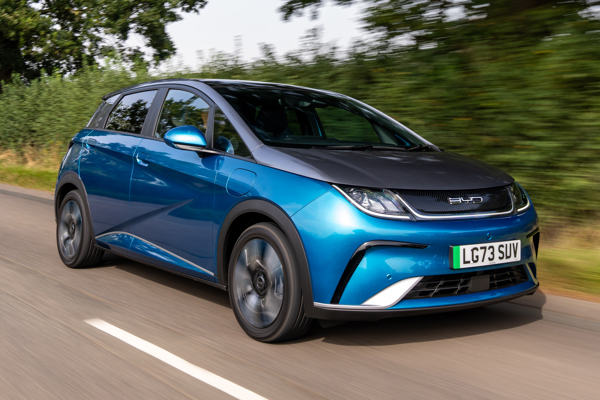
If the Dolphin Surf is BYD’s answer to the Renault Twingo, the BYD Dolphin is the closest you’ll get to the Renault 5. It neatly undercuts most small hatchback rivals in price and eclipses them in range and equipment. Our time with the Dolphin revealed that even early in its presence in the UK, it’s got the right blend of comfort and feedback to offer a good traditional hatchback driving experience. At less than £30,000, it also offers a 265-mile range and advanced features, such as Vehicle-to-Load and a heat pump.
What does traditional mean? Remember when hot hatches were a distinct breed, tuned for performance rather than family comfort? When most brands in the UK seem to have decided British drivers want sporty, firm cars even in the most basic specifications, the Dolphin has compliant suspension to mask the inevitable bulk of the 60.4kWh battery.
A hearty 204PS means the BYD can move that bulk as quickly as any Eighties GTI, but the long wheelbase and wheel-at-each-corner stance means it rides well and has a planted feel with a bit of bodyroll, rather than bouncing harshly over every pothole. It can't charge as quickly as the latest Korean EVs in this sector though – despite BYD's advanced tech, it only supports up to 88kW rates.
We found the first Dolphin on our shores scrabbled for grip and didn’t inspire confidence in fast corners. The standard tyre brand has since been changed, but it was a rare oversight in quality control for BYD. Fit, finish and refinement reflects BYD’s mainstream position in China – where it is far from a budget brand. Its distinctive dashboard design has humour and common-sense blended with some welcome hardware controls to supplement the signature rotating touchscreen.
You’ll pay less for a BYD Dolphin than you would a Peugeot E-208 or similar, meaning you get a lot for your money. A six-year warranty and competitive low-deposit finance deals complete the package – but it scores highly in most of our test criteria and doesn’t need gimmicks to be worth choosing over rivals.
Read our full BYD Dolphin review.
3. Leapmotor T03: best alternative to public transport

Why buy one?
- It is incredible value for money if you can charge at home or work
Why avoid it?
- Safety technology likes to alert you to everything. Frequently. Noisily.
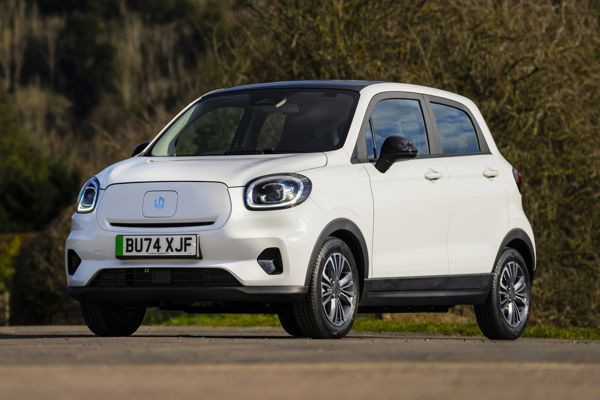
You’ve seen the adverts, the Leapmotor T03 is pretty much Britain’s cheapest car – electric or otherwise. Although there are a couple of potential rivals to that dubious accolade, they don’t offer the comprehensive suite of equipment and useful 165-mile range the T03 has to offer for its £175 deposit, £175 per month typical finance offer. Cash buyers will find them available from £14,500, with the retail price just below £16,000 if you want to order a specific colour.
That’s the only choice you have to make on this city car – it’s got a panoramic roof, driver assistance including adaptive cruise control, a smartphone app and room for four adults. Downsides are a lack of Apple CarPlay and Android Auto support – though there are third-party adaptors that work – and a small 210-litre boot. Our main complaint is that unlike the Dacia Spring and the BYD Dolphin Surf, this Leapmotor seems particularly nervous with the mandatory safety sensors pinging alerts and chiming very frequently, as well as being rather fiddly to turn off.
But that’s missing the point. This is a small electric car that unlike the Citroen Ami, can be used on real roads, mixing it with real traffic and costs less than taxing and maintaining many cheap old used cars. As commuter transport, as a shopping trolley, as an urban runabout, it’s immensely good value in 2026’s landscape of rising costs and subscribe-to-everything mentality.
This is a small Chinese car that underlines the reality of modern tech. Some firms charge to unlock the pre-installed 'digital extras' via either a monthly subscription or only switching them on for the more expensive trim levels. Not Leapmotor – it acknowledges this is the era of cheap electronics and fills the T03 with all it can. As a result, it only comes in one everything-is-standard specification. It’s different and it works. Did they need to fit so many annoying beeps as standard, though?
Read our full Leapmotor T03 review.
4. MG IM6: best high-tech family SUV

Why buy one?
- Has the potential to deliver a serene, sci-fi dream of futuristic family transport
Why avoid it?
- Britain's post-apocalyptic road-network is the wrong genre of sci-fi
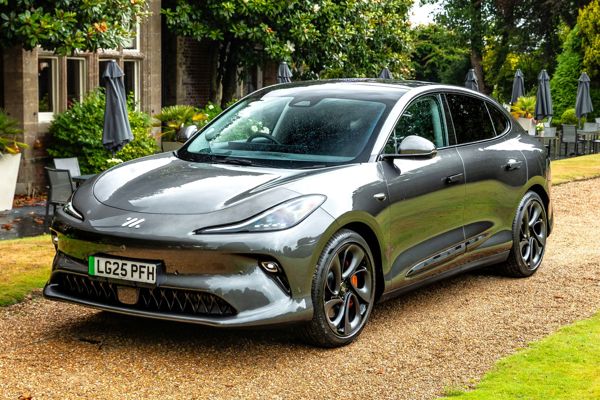
It’s the most expensive family car you’ll find in an MG showroom, but it’s still less than £48,000 for a 95.6kWh battery, 407PS electric SUV with a 388-mile range and a standard equipment list that includes four-wheel steering, a vast array of driver assistance systems and a seven-year warranty.
Rather than a boxy off-roader the MG IM6 is a tall hatchback – or coupe-SUV in marketing speak. That means that while passenger space is impressive, the 655-litre boot doesn’t expand to van-rivalling capacity with the seats down.
On the other hand, this is a sci-fi dream car, ticking all the boxes for those futuristic visions of happy families gazing at a greener world through double-glazed isolation. I, Robot meets Equilibrium has never been so affordable.
Choose the high-end Launch Edition at just under £53,000 and the adaptive air suspension might keep that illusion intact before a pothole thuds through the cabin and you realise we're trapped in Mad Max – but you’ll pay the higher VED rate for the next five years.
We rate the IM6’s value for money and equipment highly, but found the steering, ride and handling fell short of expectations on country roads. In urban environments the Launch Edition’s air suspension flipped that verdict, proving excellent for isolation and comfort.
Competing with the Tesla Model Y – albeit at a much lower price – the Kia EV6 and the Polestar 2, the MG IM6 offers impressive value and a serene experience, but it needs some polish before it truly responds well to British roads.
Read our full MG IM6 review.
5. BYD Dolphin Surf: best trendy city-slicker

Why buy one?
- Striking style and impressive interior build quality and materials, very efficient
Why avoid it?
- Limited customisation for a fashion-first design, not the best value on the market
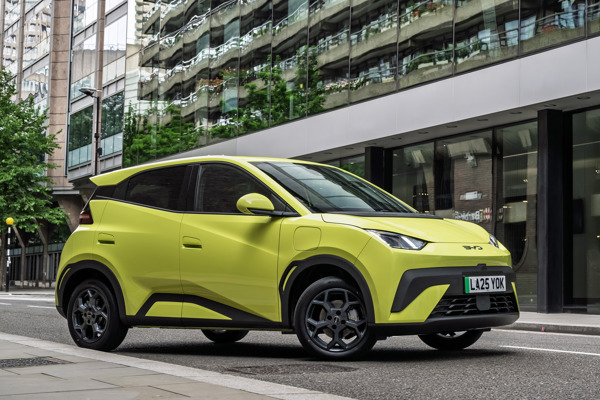
Not all dreams have to be big, right? If your ambitions are scaled to fit an urban environment BYD offers one of the most stylish, funky small electric cars you can buy in the UK – the Dolphin Surf. It’s affordable, but not as cheap as the Leapmotor T03, and it offers a fashionable and distinctive appearance, with a surprisingly mature and well-made interior for a car costing less than £19,000.
We like the interior and overall quality, but it’s not perfect – BYD’s signature rotating infotainment screen seems redundant when it’s scaled down and there are no hardware controls for climate control and other features, plus the ride can be a little fidgety. On the other hand, it feels much better made than the more expensive Citroen e-C3 and Fiat Grande Panda Electric it undercuts, has a 308-litre boot and up to 200 miles WLTP range in the £22,000 Boost model with 43.2kWh battery.
That battery is where the Dolphin Surf makes the most sense unless you drive exclusively in city traffic, the entry-level 30kWh is efficient but in winter the 137-mile WLTP range is unlikely to be met. Our tests in summer, however, suggest that the Boost and Advance models may exceed their expected range on occasion.
A choice of brighter colours and striking, cyberpunk-inspired angular design and interior details complete the style-focused attitude of the Dolphin Surf. It may not be the cheapest small EV you can buy, but it definitely stands out.
Read our full BYD Dolphin Surf review.
You may also like
- Looking for an EV made outside of China? Here are our top 10 electric cars overall
- Will you be affected by 2028’s pay-per-mile EV tax? Our guide to eVED explains all
- Not yet ready to go fully electric? Check out our 10 favourite plug-in hybrids
6. MG IM5: best for affordable luxury

Why buy one?
- Impressive performance, tech and value for money in a stylish package
Why avoid it?
- Firm ride can be unsettled on broken road surfaces
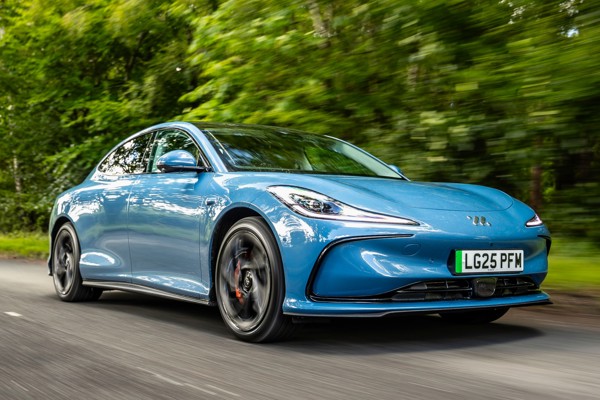
It’s another MG, but is it? The MG IM5 looks, at a glance, slightly like like a cross between the Porsche Taycan and the Hyundai Ioniq 6. It’s a long, low fastback with an enigmatic symbol on the front and little else to identify it. IM stands for Intelligence in Motion and it’s one of the higher-end Chinese brands taking aim at the aforementioned Hyundai Ioniq range as well as the obvious Tesla comparisons. Outside of China, IM is sold as an MG sub-brand giving it access to established dealer networks and putting a higher-end option in MG showrooms.
High end, but affordable – the MG IM5 stays just clear of the £50,000 luxury electric car threshold even in range-topping IM5 100 Performance trim, where a 94.6kWh battery, 357 mile range and 751PS dual-motor AWD platform with a top speed of 167mph or 62mph in 3.2 seconds meets the impressive generous specification of all IM5s. That includes four-wheel steering, auto-parking, 20-speaker surround sound and almost anything else you can think of.
You get all that on the sub-£40,000 73.5kWh standard range version as well, which has an ample 295PS – but cannot charge as quickly as the 407PS 100 Long Range (441 miles WLTP) or Performance versions which support up to 400kW ultra-rapid charging.
We’d definitely go for the 100 Long Range, at £45,000, but it’s worth taking an extended test drive if you can – some users find the firm suspension setup can be harsh on British roads. It could be that the MG IM6 is better if you spend a lot of time driving around speed bumps and potholes.
Read our full MG IM5 review.
7. XPeng G6: best for useful on-board technology

Why buy one?
- Elegant styling, for an SUV, strong all-round performance and great value for money
Why avoid it?
- Tech-laden interfaces can be confusing, low-speed ride is too firm
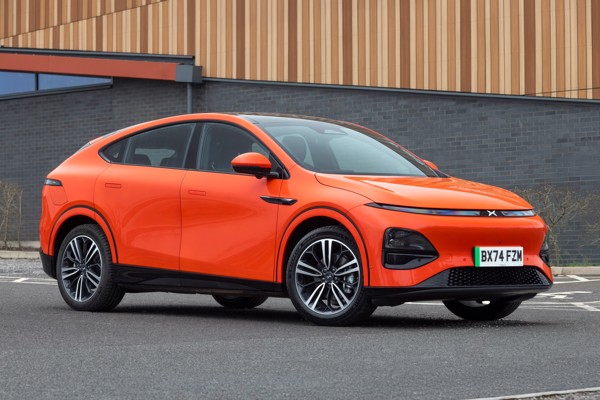
Have you seen an XPeng on the road? The dealer network is still growing but for buyers looking for a high performance electric car on a sensible budget, the XPeng G6 is worth travelling for. Under the skin it’s competing with the best EVs around the world – but you can buy one for just under £40,000 and the Long Range version at £45,000 is very impressive. Almost as impressive as the 571-litre boot and spacious interior – though it’s not as clever as the Skoda Enyaq in terms of flexibility.
Starting with an 800V architecture, and either 66kWh or 82kWh NMC battery, the XPeng G6’s tech is a similar generation to the high-end MG IM5 and IM6 and ahead of many European rivals. It means fast charging and a 354-mile range from the long-range 85.4Wh version. That upgrade includes a power boost for the rear-wheel drive G6 from 258PS to 286PS and support for 280kW charging – though the standard range’s 215kW support is good; many rivals at the same price are limited to 80-150kW charging.
We really like a lot of XPeng’s approach to interior design and quality overall, bar the lack of right-hand drive optimisation, but the high level of refinement and comfort at speed throws a rather harsh, firm low-speed ride into sharp relief. Sometimes too sharp. It’s better, overall, than most Chinese electric cars in terms of tuning for European roads and tastes, but lags behind the excellent Renault Scenic E-Tech and more expensive, but mature and polished Kia EV6.
Backed by the usual recipe of competitive finance deals, long warranty and ‘new-brand’ promotions, the XPeng G6 feels like a higher-quality product than the majority of Chinese EVs joining the market. There’s still room to improve the recipe for Britain and RHD markets.
Read our full XPeng G6 review.
8. MG Cyberster: best for open-air thrills

Why buy one?
- It's unique, well-balanced and rapid, and offers silent open-air motoring
Why avoid it?
- It attracts the luxury penalty for VED, boot space is limited, some SUVs are quicker
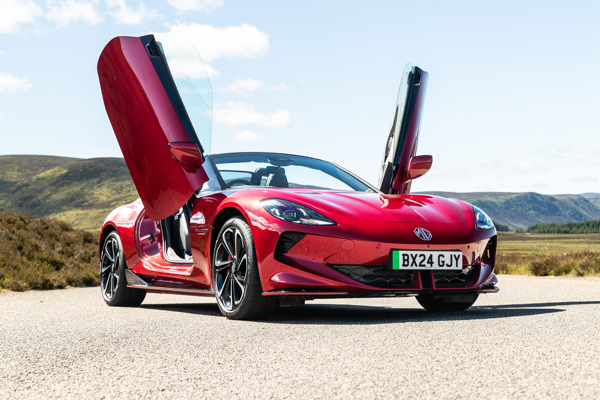
We almost feel like we’re cheating including the MG Cyberster in a list of the best Chinese electric cars. It’s a former British brand, after all, and what could 'B' more on-brand for MG than an open-topped, slightly roadster based on contemporary family car tech? We’re still waiting for other marques to release electric convertible – Tesla has yet to deliver the promised successor to the first car it produced, an electrified Lotus Elise – while the Cyberster is a 100% Chinese EV.
We like the style, the bravery and boldness of the two-seater with Lambourghini-esque scissor doors, the uncompromised folding fabric roof and undeniably impressive performance on offer. There is a practical aspect to those supercar-style doors: they’re easier to open in cramped car parks. The MG Cyberster is a wide car, with a comfortable interior and we really appreciate the ease of access offered by this unusual approach. Boot space is meagre, with 249 litres limiting your touring more than the electric range.
It’s the fastest production MG sports car ever made, with 0-62mph in 3.2 seconds achievable in the 503PS GT and a respectable 5.0 seconds for the 340PS single-motor Trophy. A range of 316 miles – which does drop to 276 miles for the AWD, dual-motor GT – reflects the packaging and weight balancing act for the 77kWh battery.
There are no direct rivals, but with prices starting at £55,000 you’re almost in Porsche 718 Boxster territory. Surprisingly, we found the MG’s interior materials and quality feel superior to the Porsche – and the driving experience, while different to a traditional combustion engine, is more involved and rewarding than many high-performance EVs. Braking, power delivery and handling have been tuned to feel like a serious sports car.
Read our full MG Cyberster review.
Jaecoo E5: best overall value for a family SUV

Why buy one?
- An above-average car with appealing high-rise SUV driving position for a below-average price
Why avoid it?
- Upmarket looks wrap a forgettable driving experience
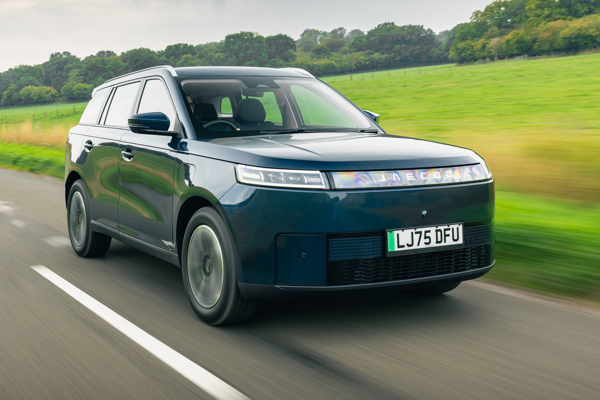
The Jaecoo E5 tops the list not because of our impressions – it’s here because the British car buyer has voted, and Jaecoo has claimed the top spot in the sale charts. The Jaecoo E5 offers impressive space and performance for a very competitive price, and the Range-Rover-esque styling can’t hurt its popularity.
Competing on price first, the Jaecoo E5’s £27,000 starting point puts it in the heart of small family SUV territory regardless of fuel type. There’s only one battery option at 61.1kWh paired with a 204PS front-mounted motor, and two trim levels.
Both of which are impressive value when compared with the Skoda Elroq or the Kia EV3. Even the Jeep Avenger Full-Electric, which at least carries an authentic aspirational off-road brand, can’t come close to the Jaecoo E5’s overall package. Its strongest rival is the MG S5 EV, which doesn't cost a great deal more but delivers a more satisfying experience behind the wheel.
Turning the tables, the Jaecoo E5’s ride and handling are merely acceptable, with nothing particularly special to offer in feedback or comfort. The high driving position delivers something of that Range Rover experience, but you won’t be lulled into a sense of premium serenity here. On the other hand, the rugged and well-made interior should be less stressful when subjected to family life.
As with the related Omoda E5, the Jaecoo E5 is a strong competitor against mainstream models such as the Nissan Qashqai, offering a seven-year warranty and competitive finance deals as incentives. Unlike many cars on this list, the incentives do matter – but for many households spending less and getting a car this competent is incentive enough.
Read our full Jaecoo E5 review.
Denza Z9GT: best for luxury and performance

Why buy one?
- It's the closest you'll get to China's state-of-the-art hyper-EV market for now
Why avoid it?
- A new brand means some risk for residual values, UK roads mean untapped potential
In China, BYD’s Denza marque is the highest-end option for family-friendly vehicles alongside the technical showcase of Yangwang, where you will find hydraulic-hopping, record-breaking supercars – the U9 Xtreme is the fastest car in the world, achieving 308mph – and the semi-amphibious U8 SUV.
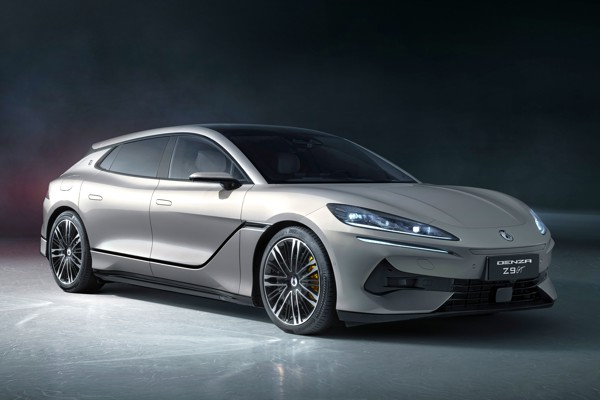
Next to such dramatic extremes, the Denza Z9GT seems almost sensible. It’s taking on the Porsche Panamera, but with elements of Audi e-tron GT. For once, it’s not an SUV – it’s more of a five-door shooting brake, with lots of interior space. Chinese models have up to 952PS and we can expect the three-motor, four-wheel steering, clever dynamics to be offered in the UK.
How useful is 952PS in Britain? The Z9GT can achieve 0-62mph in 3.4 seconds, has a range just shy of 400 miles from the 100kWh battery and features similar suspension to the aforementioned bouncy recordbreaker. It's designed to eschew any idea of being an SUV with proportions penned by former Alfa Romeo stylist Wolfgang Egger, and it certainly has the foundations to be a truly aspirational car worthy of a price anticipated to be between £75,000 and £100,000.
We’re looking forward to seeing how well China’s upper-class techfest translates to the UK’s roads and buyers – but, it’s just around the corner. We’ve included it because unlike most ambitiously high-end new marques covered in the past few years, the Denza range will be here very soon.
Read our full Denza Z9GT review.
How we test cars: the electric car method
Getting properly under the skin of all cars is how we test them at Honest John. Our team's knowledge and expertise has been honed by getting to know cars of all types thoroughly. To determine our round-up of the 10 best Chinese electric cars for 2026, our editorial experts have:
-
Driven over 10,000 miles: Narrow city streets, broad urban thoroughfares, cross-country routes, motorways... You name it, we've driven electric cars on everything that British roads can offer – good and bad.
-
Prodded and parked: For us to tell you how cars will fit into your lives, we see how well the do or don't fit into ours, so there's plenty of folding the back seats over, installing Isofix child restraints, zipping up and down multi-storey car park ramps... You name it, we've done it. Yes, including seeing how much rubbish we can fit inside for a tip run.
-
Real EV Range: In order to understand how far electric cars can be driven in realistic conditions, that's exactly what we do. Plus we test what they're like to charge, both at home using wallboxes and out and about connected to the latest ultra-rapid DC facilities.
-
Owner Feedback: HJ readers share their experiences with us year-on-year revealing the best and the worst cars when it comes to their personal reliability experiences. And when we know which are the star performers and which are best left alone, we make sure that you do, too.
Our reviews are 100% independent. We don't take money from car manufacturers to influence our rankings. Our only priority is helping you find the right car.
Frequently asked questions about Chinese electric cars
Which is the best Chinese EV as an all-rounder?
Our pick is the excellent MG S5 EV which heads our list for having an appealing combination of qualities for not a huge amount of money.
Which Chinese electric car has the longest range?
Based on the WLTP Combined cycle, the longest potential driving range of any currently on sale Chinese electric car is the MG IM5 Long Range 100. In theory it can travel 441 miles from a full charge before it needs to be plugged back in again.
Are Chinese electric cars safe?
Nearly all of the new Chinese cars on sale in Britain have been given the full five-star rating by Euro NCAP. Many of them offer more driver assistance and safety technology as standard, exceeding the mandatory requirements, and the body engineering and crash protection is on par with rivals.
When it comes to the battery technology and installation, China's huge, established market for electric vehicles means the protection and mitigation of risk has been developed over billions of miles. Most European manufacturers use Chinese battery technology either as a whole drive system, or individual cells, and in several cases European brands have formed stronger partnerships with new electric vehicle firms, such as Stellantis and Leapmotor, or AUDI – a new brand from Volkswagen Group in China – and IM Motors via SAIC.
Are Chinese EVs worse for the environment?
A lot of media coverage around the electric car industry focuses on China's extraction of raw materials and historic choices to prioritise growth over environmental regulation. Much of that growth has been aimed at getting things in place to effectively enact change across the board, rather than piecemeal, and overall China's progress towards renewable energy and environmental regulation is considerably better than some commentators portray.
One of the most significant developments coming from the Chinese electric vehicle industry is a shift in the chemistry and composition of batteries. Reducing reliance on elements such as Cobalt in Lithium-Ion Phosphate (LFP) packs is a start – in BYD's Blade 2.0 platform this Cobalt-free chemistry also supports 'Flash Charging' – a new, megawatt ultra-rapid system that can top up a suitable battery at 3000mph or 250 miles in five minutes. That brings EV charging in line with fossil fuel convenience, though the infrastructure challenges are obvious.
Resource extraction isn't just limited to China or to Chinese industries, and the environmental impact isn't mitigated by choosing a specific brand necessarily. Buying a Chinese EV over any other electric car isn't worse for the environment, and may offer access to newer, more sustainable technology. In terms of transport and logistics, as the market grows Chinese firms are looking at building factories in the UK and Europe, cutting the impact of moving cars or components around the world as well.
Evidence for electric vehicles overall shows that they're lasting longer than early predictions suggested, and with routine maintenance, are more reliable. So as a rule, choosing an electric car is the greener option.
Do Chinese cars use different controls or have poor instruction manuals?
If you're thinking of that AliExpress car radio with its half-finished handbook, don't worry. Chinese car manufacturers have invested a great deal in European and UK presence and marketing, and have documentation and interfaces in perfect English for the most part. Occasionally early software versions may have issues with localisation, but you probably know that most of the electronics and tech you buy are made and developed in China, and native export-market speakers are involved in any serious product after the factory and OEM stage.
The flawed products you've seen? They're bought by the lowest bidders and shipped with the least effort. Just look at the difference between an Xtrons infotainment system for £150, and the same device from an unknown brand on AliExpress for £80.
One area you may find differences is in the approach to integrating technology. This market loves gadgets and showing off – from car lighting that can send messages, to autonomous features such as self-parking. Cramming it all into a simple interior can result in multi-function buttons, screen-heavy controls, or even situations where the least obvious approach works such as using the voice control to open a sunroof.
