Skoda Octavia at 30: Czech out this family favourite's retrospective

Thu, 22 Jan 2026
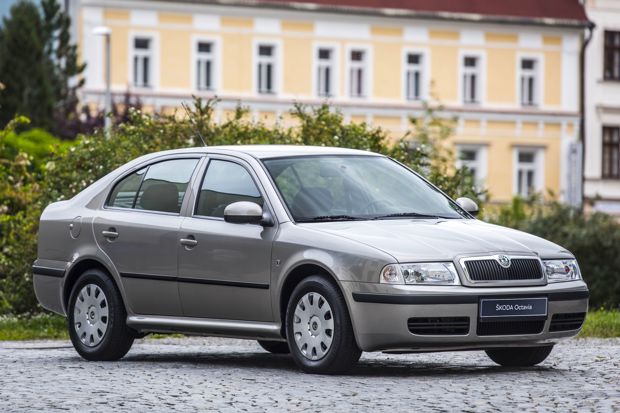
How significant certain cars really were to their manufacturers’ fortunes is a contentious topic, but in the Skoda Octavia’s case that importance is wholly justified. Launched 30 years ago, the modern-era Octavia proved utterly transformative, shifting perceptions of the Czech brand and setting alight the touchpaper of its popularity.
Although Volkswagen Group’s gradual takeover of Skoda began in 1991, five further years passed before the first true VW-era model debuted with the launch of the Octavia.
Just as it had with 1994’s Skoda Felicia — a significant Volkswagen-funded makeover of the Favorit range it replaced — Skoda’s back catalogue was the source of naming inspiration for its larger, all-new family hatchback model.
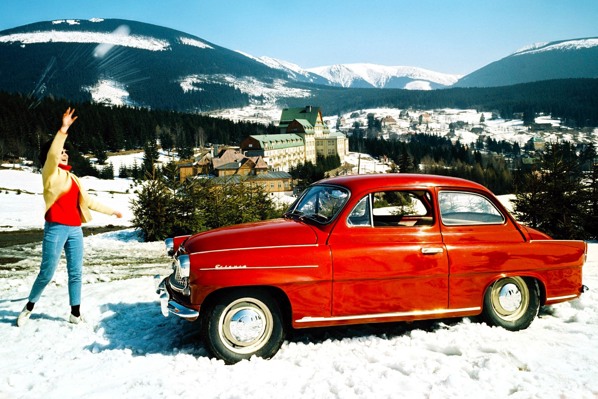
Although few examples survive today, the original Skoda Octavia — so named because it was the firm’s eighth post-war model — was also sold in Britain. There was a choice of saloon, sold between 1959 and 1965, yet it was the estate-bodied Octavia Combi which proved more popular, being price-listed in the UK from 1963 through to 1971.
Labels aside, the modern Skoda Octavia generations owe little to their ancestor yet they have been instrumental in not merely ensuring the marque’s survival, but enabling it to thrive.
Skoda Octavia Mk1 — Type 1U
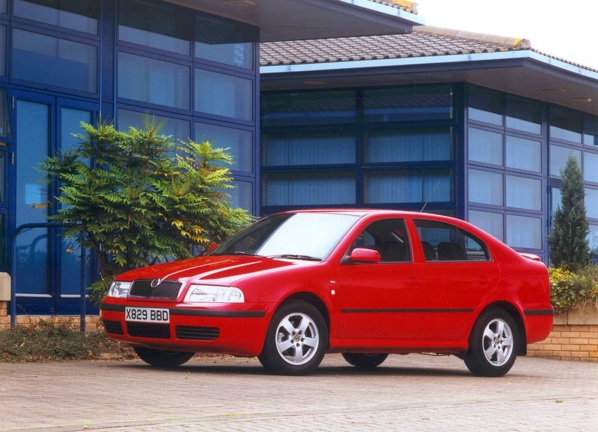
This first generation of modern Skoda Octavia is the reason the company is marking the range’s 30th anniversary in 2026. Although unveiled at the end of 1996, British buyers had to wait until early summer 1998 before they could place orders for one for the family-sized five-door hatchback.
By the time it arrived in UK showrooms, it had already received an updated dashboard and had been supplemented by a second, even more practical bodystyle. Still known as the Combi in Europe, it was known as the Skoda Octavia Estate when sales began here in autumn 1998.
Key to this-generation Octavia’s appeal was its combination of Volkswagen Group underpinnings and engines, enveloped by an attractive, spacious body which accentuated the Skoda’s value for money. Here was a car similar in size to the contemporary Ford Mondeo and Vauxhall Vectra, yet it cost less than the smaller VW Golf with which it shared much of its understructure.
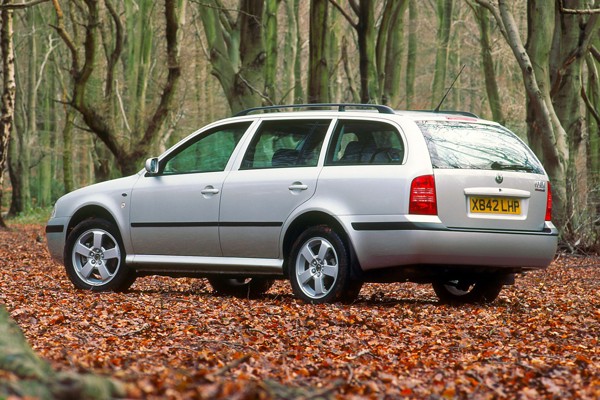
Well-built, generously equipped and powered by a suite of up-to-date, economical petrol and diesel engines, three specification grades were initially available — LX, GLX and SLX.
Yet, Skoda was soon keen to push the Octavia upmarket, launching versions propelled by the same 150PS, turbocharged 1.8-litre engine as found in the Audi TT and Volkswagen Golf GTI in October 1999.
Mildly facelifted inside and out in October 2000, the trim level structure was rejigged to become Classic, Ambiente and Elegance, joined by an even plusher range-topping specification — Laurin & Klement. This wood and leather-specification paid homage to Skoda’s corporate origins.
Before the end of that year, Skoda also introduced a slightly elevated Octavia Estate which featured all-wheel drive, with a similarly equipped hatchback equivalent arriving six months later. Also using the 150PS 1.8T engine, these were usefully quick, but faster was still to come.
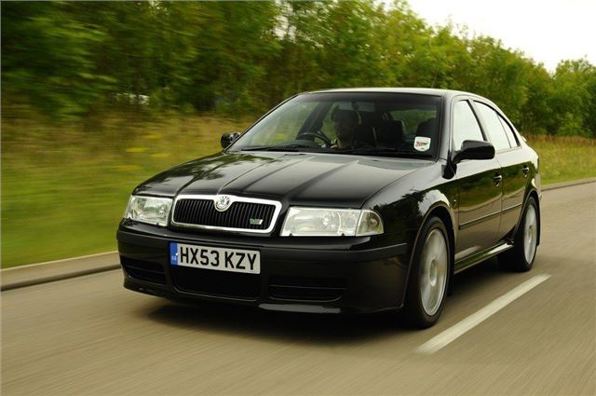
Originally intended to be sold here as the RS, as it still is elsewhere in Europe — until Ford complained — the 180PS Skoda Octavia vRS went on sale in the UK in spring 2001.
Twenty-five years on, its performance models are taken as a given, yet that overlooks Skoda’s reinvention that in the five years since the Octavia debuted it had gone from a bargain basement brand to one that could successfully sell a hot hatchback — and a large one at that.
Not only that, by February 2003 it had been joined by the Octavia vRS Estate, becoming one of the first performance load-luggers to capture the public’s imagination.
Skoda Octavia Mk2 — Type 1Z
.jpg?rmode=max&width=601&height=376)
Reflecting how successful as the Mk1 was, it continued to sell alongside the second-generation Skoda Octavia for the best part of a year as that line-up was gradually introduced.
Sharper styling, an even higher quality interior and the freshest range of Volkswagen Group engines — including direct-injection FSI petrols — came first with the Skoda Octavia hatchback from summer 2004, followed by the Mk2 Octavia Estate in early spring 2005.
Coinciding with the Estate’s launch, the continued Classic, Ambiente, Elegance and L&K specification hierarchy was joined by the Sport, providing vRS-inspired looks with less performance at a lower price point.
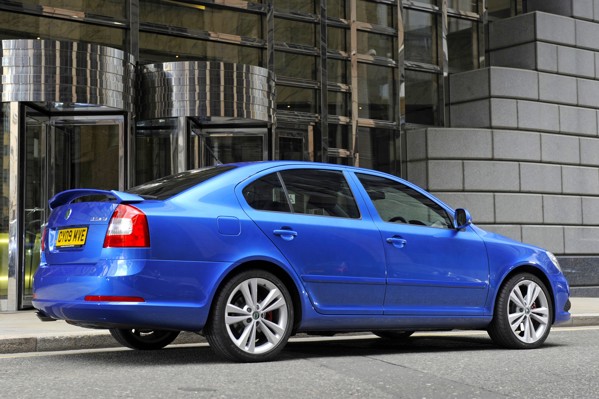
When the Mk2 Octavia vRS finally went on sale at the end of 2005, the ante had been upped significantly — its 2.0-litre TFSI engine now produced 200PS, with the offering expanded less than a year later when it was joined by a 170PS, 2.0-litre TDI diesel alternative.
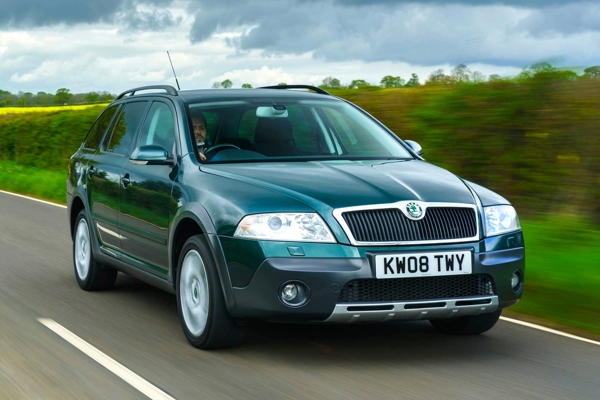
All-wheel drive continued to be available in conjunction with the Estate body, yet more was to come with the April 2007 arrival of the Skoda Octavia Scout. Following a similar recipe to that use for the contemporary Audi A6 Allroad, the Scout was an all-wheel drive Octavia Estate featuring not only an elevated ride height but a tough-look exterior courtesy of unpainted plastic bumper and wheelarch extensions for SUV-aping vibes.
A more rounded nose design for the Mk2 Octavia was introduced at the start of 2009, the facelift also marking the demise of the Classic and Ambiente trim levels in favour of S and SE.
Common rail injection diesels were now filtering through VW Group’s assortment of models, with Skoda keen to extol the Octavia’s efficiency credentials with the first of its eco-focused GreenLine versions. Producing 105PS, the 1.6-litre TDI CR engine had an official fuel consumption figure of 64.2mpg, proving especially popular with minicabbers.
Skoda Octavia Mk3 — Type 5E
.jpg?rmode=max&width=601&height=400)
Early 2013 was a busy spell for the Czech brand’s UK operation with the launch of the all-new, third-generation Skoda Octavia in hatchback (from March) and Octavia Estate (May onwards) guises.
Edging ever-closer to Volkswagen levels of plushness inside, the Octavia’s bodywork became even more chiselled than before, amplifying Skoda’s continued rise upmarket. Of stylistic note, the rear of the hatchback was altered to further resemble the shape of a traditional saloon than its immediate predecessors had ventured.
.jpg?rmode=max&width=601&height=400)
By now, all of the engines were turbocharged for both performance and efficiency, crowned by the Mk3 Skoda Octavia vRS by the end of 2013 — power was now up to 184PS for the diesel and 220PS for the petrol. The latter was increased to 230PS in 2015 at the same time as an all-wheel drive vRS diesel went on sale.
Trim levels continued from those established at the Mk2 Octavia’s facelift, joined by the company car driver-targeting SE Business in 2014 (replaced by SE Technology two years later), while 2015 saw Elegance give way to and SE L. A short-lived SE Sport derivative appeared from summer 2016.
There was also a Mk3-based Skoda Octavia Scout, although sales of all-wheel drive SUV-alike didn’t get underway until October 2014. As ‘proper’ SUVs became ever-more popular — including in-house with the Skoda Karoq and Skoda Kodiaq — interest in the Octavia Scout dwindled, with sales ending early in 2019.
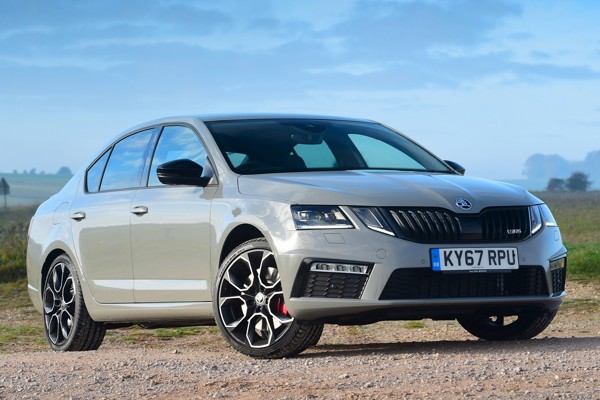
Hitherto conservative in appearance, that was ditched in spring 2017 when the Mk3 Octavia was facelifted, with much of the attention centred upon its front end complete with quad headlights — the inner, grille-adjacent pair being differently sized and angled compared with the outer two.
Further modifications to the engine range included the introduction of the three-cylinder 1.0-litre TSI at the lower echelons of the range and the petrol vRS’s 2.0-litre zinged-up to 245PS.
Skoda Octavia Mk4 — Type NX
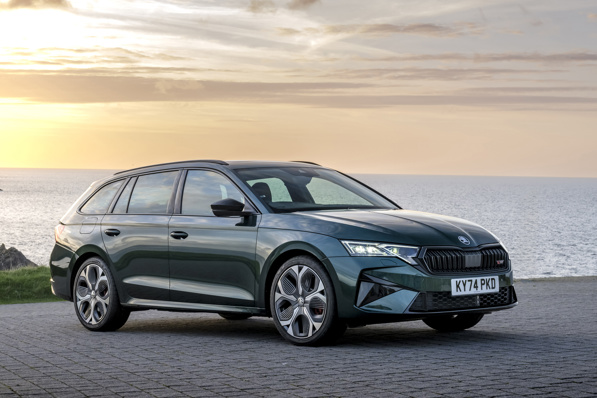
Sales of the fourth-generation Skoda Octavia commenced in June 2020. Reflecting its importance, the Skoda Octavia Estate was launched on the market simultaneously with the hatchback version.
Still recognisably an Octavia, albeit with even sharper lines, the divisive split-headlight look was ditched, albeit visually referenced in the newcomer’s LED daytime-running lights graphics. Around the back, the Octavia’s tail lights were now on a horizontal axis, bisected by the tailgate so as not to impinge on boot access or practicality.
.jpg?rmode=max&width=601&height=400)
Not only did the Mk4 Octavia’s interior dial-up the quality levels even further, it had a minimalistic style, previewing the themes of the then forthcoming Skoda Enyaq electric SUV, with a freestanding multimedia touchscreen dominating the dashboard.
While there was no EV version of the fourth-generation Skoda Octavia, hybridisation had made its way across with models so equipped going on sale in autumn 2020. Both the 1.0-litre and 1.5-litre e-Tec petrols benefitted from mild hybrid technology, company car drivers’ attention was caught by the plug-in hybrid models further up the range.
Producing 204PS when paired with SE L specification, the 1.4-litre TSI iV PHEV system was also available with 245PS in the hottest Octavia vRS guise, sharing its drive system with the Volkswagen Golf GTE.
Petrol (also 245PS) and diesel (now 200PS) Skoda Octavia vRS models sold alongside it, the latter continuing to the sold with an all-wheel drive option.
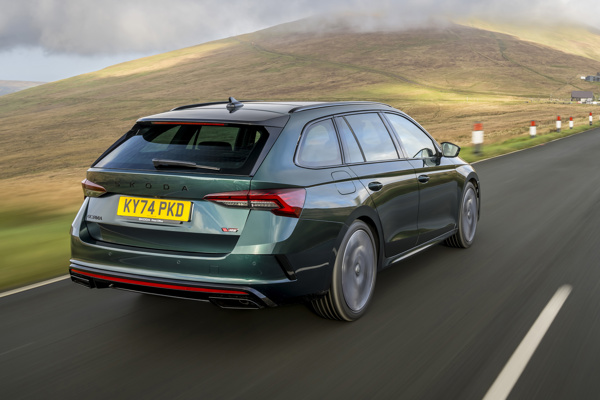
Time continues its march, of course, meaning that the current Skoda Octavia received a mild mid-life makeover in April 2024, with today’s model mix being more streamlined than it has previously been.
Within the core range, both SE Technology and SE L grades are available with a 116PS 1.5-litre petrol engine — with and without mild hybrid accompaniment — while the 2.0-litre diesel comes in 116PS and 150PS guises. Above those, minus the lower-powered diesel choice, is the SportLine trim level.
Remaining atop the line-up is the Skoda Octavia vRS, now offered solely with a 265PS 2.0-litre petrol engine — a smidgen over £40k buys you a five-seater family hatchback capable of darting from a standstill to 62mph in 6.4 seconds, while still officially averaging around 40mpg.
What's next for the Skoda Octavia?
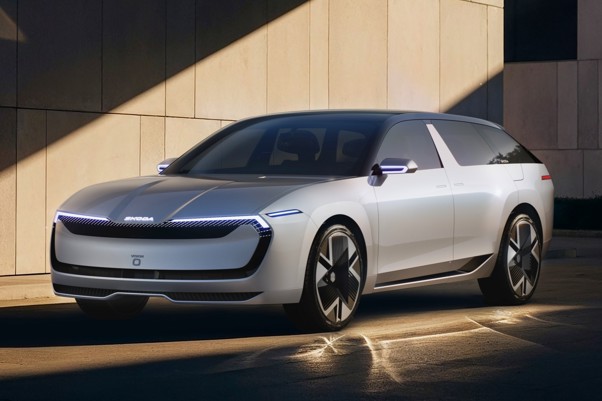
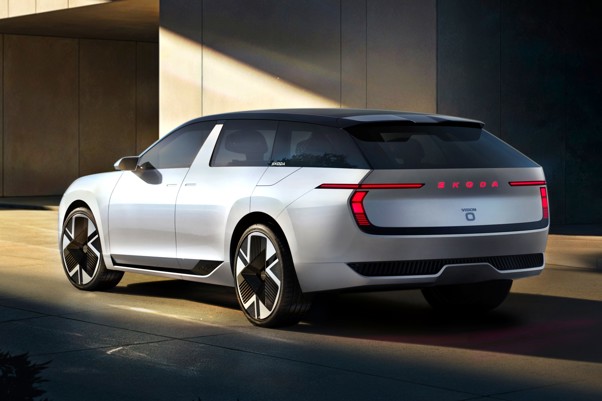
The next chapter in the Skoda Octavia story is something we can only speculate at for the time being, although not wildly so. One of the 2025 Munich motor show’s star attractions was the Skoda Vision O concept car, previewing the potential styling of a future electric estate car.
Given the company’s form by revealing concepts that closely resemble the subsequent production models, there’s a strong likelihood that the next Skoda Octavia Estate could look very similar to the Vision O when it’s revealed in 2027 or 2028.
Whether it will be sold purely as an EV or additionally alongside plug-in hybrid versions, part-propelled by efficient petrol engines, remains to be seen.
While the company has enjoyed sales success with its Skoda Elroq electric SUV — with the battery-powered Epiq and Peaq waiting in the wings to top and tail the range — car buyers haven’t embraced EVs as quickly as manufacturers and legislators had hoped. So far, at least.
What you can be certain of is that the modern-era Skoda Octavia will be around to celebrate its 40th anniversary in 2036 and that the Octavia vRS, fully electric or otherwise, will also be part of the story.