
Mercedes-Benz V-Class Review 2026
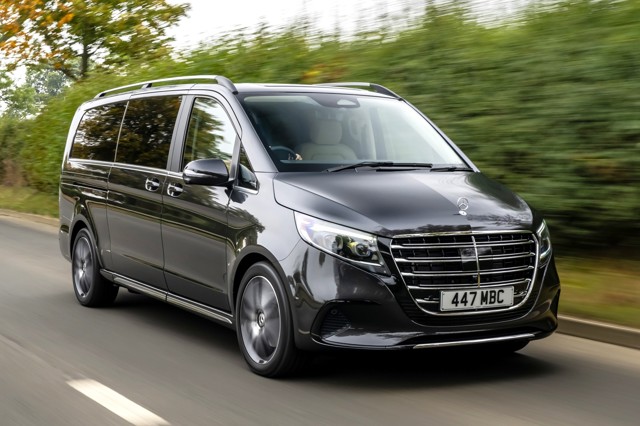
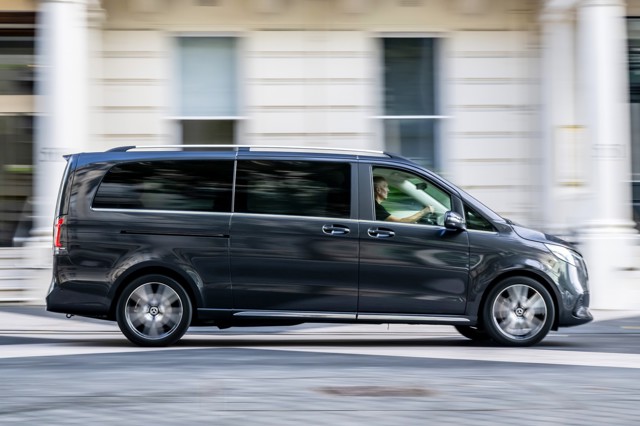
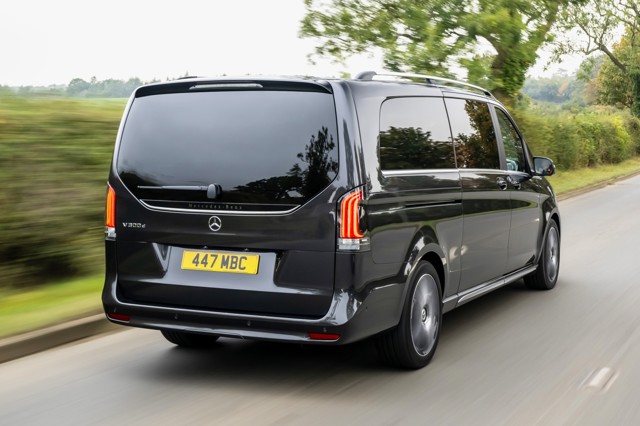
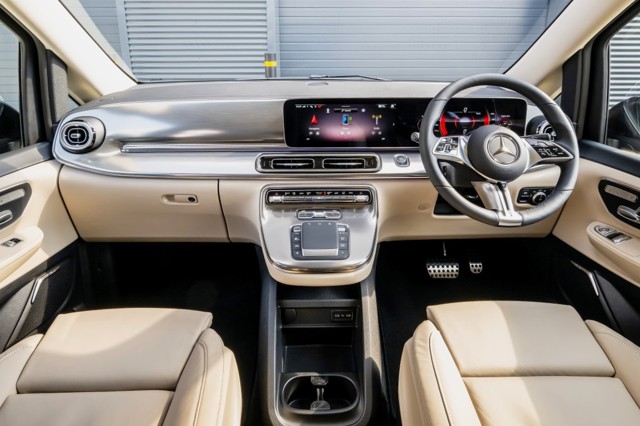

Mercedes-Benz V-Class At A Glance

 Utterly vast and flexible cabin. Comfortable seating for up to eight. Upmarket finish means you forget it’s van-based from inside.
 Prepare to dig deep because this is expensive. Several practical features are no longer available. Glitzy finish doesn’t mean you forget it’s van-based from outside.
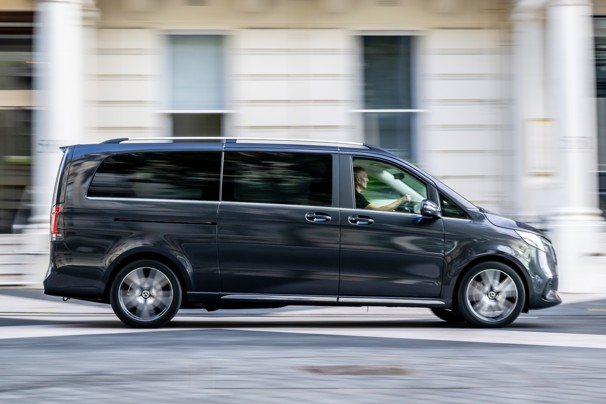
Unyieldingly cuboid bodywork is a van design hallmark. Not due to stylistic trends but because being so upright enables them to carry more cargo. So, it stands to reason that when kitted-out with seats and windows, they transform into truly capacious MPVs — but can they also be convincing luxury cars for larger families and VIPs? Find out in our full Mercedes V-Class review.
Inevitably there are exceptions to any rule, but typically within the automotive world, cars are facelifted around their third birthday and replaced by an all-new model somewhere around their sixth. One such rule-breaker is the Mercedes V-Class — it benefitted from its second makeover in 2024, close to it turning 10.
There’s a perfectly rational explanation for the V-Class’s longevity and it isn’t because customers have demanded it remained essentially unchanged for a decade since it replaced the Mercedes Viano. No, the giveaway is down to its shape.
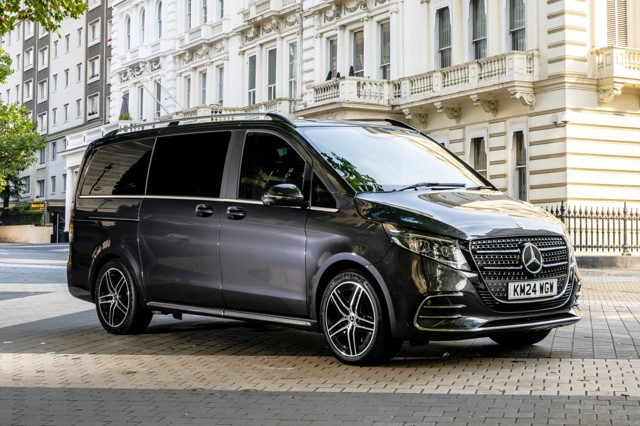
Despite the lashings of chrome-look trim, large-diameter alloy wheels and glitzy LED lighting, there’s no escaping that it shares its fundamental structure and bodywork with a van — in this instance, it’s the Mercedes Vito. In the world of commercial vehicles, product life cycles are far longer than for cars — in the Vito and V-Class’s case, almost doubly so.
Providing the original product was essentially sound and that there have been no significant technological leaps in the interim, age needn’t necessarily equate to being past it, which is why despite the V-Class being on the cusp of replacement — 2026 will see it give way to the forthcoming Mercedes VLE and VLS twins — it remains a convincing way to convey up to eight people and their luggage in comfort.
Refinement is more fundamental to the Mercedes V-Class than superficial touches offered by plush interior finishes, which is why it feels more like a capacious luxury car inside than top-of-the-range, leather-lined versions of the commercial vehicle-based Citroen SpaceTourer and Vauxhall Vivaro Life clones, do.
A decade is a long time, though, so that newer rivals have come along to out-V-Class the V-Class is not a surprise.
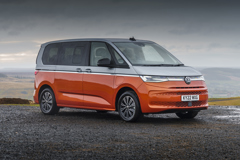
While not gunning for the prestige end of the market the way Mercedes has, the Volkswagen Multivan offers an enormous array of interior features which are as thoughtful as they are practical — they also highlight how handy some previously available clever touches that were once also available in the V-Class were.
Yet, despite its shape, name and being developed by VW’s dedicated Commercial Vehicles division, the Multivan is only available as a car. That’s equally true of the Lexus LM — despite a silhouette that would doubtless convert into a capable van, it isn’t one, but its tall bodywork ensures it’s not only cavernous inside, the comfort and finish trounce its Mercedes rival.
Let’s not pretend that MPVs are the default choice for larger families who want an up-market holdall — this is now prime SUV territory, regardless of the fact that they can’t carry a Rugby Sevens team and their kit as effortlessly as the V-Class does.
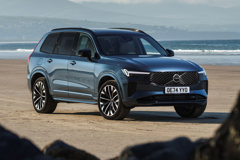
One of the SUVs that created that customer mindset switch was the Volvo XC90 — there’s a curious parallel that the current model is of a similar vintage to the Mercedes and has also recently enjoyed a second facelift to strengthen demand.
Diesel power has prevailed for UK market Mercedes V-Classes, with the latest models propelled by the same 2.0-litre engine in two levels of power driving the rear wheels via a nine-speed automatic gearbox.
Badged V220d the entry-level choice produces 163PS while the lustier V300d ramps that up to 237PS — the latter also boasts a sub-8.0-second 0-62mph time, so ferrying VIPs to private airport terminals needn’t be at a leisurely pace.
There are no self-charging or plug-in hybrid options for the V-Class but it is available in fully electric guise, marketed as the Mercedes EQV.
Two specification levels are now available, with Premium being the less expensive of the two. It can be paired with both engine options and is priced identically in seven- and eight-seater formats. Exclusive is the pricier specification and is only available with the punchier engine. It has seven seats as standard, although it loses one pew when the optional Luxury 6-seats package is selected.
Originally, the Mercedes V-Class was sold with a choice of three bodywork lengths, although the shortest ceased to be available from 2021. What was the middle-sized body is, confusingly, called Long, with the most expansive titled Extra Long.
Being van-based also means access to the two rear rows of seating is via electrically operated sliding doors on either side — such a convenience in tight car parks, it’s baffling why so few older, car-based MPVs had them.
It’s also the better-appointed car version rather than the Vito van which forms the basis of the official camper version. Sold as the Mercedes V-Class Marco Polo, it’s a four-seater, four-berth motorhome, complete with kitchen and a pop-up roof.
If you want a Mercedes V-Class you will need to act swiftly as it won’t be on sale for much longer — just be conscious that you’ll be spending upwards of £77,000 on a brand new one.
Reviews for Mercedes-Benz V-Class's top 3 rivals


Mercedes-Benz V-Class handling and engines
Mercedes-Benz V-Class 2026: Handling and ride quality
There’s no need for a car such as the Mercedes V-Class to have sporty driving characteristics and sensibly its makers have steered clear of injecting such nonsense.
This is very much a car which performs best when driven gently and with consideration — something your passengers will be most grateful for. When piloted in this manner, the V-Class remains reassuringly stable, level and able to absorb most of the road imperfections you’re likely to encounter.
It’s happiest at urban speeds and along dual-carriageways or motorways, where its standard Comfort suspension performs admirably considering they’re conventional steel springs, not sophisticated air types, with non-adjustable dampers and dealing with the V-Class’s standard 19-inch diameter wheels.
Undulating surfaces in the 40-60mph bracket can prove less successfully managed should you venture along a windier B-road or single-carriageway A-road. Here the Mercedes can take longer to settle down after dealing with the initial surface change or rut, with a small degree of flex apparent through its large frame. It’s not disconcerting, but it is noticeable, more so when fewer passengers are aboard.
Those roads are also where the V-Class is more prone to revealing its tendency to float across them, which isn’t the cossetting experience it initially sounds. In fact, it can feel akin to a seafaring vessel in that it doesn’t thump into the asphalts peaks and troughs, rather rising and falling at a rate that’s not quite in unison with the road.
Air springs might well eradicate that, but they’re not on option for UK market V-Classes, meaning the only way to lessen the effect is to reduce your speed — a small price to pay to prevent those suffering with motion sickness from involuntarily redecorating the Mercedes’ interior.
Perhaps to discouraging the driver from darting around with too much vim, the V-Class’s steering is largely anaesthetised from feel, although you quickly derive confidence that it will corner accurately and as intended by it doing just that when driven sedately.
Cornering grip remains strong even when the pace is upped through a series of bends but not only does this induce more obvious body lean, over a prolonged period it soon makes the outer edges of the V-Class’s front tyres smoother than an Olympic-level swimmer’s skin.
Reassuringly, the V-Class’s brakes feel more than up to the job of reining in its forward motion, with predictable and predominantly linear modulation as you increase the pedal pressure.
Although tyre noise into the cabin in well-suppressed, those up front will be conscious of the noise generated by the air, especially at motorway speeds, as it whips around the tall windscreen, large door mirrors and leading edges of the roof rails.
Remember that body flex we mentioned? You’ll spot that when you’re driving the V-Class alone because you’ll become conscious of soft squeaks and occasional rattles generated towards the rear portion of the interior — they’re only likely to worsen over time.
Mercedes-Benz V-Class 2026: Engines
Two diesel engine choices are available for the Mercedes V-Class, albeit they’re both fundamentally the same 2.0-litre, four-cylinder, turbocharged unit configured to produce different levels of power.
Both are rear-wheel drive, using a smooth-shifting nine-speed automatic transmission as a conduit. In typical Mercedes style over the past couple of decades, the transmission lever is mounted on the right-hand side of the steering column.
Of the two engines it’s the V220d which is the least powerful, although its outputs of 163PS and 380Nm of torque ensure that performance on the road is adequate enough in most instances. Its top speed is 120mph with the 0-62mph time done and dusted in 10.7 seconds.
Cars such as the V-Class don’t need to be outright fast, so the existence of the punchier V300d may appear superfluous to requirements. In truth, it’s more nuanced than that — especially if you’re eight-people up and need extra oomph to successfully and safely complete an overtaking manoeuvre.
It’s here where the V300d’s extra urgency is welcomed, courtesy of its 237PS and 500Nm output. Top speed rises to 136mph, but more indicative of its reserves is its 7.4-second 0-62mph time.
Of the two, it’s also the one where you will feel more inclined to claim a gap to nip into on a busy roundabout, the V-Class smartly pulling away without fuss. Keep the accelerator pinned to the carpet and the engine will inevitably sound more vocal given its relatively modest capacity for the size of car, but it soon becomes subdued when you settle back to a cruise.
Mercedes-Benz V-Class 2026: Safety
While the Mercedes V-Class was awarded the maximum five-star safety rating by crash-testing experts at Euro NCAP, that was back in 2014, using different assessment methods to those now employed.
That’s not to suggest that the V-Class is an unsafe car, but if it were to be re-tested today, even if the overall result remained the same, the individual category scores are likely to be different.
Those 2014 results scored 93% for adult occupant protection, 87% for children, pedestrian protection was just 67%, but the on-board safety assist systems were rated at 85%.
Standard safety equipment across today’s V-Class range includes automatic LED lighting front and rear, Active Lane Keeping Assist, Attention Assist driver monitoring, Blind Spot Assist, Distronic adaptive cruise control and a Sidewind Assist System to reduce the impact of gusts.
Mercedes-Benz V-Class 2026: Towing
Towing with a Mercedes V-Class is permissible, with a generous maximum braked trailer weight of 2500kg for both engines.
Mercedes-Benz V-Class interior

Mercedes-Benz V-Class 2026: Practicality
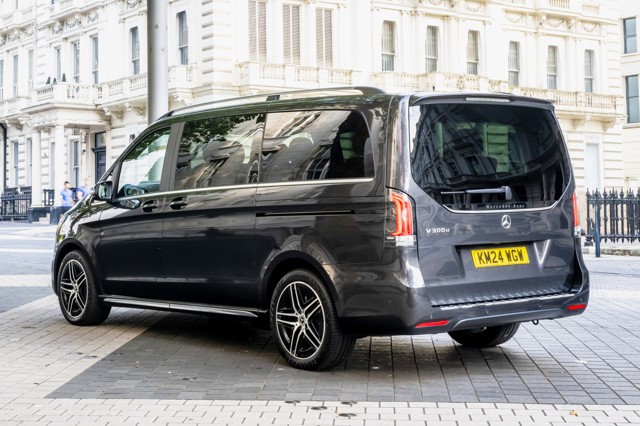
Both of the bodywork choices for the Mercedes V-Class are massive, easily dwarfing the majority of cars on the road.
From end-to-end, the V-Class Long is 5140mm with a wheelbase — that’s the distance between the front and rear wheels — of 3200mm. For the Extra Long those figures grow to 5370mm and 3430mm respectively, the extra bodywork allowing for greater space flexibility between the second- and third-row seats, as well as the boot.
Speaking of bodywork dimensions, it’s worth noting that that the V-Class Long is 1902mm tall, the Extra Long a smidge loftier at 1909mm. Those numbers could be important if you were intending the garage the V-Class at home as well as in height-restricted multi-storey car parks.
Few will have complaints about the comfort afforded by the front seats and the spaciousness around them. While you won’t feel cramped, getting in and out of the V-Class’s first row belies its commercial vehicle origins — opening either door reveals a step which is necessary to use to climb up into the Mercedes.
That’s reinforced further for the driver thanks to the position of the steering wheel — even with a useful range of adjustment, it still feels more angled towards the horizontal than in a conventional car, albeit not uncomfortably so.
Although the V-Class’s roof pillars are thick, all that glazing makes for great all-round visibility and you’re sat high from the ground, which a commanding view that outranks many SUVs.
Previously, the only awkward viewpoint was directly behind the car, the line-of-reflected-sight obscured by the central rear seat headrests. Mercedes has circumnavigated that by installing a tailgate camera, which is displayed using the rear-view mirror as a screen. As handy as it is, the video reproduction when night-driving isn’t great.
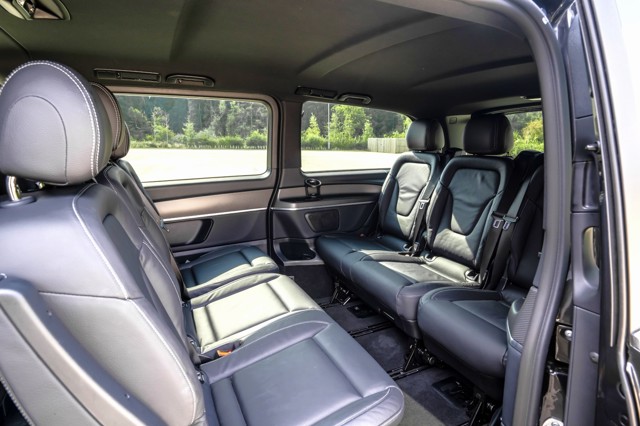
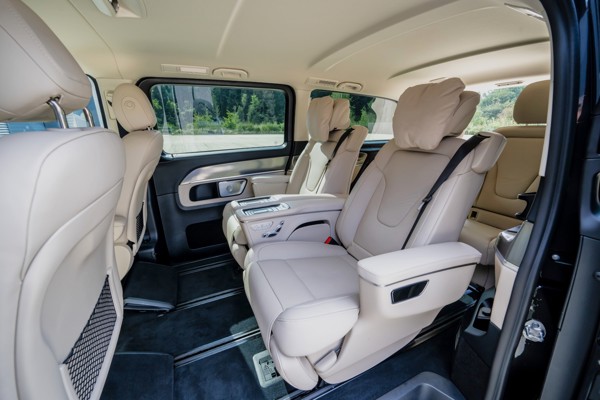
Accessing the two rearmost rows of seats is via sliding doors on either side of the V-Class, made even more convenient when electrically operated. Wherever you sit in the back, there’s ample room for tall adults to be comfy without the journey descending into a mobile game of sardines.
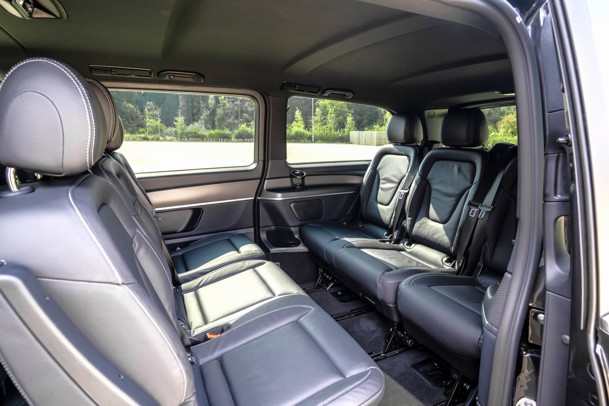
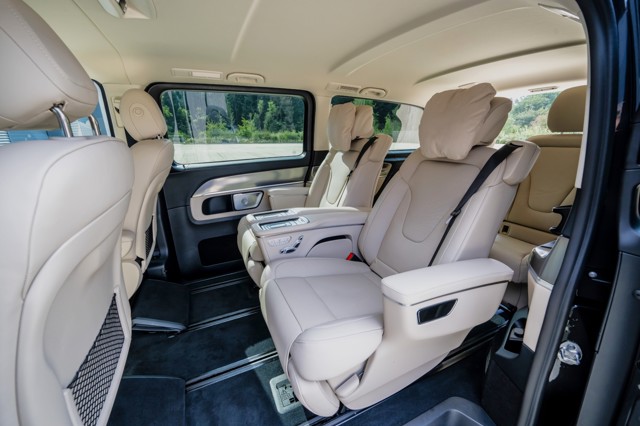
Punctuating the ceiling behind the front seats are a series of adjustable air vents, with a separate climate control panel for those sat in the back. All of the rear seats have height-adjustable headrests, reclining backrests, can be slid back and forth along floor rails plus their seatbelts are integrated.
That last point is especially key for seven- and eight-seater versions as it allows the middle-row chairs to be rotated 180 degrees and face rearwards. Whether your passengers appreciate travelling backwards is something you’ll discover by trial and error, of course.
Turning them around certainly makes the rear compartment a far more sociable space and enables those sat in the rearmost row to get in and out without those sat ahead needing to vacate their seat in order for it to be tipped forwards in the manner similar to getting into the back of a smaller two-door car.
Eight-seater V-Classes have two rearmost rows of three-person benches, split in one-third/two-thirds configurations, with Isofix child seat mounting points in the larger portions. Seven-seater models have such a bench in the third row, while that in second has been swapped for two individual captain’s chairs, with armrests either side.
All barring the eight-seater models could previously be specified with a pop-up, unfolding table, which could also be variously positioned as it also utilised the floor rails. As handy a feature as it was, it’s not available on the newest V-Classes. Pity.
Choose the V-Class Exclusive and opt for the Luxury 6-seats package and the configuration changes again. Those separate captain’s chairs now move to the third row while the middle seats are replaced by business class airliner-style electrically adjustable jobs, complete with heating, cooling, massage function, extended footrests and pillowy headrest cushions. Note these can only be used facing forwards.
Turning the middle row seats around requires a degree of manual labour, disconnecting and re-attaching them to the floor rails. They’re also heavy items to haul about, despite the convenience of integrated carrying handles.
While all of the rear seats can be removed entirely for occasions when you need to maximise the V-Class’s carrying capacity, unless you’re channelling the spirit of Geoff Capes, it’s a two-person job — and that’s before you figure out where you’re going to put them once they’re out of the car.
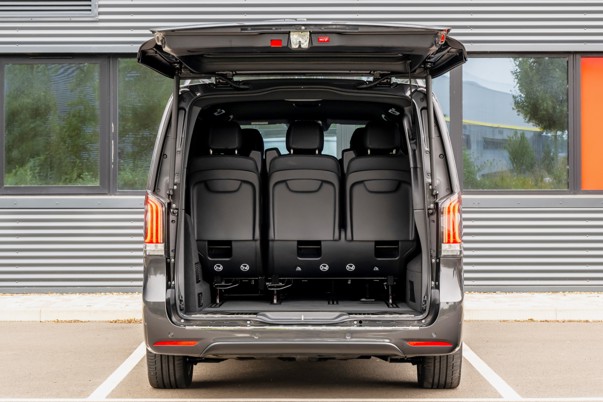
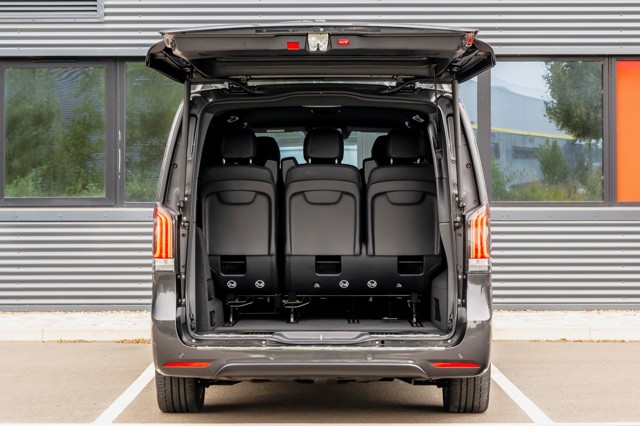
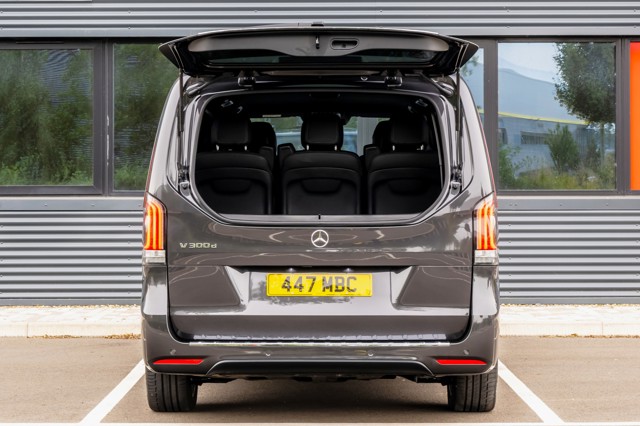
Access to the boot is via an enormous top-hinged, electrically operated tailgate. In fact, it’s so tall that it’s easy to be caught out by reversing to close to something and not leaving enough space to raise it. Usefully, a smaller hatch provides some convenience as the tailgate’s rear window can open separately.
That was especially handy when Mercedes used to sell an optional solid parcel shelf which included two collapsable storage boxes, but this has unfortunately also been absent from the configurator for some time. Now with no cover, the boot’s contents are now only obscured by the height of the rearmost seats and the dark-tinted privacy glass.
With all seats in place, the V-Class Long’s boot is a capacious 1030 litres measured to the height of the window sills, expanding to 1410 litres for the Extra Long body.
The rear seatbacks can be folded forward to provide a level platform if removing them entirely isn’t an option, but when they are extracted the Long’s overall capacity to ceiling height balloons to 4630 litres, the Extra Long to 5010 litre. Those load capacities are positively, erm, van-like.
How do those numbers compare with the alternatives? VW’s Multivan also comes in two lengths — Standard and Long — but even the larger can’t touch the Mercedes for space. With all seven seats in use, it provides 661 litres of boot capacity, growing to a maximum of 2625 litres with just the front pair used.
Comparisons with the Lexus LM are trickier as its interior isn’t as flexible, so the middle row seats are in place for its maximum capacity of 1191 litres. When all seven are in use there’s just 110 litres of volume behind them. That places it behind the Volvo XC90 — it carries up to 244 litres in seven-seater mode and a maximum of 1941 litres as a two-seater.
In-car storage for odds and ends is okay, but the loss of the parcel shelf boxes and pop-up table, as well as a high-rise centre console between the front seats, has reduced the V-Class’s detritus-hiding abilities.
All doors have large pockets, although they’re quite a stretch down from the seats, as are the front cupholders, which are barely above the floor level at the base of the dashboard, where they nestle, along with the wireless phone charging pad, behind a retractable cover. There are only four cup and bottle holders in the back, two of which look like afterthoughts that sprout out from the third row’s side panelling.
There’s a further reminder of the V-Class’s van lineage every time you refill it with diesel or top-up the AdBlue tank. They fillers are hidden behind the same flap which is located on the passenger side, low down between the front and sliding side door, just as it is on many vans.
Not only is it an awkward position to hold the fuel nozzle’s trigger, the flap itself is kept securely shut when not in use by being held in place by the front passenger door. And yes, that means whenever you need to open and re-close the filler access, the passenger door also has to be opened.
Mercedes-Benz V-Class 2026: Quality and finish
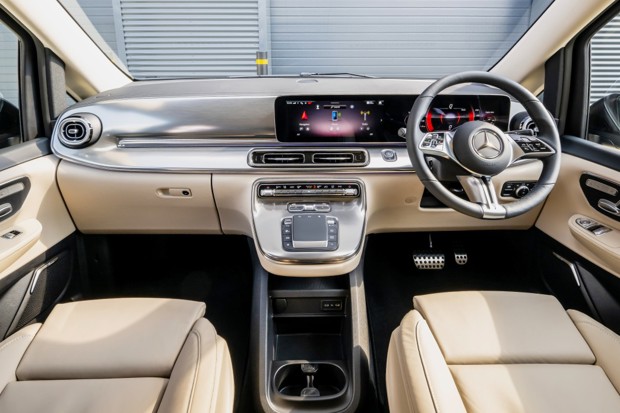
Step from a Vito van into a same-age Mercedes V-Class and you’ll immediately notice an uplift in material quality for the cabin as well as the car version having a unique dashboard design.
Earlier V-Classes dashboards weren’t quite as well finished as those in Mercedes conventional cars, but that difference was substantially reduced by the all-new dash from the 2024 facelift. That said, both designs do seem to have considerable surface areas which are unused.
Most of the surfaces and controls your hands come into contact with inside the V-Class feel of comparable quality to Mercedes smaller and medium cars, with a more appreciable difference between this as the luxury S-Class saloon. Given its Vito starting point, that’s good going.
You will find some harder plastics in the lowest reaches of the interior’s moulded fixtures, but they’re largely forgivable and in areas where extra resilience for what’s essentially a family car that needs to stand up to the rigours such a role entails, is welcome.
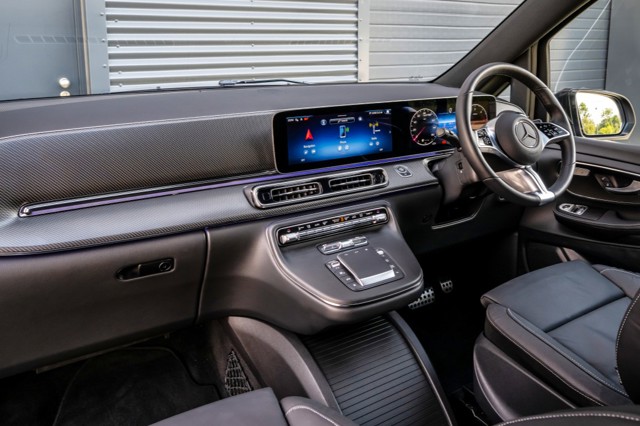
Age has proved a benefit for the V-Class in that even its latest dashboard is still festooned with physical buttons and switches, while newer Mercedes models have the majority of their functions controlled via the multimedia touchscreen. Progress, eh?
Mercedes-Benz V-Class 2026: Infotainment
Two adjacent 12.3-inch display screens mounted behind a single pane are the primary information portals for the Mercedes V-Class driver — at least those from 2024 when the current dashboard design was introduced.
Immediately ahead of the driver is a configurable instrumentation display screen, with large, clear replicas of analogue dials or more contemporary arrangements should you prefer. What additional information is displayed can be changed at a whim using steering wheel-mounted buttons.
Nearer to the dashboard’s centre is its multimedia twin, here with a very satisfyingly responsive touchscreen. It can be a stretch for more petite drivers to comfortably reach, so the V-Class retaining the additional trackpad and physical shortcut buttons is as useful as it is welcome. Plus there’s a refined voice control system for those who are happy conversing with technology.
Using Mercedes’ MBUX operating system, the menus are all clear, logically laid out and easy to navigate. Talking of which, the integral navigation system is one of the better manufacturer packages and can be amplified further with an Augmented Reality (AR) option which overlays direction arrows over a live front-mounted camera feed.
Of course, many people prefer the familiarity of their phones, so it’s good to know that wireless Android Auto and Apple CarPlay connectivity is standard.
Audio reproduction is especially satisfying in V-Classes with the Burmester surround sound package, while a further thoughtful touch is the two-way speaker system, enabling those in the front and rear rows to communicate using it as an intercom rather than hollering loudly across the interior chasm.
Mercedes-Benz V-Class value for money
Mercedes-Benz V-Class 2026: Prices
Yes, the Mercedes V-Class is enormous with a cavernous interior and yes, the equipment levels are generous with a generally impressive finish, but to pretend that it’s not an expensive car to buy is silly.
For the entry-level V220d Premium Long you’re looking at £77,040, whether you want seven or eight seats. If you fancy the Extra Long alternative, dig a little deeper for its £78,060 asking price. Sticking with the Premium specification but paired with the brisker V300d engine, the Long will set you back £82,370, the Extra Long version being £83,400.
Premium-grade V-Classes can be enhanced with an optional AMG Line package, the details of which are explained below in the Specifications section. That’s an extra £3990 apart from in the case of the V300d Premium Extra Long eight-seater where it’s £3220.
Upgrade to the plusher, seven-seater Exclusive specification, only available with the V300d engine, and there’s a quirk in the pricing — here the Extra Long body is the cheaper of the two at £89,620 compared with the Long’s £92,840 cost. Why? The shorter version comes with a panoramic glass roof as standard, a feature incompatible with the lengthier model.
Exclusive models can also be upgraded with an even more comfort-focused Luxury 6-seats package, although that weighs in at £10,100.
What of the V-Class’s rivals? VW’s Multivan will set you back upwards of £50,633, while the SUV-bodied Volvo XC90 starts at £65,450. The Lexus LM on the other hand is the priciest pick with the least costly model stickered at £94,595.
Mercedes-Benz V-Class 2026: Running Costs
While the Mercedes V-Class’s purchase price puts it out of reach for most families, those private buyers aren’t likely to find its consumption for diesel to prove too eye-watering.
According to the official WLTP Combined cycle tests, the V220d models will typically return 32.8-40.9mpg — not bad considering its 2.3-tonne heft and overall size. Surprisingly, the V300d isn’t far off at 32.5-39.2mpg. On test, a real-world 35mpg over a mixture of road types proved achievable without much effort.
In addition to the annual VED Car Tax, all V-Classes will be liable for the Expensive Car Supplement due to costing above the £40,000 threshold when new. Payable from the second to sixth anniversaries of its first registration, the annual fee is currently £425 on top of the £195 VED cost.
Company car drivers are unlikely to find the V-Class appealing due to all versions falling into the most expensive 37% Benefit-in-Kind taxation banding. Note that its electric Mercedes EQV twin is taxed at just 3%, making that the default choice of these two.
Mercedes provides a three-year, unlimited mileage warranty for the V-Class, plus maintenance costs can be more effectively managed by buying a bundle of scheduled services and spreading the cost into your finance agreement.
Satisfaction Index
 What is your car like to live with?
We need your help with our latest Satisfaction Index, so that we can help others make a smarter car buying decision. What's it like to live with your car? Love it? Loath it? We want to know. Let us know about your car - it will only take a few minutes and you could be helping thousands of others.
Help us with the Honest John Satisfaction Index nowMercedes-Benz V-Class models and specs
There are two specification grades available for the current Mercedes V-Class line-up — Premium and Exclusive.
Standard features for the Mercedes V-Class Premium include:
- 19-inch 10-spoke alloy wheels
- Double-louvred front grille with Mercedes star pattern finish
- Multibeam LED headlights with automatic main beam
- LED tail lights
- Heated windscreen washer jets
- Dark-tinted second and third row windows
- Electrically operated sliding rear side doors
- Electrically operated tailgate
- Electrically adjustable, folding and heated door mirrors with integrated side indicators
- Anodised roof rails
- Front and rear parking sensors
- 360-degree parking camera system
- 12.3-inch driver’s display screen
- 12.3-inch multimedia touchscreen
- MBUX operating system, touchpad control and voice control
- Integral navigation system
- DAB digital radio
- Wireless Android Auto and Apple CarPlay smartphone connectivity
- Wireless smartphone charging pad
- Two-way speaker system
- Lugano leather seat upholstery in Black
- Heated front seats with armrests and adjustable lumbar support
- Open-pore wood trim dashboard panel
- Heated, leather-wrapped three-spoke steering wheel
- Three-zone climate control
- 64-colour interior LED ambient lighting
- Auto-dimming interior rear-view mirror
- Keyless starting/stopping
- Distronic adaptive cruise control
- Hill Start Assist
Additional features for the Mercedes V-Class Exclusive include:
- 19-inch 5-twin-spoke Black and High Sheen alloy wheels
- AMG body kit with chrome-look detailing
- Metallic paint
- Multi-louvred front grille with LED illuminated surround
- Bonnet-mounted Mercedes mascot
- Panoramic glass sunroof — Long body only
- Mercedes logo downlighting incorporated into the door mirror housings
- Burmester surround sound system
- Electrically adjustable front seats with memory function
- Nappa leather seat upholstery in Black
- Brushed aluminium trim dashboard panel
- Artico faux leather dashboard trim with topstitching
- Digital interior rear-view mirror incorporating camera display
- Foldaway tables on front seatbacks
Optionally available on Premium specification models, the AMG Line package comprises:
- 19-inch 5-twin-spoke Black and High Sheen alloy wheels
- AMG body kit with chrome-look detailing
- Double-louvred front grille with Mercedes star pattern finish and LED illuminated surround
- Carbon fibre-look trim dashboard panel
- Sports pedals in brushed stainless steel with black rubber studs
Optionally available on Exclusive specification models, the Luxury 6-seats package includes:
- Second row dual aircraft-style electrically adjustable seats with integral headrest cushions, footrests, heating, cooling, massage function, cupholders and storage compartments
- Third row dual captain’s chairs with armrests
