
Mercedes-Benz Electric GLB Review 2026

Mercedes-Benz Electric GLB Verdict

 Long-distance driving ranges. Lots of equipment for a reasonable price. Punchy yet efficient electric drive choices.
 Ride quality and body control disappoint on cheaper versions. Plasticky interior and screens-dominated dashboard lack Mercedes’ usual classiness. Paying extra for slower DC charging capability.
Find out more about the Mercedes-Benz Electric GLB
|
 Driven, tested and rated by:
 Mercedes Electric GLB at a glance:
- Body type: SUV
- Price range: £46,100 – £57,350
- Battery range: 299 – 469 miles
- Number of seats: 5
- Boot capacity: 327 – 1715 litres
- Insurance groups: TBC
Mercedes Electric GLB: Everything you need to know
Combining the growing demand for SUVs with increasing appetite for EVs sounds like a winning idea, right? Find out if that is the case with our full Mercedes Electric GLB review – a car with the additional advantage of being capable of seating seven people.
Rather than feeling like it’s captured the zeitgeist with the must-have electric family SUV of the moment, this Mercedes feels more like something that should be on your shortlist rather than an out-and-out winner.
If that sounds like we’re damning it with faint praise, it’s because we are – it simply doesn’t feel quite as well-polished as it ought to, especially for a Mercedes. That it has few direct rivals will be advantageous for the Electric GLB only until such a point other manufacturers decide they want a slice of this particular pie.
As things stand at the Electric GLB’s launch, the only competitor it truly goes toe-to-toe with is the Peugeot E-5008. Others are in the pipeline, with the Skoda Peaq likely to chief among them. Other than one version of the Tesla Model Y that’s available in seven-seater guise, the other battery-powered, three-row SUVs are all larger and more expensive.
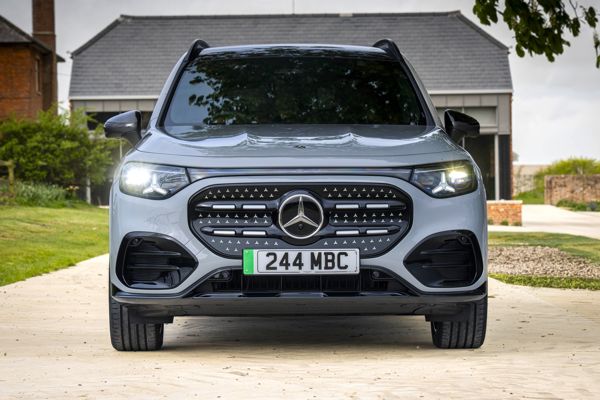
If you need to carry up to seven adults in such a car, the Hyundai Ioniq 9, the Kia EV9 and the Volvo EX90 will all perform that role more satisfactorily than the Mercedes anyway. Yet it seems when considering a model of this more modest size, car buyers are willing to accept compromises and treat the rearmost pair of seats as for children-only. In fact, the Electric GLB’s are restricted to those up to 171cm – or 5ft 7in – tall.
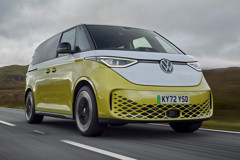
With that in mind, we’ve identified the Volkswagen ID.Buzz as another seven-seater that Electric GLB buyers might consider as an alternative, even though it’s in the MPV camp, albeit not as flexible or space-efficient as others of its ilk.
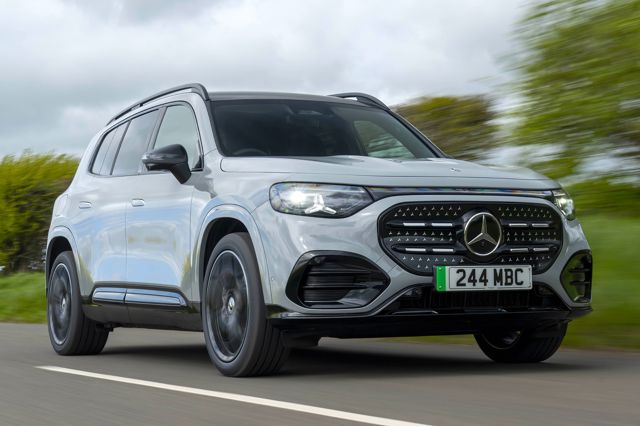
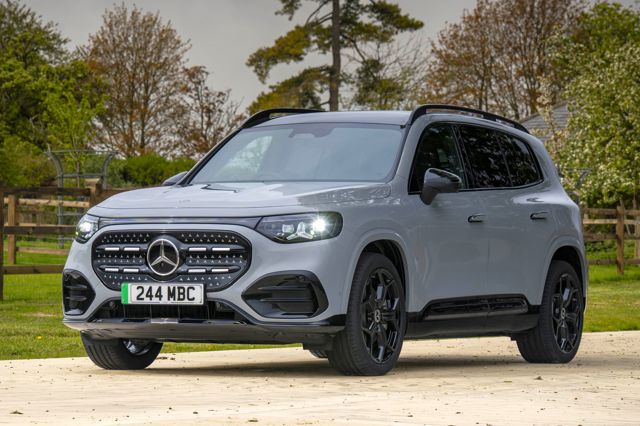
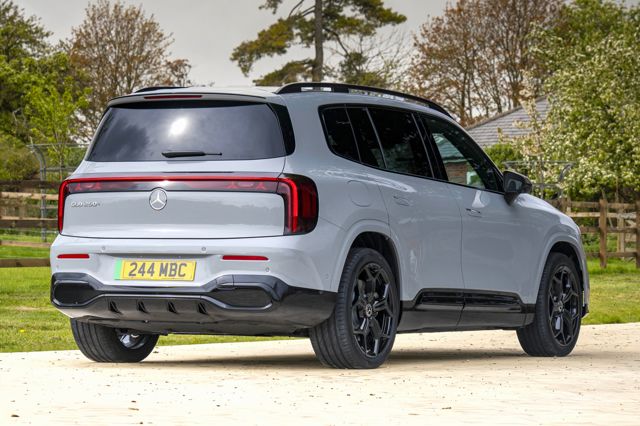
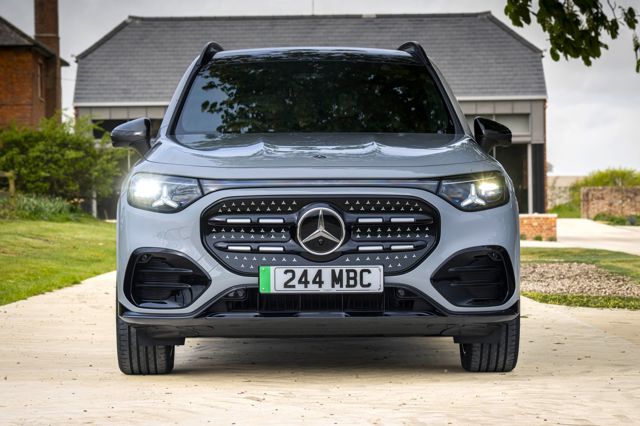
Replacing the Mercedes EQB in the line-up, the Electric GLB is one half of a two-pronged strategy – the other being a petrol-engined, second-generation Mercedes GLB, which looks largely identical two its EV twin aside from having an open front grille.
Both flavours of GLB ride on the same basic platform as the latest iterations of Mercedes CLA, albeit with a much taller body and the aforementioned seven seats. Other markets also receive a five-seater version, but the UK market is being denied that configuration.
A pair of drive system choices are available with the GLB250+ Electric set to account for the lion’s share of sales. It’s also the one with the greatest driving range potential at up to 379 miles. As a demonstration of how its taller, more upright body work affects range, note that the mechanically identical CLA250+ Electric Saloon with the same battery stretches it out to 483 miles.
By way of an alternative is the all-wheel drive GLB350 4Matic Electric – it’s faster, taking 5.5 seconds to dart from 0-62mph instead of the GLB250+’s 7.4-second, but the range drops to a potential high of 360 miles. We also think most buyers will be better served fitting good quality winter tyres on the cheaper rear-drive model if improved traction’s what you crave.
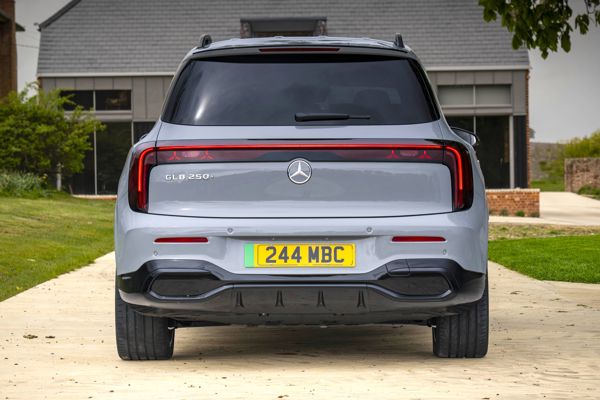
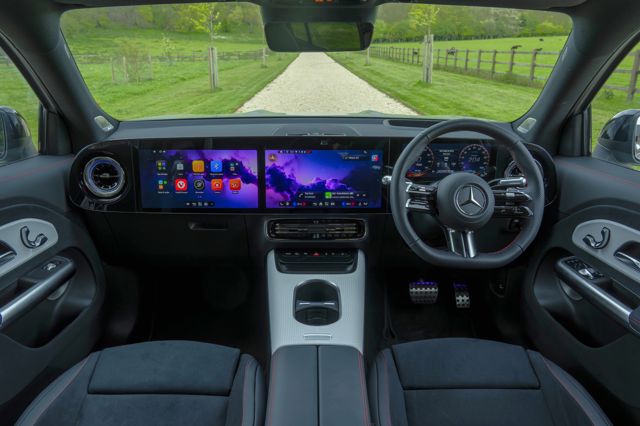
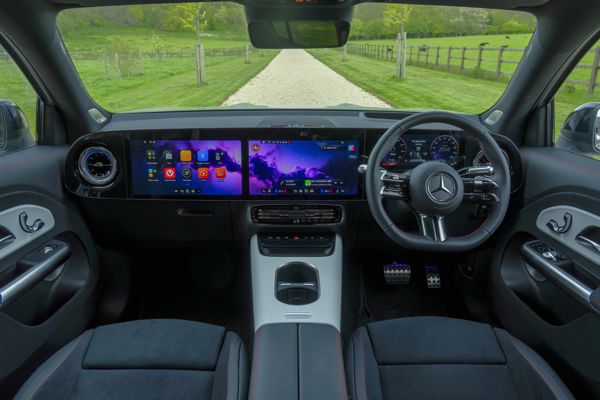
Once inside the Electric GLB you’re greeted with a near-copy of the same, unyieldingly shiny slab of plastic and screens as you do in the closely related CLA, yet due to the seating position and angle of the windscreen it seems both closer and positioned lower, which we found made picking up on mapping directions and other notifications in our peripheral vision less successful.
Prices for the Mercedes Electric GLB start at a shade over £46,000, so not inexpensive but still a useful £2500 less than the cheapest Peugeot E-5008 will set you back.
How we tested the Mercedes Electric GLB
We endeavour to test cars in ways that mirror the various ways they will be used in the real world, which includes a mixture of inner-city stop-start crawls, motorway jaunts and windier A- and B-roads in between. That’s not yet been the case with the Mercedes Electric GLB with our driving so far relatively limited, but we will share more of our thoughts on it as we extend our time behind the wheel.
So far, our drives have been concentrated in rural Oxfordshire, taking in small towns and villages interlinked with undulating single-carriageway routes. Road surfaces were predominantly asphalted, albeit in various states of repair from silky smooth sections down to badly rutted tracts, including testing Electric GLBs with both types of suspension damping it is sold with.
We have spent time seeing what space and access is like to all three rows of seating, including the middle position of the second-row bench, as well as determining how spacious and practical the boot is in its various configurations.
Our driving experiences also encompassed understanding how the touchscreen-based functions and other controls worked, including the effectiveness of various of its Advanced Driver Assistance Systems (ADAS).
Due to the relatively short nature of the test, we are yet to experience how the Mercedes Electric GLB performs when recharging using both at public and domestic facilities.
"While the Mercedes Electric GLB is competitive, the Peugeot E-5008 is an objectively better choice among more compact, battery-powered, seven-seater SUVs, although both are compromised"
|
Is the Mercedes Electric GLB a good car?
Although we are inclined to state that the Mercedes Electric GLB is a broadly good car, we so far aren’t enthused to say more than that. Its key advantage over its nearest rivals is its comparatively low pricing, but in terms of both range and interior spaciousness, it’s beaten by the Peugeot E-5008.
We also feel that the plasticky tech-fest dashboard will fall shy of customers’ expectations whether or not they are new to the Mercedes brand. Plus the ride quality in less expensive versions not fitted with the adaptive dampers is distractingly unsettled, which may prove to be especially unwelcome to passengers who suffer with motion sickness.
Overall, the Peugeot E-5008 performs the duties of an occasional seven-seater electric SUV better than the Mercedes does and its extra price is one worth paying.
Mercedes Electric GLB: Driving range
| Mercedes GLB250+ Electric | 352-379 miles |
| Mercedes GLB350 4Matic Electric | 342-360 miles |
All the effort the engineering team went to in ensuring that the Electric CLA Saloon cheated the wind has largely been undone by the upright stance of the Mercedes Electric GLB and its bluff nose.
Given that the Electric GLB also weighs 145kg more than its cousin, we didn’t expect it would come close to matching its WLTP Combined cycle driving range potential, but its best of 379 miles in GLB250+ guise is 104-miles less. Ouch.
Interestingly, the drop-off in range by choosing the more powerful GLB350 4Matic isn’t as severe as the figures initially suggest. Yes, its maximum range is 360 miles, but note that’s in mid-level AMG Line Executive specification. When the GLB250+ is similarly specified, its maximum range is 367 miles.
In the real world that is likely to equate to around 350 miles for the GLB250+ and 325 miles for the GLB350 4Matic.
High speed driving is often a weak point for electric cars, but thanks to having a two-speed automatic transmission in place of the usual single gear, the Mercedes’ efficiency on dual carriageways and motorways is significantly improved.
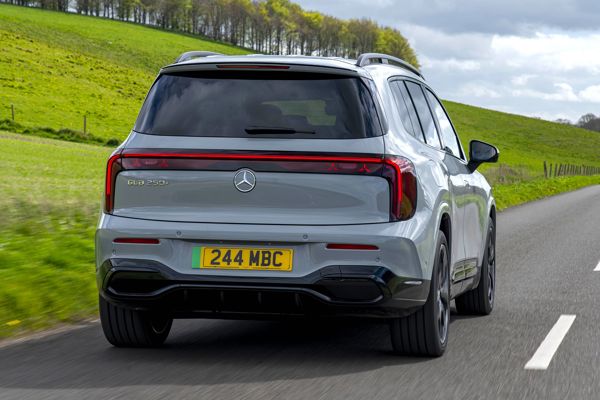
How do those range figures compare with its rivals? When fitted with the smaller 73kWh battery the Peugeot E-5008 has a WLTP Combined cycle range of 291-309 miles, while the Long Range 96.9kWh extends that to 401-413 miles.
The only seven-seater version of the Tesla Model Y is the Premium Long Range All-Wheel Drive derivative, capable of a claimed 391 miles, while the long-bodied, seven-seater iterations of the Volkswagen ID.Buzz lag behind at 280-292 miles.
Mercedes Electric GLB: Charging
All current versions of the Mercedes Electric GLB are fitted with an 85.0kWh lithium-ion battery pack. It’s possible that in due course the lineup may be fleshed-out at the cheaper end with the GLB200 Electric which uses a 58.0kWh lithium-iron-phosphate (LFP) battery, limiting not only how tightly its cells can be arranged but also how quickly it can be recharged.
Hooked-up to a regular domestic UK wallbox charger serving up to 7kW of power – although the Electric GLB can handle an 11kW AC flow rate – a complete flat-to-full recharge takes 13 hours 45 minutes.
Peugeot only quotes a comparable time for the smaller of the E-5008’s batteries, citing 10 hours 30 minutes for a 0-100% top-up, while Tesla’s coy about supplying data for the Model Y at all with no durations referenced on its website.
Volkswagen similarly frustrates by only referencing the ID.Buzz AC recharging at 11kW, claiming 9 hours. Given its 86.0kWh capacity, we estimate a 7kW charger will take in the region of 14 hours to do the job.
Mercedes has given the Electric GLB to be recharged at a public station at a DC rate of up to 320kW, which means a 10-80% battery boost could take just 22 minutes. This is with a significant caveat, though…
For that to be possible, the charger needs to be an 800-volt type, of which there are very few in the UK, although that situation will dramatically improve over the years ahead. Plug it in to a more commonly found 400-volt DC charger and nothing will happen – unless you pay £850 extra for an on-board charger that is capable of operating at both voltages.
Not only is the additional cost a downside, your recharging rate is capped at 100kW, for which Mercedes doesn’t quote a time. Our guesstimation is this will likely take 40-45 minutes for the same 10-80% recharge. Poor show, Mercedes.
DC charging for the E-5008 for both batteries is restricted to a modest 160kW, meaning a shorter 20-80% top-up takes 30 minutes for the smaller 73.0kWh pack and 27 minutes for the 99.6kWh Long Range option. Again, no time is quoted by Tesla, but Volkswagen’s 200kW DC on-board charger for seven-seater ID.Buzzes sees a 5-80% recharge take 30 minutes.
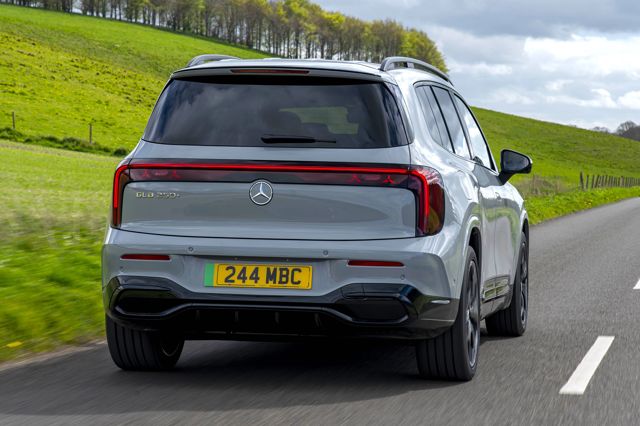
You’ll find the illuminated charging port for the Mercedes Electric GLB located on the right rear wing. We think this is the ideal location, enabling reverse parking without risking heavy cables damaging your paintwork during recharges.
Reviews for Mercedes-Benz Electric GLB's top 3 rivals

Mercedes-Benz Electric GLB handling and engines
Mercedes-Benz Electric GLB 2026: Handling and ride quality
Seven-seater SUVs are family cars first and foremost, so comfort rather than sportiness should be the order of the day – in this regard, the Mercedes Electric GLB falls short.
Although it uses versions of the same platform and suspension which underpin the Mercedes Electric CLA, that car’s impressive suppleness and control have not successfully transferred to its cousin.
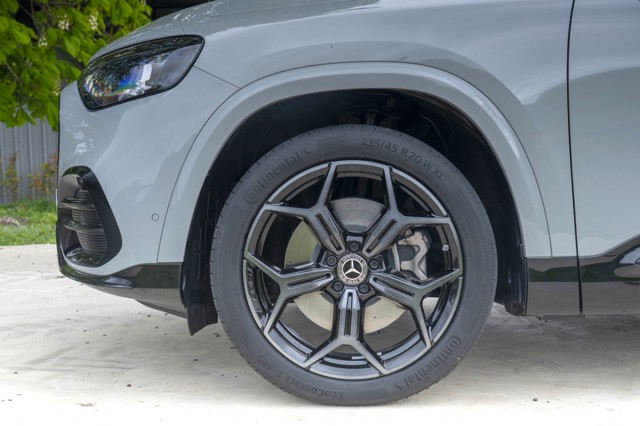
We have driven two different versions of the Electric GLB and observed significant differences in their behaviour. Sport, Sport Executive and AMG Line Executive trim levels all have standard suspension dampers and wheels of 18- and 19-inch diameter. Ordinarily we recommend smaller wheels for that suspension type as their taller tyre sidewalls absorb more road surface imperfections – we don’t in the GLB’s case.
Ruts, asphalt cracks and smaller pot holes are all noticeably felt as you drive over them, with every ripple and surface change unsettling the Mercedes, causing it to fidget and jiffle in an unseemly manner.
Worse is that its body control needs further honing. Drive along undulating stretches of road at higher speeds, with a series of peaks and troughs, and the Electric GLB’s bodywork starts moving out of sync with the topography of the road. The result is a combination of floatiness one moment immediately followed by a cushioned drop, again and again. If you or your kids are misfortunate enough to suffer with motion sickness, this Mercedes may well trigger it.
Matters are far better resolved with the more expensive AMG Line Premium and Premium Plus trim levels. They both have 20-inch alloy wheels plus the additional benefit of adaptive dampers, of which you can vary the firmness within the Drive Select modes. Even in the hardest Sport setting, it’s much smoother, less disturbed over surface imperfections plus its body movements feel more in unison with the road itself.
Soften it in Comfort mode and it’s much more supple, invoking a sense of this being the engineering team’s intended balance for the Electric GLB. That said, even with the trick dampers, it still doesn’t feel as polished as the CLA does without them even being optional.
In most other regards, the Electric GLB feels understandably similar to its close cousin. Its steering isn’t especially communicative, but you soon gain confidence that its cornering grip will maintain your intended trajectory. It’s light at low speeds, making car park manoeuvres a doddle, while weighting-up progressively at higher speeds.
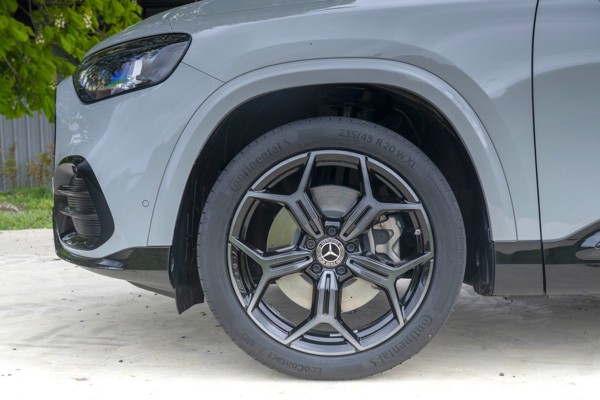
Despite the standardised all-wheel drive on GLB350 4Matic versions, the rear-drive GLB250+ doesn’t feel lacking in traction, despite its eco-centric tyres. If you want to have additional grip in colder months, we recommend a good set of winter tyres – a rear-drive car with them fitted is generally more capable in snow and ice than an all-wheel drive model on regular summer rubber.
If you’ve driven an older electric car and found the braking to be a curious experience, then rest assured that this Mercedes feels much more conventional, with an easily modulated pedal action providing a linear response.
Additionally you can also vary the strength of the brake energy recuperation from a near-coasting effect when you lift off the throttle to one which is effectively one-pedal driving with various stages in between.
Ride issues aside, it’s a quiet and refined experience for all aboard the Electric GLB. Wind noise is marginally worse than in the CLA due to the more upright windscreen angle, but it’s still subdued overall, while you’ll not hear much from the tyres or suspension working away, either.
Mercedes Electric GLB: Batteries and motors
From launch there’s a choice of two drive systems for the Mercedes Electric GLB. Like all EVs, the transmission is automatic, but unusually it has two speeds rather than the typical one. Rather than for increasing its accelerative performance, the second ratio is there to aid efficiency when high-speed cruising along dual-carriageways and motorways.
Gateway to the lineup is also the one we think is the better all-round choice – the GLB250+ Electric. With an 85.0kWh battery under the main passenger compartment, its motor is located under the boot and third-row seating, powering the rear wheels with total outputs of 272PS and 335Nm of torque. That results in a 7.4-second 0-62mph time, which isn’t too shabby considering this Mercedes’ 2200kg minimum weight.
Above it sits the GLB350 4Matic Electric, that extra detail confirming that not only does it feature all-wheel drive, that’s enabled because a second motor’s nestled under the bonnet propelling the front wheels. That being the case its 80kg weight increase seems rather modest.
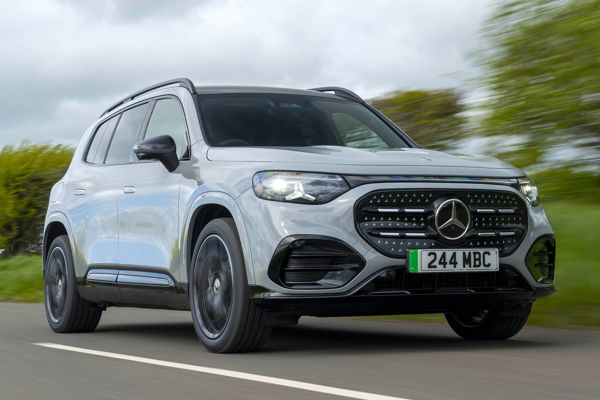
Naturally, a second motor means a sizable increase in its credentials – power’s now at 354PS while torque is zapped up to 515Nm, with a swift 5.5-second 0-62mph time being the result. Whichever Electric GLB you choose its top speed is electronically capped at 130mph.
Despite those impressive outputs you’re unlikely to inflict neck injuries to yourself or passengers with an accelerator pedal that mimics the responsive of a light switch. Like the brakes, the pedal action is easy to meter out, providing gentle pace elevations in urban traffic while still squirting rapidly into opportune gaps on busy roundabouts.
Further variation of its responsiveness is also available through the Dynamic Select driving modes, with a section of Comfort, Eco, Sport and Individual. In all likelihood we think most will simply keep it in the Comfort default the vast majority of the time, but Individual is especially useful if you like to mix and match settings – Comfort suspension with Sport acceleration, for instance.
Mercedes-Benz Electric GLB 2026: Safety
Euro NCAP’s crash-testing experts have yet to get their hands on the Mercedes Electric GLB, so we will update this page when the results are published. While it’s no guarantee of a five-star rating, the Mercedes CLA using the same platform and safety system achieved the maximum score when it was tested in 2025.
Generous levels of Advanced Driver Assistance Systems (ADAS) are fitted across the range as standard, including Attention Assist, Blind Spot Assist Plus, Evasive Steering function and Lane Keeping Assist.
Mercedes’ excellent Distronic adaptive cruise control is also fitted, but it’s listed as a Digital Extra. That’s a marketing sleight of hand meaning that while the Electric GLB has the necessary kit installed, if you want to use it you will have to pay for it via a subscription service. Come on, Mercedes, this technology is part of the package on cars costing under £20,000 these days – do better.
Mercedes-Benz Electric GLB 2026: Towing
Braked towing capacities for the Mercedes Electric GLB vary according to the level of power you opt for. Although not high in the grand scheme of towing, they’re superior to its rivals.
Go for the GLB200 Electric and you’re limited to a maximum of 1500kg with the heavier duty hauling being the preserve of the GLB350 4Matic Electric at 2000kg.
For reference, all Peugeot E-5008s are limited to 1000kg, as is the long-bodied Volkswagen ID.Buzz unless you choose that in flagship GTX guise which has been homologated to pull 1600kg.
Mercedes-Benz Electric GLB interior
Mercedes-Benz Electric GLB 2026: Practicality
Seven-seater SUVs fall into one of two camps. They’re either large enough for a septet of adults to sit comfortably within – such as the Volvo EX90 – or the third row is more modestly proportioned and designed for occasional use, primarily by less tall passengers. It’s that latter group to which the Mercedes Electric GLB belongs.
Those sat in the two front seats have the best of it when it comes to space, although while it isn’t exactly cramped, it does feel more hemmed-in than the first row of the Peugeot E-5008 does. It’s somewhat exaggerated by the base of the Mercedes’ windscreen appearing closer to you as well as the flat, glossy acreage of dashboard’s low-set position.
To date we’ve only driven the Electric GLB in its AMG Line trim levels featuring a sportier seat design. In typical Mercedes fashion they initial seem firm but you soon begin to appreciate their comfort and support. Less pleasing are the fiddly manual adjusters for the seats – if you want electric manoeuvring and memory function, be prepared to pay for one of the two pricier levels of specification.
Being an SUV, your seating position is a bit higher than in a typical hatchback or estate, so you benefit from a clearer view ahead. In fact, thanks to the large glass area it’s very easy to see out in all directions, barring the rear three quarter over-the-shoulder view – substantially thick rearmost roof pillars do you no favours. Ideally, we would also prefer it if the door mirrors’ glass area was larger – their shape’s optimised for aerodynamics rather than seeing what’s behind you.
Access to the Electric GLB’s middle row seats is nice and easy thanks to wide-opening doors, although we can imagine they’ll be easier to clonk in rammed car parks. Those in the outer positions do better than whoever draws the short straw for the centre position – it’s narrower, the cushioning is less scalloped and footroom is limited due to the rear end of the front centre console.
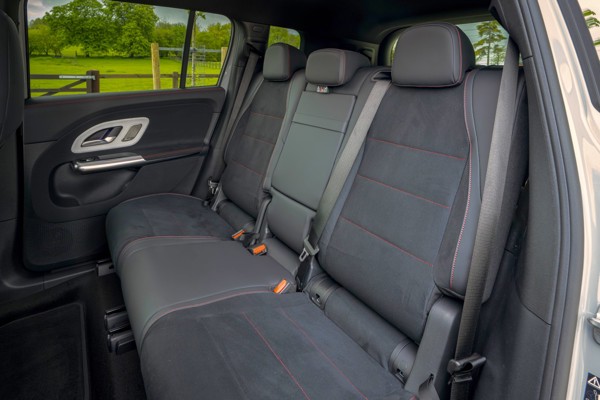
For two adult-sized passengers alone, the space is generous with ample head and legroom, although more under-thigh support from the cushion wouldn’t go amiss. The seat itself can slide forwards and backwards to give those sat behind an acceptable amount of legroom, but even with below average height adults in each of the three rows, it will feel snug.
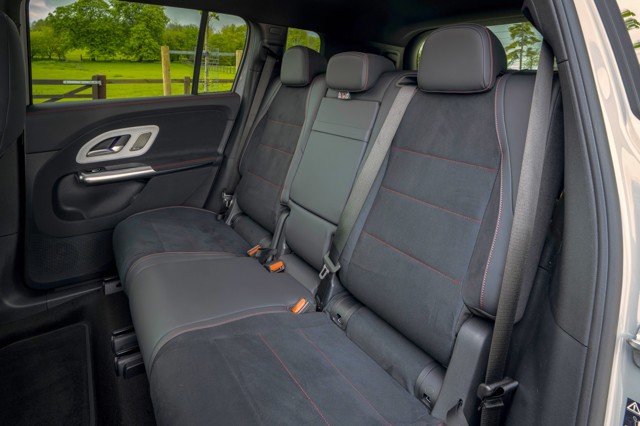
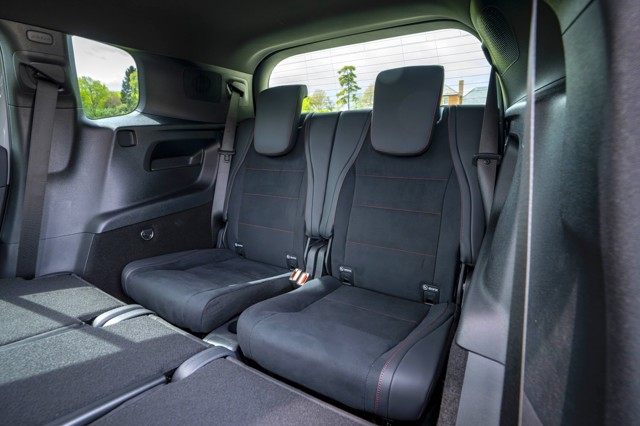
Access to the third row is only possible via the back doors and is not an especially graceful undertaking. We also found that it’s best managed with the second-row seats already eased forwards so that passengers relegated to the back have somewhere to put their feet when clambering aboard. Again, the Peugeot E-5008 just feels that bit better thought out in this respect.
Space isn’t especially generous back there, which is in part why Mercedes has slapped a 171cm – or 5ft 7in – height restriction for third-row passengers. In all honesty, even that feels ambitious, but there’s more space back there than in Tesla’s Model Y.
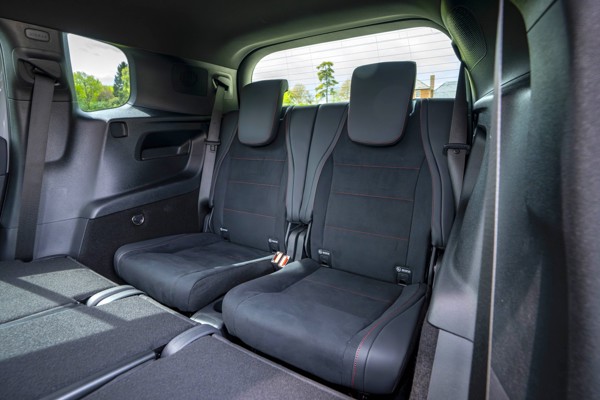
They’re more sized for kids and sensibly have Isofix child seat mounting points in addition to the pair on the outer positions of the second row giving a total of four. Remember those thick rear pillars we previously mentioned? They’re immediately adjacent to back row passengers’ heads, with a tiny side window ahead.
A glazed roof is standard on all Electric GLBs making the cabin feel that bit airier, but it doesn’t extend back over the heads of third-row passengers. Again, if you’re looking for an SUV that’s going to be a regular seven-seater, you would be wise considering something larger. Or the Volkswagen ID.Buzz.
Considering that this is a car focused at larger families, it’s disappointing that there’s no extra storage or convenience features for all manner of detritus that kids invariably bring with them on every car journey, with the exception of the Electric GLB’s additional pair of cupholders for its third row occupants.
That means, working forwards through the car, a centre middle row armrest with two cupholders except for the entry-level Sport versions, netted pockets on the front seatbacks, bins on all four doors, a sub-front armrest cubby with two cupholders and a smartphone tray on the bridge section of the centre console.
Beneath that is an open-sided space useful for small bags and perhaps a tin of those icing sugar-dusted travel sweets, with raised sides to prevent contents from escaping while cornering. Oh and there’s a glovebox on the passenger side of the dash. And that’s your lot.
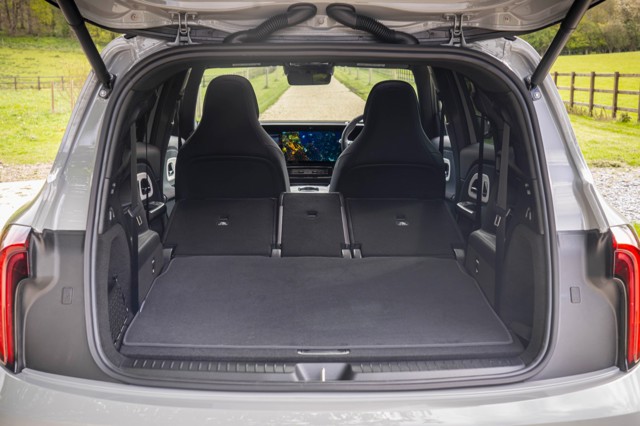
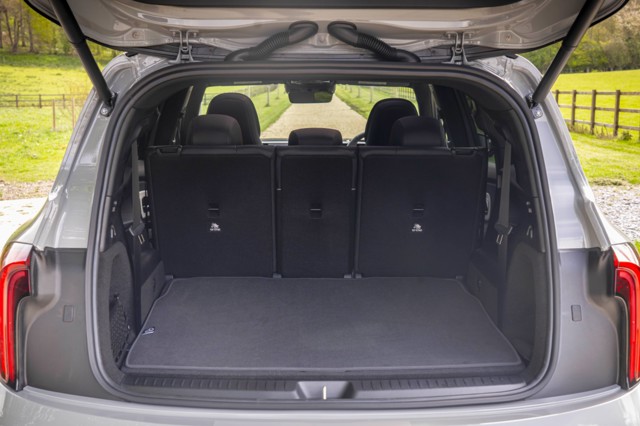
Accessing the Electric GLB’s boot is all the easier thanks to its broad, near-vertical tailgate, which is electrically operated on all except entry-level Sport trim. With all three rows of seats upright, the available space is barely better than a small hatchback’s.
Mercedes quotes a 327-litre capacity behind row three, which we suspect is when loaded up to roof height rather than the top of the seatbacks – the space is less generous visually than the Peugeot E-5008’s which has a claimed capacity of 348 litres. In the same configuration, the VW ID.Buzz only offers 306 litres, while Tesla’s keeping the Model Y’s boot capacities away from would-be buyers’ eyes it would appear.
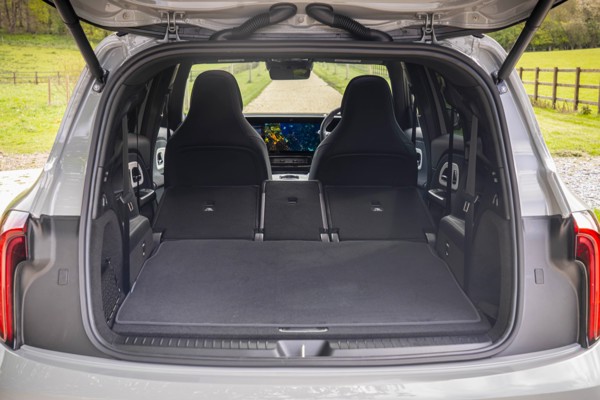
Dropping and raising the Mercedes’ rearmost seats is simple enough using the fabric loop handles protruding from the back of them, but the second-row bench has to be moved forwards to allow them to be moved. Once they are down, they lie horizontally, flush with the floor and generate a 540-litre space when cargo’s loaded to the Electric GLB’s window line.
That figure’s significantly trumped by the Peugeot E-5008’s 916-litre volume, while the ID.Buzz laughs in the face of both with its 1340-litre capacity.
Using levers mounted on top of the seatbacks to release them, the Mercedes’ middle row seats are split in a 40/20/40 configuration, potentially allowing long, slender items to be carried while retaining five useable seats overall. When they are toppled, they don’t lie on the same plane as the folded third row seats and unless you slide them backwards, there’s a gap to bridge as well, allowing smaller items to fall between.
When used in two-seater configuration and loaded to roof height there’s a total volume of 1715 litres in the Electric GLB, which is significantly less than the 2232-litre capacity of the Peugeot E-5008. The van-liked VW ID.Buzz? 2977 litres.
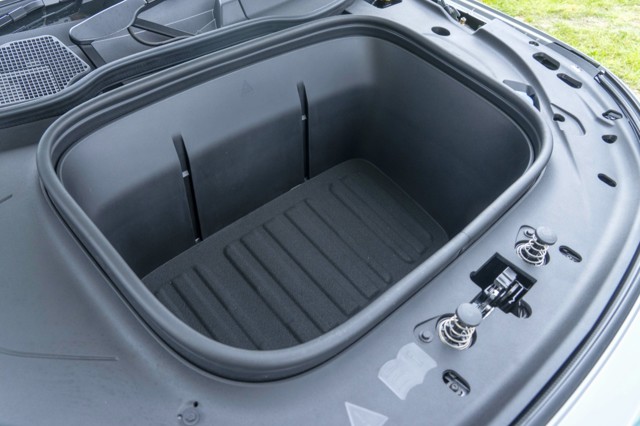
One trick the Mercedes does have up its sleeve – well, under its bonnet, more accurately – is a 124-litre ‘frunk’. When all seven seats and the sliver of luggage space behind are at capacity, that extra space in the Electric GLB’s nose could prove most useful. Only the Tesla Model Y of its immediate rivals also has one, albeit with an unquoted volume.
Mercedes Electric GLB: Dimensions
From front to back the Mercedes Electric GLB measures 4732-4728mm in the AMG Line alternatives. Width of the overall bodywork is 1860-1861mm, growing to 2028-2029mm when the door mirrors are included, while height is quoted at 1689-1692mm. In each instance the Sport trim level produces the larger dimensions than the AMG Line specifications.
Sizes of its key rivals include the Peugeot E-5008 at 4791mm long, 1895mm wide and 1694mm tall, the Tesla Model Y has a length of 4797mm, a width of 1981mm inclusive of its folded-in mirrors and a height of 1621, while the Volkswagen ID.Buzz Long is 4962mm, 1985mm and 1937mm respectively.
Mercedes-Benz Electric GLB 2026: Quality and finish
Our early engagement with the Mercedes Electric GLB points to a family car that’s been put together well, with no immediately obvious issues to suggest it won’t be resilient. Certainly, there were no early signs of rattling pieces of interior trim.
What there were plenty of signs of was just how overly plasticky the cabin is – and not much of it feeling of particularly high material quality. Overall, the Peugeot E-5008’s interior feels more special.
In fact, aside from the generous assortment of differently sized three-pointed star logos on many of its surfaces, you would be hard-pressed to guess that you were even in a Mercedes. The repeated pattern of the brand identity feels like it’s trying to negate what’s missing in the Electric GLB’s substance.
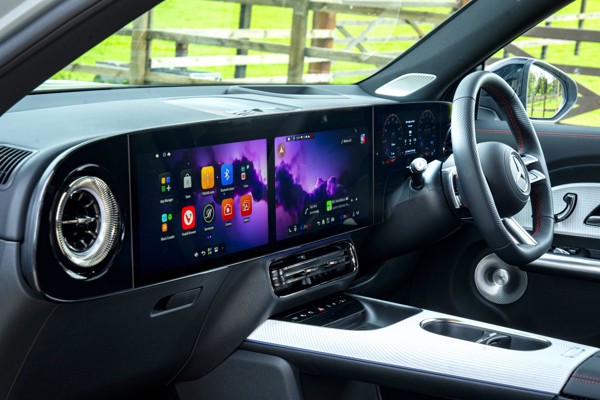
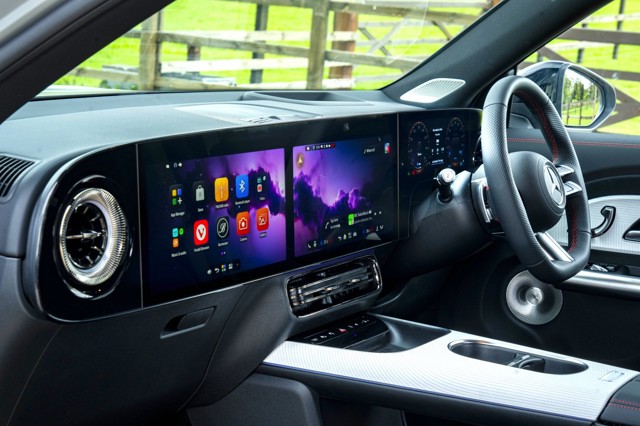
While the glossy plank containing up to three display screens, punctuated at either end by a circular air vent, looks clean and minimalist, it’s also devoid of character and pleasing tactility. For those into their tech, it may well appeal, but with so few physical controls and frequently infuritating haptic zones on the steering wheel spokes, it’s hardly a paragon of ergonomic common sense.
Even cars Mercedes was building a decade ago are superior in their ease of use while driving – which should always be the default starting point, not ‘where can we place the selfie camera?’.
Other plastics, including the decorative elements on the door panels as well as finishing off the upper centre console do little to remedy matters.
Something else to consider for a family SUV that will need to hide child-generated grime about its cabin is that while the standard seat upholstery is predominantly black in colour, the outer edges of that in AMG Line versions is called Clean White Pearl Artico, which is a faux leather finish. Although the test cars we drove were barely weeks old, several portions of the pale trim was already looking grubby. Helpfully both Black and Power Red are no-cost option alternatives.
Mercedes-Benz Electric GLB 2026: Infotainment
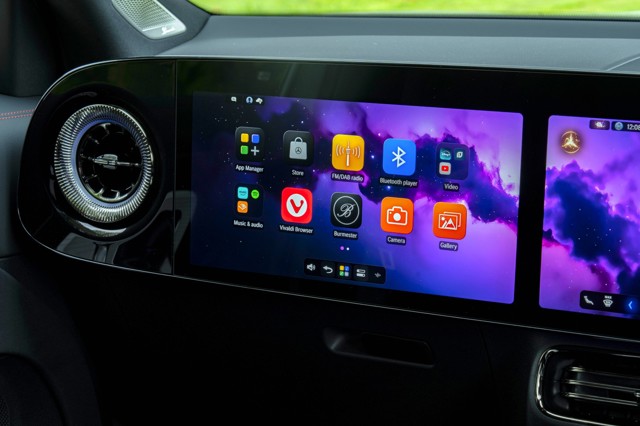
Focal point for the Mercedes Electric GLB’s interior is that vertical cliff of glossy dashboard, home to up to a trio of display screens.
Directly facing the driver is a configurable 10.25-inch item with sharp, clear rendering and graphics that are easy to read size-wise, if positioned a little lower than taller drivers’ eyelines than is ideal. A windscreen-projected head-up display helps matters, but disappointingly it’s only part of the flagship AMG Line Premium Plus package.
Immediately to its left in the centre of the dash is the 14.0-inch multimedia touchscreen. Using Mercedes’ own operating system it’s an intuitive, slick system, which is exactly how it should be considering all of the controls it gives the driver access to.
It’s also where you will adjust the various climate control functions. The temperature adjusters are permanently on-screen, but this isn’t progress over the rocker switches and rotary knobs Mercedes previously championed.
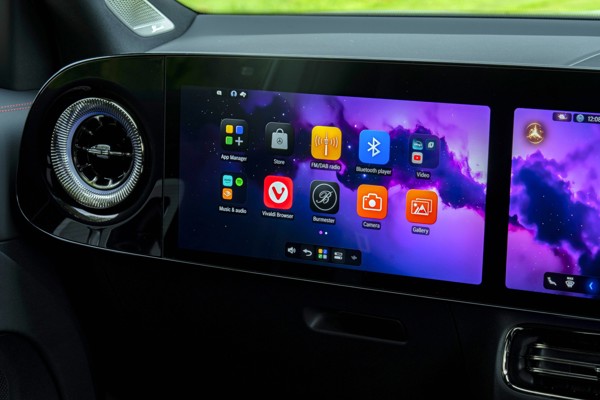
Mercedes continues to provide an integrated navigation system working in conjunction with Google Maps. Usefully, it can determine the best stopping places to recharge on journeys which outstrip its driving range potential, although it will do so based on the so far small network of 800-volt facilities.
Pairing your smartphone to use Android Auto or Apple CarPlay wirelessly is possible, but this functionality is also a subscription-based Digital Extra. Mercedes, this really isn’t on.
Plump for an AMG Line Premium or Premium Plus version and the front passenger will also have the MBUX Superscreen 14.0-inch touchscreen ahead of them, providing access an array of entertainment apps. Eye-tracking software supposedly prevents the driver from watching videos being played, but it really needs to act quicker than it presently seems to.
Every Electric GLB’s dashboard also contains a slickly integrated in-car selfie and video camera. Without wishing to sound like grumpy old codgers, we’re baffled as to what in-car entertainment this provides beyond the first couple of minutes’ use.
Except for the lineup-topping AMG Line Premium Plus specification, all Electric GLBs feature an eight-speaker, 125W sound system. For the flagship that’s upgraded to a Burmester 3D sound package, consisting of 16 speakers, 850W of output and Dolby Atmos.
Mercedes-Benz Electric GLB value for money

Mercedes-Benz Electric GLB 2026: Prices
These are the current on-the-road (OTR) prices for the Mercedes Electric GLB, as of April 2026. No version is in receipt of the government’s Electric Car Grant (ECG). Prices can and do change, so use these as a guide but also check on Mercedes’ UK website for up-to-date price lists.
| Mercedes GLB250+ Electric | from £46,100 |
| Mercedes GLB350 4Matic Electric | from £55,100 |
Is the Mercedes Electric GLB good value compared with its rivals?
It is, albeit with provisos. The Mercedes GLB250+ Electric is available in both the cheaper Sport and Sport Executive trim levels, while the GLB350 4Matic is introduced at the lineup’s AMG Line Executive mid-point.
The priciest version before extras are factored in is the GLB350 4Matic Electric AMG Line Premium Plus at £60,900.
For us, the sweetest spot is the GLB250+ Electric AMG Line Premium – that’s the longer range drive system in the least expensive trim level that includes the must-have adaptive dampers, yet it’s a not inconsiderable £53,700.
In all likelihood you will be wise to specify the factory-fit 400-volt on-board DC charger option, which adds £850 to the bill.
Solid Night Black solid is the only standard paint finish, but two others – Polar White and Aqua-Mint – are zero-cost options.
For £715 you can opt for metallic finishes in Cosmos Black, High-tech Silver and Sapphire Blue, while Mercedes’ exclusive Manufaktur finishes in solid Alpine Grey solid and metallic Patagonia Red cost £825.
All Electric GLB specifications except for Sport have alternative upholstery options at no extra cost. Genuine leather in Black is £1300 extra on AMG Line Premium and Premium Plus trims.
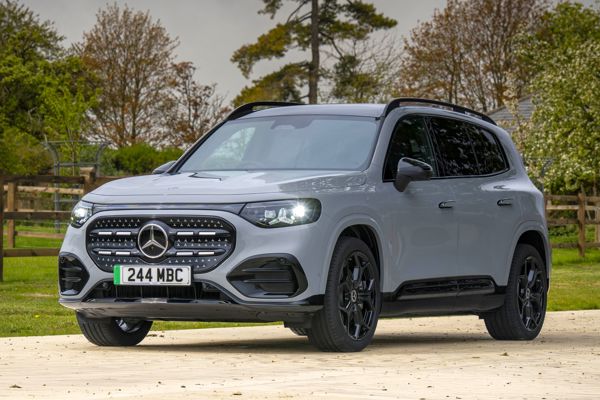
How do those prices stack up against the alternatives? An entry-level Peugeot E-5008 Allure 73kWh 210 will set you back £48,560 rising to £57,225 for the E-5008 GT Premium Dual Motor 73kWh 325.
Only one version of the Tesla Model Y has the requisite seating capacity – that’s the Premium Long Range All-Wheel Drive Seven Seat Interior at £54,490. If you want a seven-seater version of the Volkswagen ID.Buzz you need to go for the Long bodywork option, with prices stretching from £60,533 for the Life 86 Pro to £69,059 for the GTX 86 Pro.
Mercedes-Benz Electric GLB 2026: Reliability and running costs
Like any EV, you can help yourself to low running costs for the Mercedes Electric GLB by having a wallbox installed at home and using this for the vast majority of your charging needs. Switch to an electric car-friendly tariff and you will be looking at 8-9p/kWh, meaning a full charge will cost under £8.
Although value added tax (VAT) is set to fall from 20% to 5% at public charging stations, the change has yet to be actioned. Regardless, we only advise such facilities are used on a when-necessary basis and for as short a period as you can comfortably get away with. They aren’t cost-effective alternatives for charging EVs if having a home wallbox installed isn’t possible.
As of April 2026 the annual VED car tax bill from the first anniversary of a car’s initial registration onwards costs £200 with no exemption for EVs.
One potential taxation advantage of opting for an electric car over a combustion-engined alternative is that the Expensive Car Supplement only applies when the vehicle’s new price, inclusive of options, was £50,000 or over, rather than £40,000. Only the two least expensive versions of the Electric GLB therefore escape the £440 surcharge from years two to six.
One key attraction for company car drivers is that EVs are subjected to a very low rate of Benefit-in-Kind (BiK) taxation. For the 2026/27 financial year it’s just 4%.
Exactly how reliable the Mercedes Electric GLB proves to be will only be known in the fullness of time. By way of reassuring its customers, it comes with Mercedes’ usual three-year/unlimited mileage warranty, plus the battery pack is separately covered for eight years or 100,000 miles against falling below a 70% usable capacity level.
Mercedes Electric GLB: Frequently Asked Questions
What’s the difference between the Mercedes Electric GLB and the Mercedes EQB?
Essentially, the Electric GLB is the second-generation replacement for the EQB. To all intents and purposes, the EQB was the EV version of the Mk1 Mercedes GLB. It was labelled differently because Mercedes then strategy was to have a separate line of electric-only models with differentiated styling and names all prefixed with EQ. That decision has since been reversed, hence the Electric GLB looks virtually identical to its combustion-engined twin.
Which engines are available for the Mercedes GLB?
Aside from the GLB250+ Electric and the GLB350 4Matic Electric, there’s a choice of three mild hybrid-assisted, 1.5-litre petrol engines available for this seven-seater Mercedes.
Despite the engines being the same capacity, different power an torque outputs mean they are all badged differently, being available as the GLB180, the GLB200 and the GLB220 4Matic. There’s no diesel-engined version.
What’s the Mercedes Electric GLB’s driving range?
According to the WLTP Combined cycle tests, the highest range figure achieved is 379 miles for the Mercedes GLB250+ Electric Sport.
The lowest potential driving range is 342 miles for the Mercedes GLB350 4Matic Electric AMG Line Premium Plus.
How big is the Mercedes Electric GLB’s boot?
Mercedes claims with all three rows of seats in use the capacity is 327 litres, although we suspect this is when loaded to the roof level. Fold the rearmost seats into the floor and load your cargo to the window line and you have a 540-litre capacity. With just the front two seats occupiable and loaded to the roof height, there’s up to 1715 litres of capacity at your disposal. All Electric GLBs also feature a 127-litre ‘frunk’ below the bonnet.
Is the Mercedes Electric GLB available through Motability?
No. Following political arguments in 2025, Mercedes was one of a number of luxury brands deemed to be incongruous with the Motability scheme, forcing them to be removed. Of course, a fairer method would have been to differentiate on price rather than brand perceptions, but the optics for politicians of doing that would grab fewer headlines.
Satisfaction Index
 What is your car like to live with?
We need your help with our latest Satisfaction Index, so that we can help others make a smarter car buying decision. What's it like to live with your car? Love it? Loath it? We want to know. Let us know about your car - it will only take a few minutes and you could be helping thousands of others.
Help us with the Honest John Satisfaction Index nowMercedes-Benz Electric GLB models and specs
Since the Mercedes Electric GLB was launched it has been available in five levels of specification – Sport, Sport Executive, AMG Line Executive, AMG Line Premium and AMG Line Premium Plus.
Mercedes Electric GLB: current trim levels
Mercedes Electric GLB Sport standard equipment (January 2026 to date):
- 18-inch 5-twin-spoke alloy wheels in High-Gloss Black and High-Sheen finish
- Comfort suspension
- Sport exterior body styling
- Automatic LED High Performance headlights with integrated LED daytime-running lights
- LED tail lights
- Electrically adjustable and folding door mirrors
- Automatic windscreen wipers
- Panoramic sunroof
- Roof rails
- Body-coloured exterior door handles
- 10.25-inch driver’s display screen
- 14.0-inch touchscreen MBUX multimedia system
- DAB digital radio
- Facial recognition
- Selfie and video camera
- Eight-speaker, 125W Mercedes-Benz sound system
- USB-C ports – 2x front and 2x rear
- Heated front seats with four-way electrically adjustable lumbar support
- Black Artico faux leather and Black Sortland fabric seat upholstery
- Leather-wrapped, three-spoke, multifunction steering wheel
- Anthracite anodised-look interior trim elements
- Velour floor mats
- Thermatic one-zone climate controlled air-conditioning
- Electric windows front and rear
- Auto-dimming interior rear-view mirror
- 40/20/40 split-folding second row seatbacks
- 50/50 split-folding third row seatbacks
- Anti-slip boot floor mat
- Dynamic Select driving modes – Comfort, Eco, Sport and Individual
- Heat pump
- 11kW AC on-board charger
- 320kW DC on-board charger
- Acoustic vehicle presence indicator
- Emergency Brake Assist
- Attention Assist
- Blind Spot Assist Plus
- Driver’s Eye-Tracking technology
- Evasive Steering Function
- Hill Hold and Hill Start Assist
- Lane Keeping Assist
- Manoeuvring Assist
- Radar-based brake energy recuperation
Mercedes Electric GLB Sport Executive standard equipment (January 2026 to date) – differences from Sport include:
- 19-inch multi-spoke alloy wheels in High-Gloss Black and High-Sheen finish
- Flush-fitting, automatically retractable and extending exterior door handles
- Keyless-Go locking, unlocking and starting
- Electrically operated tailgate with gesture control
- Heat-insulating, dark-tinted rear side and tailgate glass
- Wireless smartphone charging pad
- Black Artico faux leather seat upholstery
- Light brushed aluminium interior trim elements
- 64-colour LED interior ambient lighting
- Rear central armrest
Mercedes Electric GLB AMG Line Executive standard equipment (January 2026 to date) – differences from Sport Executive include:
- 19-inch AMG 5-spoke alloy wheels in High-Gloss Black and High-Sheen finish
- AMG exterior body styling
- Electrically adjustable and folding door mirrors with Mercedes logo-projecting downlighting
- Sporty, contoured front seats with integral-look headrests
- Clean White Pearl Artico faux leather and Black Microcut microfibre seat upholstery
- Nappa leather-wrapped, flat-bottomed, multifunction steering wheel
- Light carbon-grain aluminium interior trim elements
Mercedes Electric GLB AMG Line Premium standard equipment (January 2026 to date) – differences from AMG Line Executive include:
- 20-inch AMG multi-spoke alloy wheels in High-Gloss Black and High-Sheen finish
- Adjustable suspension damping
- Electrically adjustable front seats with memory function
- Light brushed aluminium interior trim elements
- Thermotronic two-zone climate controlled air-conditioning
- Illuminated door sill treadplates
Mercedes Electric GLB AMG Line Premium Plus standard equipment (January 2026 to date) – differences from AMG Line Premium include:
- 20-inch AMG 5-twin-spoke alloy wheels in High-Gloss Black, Dark Platinum Gloss and High-Sheen finish
- AMG Plus with Night Package exterior body styling
- Automatic Multibeam LED High Performance headlights with integrated LED daytime-running lights
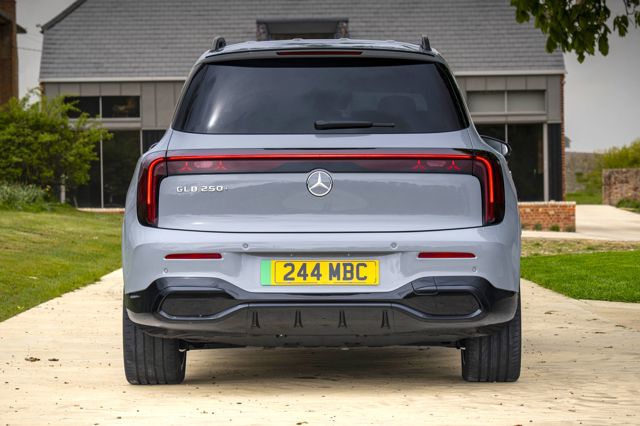
- Animated LED lighting strip between tail light clusters
- Heat- and noise-insulating acoustic side windows
- Heated windscreen wiper blades
- Head-up display
- 16-speaker, 850W Burmester 3D surround sound system and Dolby Atmos
- Heated, Nappa leather-wrapped, flat-bottomed, multifunction steering wheel
- Matt White natural fibre silent lines interior trim elements
- Pre-Safe system comprising preventative occupant protection with Pre-Safe Curve, Pre-Safe Sound and closing function for side windows
Subscription-type Digital Extras:
- Adaptive main beam headlights
- MBUX Navigation – free for the first seven years
- Android Auto and Apple CarPlay smartphone connectivity
- Distronic adaptive cruise control
- MB.Drive Parking Assist with front and rear parking sensors plus reversing camera
