
Dacia Jogger Review: Price, specs and boot space

Dacia Jogger Verdict

 It's a genuine bargain. Seven seats as standard. A big boot if used as a five-seater. Frugal 1.0-litre engine plus excellent hybrid model.
 Interior isn't as flashy as mainstream rivals. It's not particularly refined. Poor safety scores from Euro NCAP.
Find out more about the Dacia Jogger
Insurance Groups are between 13–14
On average it achieves 0% of the official MPG figure
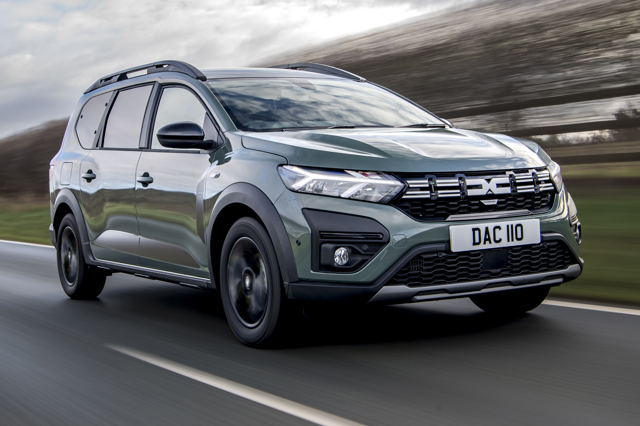
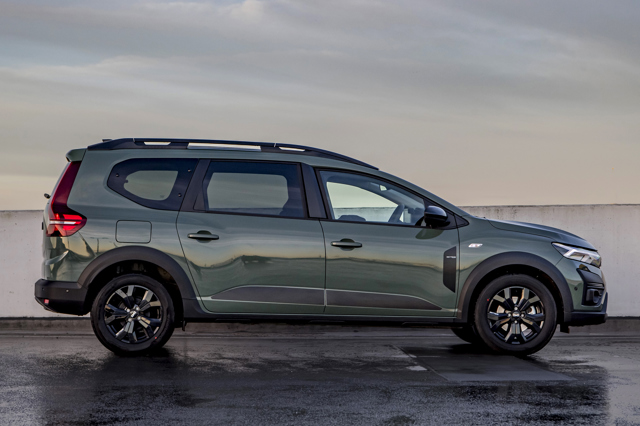
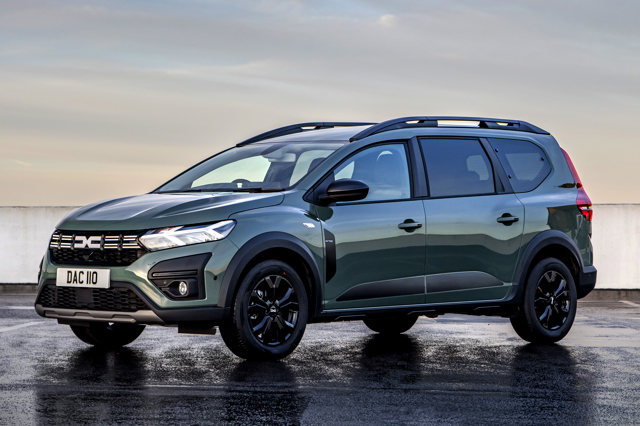
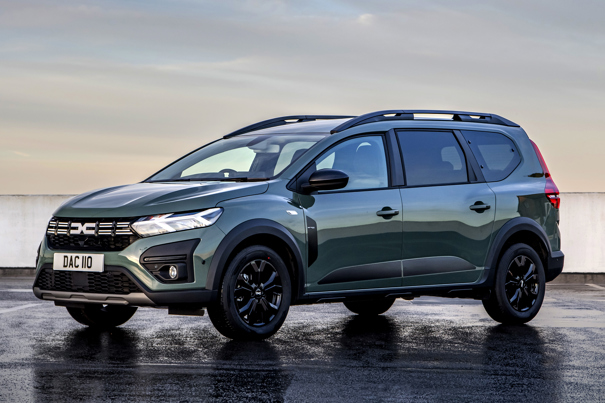
The Dacia Jogger is a versatile seven-seat family wagon that offers incredible value for money. For less than the price of a Skoda Fabia, you could be driving an extremely useful estate-car-cum-people-carrier that really isn't as bleak as you might expect. There's also an excellent hybrid version.
It's one of the biggest cars that Dacia makes, but the Dacia Jogger is actually based on the same platform as the Dacia Sandero hatchback. The question is, does it cut the mustard as a seven-seat family car? Find out in our Dacia Jogger review.
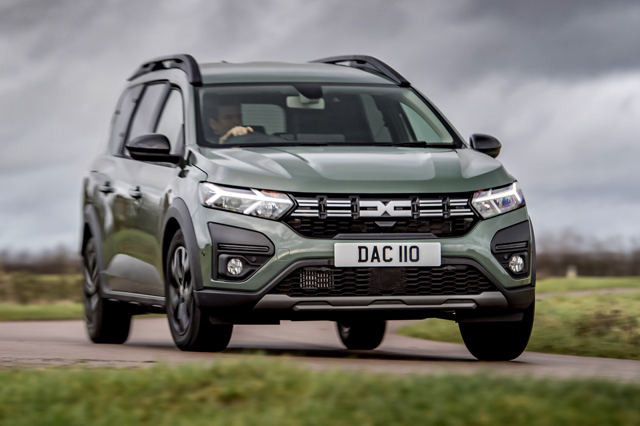
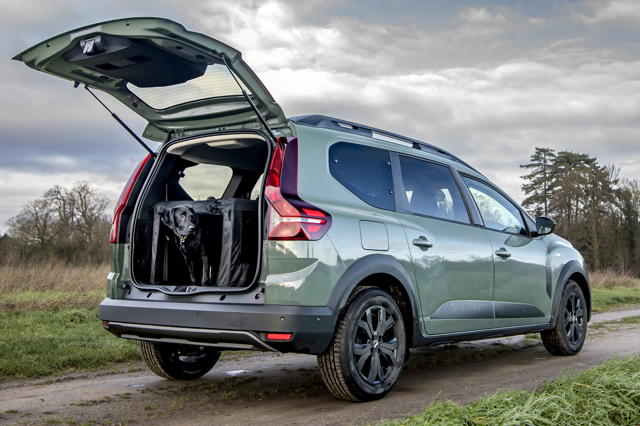
The Dacia Jogger is similar in size to a Volkswagen Golf Estate, while its stepped roof means it feels more like a spacious MPV inside. With its slightly raised ride height, you might also consider it alongside SUV alternatives like the Skoda Karoq, too.
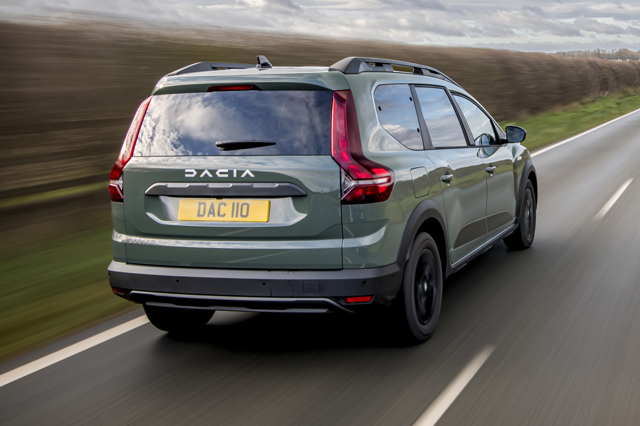
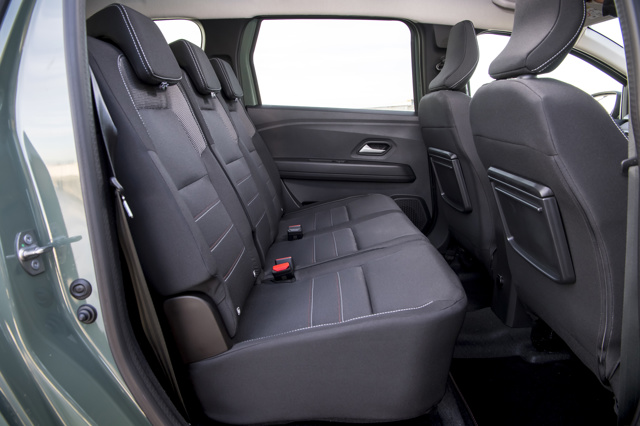
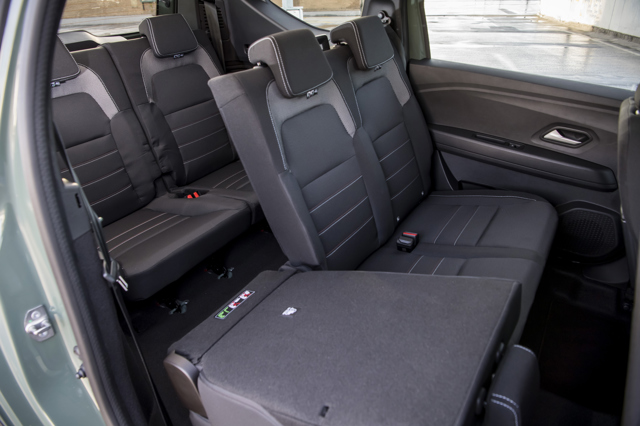
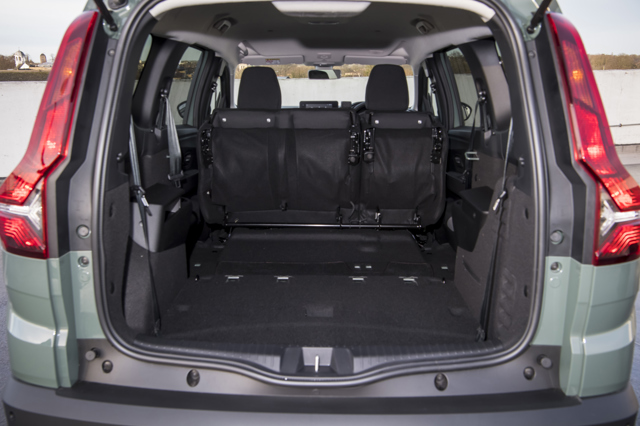
All Dacia Joggers sold in the UK come with seven seats as standard. The rear-most seats are only really meant for occasional use: kids will excitedly climb into the back, but we reckon adults will be rather less enthusiastic, and certainly won't be as comfortable once they're in. There's not much of a boot with the back seats in use, either. That said, those rearmost seats can be folded away when not needed to open up generous boot space, and can be removed entirely for even more cargo space: they're extremely lightweight, too, so the removal process isn't too much of a faff.
If, like us, you get animated about versatility, you'll also be keen on the Dacia Jogger's clever modular roof rails. Armed with an Allen key, you can transform these into a full-on roof rack capable of carrying up to 80kg.
Ordering a Dacia Jogger is an easy process, too. You get the choice of just three trim levels (Essential, Comfort and Extreme SE on early models, with the line-up later revised to Essential, Expression, and Extreme), all of which are very reasonably priced. And there are just two optional extras available: metallic paint and a spare wheel.
The small difference in monthly payments between the most affordable Dacia Jogger Essential and top-spec Dacia Jogger Extreme means we'd go for the latter. Standard kit on the range-topper includes 16-inch alloy wheels, heated front seats, a reversing camera and central navigation system with Apple CarPlay and Android Auto.
The most affordable version is the TCe 110 petrol, a little 1.0-litre turbocharged three-cylinder petrol engine paired with a six-speed manual gearbox. With just 110PS and 200Nm torque, it might not sound like the punchiest of units, but it's actually more than adequate for getting a shift-on in the Dacia Jogger thanks to the car's relatively light weight.
The Dacia Jogger Hybrid is the other choice, and it's an excellent one. The earlier Hybrid 140 iteration used the same hybrid system as the Renault Clio E-Tech, being smooth, quick and easy to drive, while the later Hybrid 155 powertrain that replaced it comes from the larger Dacia Bigster.
The Jogger's pleasant enough from behind the wheel, although refinement isn't as good as in pricier mainstream alternatives. It isn't too stodgy in the corners, it's reasonably comfortable, and there's plenty of tech on hand (from 2024 onwards, at least) to help reduce the risk of a collision. Beware its one-star Euro NCAP rating, though, which might well prove to be an understandable deal-breaker for some family-car buyers.
We lived with a Jogger for three months - find out how we got on with it in our Dacia Jogger long-term test.
Reviews for Dacia Jogger's top 3 rivals


Dacia Jogger handling and engines
- Engines range from 1.0 TCE to Hybrid
- Readers report Real MPG to be between 40–60 mpg
Dacia Jogger 2026: Handling and ride quality
There's a slight lack of polish to the way the Dacia Jogger deals with bumpy road surfaces, but it strikes a reasonable middle-ground of abilities, being neither too floaty nor too firm. You can only get the Dacia Jogger with 16-inch alloy wheels and high-profile tyres, which no doubt helps here.
It corners reasonably well, too. Okay, you're not going to enjoy driving it as much as a SEAT Leon Estate, but it feels surprisingly composed and there's plenty of grip on offer. The steering is rather light, which is useful around town, while the Jogger's relatively compact dimensions (especially compared to other seven-seaters) help when tackling tight parking spaces.
There's a noticeable difference in ride quality with the Hybrid 140 version. Dacia has reinforced the suspension to compensate for the extra 180kg of weight, so it's noticeably firmer. It's fine on motorways, but on poorer local roads, it can struggle to settle down and feels quite busy. We haven't yet driven the Hybrid 140's replacement, the Hybrid 155, so we can't yet tell you if the same is true here.
Dacia Jogger 2026: Engines
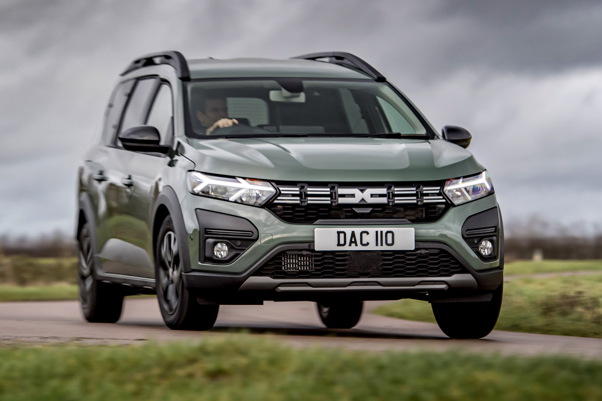
When it was first launched, the Dacia Jogger was available only with a 1.0-litre petrol engine paired with a six-speed manual gearbox. This three-cylinder turbocharged unit packs just 110PS and 200Nm of torque, which doesn't sound like a great deal for a seven-seat family car.
Its 11.2 second 0-62mph time means it'll feel quite slow if you're coming out of a punchy turbodiesel (unsurprisingly, diesel power isn't on the agenda for the Dacia Jogger), but it actually feels sprightly enough for a car of this type. Its low 1205kg kerb weight helps, but a full complement of passengers and a roof box full of luggage will no doubt hinder performance.
This entry-level powertrain, which remains on sale today, was soon joined in the Jogger range by the Hybrid 140 version. This uses a 1.6-litre non-turbo petrol engine alongside two electric motors, and rather than having a CVT transmission like many hybrids, the Dacia has a multi-mode clutchless gearbox.
You'll barely notice when it switches between electric and petrol power, while the gearbox works really well, delivering plenty of low down torque when you need it and reasonably swift acceleration. 0-62mph happens in 10.1 seconds. There's a B engine-braking mode, which recuperates more energy, recharging the battery faster and increasing the braking effect when you lift off the accelerator. It's very useful around town where the Jogger Hybrid can drive at up to 43mph on electric power.
In late 2025, Dacia replaced the Hybrid 140 powertrain with the more recent Hybrid 155 alternative that initially made its debut in Dacia's Bigster SUV. It uses a naturally aspirated 1.8-litre petrol engine alongside a pair of electric motors and the multi-mode transmission. As the moniker suggests, the total output is 155PS, and the 0-62mph sprint time stands at nine seconds dead, a considerable improvement on the Hybrid 140, while also being 10% more efficient. We haven't yet tried the Hybrid 155 powertrain, though, so we can't yet tell you what its level of performance feels like.
Dacia Jogger 2026: Safety
If our description of the Dacia Jogger so far in this review has got you champing at the bit to get out straight out there and buy one, then prepare for your enthusiasm levels to evaporate almost entirely.
That's because when the Jogger was crash-tested by Euro NCAP in 2021, it received a paltry one-star (out of five) rating. That's perhaps not all that surprising given that Dacia's best performance in these tests to date is three out of five stars, and that one- and two-star ratings have been seen before by the brand, but it's still very poor in the scheme of things, especially in a car designed to carry families.
But before you screw up your order form and hurl it in the bin in disgust, let's put a little context around that result. The Adult Occupant score of 70% isn't actually all that bad, and neither is the Child Occupant score of 69%. However, the Vulnerable Road Users score of 41% and Safety Assist score of 39% are the main factors behind such a low rating.
That's partly because its automatic emergency braking system (which is a legal requirement) is (or at least, was at the time) a less sophisticated one than the norm as it doesn't detect pedestrians and the like. And that's partly intentional on Dacia's part: the brand has been open in the past about its view that its customers value low prices over (some would say needless) safety systems that add cost and complexity. Dacia also chose to forego some other driver assistance systems Jogger for the same reason.
Since the NCAP tests were conducted, however, Dacia has climbed down from its soap box a little, and decided to add a range of additional driver assistance systems to the Jogger at no extra cost to the customer. These include an upgraded emergency braking system, along with lane keep assist, lane change alert, speed limit assist and driver attention alert. That's on top of the safety kit that was already on board, including various electronic stability systems, and front-, side- and curtain airbags.
The Jogger hasn't yet been retested by Euro NCAP since the upgrades were applied, and if/when it is, it'll be interesting to see if the ratings improve, and by how much.
Dacia Jogger 2026: Towing
The Dacia Jogger 1.0-litre has a braked towing capacity of up to 1200kg, which drops to 750kg for the Hybrid 140. Thankfully, the replacement for the Hybrid 140, the Hybrid 155, cranks the towing figure back up to 1200kg.
| Engine | MPG | 0-62 | CO2 |
|---|---|---|---|
| 1.0 TCE | - | 11.2–32.5 s | 131 g/km |
| Hybrid | - | 10.0 s | 111–112 g/km |
Dacia Jogger interior

| Dimensions | |
|---|---|
| Length | 4547 mm |
| Width | 2007 mm |
| Height | 1674–1691 mm |
| Wheelbase | 2898 mm |
Dacia Jogger 2026: Practicality
We don't think you can buy a more versatile new car than the Dacia Jogger for the money. Anything else with seven seats costs you thousands more, even models from the Chinese disruptor brands that are becoming more and more commonplace in the UK.
Having said that, you might consider the Jogger to be a seven-seater on a mere technicality. Yes, it has the requisite number of chairs, but the rear-most seats are very tight on space, they're not the most accessible because the middle seating row doesn't slide, and the boot becomes incredibly small when all the seats are in place (just 160 litres).
It probably shouldn't be relied on as a regular seven-seater, then, but as a five-seater with a backup plan for when the kids want to bring their mates home from school for a playdate, it's more than adequate. You also get a generous 565-litre boot when the third-row seats are folded away
That said. the rearmost seats weigh next to nothing and can easily be removed, so we'd suggest doing that and leaving them stored away in the garage until those occasions when you actually need seven seats. Doing so gives you a massive 696-litre boot with five seats still in place. With all the car's foldable seats dropped, you have a huge 1807-litre loadspace to call upon.
Access to the loadspace is easier than with most high-up SUVs, too. You shouldn't have too much of an issue encouraging a dog to jump into the Jogger's boot, while loading heavy items should be easy, too.
A stepped roofline means there's loads of headroom in the middle row of the Jogger, although legroom will be a little tight for adults. There's plenty of room in the front, though, while Dacia proudly boasts that the Jogger has 23 litres of useful storage space dotted around the cabin.
Dacia Jogger 2026: Quality and finish
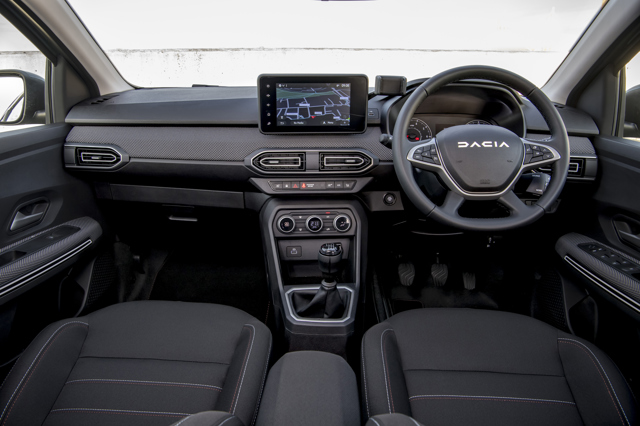
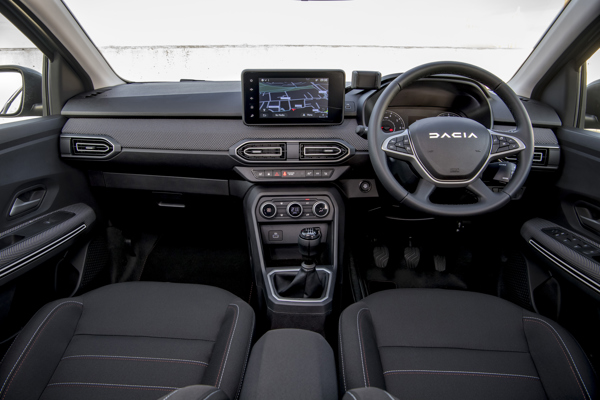
You're certainly not going to mistake the Dacia Jogger's interior for that of a BMW or Audi, but it's perfectly fine for the money. There are hard plastics in most areas of the cabin, but it's not entirely drab. The fabric-covered dashboard on mid- and high-spec versions is a nice touch, and in the range-topper, the copper-coloured interior styling accents and digital climate control dials give things more of a lift.
Dacia Jogger 2026: Infotainment
The base-spec Dacia Jogger Essential doesn't even come with an infotainment screen. It does come with a basic DAB radio, though, with Bluetooth and an in-built phone holder. Your audio is played through just two speakers, though.
It's worth upgrading to the second-rung Dacia Jogger, if only for the addition of an in-built infotainment system. This was previously the Comfort trim, which got an 8.0-inch multimedia screen in the centre of the dashboard, but when Comfort trim was replaced by Expression trim in 2025, this was replaced by a new 10.0-inch screen. Either way, you get four-speaker audio and the ability to display navigation instructions through you smartphone via Apple CarPlay and Android Auto.
The one-time range-topping Jogger, the Extreme SE, also got an 8.0-inch multimedia screen, but once again, this trim was replaced in 2025 with the Extreme, which gained a new 10.0-inch item. In both cases, these had integrated nav and various connected services, while the Extreme also gained wireless phone charging. Six speakers also come as standard.
Base-spec Joggers come with a 3.5-inch black-and-white digital driver display with analogue dials, while range-topping ones have a 7.0-inch colour fully digital driver readout. With mid-spec cars, the petrol has the former while the hybrid has the latter.
Dacia Jogger value for money

Dacia Jogger 2026: Prices
The Dacia Jogger is unbelievably cheap, especially for a car with seven seats, but like everything in the world today (cars or otherwise), it's nowhere near as cheap as it used to be. When it first went on sale, prices started at £15,000, but that headline price has since risen to £19,000. For context, that's about the same as you'll pay for an entry-level Fiat Grande Panda, which is teeny, and less than you'll pay for an entry-level Vauxhall Corsa.
Upgrading to the mid-range Expression trim from the entry-level Essential (which you'll probably want to for tolerable kit levels) takes your outlay up to over £20,000, while upgrading further to the Extreme takes you closer to £22,000.
Those prices are for the petrol version, too. If you want the hybrid, then the Essential will set you back just over £23,000, while the Extreme costs more like £25,000. That's still relative chicken-feed for a seven-seater with a hybrid powertrain.
Despite the low prices as a new car, there are still significant savings to be made if you buy a used Jogger instead. A budget of £13,000 will get you a broad choice of 1.0-litre petrols in a variety of trim levels, from around 2022 with around 25,000 miles on the clock. These will have reached the end of their original standard three-year, 60,000-mile warranty, but fear not, as Dacia has now introduced a service-activated warranty like a number of other manufacturers. Get jour Jogger serviced by a Dacia main dealer, and you automatically get an additional one year or 18,000 miles (whichever expires first) worth of cover up to a maximum of seven years or 75,000 miles.
Dacia Jogger 2026: Reliability and running costs
Earlier on in its life, the Jogger's fuel economy figures were given at around 49mpg for the 1.0-litre petrol version, and 57mpg for the Hybrid 140. These aren't bad at all, and are on a par with the figures of many superminis, let alone seven-seaters.
More recently, the figure for the 1.0-litre petrol has dropped to around 47mpg - we're not entirely sure why: perhaps it's the extra weight of the additional safety kit applied in 2024 - while the figure for the Hybrid 155 stands at 61mpg, a marked improvement over the Hybrid 140 despite its extra power.
Insurance groupings for the Dacia Jogger range vary from group 13 (out of 50) at the bottom of the scale to group 20 at the top, so no version will ruinously expensive to insure.
VED road tax will be charged at the regular flat rate of £195 per year, with no danger whatsoever of you being stung for the pricey 'luxury car surcharge' thanks to the Jogger's low list prices.
Satisfaction Index
 What is your car like to live with?
We need your help with our latest Satisfaction Index, so that we can help others make a smarter car buying decision. What's it like to live with your car? Love it? Loath it? We want to know. Let us know about your car - it will only take a few minutes and you could be helping thousands of others.
Help us with the Honest John Satisfaction Index nowDacia Jogger models and specs
Today, the Dacia Jogger comes in three main trim levels, Essential, Expression and Extreme.
The entry-level Dacia Jogger Essential comes with a reasonable amount of equipment given its low price, so it doesn't feel too bare-bones, but there are still a few items you might miss. You do, however, get:
- 16-inch steel wheel with wheeltrims
- longitudinal roof bars
- rear parking sensors
- automatic lights and wipers
- cruise control and speed limiter
- manual air-conditioning
- electric front windows
- basic non-touchscreen infotainment
Next up is the Dacia Jogger Expression, which manages to feel a good bit more salubrious, with:
- fabric dashboard trim
- modular roof bars
- reversing camera
- 7.0-inch digital instrument panel (on hybrid)
- handfree keycard
- front foglights
- electrically adjusting door mirrors
- automatic climate control air-conditioning
- electric rear windows
- 10.0-inch touchscreen infotainment with Apple CarPlay/Android Auto
The poshest Jogger is the Dacia Jogger Extreme, which adds:
- 16-inch alloy wheels
- 360-degree cameras
- power folding door mirrors
- wireless charging
- heated front seats
- heated steering wheel
- 10.0-inch touchscreen infotainment with integrated nav
Expression trim replaced the Comfort trim level that was offered previously, while Extreme trim replaced the previous Extreme SE special edition model to become the regular top-of-the-range offering.
| Dimensions | |
|---|---|
| Length | 4547 mm |
| Width | 2007 mm |
| Height | 1674–1691 mm |
| Wheelbase | 2898 mm |
| Miscellaneous | |
|---|---|
| Kerb Weight | 1261–1406 kg |
| Boot Space | - |
| Warranty | |
| Servicing | - |
| Costs | |
|---|---|
| List Price | £16,400–£23,860 |
| Insurance Groups | 13–14 |
| Road Tax Bands | C–E |
| Official MPG | - |
| Euro NCAP Safety Ratings | |
|---|---|
| Adult | - |
| Child | - |
| Pedestrian | - |
| Overall | - |
Currently on sale
| Small MPV | |||
|---|---|---|---|
| Version | List Price | MPG | 0-62 |
| Essential TCe110 Start/Stop 5dr | £16,400 | - | 32.5 s |
| Expression TCe110 Start/Stop 5dr | £19,270 | - | 32.5 s |
| Expression TCe-h 140 Auto Start/Stop 5dr | £22,755 | - | - |
| Extreme TCe110 Start/Stop 5dr | £20,330 | - | 11.2 s |
| Extreme TCe-h 140 Auto Start/Stop 5dr | £23,860 | - | 10.0 s |
On sale until February 2024
| Small MPV | |||
|---|---|---|---|
| Version | List Price | MPG | 0-62 |
| Extreme SE TCe110 Start/Stop 5dr | £19,000 | - | 32.5 s |
| Extreme SE TCe-h 140 Auto Start/Stop 5dr | £23,160 | - | - |
On sale until August 2022
| Small MPV | |||
|---|---|---|---|
| Version | List Price | MPG | 0-62 |
| Comfort TCe110 Start/Stop 5dr | - | - | - |
| Essential TCe110 Start/Stop 5dr | - | - | - |
| Extreme SE TCe110 Start/Stop 5dr | - | - | - |
Model History
- April 2024: Dacia Jogger gets extra safety equipment at no extra cost
- October 2025: Dacia Jogger design and trim updates
- November 2025: Dacia Jogger upgraded for 2026
April 2024
Dacia Jogger gets extra safety equipment at no extra cost
Dacia has announced that it is boosting the safety and convenience of its models without any additional cost to the customer.
All Sandero, Sandero Stepway and Jogger models now get intelligent speed assist, lane departure warning, lane keeping assist, Advanced Emergency Braking System (AEBS), driver drowsiness and attention warning, rear parking sensors, and automatic headlights at no extra charge.
The move means all Dacia models conform to the new European Global Safety Regulation 2 (GSR2) legislation.
The Jogger Hybrid 140 now features the seven-inch instrument panel first seen on the All-New Duster and a new E-SAVE function that allows energy to be reserved for later in a trip.
For example, if a steep uphill stretch is approaching, the driver can activate E-SAVE to preserve the battery and then deactivate it once the climb has been completed.
Prices for the Jogger start at £18,295.
October 2025
Dacia Jogger design and trim updates
Dacia has announced a number of updates to the Jogger range. The changes include a new design of LED headlights and a new front grille, while the taillights are also revised.
New wheel designs, plastic wheelarch cladding made from Dacia's 20% recycled Starkle material, and the option of a Sandstone exterior colour complete the exterior changes.
Inside, there's new air vents, harder-wearing upholstery and a new steering wheel design. The seven-inch display for the digital dials has been redesigned and there's a new 10-inch central screen on Expression, Extreme and Journey trims. A wireless phone charger is also available for the first time.
Dacia has also confirmed that the 155PS hybrid powertrain introduced with the Bigster has been added to the Jogger line-up.
November 2025
Dacia Jogger upgraded for 2026
Dacia has released prices and specs for its revised Jogger range, which includes design and tech upgrades, plus a new hybrid powertrain. Importantly, prices for the refreshed model start at £18,995, just £25 more than the outgoing car.
On the outside, the Jogger gets new inverted T-shaped LED headlights and a new grille, and new vertical LED ‘pixel’ taillights. New wheel designs and body cladding made from Dacia's Starkle recyclable plastic also feature. Sandstone metallic paint is also new.
The interior a new 10-inch central touchscreen with connected navigation and wireless smartphone integration. Higher-spec models get a seven-inch digital driver display.
The Jogger now features YouClip mounting points for accessories like a smartphone holder, storage pouch or tablet mount.
The Jogger also gets a new hybrid powertrain which Dacia claims gives both better performance and improved efficiency. The Hybrid 155 uses a 1.8 petrol engine, two electric motors and a 1.4kWh battery to deliver 155PS while improving fuel consumption and cutting CO2 emissions by around 10%.
The new car is available to order now.
Dacia Jogger 2026 prices
Jogger Essential TCe 110 £18,995
Jogger Expression TCe 110 £20,295
Jogger Expression Hybrid 155 £23,330
Jogger Extreme TCe 110 £21,595
Jogger Extreme Hybrid 155 £24,630
