
BMW X5 Review: Price, specs and boot space


BMW X5 Verdict

 Excellent interior with plenty of space and luxury. Great to drive with impressive petrol, diesel and hybrid options.
 Optional third row of seats aren't the roomiest. Expensive in higher trims.
Find out more about the BMW X5
Insurance Group 50
On average it achieves 99% of the official MPG figure
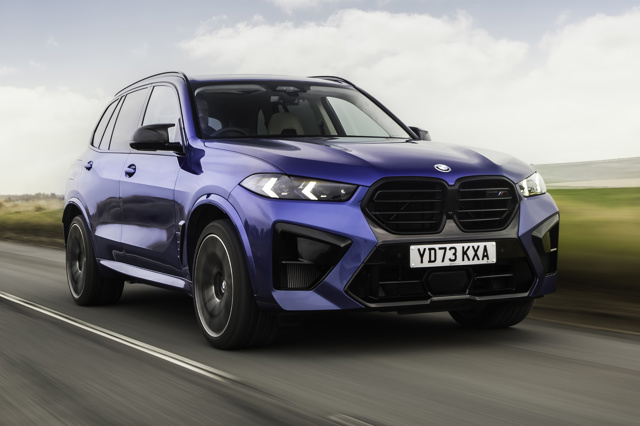
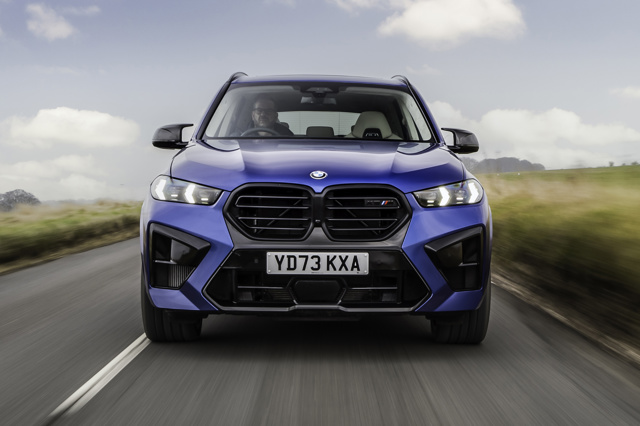
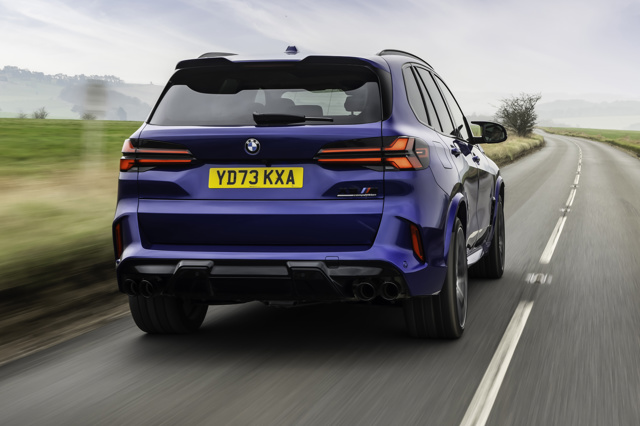
The BMW is one of the finest cars of its type to drive, with an excellent ride-and-handling balance and brilliant engines. It also has all the space, quality, luxury and technology you could hope for, even in a luxury SUV.
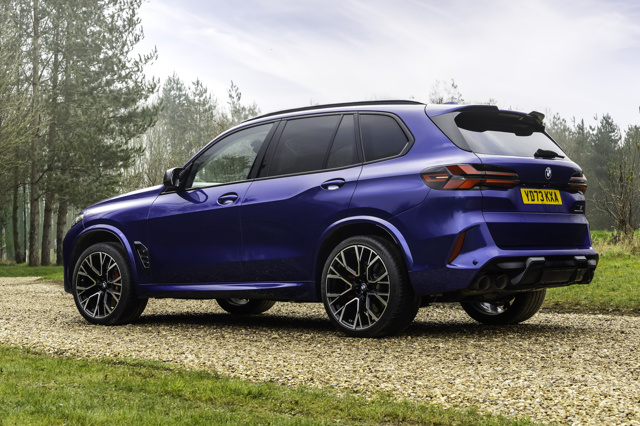
The original BMW X5 was one of the original luxury SUVs when it was first released in 1999. While proper luxury 4x4s had already been going for some time in the form of cars like the Range Rover, the X5 was one of a group of cars to take the favoured features of proper off-roaders - such as a high driving position and rugged styling - and apply them to a more road-biased model.
Hence, the SUV was born, and you don't need us to tell you how successful a formula it's become over the last couple of decades: you can't blinkin' move for them. The latest BMW X5 is the fourth-generation version, and having been initially released in 2018, it's already been around for a fair few years. It shares its platform with the larger BMW X7, and it competes with the likes of the Mercedes-Benz GLE, Audi Q7 and Volvo XC90, among many others.
So, in such a booming and crowded segment, how does the BMW X5 stand out? Well, it's massive for one thing, providing bags of space for those inside and a big boot. It offers the option of seven seats if you're prepared to pay more to add them, but if you do, the extra chairs don't get as much space as in many rivals, to be honest.
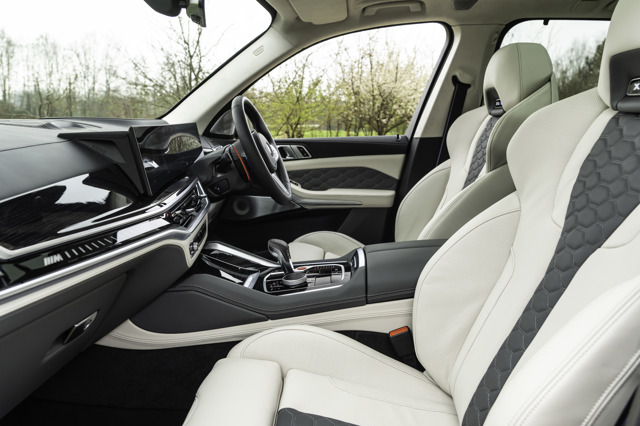
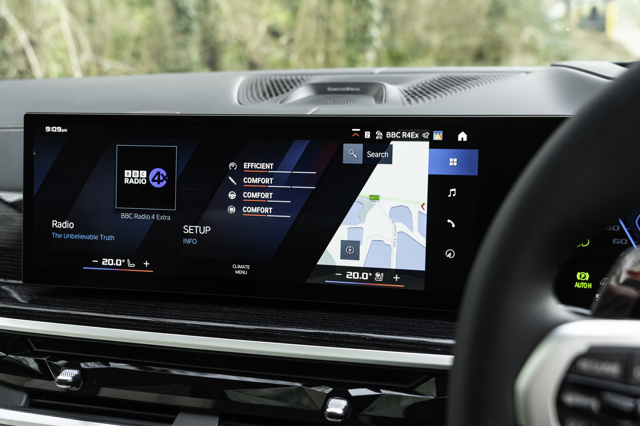
The X5's cabin also stands out for its sheer quality, even in this very well-heeled class, with utterly gorgeous materials and a standard of fit and finish that's beyond reproach. Lots of impressive tech is provided as well, much of it standard, and even more is available if you're prepared to raid the options list.
Of course, being a BMW, where the X5 really stands out is on the road. It's a brilliant car to drive, with impressive comfort, excellent refinement, and handling that's secure, satisfying and involving, which certainly isn't always a given, especially in the large SUV class.
It's been offered with a vast array of engines over its long period on sale, some petrol, some diesel and some plug-in hybrid. All offer performance that ranges from very swift to utterly stupefying, and most balance their impressive power with relatively good fuel economy.
Naturally, it's far from cheap to buy, but you wouldn't expect it to be, because no large luxury 4x4 from a prestige German brand is. The more important question is, does it feel worth the money you pay? For us, it absolutely does.
Reviews for BMW X5's top 3 rivals

.jpg?width=240&height=160&rmode=crop)

BMW X5 handling and engines
- Engines range from xDrive 30d to X5 M
- Readers report Real MPG to be between 21–45 mpg
BMW X5 2026: Handling and ride quality
If you're used to smaller cars, the BMW X5 might feel slightly intimidating at first. It's a big car, but one that you'll soon get used to. Visibility is good and there's plenty of technology to make life easier, with Parking Assistant standard across the range with a rearview camera. The Parking Assistant Plus, with its remote 3D view and surround view systems, is a worthwhile option as part of the technology pack.
On the motorway, the BMW X5 is a very serene cruiser, with little in the way of noise from outside the car. The optional acoustic side glass makes it even quieter. One frustrating thing is that, on all engines, fake engine noise is played through the speakers. It's subtle, but there, and more pronounced in Sport mode. This seems unnecessary.
Having said that, the X5 drives extremely well. It doesn't lean too much in corners given its height and weight, and the steering offers plenty of feedback. No, it doesn't quite manage to behave exactly like a BMW 5 Series in this department, but the DNA is evident.
We've never driven an entry-level xLine car on its standard suspension, but all other versions get some form of adaptive system. Combustion-engined M Sport cars have Adaptive M Suspension with adaptive dampers, while the PHEV version has all-round air suspension (air is optional on the M Sports as well).
The adaptive setup can feel a little too firm in its raciest modes, but dialling back the aggression by selecting a more relaxed mode improves things greatly, providing a ride quality that's both absorbent and controlled, so all road surfaces are dealt with admirably. The M60i (and also the now-discontinued M50i and M50d models) comes with an M Sport differential, which helps the X5 feel more agile, but in truth, all versions handle incredibly well for an SUV of this size. Cars fitted with air suspension feel even more plush and cosseting, while still displaying seriously impressive control.
Overall, the X5 remains the benchmark in this sector in terms of all-round ability. It's important to note, though, that if you value comfort and off-road capability above all else, the Land Rover Discovery is a better bet.
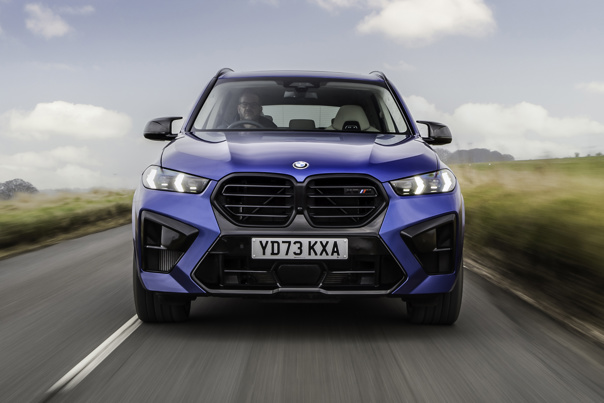
BMW X5 2026: Engines
The range of engines on offer in the BMW X5 has changed extensively during the car's many years on sale, so if you're buying used, the availability will depend on the vintage of X5 you're considering.
The bedrock of the range has always been the entry-level 3.0-litre six-cylinder 30d diesel, and that's a good thing, as it combines the perfect mix of performance and economy. With 265PS and a 0-62mph time of 6.5 seconds, it's quick enough for most buyers and the eight-speed automatic gearbox is excellent.
Press down on the accelerator and it will readily drop down a gear or two in eagerness for an overtake, while you can take control using the steering wheel paddles should you wish to do so (we rarely felt the need). The smooth six-cylinder unit even makes a half-decent noise for a diesel engine, and 35mpg in the real world is easily achievable. We never got to drive the xDrive40d model, but as it's effectively the same engine with an additional turbocharger, it should be an excellent all-rounder. It puts out 313PS, and 0-62mph is dispatched in 5.9 seconds.
At the top of the diesel range sat the M50d, with no fewer than four turbochargers strapped to its 3.0-litre engine to deliver 400PS. It trimmed the 0-62mph dash time to 5.2 seconds, but we never got to try it. And we probably never will because it's now been discntinued.
The 30d and 40d remain for new-car buyers, but in heavily revised forms. The 30d now punts out 298PS for a trimmed 0-62mph time of 6.1 seconds, while the 40d now packs 352PS for a sprint time of 5.5 seconds. Still no shortage of power or pace, then...
It's been all-change with the petrols, too. Once upon a time, the entry-level choice was the six-cylinder xDrive40i, with 340PS and a 0-62mph time of 5.5 seconds, putting it on a par with the best of the diesels. However, with significantly less torque, it doesn't pick up from low revs quite as effectively as any of the diesels, meaning it doesn't always feel as effortless. It's also much thirstier: expect 28mpg to be as good as it gets in mixed driving.
The 394PS xDrive45e plug-in hybrid obviously did much better in this respect, on paper at least. A healthy 24kWh battery gave the promise of an all-electric range of over 50 miles, but even so, don't believe the triple-digit MPG figures BMW quotes, especially if you're not able to regularly charge up the battery, in which case it will become very expensive to run. The PHEV's 113PS electric motor gives it a good bit more low-rev punch than the 40i, too, although on paper, the performance figures of the pair look quite similar: that's because the PHEV is a good bit heavier.
The M50i once topped the petrol range with its thumping 523PS 4.4-litre twin-turbo V8. It's a fantastic engine, giving the X5 near sports saloon pace while not sacrificing effortless cruising manners. It is, however, very punchy on fuel: low 20s MPG is to be expected, even at a cruise.
These days, the 40i is no more, while the other two petrol-powered engines have been replaced with upgraded versions: the 45e with the 489PS 50e, and the M50i with the 530PS M60i. The former sees off the 0-62mph dash in just 4.8 seconds, while the latter does it even quicker (predictably) at 4.3 seconds. We've tried neither, but since both are improvements on their predecessors in terms of performance, which were already brilliant, we can't see either struggling for pace.
BMW X5 2026: Safety
The BMW X5 matched pretty much all of its contemporary rivals with a five-star Euro NCAP crash safety rating when tested in 2018. It scored highly across the board, although the Volvo XC90 pips it for adult and child occupant protection. That said, this rating has since expired due to ever-improving safety standards and assessment methods.
As you'd expect, the X5 comes with an extensive collection of airbags, including driver's knee- and side impact protection. However, those airbags don't protect the optional third row of seats, as they do on other competitors where seven seats are standard.
There's no shortage of active safety equipment as standard, though, including lane departure warning, speed limit assist (that reduces your speed when the limit changes, but can be overriden) and autonomous emergency braking that can detect pedestrians and cyclists as well as cars.
There's also an array of cameras and sensors around the car to assist in parking manoeuvres, automatic bay and parallel parking and a 'reversing assistant'. This clever piece of tech memorises the steering inputs you make to pull into a parking space, and can memorise them for days so that when you need to reverse out of the space, it can simply perform those inputs in reverse leaving you simply to operate the throttle and brake.
BMW X5 2026: Towing
Every version of the BMW X5 can tow a weight of 2,700kg, which is sufficient for most large caravans or trailers. It's a figure that's on a par with the Audi Q7, and beats the Volvo XC90's lowest figure.
However, the diesel versions of the X5 can tow 3.5 tonnes, which again matches the higher figure of the Audi Q7 and makes the X5 as good as anything else in its class for towing.
| Engine | MPG | 0-62 | CO2 |
|---|---|---|---|
| M50d | 42 mpg | 5.2 s | 179 g/km |
| M50i | - | 4.3 s | 238–263 g/km |
| X5 M | - | 3.8–3.9 s | 292–305 g/km |
| xDrive 30d | 47 mpg | 6.5 s | 158–162 g/km |
| xDrive 30d MHEV | - | 6.1–6.3 s | 179–187 g/km |
| xDrive 40d MHEV | - | 5.5 s | 180–210 g/km |
| xDrive 40i | 33 mpg | 5.5 s | 193–197 g/km |
| xDrive 40i MHEV | - | 5.5–5.7 s | 209–216 g/km |
| xDrive 45e | - | 5.6–6.8 s | 39–41 g/km |
| xDrive 50e | - | 4.8 s | 19 g/km |
| xDrive M60i MHEV | - | 4.3 s | 262 g/km |
Real MPG average for the BMW X5

Real MPG was created following thousands of readers telling us that their cars could not match the official figures.
Real MPG gives real world data from drivers like you to show how much fuel a vehicle really uses.
Average performance
99%
Real MPG
21–45 mpg
MPGs submitted
93
BMW X5 interior
- Boot space is 500–1870 litres
- Euro NCAP rating of five stars
| Dimensions | |
|---|---|
| Length | 4922–4948 mm |
| Width | 2218 mm |
| Height | 1745–1765 mm |
| Wheelbase | 2972–2975 mm |
BMW X5 2026: Practicality
The BMW X5 makes you feel like the lord of the manor, as a luxury SUV should. You sit high up, in big comfortable seats with an excellent view of the road ahead.
There's also plenty of space regardless of where you're sitting: in the first two rows at least. Front-seat passengers have all the head- and legroom they could possibly want, while there's plenty of (electric) adjustment in the seats and steering wheel.
Things are good in the back, too. Access is easy, with wide opening doors unhindered by the rear wheel arches, and where fitted, you can also drop the air suspension to help you get in if you wish. There's more than enough space in the rear seats for two adults to be very comfortable, while three can squeeze in without too much compromise.
As an optional extra, you can also specify a third row of seats, should you occasionally need to transport extra passengers. Don't go comparing them to the third row in a Volvo XC90 or Land Rover Discovery, however: they're lacking in both head- and legroom, and are only really suitable for children, or really small adults for really short journeys. It's worth noting that these extra seats aren't available in PHEV versions, either.
Buyers of the PHEV are also a little compromised on boot space: the very impressive 650 litres of space you get in the other versions drops to 500 litres in plug-in X5s. Either way, there an electrically deployable split tailgate, aiding loading and also giving you a handy seat to rest on. Obviously, the car's height does make things slightly tricky if you're loading heavy items, but the boot's wide opening is useful and the seats drop easily to provide 1870 litres of luggage space (1720 litres in the PHEVs).
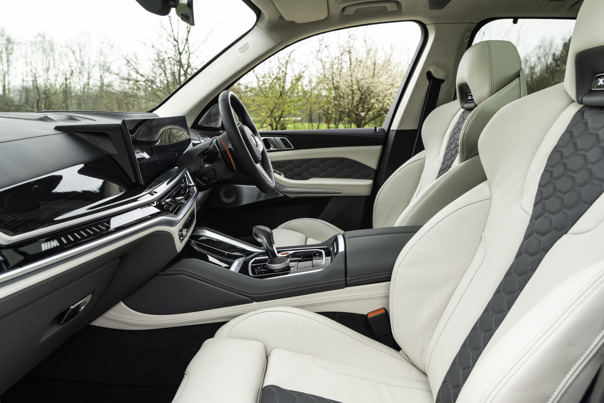
BMW X5 2026: Quality and finish
We've become used to BMWs feeling like very high quality products, and gone are the days where its models were sparsely equipped as standard. Every X5 is generously equipped as standard, meaning there's not a huge need to move up to higher grades.
Regardless, material quality and fit and finish is excellent. Best-in-class, in fact. There's loads of dense, plush-feeling soft-touch trim all over the dashboard and doors, while the aluminium trim is actually that, not just a plastic imitation. All of the switchgear feels expensive in its damping, and even in the rear, you'll struggle to find scratchy plastics anywhere.
It used to be that Audi's cabins ruled the roost for perceived quality. But in the case of the X5, it's a nicer place to sit than the Q7 on account of its more modern design and plusher finish.
BMW X5 2026: Infotainment
Like in other areas of this review, the BMW X5 has undergone lots of change in this area during the several years it's been on sale.
In early cars, the 12.3-inch screen sitting in the centre of the dashboard was supplemented by a vast array of buttons for operating various functions. There were quite a few of them, and it could take a little time to get used to where everything was, but it was still a real bonus to be able to control things like the climate control without having to dive into countless sub menus on the infotainment screen. The screen itself was simple to use, largely thanks to the logical arrangement of the menus and sub menus, but also because of the rotary dial controller and shortcut buttons on the centre console: these allow you to navigate through the system without having to rely on the system's touchscreen functionality, which is rather distracting.
There was some functionality missing from the earliest cars, though. Initially, BMW intended to force Apple CarPlay users to pay an annual subscription to use it after 12 months, which was rather mean. The company reversed that decision in 2019. Similarly, Android Auto wasn't offered on BMWs until 2020, after which it retroactively installed on BMW models using the latest operating system, using an over-the-air update. These days, both functions are standard across the board, as well they should be.
Later on, this system was chopped in for a brand new one. On the positive side, the 12.3-inch central screen was replaces by a bigger, glitzier 14.9-inch item, and a 12.3-inch digital instrument panel behind the steering wheel was also provided.
On the not-so-positive side, BMW had succumbed to the automotive design trend for minimalism, and many of the cabin's various buttons had been removed, meaning that the functions they previously operated now had to be operated through the central screen, which made the system more cluttered and confusing. It's still pretty good on that score, though, certainly more intuitive than many such systems we've encountered, and at least the dial controller and shortcut buttons remained.
BMW X5 value for money

BMW X5 2026: Prices
For new-car buyers, prices for the BMW X5 start at around £74,000 for the 30d xLine (the only version offered in xLine trim), but most buyers will pay the £5,000-odd it costs to upgrade to M Sport trim. The 50e will set you back upwards of £82,000, while the 40d will cost about a grand more than that (the 50e actually has a considerably higher RRP than the 40d, but because you pay so much less in first-year VED road tax on the PHEV car, its OTR price is actually a wee bit lower). At the top of the range sits the M60i, which costs - as near as makes no difference - a hundred grand. And as with all these prices, that's before you've even looked at the extensive options list, with which it's possible to add many thousands more to the price of your X5.
As usual, the used car market offers some huge savings on this generation of X5 for those who don't insist on driving a brand new car. A budget of around £32,000 will get you a fairly wide choice of 30d M Sports. These will be early 2019 examples with around 50,000- or 60,000 miles on the clock. If you fancy a plug-inn hybrid instead, prices start at around £38,000 for a slightly newer 2021 example of the 45e with similar mileage.
BMW X5 2026: Reliability and running costs
No premium, large combustion-engined SUV is cheap to run, and in that respect the X5 is broadly the same as its main competitors.
The most efficient models on paper are, of course, the plug-in hybrids. The official figures stand at 235mpg on the old xDrive45e, and that rises to an even-more-ludicrous 313mpg on the later 50e. In reality, of course, how much they cost to run depends entirely on your usage. If you run it without charging the battery, you're unlikely to be getting more efficiency than the 40i petrol. However, if you plug it in every day and do exclusively short journeys that can be completely on battery power, you'll hardly ever use a drop of petrol.
The xDrive 30d diesel is an excellent all-rounder. Not only is it the cheapest to buy, it'll officially manage over 38mpg. As will the more powerful 40d, although if you make frequent use of the extra performance, expect to see a bigger drop.
The brilliance of the diesels largely makes the petrols look pointless, and nowhere is that more apparent than in fuel economy terms. For example, the xDrive 40i petrol officially manages 10mpg less than the 40d diesel. And the V8-powered M50i and M60i? Those are quoted at just 24mpg, but our experience tells us even that is a difficult figure to reach.
Satisfaction Index
 What is your car like to live with?
We need your help with our latest Satisfaction Index, so that we can help others make a smarter car buying decision. What's it like to live with your car? Love it? Loath it? We want to know. Let us know about your car - it will only take a few minutes and you could be helping thousands of others.
Help us with the Honest John Satisfaction Index nowBMW X5 models and specs
The mainstream models of the BMW X5 come in either entry-level xLine trim or racier M Sport trim (M Sport is by far them most popular. despite the upgrades being mostly cosmetic), while the most powerful versions come in their own standalone M trims.
With the X5 having been on sale for such a long time already, precise equipment levels have changed quite a bit over time due to regular incremental enhancements and upgrades to the spec to keep the car competitive with rivals. So, newer cars will have slightly more equipment than older examples.
Right now, the entry-level BMW X5 xLine comes with:
- 19-inch alloy wheels
- adaptive LED headlights
- power folding door mirrors
- power tailgate
- climate control air conditioning
- ambient lighting
- electric memory seats
- electric windows
- heated front sports seats
- man-made leather upholstery
- leather multifunction steering wheel
- adaptive cruise control
- front- and rear parking sensors
- reversing camera
If you make the upgrade to the BMW X5 M Sport (and most people do), then you'll get in addition:
- 20-inch alloy wheels
- M aerodynamic body styling and badging
- M Sport brakes with blue calipers
- high gloss window trim
- high gloss interior trim
- M leather steering wheel
- man-made leather dashboard
- Adaptive M Suspension (xDrive30d and xDrive40d)
- adaptive air suspension (xDrive50e)
Go out for the current range-topper, the BMW X5 M60i, and you'll also get:
- 21-inch alloy wheels
- illuminated grille
- M Sport brakes with red calipers
- M Sport exhaust
- M Sport body styling
- darkened light lenses
- M Sport seat belts
- illuminated kick plates
- integral active steering
- Adaptive M Suspension and M Sport differential
- Harman Kardon Surround Sound audio
| Dimensions | |
|---|---|
| Length | 4922–4948 mm |
| Width | 2218 mm |
| Height | 1745–1765 mm |
| Wheelbase | 2972–2975 mm |
| Miscellaneous | |
|---|---|
| Kerb Weight | 2060–2510 kg |
| Boot Space | 500–1870 L |
| Warranty | 3 years / Unlimited miles |
| Servicing | 10000–18000 miles |
| Costs | |
|---|---|
| List Price | £69,545–£126,055 |
| Insurance Groups | 50 |
| Road Tax Bands | A–M |
| Official MPG | 33.2–47.0 mpg |
| Euro NCAP Safety Ratings | |
|---|---|
| Adult | - |
| Child | - |
| Pedestrian | - |
| Overall | 5 |
Currently on sale
| SUV | |||
|---|---|---|---|
| Version | List Price | MPG | 0-62 |
| Competition xDrive 625 V8 Auto Start/Stop 5dr | £126,055 | - | 3.9 s |
| xDrive M60i xDrive M60i 530 MHEV Auto Start/Stop 5dr | £92,510 | - | 4.3 s |
| xDrive30d M Sport xDrive30d 298 MHEV 7st Auto Start/Stop 5dr | £78,405 | - | 6.1 s |
| xDrive30d M Sport xDrive30d 298 MHEV Auto Start/Stop 5dr | £73,045 | - | 6.1 s |
| xDrive30d xLine xDrive30d 298 MHEV 7st Auto Start/Stop 5dr | £69,545 | - | 6.1 s |
| xDrive30d xLine xDrive30d 298 MHEV Auto Start/Stop 5dr | £71,205 | - | 6.1 s |
| xDrive40d M Sport xDrive40d 352 MHEV 7st Auto Start/Stop 5dr | - | - | 5.5 s |
| xDrive40d M Sport xDrive40d 352 MHEV Auto Start/Stop 5dr | £77,195 | - | 5.5 s |
| xDrive50e M Sport xDrive50e 313ps/197ps electric motor 489 25.7kWh Auto Start/Stop 5dr | £80,780 | - | 4.8 s |
On sale until May 2023
| SUV | |||
|---|---|---|---|
| Version | List Price | MPG | 0-62 |
| 4.4 xDrive V8 Competition Auto 5dr | - | - | 3.8 s |
| M50i 5dr | - | - | 4.3 s |
| xDrive30d M Sport xDrive 30d 7st Auto MHEV Start/Stop 5dr | £65,625 | - | 6.3 s |
| xDrive30d M Sport xDrive 30d Auto MHEV Start/Stop 5dr | £64,235 | - | 6.3 s |
| xDrive30d xLine xDrive 30d 7st Auto MHEV Start/Stop 5dr | £62,125 | - | 6.3 s |
| xDrive30d xLine xDrive 30d Auto MHEV Start/Stop 5dr | £60,735 | - | 6.3 s |
| xDrive40d 48V Mht M Sport 5dr | £66,235 | - | 5.5 s |
| xDrive40d 48V Mht M Sport 7Seat 5dr | £67,625 | - | 5.5 s |
| xDrive40d 48V Mht Xline 5dr | £62,735 | - | 5.5 s |
| xDrive40d 48V Mht Xline 7Seat 5dr | £64,125 | - | 5.5 s |
| xDrive40i M Sport xDrive 40i 48v MHEV Auto Start/Stop 5dr | £65,710 | - | 5.5 s |
| xDrive40i M Sport xDrive 40i 7st 48v MHEV Auto Start/Stop 5dr | £67,100 | - | 5.5 s |
| xDrive40i xLine xDrive 40i 48v MHEV Auto Start/Stop 5dr | £62,210 | - | 5.5 s |
| xDrive40i xLine xDrive 40i 7st 48v MHEV Auto Start/Stop 5dr | £63,600 | - | 5.5 s |
| xDrive45e M Sport 5dr | £69,915 | - | 6.8 s |
| xDrive45e Xline 5dr | £66,415 | - | 6.8 s |
On sale until August 2022
| SUV | |||
|---|---|---|---|
| Version | List Price | MPG | 0-62 |
| xDrive M50i xDrive M50i Auto Start/Stop 5dr | - | - | 4.3 s |
On sale until June 2022
| SUV | |||
|---|---|---|---|
| Version | List Price | MPG | 0-62 |
| Competition First Edition xDrive V8 Auto Start/Stop 5dr | - | - | 3.8 s |
| M50d 5dr | - | 41.5 mpg | 5.2 s |
| M50d 7Seat 5dr | - | 41.5 mpg | 5.2 s |
| xDrive M50i Black Vermilion Edition xDrive M50i Auto Start/Stop 5dr | - | - | 4.3 s |
| xDrive M50i Black Vermilion Edition xDrive M50i Auto Start/Stop 5dr | - | - | 4.3 s |
| xDrive30d Black Vermilion Edition xDrive 30d 7st Auto MHEV Start/Stop 5dr | £75,620 | - | 6.1 s |
| xDrive30d Black Vermilion Edition xDrive 30d Auto MHEV Start/Stop 5dr | £74,150 | - | 6.1 s |
| xDrive40d Black Vermilion Edition xDrive 40d 48v MHEV Auto Start/Stop 5dr | £76,150 | - | 5.5 s |
| xDrive40d Black Vermilion Edition xDrive 40d 7st 48v MHEV Auto Start/Stop 5dr | £77,620 | - | 5.5 s |
| xDrive40i Black Vermilion Edition xDrive 40i 48v MHEV Auto Start/Stop 5dr | £75,175 | - | 5.7 s |
| xDrive40i Black Vermilion Edition xDrive 40i 7st 48v MHEV Auto Start/Stop 5dr | £76,645 | - | 5.7 s |
| xDrive45e Black Vermilion Edition xDrive45e + 113ps electric motor 394 24kWh Aut 5dr | £81,415 | - | 5.6 s |
On sale until June 2021
| SUV | |||
|---|---|---|---|
| Version | List Price | MPG | 0-62 |
| xDrive40i Xline 5dr | - | 33.2 mpg | 5.5 s |
On sale until April 2021
| SUV | |||
|---|---|---|---|
| Version | List Price | MPG | 0-62 |
| xDrive40i M Sport Plus Pack 5dr | - | - | 5.5 s |
| xDrive40i M Sport Plus Pack 5dr | - | - | 5.5 s |
| xDrive40i Xline 7Seat 5dr | - | 33.2 mpg | 5.5 s |
On sale until November 2020
| SUV | |||
|---|---|---|---|
| Version | List Price | MPG | 0-62 |
| xDrive30d M Sport Plus Pack 5dr | - | - | - |
| xDrive30d M Sport Plus Pack 5dr | - | - | - |
| xDrive30d Xline 5dr | - | 47.0 mpg | 6.5 s |
| xDrive30d Xline 7Seat 5dr | - | 47.0 mpg | 6.5 s |
Model History
June 2018
BMW reveals fourth-generation X5
With a wheelbase 42mm longer than its predecessor, an increase in vehicle length of 36mm, an extra 66mm of width and a 19mm increase in height, the new BMW X5 has both an imposing appearance and generous levels of space for passengers and their luggage.
The xLine model adds kidney grille bars in aluminium matt, roof rails and side window surrounds in satin Aluminium, plus other accents in Pearl-effect Chrome. M Sport specification, meanwhile, sees the wheel arch trim, bumper trim, rear underguard and side skirts painted in body colour, plus extra-large air intakes at the front end, aluminium matt kidney grille bars. The roof rails, side window surrounds and other trim elements in high-gloss black flag up the dynamic potential of the SAV.
The new BMW X5 comes as standard with 19-inch light-alloy wheels on the xLine model, 20-inch M star-spoke light-alloy wheels on the M Sport model and 22-inch V-spoke alloy wheels on the M Performance model. Further variants in 20 to 22-inch formats are available as options.
There will be one petrol and two diesel units available from the latest generation of engines. The BMW X5 M50d is powered by a six-cylinder in-line diesel engine with a quartet of turbochargers, with a six-cylinder inline unit in the BMW X5 xDrive40i and BMW X5 xDrive30d.
All engines channel their power through an eight-speed Steptronic transmission, while BMW xDrive intelligent all-wheel drive is on hand to ensure that power is translated into secure progress – on or off road.
The power unit fitted in the new BMW X5 xDrive40i enjoys free-revving ability and eager response. The 3.0-litre unit employs a twin-scroll turbocharger and direct petrol injection technology with a maximum pressure of 350 bar. The straight-six generates its maximum output of 340hp, while the peak torque of 450Nm is available. The new BMW X5 xDrive40i completes the zero to 62mph sprint in just 5.5 seconds. Fuel consumption averages 33.2mpg and CO2 emissions are 193g/km.
The performance of the new BMW X5 M50d is provided by the potent engine at work under its bonnet. From its 3.0-litre displacement the BMW M Performance model’s six-cylinder in-line unit delivers a peak output of 400hp and generates maximum torque of 760Nm.
The new BMW X5 M50d darts to 62mph from rest in 5.2 seconds yet it succeeds in posting a combined fuel consumption of 41.5mpg and CO 2 emissions of 179g/km.
The new BMW X5 xDrive30d is also powered by a straight-six diesel engine, this time with displacement of 3.0 litres and featuring a single turbocharger with variable inlet geometry. The common-rail direct injection system propels fuel into the combustion chambers at up to 2,500 bar. Maximum output of 265hp, while offering 620Nm of torque. Capable of reaching the 62mph mark from rest in 6.5 seconds, the new X5 xDrive30d returns combined fuel consumption of just 470mpg, equating to CO 2 emissions of 158g/km.
|
Model |
Power |
Torque (Nm) |
0 – 62mph (Seconds) |
Top Speed (mph) |
Combined (mpg) |
CO2 Emissions (g/km) |
From |
|
X5 xDrive40i xLine |
340 |
450 |
5.5 |
151 |
33.2 |
193 |
£58,100 |
|
X5 xDrive30d xLine |
265 |
620 |
6.5 |
143 |
47.1 |
158 |
£56,710 |
|
X5 M50d |
400 |
760 |
5.2 |
155 |
41.5 |
179 |
£70,690 |
The two-axle air suspension system is standard on both the BMW X5 xDrive30d and X5 xDrive40i models. It is controlled individually for each wheel using an electrically driven compressor with pressure reservoir, enabling it to balance out an unevenly loaded vehicle. Working in tandem with the Dynamic Stability Control (DSC) system, the vehicle load registered by its sensors can be factored into braking calculations.
Customers can also specify an Off-Road package. Offered for the first time in a BMW X model, the package includes underguard elements at the front and rear of the vehicle, along with the two-axle air suspension and electronically controlled rear differential lock. The driver can activate the ideal settings for off-roading including the vehicle’s ride height, the xDrive system, the accelerator response, the transmission control, and the DSC system’s corrective inputs in preparation for driving on a range of surfaces, such as sand, rock, gravel or snow. Available for all model variants apart from the BMW X5 M50d.
The fully-digital instrument cluster and the Control Display share the same graphics and design, with the centre console hosting the Controller, the newly designed transmission selector lever and all other driving-related controls. A similarly new-look control panel for the heating and air conditioning is also on hand and the light functions in the new X5 are likewise operated using buttons.
M Sport models also includes an M sports steering wheel, BMW Individual headliner in Anthracite, M-specific pedals, driver’s footrest and piping on the seats, plus exclusive interior trim strips in Aluminium Tetragon.
Other new features on board the BMW X5 include the four-zone air conditioning system and the panoramic glass roof, whose clear surface is 30 per cent larger than on the outgoing car.
The new BMW X5 can now also be specified with thermo-cupholders foremost in the centre console which can be kept cool or warm, while the optional CraftedClarity glass application for selected controls bring an all-new flourish to the interior of the X5. This exclusive design feature has been developed for the transmission selector lever, the Controller, the start/stop button and the volume control button for the audio system.
If the optional third row of seats is specified customers may also order the rear seats with electric fore-and-aft adjustment. A control panel in the boot can be used to slide the second-row seats forwards or backwards and fold down the backrests of the second and third rows.
November 2019
BMW X5 xDrive45e PHEV announced
Combines a model-specific in-line six-cylinder petrol engine featuring BMW TwinPower Turbo Technology with the very latest BMW eDrive technology. Development of plug-hybrid drive has increased power and the electrically powered range along with a significant reduction in fuel consumption and CO2 levels when compared to the predecessor model.
The electrically powered range of the new BMW X5 xDrive45e is 54 miles – more than three times as far as the predecessor model. Meanwhile the combined fuel consumption and CO2 emissions have been almost halved. The fuel consumption figures are now 141-166mpg with the relevant CO2 emissions being reduced to 39g/km.
These figures are the result of a completely newly developed drivetrain comprising a 3.0-litre, 286PS in-line six-cylinder engine. A 113hp electric motor, a lithium-ion battery with a gross energy content increased to 24.0kWh and further developed power electronics for intelligent energy management combine to generate a peak power output of 394PS with a maximum torque of 600Nm.
The combustion engine and electric motor deliver their power to a latest generation eight-speed Steptronic transmission and the intelligent all-wheel-drive BMW xDrive system. This means the drive torque is transferred to all four wheels whether driving on electric power alone, using the combustion engine or indeed both drive units. The new BMW X5 xDrive45e takes 5.6 seconds for the sprint from zero to 62mph – 1.2 seconds less than the predecessor model. Top speed is 146mph.
Thanks to the high-voltage battery positioned in the underbody area of the vehicle, the centre of gravity is lower than in conventionally powered model variants. The luggage compartment volume is 500 litres – 50 litres less than a conventionally powered BMW X5. If the rear backrests are folded down luggage volume extends to 1720 litres. The fuel tank capacity is 69 litres.
The new BMW X5 xDrive45e is fitted as standard with a two-axle air suspension and electronically controlled dampers. The optional suspension systems available for the plug-in hybrid model include integral active steering. In addition to a comprehensive selection of intelligent connectivity features, new digital services geared specifically towards electro-mobility are offered. In addition, all the BMW driver assistance systems in the X5 range are available on this model, as well as high-quality options to enhance comfort. Standard equipment includes acoustic pedestrian protection – a system that emits noise at low speeds so that those about to cross the road can hear the vehicle coming.
The clincher for company drivers is that emitting only 32g/km CO2 and with a 51 mile WLTP EV range the X5 xDrive 45e qualifies for just 6% BIK for company drivers from April 2020, so actual tax on a loaded £79,000 X5 xDrive 45e would be only £158 a month for a 40% taxpayer. New digital cockpit overcomes our previous criticism of no Android Auto.
|
|
Peak Power (PS) |
Peak Torque (Nm) |
Acceleration (0-62mph) |
Top Speed (mph) |
CO2 emissions (g/km)* |
Average Combined Fuel Economy* (mpg) |
Electric-only range (miles) |
OTR Price |
|
BMW X5 |
394 |
600 |
5.6 |
146 |
47-39g/km |
141-166mpg |
54 |
£63,165 |
