
Volvo ES90 Review: Price, range and boot space

Volvo ES90 Verdict

 Impressive electric range even from the Single Motor model. Plush interior and feels exceptionally well-made. Acres of rear legroom and excellent seats.
 Boot space is not a match for rivals. Ride is a touch on the firm side on models without air suspension.
Find out more about the Volvo ES90
|
 Driven, tested and rated by:
 Volvo ES90 at a glance:
- Body type: Saloon
- Price range: £67,560 - £77,260
- Range: 399 - 426 miles
- Number of seats: 5
- Boot capacity: 440 litres
- Insurance groups: 44 - 50
Volvo ES90: Everything you need to know
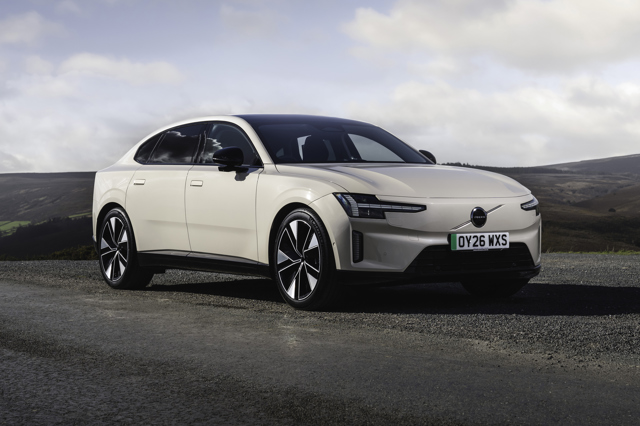
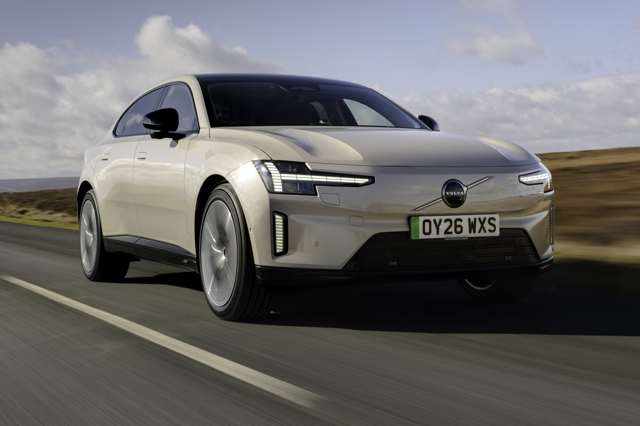
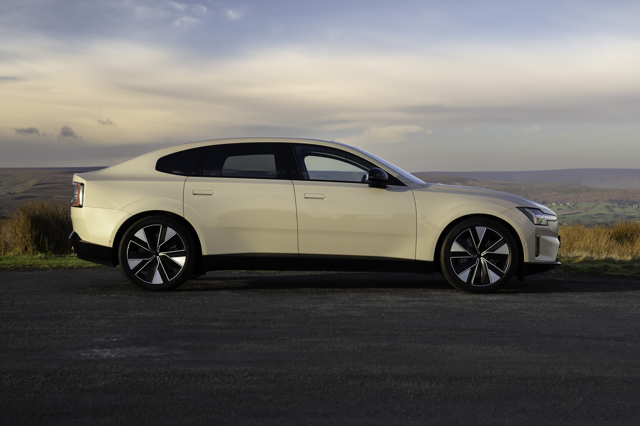
The Volvo ES90 is Volvo's first dedicated pure-electric executive saloon, acting as a low-slung, aerodynamic flagship to sit alongside the big EX90 SUV.
It effectively replaces the long-running Volvo S90, bringing Volvo’s saloon offering into the electric age with a focus on long-range efficiency and Scandinavian minimalism. With its sleek silhouette, you might be forgiven for thinking it's a luxury saloon, but it's not — not in the conventional sense, anyway.
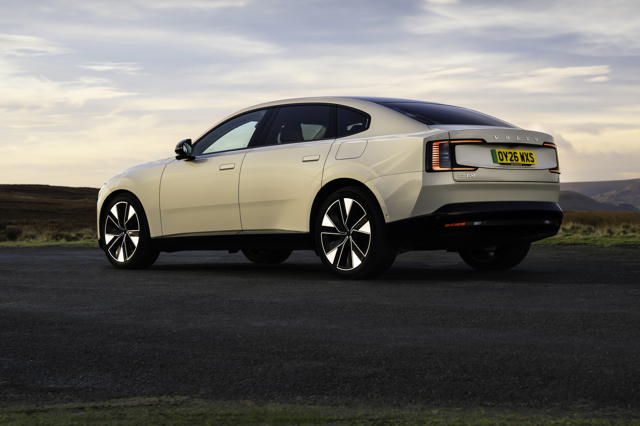
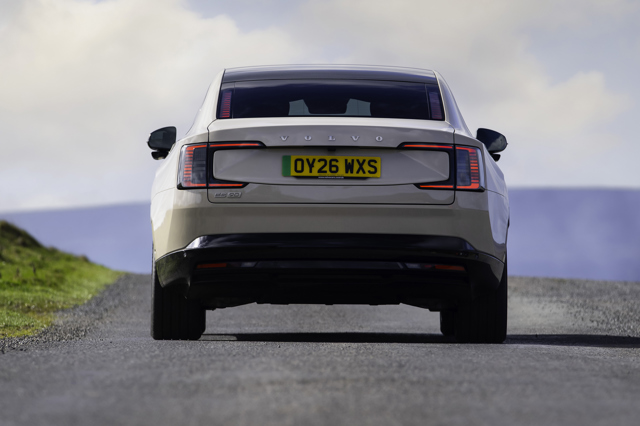
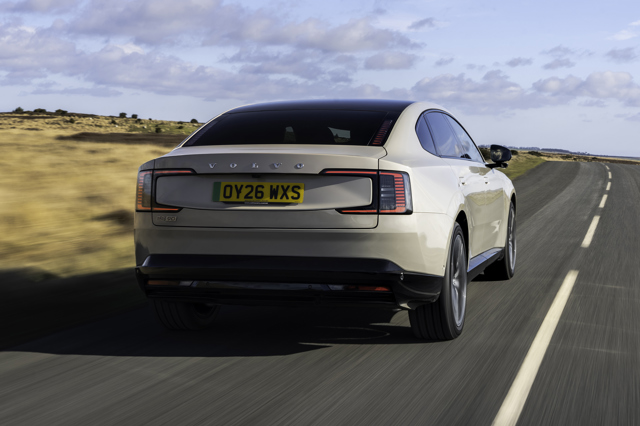
If you've spotted that the ES90’s boot lid looks rather stunted, that’s because it’s not a traditional four-door car but a five-door hatchback with a large tailgate.
Range and charging are where the Volvo ES90 aims to lead the class. With a 111kWh battery pack the ES90 has an official WLTP range of up 426 miles. This is bolstered by a 250kW charging architecture that can add significant mileage in the time it takes to grab a coffee.
The Volvo ES90 comes with a choice of three electric drive systems starting with the rear-wheel drive Single Motor Extended Range and followed by even quicker Twin Motor and Twin Motor Performance options.
Two trim levels are available for the ES90, labelled Plus and Ultra — the former only being available with the Single Motor, the latter with all three options. Both versions are generously equipped but you’ll need to go for the Ultra if want standard fancy air suspension, HD pixel headlights, ventilated front and rear seats, plus the Bowers & Wilkins 25-speaker audio system.
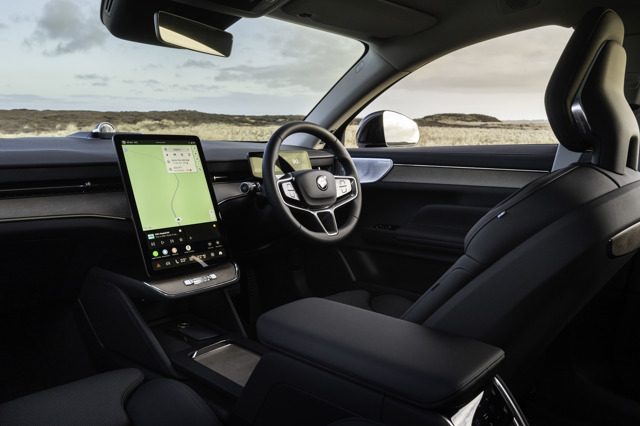
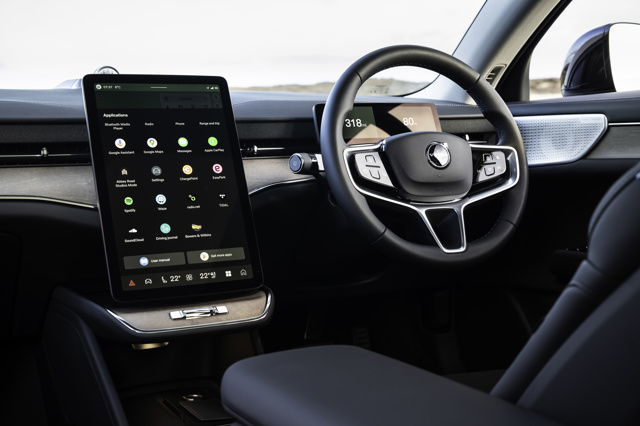
Minimalism is the theme for the Volvo ES90’s dashboard with few physical buttons, with even the hazard warning lights controlled via the central Google-powered multimedia touchscreen. That feels like it flies in the face of Volvo’s carefully curated reputation for safety.
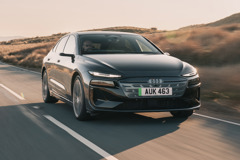
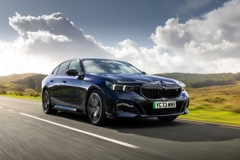
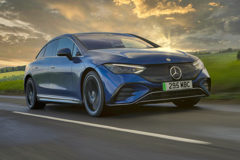
So who is it aimed at? Well the ES90 is up against the BMW i5, which offers a more driver-focused experience and the Mercedes EQE, which leans heavily into futuristic tech. It will also face stiff competition from the Audi A6 e-tron. Volvo hopes its reputation for world-leading safety and understated luxury will win over traditional executive buyers.
How we tested the Volvo ES90
To truly understand the Volvo ES90, we took it into the heart of the Cotswolds, putting this five-metre-long EV through a demanding route designed to expose any flaws in its luxury credentials.
We combined high-speed motorway stretches — the ES90’s natural habitat — with the notoriously narrow, stone-walled country lanes around Stow-on-the-Wold. Navigating these tight passes allowed us to test the accuracy of the steering and the effectiveness of the LiDAR-based 360-degree cameras, which are essential for a car of this size.
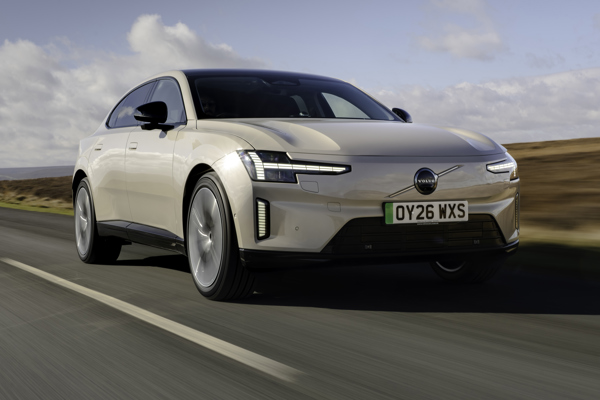
We also focused heavily on low-speed refinement and ride quality over the broken, rutted surfaces typical of rural British B-roads. This real-world mix ensured we could evaluate how the massive 111kWh battery affects agility and whether the regenerative braking feels natural in stop-start village traffic.
By the time we finished, we had a definitive picture of how the ES90 handles the unique challenges of the UK road network, from whisper-quiet cruising to the high-pressure squeeze of a single-track lane.
As well as driving, we also swapped around to experience the ES90 as a rear seat passenger to see just how comfortable and quiet it is for those in the back.
"While the BMW might be the driver’s car, the Volvo ES90 is arguably the better long-distance companion, offering faster charging, a more relaxing environment and a more versatile cargo area." |
Is the Volvo ES90 a credible alternative to the BMW i5?
Whether the Volvo ES90 can truly challenge the BMW i5 depends entirely on what you value in a luxury executive car. While the BMW remains the undisputed choice for those who want an engaging drive, the Volvo is a different kind of premium experience that's more about serenity and efficiency.
It is undoubtedly a credible alternative, but it appeals to the head and the heart in different ways to the BMW. The most significant advantage for the Volvo lies in its 800-volt electrical architecture. This setup allows the ES90 to handle charging speeds of up to 350kW, which is a considerable step up from the 205kW peak found in the BMW i5.
In practical terms, this means the Volvo can add roughly 186 miles of range in just ten minutes at a compatible ultra-rapid station. When you combine this with a larger 102kWh usable battery capacity in the Twin Motor, the Volvo offers a better official range of up to 426 miles. This comfortably outstrips the BMW i5 eDrive40, which tops out at 357 miles.
On the road, the two cars feel worlds apart. The BMW i5 is lean and agile, hiding its weight well through corners and offering a more connected feel through the steering wheel. The Volvo's forte is comfort. It uses its weight to provide a planted, languid ride that ironed out road imperfections during our testing.
Inside, the Volvo has a Scandi-minimalist lounge-like cabin featuring a 14.5-inch vertical touchscreen and sustainable materials. It feels less like a traditional car cockpit and more like a high-end Swedish living room, avoiding the somewhat polarising interaction bar and neon lighting found in the latest BMWs.
Practicality is another area where the Volvo makes a strong case for itself. Although the BMW has a slightly larger 490-litre boot compared to the Volvo’s 424-litre space, the ES90 is designed as a liftback. This means the entire rear glass opens, making it far easier to load large boxes or family gear than the BMW’s traditional, narrow saloon opening.
While the BMW might be the driver’s car, the Volvo ES90 is arguably the better long-distance companion, offering faster charging, a more relaxing environment and a (slightly) more versatile cargo area.
Volvo ES90 range
| Volvo ES90 Single Motor Extended Range Plus | 411 miles |
| Volvo ES90 Single Motor Extended Range Ultra | 399 miles |
| Volvo ES90 Twin Motor Ultra | 426 miles |
| Volvo ES90 Twin Motor Performance Ultra | 426 miles |
Under the floor of the Volvo ES90 Single Motor Extended Range is an 88kWh usable capacity battery pack giving an official range of up to 411 miles between charging (though as is the case with all EVs, expect this figure to be lower in real-world conditions).
With a larger 102kWh usable capacity battery, the ES90 Twin Motor has an official range of up to 426 miles. Those numbers are mirrored by the Volvo ES90 Twin Motor Performance despite its usable battery capacity being marginally larger again at 107kWh.
Volvo ES90 charging
Using a 7kW domestic home wallbox, a full recharge for the Volvo ES90 Single Motor Extended Range will take around 15 hours, while a 310kW DC ultra-rapid public charger reduces that to rapid 22 minutes for a 10-80% charge.
The Twin Motor with its larger battery takes a little longer — expect to be topped up in 17 hours for a flat-to-full charge, while a 350kW DC ultra-rapid public charger will take 22 minutes for a 10-80% top-up.
How much will it cost to charge an ES90? If you're at home and paying the UK’s national average of 28p per kWh, then you're looking at around £30 to top up. Certainly cheaper than an equivalent petrol or diesel car, but we'd recommend getting yourself on an EV-specific domestic power tariff that allows you to charge your car overnight using discounted off-peak electricity to make even bigger savings.
If you're charging on the go and use a public charger, rates will vary, but don't be surprised to be paying close to what you'd pay to fill up a petrol or diesel car.
Reviews for Volvo ES90's top 3 rivals



Volvo ES90 handling and engines
Volvo ES90 2026: Handling and ride quality
The ES90 is a substantial car, weighing in at approximately 2.5 tonnes, but it doesn't try to hide this heft. Instead using it to provide a planted, unshakable feel. The electric power assisted steering is light and effortless by default, making the 5-metre-long saloon surprisingly manageable in urban environments.
We always delve into the settings in Volvos to select the firm steering weight, which adds a bit more resistance for high-speed stability. It remains a 'digital' experience rather than a tactile one though - this is clearly a car aimed at effortles comfort rather than keen handling. There is no traditional Sport mode here either - Volvo prefers to offer a consistent and predictable response.
While Plus trim models come with a standard suspension setup, those in Ultra trim come with self-levelling air suspension for all four wheels, with the Volvo ES90 maintaining ride height independent of load. It's clever enough to lower the car automatically at speed to save energy and help extend its driving range, as well as enhancing stability.
The dual-chamber system also continuously monitors the road surface and driving style, adjusting the damping in milliseconds.
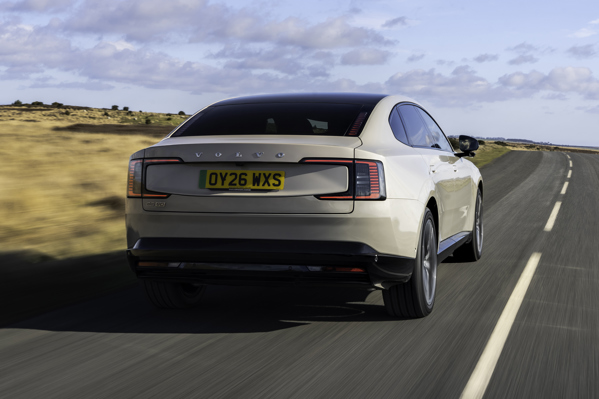
It has other uses — when not moving, the car can be lowered to make access to the boot easier, handy to help with loading or making it less of a struggle for a tired, old dog to get in. There's a dedicated Off Road driving mode that raises the ES90 for improved ground clearance.
However, even with the air suspension, the ride can feel firm on the optional 22-inch wheels fitted — it's much better on the 21-inch wheels standard on Ultra models.
Speed bumps are greeted with a thump that reminds you of the car's weight, though it does a good job of tackling uneven road surfaces..
Away from twisty roads is where the ES90 really excels. On fast and flowing carriageways it's extremely civilised and comfortable. It's also incredibly quiet. While that statement might seem fairly obvious when talking about an EV, the ES90's cabin is certainly one of the quietest we've been in. The soundproofing and whisper-quiet hum of the motors mean that you could potentially hear a pin drop when sitting inside. Providing it landed on a hard surface...
Volvo ES90: Batteries and motors
The Volvo ES90 is available in three versions. All are fitted with a single-speed transmission that's used like a conventional automatic and have an electronically governed top speed of 112mph.
Confusingly, the entry-level option is called Single Motor Extended Range even though there's no Standard Range version available — yet at least. It produces 333PS and 480Nm of torque, hitting 62mph from a standstill in 6.6 seconds.
After that, you move up to the Twin Motor delivering 449PS and 665Nm of torque, with drive going to all four wheels. This results in a slightly slower 0-62mph time of 5.4 seconds, though how fast do you need your luxury EV to be?
If the answer is 'even faster', that's where the Volvo ES90 Twin Motor Performance comes in. With 517PS and 9100Nm of torque available, you can rocket to nothing to 62mph in as little as 4.0 seconds.
The traction and performance from the Single Motor ES90 is very impressive, so much so that we can't really think why you would need the extra performance of the more powerful options as this already feels quick enough for such a large car.
Volvo ES90 2026: Safety
This is the firm's flagship car and a showcase for all its technology, so its no surprise to discover that the Volvo ES90 is smothered in safety features.
Based around Volvo's Safe Space Technology, the ES90 takes advantage of its core computing system to work with an array of ultrasonic sensors, cameras, radars and lidar to monitor your surroundings both inside and out.
The system can precisely pick-out moving and stationary objects up to 250 metres ahead, day or night, helping to prevent crashes, while the ES90's sensors are so sensitive that they can detect a baby breathing in the cabin — Volvo reckons this is to help you avoid leaving loved ones behind, but we're not sure we've met a new parent who's been that forgetful.
All these sensors mean there's an abundance of Advanced Driver Assistance Systems on tap, with everything from Volvo's Pilot Assist adaptive cruise control system to collision avoidance and cross traffic alert, all scouring your surroundings for potential dangers.
The downside is the lidar's housing, just above the windscreen — there's more than a hiff of a taxi’s ‘for hire’ light about it.
The Volvo ES90 hasn't been crash tested by Euro NCAP just yet but the ravens will probably leave the Tower of London before a Volvo gets a poor score here. Volvo quotes the ES90 as having state-of-the-art occupant protection, with a strong safety cage, robust restraint technology and optimised deformation zones.
Volvo ES90 2026: Towing
The Volvo ES90 proves that switching to electric doesn’t mean sacrificing utility, offering a maximum braked towing capacity of 2000kg. Single Motor versions are rated up to 1600kg.
This makes it one of the most capable electric saloons for hauling horseboxes or medium-sized caravans. For lighter duties, it supports a standard 750kg unbraked limit and a 100kg towball load, ideal for heavy-duty cycle carriers.
Volvo offers a fully electric folding towbar that hides behind the bumper when not in use. Safety is bolstered by integrated Trailer Stability Assist (TSA), which automatically applies individual brakes to counteract snaking. While towing will naturally impact the ES90's 400-mile+ range, its 800V architecture allows for rapid charging stops.
Volvo ES90 interior
Volvo ES90 2026: Practicality
As the Swedish brand's flagship car, there's no getting away from the fact that the Volvo ES90 is a big beast. At 5000mm long it's only 37mm shorter than its seven-seat EX90 SUV sibling yet overall the the sort-of saloon is actually 7mm wider.
How does that compare with rivals? Well, it's a bit shorter and narrower than a BMW i5, while being a touch longer and not quite as wide as the Audi A6 e-tron.
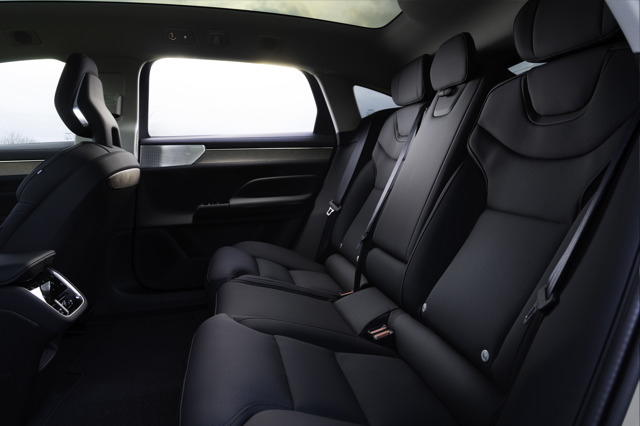
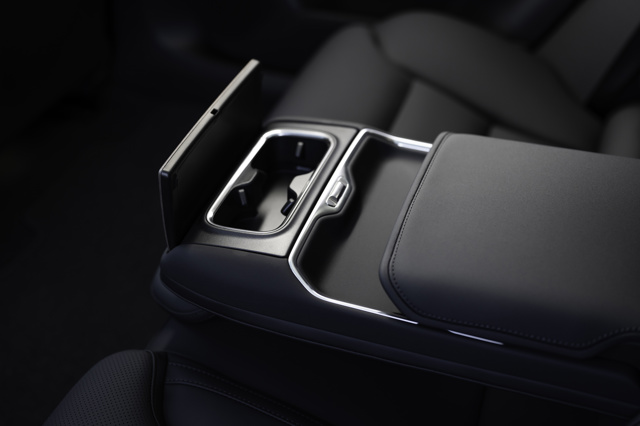
The cabin is generous — those sitting in the front have ample space and there are big cupholders in the central console but it's in the back where the ES90 excels.
Rear legroom is, quite frankly, ridiculous — there is more space here than in many long-wheelbase luxury cars. However, the floor is relatively high due to the 111kWh battery pack, which means your knees sit slightly higher than in a petrol-powered saloon. On the plus side, the wide cabin means three adults can sit across the back without a game of shoulder-rubbing becoming mandatory.
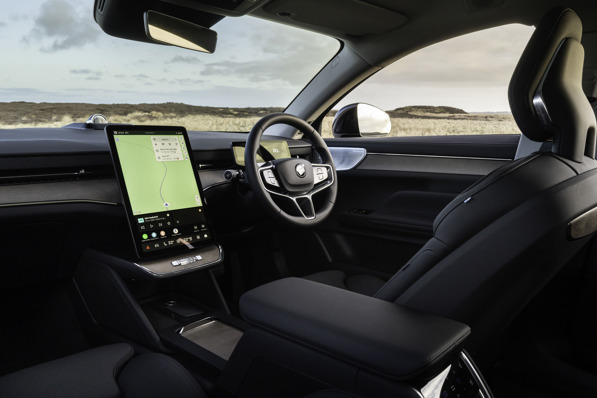
It's further helped by a standard-fit panoramic roof, with Ultra models getting an electrochromic version that can be easily darkened at the touch of a button if conditions outside are too bright. We still prefer a proper sliding shade though...
Volvo's also put some thought into the ambient lighting in the cabin of the ES90 — all interior spotlights feature a non-flickering, more natural light spectrum closer to sunlight, according to Volvo. That should help reduce eye fatigue.
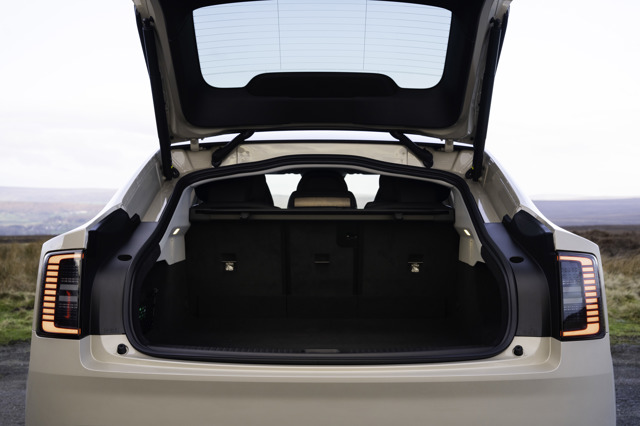
The boot is is where the ES90’s form over function approach becomes apparent. With 424 litres of boot space, it is significantly smaller than the BMW i5 (490 litres) or the cavernous Audi A6 e-tron. It is, however, a hatchback rather than a traditional saloon, which makes the opening far more versatile for loading bulky items.
The rear seats split 40/20/40, allowing you to slide through longer items like skis (or bits of wood from B&Q) while still seating two in the back. Fold the Volvo ES90's rear seats over and loaded to roof height there's 1427 litres of boot space available.
Up front, you get a 22-litre frunk under the bonnet — just enough space for your charging cables. Small-item storage in the cabin is excellent, with a large floating centre console and deep door bins that are felt-lined to prevent your keys from rattling during a spirited drive.
Volvo ES90 2026: Quality and finish
If German executive saloons represent a high-tech laboratory, the Volvo ES90 is more of a high-end boutique hotel.
Volvo has doubled down on its Scandinavian Living Room philosophy, resulting in one of the most calming interiors on the market. There is a perceptible heft to everything you touch and even the sustainable materials feel expensive rather than like a cheap eco-compromise.
The first thing that strikes you is the move away from traditional leather. Instead, Volvo uses Nordico, a textile made from recycled plastics and pine oil (standard on Plus models).
It is remarkably soft — more so than the vegan leathers used by Tesla. For a more classic touch, the optional Tailored Wool Blend provides a premium, tactile finish that also aids cabin acoustics. It's a no cost option on Ultra models.
During our time navigating the rutted B-roads of the Cotswolds, the cabin remained tomb-silent. There wasn't a single squeak from the dashboard or a rattle from the door cards, even when the 21-inch wheels met a nasty pothole. The FSC-certified wood inlays feature a subtle backlit glow that adds character without being tacky.
Volvo ES90 2026: Infotainment
As with the EX90 SUV, the Volvo ES90 uses a 14.5-inch portrait-oriented touchscreen display that acts as your gateway to access almost every function and control on the car.
You will need to spend time familiarising yourself with where everything is in the menus as even the reach and angle adjustment for the steering wheel are tucked away within the screen's controls. This isn't a problem if you're the only one driving but if you're share the car with your other half, it can quickly become annoying.
While you could argue that once you've got these core settings just how you like and stored in the Volvo's memory you won't need to revisit them that often, there are other controls that are used more regularly that you will need to go into the menus for.
This means you'll have to take your eyes off the road while you try and remember where something is. There's Google Assistant to help but as we prefer with other touchscreen-first interiors, a few physical controls and buttons wouldn't go amiss.
The system is powered by Qualcomm's Snapdragon Cockpit Platform, it uses Google's Android Automotive operating system for its interface — not to be confused with Android Auto, though that is available along with Apple CarPlay — which means Google Maps and Google Assistant are in-built. Apps such as Waze are installed, while you can build upon your ES90's apps by downloading them from Google's PlayStore.
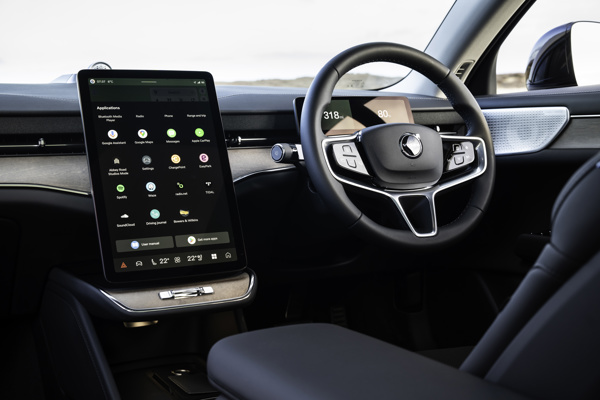
The display is broken down into four sections, with most of the real estate is given over to the navigation. As you can link it to your Google account, searches for destinations you've made on your smartphone will be available inside the ES90. Rather helpfully it will also show where charging points are on your route, as well as estimate how much charge you're likely to have once you've reached your destination.
Below the navigation are widgets for phone and media selections, while sitting underneath that is the Contextual Bar. This displays recently used apps and settings as well as the ES90s camera access.
Finally, there's what Volvo terms the Fixed System Bar that runs along the bottom of the display. This is locked and gives access to the ES90 plethora of menus, as well as the hazard warning lights and climate control (and heated seats).
As we found with the EX90 — and the smaller Volvo EX30 for that matter — it's a responsive system. We didn't experience any lag when using it and both resolution and clarity are excellent.
Supporting the screen is a 9.0-inch digital instrument display with three display modes. Most of the time we used the mapping mode, while the head-up display relays turn-by-turn directions and essential driving and vehicle information.
The ES90 in Plus trim comes with a Bose stereo but the Ultra gets a breathtaking 25-speaker Bowers & Wilkins system. If you're an audiophile this is the one to go for as the breadth of the sound it delivers is incredible.
Volvo ES90 value for money
Volvo ES90 2026: Prices
These are the latest On The Road (OTR) prices for the new Volvo ES90 as of April – prices quickly change, so please use these as a guide before checking Volvo's latest price lists.
| ES90 Plus Single Motor Extended Range | £67,560 |
| ES90 Ultra Single Motor | £77,260 |
| ES90 Twin Motor | £81,460 |
| ES90 Twin Motor Performance | £86,060 |
Is the Volvo ES90 good value compared to rivals?
On paper the Volvo ES90 looks closely priced to rivals but dig deeper and you'll discover that the ES90 effectively undercuts its primary German rivals by offering a more generous standard specification
So although the Audi A6 Sportback e-tron currently starts at £62,540, it can't match the Volvo for driving range. Prices top out at £82,410 for a top-of-the-line A6 e-tron quattro in Edition 1 trim.
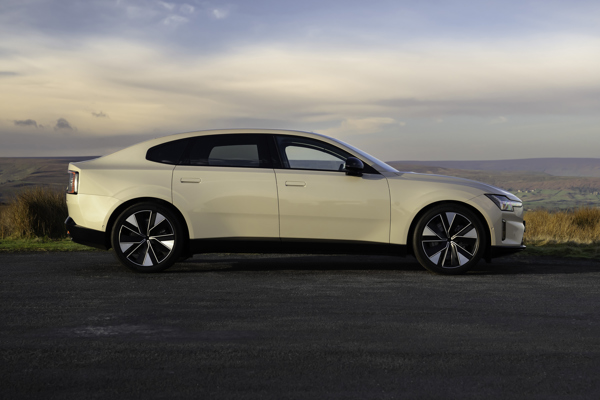
The BMW i5 meanwhile starts at £67,795 for the eDrive 40 Sport Edition with prices rising to £97,845 for the M60 xDrive, which is both down on power and range compared with the top-spec ES90.
The true value proposition lies in Volvo’s all-in approach to equipment. While competitors often hide essential luxury features behind expensive optional packages, the ES90 includes a Bose Premium sound system, a 360-degree camera and advanced safety tech as standard.
Stepping up to the Ultra trim adds high-end luxuries like a Bowers & Wilkins audio system and an electrochromic panoramic roof for a price that remains well within the range of rival entry-level models that do without.
Volvo ES90 2026: Reliability and running costs
As with all EVs, home charging is the way to make your car cheap to run. Utilising an off-peak EV energy tariff (around 7p/kWh), a full charge costs less than £8, equating to just 2p per mile. Even on standard domestic rates, running costs remain roughly 60-70% lower than a comparable petrol or diesel saloon
Volvo offers a standard three-year/60,000 warranty with the Volvo ES90, though the battery has eight years or 100,000 miles of separate coverage. It's too soon to talk about reliability with the ES90 but we're hoping the new technologies used here will prove to be less buggy than those of the EX90.
Since April 2025 you have to pay VED car tax on electric cars, so you're in line for a charge of £200 as you are with any other car, while the price is significantly over the Expensive Car Supplement threshold of £40,000. This means that from years two to six you will be paying an additional £440, bringing your annual car tax bill to £640 at today's rates.
For business users, the ES90 is ideal. With Benefit-in-Kind (BIK) rates for 2026-27 set at just 3%, company car drivers can save thousands annually compared to internal combustion alternatives
Satisfaction Index
 What is your car like to live with?
We need your help with our latest Satisfaction Index, so that we can help others make a smarter car buying decision. What's it like to live with your car? Love it? Loath it? We want to know. Let us know about your car - it will only take a few minutes and you could be helping thousands of others.
Help us with the Honest John Satisfaction Index nowVolvo ES90 models and specs
The Volvo ES90 is available in two trim levels — Plus and Ultra.
The Volvo ES90 Plus comes with the following as standard:
- 20-inch 7-spoke alloy wheels
- Bose Premium Sound
- Wireless Apple CarPlay
- Driver support systems (including Driver Understanding and Safe Space Technology)
- Panoramic roof
- Bi-directional charging capabilities
Move up to the Volvo ES90 Ultra and in addition to the Plus, you get:
- Active Four-C chassis (air suspension)
- High-definition Pixel headlights
- 21-inch 5-spoke alloy wheels
- Dark-tinted rear windows
- Electrochromic panoramic roof
- Power release/soft close doors
- Front seat massage
- Rear seat powered backrest recline and lounge armrest
- Bowers & Wilkins stereo
There's a choice of seven colours for the Volvo ES90 — Crystal White, Onyx Black, Denim Blue, Mulberry Red, Vapour Grey, Sand Dune and Aurora Silver.
