
Polestar 4 Review: Price, range & boot space

Polestar 4 Verdict

 Attractive interior. Good interior space and big boot. Lots of standard equipment. Pleasant to drive.
 Complex and confusing infotainment system. Not cheap. You’ll get bored of explaining what it is.
Find out more about the Polestar 4

|
 Driven, tested and rated by:
 Polestar 4 at a glance:
- Body type: SUV
- Price range: £55,750 - £67,750
- Battery range: 367-385 miles
- Number of seats: 5 (2 Isofix)
- Boot capacity: 526 litres
- Insurance groups: 43-48
The Polestar 4: Everything you need to know
In the business world, it’s all the rage to be known as a ‘disruptor’ — a non-conformist company that challenges norms and intentionally does things differently. That’s very much how this Scandi-Sino brand sees itself within the automotive space but it potentially hinders customers understanding its products. Find out whether its latest model, a rakish, electric SUV coupe, is worth learning more about with our comprehensive Polestar 4 review.
Like many manufacturers, Polestar names its models on a numerical basis. However, while most carmakers do this according to car size — the larger the car, the higher the number — Polestar does so according to the order in which its models were released.
So, of its current line-up, while the Polestar 2 is coincidentally its smallest model and the Polestar 3 is its biggest, the 4 sits somewhere in between. All potentially confusing so don’t ask about the forthcoming 5 and 6 for the time being.
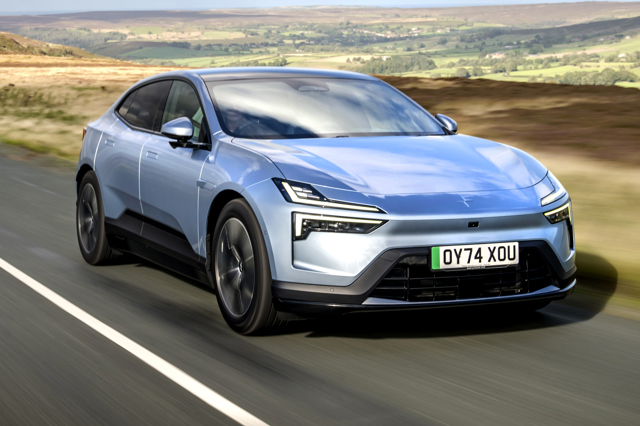
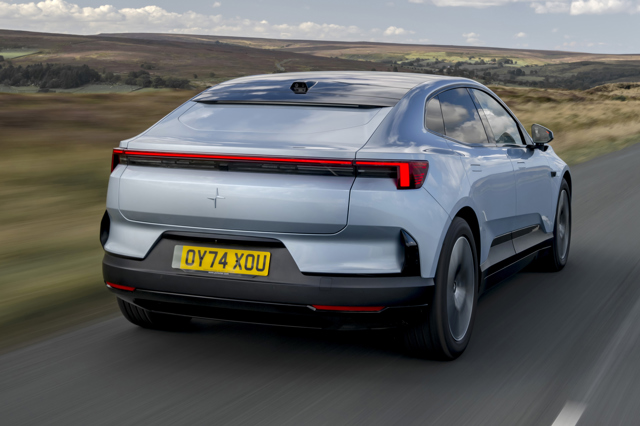
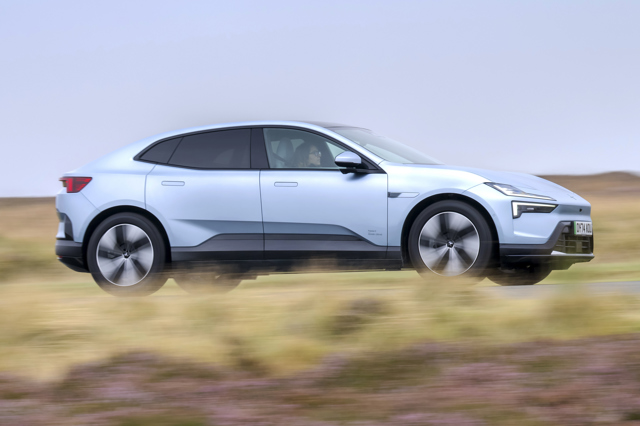
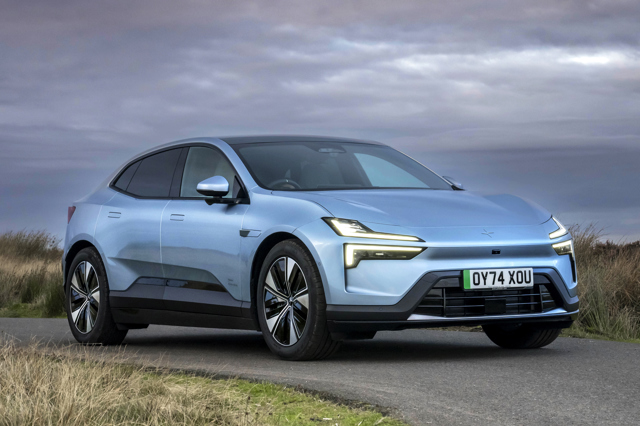
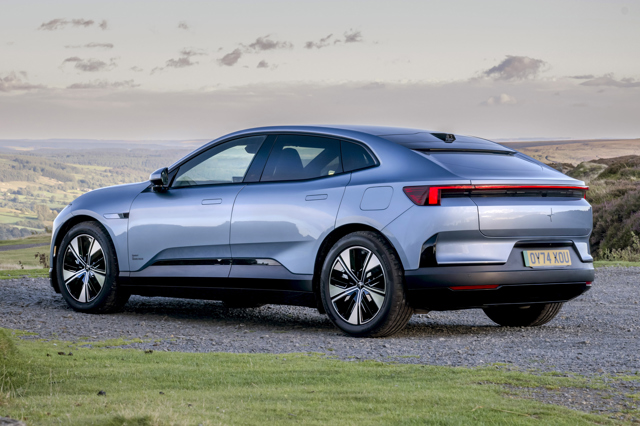
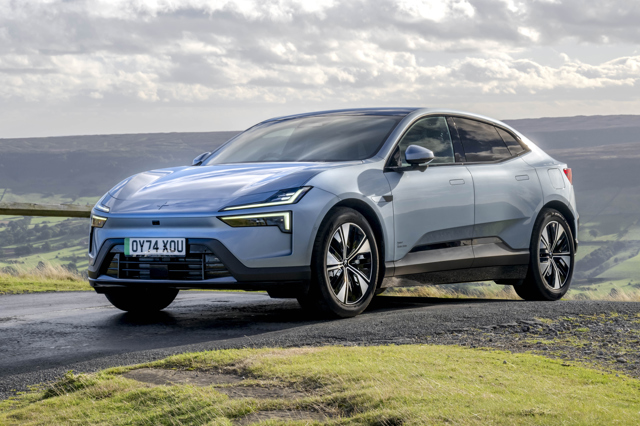
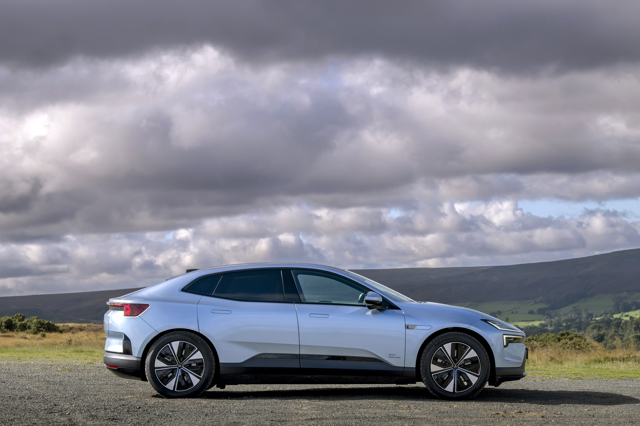
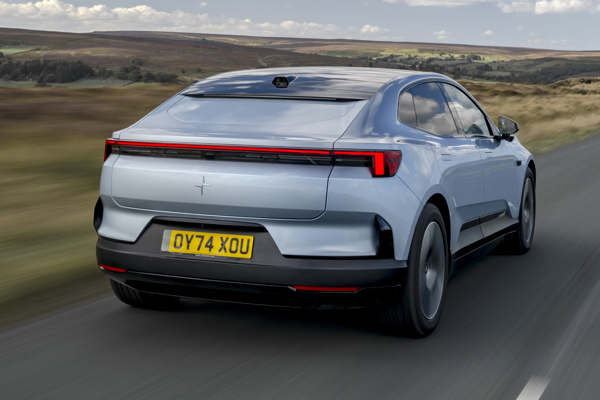
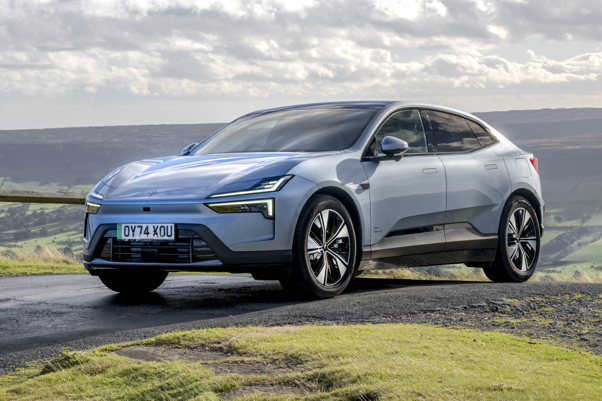
Given the Polestar 4 combines an elevated SUV ride with a daring coupe roofline — and no, your eyes aren’t playing tricks on you, there isn’t a rear windscreen — it doesn’t (yet) have any truly direct rivals.
Of those those comes close, the BMW i4, sits much closer to the ground than the Polestar, but offers a similar blend of performance and style.
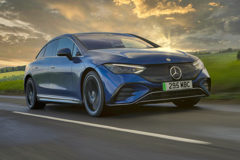
More traditional, albeit a radical shape for its manufacturer, is the Mercedes EQE. Ultimately, this is a four-door saloon, though, rather than an SUV. Yes, there is an EQE SUV, although coupe-like it most certainly isn’t. Most definitely an SUV, fairly coupe-like, but far less slinky than the Polestar is the Porsche Macan Electric.
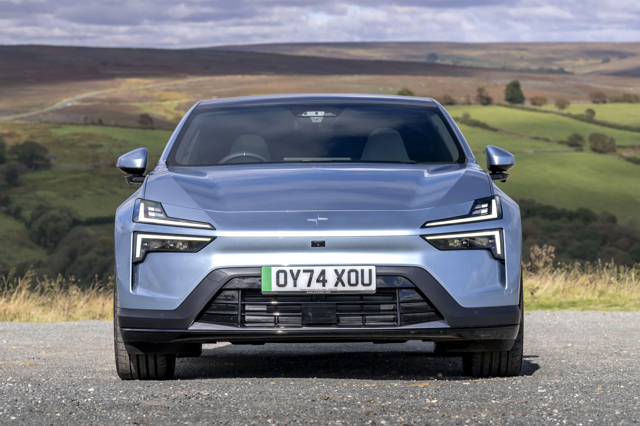
In truth, the sleek 4 is only a fraction shorter than the more conventionally shaped Polestar 3, so it’s still a big car. Its handsome styling conceals its whopping dimensions well and the interior looks just as stylish as the outside, feeling appropriately sophisticated. There’s lots of interior space provided, plus a big boot, making this sleek machine a deceptively capable family car.
Two fully electric power systems are available for the Polestar 4: a rear-wheel-drive Single Motor model and a more powerful Dual Motor with all-wheel-drive car. Both have stonking performance, along with massive batteries and an impressively generous range.
Being a Polestar, the 4 is intended to sit at the sportier end of the luxury SUV spectrum, so the generous power levels are intended to be complemented by involving handling.
As well as sportiness, Polestar prides itself on its tech, so plenty of gadgetry is present and correct, both in terms of infotainment and clever driver assistance. It’s not a cheap car as a result, but compared with all-electric prestige SUV rivals, the prices look far from excessive.
How we tested the Polestar 4
So far, we've only had the opportunity to drive the Polestar 4 once, at a UK launch event held by Polestar in Gloucestershire. We had plenty of time with the car, and so gave it a thorough going-over, but we only had the opportunity to drive one version, the Single Motor car. As soon as we get a go in the Dual Motor car, we'll update this review with our thoughts.
"As well as sportiness, Polestar prides itself on its tech, so plenty of gadgetry is present and correct, both in terms of infotainment and clever driver assistance"
|
Is the Polestar 4 a good car?
Absolutely. It's good to drive, nice to be driven in, refined, comfortable, nicely finished, practical and packed with tech. We just wish that the touchscreen system that controls all that tech weren't quite so bamboozling.
Polestar 4 Range
| Long Range Single Motor | 385 miles |
| Long Range Dual Motor | 367 miles |
Official figures say that the Polestar 4 Long Range Single Motor will do a maximum combined range of 385 miles on a full charge, while the extra performance of the Polestar 4 Long Range Dual Motor version brings that figure down to 367 miles between charges. You shouldn't bank on matching those figures in the real world, though, especially in cold conditions or with lots of motorway running, neither of which EVs like: you'll be doing well if you extract more than 300 miles in each case.
That said, the standard spec does include a heat pump for more efficient cabin heating in cold weather, thus maximising of the car’s range.
Polestar 4 Charging times: How fast can it charge at a 200kW station?
The Polestar 4 has a maximum DC charging speed of up to 200kW, so if you can find a powerful enough charging station running at sufficient capacity, the car’s 94kWh battery can take on a 10-80% charge in 30 minutes. This is a very expensive way of charging, though, so we wouldn’t rely on it on a regular basis.
Polestar quotes an AC charging time of five and a half hours, but that’s a wee bit misleading because that’s on a 22kW hookup, which is way beyond what most customers will have at home. Charge your car regularly on a domestic wallbox charger like most owners will and the maximum AC charging speed you’re likely to get is 7.4kW: at that rate you’re looking at more like 16 to 17 hours for a full charge.
Reviews for Polestar 4's top 3 rivals
.jpg?width=240&height=160&rmode=crop)


Polestar 4 handling and engines
Polestar 4 2026: Handling and ride quality
The entry-level Polestar 4 Single Motor variant has passive suspension dampers, while the Dual Motor has electronically adaptive ones that vary their stiffness according to various parameters. The Dual Motor also has 50/50 weight distribution front-to-rear, while on the Single Motor, it’s 48% on the front end and 52% at the back.
The car we drove was the more basic Single Motor setup but nevertheless, we were suitably impressed by what we experienced. The passive suspension strikes a really nice balance, being forgiving enough to keep things feeling comfortable and sophisticated at all speeds and on most kinds of surface, but it also has enough firmness to keep the body feeling tied down and eager to turn.
There’s a massive amount of grip at both ends of the car and the steering is sharp, responsive and even delivers a bit of genuine feel to make you feel connected to the car and give you the confidence to push the limits.
Even better, it manages to avoid the nose-heavy feel under hard braking that blights many electric cars and that helps it move along the road with even more fluidity.
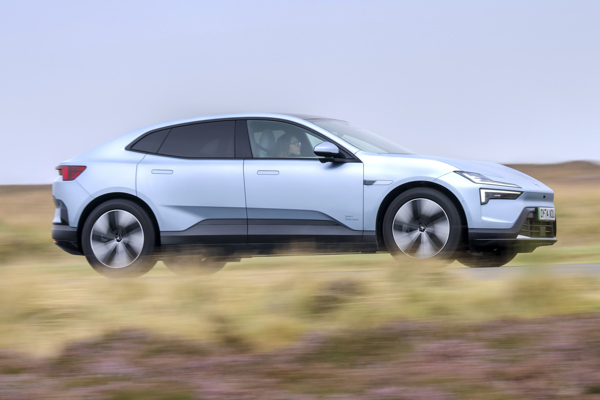
Overall, it’s a driving experience that delivers on the car’s promise of sportiness and attitude, but doesn’t do so at the expense of everyday comfort and usability. That comfort and usability is only enhanced by the near-silent powertrain and the excellent suppression of other exterior noises, making the Polestar 4 a very peaceful and serene way of getting around.
We haven’t yet tried the Dual Motor version, so we don’t know what effect all the different hardware will have on ride and handling characteristics. Having tried the Single Motor version, though, suffice it to say that our expectations are high.
Polestar 4 Review: Batteries and motors
Polestar 4 buyers choose between two very distinct powertrain options. The Single Motor version is the entry-level variant and the sole electric motor alluded to by its name puts 272PS through the rear wheels. This makes the car capable of sprinting from 0-62mph in 7.1 seconds.
The Dual Motor variant gets a second electric motor to power the front wheels. Not only does this give you all-electric four-wheel drive for better traction off the line, but it also hikes the power output to a fairly fearsome 544PS. Unsurprisingly, the Dual Motor is considerably quicker as a result, seeing off the 0-62mph dash in just 3.8 seconds.
So far, we’ve only had the opportunity to try the Single Motor version and we reckon it’ll be plenty brisk enough for most. Granted, it doesn’t give you that devastating off-the-mark acceleration provided by some electric cars (and we suspect the Dual Motor version will count among those, given its on-paper performance figures) but the way it picks up feels quicker than its 0-62mph figure suggests and it’s plenty fast enough to preserve the car’s sporty character.
The level of on-the-move acceleration available wanes a bit the faster you go but that’s the case with many electric cars because of the way electric motors work. You always feels like it has enough pace in reserve to deal with any situation.
Polestar 4 Single Motor vs Dual Motor: Is the 544PS version too fast?
We haven’t yet tried the Dual Motor version, so it’s a little difficult to say for sure, but given its on-paper performance figures, we can certainly see the argument behind that view. We can say, however, that the Single Motor will be plenty fast enough for most drivers, and doesn't feel like it's lacking anything in the way of pace.
Polestar 4 2026: Safety
The Polestar 4 was smashed to smithereens by Euro NCAP in 2025, with the safety body awarding it the maximum five-star rating.
Given Polestar’s close relationship with Volvo, you’d expect safety to be a top priority in this car. It’s no surprise, then, that virtually no stone is left unturned in this area.
The Polestar 4 has a total of 12 cameras, 12 ultrasonic sensors and one radar involved in its sophisticated driver assistance system, which it uses to build up a detailed digital picture of what’s going on around you, so it can fend off hazards with various different types of semi-autonomous intervention.
There is one thing missing from the 4’s driver assistance makeup, though. The larger Polestar 3 SUV is offered with an optional LiDAR system, while the 4 isn’t. This system is basically the hardware necessary to facilitate full autonomous driving, so says Polestar, and once that becomes legal in this country, Polestar will activate the system via over-the-air updates.
If trouble somehow becomes unavoidable, there are seven airbags to help keep you from harm, and another two are available from the options list.
Polestar 4 2026: Towing
Electric cars often have rubbish towing figures but happily, the Polestar 4 isn’t among them. The Single Motor version is allowed to pull a braked trailer of up to 1500kg, while the Dual Motor ups that figure to 2000kg. That’s not bad by any standard.
| Engine | MPG | 0-62 | CO2 |
|---|
Polestar 4 interior
| Dimensions | |
|---|---|
| Length | - |
| Width | - |
| Height | - |
| Wheelbase | 2998 mm |
Polestar 4 2026: Practicality
While the Polestar 4 isn’t the brand’s biggest car, that certainly doesn’t mean it’s small, and it’s still a big old lump of a thing.
Quite a sleek lump, mind. It was the goal of Polestar’s designers to deliver a theatrical coupe-like roofline on the car, but to maintain generous rear headroom at the same time. In order to achieve this, they took the rather unusual step of doing away with a rear window so that they could shift the structural parts of the roof further backwards.
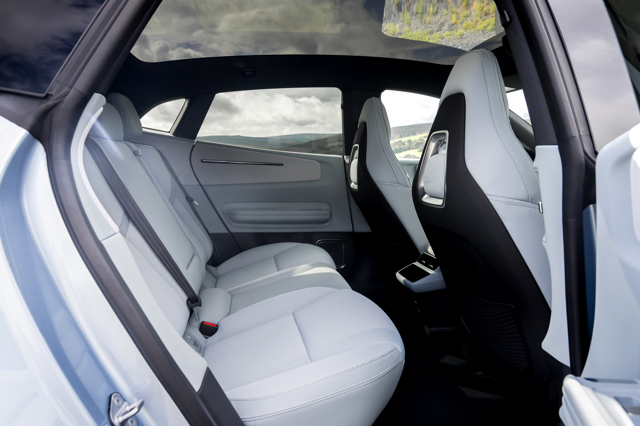
Radical, perhaps, but effective, because the Polestar 4 is a very roomy car. Headroom is generous in both the front and the rear, while legroom is in even more plentiful supply all-round. The cabin also feels very wide, so three adult passengers will fit comfortably along the rear bench and they’re made even more comfortable by well-sculpted seats and a flat floor.
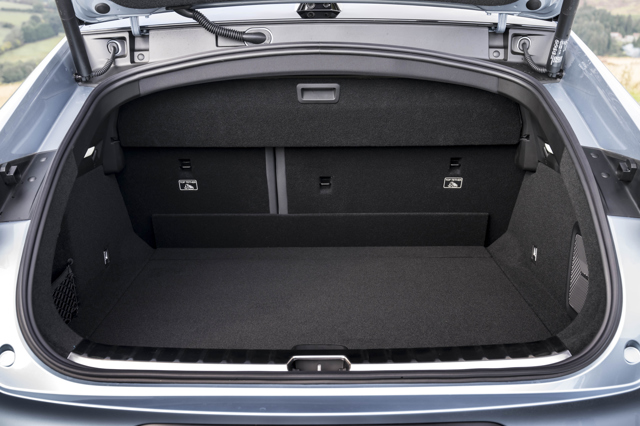
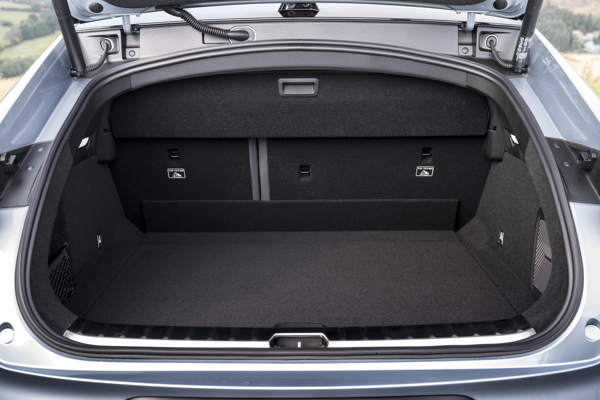
The boot is massive at 526 litres, and you can keep your charging cable either in a storage compartment under the boot floor or in another smaller one under the bonnet.
You can drop the 60/40 split rear seats on those occasions you need maximum cargo space — up to 1,536 litres can be liberated — and the backrests lie flat and flush with the boot floor, which makes sliding heavy items in quite a bit easier. You will have to muscle those items over a small lip at the boot entrance, though.
Polestar 4 Review: Dimensions
We said a moment ago that the Polestar 4 is a big old lump of a thing, but precisely how big? If you need to know whether it'll fit in your garage, we can tell you that the car measures 4,840mm in legth, 2,139mm in width (including door mirrors) and 1,534mm in height, while the wheelbase is 2,999mm.
Polestar 4 Rear Window: How does the digital mirror work?
The Polestar 4 doesn’t have a rear window, so a conventional rear-view mirror wouldn’t be much good to you. Instead, you get a small screen that sits precisely where a conventional rear-view would be, and it shows you a live feed of what’s behind you from a rear-facing camera mounted on the back of the roof. It’s a little odd at first, but you soon get used to it.
Polestar 4 2026: Quality and finish
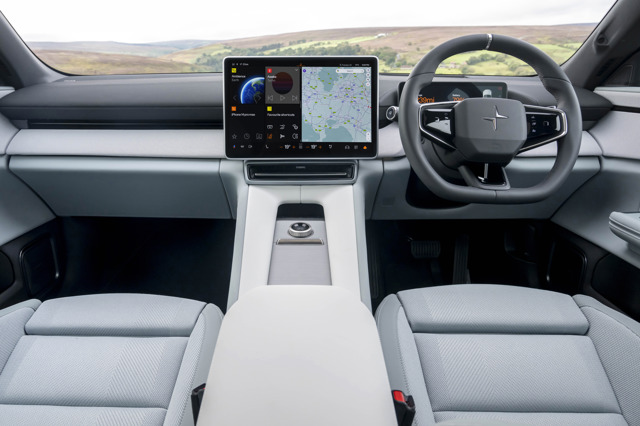
The Polestar 4’s minimalist interior design immediately injects an aura of modernity and sophistication into proceedings, but that’s complemented by a very high standard of fit and finish, plus a carefully selected mixture of classy-feeling materials.
What’s more, many of those materials have led previous lives. Some of the plastics, fabrics and carpets used are recycled from old plastic water bottles, reclaimed fishing nets and a variety of other sources.
Specify the optional Nappa leather pack, and the hide you get for your upholstery is animal welfare-secured. All very right-on and all very effective.
Polestar 4 2026: Infotainment
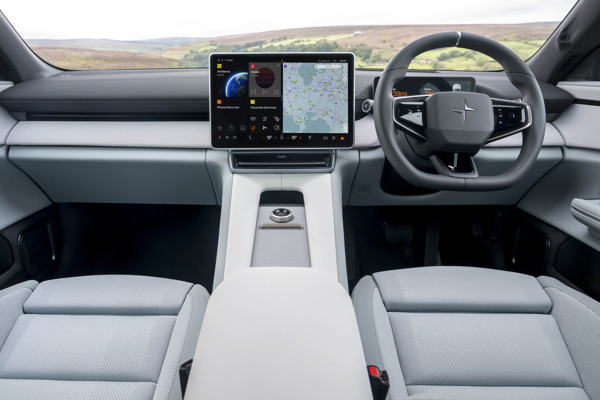
The Polestar 4’s very minimalist interior design means that there’s almost no physical switchgear to be found in the cabin. Pretty much all of the car’s functions have to be operated through the massive 15.4-inch landscape-orientated infotainment touchscreen mounted on the centre of the dashboard.
This has all the functionality you expect, including Android Auto, Apple CarPlay, Bluetooth, and DAB radio. You also get wireless phone charging and four USB-C ports (two in the front, two in the back), along with another 10.2-inch screen behind the steering wheel to serve as your driving instruments.
As if that wasn’t enough, there’s also yet another touchscreen in the back to give rear-seat passengers control over climate and media functions.
The operating system has been co-developed with Google, meaning that the navigation is based on Google Maps, you have Google Assistant voice control and you can download a variety of different apps directly onto the system via Google Play store.
The whole thing looks very cool, with crisp, stylish graphics and slick screen transitions. We also like the fact that the on-screen menus are fitted to the screen so that the whole of any given menu is always visible on the screen and you don’t have to scroll down to reveal more of it. You don’t swipe sideways between menus, either.
Yet despite these two neat little bits of design, the user-interface is still way too complex to find your way around easily. There are just so many different menus and screen layouts that it’s far too easy to get lost.
Attempting to find a minor function will likely have you trying four or five menus before you eventually discover it, and even when you finally do, you might need several attempts at registering your command because the screen sensitivity isn’t all that great.
And all the while, your attention is being diverted from the road ahead…
Polestar 4 value for money
Polestar 4 2026: Prices
This review was last updated in March 2026, and the prices given in the table below were the latest prices given by Polestar at that time. Car prices change very frequently, however, so please only use these as a guide and verify the latest pricing for yourself on Polestar's website.
| Long Range Single Motor | £55,750 |
| Long Range Dual Motor | £67,750 |
Is the Polestar 4 good value compared to rivals?
Granted, this is not a cheap car, and that’s before you add any of the various option packs available, which can quickly skyrocket the price of your car with just a few reckless ticks.
Then again, this is a large all-electric model from a self-confessed high-performance premium brand, so you wouldn’t really expect it to be cheap.
Importantly, it looks like pretty decent value when compared with the alternatives. That saloon-bodied Mercedes EQE costs from a whisker over £69,000, while the non-SUV coupe BMW i4 can be had from around £51,000, although its driving range is around 80 miles shy of the Polestar’s.
At around £48,000 the Cupra Tavascan’s starting price makes it appear to be a bargain, although it is around 20cm shorter than the Polestar overall, so it's considerably smaller.
The more powerful Dual Motor car is a similar story. The money you pay is pretty much spot-on with what you’ll pay for the latest Porsche Macan Electric, but compared with that car, the Polestar is considerably longer, lower and provides much more in the way of performance.
Looked at through this lens, the Polestar’s prices don’t seem so steep.
Polestar 4 2026: Reliability and running costs
Both versions of the Polestar 4 have a whopping 100kWh (gross) battery pack with a 94kWh usable capacity.
Assuming for a moment that you pay the UK’s national average rate for your domestic power (around 28p per kWh), then charging it up fully will cost you around £26. However, if you negotiate with your provider to get yourself on a tariff specifically designed for EV drivers to charge their car overnight using heavily discounted off-peak power, and you can easily cut that figure in half for an even greater saving.
Do bear in mind, though, that any time you use a DC public rapid charger, the power that comes out of it will cost much more (90p per kWh is not uncommon), so it’s best not to rely on this on a regular basis. Indeed, at that kind of price, you’ll be paying roughly as much to fuel your electric performance car as you would to fuel a similarly powered petrol car.
Electric cars are no longer exempt from VED road tax, and not only that, the Polestar's list prices of more than £40,000 across the range mean that all versions will be stung for the higher rate. So, on top of the £195 per year flat rate, you'll pay and additional £425 per year between years two and six of the car's life.
Insurance costs will be high, too, but that's not surprising given the price and power of the car. The Single Motor version ranges between groups 43 and 45 depending on the options fitted, while the Dual Motor car sits in group 48 (of 50, with group 50 cars being the most expensive on premiums).
Polestar 4: Frequently Asked Questions
How much does the Polestar 4 cost in the UK?
Prices for the Polestar 4 in the UK start at around £56,000, but get much higher as you move up the range.
Does the Polestar 4 have a rear window?
No, the Polestar 4’s designers decided not to give it a rear window so that rear headroom could be improved while maintaining a slinky coupe-like roofline.
What is the real-world range of the Polestar 4?
The longest-range version of the Polestar 4 has an official range figure of 385 miles, so expect around 300 miles in good conditions, less if you’re doing lots of motorway miles.
Satisfaction Index
 What is your car like to live with?
We need your help with our latest Satisfaction Index, so that we can help others make a smarter car buying decision. What's it like to live with your car? Love it? Loath it? We want to know. Let us know about your car - it will only take a few minutes and you could be helping thousands of others.
Help us with the Honest John Satisfaction Index nowPolestar 4 models and specs
There are no trim levels as such with the Polestar 4, just a choice of powertrains and one standard level of equipment.
On top of all the safety kit and the infotainment stuff we’ve already talked about in other sections, the standard equipment list includes:
- Panoramic glass roof
- LED exterior lighting with automatic high beam headlights
- 360-degree parking cameras and sensors
- Dual-zone climate control
- Heated front seats
- Heated power folding door mirrors
- Active LED headlights
- Automatic wipers
- Power tailgate
- Power-adjusting front seats
Various option packs are offered, which bundle up desirable extras for a one-off cost. The Performance Pack, for instance, which is only available on the Twin Motor model, adds 22-inch wheels, sportier handling, uprated brakes and gold-coloured accents. The upgrade costs quite a bit of cash, though, at around £4000.
More articles you might be interested in:


| Dimensions | |
|---|---|
| Length | - |
| Width | - |
| Height | - |
| Wheelbase | 2998 mm |
| Miscellaneous | |
|---|---|
| Kerb Weight | - |
| Boot Space | - |
| Warranty | |
| Servicing | - |
| Costs | |
|---|---|
| List Price | £59,935–£66,935 |
| Insurance Groups | - |
| Road Tax Bands | A |
| Official MPG | - |
| Euro NCAP Safety Ratings | |
|---|---|
| Adult | - |
| Child | - |
| Pedestrian | - |
| Overall | - |
| SUV | |||
|---|---|---|---|
| Version | List Price | MPG | 0-62 |
| Long Range Plus 271 Electric 100kWh Auto 5dr | £59,935 | - | - |
| Long Range Plus 542 Electric Dual Motor 100kWh Auto 5dr | £66,935 | - | - |
Model History
January 2024
Polestar 4 on sale now, priced from £59,990
The Polestar 4 is now officially on sale in Europe and Australia, following first deliveries in China at the end of 2023. In the UK, the Polestar 4 is priced from £59,990. Production is planned to start towards the middle of 2024, with first deliveries expected from August.
Two models will be available. The Polestar 4 Long range Single motor costs from £59,990 and the Long Range Dual motor from £66,990. Buyers have the option of adding a number of packages to augment the already high standard spec.
The Pro Pack costs £1800 and adds 21-inch wheels and subtle design details like additional headrest speakers for the front seats. The Pilot Pack costs £1300 and includes Pilot Assist and its extended features.
The Performance Pack (£4000) increases the performance look and driving experience of the Long range Dual motor version, with 22-inch wheels, Brembo brakes, Polestar Engineered performance chassis tuning and Swedish gold details for the brakes, seat belts and valve caps.
