
Peugeot 3008 Review: Price, specs and boot space

Peugeot 3008 Verdict

 Eye-catching exterior styling. Bold and modern cabin design. Good standard specification. Quality is impressive.
 Limited rear headroom. Complex infotainment system. Mild hybrid versions lack performance. Lacklustre road manners.
Find out more about the Peugeot 3008
Each generation of the Peugeot 3008 has brought with it a significant change of purpose. First it was a pseudo-MPV that majored on interior space, before morphing into a sharply-styled SUV for its second generation. Now in its third iteration, it’s evolved once more into something more rakish, but does this hint at a model with a slightly sportier purpose? Find out in our full Peugeot 3008 review.
While there’s a growing trend for slinky SUV coupes, the fact that the latest Peugeot 3008 has joined their number appears to pose something of a potential headache for its maker. You see, within the firm's range is another of these fastbacks — the Peugeot 408 — which is 145mm longer, 165mm wider and 163mm lower than the 3008, as well as being available in mild hybrid, plug-in hybrid and fully electric forms.
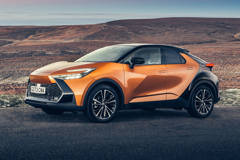
Despite those points, it’s the hybridised 3008 covered here — the all-electric Peugeot E-3008 we’ve reviewed separately — that’s the costlier option of the in-house rivals. What's more, there are plenty of alternatives from other brands to contend with, including the similarly slinky Toyota C-HR.
Other rivals that buyers would be wise to consider alongside the Peugeot include the handsome Cupra Formentor, the seemingly omnipresent Range Rover Evoque and the Renault Rafale.
When fitted with a combustion engine, there are two drive system choices for the Peugeot 3008. Marketed as the Hybrid 136 (or later the Hybrid 145, but more on that in a while) is the familiar 1.2-litre turbocharged petrol engine fitted with a mild hybrid electric system, which sells alongside the Plug-in Hybrid 195 fitted with a larger 1.6-litre turbo petrol engine as well as a bigger electric motor and battery combination to allow prolonged pure-electric running.
Your Peugeot 3008 experience is very much dictated by which option you go for. The 3008 Hybrid 136’s relatively small engine and electric motor arrangement gives very modest performance: it's okay for mooching around town, but it can feel a little breathless when out on the open road
The 3008 Plug-In Hybrid 195 feels more capable, courtesy of a combined petrol-electric power output of 194PS and 350Nm of torque. Its 0-62mph time of 7.8 seconds is 2.4 seconds brisker than the Hybrid 136 manages, but of greater interest is the PHEV’s 39-55-mile electric-only driving range on the WLTP Combined cycle.
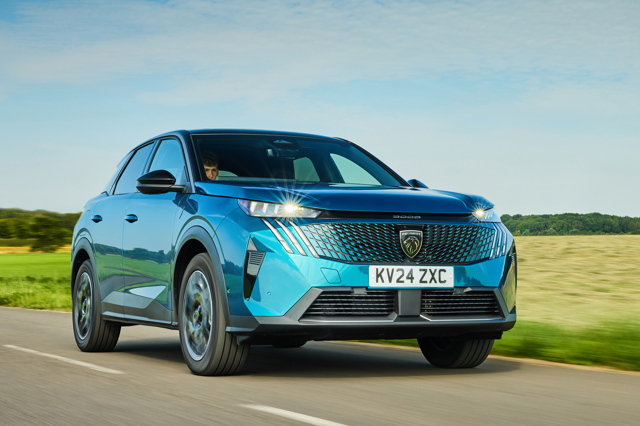
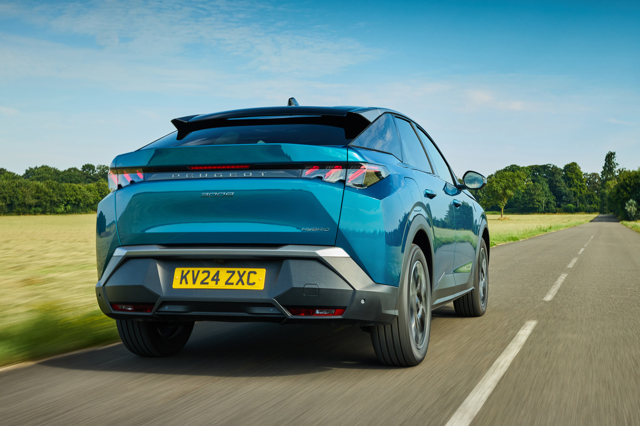
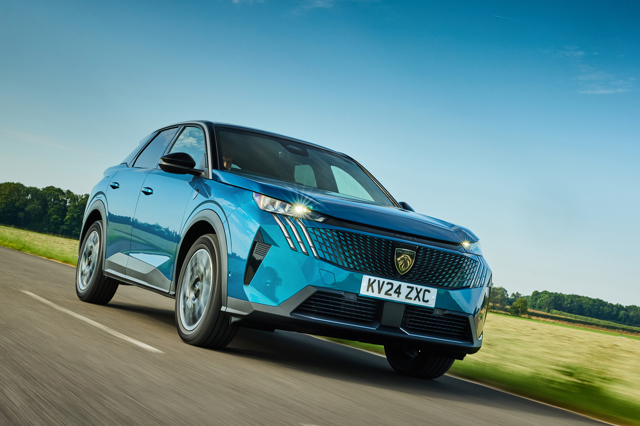
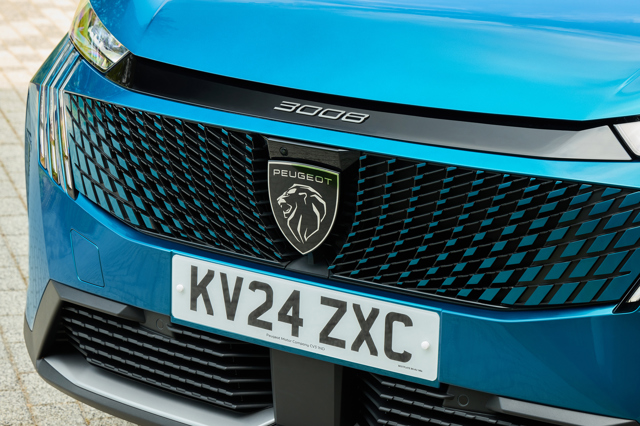
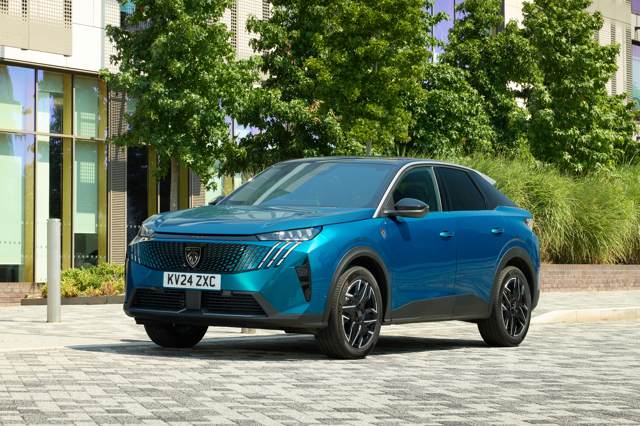
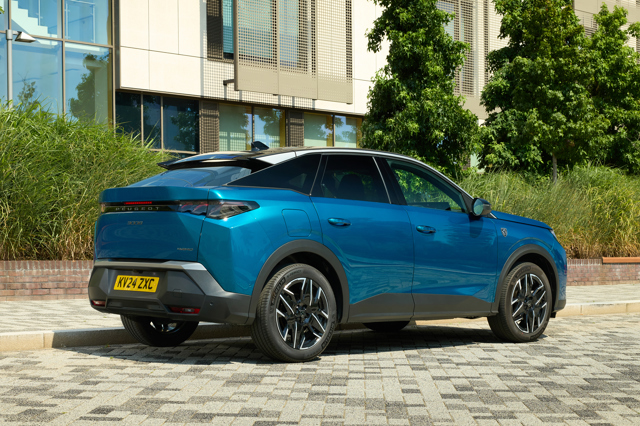
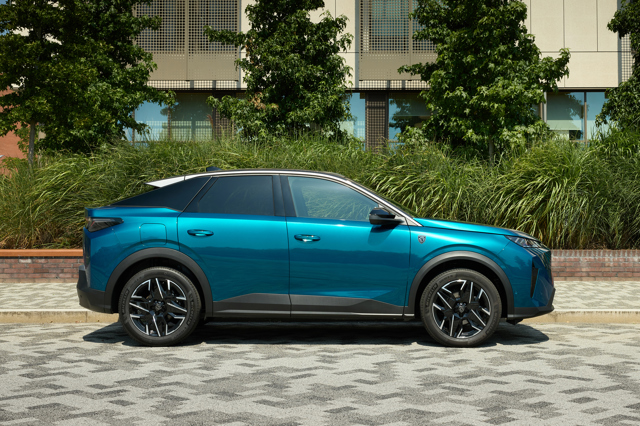
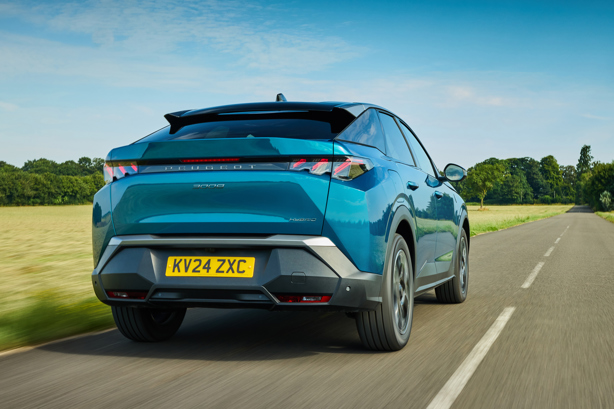
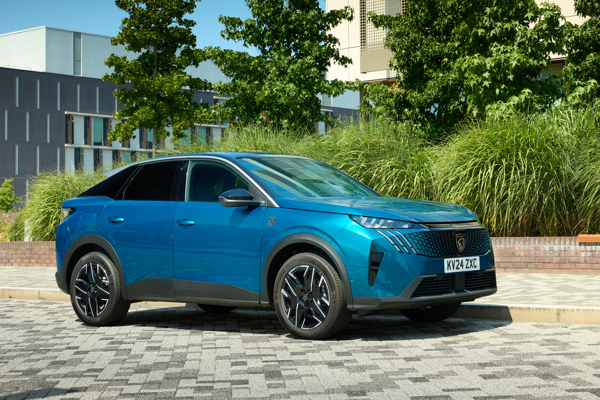
Regardless of how it’s propelled, it’s the Peugeot 3008’s styling that’s likely to be the primary attention-grabber. It shares some similarities with its smart-suited predecessor, but there’s a more distinct slope to the roofline for those coupe overtones, yet it retains the tall body and that buyers expect from a family-sized SUV.
Its nose is particularly bold, with a complex grille and heavily stylised lighting design. It certainly makes an impression and stands out from the more conservatively-styled alternatives, although it is essentially shared with the 3008’s seven-seater sibling, the Peugeot 5008.
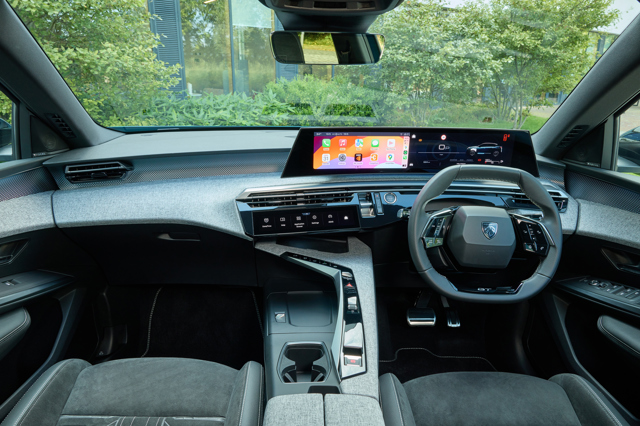
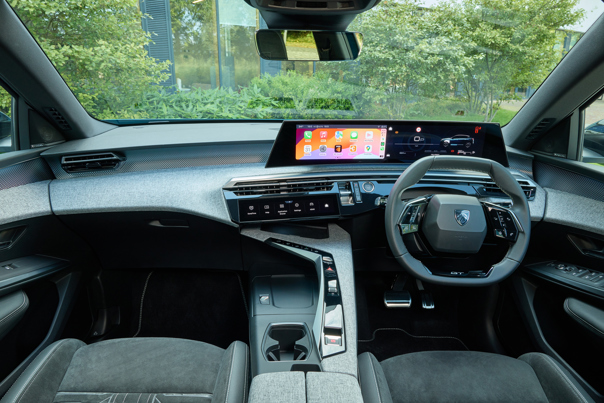
It’s a similar story on the inside, where a mix of sharp design and some unusual material choices help to elevate the 3008 above its competition. Peugeot’s i-Cockpit design remains, which essentially means a low-set steering wheel with the instrument display viewed over it, rather than through it. With careful evolution of the concept over the years, the 3008’s driving position feels much more natural than in some earlier Peugeot models.
There’s also the matter of the infotainment arrangement: Peugeot says the 3008 has a 21.0-inch display, but in truth, it’s two separate screens housed behind a single pane of glass. It’s impressive, nonetheless, and combined with the angular design of the cabin and a pleasing mix of materials, it feels like something with a heftier price tag.
The Peugeot 3008 has a number of appealing aspects, in particular its attractive design inside and out, as well as its strong specification levels. However, its road manners are rather disappointing in truth, and the somewhat underpowered mild hybrid powertrain, and expensive plug-in hybrid one, means doesn’t feel like as well a rounded proposition as its predecessor did.
Peugeot 3008 Plug-in Hybrid: Range and charging times
| Peugeot 3008 Plug-in Hybrid 195 | 39-55 miles |
Peugeot claims an EV range of 39-55 miles for the 3008 Plug-in Hybrid 195, which is reasonably competitive with most PHEV rivals if some way behind the best, and should give at least some usable range even in the winter months.
Its 17.9kWh battery is only capable of accepting an AC Type 2 charging plug, such as the type fitted to domestic wallboxes, so bear that in mind as you won’t be able to connect it to a DC rapid public charger.
The standard on-board charger is also limited to 3.7kW, so despite the battery’s modest size, it’ll still take 5 hours and 30 minutes to complete a flat-to-full recharge.
Reviews for Peugeot 3008's top 3 rivals


.jpg?width=240&height=160&rmode=crop)
Peugeot 3008 handling and engines
Peugeot 3008 2026: Handling and ride quality
Looking at the Peugeot 3008’s exterior, you might be forgiven for thinking this might be a car with a bit of verve about the way it drives. However, the reality is that this is a mid-sized family car that very much wants to stay in its lane.
Handling-wise, the Peugeot 3008 is safe and secure with reasonably responsive steering, but it leaves the driver feeling rather detached from what’s happening with the front wheels. The 3008 Plug-In Hybrid also feels more blunt than the Hybrid due to its extra weight, tipping the scales at 1905kg: you’re never in any doubt that this is a tall and heavy car.
This lacklustre handling would be entirely justifiable if it translated into cushy ride comfort, but the 3008 doesn't do brilliantly there, either. At lower speeds, the ride quality is mainly okay, but it can clatter and thump over sharper bumps and potholes. And at higher speeds, the ride feels even busier, particularly on the GT models with their larger wheels, which is irritating on the motorway.
Peugeot 3008 2026: Engines
There are four powertrain options for the Peugeot 3008, two of which are fully electric. You can read about those in our separate Peugeot E-3008, because here, we're talking exclusively about the ones that use petrol power. These comprise one mild hybrid and one plug-in hybrid.
And the former most certainly is only a mild hybrid, despite the fact that Peugeot gives it a rather misleading name. As is the case with most Stellantis (the parent company of which Peugeot is a part) brands, the powertrain has the moniker of Hybrid 136, or later Hybrid 145, which might suggest that it's a full - or self-charging - hybrid. It isn't. The electric motor only assists the petrol engine in most cases, and with a minuscule 0.4kWh battery, it'll only move around under electric power alone at the lowest speeds, and for the shortest distances, such as when parking.
What's more, don't go thinking that the disparity in numbers means that the 145 has any more power than the 136. When the car first went on sale, it was given the Hybrid 136 designation to reflect the 136PS power output of the 1.2-litre three-cylinder petrol engine. It was only a few months later that Peugeot's marketing bods realised that it might sound a bit better if they included the occasional 9PS boost added by the electric motor, so the number changed to 145. The powertrain itself, however, is absolutely unchanged.
Drive is sent to the front wheels via a six-speed dual-clutch automatic gearbox, and the 0-62mph sprint time is given at 10.2 seconds. Your progress is fairly reasonable around town, but on more open, higher speed roads, the rate of pickup feels distinctly lacklustre. It frequently feels like it requires a more determined press of the accelerator to make decent progress, and although this results in a marked increase of volume from under the bonnet, you don't really get a whole lot more in the way of additional forward momentum.
The Peugeot 3008 Plug-in Hybrid 195, meanwhile, uses a 1.6-litre, four-cylinder engine paired with a more powerful electric motor and a much larger 17.9kWh battery pack. Drive is still sent exclusively to the front wheels, although the e-DSC7 automatic transmission has an extra ratio. This PHEV system produces a combined 194PS and 350Nm of torque, resulting in a 7.8-second 0-62mph time and a 137mph top speed.
In Plug-in Hybrid guise, the 3008 feels generally more relaxed, with substantially more power and torque making shorter work of keeping up with traffic, as well as overtaking it. The car drives quietly and smoothly in EV mode, too. However, even this version doesn't feel as quick as the prodigious power output would suggest, primarily because it weights the thick end of two tonnes.
Peugeot 3008 2026: Safety
Euro NCAP didn't assess the Peugeot 3008 until 2025, and when the tests were finally carried out, it achieved a four-star (out of five) rating: not dreadful, but not brilliant, either. The level of standard safety equipment is fairly high. All versions are fitted with lane-keep assist, automatic emergency braking with pedestrian and cyclist detection and driver attention alert.
However, only higher-spec models are fitted with adaptive cruise control as standard, while a safety pack that adds long-range blind-spot monitoring and rear cross-traffic alert is only standard on the Allure Premium and GT Premium trims, or is optional on the others.
Peugeot 3008 2026: Towing
Towing with the Peugeot 3008 depends on which drive system is fitted. The Hybrid 136/145 has a maximum braked towing capacity of 1200kg, while the Plug-In Hybrid 195 can haul 1550kg of braked trailer.
Peugeot 3008 interior

Peugeot 3008 2026: Practicality
For a family-sized SUV, the Peugeot 3008 offers competitive space for both occupants and luggage. In the front, the head- and legroom is good, and although the centre console is quite chunky and substantial, it doesn’t eat into the sense of space too much.
In the rear, legroom and elbow room are also good enough for adults that are above average in height, although the slope of the roofline does limit the available headroom for taller occupants in the back. Although you can fit three adults across the rear bench, the middle-seat passenger has to negotiate the back of the centre console when finding space for their legs.
Storage space in the cabin is good: while the glovebox is relatively small, the generous door bins and large centre console stowage make up for it. Boot space is competitive at 588 litres, which can be increased to 1663 litres by folding down the rear seats. This figure applies to not only the Hybrid and Plug-in Hybrid models, but also the electric E-3008, so there’s no loss of space with the bigger batteries.
Peugeot 3008 2026: Quality and finish
As well as an appealing interior design, the choice of materials and their quality are a strong point of the Peugeot 3008’s cabin. A good portion of the interior plastics are soft to the touch, and rather than having acres of chintzy gloss-finish plastic, there are generous areas of fabric on the doors and across the top of the dashboard.
Despite much of the interior colour scheme being black and dark grey, there is enough variety in tone and materials to give the 3008 the feel of something more upmarket, and it's a very pleasant place to sit.
Peugeot 3008 2026: Infotainment
All versions of the Peugeot 3008 are fitted with what’s stated to be a 21.0-inch panoramic curved display, although in reality it’s two separate displays housed behind a single piece of glass. There’s an additional touchscreen mounted beneath the central air vents containing what Peugeot calls i-Toggles: configurable shortcuts that allow ten different options functions to be operated.
The system also includes connected navigation, wireless or USB phone mirroring with Android Auto and Apple CarPlay, while the Bluetooth function allows two devices to be connected at the same time. There’s also voice recognition, DAB radio and four USB-C ports divided equally between the front and rear.
Such a large display offers a great deal of information and is impressive to look at, while its curvature prevents it from interfering with the driver’s view ahead. Its responsiveness is generally good, but some of the menus feel overly complicated and the lack of physical buttons to operate the climate control is frustrating. At least those i-Toggle controls make navigating the car's various functions easier than it would otherwise be, and they look cool, too.
Peugeot 3008 value for money
Peugeot 3008 2026: Prices
Prices for the Peugeot 3008 currently start at around £38,000 for the mild hybrid in Allure trim, while the cheapest powertrain in GT trim will set you back around £41,000. If you want the plug-in hybrid version instead, you'll be paying around £3,000 extra trim-for-trim. The range currently tops out (ignoring the electric versions) at around £46,000 for the PHEV powertrain in loftiest GT Premium trim.
Those prices aren't actually all that much different to what you'll pay for rivals such as the Cupra Formentor or Ford Kuga in equivalent form, so while the 3008 isn't a cheap option, it is competitive on price.
As ever, buying used can save you a packet on the cost of your Peugeot 3008. This mk3 car from 2024 onwards can be had for as little as £24,000. This will be for the mild hybrid in Allure spec with around 15,000 miles on the clock, or if you don't object to an EV, there are plenty of all-electric versions around for this sort of money as well. If you fancy saving even more cash, why not consider going slightly older and buying a Mk2 3008 from the generation before. In some ways, it's actually a better car: it's certainly better to drive.
Peugeot 3008 2026: Reliability and running costs
Peugeot claims a combined WLTP fuel consumption figure of between 44.6 and 52.5mpg for the Hybrid 136/145 versions (the identical figures are further proof that, regardless of name, the powertrains are exactly the same), which should mean that low 40s should be possible in the real world if you're careful.
As with all plug-in hybrids, the claimed official WLTP figures of 212.7-356.2mpg are unlikely to be achieved in the real world, because the official test are unrealistically flattering to such powertrains. Combining regular home charging and short journeys will allow you to cut costs, provided those journeys are short enough to be completed entirely on the cars electric range (between 39 miles and 55 miles acording to the official figures, which is a lot less than the best PHEVs these days, some of which can achieve up to 80 miles). However, do be aware that as soon as the petrol engine fires into life, your car will become very thirsty due to the added weight of that battery that the petrol engine has to haul around.
Insurance groups are 22 and 24 for the Hybrid versions, but jump up to 32 and 33 for the PHEVs. Those paying Benefit-in-Kind (BiK) company car tax will find the PHEV a lot more attractive than the mild hybrid in tax payments.
Satisfaction Index
 What is your car like to live with?
We need your help with our latest Satisfaction Index, so that we can help others make a smarter car buying decision. What's it like to live with your car? Love it? Loath it? We want to know. Let us know about your car - it will only take a few minutes and you could be helping thousands of others.
Help us with the Honest John Satisfaction Index nowPeugeot 3008 models and specs
There are two core trim levels for the Peugeot 3008 range, comprising Allure and GT.
Standard equipment with the Peugeot 3008 Allure includes:
- 19-inch alloy wheels
- keyless entry and start
- heated and automatically folding door mirrors
- a reversing camera
- rear parking sensors
- automatic LED lights
- dual-zone climate control
- 21.0-inch combined infotainment display with connected navigation
- DAB radio
- smartphone mirroring for wireless Android Auto and Apple CarPlay
- wireless phone charging pad
- LED ambient lighting.
- emergency braking assist
- hill start assist
- cruise control with speed limiter
- driver attention alert
Upgrade to the Peugeot 3008 GT if you fancy:
- adaptive cruise control
- a heated steering wheel
- electrically operated tailgate
- front parking sensors
- eight-colour interior ambient lighting
- lumbar adjustment for the driver’s seat
- luxury floor mats
- adaptive LED headlights with automatic main beam
Later on, Peugeot introduced two intermediate trim levels known as Allure Premium and GT Premium. The Peugeot 3008 Allure Premium builds on Allure trim by adding:
- adaptive cruise control
- rear cross traffic alert
- front parking sensors
- high beam assist
- heated steering wheel
- heated front seats
- driver's seat with 10-way power adjustment
The Peugeot 3008 GT Premium builds on the GT spec by adding:
- 360-degree cameras
- extended driver assistance pack
- alcantara upholstery
- massaging front seats
- heated rear seats
Model History
- November 2023: Peugeot 3008 Hybrid opens for orders, priced from £34,650
- October 2025: Peugeot adds range-topping 3008 GT Premium trim, priced from £42,670
November 2023
Peugeot 3008 Hybrid opens for orders, priced from £34,650
Peugeot has announced that its new 3008 Hybrid is now open for orders with prices starting from £34,650.
The new 3008 Hybrid will be launched with a 136PS petrol-electric drivetrain, featuring a e-DSC6 six-speed Dual Shift Clutch automatic gearbox
The 3008 is available in two trim levels: Allure and GT.
Allure models start at £34,650 and include a 21-inch HD Panoramic Curved Display, 3D Connected Navigation, configurable i-Toggles, a smartphone wireless charger, keyless go and a reversing camera.
3008 GT models start at £38,150 and include pixel LED Headlights, a handsfree electric tailgate, adaptive cruise control, a heated steering wheel and front seats, eight-colour ambient lighting and an Alcantara interior.
October 2025
Peugeot adds range-topping 3008 GT Premium trim, priced from £42,670
Peugeot has introduced a new range-topping GT Premium trim level for the 3008 line-up. Available on all models, GT Premium starts at £42,670 for the Hybrid 145 and £46,240 for the Plug-In Hybrid 195.
Equipment includes Mistral black-embossed Alcantara upholstery with Iced Clay light green stitching. Black Nappa leather seats are also available as an option on GT Premium trim for £1300.
The Driver and Passenger Seat Pack is included as standard. Both front seats have received the AGR (Campaign for Healthier Backs) seal of approval and come with 10-way electric adjustment with pneumatic lumbar support, adaptive side bolsters, powered cushion angle adjustment and manual cushion nose adjustment.
The seats also feature multi-point massaging with up to five patterns and three intensities. The front and rear seats are heated.
GT Premium trim is available on all powertrain options, including the Hybrid 145 e-DSC6 and the Plug-in Hybrid 195 e-DSC7, the latter featuring a 21kWh battery that delivers up to 50 miles of electric range.
