
Kia Niro Review: Price, specs and boot space


Kia Niro Verdict

 Spacious, smart and well-equipped interior. Less bland than the old Niro. Smooth and easy hybrid driving experience.
 Looks may divide opinion. Self-charging hybrid feels strained when revved. No longer a bargain.
Find out more about the Kia Niro
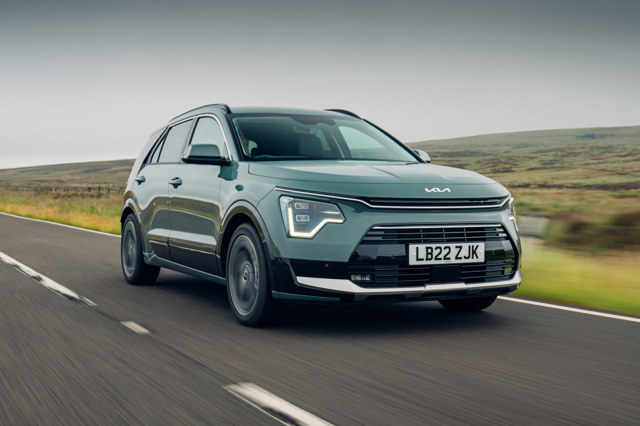
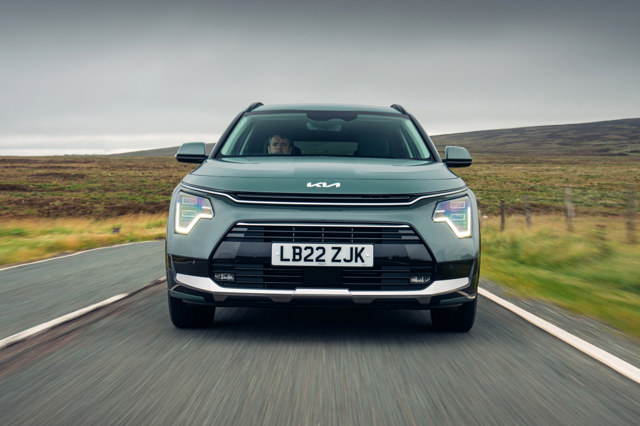
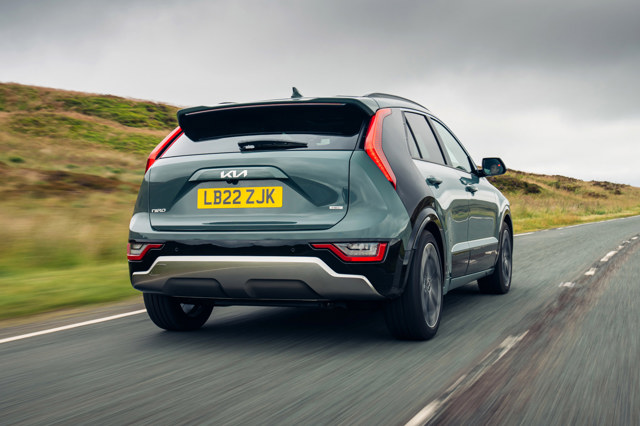
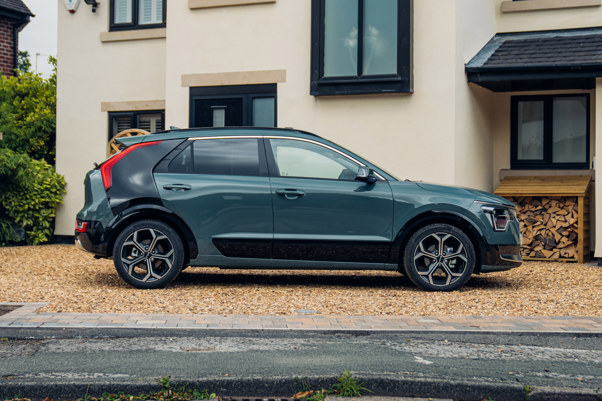
The second-generation Kia Niro looked to double down on the huge success of the first iteration. It continues the traits that made the first model so popular; namely low running costs and the choice of hybrid, plug-in hybrid and electric power. This time around, however, the Niro adds extra desirability inside and out.
The original Niro was a hugely important car to Kia. The compact SUV was the second most popular model Kia sold in the UK, only being outsold by the bigger Sportage.
That success is both a blessing and a curse for Kia, because when replacing such an important model with a new version, you really don't want to mess it up. And that's why the core recipe has remained very similar between the first-generation Niro and the second-generation car. It still does all the stuff that people liked about the old car, but with a bit more style and desirability.
Now, as we all know, the compact SUV market isn't exactly short of model offerings, and neither, it has to be said, is Kia. The Korean firm offers combustion-engined offerings (some hybrid) in the form of the Stonic, Xceed, and Sportage, while all-electric offerings in the firm's range include the EV3, EV4 and EV6.
So where does the Niro fit in? Well, it's the only one that offers both electric and electrified petrol-powered options within the same model range. As with the first Niro, you can have it with a self-charging hybrid powertrain, as a plug-in hybrid, or as a full EV. Size-wise, it sits pretty much bang in the middle of Kia's vast array of compact SUVs.
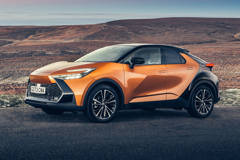
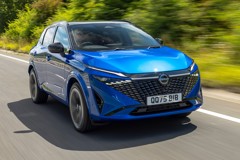
Key rivals for the Niro hybrids include the Honda HR-V, the Toyota C-HR and the Renault Arkana E-Tech. In this review we'll be focusing on the two hybrid versions of the Niro, but you can check out our new Kia Niro EV review here.
The self-charging hybrid Niro can only run for short distances on electric-only power, but it is considerably cheaper to buy than the PHEV and still impressively efficient. Conversely, the PHEV will do around forty-odd miles on electricity alone, but you'll need somewhere to plug it in - and remember to do it - if you want the best running costs.
The Mk2 Kia Niro is larger, more generously equipped, more desirable inside and out, and has a much bigger arsenal of tech than the old Mk1 model. But, as is the way when any new car comes along, it's also more expensive. Can Kia justify the extra cash? Read on to find out.
Reviews for Kia Niro's top 3 rivals


Kia Niro handling and engines

Kia Niro 2026: Handling and ride quality
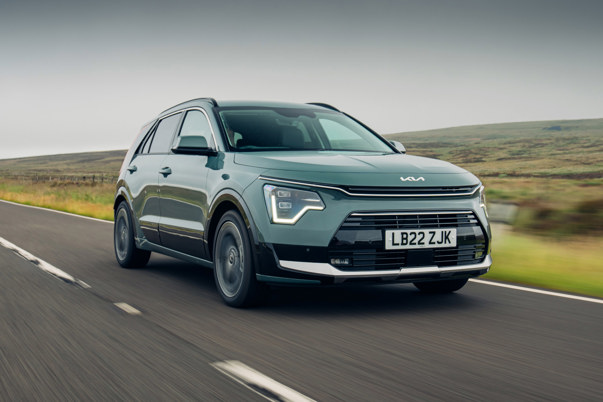
The Kia Niro has never been about razor-sharp handling, and certainly that's the case here. But it's competent enough for most people's needs, majoring on smoothness and comfort.
If you want to hustle it along you can select Sport mode on the handy wheel-mounted drive mode selector on both hybrids. The dials switch to a moody red glow, the steering gets heavier and the throttle pedal and gearshifts are more eager, but it doesn't change the car's easy-going character that much.
The Niro's steering is probably its weakest area. It's precise enough and easy around town, but the lightness and lack of feel means you don't have full confidence in it on twisty roads. The plug-in hybrid's steering is more weighty and confidence-inspiring, but the trade-off is that it weighs 120kg more than the base hybrid and leans over more in the bends.
The self-charging hybrid has better body control, but neither versions offers a fun driving experience. Happily, what matters more in a car such as this is a comfortable ride, and the Niro offers that on both variants. Top models with 18-inch alloys are a little more disrupted by potholes, but not drastically so. The friction brakes on both versions aren't too grabby, either.
Refinement is good but not outstanding. There's a little road- and wind noise to be heard, while the engines can get pretty vocal if you stamp on the accelerator (more on that below).
Kia Niro 2026: Engines
We have a separate review for the all-electric Niro EV, so this section just focuses on the two hybrid Kia Niros, the self-charging hybrid and the plug-in hybrid.
Both centre around a 1.6-litre petrol engine mated to a six-speed dual-clutch transmission, and an electric motor, powering the front wheels. The precise power output of both versions has moved around a tiny bit over the years to satisfy changing emissions regulations, but these days, the maximum total outputs stand at 138PS for the self-charging hybrid and 170PS for the plug-in hybrid. Not that it matters a great deal, but the former does the 0-62mph dash in 11.1 seconds, while the same sprint takes 9.9 seconds in the latter.
But how does the performance feel? Well, in the self-charging hybrid, it's best described as modest, or acceptable. It'll mooch around nicely at town speeds, flitting smoothly between electric-only power and petrol propulsion: you have to be super-gentle with the throttle if you want to avoid making the petrol engine fire up, but when it does so, it does so smoothly and quietly. Cruising is fine, too, but the modest acceleration available means that overtaking moves need to be planned in advance, and working the engine hard makes it sound quite thrashy.
Happily, the dual-clutch gearbox responds more naturally to throttle inputs than the CVT transmissions you more commonly find in hybrids, allowing you to keep revs down and reduce the din. However, you will need revs - and plenty of them - if you want to get up to speed with any real purpose.
The plug-in hybrid's extra power comes entirely from its brawnier electric motor, and obviously, it has a much larger battery as well. The PHEV feels a good bit faster than the self-charger: it's still not what you'd call quick, but it gets up to speed more effortlessly. That said, the engine still gets pretty vocal when you floor it.
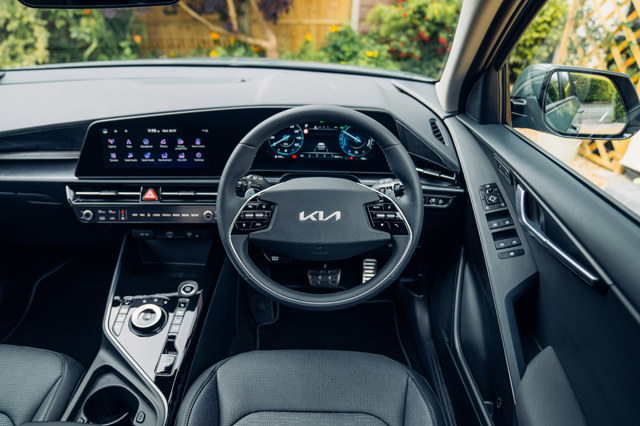
The dual purpose paddle shifters behind the steering wheel are a neat touch. In Eco mode, they let you adjust the level of regenerative braking between three levels, while when you switch to Sport mode, they instead control the dual-clutch gearshifts.
It's hardly going to change your life, but a neat touch is that neither versions of the Kia Niro actually have a physical reverse gear. Instead, they spin the electric motor in reverse, saving weight and ensuring smooth, silent reversing.
Kia Niro 2026: Safety
Look at the Euro NCAP website, and you'll see that the second-generation Kia Niro has two safety ratings: a five-star rating for cars fitted with a safety pack, and a four-star one for cars that don't have it. Fear not, because all cars sold in the UK do have it, so the five-star rating applies across the board.
That's not to say there aren't differences in safety provision between the various versions, though. The entry-level Kia Niro 2/Pure comes with automatic emergency braking with car-, pedestrian- and cyclist recognition, and adaptive cruise control, along with the usual lane keeping aid and drowsiness detection.
Step up to the Kia Niro 3/Evolve and you get Highway Driving Assist, which combines the adaptive cruise control with a more advanced lane assist system that will naturally guide the steering within your lane. You also get Blind Spot Collision Avoidance.
The top-spec Kia Niro 4/Aspire comes with a remote parking function and parking collision avoidance assist.
Kia Niro 2026: Towing
The Kia Niro isn't particularly great tow car but it'll tow small trailers, with a maximum braked weight of 1,100kg on the HEV and 1,000kg on the PHEV.
Kia Niro interior
Kia Niro 2026: Practicality
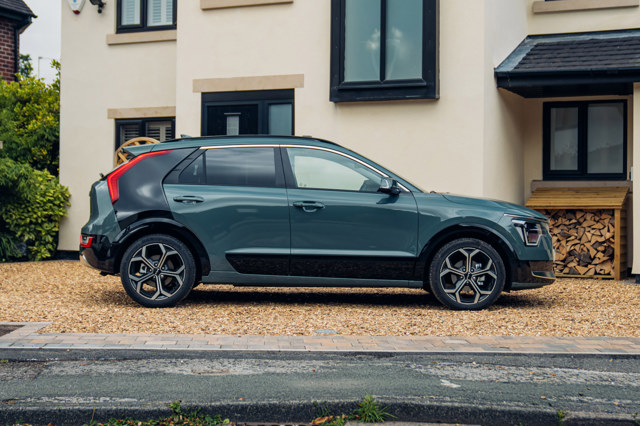
Despite looking more like a tall hatchback than a 'proper' SUV, the Kia Niro has a relatively high, commanding driving position. There's enough space and adjustment up front for those of all shapes and sizes to get comfortable, although we'd like a little more movement in the steering column for the really tall driver.
Visibility is good all-round despite the thick rear pillars either side of the rear window, while a rear-view camera and rear parking sensors are standard-fit on all versions. The seats are very comfortable for long stints at the wheel, and storage is good for drinks and other oddments, although the centre armrest stowage is shallow.
The Kia Niro has grown in exterior dimensions a bit over the old car, with a length of 4420mm (an extra 65mm) a width of 1825mm (an extra 25mm) and an identical height of 1545mm. That translates to improved cabin space.
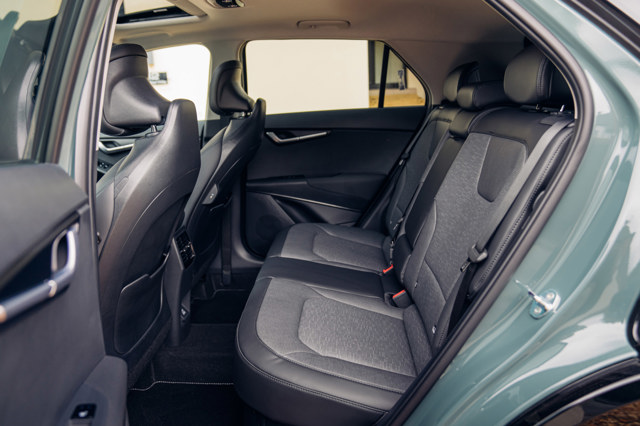
There's absolutely loads of headroom in the front and rear, and that's regardless of whether you spec the sunroof: it's an old-fashioned small sunroof rather than a panoramic one. Legroom is good, too, with six-footers able to sit behind one another and just enough space for a third passenger in the middle. You can also adjust the rear backrest to recline it on top trims, although rather than doing this with a lever down by the seat base, it's a fiddly one by your shoulder.
The self-charging hybrid's 451-litre boot is larger than thosein key rivals from Toyota or Honda, but not quite on a par with the Nissan Qashqai e-Power hybrid. That space reduces to 348 litres in the plug-in hybrid Niro, mainly because you lose the underfloor storage due to the bigger battery pack. But there's very little load lip and the seats will fold nice and flat, if only in a 60/40 split.
Kia Niro 2026: Quality and finish
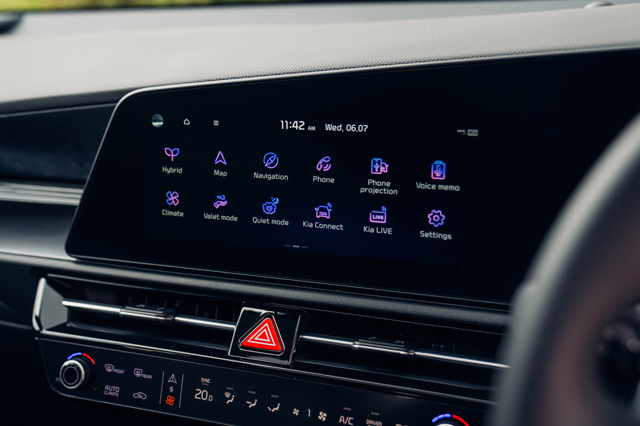
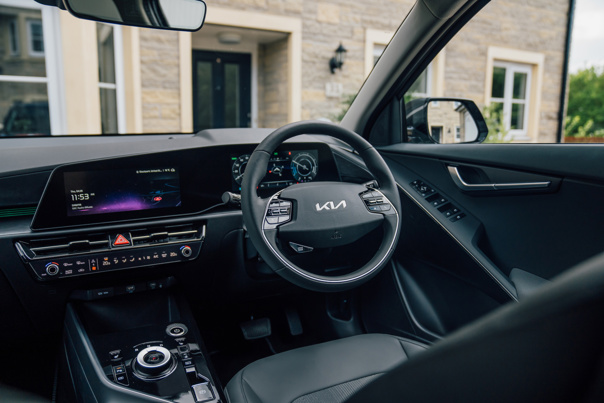
Kia has translated some elements of the brilliant EV6 electric car's cabin to the cheaper Niro, with a similar dashboard appearance and tech layout. Generally speaking, the fit and finish is sound and there are enough soft-touch plastics, gloss black finishes and chrome elements to avoid the Niro feeling bargain-basement.
That said, there are plenty of harder plastics dotted about the place, particularly in the lower reaches of the cabin. We'd like a splash more colour around, too, but everything feels very well screwed together and shouldn't be pulled apart by unruly children.
Kia Niro 2026: Infotainment
Initially, Kia offered two levels of infotainment depending on the trim level you went for. The entry-level Niro 2 came with an 8.0-inch central touchscreen and analogue instruments with a measly 4.2-inch digital display inset into them. Apple CarPlay and Android Auto plus DAB radio were provided.
The touchscreen at this base point worked fine, and although the graphics weren't stunning, the system was responsive enough. The small screen looked a bit lost in the glossy plastic bezel, though, which was remedied by the larger 10.25-inch screen you got in the 3 model. The screen also looked crisper and was a little more responsive, and you also got sat-nav and a wireless phone charger. Later on, this larger screen was made standard across the range.
The full EV6-style twin widescreen setup is still reserved for the top-spec Niro, as the 10.25-inch central screen is joined by a digital instrument panel of the same size. You also get a head-up display and a Harmon Kardon premium sound system. It's a shame you don't get the clever 360-degree surround-view camera system you'll find in an EV6 and some rivals, however.
Kia Niro value for money
Kia Niro 2026: Prices
Prices for the Kia Niro self-charging hybrid currently start at around £31,000, and rise to around £36,000, with the middle trim level splitting the difference very evenly. It's a similar pattern with the prices of the plug-in hybrid, although of course, those prices themselves are higher. The PHEV starts at around £35,000 and tops out at just over £40,000.
Of course, significant savings can be made by turning to the used car market rather than buying brand new. An early base-level self-charging hybrid version of the second-generation Kia Niro can be had for around £17,000 with around 35,000 miles on the clock, meaning that it'll still have plenty of Kia's famous seven-year, 100,000-mile warranty left to run.
If you're after a plug-in hybrid, you'll be looking at more like £21,000 for a car of a similar grade, age and mileage as just mentioned.
Kia Niro 2026: Reliability and running costs
All versions of the self-charging hybrid Niro have an official fuel economy figure of around 60mpg, but the precise figure can be a little higher or lower than that depending on spec. Keep your accelerator inputs gentle to make the most of the car' electric propulsion, and you should have at least a fighting chance of seeing something like that in the real world.
The same will not be true of the PHEV version. The car's electric-only range of around 40 miles gives it an official fuel economy figure upwards of 300mpg, but the official laboratory tests are always unrealistically flattering to plug-in hybrids, so you'll likely see nowhere near that in reality. Your economy will depend entirely on how often you charge up your car and how often the petrol engine is called into action. The second it fires up, the PHEV will instantly become thirstier than the HEV due to its heavier batteries. For the best economy, keep your battery juiced and your journeys short.
Insurance groups for the Kia Niro range between 18 and 25, so comparatively, no version will be cheap to insure, but no version will be overly expensive, either. VED road tax will be charged at the flat rate of £195 per year, unless you go for the very priciest version of the plug-in hybrid, which is expensive enough to incur the steep 'luxury car surcharge', which adds another £425 per year onto your tax bill between years two and six of the car's life.
Of course, you get Kia's famous seven-year/100,000-mile warranty.
Satisfaction Index
 What is your car like to live with?
We need your help with our latest Satisfaction Index, so that we can help others make a smarter car buying decision. What's it like to live with your car? Love it? Loath it? We want to know. Let us know about your car - it will only take a few minutes and you could be helping thousands of others.
Help us with the Honest John Satisfaction Index nowKia Niro models and specs
For most of its life, the Kia Niro - regardless of powertrain - has been offered in trim levels called 2, 3 and 4. In late 2025, though, something rather strange happened. While the trim levels for the EV and plug-in hybrid versions remained the same, the trim levels for the self-charging hybrid changed to Pure, Evolve and Aspire. Kia tells us that this is because 2026 model year versions of the hybrid have already arrived in the UK and are being offered for sale, where we're going to have to wait a bit longer for MY26 versions of the EV and PHEV. So, the trim levels for the others will eventually switch as well, but Kia can't yet tell us when. It makes little difference, however, because apart from the name, Kia tells us that there's very little difference between the old trim levels and the new ones.
Opt for the entry-level Kia Niro 2/Pure and you'll get standard equipment including: 16-inch alloys
- automatic LED headlights
- variable boot floor
- rain-sensing wipers
- rear parking sensors
- rear-view camera
- automatic air conditioning
- electric front- and rear windows
- 8.0-inch touchscreen with Android Auto and Apple CarPlay (later upgraded to 10.25 inches)
- adaptive cruise control
- forward collision avoidance
Stepping up to the Kia Niro 3/Evolve adds:
- 18-inch alloy wheels with Continental tyres
- part faux leather upholstery
- 10.25-inch touchscreen with navigation
- front parking sensors
- keyless entry and start
- heated seats
- heated steering wheel
- privacy glass
- adjustable lumbar support for the driver
- reclining rear seats
- wireless phone charger
- extra driver assist features
The flagship Kia Niro 4/Aspire further brings:
- head-up display
- 10.25-inch digital dial display
- heated rear seats
- ventilated front seats
- 'premium relaxation' mode for the passenger seat
- electric tailgate
- sunroof
- Harmon Kardon sound system
- electric front seats
- Remote Smart Parking Assist
- Parking Collision Avoidance assist
- vegan leather seats
Model History
April 2022
New 2022 Kia Niro priced from £27,745
All three variants are available in ‘2’, ‘3’ or highly specified ‘4’ grades, with a price rise of £2,750 between each trim level for all three models.
Pricing for the Niro Hybrid ‘2’ starts from £27,745, rising to £30,495 for ‘3’ and £33,245 for ‘4’ grades.
Niro Plug-in Hybrid models are priced from £32,775 for the ‘2’ grade, £35,525 for the ‘3’, and £38,275 for top-spec ‘4’ model.
The popular Niro EV starts from £34,995 for the base ‘2’ model, £37,745 for the mid-range ‘3’ grade, and rises to £40,495 for the top-spec ‘4’ model.
All models are available in a choice of eight colours, with premium paint options charged at £595. Top-spec ‘4’ models are offered with an optional two-tone paint option for £150 when combined with the standard paint, or £745 when combined with premium paint option. This option allows customers to specify the C-pillar in contrasting Steel Grey or Black Pearl, depending on the chosen body colour. The Niro EV ‘4’ is also available with an exclusive lighter grey interior, Steel Grey body cladding, and White Pearl paint for £745 over the £40,495 base price.
The Niro Hybrid, Plug-in Hybrid and EV ranges follow a familiar and logical path when it comes to equipment levels, with a choice of ‘2’, ‘3’ or ‘4’ trim levels across all three variants.
All Hybrid and Plug-in Hybrid ‘2’ models feature 16-inch alloy wheels, LED headlights, cloth upholstery, a dual-height boot floor for extra versatility, rear parking sensors and camera system, an 8.0-inch touchscreen display with DAB radio, Android Auto and Apple CarPlay, and 4.2-inch supervision cluster. In addition, standard driver assistance technologies include Forward Collision Avoidance with car, pedestrian and cyclist recognition and junction crossing (FCA1.5) and Smart Cruise Control (SCC).
Niro EV ‘2’ models additionally pair an 8.0-inch touchscreen display with 10.25-inch instrument cluster, and also feature 17-inch alloy wheels, 11kW on-board charger, and a battery heating system.
For Hybrid and Plug-in Hybrid variants, the move up to the mid-range ‘3’ grade brings 18-inch alloy wheels with Continental tyres, a larger 10.25-inch touchscreen with navigation system, cloth and faux leather upholstery, a 4.2-inch TFT instrument cluster, front parking sensors, keyless smart entry and start, and heated seats and steering wheel. Equipment also includes rear privacy glass, driver lumbar support, Highway Driving Assist (HDA), Blind Spot Collision Avoidance (BCA) for the rear, a wireless smartphone charger, and adjustable multi-angle rear seats.
On top of this, Niro EV ‘3’ models benefit Vehicle-to-Device (V2L) functionality with a three-pin plug socket as standard, with the option of a heat pump. V2L made its debut on the Kia EV6 and means that any unused battery charge can be used to power external electrical appliances, thanks to the bi-directional ability of the car’s EV power pack.
Crowning the Niro Hybrid, Plug-in Hybrid and EV line-up is the ‘4’ grade. This adds a head-up display, twin 10.25-inch touchscreen and instrument cluster display, heated rear seats and ventilated front seats, front passenger premium relaxation seating, a power operated tailgate, electric sunroof, an uprated Harman Kardon premium sound system, driver’s side memory seating, and front passenger lumbar support. Additional technologies include Remote Smart Parking Assist (RSPA), and Parking Collision-Avoidance Assist (PCA). The optional contrasting C-pillar is also available, while all ‘4’ grades – regardless of powertrain – feature PU vegan leather seat coverings, containing Tencel from eucalyptus trees.
Niro EV ‘4’ versions also feature Highway Driver Assist 2 (HDA2) and Forward Collision Avoidance 2 (FCA2) with additional functionality.The all-new Niro EV is powered by a long-range 64.8 kWh lithium-ion polymer battery pack and a 201 bhp (150 kW) electric motor. Torque is rated at 255 Nm, and the car is capable of accelerating from 0-to-62 mph in just 7.8 seconds. Kia engineers are targeting an electric driving range of 287 miles on the WLTP combined cycle (pending homologation).
Recharging from 10 to 80 per cent takes as little as 45 minutes – up to nine minutes quicker than the outgoing model. In the winter months, when temperatures are typically low, the system in the Niro EV uses navigation-based conditioning to pre-heat the battery when a charge point is selected as a destination, which helps shorten charge times and optimise battery performance.
The Niro EV also offers trailer-towing capabilities, with a braked towing capacity of 750kg, sufficient to haul a small trailer.
|
All-new Niro EV |
OTR price (£) |
Power (bhp) |
Torque (Nm) |
|
‘2’ 64.8 kWh |
£34,995 |
201 |
255 |
|
‘3’ 64.8 kWh |
£37,745 |
201 |
255 |
|
‘4’ 64.8 kWh |
£40,495 |
201 |
255 |
The Niro Hybrid features Kia’s Smartstream 1.6-litre GDi petrol engine paired with a six-speed dual-clutch automatic transmission (6DCT). This is combined with a 32 kW (43 bhp) permanent magnet synchronous electric motor, giving the powertrain a combined maximum power output of 139 bhp.
Powertrain innovations include low-friction ball bearings, gears optimised for efficiency, and the removal of the reverse gear, saving 2.3 kg in weight. Instead, the electric motor provides reverse propulsion, eliminating tailpipe emissions during manoeuvres. The Niro Hybrid has the ability to tow loads of up to 1,300kg to further boost versatility.
The Niro Hybrid also features a new intelligent ‘Green Zone’ Drive Mode, which automatically switches to electric power based on location guidance from the navigation system, driver patterns, or manual selection by the driver. For example, using the touchscreen drivers can designate built-up areas, roads close to schools and hospitals, or beauty spots as Green Zones, and the vehicle then automatically switches to electric-only driving to reduce exhaust emissions to zero in those environments (depending on battery state of charge).
|
All-new Niro Hybrid |
OTR price (£) |
Power (bhp) |
Torque (Nm) |
|
‘2’ 1.6 GDi 6-speed automatic DCT |
£27,745 |
139 |
265 |
|
‘3’ 1.6 GDi 6-speed automatic DCT |
£30,495 |
139 |
265 |
|
‘4’ 1.6 GDi 6-speed automatic DCT |
£33,245 |
139 |
265 |
Like the Niro Hybrid, the Plug-in Hybrid is powered by the same Smartstream 1.6-litre GDi petrol engine and 6DCT. It’s paired with a larger 62 kW (83 bhp) electric motor, resulting in a combined power output of 180 bhp. Engineers are targeting an electric-only driving range of up to 40 miles (WLTP, pending homologation) – more than enough for a driver to complete the average daily commute in the UK.
The Niro Plug-in Hybrid also offers the Green Zone Drive Mode, cutting out exhaust emissions in particular urban scenarios or those specially designated by the driver. For buyers that like to escape into the great outdoors, the Niro Plug-in Hybrid is also able to tow braked loads of up to 1,300kg.
|
All-new Niro Plug-in Hybrid |
OTR price (£) |
Power (bhp) |
Torque (Nm) |
|
‘2’ 1.6 GDi 6-speed automatic DCT |
£32,775 |
180 |
265 |
|
‘3’ 1.6 GDi 6-speed automatic DCT |
£35,525 |
180 |
265 |
|
‘4’ 1.6 GDi 6-speed automatic DCT |
£38,275 |
180 |
265 |
