
10 best family SUVs to buy in 2026: Top-rated models ranked
| Written by: Mark Nichol | Last updated: 6th January 2026 |
The family SUV genre is one of the most in-demand in the UK. It’s easy to see why: they offer the space, comfort, flexibility and practicality needed for families, while being much more trendy than a people carrier.
Thanks to the blueprint set by the original Nissan Qashqai, plenty of family SUVs are based on family hatchbacks. That means you get the low running costs of a smaller car but the raised driving position of a 4x4.
Top picks at a glance
- Best overall: Hyundai Santa Fe
- Best EV: Kia EV3
- Best premium: Land Rover Defender
- Best for comfort: Skoda Kodiaq
- Best value: Dacia Duster
- See the full top 10
To understand what’s best for you, you’ll need to decide if you want five or seven seats. Seven-seat SUVs generally offer more flexibility and have enormous boots if the rearmost seats are folded down, but they’re bigger and heavier, making them less efficient. Similarly, if you don’t need the additional traction of four-wheel drive, you can avoid extra complexity and cost.
Family SUVs: what's the total cost of ownership?*
| Model | Est 3-year depreciation | Avg annual fuel/energy | Insurance group | Service & Tax (3 years) |
| Hyundai Sante Fe | £18,000 | £1400 | 30-35 | £2800 |
| Kia EV3 | £11,000 | £450 (home charge) | 25-30 | £1450^ |
| BMW iX3 | £24,000 | £750 (home charge) | 40-45 | £3200^ |
| Nissan Qashqai | £12,500 | £1150 | 14-20 | £1500 |
| MG IM6 | £19,000 | £600 (home charge) | 35-40 | £2600^ |
| MINI Countryman | £12,000 | £1250 | 22-32 | £1800 |
| Land Rover Defender | £22,000 | £1900 | 45-50 | £3500^ |
| Skoda Kodiaq | £14,000 | £1300 | 18-25 | £2400^ |
| Peugeot 3008 | £15,500 | £1100 | 20-28 | £2500^ |
| Dacia Duster | £7500 | £1200 | 10-13 | £1100 |
We’ve included petrol, hybrid and electric models here, with a variety of sizes and price points - after all, families come in all shapes and sizes. So if you're looking for the best family SUVs to buy in 2026, read on...
*sources: ABI, Cap HPI, Glass's Guide, Real MPG, manufacturer websites. EV charging based on a standard 2026 domestic energy cap of 24.5p/kWh for home charging. ^Includes the Expensive Car Supplement (£410/year) for cars with a list price over £40k
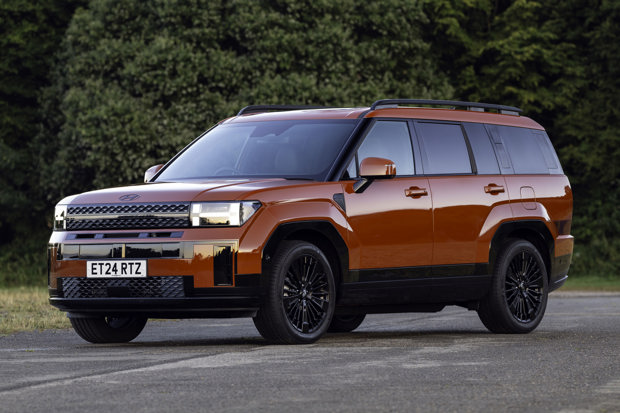
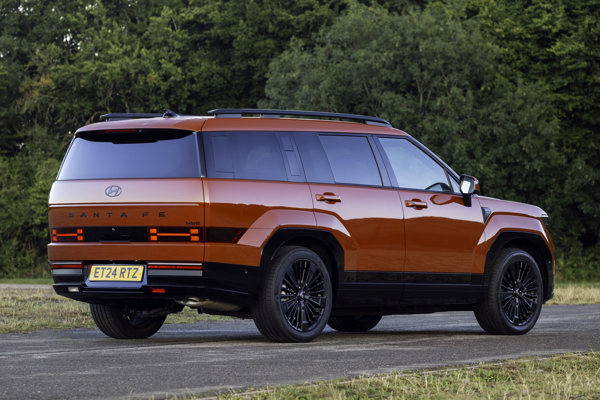
1. Hyundai Santa Fe: best SUV for luxurious 7-seat family travel
Why buy it
- Massive space with a luxury interior and great standard technology
Why avoid it
- "Challenging" exterior looks and awkward touchscreen controls
The latest Hyundai Santa Fe is is a million miles away from the Santa Fe of 20 years ago, a car about which the word "utilitarian" was used a lot. As in, "My car isn’t a cheapy Korean SUV with awful interior plastics, it’s utilitarian."
Today’s Santa Fe is a genuine alternative to a Land Rover Discovery or a Volvo XC90. It’s may seem expensive for a Hyundai but compare it to those two we think it looks a bargain. It also feels worth every pound of the £50,000-odd you’ve spent on it. The looks can be described as 'challenging' but we found the interior fantastic, as is the general refinement. And it has seven seats as standard.
It comes as a plug-in hybrid, so it’s an ideal company car for tax purposes, albeit the cheapest one is a self-charging type. Both use a 1.6-litre turbo petrol engine, the hybrid producing 215PS and the PHEV 253PS with around 35 miles of electric-only range. The PHEV is smooth to drive and ideal for the school run as it runs on EV power at low speeds.
Even the base Premium trim is well-equipped, coming with a 12-inch touchscreen, navigation, digital driver display, heated front seats, adaptive cruise control and wireless smartphone mirroring. We think it's absolutely loads of car for the money.
Read our full Hyundai Santa Fe review
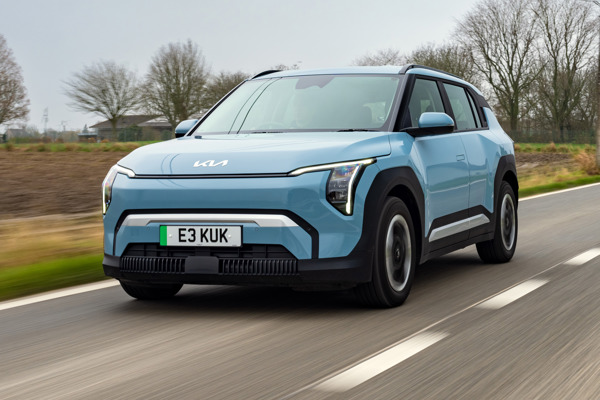
2. Kia EV3: best family SUV for affordable high-tech electric driving
Why buy it
- Long battery range with a stunning design while great value
Why avoid it
- Frustrating door handles and small rear seats
If you remember the sort of stuff Kia used to make, you’ll look at the Kia EV3 and likely be blown away. Amazing, isn’t it? Thankfully it still does what Kias always do well: reasonable price, cost-effective to run, well-built and usefully practical. We love the spacious interior which balances high-tech looks with ease-of-use, rather than being minimalistic for the sake of it and sacrificing intuitiveness in the process.
There are two battery options: Standard Range with a 58kWh battery and Long Range with 81kWh, the latter offering a claimed 375 miles. During our tests we saw around 300 miles but that's still extremely useful, albeit £36,000 is the minimum you'll pay for that battery.
If you don't need that much range, a base car with the 54kWh unit is £3000 cheaper, does (up to) a very impressive 270 miles (claimed) and comes with loads of kit. Dual 12-inch displays, twin-zone air con, wireless phone connectivity and a heat pump for cold weather efficiency. We think it's probably all the Kia EV3 you'll ever need.
Read our full Kia EV3 review
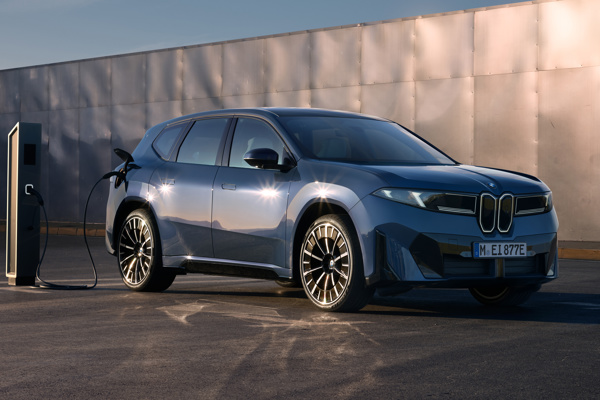
3. BMW iX3: best family SUV for driving enthusiasts wanting an EV
Why buy it
- Incredible handling with premium refinement and fast charging
Why avoid it
- High list prices and large pillar blind-spots
Brand new for 2026, the latest BMW iX3 is more than just a model update - it’s the start of a whole new era of electric cars for the brand. Completely new from the ground up, the BMW iX3 will basically underpin dozens of electric BMWs over the next few years. As we type this it's just been released, so we only have first drives to go on, but we already know that it’s a phenomenal piece of groundwork.
It has huge range (a claimed 500 miles), is stuffed with useful tech, comfy, and yet it's much better to drive than an SUV should be. It actually looks lovely too. That’s not a given for a modern BMW. Or an SUV, actually.
The BMW iX3 represents a company absolutely on the right path. All this said, this level of quality and innnovation isn't cheap. The least you'll pay will be in the mid-£60,000 range, although if this is a company car you'll claw much of that back in running cost savings.
Read our full BMW iX3 review
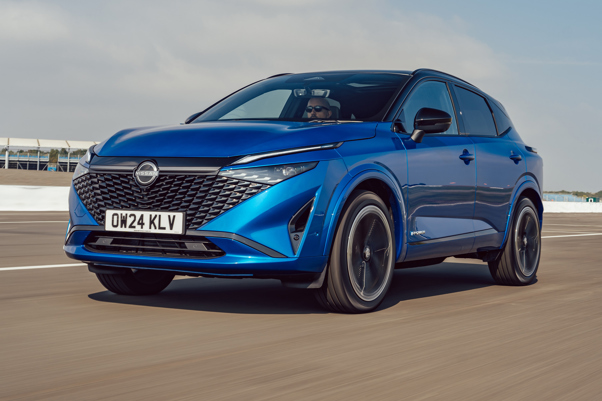
4. Nissan Qashqai: best all-rounder for suburban life
Why buy it
- It's easy to drive, comfortable and has a clever hybrid engine
Why avoid it
- Not very exciting and smaller boot space than rivals
Cars that looked like SUVs but actually weren’t existed before the Nissan Qashqai came along in 2007. But in the same way that Nirvana is credited with inventing the grunge movement, the Nissan Qashqai gets credit because it made its thing very popular and completely changed the game.
In our opinion this third-generation model is the best ever (you’d expect that, but it’s good to know), blending manageable size with good interior space and a high-quality, easily fathomable cabin. It was never the cheapest car and its £35k to £45k price range looks expensive these days for a car that feels so "common", but it is a cost-effective thing to run with cost of three years servicing and tax one of the lowest here.
The mild hybrid petrol models at the base of the range should return 40mpg in real life, while the 62mpg claim of the 'e-Power' models is achievable. Just don't let the Nissan salesperson convince you it's "just like an electric car". It's not, really. It's a hybrid that uses a petrol motor as a generator, with the electric motor doing the driving.
As a family SUV we found it very well designed. The rear doors open to a wide 85-degree angle, making fitting bulky Isofix child seats much easier. The 504-litre boot (depending on trim) isn't the largest in its class but we like the clever Divide-N-Hide shelving system that allows you to organise shopping bags or muddy boots away from the main luggage. Standard safety tech is equally robust, featuring ProPILOT with Navi-link, which can automatically adjust your speed for upcoming junctions, very helpful on the school run.
Read our full Nissan Qashqai review
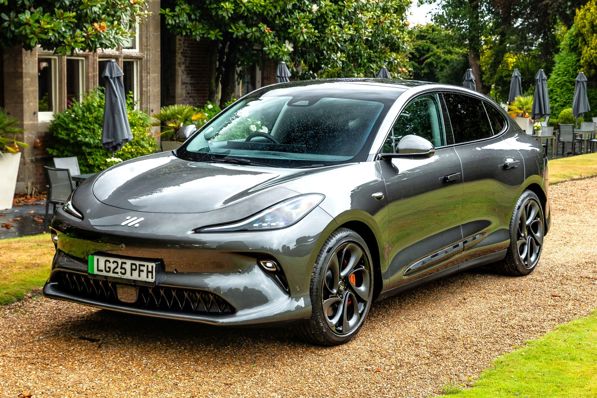
5. MG IM6: best for maximum performance for the money
Why buy it
- Sensational acceleration, a huge boot and fast 20-minute charging
Why avoid it
- Fiddly infotainment and bulky size when parking
The MG IM6 looks like someone gave AI a picture of a Tesla Model Y and said "change this just enough that we don’t get sued." Aston Martin might have something to say about the rear end. And Porsche about the screen between the front seats. Still, it’s enormous and we really like the interior which feels properly plush.
The Long Range version does almost 400 miles (claimed) and the Performance model is as quick as a Lamborghini Huracan. And all this for around £50,000.
It’s FAR from perfect: we found the body control makes a country road feel like you’re crowd surfing and it bongs at you a lot, usually when you’re distracted by its confusing infotainment. The IM6 is charming enough to overcome all its flaws, though.
We found it soft and comfy on the move and it has a genuinely staggering amount of standard equipment. The "basic" car comes with luxuries including heated rear seats, self-parking, ventilated high-speed wireless phone charging, and a 20-speaker stereo... but not adaptive suspension, which is reserved for the top-spec 'Launch Edition", for some reason.
Read our full MG IM6 review
You may also like
- Thinking of going smaller? The 10 best small SUVs for 2026 that still offer great space
- Need even more seats? Our expert guide to the best 7-seaters for 2026
- Looking to save? The cheapest SUVs to buy and run in the UK
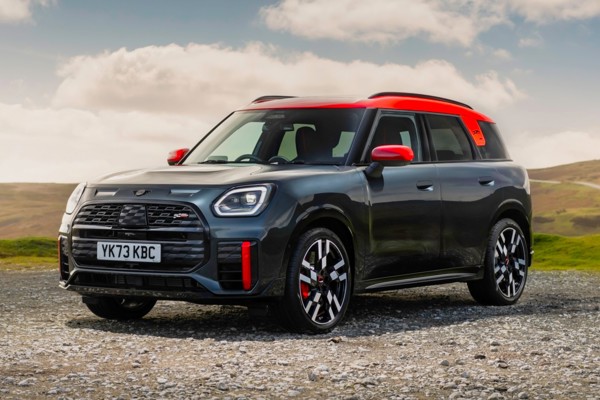
6. MINI Countryman: best for fun handling
Why buy it
- Fun to drive with a unique design and a high-quality cabin
Why avoid it
- Firm ride quality and expensive for its size
Imagine being able to go back in time, find all the people who moaned about the first MINI Countryman being too big and show them this thing. They’d look at you like you’d spat on their Austin Allegro bodywarmer. But for those who don’t give a monkey’s about what the dimensions of a MINI are supposed to be, this Countryman (the biggest ever made) retains MINI’s je ne sais quoi while being a very capable day-to-day family runabout.
That's something the first MINI Countryman could never do - too small. This one, all family-friendly, is great to drive, cheap to run and still has loads of character.
What truly sets the MINI Countryman apart in the crowded SUV market is its digital-first interior. The dashboard is dominated by a 9.4-inch circular OLED display that pays homage to the original Mini speedo while running a high-speed operating system (MINI OS9). For us, the real win is the sliding rear bench, which can move forward or back by 13cm to prioritise either adult-sized legroom or an expanded 460-litre boot.
Surprisingly, prices start below £30,000, which will get you a MINI Countyman Classic with all the kit you really need: alloys, Apple CarPlay, parking sensors all round, and MINI's now-standard circular OLED touchscreen. We'd probably spend a bit more on an S though, which for £35k looks better and adds a useful amount of power (218 PS), so it's that bit more 'MINI' to drive.
Read our full MINI Countryman review
7. Land Rover Defender: best for rugged adventures and status
.jpg?rmode=max&width=601&height=400)
Why buy it
- Unbeatable off-road ability with iconic styling and luxury feel
Why avoid it
- Very expensive options and potential reliability concerns
Land Rover doesn’t enjoy a stellar reputation for reliability, we all know this, but a new and fully warranted up Land Rover Defender is one of the best do-it-all family cars on the planet. Somehow, it manages to eclipse the off-road ability of its predecessor by every metric, while driving near enough like a Range Rover in the comfort and refinement stakes.
It costs a fortune (£60 grand for a base model once you've added an option or two and painted it), it’s a nightmare to park (apart from the little three-door one) and you’ll look like a proper div at the drive-thru. But you won’t care because it makes you feel better than all the little people.
The interior is a masterclass in functional premium. You'll find exposed screw heads and a structural magnesium dashboard beam alongside a crisp 13.1-inch Pivi Pro touchscreen.
We think the true luxury lies in the durability: the cabin features washable rubber flooring and rugged, wipe-clean upholstery that can handle muddy boots and spilled drinks without the stress of marking delicate leather. With the air suspension lowered via buttons in the boot, loading a heavy double-buggy into the cavernous 1075-litre boot(in 5-seat mode) is significantly easier on your back
The trim levels are myriad and utterly baffling, but essentially, you'll need a higher-spec one and a trim pack or two for it to feel like a true luxury car. The Signature Interior Pack adds leather and heated/cooled seats, albeit that is an extra £3000. Which tells you how much you can actually spend on one of these. Fun fact: a Defender Octa with a twin-turbo V8 lists at £145,000. **something about a Premier League footballer**
Read our full Land Rover Defender review
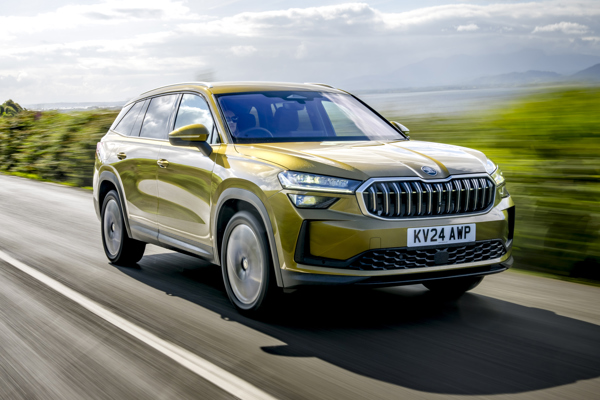
8. Skoda Kodiaq: best for practicality and sheer boot space
Why but it
- Enormous boot with a practical interior and a great engine range
Why avoid it
- Expensive in higher trims and firm second-row seats
The Skoda Kodiaq is one of the most accomplished and all-encompassing family cars on the market. It’s available with five- or seven seats, with an engine range of frugal petrols and diesels and even a high-performance, turbocharged vRS model. The latter is a hot hatch but taller and with 265PS it can cover 0-62mph in 6.4 seconds. Two‑ and four‑wheel‑drive models are available and all versions are spacious, comfortable to ride in and drive with a sense of cultured refinement.
Practicality remains the Kodiaq's trump card. In five-seat mode, it boasts a huge 910-litre boot, which we found large enough to swallow a camping trip's worth of gear. For 2026, the engine lineup is more diverse than ever, featuring a Plug-in Hybrid (iV) that offers an impressive real-world electric range of over 60 miles, great for our school run and local shopping tests.
We're also big fans of the trademark Skoda Simply Clever touches that make daily life easier: a hidden umbrella in the driver’s door, an ice scraper in the fuel flap and even a dedicated screen cleaner tucked into the center console to keep that 13-inch display smudge-free.
Main trims are SE, SE L, and Sportline, with £37k getting you a base car featuring a 12‑inch Virtual Cockpit, touchscreen infotainment, LED headlights, alloys and proper climate control. The plug‑in hybrid offers a claimed 60 miles of electric‑only range. It's expensive to buy (from £41,000) and nowhere near as efficient as the 188mpg WLTP figure suggests, but it makes a very tax‑efficient, high‑quality, almost entirely anonymous company car for an attention‑shy family buyer.
Read our full Skoda Kodiaq review
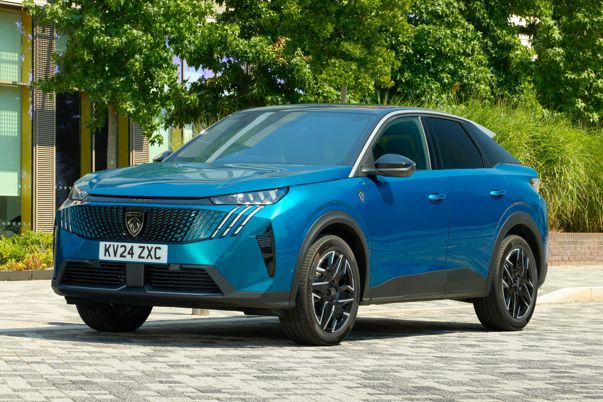
9. Peugeot 3008: best family SUV for the style conscious
Why buy it
- Striking coupe-SUV looks and high-end interior quality
Why avoid it
- Cramped rear legroom and frustrating touchscreen menus
Lots of space, lovely to drive and a cabin that’s both high quality and truly unique (well, apart from the other Peugeots, obvs), we think the Peugeot 3008 is possibly the best "non-premium" family SUV car on the market. Although that said, the Peugeot 5008 does basically the same thing but with a bigger boot and two additional seats… so maybe we should have chosen that?
Oh well, the Peugeot 3008 is cheaper but still available with petrol engines or as a proper electric car. We found the latter is the best one, because it can do 300 miles on a charge and it’s much quieter.
Prices start from about £35,000 for the 1.2 Hybrid 136 in Allure trim, with GT versions costing around £38,000. The plug-in hybrid comes in around £41,000, offering electric range of around 50 miles, while the EVs start near £46,000 and go up towards £52,000 for Long-Range models.
Expensive, yes, but a long-range Peugeot 3008 does a claimed 435 miles on a single charge, making it one of the most motorway-friendly EVs on sale today. There's a good chance you'll get from Newcastle to Big London in a single shot in one, which is quite remarkable. Assuming you actually want to do that, of course.
Read our full Peugeot 3008 review
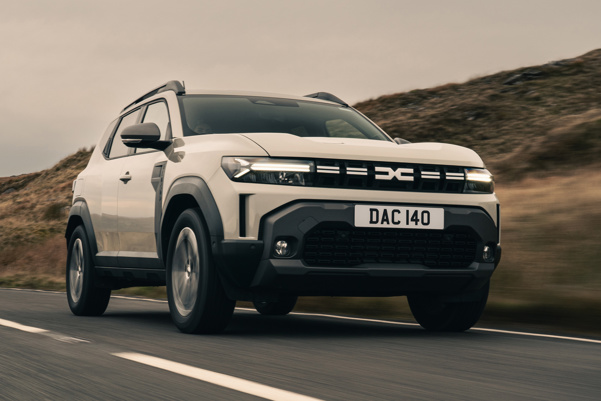
10. Dacia Duster: best family SUV for budget-conscious utility
Why buy it
- Unbeatable price with rugged build and improved modern technology
Why avoid it
- Low safety ratings and noisy at higher speeds
The Dacia Duster is one of the most affordable SUVs on sale. That's a huge part of its charm, the other part being how practical and roomy it is. Trim levels are straightforward: the basic Essential version gets steel wheels and no touchscreen.
Most people avoid that one, though, because for not much more than its £19,000 price, a Journey car adds 18‑inch alloys, automatic air con, keyless entry, wireless phone charging, touchscreen navigation, and heated front seats. It feels like a 'proper' car, in other words. For a mere £2500 premium. It's the one we'd recommend.
Four-wheel-drive versions are available on certain petrol and diesel engines, if you need that sort of thing, but either way, the Dacia Duster’s appeal is straightforward utility, robust practicality and unbeatable starting prices for a new SUV. Or for not much more money, you could get the newer, bigger and ridiculously named Dacia Bigster.
Read our full Dacia Duster review
How we test cars: Our 2026 family SUV methodology
At HonestJohn we don’t just look at manufacturer spec sheets, we live with these cars to see how they handle the chaos of real family life. For this 2026 guide, our editorial team of experienced and expert testers put each SUV through a rigorous real-world assessment involving:
-
The school run test: We assess visibility, ease of parking in tight urban spaces and how quickly the cabin warms up or cools down on short trips.
-
The boot challenge: We don't just measure litres. We physically test each boot with a double-buggy, a week’s worth of family shopping and (if we cab) a medium-sized dog. Or occassionally a dachshund.
-
Isofix and seating: We install various child seats (Group 0+ to Group 3) to check the accessibility of Isofox points and whether three children can actually sit abreast in the second row.
-
Real MPG & efficiency: We compare official WLTP figures against our Real MPG database, which contains over 150,000 data points from real UK owners.
-
Tech & connectivity: We test how intuitive the infotainment is while driving, prioritising physical buttons over fiddly touchscreens and check the charging speed of on-board USB ports.
-
Long-term durability: We consult our Satisfaction Index and review data to see how these SUVs hold up after three years of ownership, not just three days of testing.
Frequently asked questions about family SUVs
Which family SUV is the most reliable for 2026?
According to the latest Honest John Satisfaction Index, the Skoda Karoq remains the top-rated family SUV for reliability, followed closely by the Toyota Yaris Cross. Japanese and Korean brands continue to dominate our reliability charts, with Toyota and Hyundai owners reporting the fewest mechanical issues over a three-year ownership period.
Is a 7-seater SUV better for a family than a 5-seater?
A 7-seater, such as the Skoda Kodiaq or Hyundai Santa Fe, offers much greater flexibility, but there is a trade-off. They are typically heavier and more expensive to run. If you only need five seats daily, a 5-seater like the Nissan Qashqai will offer better fuel economy and easier parking. However, 7-seaters often have much larger boots when the third row is folded flat.
Can I fit three child seats across the back of a family SUV?
This is a common challenge. Most mid-sized family SUVs struggle to fit three full-sized Isofix seats side-by-side. For the best chance of success, look for SUVs with three individual rear seats rather than a 60/40 bench. The Peugeot 5008, Citroen C5 Aircross and the Audi Q7 are among the few that can comfortably accommodate three child seats in the second row.
What is the best family SUV for fuel economy in 2026?
If you aren't ready for a full electric vehicle, the Toyota Yaris Cross is the Real MPG champion, often returning over 65mpg in mixed driving. For those who can charge at home, plug-in hybrids (PHEVs) like the Volvo XC60 Recharge offer over 40 miles of electric-only range, potentially bringing your fuel costs down to near zero for school runs.
Are electric family SUVs expensive to insure?
Insurance premiums for electric SUVs have stabilized in 2026, but they are still generally higher than petrol equivalents due to higher repair costs. For example, a Kia EV3 typically sits in a higher insurance group than a petrol Nissan Qashqai. Always check the insurance group — ranging from 1 (cheapest) to 50 (most expensive) — before committing to a purchase.
Which family SUV has the biggest boot?
The Land Rover Defender 130 and Hyundai Santa Fe lead the class for outright volume. However, for sheer practical value, the Skoda Kodiaq offers a massive 910-litre boot (in 5-seat mode), which is significantly larger than many premium SUVs that cost twice as much.
Which SUV is best for families?
Space is generally what family SUV buyers are looking for, obviously. However, it’s not just about space on the inside – relatively compact dimensions on the outside make SUVs less of a headache when doing the shopping or the school run. This is where models such as the Nissan Qashqai excel. But if you need extra seating, then look towards bigger cars like the Skoda Kodiaq, SEAT Tarraco and Hyundai Santa Fe.
Which family SUV offers best value for money?
The bargain-priced Dacia Duster, the good-value Skoda Kodiaq or even the premium-priced Volkswagen Tiguan all offer great value for money in their own ways. The Kia Sorento and Hyundai Tucson are two more family SUVs that are great value for money, particularly when you take their long warranties into account. SImilarly MG, whose ZS and HS models offer loads of space and equipment for the cash.
Can you get a seven-seat family SUV?
Most family SUVs are offered with five seats. But some come with three rows of seats and space for seven. The SEAT Tarraco is a seven-seat alternative to the smaller Ateca, for example, while Volkswagen sells a seven-seat version of the Tiguan called the Allspace. The Skoda Kodiaq comes with five or seven seats, and the Kia Sorento has seven as standard. You can also get a seven-seat alternative to the Peugeot 3008, the 5008, which is identical to the 3008 from the rear seats forwards.
