
BYD Sealion 5 Review 2026
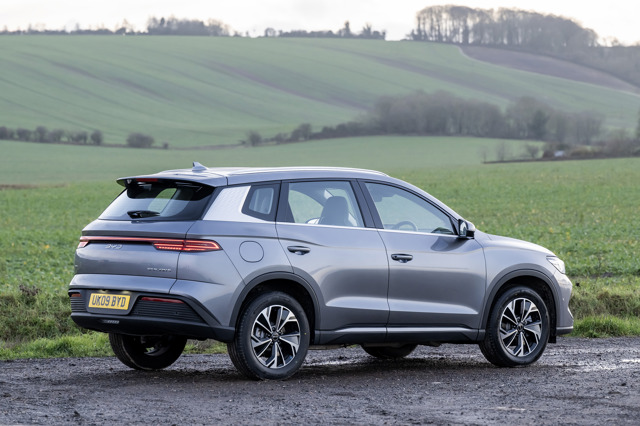

BYD Sealion 5 At A Glance

 Well equipped considering the price. Reasonable electric-only range. Handles better than other BYD models.
 Rides too firmly. Plug-in hybrid system is very slow to respond. Over-reliance on fiddly touchscreen.
With its BYD Sealion 5, this Chinese brand faces its toughest test yet as it takes on a multitude of popular family-sized SUVs. Can it possibly compete with some of the most popular cars on sale in the UK? It helps that it undercuts them on price, but in some ways this is a case of 'you get what you pay for' car. We explain all in our full BYD Sealion 5 DM-i review.
We might as well deal with this first. Yes, the car you're reading about here is called the BYD Sealion 5. No, we don't think that's a very good name, but the Chinese car brand does have form here. In fact, it has a whole Ocean Series of cars incorporating various Dolphin and Seal models, as well as a larger Sealion.
That's the all-electric BYD Sealion 7, but the Sealion 5 is only going to be sold as a plug-in hybrid — or DM-i, for Dual Mode Intelligent, in BYD-speak. An electric version is sold in China but it remains to be seen if that will also make its way here.
The Sealion 5 is not quite as new as you might think, being much the same as the BYD Song Pro, which first went on sale in China in 2019.
The BYD Sealion 5 will be targeting some of the best-selling family SUVs around. It will need to tempt buyers away from well-established rivals, including the Hyundai Tucson, the Kia Sportage and the Nissan Qashqai, all of which made the UK's top 10 selling cars list in 2025.
Also making the top 10 was the Volkswagen Tiguan, although its better value cousin, the Skoda Karoq, is a closer rival to the BYD given its pricing.
Prices for the BYD Sealion 5 start at a fiver under £30,000, reflecting its maker's value-focused strategy since it arrived here in 2023. That means there's a generous amount of standard equipment for the money.
One problem for the Sealion 5 could come from a newer Chinese brand. The Chery Tiggo 7 also offers a lot of gear and a plug-in hybrid system for exactly the same price. What's more, there's an even cheaper non-hybrid version, which could prove tempting for those whom a PHEV doesn't suit the needs of.
Also from China is a further newcomer in the shape of the Geely Starray, a PHEV which is also nearly identically priced to the BYD.
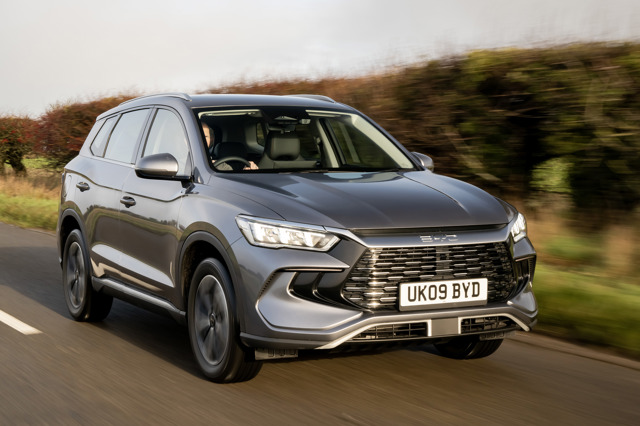
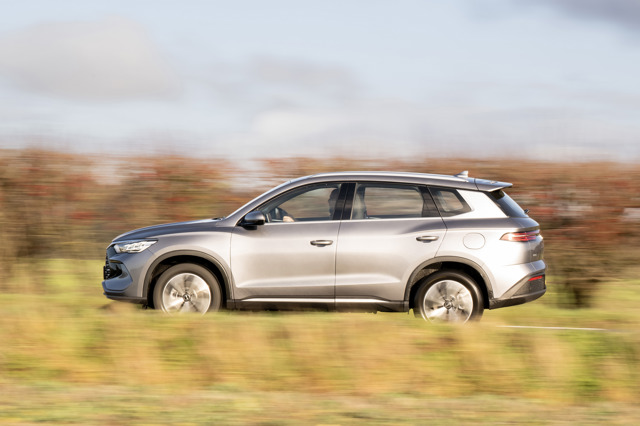
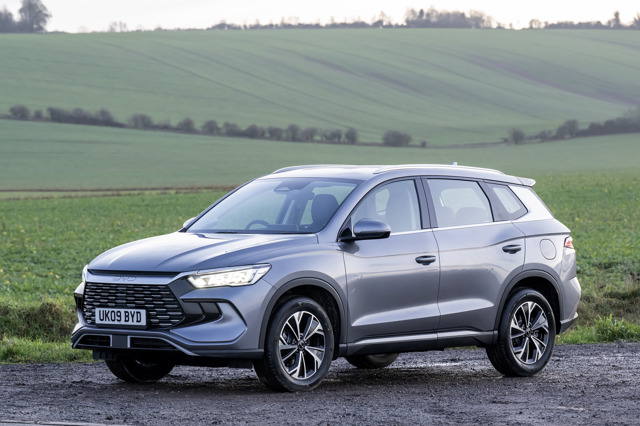
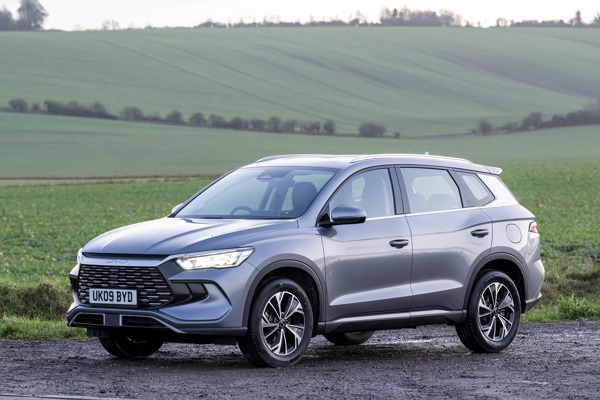
At 4738mm long, the BYD Sealion 5 is a bit larger than several of the cars it's having a pop at, somewhere between the Tucson and its bigger Hyundai Santa Fe sibling, to give you some idea.
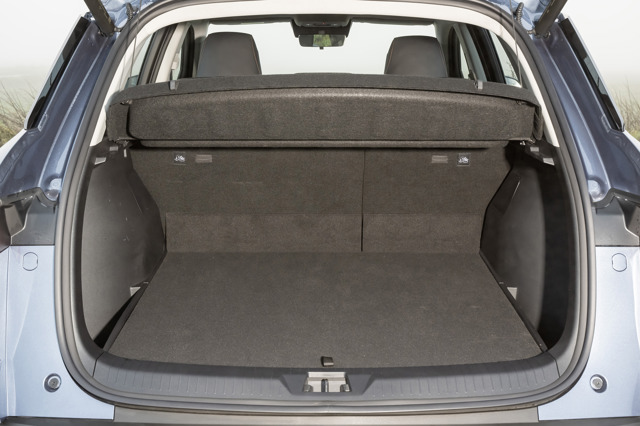
The 463 litres of boot space is underwhelming considering the Sealion 5's generous proportions, but you do get a healthy amount of rear legroom. BYD claims the car has 'class-leading levels of interior space', although it hasn't specified by what metrics.
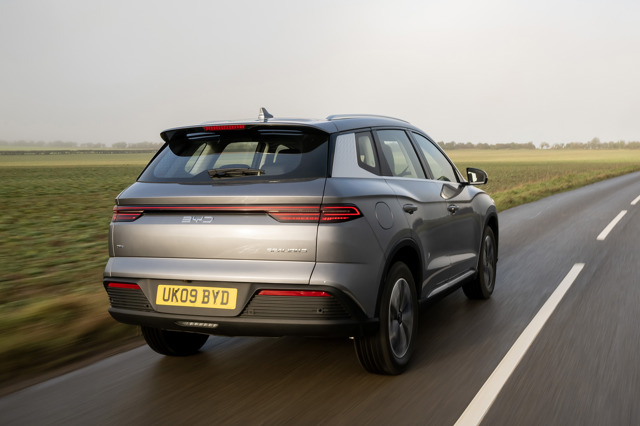
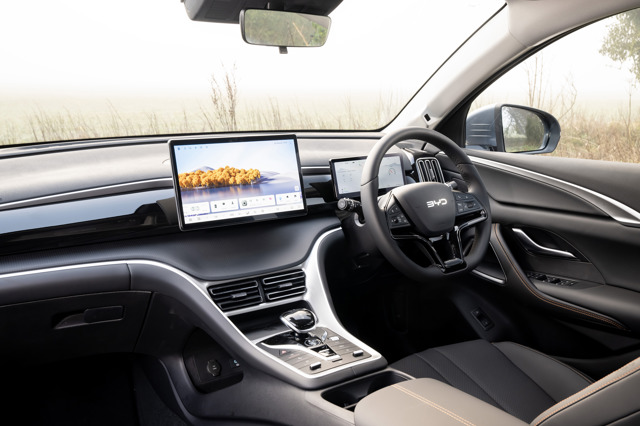
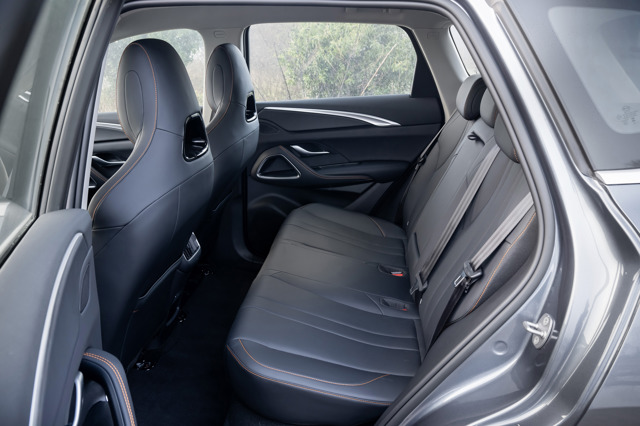
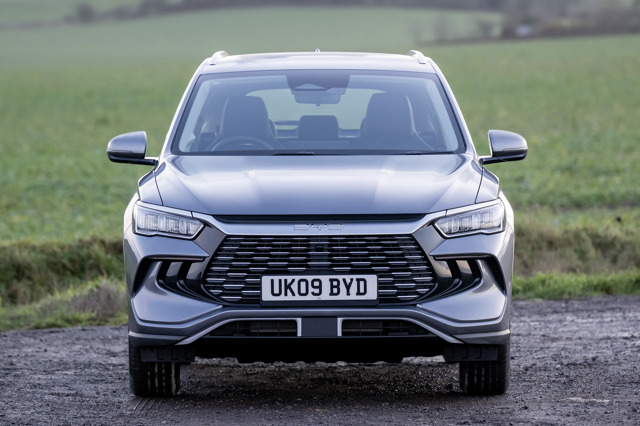
Its interior features a sleek, minimalistic design, although the quality of materials doesn't exactly have much wow factor. The exterior doesn't do much for us, either. It's generic from some angles and fussy from others. Not ugly, but not exactly handsome either.
The price of the Sealion 5 makes all of that easier to accept, but those aren't the only compromises that come with the savings. The ride comfort ought to be better, the plug-in hybrid system is slow to respond and at times noisy, and the infotainment system can be a pain. This car isn't a no-brainer, and comes with some foibles that must be carefully considered before you decide if they're worth the extra money in your pocket.
BYD Sealion 5 DM-i: Range and charging times
The official electric-only driving range of the BYD Sealion 5 DM-i Comfort is 38 miles, while the Design manages 53 miles. That difference is due to battery size with the Comfort's 12.96kWh pack being trumped by the Design's 18.3kWh unit. For comparison, the Chery Tiggo 7 is good for 56 miles.
Curiously, the Sealion 5 can only recharge at a maximum AC rate of 3.3kW rather than the usual 7.4kW which most UK home wallboxes are able to supply. This means that for a 15-100% recharge it will take around 4 hours 30 minutes for the Comfort and approximately 6 hours for the Design version.
Reviews for BYD Sealion 5's top 3 rivals


BYD Sealion 5 handling and engines

BYD Sealion 5 2026: Handling and ride quality
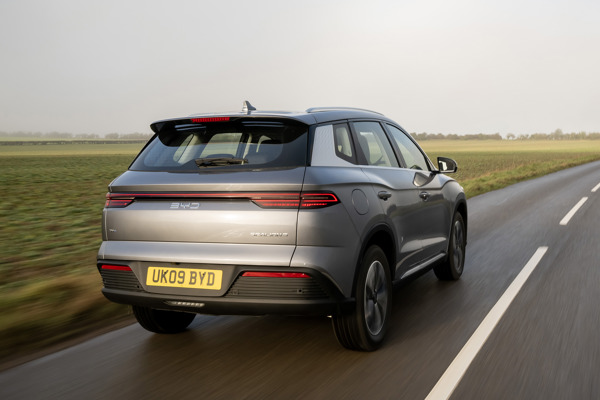
The BYD Sealion 5's handling feels like a step in the right direction for the brand. It's more tied down than other models, such as the BYD Seal 6 and doesn't suffer from an unsettled ride, generally remaining unflustered over undulations in the road surface.
It's more than competent enough being driven enthusiastically along twisty country roads or around roundabouts, with a perfectly acceptable amount of body lean and plenty of grip.
The Sealion 5's steering is particularly numb, offering little in the way of feedback from the road surface. Traction can be limited if you're pulling out of a side turning with a lot of throttle, with the front wheels spinning until the crude traction control intervenes, only to spin-up once again.
While it settles well over lumps and bumps, the Sealion 5 is surprisingly firm compared with rivals, including the Hyundai Tucson. Even on what appear to be smooth roads, it seems to find the lightest of imperfections in the asphalt, sending it shuddering through the cabin.
We even heard a massive thud at one point when the suspension hit the bump stops — indicating the springs couldn't compress further — when going over what looked like a modestly sized pothole.
Refinement could also be better. At lower speeds there's a surprising amount of tyre noise, while when cruising at 70mph insulation from wind noise is only just about adequate.
BYD Sealion 5 2026: Engines
Both versions of the BYD Sealion 5 DM-i use the same 1.5-litre, four-cylinder petrol engine and an electric motor to give a combined output of 212PS and 300Nm.
As the Design model has a larger capacity battery, it's also heavier at 1785kg compared with 1724kg for the Comfort. That difference is sufficient to make it slower in the 0-62mph dash, taking 8.1 seconds while the Comfort manages the same in 7.7 seconds. Neither figure is particularly special, but that should be more than enough performance for most. The top speed of each is the same at 106mph.
Most of the time, the motor powers the front wheels, with the engine working as a generator to keep the battery topped up. The engine can also directly power the front wheels if the driving situation demands it.
At full throttle, the Sealion 5 feels a touch slower than those numbers suggest it might. It doesn't help that on the move, it takes several seconds for the engine to kick into life and offer its assistance. Up until that point, the motor is left to do the job on its own, with the speed gathering at a glacial rate.
When the engine does finally kick in, you're in for a noisy time, with the revs staying high and blaring into the cabin with the sound of a petrol engine that doesn't sound terribly happy about being woken up. It's not so bad with more moderate applications of the accelerator pedal.
With the Sealion 5 so heavily biased towards electric running, it is generally a smooth car to drive around in if you don't need to accelerate hard.
BYD Sealion 5 2026: Safety
There's no Euro NCAP rating for the BYD Sealion 5 just yet. While there's no guarantee it will match them, every BYD model the safety body has tested so far has achieved the full five-star rating.
As standard, all versions of the car get adaptive cruise control, lane-keeping assistance, blind-spot detection, front and rear collision warnings, traffic sign recognition, autonomous emergency braking, a driver attention monitor and seven airbags.
You may want to turn the driver attention monitor off, though. We found it to be extremely sensitive, to the point where it'd go off every few minutes at even the briefest look away from the road.
BYD Sealion 5 interior
BYD Sealion 5 2026: Practicality
Behind the BYD Sealion 5's rear seats is 463 litres of luggage space. These fold in a 40/60 split to open up 1410 litres of boot volume. Neither figure is particularly impressive compared with its rivals, particularly considering the Sealion 5 is bigger than them.
The Chery Tiggo 7 is one of the less capacious options among family SUVs, but it still does better than the BYD at 488 litres, while the Hyundai Tucson easily beats both with its 558-litre capacity.
BYD boasts that the Sealion 5's 2712mm wheelbase 'helps to deliver excellent rear legroom'. While that is longer than the wheelbases of the Tiggo 7 and the Nissan Qashqai, it's marginally shorter than the Tucson's. In any case, rear legroom is supplied in abundance, as is headroom.
There's a large storage area underneath the centre console, plus a small storage tray on top of it, which doubles as a wireless phone charging pad on Design models. There's also a lidded cubby under the central armrest with two cupholders ahead of it.
BYD Sealion 5 2026: Quality and finish
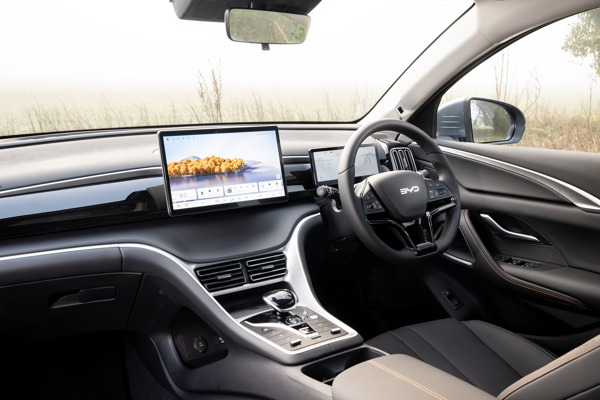
Having been impressed with the cabin quality of other its other models, the BYD Sealion 5 somewhat disappointed.
Some of the materials used feel pleasingly upmarket, but the massive slab of creaky, shiny black plastic spanning the dash brings things down a notch. The silver-finished trim bordering the dashboard also has a poorly lined-up join.
Would some lighter tones go amiss? As it stands, the Sealion 5 is dreary inside.
BYD Sealion 5 2026: Infotainment
All versions of the BYD Sealion 5 come with an 8.8-inch digital instrument cluster and a 12.8-inch infotainment touchscreen.
BYD has become known for its screens that rotate between landscape and portrait modes, but you don't get that functionality here, because it's fixed in a landscape position. The change is in response to customer feedback, which is fine by us. The rotating versions always felt like a gimmick and work better in landscape mode anyway.
Unfortunately, you do need to use the touchscreen to adjust the climate control's settings, but that isn't to single-out BYD for criticism here, because it's common across many cars. You do at least get shortcuts for the temperature of each climate zone permanently displayed along the bottom of the screen, although they're not very big, which makes them tricky to use on the move.
Changing the heated seats fitted to Comfort models requires multiple screen prods. Although it is possible to add a shortcut to a menu accessed by swiping from the top of the screen, this is still more faff than had BYD just fitted a physical button for it somewhere.
Also, if you are on the climate or heated seat screen and want to get back to your mobile phone connectivity, you need to press a tiny little icon in the top right that's both hard to see and to press when you're driving.
This theme continues with the 8.8-inch digital instrument cluster. That's a decent enough size, but the screen's reasonable real estate is poorly utilised. A large portion of the screen is taken up by lane assistance information showing where other cars are in relation to you, leaving everything else condensed to the outer edges in a small font. The speed reading is a bit bigger, but not enough.
The Sealion 5 has two pairs of USB-C ports (18W and 60W) — two for front-seat passengers and two for those in the rear.
BYD Sealion 5 value for money

BYD Sealion 5 2026: Prices
Prices for the BYD Sealion 5 DM-i start at £29,995 for the Comfort model, while the larger battery and elevated equipment levels push the Design version up to £32,995.
In terms of the competition, the Hyundai Tucson starts at £33,105 but jumps to £39,410 for the cheapest plug-in hybrid version. The Nissan Qashqai, which doesn't have a PHEV to choose from, is upwards of £30,615. Those cars are all a lot nicer to drive than the Sealion 5, though, and the onboard tech in each is much less annoying.
The most affordable plug-in hybrid version of the Chery Tiggo 7 also costs £29,995, while the Geely Starray EM-i nips in below both at £29,990. Although we haven't driven the Geely yet, we do know that the Chery comes with similar compromises to the Sealion 5 that are worth bearing in mind before you get too sucked into the low price.
BYD Sealion 5 2026: Running Costs
It'll be the same £195 a year for Vehicle Excise Duty (VED) on the BYD Sealion 5 as any other car, while its pricing ensures it's not close to the £40,000 for the additional Expensive Car Supplement.
There are two official fuel economy figures for both versions of the Sealion 5 you should be particularly interested in. One is the weighted WLTP Combined cycle figure, which assumes greater use of the car's electric-only running.
You are looking at 104.6mpg for the Comfort version with its smaller battery and 134.5mpg for the Design. Over longer distances, it'll be easier to replicate the regular WLTP figure, which is 53.0mpg for both cars.
Using Ofgem's current 27.69p/kWh price cap as a guide, a full recharge of the Sealion 5 Comfort's battery will cost £3.59 and £5.07 to do the same to the Design's. You could slash those figures by getting onto a variable rate electricity tariff and timing your charging sessions to coincide with cheaper off-peak periods.
Satisfaction Index
 What is your car like to live with?
We need your help with our latest Satisfaction Index, so that we can help others make a smarter car buying decision. What's it like to live with your car? Love it? Loath it? We want to know. Let us know about your car - it will only take a few minutes and you could be helping thousands of others.
Help us with the Honest John Satisfaction Index nowBYD Sealion 5 models and specs
The BYD Sealion 5 is offered in two levels of specification — Comfort and Design. Along with its additional equipment, the Design also has a larger capacity battery.
The BYD Sealion 5 DM-i Comfort comes with the following as standard:
- 18-inch alloy wheels
- LED front and rear lights
- 8.8-inch digital instrument cluster
- 12.8-inch infotainment system
- Electrically adjustable front seats
- Rear parking sensors
- Rear parking camera
- Vehicle-to-load capability
The BYD Sealion 5 Design builds on the above with:
- Electrically operated tailgate
- Heated front seats
- Front parking sensors
- 360-degree camera
- Wireless smartphone charging pad
Model History
January 2026
BYD Sealion 5 DM-i prices and specs confirmed
BYD has announced full prices and specs for the new Sealion 5 DM-i. The small SUV is the firm's ninth model offered on the UK market, and prices start at £29,995. The Sealion 5 is available to order now, with the first examples arriving at dealers on 7 February.
Two trim levels are offered - Comfort and Design - with the entry-level Comfort model including 18-inch alloys, automatic LED headlights, rear parking sensors and a rear-view camera, and heated door mirrors.
All infotainment needs are handled by a 12.8-inch touchscreen that features Apple CarPlay and Android Auto, plus 4G connectivity and voice control. A further 8.8-inch LCD panel delivers digital dials.
Design trim adds welcome lights, an electric tailgate, front parking sensors, a 360° camera system, wireless smartphone charging and heated front seats.
All Sealion 5s are powered by BYD's 212PS plug-in hybrid powertrain that combines a 1.5 petrol engine with an electric motor. Comfort models get a 12.96kWh battery, giving a fully electric mode range of 38 miles, while Design models have a larger 18.3kWh battery for a range of 53.4 miles. Both models include a 3.3kW on-board charger and Vehicle-to-Load (V2L) technology.
BYD Sealion 5 DM-i prices
Sealion 5 DM-i Comfort £29,995
Sealion 5 DM-i Design £32,995
