
BYD Seal 6 Review 2026

BYD Seal 6 At A Glance

 Spacious cabin and boot. Airy, comfortable interior. Lots of standard features.
 Fidgety ride. Maddening over-nannying safety system. Gutless entry-level engine.
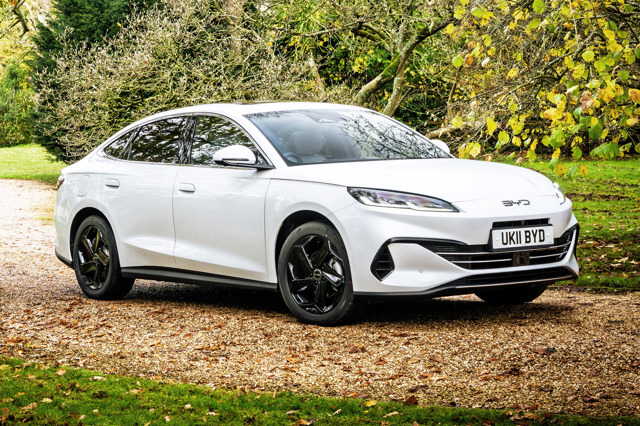
Yet another BYD model named Seal (after the BYD Seal and the BYD Seal U) the BYD Seal 6 is a plug-in hybrid which shuns the trend for SUVs by offering buyers a choice between a saloon or an estate. Available with BYD's unusual DM-i plug-in hybrid system and priced from £34k, it is, on paper, a cut-price rival for the likes of the Skoda Superb, the Toyota Corolla and the Volkswagen Passat. But is it good value for money? Our BYD Seal 6 review will explain all.
We've seen BYD's DM-i tech before – it's also used in the Seal U – and it's worth noting that it's not like other PHEVs. Its 1.5-litre petrol engine has been developed especially for the plug-in hybrid. There's a battery (10Wh or 19kWh depending on which version you go for) and an electric motor, which is the primary method of propulsion.
The engine, with only 98PS, is basically there to help out when the battery runs out, although it can directly power the wheels, which means it's not a range-extender. BYD says the entry-level model can manage up to 31 miles on a fully charged battery while the bigger battery will manage 65 miles.
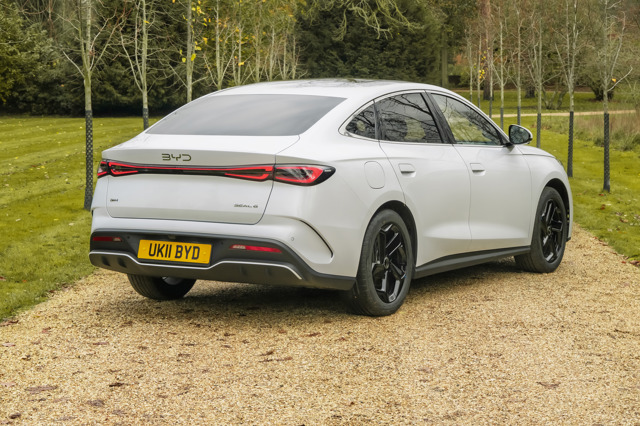
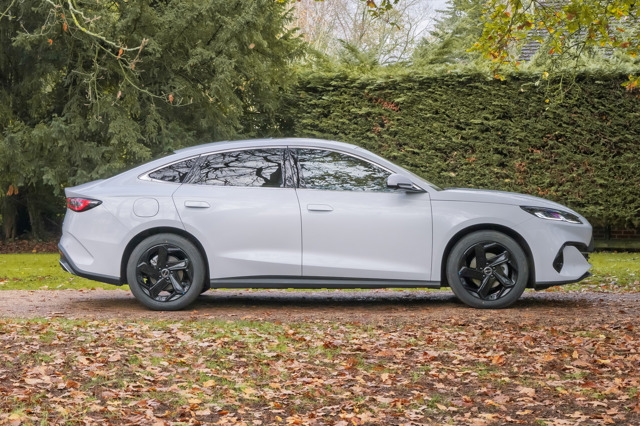
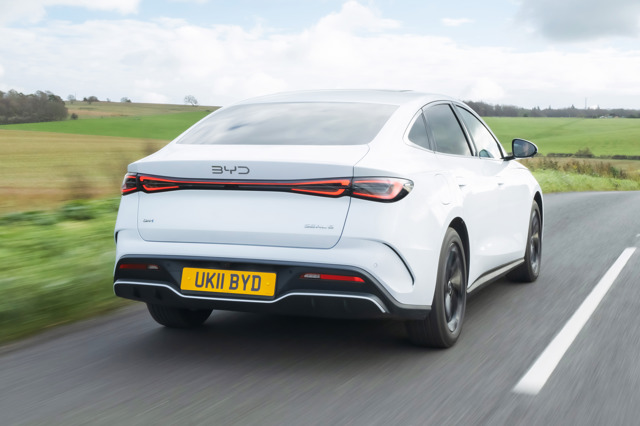
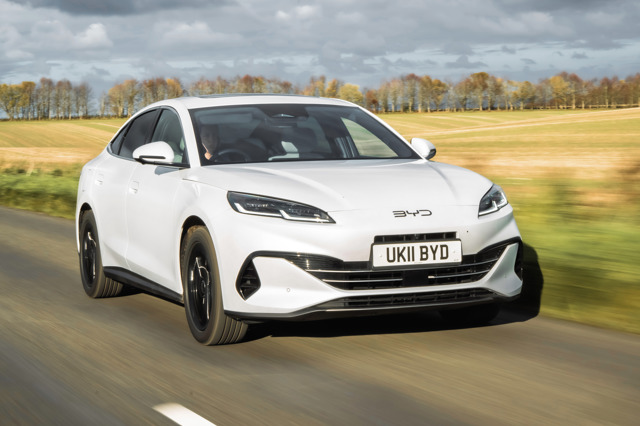
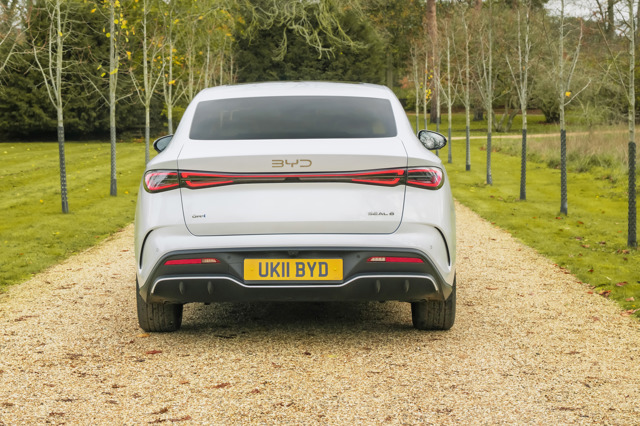
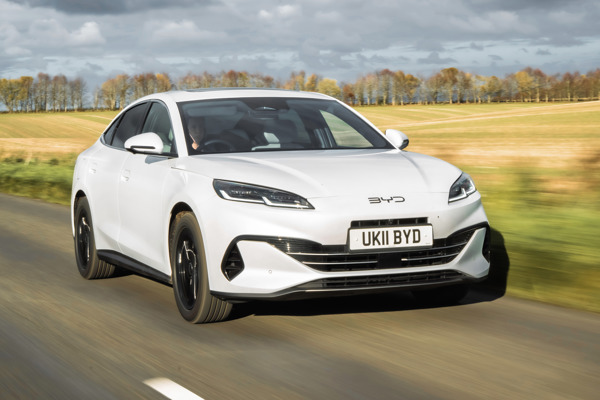
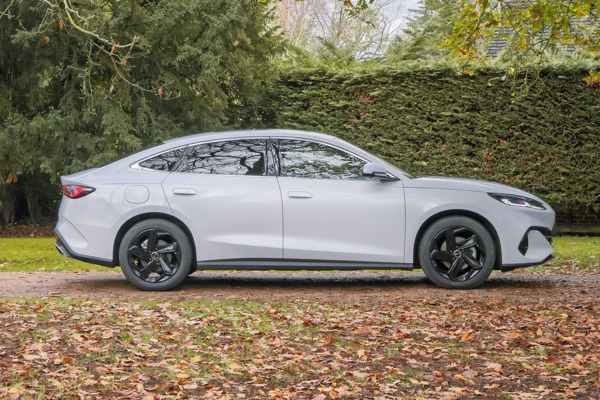
Looks-wise, the BYD Seal 6 follows the same ocean-inspired design used in other BYD models (in case the Seal name didn't tip you off).
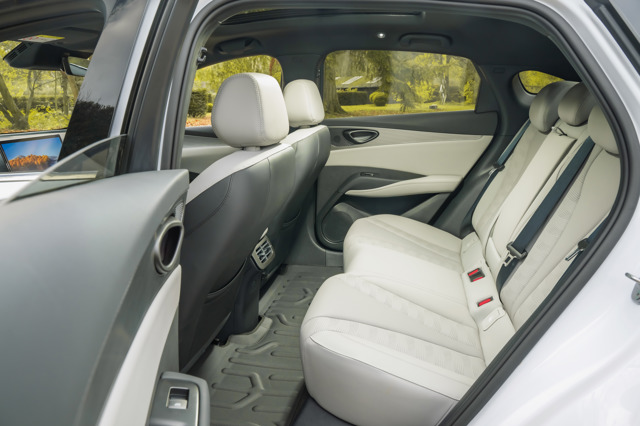
Inside, there's plenty of space for five and a decent boot. Build quality feels good and there's loads of equipment across the range. However, the driving experience is unremarkable with a ride that can be unsettled while the handling is competent but lacklustre.
Prices for the BYD Seal 6 DM-i start at just under £34,000. There are two trim levels – Boost and Comfort – although there are a few Comfort Lite models being sold early on, which is identical to the Comfort save for a smaller screen.
The Comfort model carries a £3000 premium but has almost double the EV range at 65 miles. If you want any paint colour other than Polar White, you can whack on another £1100. Still, that's still a very attractive price considering the amount of equipment included.
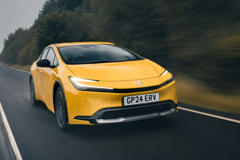
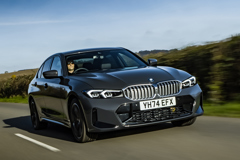
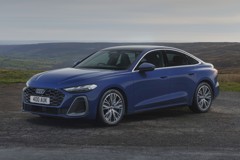
Direct rivals are few and far between. The Toyota Prius is similarly priced but smaller while the Audi A5 e-hybrid costs considerably more. Both are also technically hatchbacks. The BMW 330e is a saloon but, like the Audi, has a higher starting price.
All that said, there is a reason it's not as pricey as some rivals. Certain plastics betray its budget and some of the ergonomics could be better thought out. These are minor quibbles though. Of more importance, is the underwhelming driving experience. Even so, this is a lot of car for your cash.
BYD Seal 6: Range and charging
| BYD Seal 6 Boost | 34 miles |
| BYD Seal 6 Comfort | 65 miles |
The entry-level BYD Seal 6 Boost gets a 10kWh battery giving it an official range of 34 miles, which is pretty reasonable for a PHEV. It has a 3.3kW on-board charger so only takes a few hours to charge the battery from empty.
However, thanks to its impressive range of 65 miles, the Comfort model is the one to go for. It has a bigger 19kWh battery but a faster 6.6kW on-board charger means similar charging times to the Boost.
Reviews for BYD Seal 6's top 3 rivals


BYD Seal 6 handling and engines
BYD Seal 6 2026: Handling and ride quality
The handling and steering of the BYD Seal 6 are vague while the ride is somewhat fidgety and unsettled, even over relatively well-finished road surfaces. However, this is not pretending to be a sporty car, or something for enthusiasts.
Yes, the BYD Seal 6's German rivals are better to drive by some margin. But they're also a lot more expensive and we suspect a lot of BYD's prospective customers will find the experience acceptable when they factor in the savings. Overall though, it feels slightly undercooked.
For general cruising, the way the BYD Seal 6 feels on the road is more than adequate. The steering is certainly not the last word in precision or engagement, but there's enough communication with the front wheels to know what's going on. It feels stable at speed making it a decent motorway cruisier while the weight of the steering is light enough for easy progress around town.
Ride quality is a mixed bag. It's fidgety and unsettled over lumps and bumps at low to mid speeds. But is it uncomfortable? No, it's just a bit unrefined and unsophisticated. Yes, it lacks the polish of a BMW, but then it also lacks the higher price.
BYD Seal 6 2026: Engines
There are two engine options, both of which comprise a 1.5-litre petrol engine paired with an electric motor and battery pack. Unlike many other traditional PHEVs, the BYD setup is biased towards electric driving, with the engine acting as a backup (although because it can drive the wheels directly, it's a PHEV rather than a range extender).
There are pros and cons to this approach. On the plus side, it feels like an EV at lower speeds, with a quiet and smooth operation plus instant torque from the electric motor.
We did find the front wheels scrabbling for grip when moving away from junctions – something that could potentially be fixed by a software tweak – but overall it makes for a good urban runabout, which also suits the nature of a PHEV.
Things are less impressive when the petrol engine kicks in. The more powerful version, with a combined 212PS, isn't too bad when it comes to punchy acceleration, but the 184PS model feels pretty gutless when you put your foot down and feels less powerful than its official specs suggest.
Most of the time this isn't a massive issue, but it's particularly noticeable when trying to get up to speed on a motorway, or if you're considering an overtake.
BYD Seal 6 2026: Safety
The BYD Seal 6 was given a maximum five-star rating by independent safety organisation Euro NCAP in 2025, with strong scores across the board – 92% for adult occupant safety, 90% for child occupant, 84% for vulnerable road users and 85% for safety assist.
Safety systems include front and rear parking sensors and a plethora of cameras for manoeuvring plus rear cross-traffic alert, blind-spot detection, adaptive cruise control and more.
However, during our test drive of two different models we found the distraction detection system to be particularly overbearing, barking at us to keep our eyes on the road even when our attention was firmly directed in the correct place. Ironically, it became a distraction itself. This seems something that could be fixed with a software update and it is possible to switch some of the systems off, but it's an irritating quirk
BYD Seal 6 2026: Towing
The BYD Seal 6 isn't particularly well suited for towing, with an official unbraked capacity of up to 750kg. No braked capacity has been specified.
BYD Seal 6 interior

BYD Seal 6 2026: Practicality
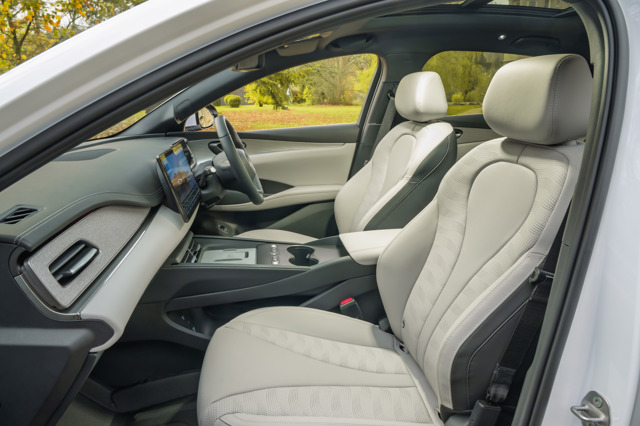
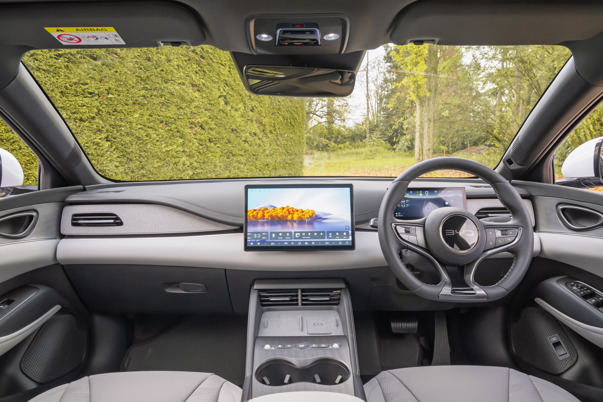
Practicality is one of the BYD Seal 6's strong points. There's generous rear-seat space and plenty of headroom even with the panoramic sunroof that's standard on the Comfort model. General storage is good, too - there's a big cubby between the front seats and a shelf under the centre console, as well as decent-sized door pockets front and back plus cupholders all round.
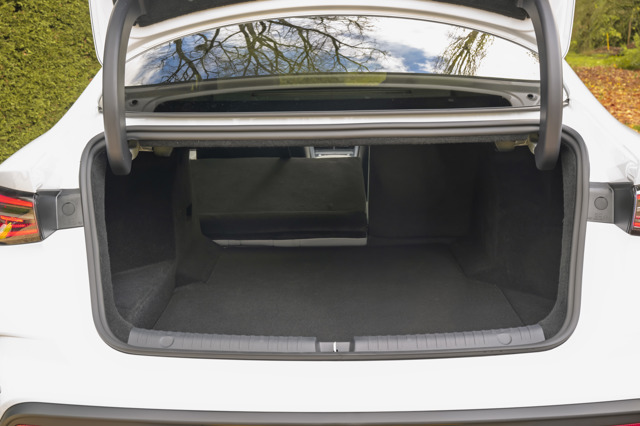
Boot space in the saloon is quoted at 491 litres and the back seats fold in a 60/40 split. You can drop them using levers in the boot or on the seat itself. That opens the load space up to 1370 litres but there's also a ski hatch in the middle for longer items if needed.
BYD Seal 6 2026: Quality and finish
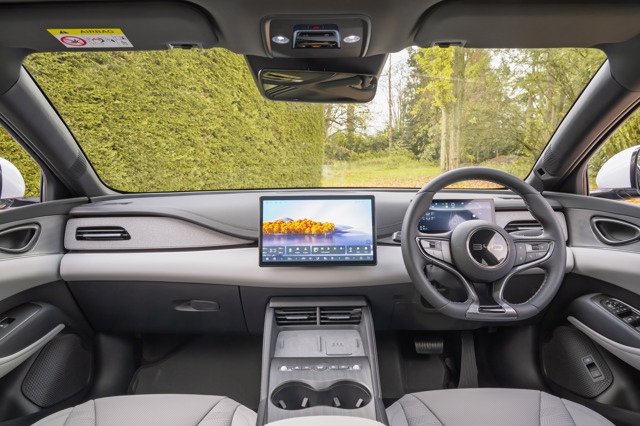
The BYD Seal 6 feels solidly built and well-finished for the money. There are plenty of soft-touch surfaces throughout and everything is well fitted. The rather understated interior design is competent rather than impressive, but it avoids cheap-feeling plastics and there are some nice touches to help it feel rather grown-up. Some might say it's a touch bland and uninspiring, but that depends on your point of view.
BYD Seal 6 2026: Infotainment
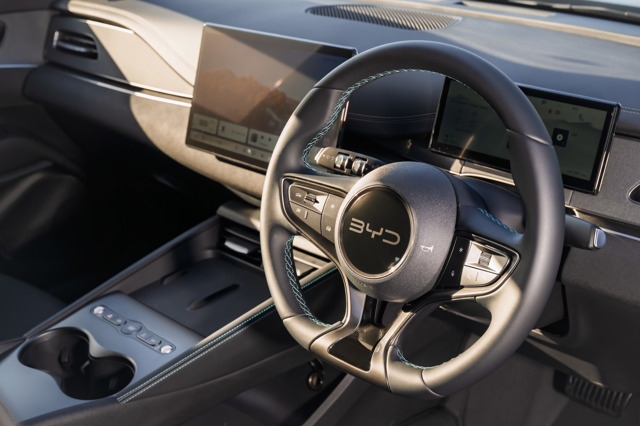
All BYD Seal 6 models get an 8.8-inch digital instrument panel, and either a 12.8-inch touchscreen or, on the Comfort trim, a 15.6-inch version.
Both setups come with Apple CarPlay and Android Auto which means you can bypass the proprietary system and use your own apps for navigation and entertainment. We've not had loads of time to really delve into the BYD system, but based on our first drives it's quick to respond and the graphics are sharp.
As with so many modern cars, there is an over-reliance on the touchscreen for ancilliary functions. Want to adjust the climate control? Touchscreen. Change the drive mode? Touchscreen. It's not the worst offender, but as we seem to keep parroting, it's a lot easier to change basic functions with a proper switch or dial than with a jab at the screen, especially on the move.
In fairness to BYD, you can tap on the various features quickly using shortcuts at the bottom of the screen, even in CarPlay, so there are fewer convoluted menus to navigate, but it's still more faff than it should be.
BYD Seal 6 value for money
BYD Seal 6 2026: Prices
Buy a BYD Seal 6 new and you'll have to shell out £33,990 for the Boost and £36,990 for the Comfort. However, if you want any colour other than white (and there are only four paint options in total) you'll have to splash out another £1100.
Still, that's the only option box you'll have to tick, as everything else is standard. That also means that no Seal 6 will tip over the £40,000 threshold for the expensive car supplement.
The BYD Seal 6 undercuts most comparable rivals by a considerable margin. For example, a new BMW 3 Series PHEV will be north of £47,000 while the cheapest new Audi A5 e-hybrid is £50k. Hence why we think the Toyota Prius - now excusively a plug-in hybrid - is a more obvious rival at around £36,000.
BYD Seal 6 2026: Running Costs
As with all PHEVs, the cost of fuel for the BYD Seal 6 will depend how you use it. Keep your journeys short and rely heavily on the battery rather than the petrol tank and your costs will be low, especially if you can charge at home and have an electricity tariff that can give you cheap off-peak power. However, doing longer journeys that bring in the petrol engine and your costs will rocket.
For the record, the official fuel economy figure for the BYD Seal 6 is 188.3mpg, but that's basically meaningless in the real world. BYD claims that with a full battery and a full petrol tank, you'll be able to do up to 935 miles without refuelling or recharging.
Annual car tax will be at the standard rate but thanks to low CO2 emissions, the extra first year tax will be an affordable £110 for the Boost (34g/km) and £130 for the Comfort (52g/km).
The BYD Seal 6 saloon sits in insurance group 28 of 50 for the Boost and 31 for the Comfort and Comfort Lite, about the same as a Toyota Prius.
BYD offers a very decent six-year/93,750-mile warranty (essentially 150,000km), which is considerably better than most rivals.
Satisfaction Index
 What is your car like to live with?
We need your help with our latest Satisfaction Index, so that we can help others make a smarter car buying decision. What's it like to live with your car? Love it? Loath it? We want to know. Let us know about your car - it will only take a few minutes and you could be helping thousands of others.
Help us with the Honest John Satisfaction Index nowBYD Seal 6 models and specs
There are two trim levels available on the BYD Seal 6 – Boost and Comfort – although right at the start of its life in the UK there have been a few BYD Seal 6 Comfort Lite models sold. This is identical to the Comfort except for the infotainment screen, which is the same smaller size found in the Boost. The entry-level Boost comes with the less powerful motor and the Comfort has the more powerful option.
The entry-level BYD Seal 6 Boost gets:
- 3.3kW AC onboard charger
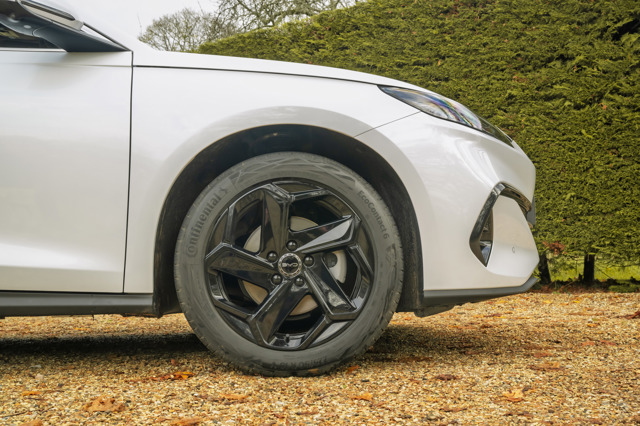
- 17-inch alloy wheels
- Metallic paint
- LED headlights, taillights, and running lights
- Automatic wipers
- Electrically adjustable front seats
- Electrically adjustable and folding side mirrors
- 8.8-inch digital instrument panel
- 12.8-inch touchscreen infotainment system
- Four USB ports
- Rear parking sensors
- Rear-view camera
- Vehicle-to-Load functionality
- Aluminium roof rails (Touring only)
- Powered boot lid (Touring only)
Upgrade to the top-spec BYD Seal 6 Comfort and you'll find:
- Faster onboard charger (6.6kW AC and 26kW DC)
- 15.6-inch infotainment screen
- Heated steering wheel
- Side-mirror puddle lights
- 18-inch alloy wheels
- Rear privacy glass
- Rhythm-reactive ambient lighting
- Auto-dimming rear-view mirror
- Wireless smartphone charging pad
- Uprated audio system with eight speakers.
Model History
November 2025
BYD Seal 6 DM-i Saloon and Touring specs confirmed, prices start at £33,990
BYD has confirmed prices and specs for its new Seal 6 DM-i Saloon and Touring models. The Saloon starts at £33,990 and the Touring from £34,990, both models are available to order now and first deliveries will take place in December.
Both models are powered by the same plug-in hybrid powertrain which is capable of 87 miles of electric-only range in the Saloon and 81 miles in the Touring.
The Touring is BYD's first estate car to be offered in Europe, and features a 500-litre boot with the seats up, expanding to 1535 litres with the seats down.
Both cars have the choice of Boost and Comfort trim levels. Boost is expected to be the biggest seller, and includes 17-inch alloy wheels, a 3.3kW on-board charger, a 12.8-inch touchscreen, vegan leather upholstery and a six-speaker audio system.
Comfort adds a 15.6-inch touchscreen, 18-inch alloys, a 6.6kW on-board charger, a panoramic roof, ambient lighting, a heated steering wheel and heated and ventilated front seats, and eight-speaker stereo and wireless smartphone charging.
BYD Seal 6 DM-i prices
Seal 6 DM-i Saloon Boost £33,990
Seal 6 DM-i Saloon Comfort £36,990
Seal 6 DM-i Touring Boost £34,990
Seal 6 DM-i Touring Comfort £37,990
