
BYD Seal 6 Touring Review: Price, range and boot space

BYD Seal 6 Touring Verdict
 Roomy, well-finished interior. Lots of standard equipment for the money. Refined plug-in hybrid system.
 Feels unsettled and numb to drive. Modest electric-only driving range. Too much touchscreen reliance.
Find out more about the BYD Seal 6 Touring
BYD has enjoyed enormous growth since its 2023 UK launch — it’s already the most popular Chinese-origin brand sold here, courtesy of an ever-broadening line-up of fully electric and plug-in hybrid models offering plenty of kit for the money. Find out if the firm’s first large family estate is similarly appealing with our full BYD Seal 6 Touring review.
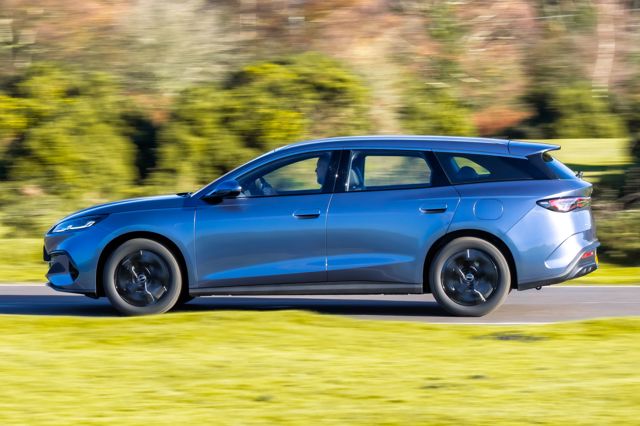
Scour the showrooms and websites of most mainstream car brands and it’s quickly evident that estates are becoming a rare breed as consumers flock to SUVs in growing numbers. Not everyone wants a high-rise familymobile, of course, meaning the BYD Seal 6 Touring is instantly in with a chance of capturing buyers’ imaginations simply by existing.
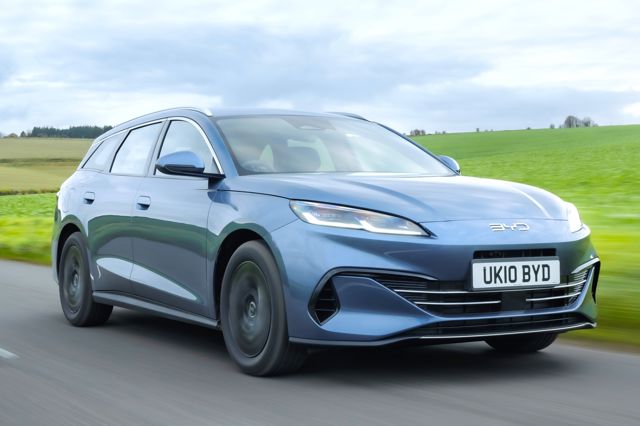
Not that the Seal 6 Touring’s arrival heralds the end of its maker’s suite of SUVs — after all, its underpinnings are shared with the strong-selling BYD Seal U. Yet in a further nod to buyers of more traditional tastes, the Touring estate is the more practical twin of the four-door BYD Seal 6 saloon.
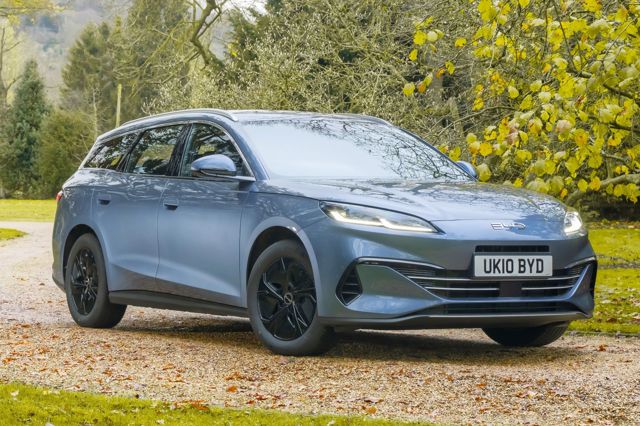
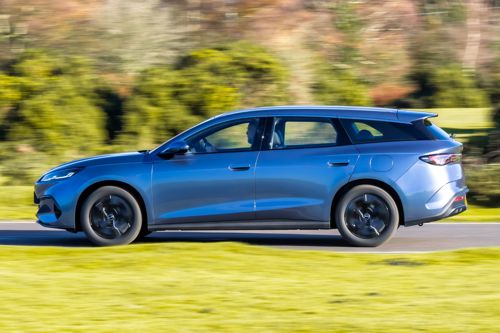
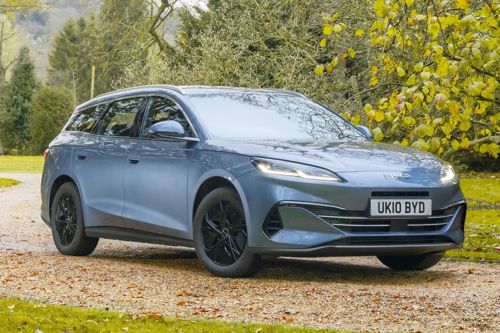
At 4840mm long, the Seal 6 Touring is a larger car than it appears. Its deliberately vanilla styling is unlikely alienate those new to BYD, yet the manner in which it disguises its bulk is sophisticated. For context, it’s 142mm longer than the Skoda Octavia Estate but just 62mm shy of the larger Skoda Superb Estate’s length — and that’s a big car in anyone’s book.
Therein lies one of the problems the BYD faces — the Superb offers superior packaging, ensuring its cabin feels positively palatial compared with the Seal 6 Touring’s, despite being far from cramped. As the Superb Estate is also a very close relation to the Volkswagen Passat, which is now only sold in estate form, it can also be considered an alternative to the Seal 6 Touring.
In other words, BYD has aimed right at the family wagon many brands abandoned — Ford Mondeo Estate? Gone. Peugeot 508 SW? Erm, no. Vauxhall Insignia Sport Tourer? Nope. Many more besides have also vanished and those which remain are from upmarket brands with upmarket prices.
It says much about the world that of the familiar German big three, it’s the BMW 3 Series Touring that represents the best value for money compared with the Audi A5 Avant and the Mercedes C-Class Estate. For a broader sense of perspective, the entry-level £35,000 BYD Seal 6 Touring is the best part of £14k less than the least-costly plug-in hybrid (PHEV) version of the BMW.
While the BYD is solely available as a PHEV, for each of the Audi, BMW, Mercedes, Skoda and Volkswagen, the plug-in is one of a number of engine options. What none of them do is operate in the same way as the DM-i system in the Seal 6 Touring.
Setting the BYD’s drive method apart is that it operates more like a range-extender electric vehicle, where the combustion engine’s role is to act as an on-board generator, ensuring the propulsion of the car is performed by the electric motor. Unlike with a range extender, the DM-i arrangement also allows the engine to directly drive the wheels, but only when its on-board electronics deem it necessary.
Two versions of the BYD Seal 6 Touring are available, the pair sharing the same 1.5-litre engine specifically designed for operating in this pseudo-range-extender manner. When mated to the electric motor the system is tuned to produce 184PS in the Boost model and 212PS for the Comfort. Performance is adequate rather than sparkling, with the punchier of the two claiming a 0-62mph time of 8.5 seconds.
Similarly, there’s little about the way the Seal 6 Touring drives to set pulses racing, which is fine considering this is a car designed for conveying families in comfort. That’s an issue because BYD has left plenty of room for improvement — the only times it feels truly settled and fidget-free is when the road surface is glass-smooth, a quality rarely experienced on UK highways.
Equipment levels are generous on both versions, with the primary point of difference being the Comfort’s larger battery capacity as outlined below. It’s also the model to go for if you want heated and ventilated front seats, a heated steering wheel, a panoramic sunroof and a 2.8-inch larger multimedia touchscreen.
Regardless of size, it’s your interface to operate a plethora of the Seal 6 Touring’s functions, several of which seem unnecessarily buried, so aren’t quickly accessed even when you’ve memorised where they are. Touch responses are fast, the resolution is sharp, but the small icons make it fiddly to use accurately when driving.
Overall, the BYD Seal 6 Touring has a comprehensive set of virtues which will undoubtedly place it on people’s shortlists. There’s a lot of equipment for not a lot of cash, its roomy interior feels impressively put together and its clever DM-i plug-in hybrid drive (PHEV) system is smooth and ensures the BYD will be inexpensive to run.
With further honing of the ride quality, adding a dash of zing to the driving experience, tweaking the touchscreen system to enlarge its icons as well as adding some more physical dashboard buttons for ease of use while driving would make it a more tempting proposition.
Yes, there’s plenty to like about the BYD Seal 6 Touring — but as it is right now, it’s not a car you’ll ever grow to love, however many years of hassle-free service it provided as a family wagon.
BYD Seal 6 DM-i Touring: Range and charging times
| BYD Seal 6 DM-i Touring Boost | 31 miles |
| BYD Seal 6 DM-i Touring Comfort | 62 miles |
With a battery capacity of just 10kWh, the cheaper BYD Seal 6 Touring Boost has a WLTP Combined cycle electric driving range of just 31 miles. Matters improve significantly with the Comfort version, doubling that potential to 62 miles, thanks to its 19kWh battery.
For reference, the BMW 330e Touring PHEV models have a 19.5kWh battery with a best range figure of 60 miles, while the 19.7kWh unit in the Volkswagen Passat eHybrid enables up to 82 miles of electric-only motoring.
Charging quickly isn’t a forte of the BYD either. Choose the Boost version and you’re limited to an AC maximum energy flow rate of 3.3kW, even though your home wallbox charger will deliver up to 7.4kW. This means a 15-100% recharge will take around 3 hours.
Matters improve with the Seal 6 DM-i Touring Comfort in two ways, but they could both still be better. Firstly, its AC on-board charger handles up to 6.6kW so that same 15-100% charge at home takes 2 hours 42 minutes. It also permits quicker DC charging at a public facility, but is capped at just 26kW, so a 30-80% battery top-up requires 23 minutes.
BMW’s 330e Touring can only charge using an AC connection, but its 11kW maximum means a 0-100% recharge could be completed in 2 hours 15 minutes.
VW’s Passat also AC charges at up to 11kW, enabling a flat-to-full recharge in 2 hours 30 minutes, plus it will DC charge at 40kW, requiring just 26 minutes for a 5-80% state-of-charge increase.
Reviews for BYD Seal 6 Touring's top 3 rivals
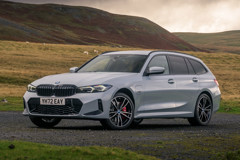

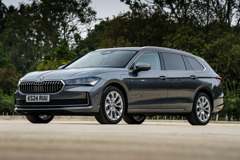

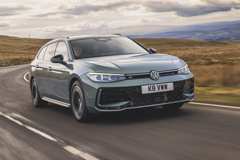
BYD Seal 6 Touring handling and engines

BYD Seal 6 Touring 2026: Handling and ride quality
Few car buyers choose large family estate cars because they are primarily seeking driving satisfaction, whether that’s via effortless comfort or thrilling handling — or a happy balance of the two. The problem facing the BYD Seal 6 Touring is two-fold, neither riding brilliantly or delivering any sense of dynamic fun, whereas its rivals deliver one aspect very well and are more than decent at the other.
Concentrating on the ride quality is likely where BYD’s engineering team’s time is best-served in the short-term, because it’s likely to be the easier fix.
Along supremely smooth stretches of freshly rolled asphalt across a relatively level landscape, the Seal 6 Touring is perfectly adapt at delivering comfort. The issue is few UK roads are like that. Even on decent motorway surfaces, the BYD refuses to settle right down, gently jiffling about as it struggles to maintain its composure.
Across rougher, rutted roads, it manages to round-off the sharp imperfections, with minimal suspension clonks, but the unsettled nature becomes more of a fidget as the dampers are still dealing with the previous shock as they encounter the next.
More undulating stretches of B-road confirm that by and large the BYD’s body control isn’t too bad at all, meaning it feels tied-down as it faithfully follows the topography, so little floatiness over crests and lean through corners being similarly restrained. On motorways it’s reassuringly planted.
That complements the Seal 6 Touring’s ability to maintain pace around sweeping bends, as does the grippy nature of its traction — in the dry, at any rate. In wet conditions its tyres are notably less bitey, causing you to notice it’s not tracing as tight a trajectory and adjust your speed accordingly.
You only really know this from what your eyes are telling you because the BYD’s steering has been so anaesthetised as to wonder if it’s slipped into a medically induced coma. Sure, its lightness ensures it doesn’t feel remotely tiring to drive, but there’s no advantage at all of it being so devoid of sensation.
More positively, the Seal 6 Touring’s brakes provide ample stopping power, with a linear progression to pedal movement that enables smooth, easy to modulate retardation.
BYD Seal 6 Touring 2026: Engines
Both of the BYD Seal 6 Touring’s DM-i plug-in hybrid drive systems combine a 1.5-litre petrol engine and an electric motor squeezed under the bonnet. Drive is sent to the front wheels through an automatic transmission.
For the vast majority of the time, the engine never directly powers the BYD and on the occasions it does, it’s at the behest of its onboard electronics, not because the driver’s demanded it. Its primary duty is to generate electricity for the battery, which is then used by the electric motor.
While that sounds overly complex, it means that the engine can operate within a more fuel-efficient speed for longer — it’s reasonably quiet inside the car as a result, if slightly weird not hearing the revs rise as the car gather speed. Nevertheless, it’s a smooth, refined system that’s a testament to BYD’s investment in the technology.
Boost models produce 184PS overall and 300Nm of torque for acceleration, although it feels more leisurely than its spry 8.9-second 0-62mph suggests. Its top speed is electronically capped at 112mph.
Comfort models have the same torque output but power is eked-out to 212PS. It’s marginally quicker in accelerative terms, with the 0-62mph benchmark quoted at 8.5 seconds, while the top speed remains unchanged.
Power delivery is more like that of an EV than a conventional PHEV, which is to be expected given how the drive system works. Accelerator response is near-instant, with performance introduced relatively gently in the Normal driving mode — switching to Sport makes it feel slightly more urgent, but this is no performance-oriented estate by any stretch of the imagination.
That’s particularly evident when completing overtaking manoeuvres, where the extra speed ebbs-in gradually when a shove-in-the-back wave of pace would be especially welcome. Again, this is something which can be reprogrammed relatively easily within the grand scheme of automotive developments, sent to all cars as part of an over-the-air update.
Despite the gentler nature of its acceleration qualities, stamping hard on the throttle pedal will make it a bit easier to dart into gaps on roundabouts or when pulling away from junctions, but it frequently comes with a wheel-spinning penalty as the tyres scrabble for traction. The net result being it would have almost been as quick overall to pull out with less eagerness — a reminder that the BYD’s at its best when it isn’t being rushed.
BYD Seal 6 Touring 2026: Safety
Although it was the BYD Seal 6 saloon that safety organisation Euro NCAP crash-tested in 2025, its excellent five-star rating is equally applicable to the Seal 6 Touring estate.
Within the four individual categories it scored 92% for adult occupant safety and 90% for child equivalent measurement. Protection for vulnerable road users was rated at 84% while the BYD’s safety assist driver aids at 85%.
In the main, these systems work fine, although some fine-tuning wouldn’t go amiss for both the automatic emergency braking and the driver attention monitor.
The former seems prone to consider cars parked at the roadside to be part of the traffic flow when using adaptive cruise control, while the latter is especially overzealous, particularly when it’s chastising you for looking at the touchscreen as you adjust the interior temperature…
These systems can all be switched off, but legal requirements ensure they default back to being active each time the car’s turned on.
BYD Seal 6 Touring 2026: Towing
Prepare to be disappointed if you planned to tow using the BYD Seal 6 Touring. Although a towbar can be fitted, the maximum braked capacity is just 750kg, so leave that caravan at home and pack lightly when doing a tip run.
BYD Seal 6 Touring interior

BYD Seal 6 Touring 2026: Practicality
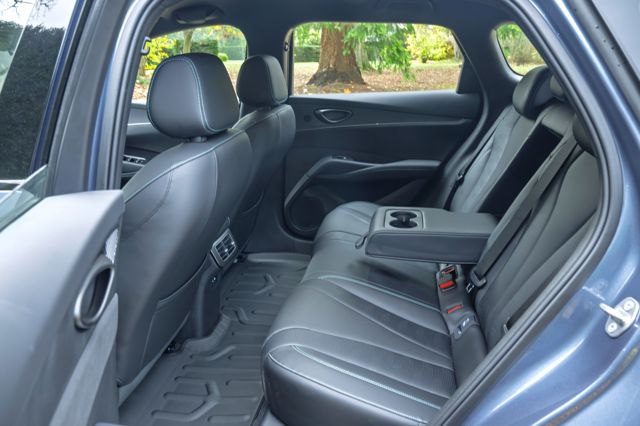
Whether you’re sat in the front or rear of the BYD Seal 6 Touring there’s a generous amount of space, with ample clearance between scalps and the headlining and little danger of taller occupants sat behind pressing their knees into the kidneys of similarly statured occupants ahead of them.
Whichever version you choose, the front seats are electrically adjustable — in six directions for the driver, four for the passenger — so establishing a sound driving position is easy enough, aided by plenty of adjustment for angle and distance with the steering wheel.
All-round visibility is good, at least when the windows are demisted. It seems to take the BYD’s climate control system longer than in most cars to dispense with the condensation — more generally, the temperature setting needs dialling up more than is usually required to both warm up and maintain a comfortable level.
Even three-abreast the reach bench doesn’t feel overly squished — the flat floor helps in this regard and ensures there’s minimal kicking and ankle-grinding as passengers vie for lower-limb space. Inevitably, the middle perch is the narrowest between the seatbelt buckles, with the cushion and seatback foam protruding outwards rather than scalloped away as the outer positions are, but it’s far from uncomfortable.
Step from the Seal 6 Touring and plonk yourself down in either the Skoda Superb iV Estate or the Volkswagen Passat eHybrid and you immediately realise how much more generous their passenger accommodation is, particularly in the back, despite only being marginally longer overall. BMW’s 3 Series Touring on the other hand is better-suited to four adults and even then still feels snug in this company.
Storage for in-car detritus is good without showcasing any novel features to make life as a family car even easier. Usefully proportioned door bins, two cupholders front and rear, a sub-front armrest cubby and dedicated smartphone spaces on the dashboard are par for the course these days. There’s also an open-sided storage area beneath the centre console, ideal for a smaller handbag.
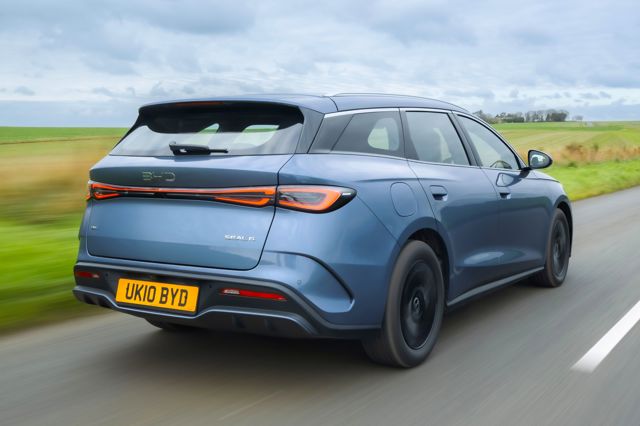
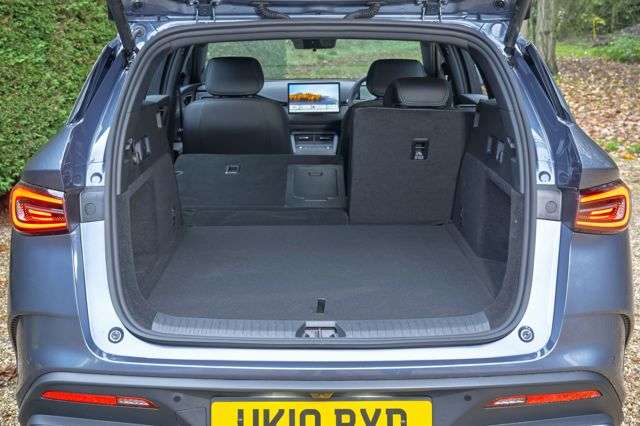
Pop open the Seal 6 Touring’s tailgate — it’s electrically operated on both versions — to reveal a sensibly shaped 500-litre loadspace when loaded to the height of the roller blind-style retractable cover. That’s appreciably more commodious than the BMW 330e Touring’s 410-litre capacity, if a tad shy of the 510 litres in both the Skoda and VW alternatives.
A couple of substantial shopping bag hooks are moulded into the sidewalls of the BYD’s boot, with levers to release the 60/40-split rear seatbacks just ahead of them, saving you walking around to open the back doors and lowering them there.
When they are tipped forwards, they don’t lie completely horizontally, resting on a different plane to the boot floor, but helpfully there’s no step between them so heavier items can be slid in with minimal fuss. There’s also a ski-hatch flap behind the rear centre armrest to accommodate extra-long yet slender cargo.
With the back seats folded and measured up to ceiling height, the Seal 6 Touring can swallow 1535-litre loads, making it a capable family wagon, managing 115 litres more than the BMW. Then again, both the Skoda and VW outdo the BYD with their 1770-litre maxima.
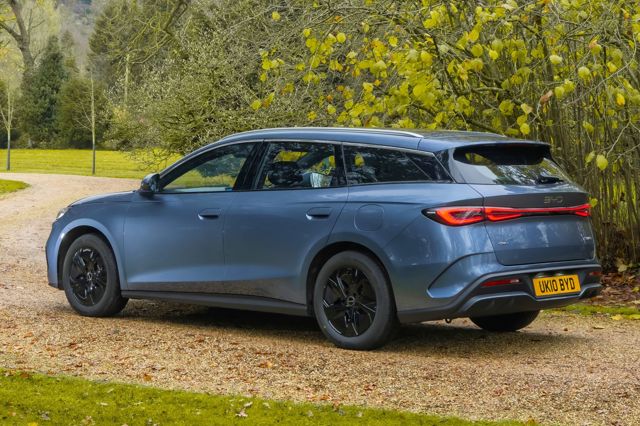
Access to the BYD Seal 6 Touring’s charging port is simple enough given its position on the driver’s side rear wing — the fuel filler is behind a flap mirrored on the passenger side. Where it could be improved is by having some hooks to attach the socket covers instead of having them left dangling when it’s plugged in.
BYD Seal 6 Touring 2026: Quality and finish
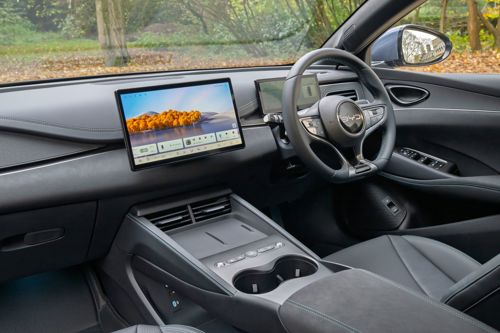
You are unlikely to have any major gripes regarding the BYD Seal 6 Touring’s interior finish. It all feels impressively well-assembled, with no troublesome early signs of squeaks or rattles.
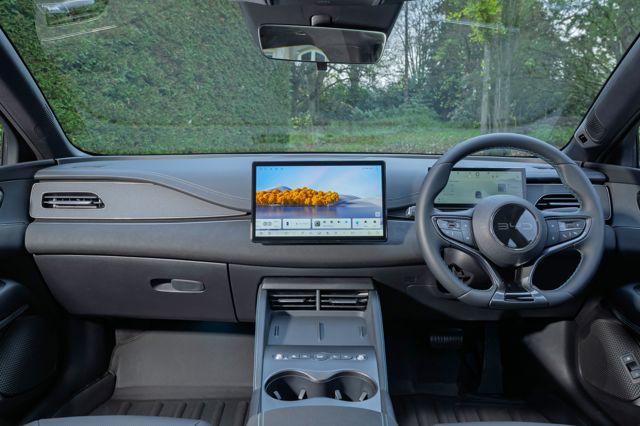
Visually, the panels from the doors blend neatly into the curved forms of the dashboard, many of the surfaces being clad in faux leather or a heavier textured-rubbery finish. Personal taste plays an important role here, but it looks more inviting and upmarket with the light grey finish — it’s rather dour in the darker colours.
Most of what your hands come into contact with feel substantial and pleasant to touch, with harder, more robust plastics used for areas where you are less likely to prod and poke with any regularity.
BYD scores bonus points in our book with the lack of glossy finished black plastic interior fittings. Such material always imitates proper piano black timber poorly, showing all manner of fingerprints and fine surface scratches.
BYD Seal 6 Touring 2026: Infotainment
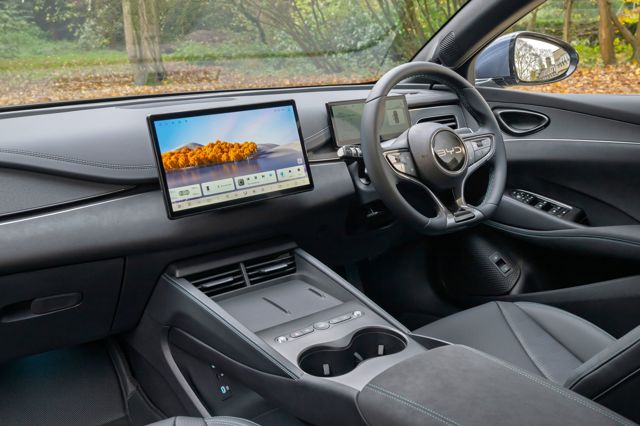
Two screens punctuate the BYD Seal 6 Touring’s dashboard — an 8.8-inch driver’s display for both versions, with a central 12.8-inch multimedia touchscreen for Boost and a 15.6-inch alternative in Comfort models.
Earlier BYD touchscreens could be rotated 90 degrees to a portrait position if you so wished, but here they are fixed in a landscape orientation. In truth, that gimmick’s absence doesn’t feel like a substantial loss.
Given how sharp the graphics are and how quickly the touchscreen responds, it’s now even more clear that BYD’s software developers should spend time making the icons that bit larger to ensure they are easier to use on the move. And use them you will need to because most functions have to be operated via the interface, including the climate control’s settings.
Not that the BYD is alone in this, from a user perspective it’s an inferior arrangement to having physical buttons, switches or knobs to alter basic functions such as temperature or fan speed, requiring more time with your eyes away from the road ahead.
While you do quickly learn your way around the screens wide array of functions, some do seem unnecessarily buried, so even though you know where they are, it’s not as quick as a single press of a physical button.
As wireless Android Auto and Apple CarPlay smartphone connectivity is standard for both models, we suspect most owners will use those apps for mapping and entertainment purposes. Helpfully, the shortcut bar for accessing the climate control and other functions remains permanently displayed at the screen’s base.
While the driver’s display screen is similarly sharp, its font sizes seem unnecessarily small, with a peculiarly large proportion of the display’s real estate given over to an ADAS-related graphic. Again, this is a relatively simple thing to remedy.
BYD Seal 6 Touring value for money

BYD Seal 6 Touring 2026: Prices
Considering its size, the BYD Seal 6 Touring is something of a bargain — factor-in that it’s also a plug-in hybrid, then it feels like extraordinarily good value alongside other large, PHEV-powered wagons.
Prices start at £35,015 for the BYD Seal 6 DM-i Touring Boost, with the larger batteried Comfort model weighing in at £38,015.
To get behind the wheel of the cheapest BMW 3 Series Touring PHEV you’ll need to spend £48,985 for the 330e Sport. Skoda charges £41,575 for the least expensive Superb Estate 1.5 TSI iV, while it’s close cousin, the Volkswagen Passat 1.5 TSI eHybrid costs upwards of £43,735.
As the BYD Seal 6 Touring only went on sale in the latter months of 2025 it’s too soon at this stage to get a real sense of how their used prices are stacking up.
BYD Seal 6 Touring 2026: Reliability and running costs
Just as is true with any PHEV, how you use the BYD Seal 6 Touring will determine its running costs. If your drives primarily consist of shorter commutes that can be managed using battery power alone, then you could be quids-in, particularly if you also switch to an EV-friendly electricity tariff that could see you spending as little as 7p/kWh.
Driving purely on electrical energy is easier with the Comfort model’s larger battery, of course, so you are more likely to run the engine with greater frequency by choosing the Boost version. The more it runs, the more fuel you will use.
Somewhat unusually, BYD also quotes an overall Combined cycle driving range for the Seal 6 Touring using both the engine and the electric motor — 839 miles is the figure attributed to both versions.
When free of the weighting that gives PHEV-powered cars triple-digit fuel consumption figures, the Boost averages 58.9mpg and the Comfort 56.5mpg. Over the course of an extended test with the Boost version we achieved 52mpg without even attempting to drive economically, nudging closer to 60mpg when putting some effort into it.
In short, it’s a car that’s tricky to make guzzle fuel because the engine’s primarily there to work as a generator, operating at more a more constant speed than if it was used mainly to propel the wheels directly.
Although first year VED Car Tax will be lower than a combustion engine-only car, rates from the second year onwards are standardised across all types. As the most you can pay for a BYD Seal 6 Touring new is £39,115 for a Comfort model in an optional paint colour, it’s still short of the £40,000 threshold for the Expensive Car Supplement, but not by a substantial margin.
Also note that under current plans, all PHEVs will be additionally liable for the 1.5p per mile eVED tax from April 2028.
Fully electric cars remain the default choice for company car drivers when it comes to Benefit-in-Kind (BiK) taxation given they are in the 3% band for 2025/26 and 4% for 2026/27. By contrast, the Seal 6 Touring Boost is banded at 18% for 2025/26 and 19% the following year, yet thanks to the Comfort version’s longer range and lower CO2 emissions, it’s in the 9% and 10% bands for those respective years.
BYD’s warranty package provides a generous six year or 93,750 miles (that’s 150,000km) of cover, with the battery pack separately having eight years or 100,000 miles of guarantee.
Satisfaction Index
 What is your car like to live with?
We need your help with our latest Satisfaction Index, so that we can help others make a smarter car buying decision. What's it like to live with your car? Love it? Loath it? We want to know. Let us know about your car - it will only take a few minutes and you could be helping thousands of others.
Help us with the Honest John Satisfaction Index nowBYD Seal 6 Touring models and specs
Two trim levels are available for the BYD Seal 6 Touring line-up — Boost and Comfort. Beyond variances in their respective standard equipment, there are also differences for both the power outputs and battery sizes.
Standard features for the BYD Seal 6 Touring Boost include:
- 17-inch monochrome alloy wheels
- Metallic paint — Polar White
- Automatic LED head, daytime-running and tail lights
- Automatic main beam
- Rear parking sensors
- Reversing camera
- Aluminium roof rails
- Keyless entry and starting
- Electrically operated tailgate
- Automatic windscreen wipers
- Electric windows front and rear
- Electrically adjustable, folding and heated door mirrors
- 8.8-inch TFT LCD instrument screen
- 12.8-inch multimedia touchscreen
- FM and DAB radio
- Voice-activated controls
- Wireless Android Auto and Apple CarPlay smartphone connectivity
- Six-speaker audio system
- Electrically adjustable front seats
- Vegan leather upholstery
- Vegan leather-wrapped multi-function steering wheel
- Dual-zone automatic climate control air conditioning
- 3.3kW AC on-board charger
- Adaptive cruise control
- Automatic parking brake
Additional equipment for the BYD Seal 6 Touring Comfort comprises:
- 18-inch monochrome alloy wheels
- Electrically adjustable, folding and heated door mirrors with integral downlighting
- Dark-tinted rear privacy glass
- Panoramic sunroof with electrically operated blind
- Front and rear parking sensors
- 360-degree parking camera system
- 15.6-inch multimedia touchscreen
- Eight-speaker Hi-Fi sound effect audio system
- Wireless smartphone charging pad
- Heated, ventilated and electrically adjustable front seats with driver’s side memory function
- Heated vegan leather-wrapped multi-function steering wheel
- Multi-colour, rhythm-reactive interior LED ambient lighting
- Auto-dimming interior rear-view mirror
- 6.6kW AC on-board charger
- 26kW DC on-board charger
