
BMW X1 Review: Price, specs and boot space

BMW X1 Verdict

 Spacious and upmarket cabin with excellent infotainment system. Comfortable yet fun to drive. Impressive electric range from PHEVs.
 The most desirable models are pretty expensive. You could pick up a bigger, mainstream alternative for less. Diesel engines are a bit noisy.
Find out more about the BMW X1
Insurance Groups are between 25–35
On average it achieves 0% of the official MPG figure
|
 Driven, tested and rated by:
 BMW X1 at a glance:
- Body type: SUV
- Price range: £37,525 - £52,485
- Fuel economy: 36.7-117.7mpg
- Number of seats: 5 (2 Isofix)
- Boot capacity: 490-540 litres
- Insurance groups: 24-35
The BMW X1: Everything you need to know
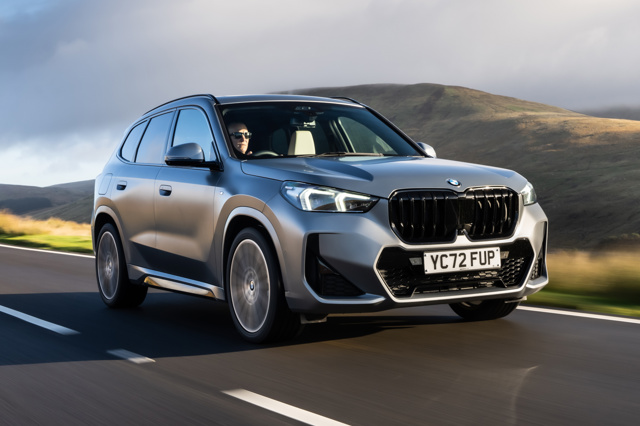
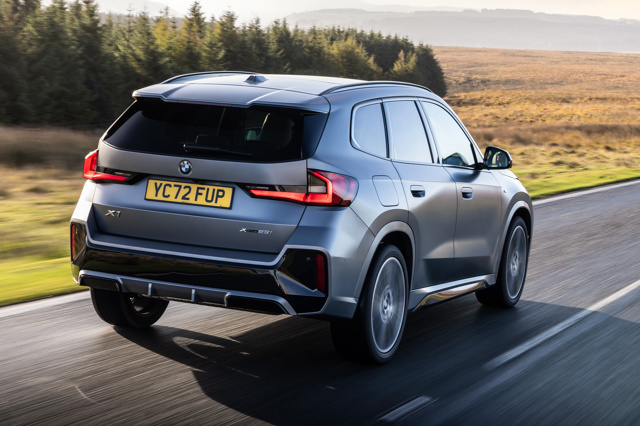
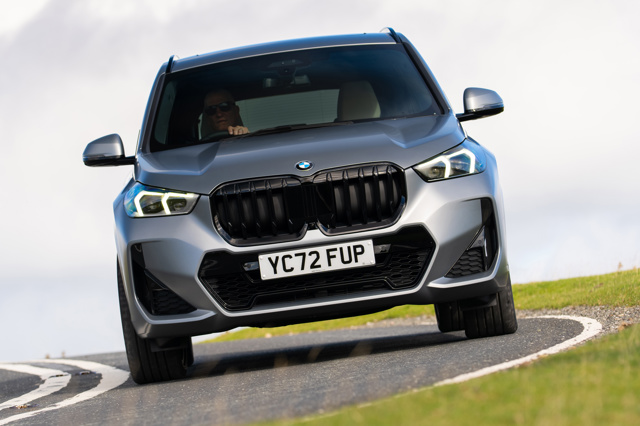
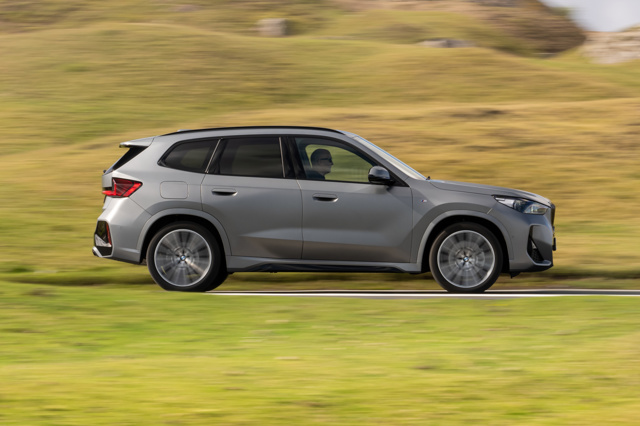
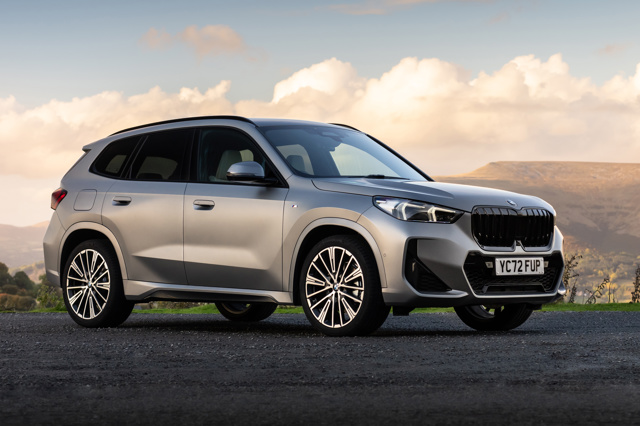
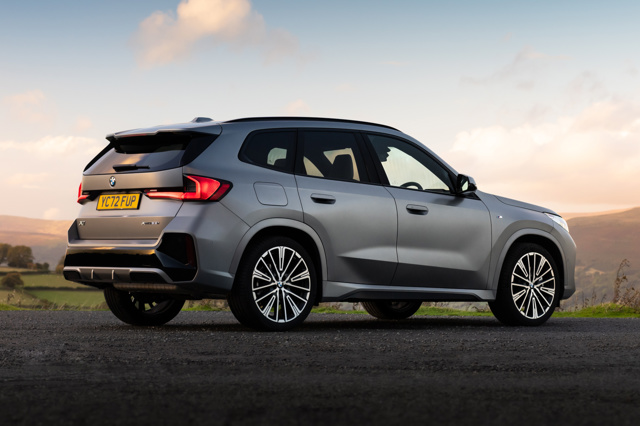
The new BMW X1 is one of the poshest little SUVs you can buy. Now in its third generation, it's better than ever, thanks to a roomier cabin, impressive infotainment and an expansive engine line-up. Find out more in our BMW X1 review.
Of course, the BMW X1 needs to be pretty good to make a splash against rivals like the Volvo XC40, Lexus NX, Mercedes GLA and Audi Q3, not to mention the stylish Alfa Romeo Tonale and ever-popular Range Rover Evoque. Mainstream competitors like the Hyundai Tucson and Kia Sportage are edging further into premium SUV territory, too.
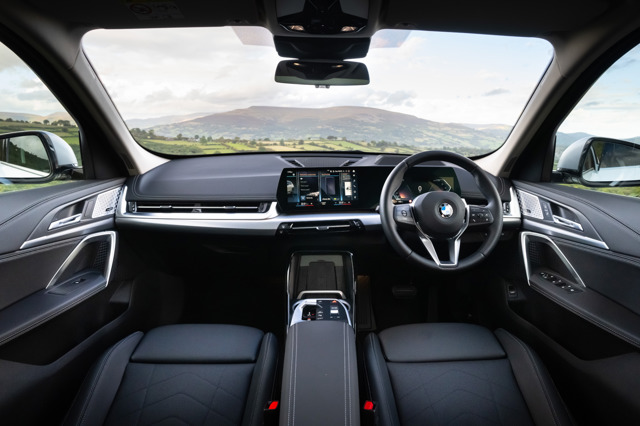
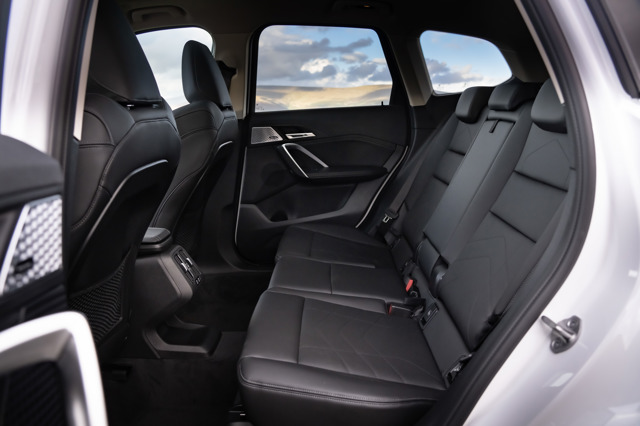
So how does the X1 stand out? For a start, BMW's shifted the car onto the same platform as the 2 Series Active Tourer. That means it's an extremely family-friendly small SUV, with neat touches like a floating centre console and a sliding rear bench adding to the overall feeling of spaciousness.
It's also got one of the biggest boots in its class, while the new platform means even adults should be comfortable in the rear seats.
There are various BMW X1 trim levels to choose from, ranging from the entry-level X1 Sport to the mid-spec xLine and range-topping M Sport. Obviously, the BMW X1 M Sport is ultra-desirable, but it soon starts to get quite expensive and doesn't really add any essential kit. Be careful with the option packs, too, as the BMW X1 can soon start to cost quite a lot of money.
There's also a wide range of engines available in the BMW X1, including petrol, diesel, plug-in hybrid and even pure-electric power. The latter is badged the BMW iX1 (hit the link to read our review), while the plug-in hybrids ought to be very cheap to run thanks to their impressive electric ranges. The most powerful petrols and diesels are offered with mild-hybrid tech, too, boosting both efficiency and performance.
Whichever engine you go for, the BMW X1 is good to drive. No, it's not quite as sporty as low-slung BMW models like the 3 Series, but it feels more agile than a Volvo XC40. A slick automatic gearbox is standard across the range, while you can choose between standard passive suspension or the adaptable M Sport setup. There's a long list of standard driver-assistance tech, too, including an autonomous emergency braking system that can detect other vehicles as well as pedestrians and cyclists.
Prices for the new BMW X1 start from around £37,000, but you don't have to take too many steps up the ladder on either your engine or your trim level before you find that you're spending a sight more than that, particularly if you're considering a plug-in hybrid. The BMW badge should help residual values, though, and relatively low running costs will also make it easier to justify.
Looking for the old model? You'll want our BMW X1 (2015-2022) review.
How we tested the BMW X1
We've tested the BMW X1 a number of times since its release in 2022, trying out as many of the engine variants and trim levels as we can to bring you the most thorough review possible.
"The BMW X1 is one of the best premium compact SUVs thanks to its spacious and posh interior, its wide range of efficient engines and its smart driving manners"
|
Is the BMW X1 a good car?
Yes, the BMW X1 is one of the best premium compact SUVs thanks to its spacious and posh interior, its wide range of efficient engines and its smart driving manners. It's pricey, but running costs should be palatable.
Reviews for BMW X1's top 3 rivals
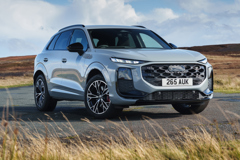

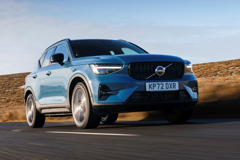

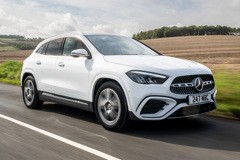

BMW X1 handling and engines

- Engines range from xDrive 25e Automatic to xDrive M35i
- Readers report Real MPG to be between 56–63 mpg
BMW X1 2026: Handling and ride quality
There are two separate suspension system available on the X1. Sport and xLine cars get a regular passive system that can't be adjusted, while M Sport cars come with adaptive M Sport suspension, which lets you firm up the ride at the touch of the button, or - perhaps more significantly - prioritise a softer ride when you just want to get home in comfort. So far, we've only sampled cars with the latter.
Even with the adaptive suspension in its softest setting, the ride is still on the firm side for the class, but it'll be comfortable enough for most drivers. Things become more taut in the other modes, and this is indeed effective in making the X1 feel more urgent as it changes direction, with crisper control over body movements. It's one of the neater-handling cars in the class, and as a result, one of the more enjoyable options to drive. It's also an easy car to drive thanks to its responsive steering and standard automatic gearbox.
Models with the lowest-powered petrol and diesel engines are front-wheel drive (look out for the moniker 'sDrive' to signify this), but most have xDrive four-wheel drive. This might be well worth considering if you live in a rural area or are worried about driving in wintery conditions.
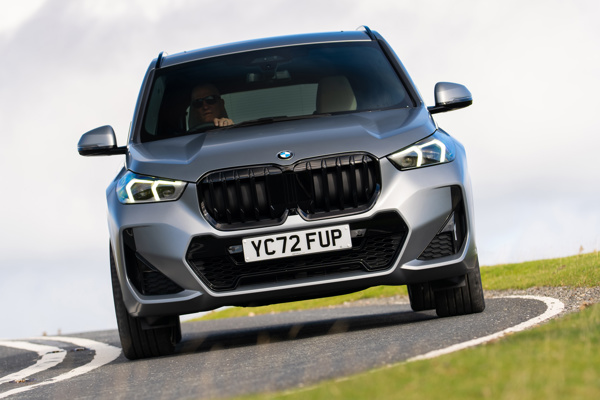
BMW X1 2026: Engines
If you're looking for a BMW X1 to pound the motorway, we'd recommend one with a diesel engine. Your options include the entry-level sDrive18d, which uses a 2.0-litre turbodiesel producing 150PS and 360Nm of torque, or the punchier BMW X1 xDrive23d. This produces 211PS and 400Nm of torque. The latter comes with BMW's all-wheel-drive system, which can shift torque between the axles to help maintain traction in slippery conditions: potentially very useful if you live in a rural area or plan to use the BMW X1 as a tow car.
The low-down pull of the diesels mean they feel pretty flexible, although there's a surprising amount of engine noise that makes its way into the cabin. The petrol and hybrids are a more refined choice.
The entry-level petrol is badged the sDrive20i. Its a turbocharged 1.5-litre petrol engine, which is actually quite sprightly. With 170PS, it'll accelerate to 62mph in 8.3 seconds.
The only petrol BMW X1 we've tried so far is the xDrive23i. This uses a fairly punchy 2.0-litre petrol engine, aided by a small amount of electrical assistance in the form of mild hybrid technology. Buy one with M Sport trim and you'll be able to pull a paddle behind the steering wheel for an extra boost of acceleration. Officially, 0-62mph takes a fairly swift 7.1 seconds.
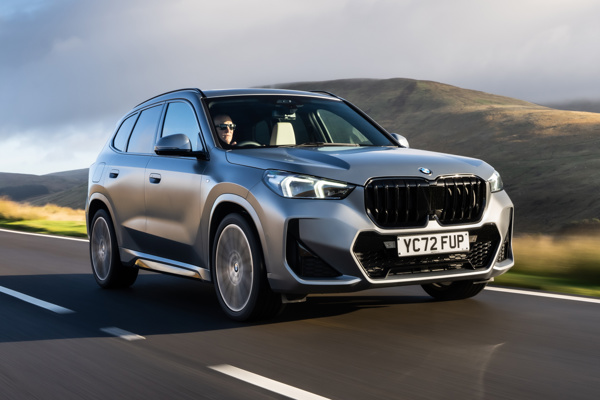
The plug-in hybrids will be more popular with company car drivers (the all-electric iX1 will probably be more popular still with these folk, but we've written a separate BMW iX1 review for that car). There are two, the xDrive25e and xDrive30e. Both combine the 1.5-litre petrol engine with an electric motor. A fairly meaty battery means they have an official electric-only range of around 50 miles. You'll likely get slightly less in the real world, but it should be more than enough for covering the average commute in zero-emission fashion.
We haven't driven the range-topping X1 M35i xDrive yet, but it's the hot one, with a 300PS 2.0-litre petrol engine, making it capable of seeing off the 0-62mph dash in just 5.4 seconds.
BMW X1 2026: Safety
The BMW X1 has been awarded a maximum five stars for safety by Euro NCAP, which means it's fundamentally a very safe car for transporting your family in.
Driver-assist highlights include a front-collision warning system with brake intervention, capable of detecting other vehicles, pedestrians and cyclists. If the system thinks there's going to be a collision, it can apply the brakes to prevent a bump (or at least reduce the severity, anyway).
A Lane Departure Warning system is standard, as well as an Active Park Distance Control feature which - in theory - should avoid any awkward parking scrapes.
BMW X1 2026: Towing
The X1's towing capacity depends on which engine you choose. The 20i petrol and 18d diesel both have a braked trailer capacity of 1800kg, while the more powerful petrol and diesel models, the 23i and 23d, will both pull up to 2000kg. As far as the plug-in hybrids are concerned, the 25e will pull 1700kg while the 30e will pull 1800kg.
| Engine | MPG | 0-62 | CO2 |
|---|---|---|---|
| sDrive 18d Automatic | - | 8.9 s | 130–136 g/km |
| sDrive 18d MHEV Automatic | - | 8.9 s | 131–134 g/km |
| sDrive 20i MHEV Automatic | - | 8.3 s | 127–139 g/km |
| xDrive 23d MHEV Automatic | - | 7.4 s | 129–132 g/km |
| xDrive 23i MHEV Automatic | - | 7.1 s | 150–153 g/km |
| xDrive 25e Automatic | - | 6.8 s | 16–17 g/km |
| xDrive 30e Automatic | - | 5.6 s | 18–19 g/km |
| xDrive M35i | - | 5.4 s | 176 g/km |
BMW X1 interior
| Dimensions | |
|---|---|
| Length | 4500–4505 mm |
| Width | 2104 mm |
| Height | 1622–1642 mm |
| Wheelbase | 2692 mm |
BMW X1 2026: Practicality
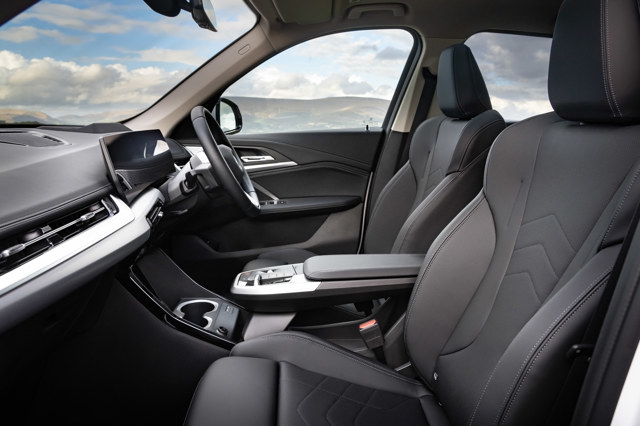
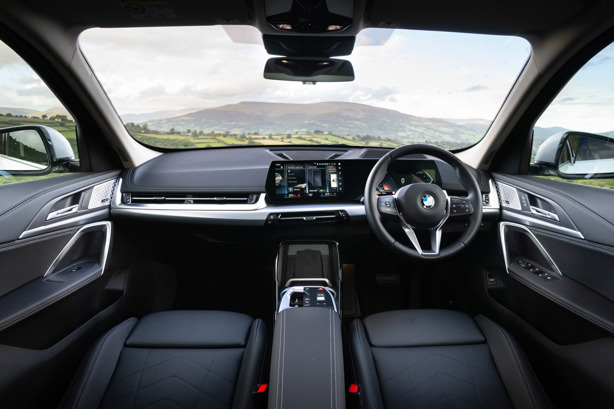
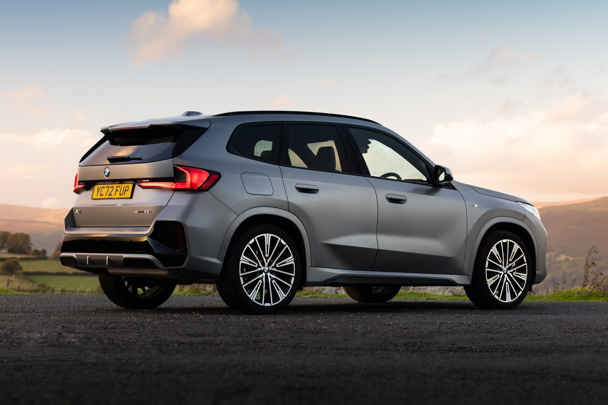
BMW has prioritised interior space in the X1. It's bigger than its predecessor, while the wheels have been pushed further apart to increase room for passengers. Combine that with relatively low seats and a floating centre console, and the X1 feels cavernous inside.
While the front of the BMW X1 feels almost as roomy as the BMW 2 Series Active Tourer people carrier, passengers in the rear in particular will appreciate the space on offer. There's plenty of headroom and legroom, allowing adults to spread themselves out in comfort.
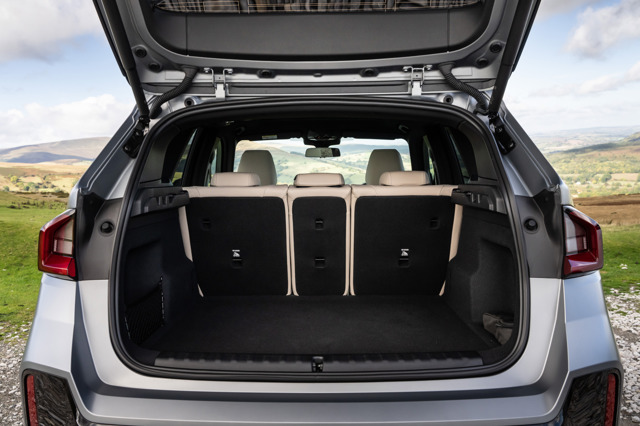
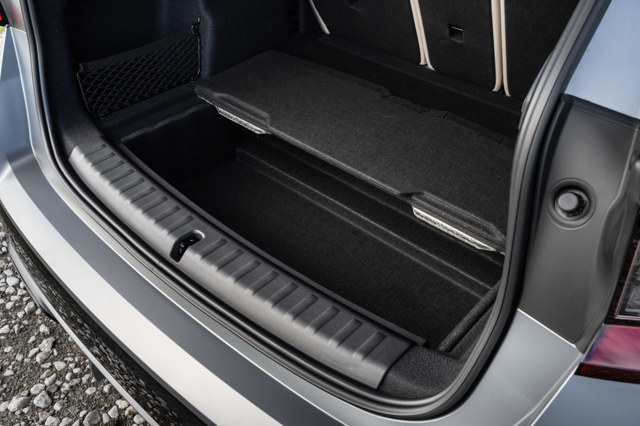
The amount of boot space you get depends on a variety of factors. The maximum on offer is 540 litres with the seats up, which is quite a lot for a small SUV. The maximum space in models with a mild hybrid powertrain falls to 500 litres, which is still very useful by class standards, while capacity in plug-in hybrid models falls further to 490 litres.
The X1 is also available with sliding rear seats that allow you to sacrifice some of that generous legroom to boost boot space while keeping the seats in service. These used to come as standard on xLine models and above, but they now seem to be an optional extra across the range. All models get back seats that are split 40/20/40, though, which is more versatile than the 60/40 arrangement in some rivals and allows through-loading. When you drop the rear seats, they lie pretty flat and flush, too.
BMW X1 Review: Dimensions
The BMW X1 measures 4,500mm in length, 2104mm in width (including door mirrors: it's 1845mm without) and 1642mm in height. The wheelbase is given at 2692mm.
BMW X1 2026: Quality and finish
The more you spend on an X1, the posher it'll feel inside. The BMW X1 xLine comes with Sensatec faux-leather trim and gloss black interior highlights, while the M Sport takes things up a notch with sporty Alcantara-and-Sensatec seat coverings and aluminium interior finishes.
That said, all BMW X1s feel pretty plush inside. You will find a few hard plastics low down in the cabin if you really go hunting for them, but these feel like they'll stand up well to abuse from day-to-day family life.
BMW X1 2026: Infotainment
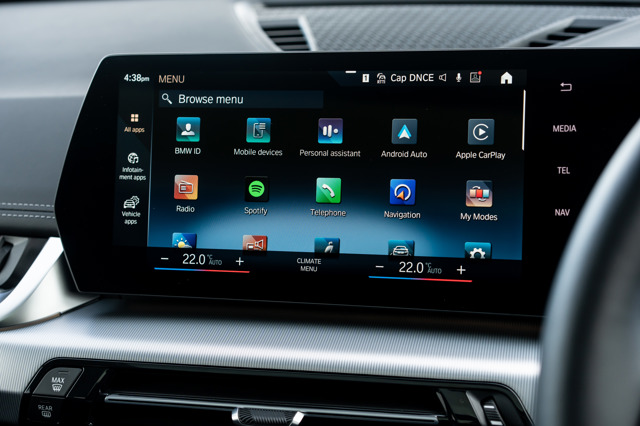
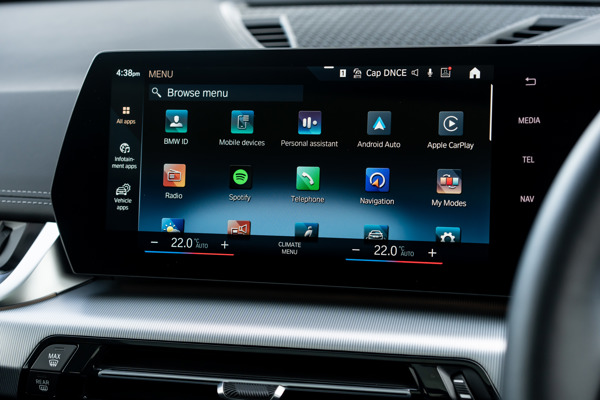
All BMW X1 trim levels come with the same twin-screen infotainment setup. This pairs a central 10.7-inch display with a 10.25-inch digital driver's display.
It looks really impressive and adds significantly to the overall premium vibe of the BMW X1's interior. It's generally easy to operate and customisable, too, although it does lose points for lacking the rotary controller you'd find in other BMW models. That means you have to lean forward to prod at the touchscreen, or shout 'hey BMW' commands at the Intelligent Personal Assistant. This always feels a bit silly to us, but it's no worse than using Alexa or Siri. It can do some pretty useful stuff, too, including opening a window or turning on the heated seats.
All the usual functionality is supported, including Apple CarPlay and Android Auto.
BMW X1 value for money
BMW X1 2026: Prices
This review was last updated in March of 2026, and the table below features the latest prices of the BMW X1 at that point in time. Prices frequently change, however, so please only use these as a guide before checking BMW website for the latest prices.
| Petrol | |
| sDrive 20i Sport | £37,525 |
| sDrive 20i xLine | £39,555 |
| sDrive 20i M Sport | £42,345 |
| xDrive 23i xLine | £42,890 |
| xDrive 23i M Sport | £45,665 |
| M35i xDrive | £52,485 |
| Plug-in hybrid | |
| xDrive 25e xLine | £44,890 |
| xDrive 25e M Sport | £47,640 |
| xDrive 30e xLine | £47,160 |
| xDrive 30e M Sport | £49,910 |
| Diesel | |
| sDrive 18d Sport | £38,815 |
| sDrive 18d xLine | £40,855 |
| sDrive 18d M Sport | £43,645 |
| xDrive 23d xLine | £44,520 |
| xDrive 23d M Sport | £47,310 |
Is the BMW X1 good value compared to rivals?
That depends on how you define 'good value'. It's certainly not cheap, that's for sure, and you'll get hold of an SUV from a more mainstream brand for less. However, prices are roughly on a par with what Audi and Volvo will charge you for an equivalent version of the Q3 and XC40, and thanks to the X1's impressive quality and polished engineering, it feels worth the money you pay.
Do be careful with the options list when buying brand new, though, because it's very long, and it's packed with tempting tidbits of luxury tech. If you're not restrained, the price of your configured car can spiral alarmingly quickly.
BMW X1 used car prices
As usual, you can save a vast amount of cash by shopping on the used car market instead of buying an X1 brand new. The cheapest X1s of this generation can be had for around £27,000. These will likely be 18ds or 20is from late-2022 or early-2023, most likely in xLine trim, with around 40,000 miles on the dial. That's a chunky five-figure saving compared with a brand new one.
BMW X1 2026: Reliability and running costs
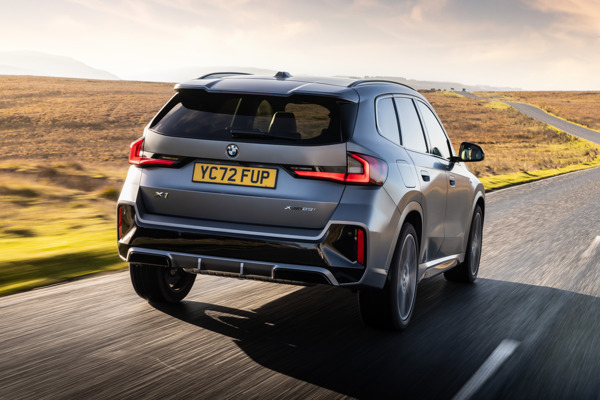
The plug-in hybrids are the winners in terms of fuel economy, at least according to the official WLTP fuel economy tests. We'd take the quoted figures - which are upwards of 100mpg - with a sizeable pinch of salt but, if you keep the battery topped up and rarely exceed the 50-odd-mile electric range, a BMW X1 PHEV should be a very efficient car.
Cover a lot of motorway miles? The diesel sDrive18d and xDrive23d return up to 56.5mpg and 60.1mpg, respectively. With some gentle driving, you should be able to get pretty close to these figures in the real world.
The petrols are less efficient, with the sDrive20i managing up to 50.4mpg and the xDrive23i officially returning up to 44.1mpg. You'll be down to 36.7mpg if you choose the M35i.
Insurance groupings for the car range between 24 to 35, which isn't too bad, but watch out where VED road tax is concerned. Any car that costs over £40,000 when brand new including options - and this applies to most versions of the X1 - will not only have to pay the standard flat rate of £195 per year, but also the 'luxury car surcharge', which amounts to a further £425 on top between years two and six of the car's life.
Of course, for ultra-low running costs, especially for company car drivers, you could look at the all-electric BMW iX1 instead.
BMW X1: Frequently Asked Questions
Is the BMW X1 four-wheel drive?
It can be, but it's not always. The least powerful petrol and diesel engines - the 20i sDrive and 18d sDrive - are front-wheel-drive-only, and that's signified by the 'sDrive' bit of their name. The more powerful petrol and diesel versions - the 23i xDrive, 23d xDrive and M35i xDrive - have four-wheel drive, meanwhile, signified by the 'xDrive' part of their names. The plug-in hybrid models are xDrive all the way.
Which is bigger: the BMW X1 or X2?
Although the X1 has a boxier shape than the X2, the X2 is actually a little longer, to the sum of 54mm. All of that extra length lies in the rear overhang, which means the X2 actually has a slightly bigger boot than the X1 despite its slinkier shape.
Is the BMW X1 electric?
Erm, that's a tricky one. There is indeed an all-electric version of the car, but technically, that car is called the BMW iX1, rather than the X1. The X1 name applies to the versions with petrol, diesel, and plug-in-hybrid powertrains.
Satisfaction Index
 What is your car like to live with?
We need your help with our latest Satisfaction Index, so that we can help others make a smarter car buying decision. What's it like to live with your car? Love it? Loath it? We want to know. Let us know about your car - it will only take a few minutes and you could be helping thousands of others.
Help us with the Honest John Satisfaction Index nowBMW X1 models and specs
The BMW X1 is available in three core trim levels: Sport, xLine and M Sport.
The entry-level BMW X1 Sport comes pretty well equipped as it is, with:
- LED lights
- 17-inch alloy wheels
- powered tailgate
- leather steering wheel
- cloth upholstery
- heated front seats
- two-zone climate control
- the full twin-screen infotainment system
- Parking Assistant (including Park Distance Control and Reversing Assist Camera)
- cruise control
Next comes the BMW X1 xLine, which adds:
- 18-inch alloy wheels
- dark grey mirror caps
- radiator grille finished in matt aluminium
- aluminium door sills
- perforated Sensatec (faux-leather) upholstery
- high-gloss black interior trim
The top-spec BMW X1 M Sport comes with
- more exterior aesthetic upgrades
- aluminium interior trim.
- sports front seats
- Alcantara/Sensatec upholstery finished in black with blue stitching
- adaptive M suspension
More articles you might be interested in:


| Dimensions | |
|---|---|
| Length | 4500–4505 mm |
| Width | 2104 mm |
| Height | 1622–1642 mm |
| Wheelbase | 2692 mm |
| Miscellaneous | |
|---|---|
| Kerb Weight | 1625–1935 kg |
| Boot Space | - |
| Warranty | |
| Servicing | - |
| Costs | |
|---|---|
| List Price | £34,635–£49,185 |
| Insurance Groups | 25–35 |
| Road Tax Bands | A–I |
| Official MPG | - |
| Euro NCAP Safety Ratings | |
|---|---|
| Adult | - |
| Child | - |
| Pedestrian | - |
| Overall | - |
Currently on sale
On sale until September 2023
| SUV | |||
|---|---|---|---|
| Version | List Price | MPG | 0-62 |
| sDrive20 M Sport sDrive 20i 48v MHEV Auto Start/Stop (Edrive upto 14kW) 5dr | - | - | 8.3 s |
| sDrive20 Sport sDrive 20i 48v MHEV Auto Start/Stop (Edrive upto 14kW) 5dr | - | - | 8.3 s |
| sDrive20 xLine sDrive 20i 48v MHEV Auto Start/Stop (Edrive upto 14kW) 5dr | - | - | 8.3 s |
On sale until November 2022
Model History
June 2022
New BMW X1 priced from £35,130
Featuring a new distinctive design, a high level of electrification across the range and the latest in connectivity, the new BMW X1 builds on the concept of a Sports Utility Vehicle (SUV) for the premium compact segment.
BMW says an expanded standard specification, increased interior spaciousness with a premium ambience, new BMW Operating System 8 and BMW Curved Display, and a large selection of automated driving and parking systems ensure the new BMW X1 stands out against its rivals.
From launch, the new BMW X1 will be available with one petrol engine and two diesel engine options, as well as the all-electric BMW iX1. A pair of plug-in hybrid models will join the range immediately after launch.
Offered in a choice of five models – Sport Premier, xLine Premier, xLine Premier Pro, M Sport Premier, and M Sport Premier Pro – the new BMW X1 will be available to order now, priced from £35,130 RRP.
|
Model |
Max Power (hp) |
Peak Torque (Nm) |
0-62mph (secs) |
Top Speed (mph) |
Electric Range (WLTP) (miles) |
CO2 |
Fuel Consumption Combined (WLTP) (mpg) |
Electric Power |
Price (RRP) |
|
BMW X1 xDrive23i |
218 |
360 |
7.1 |
145 |
- |
162 - 146 |
39.2 - 43.5 |
- |
£40,600 |
|
BMW X1 sDrive18d |
150 |
360 |
8.9 |
130 |
- |
145 - 129 |
51.4 - 57.7 |
- |
£35,130 |
|
BMW X1 xDrive23d |
211 |
400 |
7.4 |
140 |
- |
142 - 125 |
52.3 - 58.9 |
- |
£42,150 |
|
BMW X1 xDrive25e |
245 |
477 |
6.8 |
118 |
48 - 55 |
24 - 17 |
256.8 - 353.1 |
18.2 - 16.4 |
TBA |
|
BMW X1 xDrive30e |
326 |
477 |
5.7 |
127 |
48 - 55 |
24 - 17 |
256.8 - 353.1 |
18.2 - 16.4 |
TBA |
|
BMW iX1 xDrive30 |
313 |
494 |
5.7 |
112 |
257 - 272 |
0 |
- |
18.4 - 17.3 |
TBA |
