
Refine by channel:
 Forum (22207)
 Ask HJ (8882)
 News (4340)
 Good Garages (247)
 Reviews (183)
 Article (120)
 productReview (101)
 Classics Reviews (68)
 Van Reviews (58)
 FAQs (25)
Sort by: Relevance | Newest first | Oldest first
-
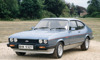 Ford Capri Mk3 (1978 - 1987) (Classics Reviews)
The final – and some would say ultimate – Capri arrived in 1977. And with the minimum of effort on Ford’s part, it put right just about all of the Mk2’s flaws. Designated Project Carla, the re-invigorated coupe looked mean and moody, and proved that the Ford stylists had not lost their magic touch. In fact, it is hard to believe that in terms of styling, the only major differences between the Mk2 and Mk3 amounted to a re-profiled bonnet leading edge, some natty ribbed rear light clusters, and wraparound bumpers. -
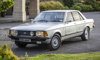 Ford Granada Mk2 (1977 - 1985) (Classics Reviews)
The Ford Granada Mk2 became a whole lot more angular at the first major facelift. The new styling, overseen by Filippo Sapino adopted Ford’s new pan-European sharp-suit, and soon spread its way across the entire range. -
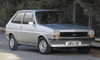 Ford Fiesta Mk1 (1976 - 1983) (Classics Reviews)
Ford’s arrival in the supermini sector might have been a little late in 1976, following the Fiat 127, Renault 5 and Volkswagen Polo by several years. But Ford took very little time to make up for lost time, with the Fiesta becoming the UK's best-selling supermini in 1978, and a million-seller in 1980. -
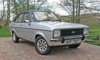 Ford Escort Mk2 (1975 - 1980) (Classics Reviews)
In the mid-1970s, Ford set about sharpening its act. Not in a marketing sense - because it had been impeccable since at least the end of the 1960s - but visually. Just as the Capri received its straight-edged new styling, so did the Escort, to become the Mk2. -
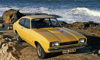 Ford Capri Mk2 (1974 - 1977) (Classics Reviews)
After a run of 1.2 million cars sold, and with the post-1973 mood being rather glum in the wake of the oil crisis, Ford appeared to lessen the Capri’s glamour with the Mk2 version, and made it a whole lot more versatile with the addition of a commodious hatchback rear end, and split folding rear seats. So for all those, who said the Fiesta was Ford’s first economical hatchback, we present you with the Capri Mk2 1.3L… The newer car built on the successes of the flamboyant original, but many purists felt that it looked a little on the ‘soft’ side. -
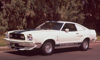 Ford Mustang II (1974 - 1979) (Classics Reviews)
In the post-Energy Crisis years, and at a time when safety regulations were coming thick and fast, Ford responded in the only way it knew how – by downsizing. The top speed from the six-cylinder 2.8-litre version was now a paltry 102mph, and worse than that, 60mph came up in over 13 seconds. -
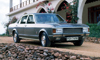 Ford Consul/Granada (1972 - 1977) (Classics Reviews)
The Consul and Granada arrived on the scene in 1972 to banish the memories of the previous Zephyr and Zodiac, and show that a pan-European Ford could be just as desirable in London as it was in Berlin. The new executive car was certainly smart and well proportioned, and proof that Ford in the UK had not lost its direction stylistically, despite what some critics of the Z-cars might have been saying. -
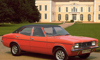 Ford Cortina Mk3 (1970 - 1976) (Classics Reviews)
Both the Mk1 and Mk2 were compact cars with their upper models anchored to the one-and-a-half litre class, but what Ford decided to do for their replacement was to retain the 1.3-litre entry point, but take the top models up to 2-litres, swallowing up the old Corsair range in the process. It was a cunning plan – because although it was a capable all-rounder, the Corsair had failed to set the sales charts alight, and the opportunity for Ford product planners here was to grab those sales in the two-litre market sector, hoping the Cortina magic would encourage new buyers into the fold. -
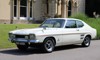 Ford Capri Mk1 (1969 - 1973) (Classics Reviews)
That legend started with Ford's own advertising strapline, which described the Capri as ‘The car you always promised yourself’. And, in just five years, almost 1.5 million customers added a Capri Mk1 to their lives. The Capri was unashamedly inspired by the Ford Mustang and buyers really didn't mind that it was a close relative of the Cortina and Escort, dressed in a fetching party dress. -
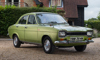 Ford Escort Mk1 (1968 - 1975) (Classics Reviews)
The Escort was the first pan-European Ford car (the Transit came before), which meant the beginning of the end of those strange, unfamiliar (to us Brits) German market cars... Originally designed as the new Anglia, the Euro-friendly Escort name was adopted instead for the fresh small Ford after the formation of Ford of Europe in 1967. -
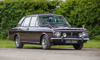 Ford Cortina Mk2 (1966 - 1970) (Classics Reviews)
Once again, the new car’s styling took its cues from the USA, with its design chief Roy Haynes clearly being inspired by the neat minimalism that was sweeping through the Ford empire at the time. So, a mere four years after the Cortina Mk1 rolled out of Dagenham, the Mk2 version followed suit. But it was a look that worked, and more importantly, this car proved Ford’s undoubted commitment to giving customers exactly what they wanted. -
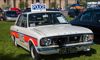 Ford Cortina-Lotus (1966 - 1970) (Classics Reviews)
More modern looking than its predecessor -
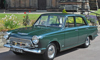 Ford Cortina Mk1 (1962 - 1966) (Classics Reviews)
Performance was significantly increased as a result, and aspirational buyers now had the option of spending more money at their Ford dealership. Following on from that came the Cortina GT – basically a Super with lowered suspension – and a 78bhp engine, arguably the first in a long line of hot Ford saloons that would keep the public entertained for years. -
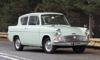 Ford Anglia 105E (1959 - 1967) (Classics Reviews)
However, despite the promise of a bright future, only one production model emerged from this creative 'hothouse', the 105E Anglia. However, the car was an interesting departure for Ford. Most obvious was the Americanized styling, which was not too surprising as a visiting designer from Ford USA, Elwood Engel, was credited with many features as well as being responsible for the extensive wind-tunnel testing. -
.jpg?width=100&height=60&rmode=crop) Ford Fairlane Skyliner (1956 - 1959) (Classics Reviews)
Ford Fairlane Skyliner (1956 - 1959) (Classics Reviews)
Introduced in 1955 as the new top of the line full-size Ford, the Fairlane, was actually named after Henry Ford's Fair Lane mansion in Dearborn. Originally offered in six different body styles, the Fairline range included saloons, plus a plastic-topped Crown Victoria, a steel-roofed Victoria and the convertible. -
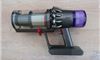 Review: Dyson V11 Absolute vacuum cleaner (productReview)
There's a brand new screen on the back of the V11's head, too, which displays remaining battery life and, very usefully, how much time you have left before the power runs out. This changes as you use different attachments and change suction modes, i.e. if you move from carpet to a hard floor, the battery percentage and the time it shows left will increase because the vacuum will automatically change to a lower suction mode. -
 Ford Mustang Mach-E GT (2021 on) (Reviews)
Well, the Ford Mustang Mach-E GT certainly looks the part. A different front grille, larger wheels and body-coloured exterior trim give the car a sportier, more assertive look that really appeals. The Ford Performance sports seats look and feel fantastic, too. -
 Ford Transit Custom Nugget (2020 - 2024) (Van Reviews)
Onboard wifi will allow the van's occupants to connect up to 10 devices wirelessly with a maximum range of 15 metres. Ford says this will allow children to sit outside, while streaming a movie or TV show to their compatible tablet or smartphone. The Transit Custom Nugget is powered by Ford’s 2.0-litre EcoBlue diesel engine; the 130PS version costs from £56,273 while a more powerful 185PS variant is also available with a choice of manual and automatic transmission, priced from £57,229 and £58,199, respectively. -
.jpg?width=100&height=60&rmode=crop) Ford Wellhouse Terrier 2 (2016 - 2023) (Van Reviews)
Ford Wellhouse Terrier 2 (2016 - 2023) (Van Reviews)
Very well-finished, practical and comfortable, very easy to drive, capable of easily covering long distances. -
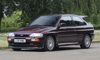 Ford Escort RS Cosworth (1992 - 1996) (Classics Reviews)
The car continued until early 1996, when emissions regulations forced it out of production. Like pretty much every RS Ford, it was a classic from the moment it was built...
Elsewhere on 


