
Refine by channel:
 Forum (2425)
 Ask HJ (1847)
 News (851)
 Article (28)
 Reviews (25)
 Good Garages (24)
 Classics Reviews (11)
 FAQs (4)
 productReview (1)
 Van Reviews (1)
Sort by: Relevance | Newest first | Oldest first
-
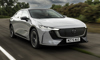 Mazda 6e (2026 on) (Reviews)
The result is something that might look like a Mazda, but doesn't feel like one at all, which is a shame. We explain all in our full Mazda 6e review. -
.jpg?width=100&height=60&rmode=crop) Mazda 3 (2019 on) (Reviews)
Mazda 3 (2019 on) (Reviews)
Our Mazda 3 review will find out if it's the full package. -
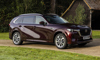 Mazda CX-80 (2024 on) (Reviews)
Usefully, the middle-row seats can be slid to and fro to maximise comfort, while pricier versions of the Mazda can have two individual seats in the second row in place of the three-seater bench. In all the Mazda CX-80 is a likeable machine with a good deal going for it in an increasingly competitive arena. -
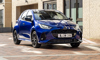 Mazda 2 Hybrid (2022 on) (Reviews)
Read on for our full Mazda 2 Hybrid review. -
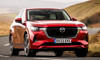 Mazda CX-60 (2022 on) (Reviews)
We don't envy Mazda's marketing department for having to turn the heads of traditional premium car buyers but, with its bold looks and superb interior, there's a distinct appeal to the CX-60. The new Mazda CX-60 is one of the most interesting SUVs to hit the market in recent years. -
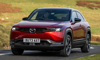 Mazda MX-30 (2020 on) (Reviews)
If you do want a Mazda MX-30 that can travel further afield, the Mazda MX-30 R-EV offers a slightly different take on the plug-in hybrid approach. It can travel up to 53 miles under electric power. After that, a small rotary petrol engine kicks in to act as a generator. -
.jpg?width=100&height=60&rmode=crop) Mazda CX-30 (2019 on) (Reviews)
Mazda CX-30 (2019 on) (Reviews)
Mazda had its reasons for not calling this car the Mazda CX-4, but nomenclature does not really matter here. Although closer in size to the roomy Mazda CX-5, Mazda made the CX-30 look far more rakish. -
.jpg?width=100&height=60&rmode=crop) Mazda CX-5 (2017 on) (Reviews)
Mazda CX-5 (2017 on) (Reviews)
And we really mean traditional – the petrol engines aren't small capacity turbocharged units like you'll find in rivals; you can even buy the Mazda CX-5 with a thirsty (and not particularly powerful) 2.5-litre petrol engine. It's unfashionable to say so, but we reckon the Mazda CX-5 is at its best with a diesel engine. You can buy a 2.2-litre turbodiesel with 150PS or 184PS – the lower powered unit is fine, unless you want four-wheel drive. -
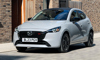 Mazda 2 (2015 - 2025) (Reviews)
Like its bigger siblings, the Mazda 2 surprises in how fun it is to drive. Much like a Ford Fiesta, it feels agile both in and out of town, with sharp steering and a very slick six-speed manual gearbox. In typical Mazda fashion, the 2 takes a stand against the trend for tiny, turbocharged petrol engines. -
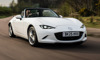 Mazda MX-5 (2015 on) (Reviews)
An exceptional reliability record and a huge support network mean the Mazda MX-5 can also be a brilliant used purchase. Just make sure you fit first. In a world of low-emission zones and high living costs, even a relatively inexpensive two-seater convertible, such as the Mazda MX-5 is an extravagance many can do without — and most do, hence why it now has no truly direct rivals any more. -
.jpg?width=100&height=60&rmode=crop) Mazda 3 (2014 - 2019) (Reviews)
Mazda 3 (2014 - 2019) (Reviews)
Others will revel in the quality engineering, driver satisfaction and understated confidence of the Mazda 3. Judged on the basis of styling, dynamics, quality and reliability, the Mazda is good enough to be called the class leader. It’s that good. The Mazda 3 is one of the best family hatchbacks you can buy. -
.jpg?width=100&height=60&rmode=crop) Mazda 6 (2012 - 2022) (Reviews)
Mazda 6 (2012 - 2022) (Reviews)
Often overlooked, the Mazda 6 is a handsome car which is good to drive, although rear headroom is tight in the saloon version. You can rely on Mazda to do things its own way, and the Mazda 6 is a perfect example of this. -
.jpg?width=100&height=60&rmode=crop) Mazda 5 (2010 - 2015) (Reviews)
Mazda 5 (2010 - 2015) (Reviews)
It all makes the Maxda 5 a very appealing used car buy for families. Fancy a new Mazda CX-5? Read our Mazda CX-5 review here . This generation of Mazda 5 is a handily versatile, practical MPV that also happens to be one of the best cars of its type to drive. -
.jpg?width=100&height=60&rmode=crop) Mazda 3 (2009 - 2013) (Reviews)
Mazda 3 (2009 - 2013) (Reviews)
Development of the Mazda 3 and the Ford Focus always went hand in glove. They share engines, suspension and steering, though not mutually inclusively. Sometimes Ford has been ahead with one component. Sometimes Mazda. What can't be denied is that both cars have been steadily improved. -
.jpg?width=100&height=60&rmode=crop) Mazda 6 (2008 - 2012) (Reviews)
Mazda 6 (2008 - 2012) (Reviews)
Because all new bigger, better Mazda 6s weigh in at an average 35 kilos lighter than the old car. As with the new Mazda 2, the company has stopped eating all the pies and is thinking along the same lines as a supermodel. As well as more car at less weight it's also more streamlined. -
.jpg?width=100&height=60&rmode=crop) Mazda 2 (2007 - 2015) (Reviews)
Mazda 2 (2007 - 2015) (Reviews)
The suspension could offer better ride quality, too – but the payoff is great handling in bends. From 2011, the Mazda 2’s ride quality improved noticeably. On a B-road, the Mazda 2 is excellent fun, with precise, well-weighted steering, a slick gear change, and good body control. There’s plenty of feedback to inspire confidence. -
.jpg?width=100&height=60&rmode=crop) Mazda 5 (2005 - 2010) (Reviews)
Mazda 5 (2005 - 2010) (Reviews)
However, it's real selling point is the sliding rear side doors, making getting in and out - even in tight sports such as multi-storey car parks - easy and dent-free. Mazda has created a 6+1 seating system and it’s the middle row which differentiates it from the others. There are two individual chairs that slide, recline and fold flat, while both have lift-up bases which conceal extra storage. -
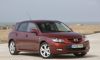 Mazda 3 (2004 - 2009) (Reviews)
Mazda is good and building attractive cars and this shows in the neat Mazda 3. It takes a little bit of inspiration from other Mazda models, such as the sporty RX-8 and is an attractive car. -
 Mazda Demio (1998 - 2002) (Classics Reviews)
Mazda’s new-for-1998 supermini, and a replacement for the 121. In styling terms it was much closer to the original 121 than the oddball and bulbous model that replaced it, with a traditional boxy hatchback body. -
.jpg?width=100&height=60&rmode=crop) Mazda 121 (1991 - 1998) (Classics Reviews)
Mazda 121 (1991 - 1998) (Classics Reviews)
Like its predecessor, the second generation Mazda 121 is of mixed parentage - being sold as as the Autozam Revue in its home market, where it was sold as a speciality product. Curvaceous styling certainly undid the blandness of the first 121, but it would also prove to be instrumenatal in making it hard to sell in the UK, where it never really took off at all.
Elsewhere on 


