
Polestar 3 Review: Price, range and boot space

Polestar 3 Verdict

 Spacious, practical and thoroughly modern. Impressive driving ranges and decent value. Comfort isn’t compromised in the pursuit of performance.
 Too few physical dashboard controls. Interior looks stark, especially in dark colours. Little advantage with fastest model.
Find out more about the Polestar 3
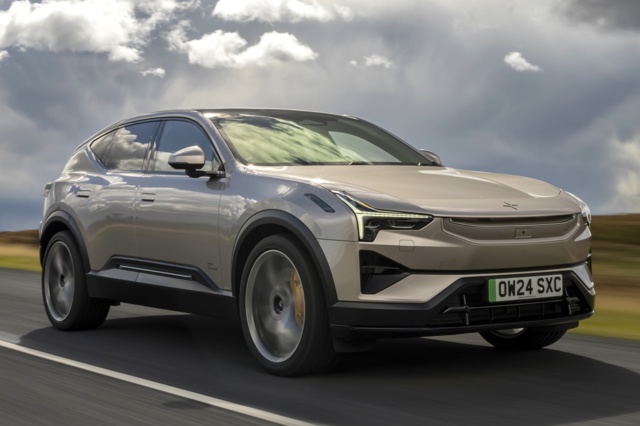
Whereas the Polestar 2’s Volvo heritage is conspicuous wherever you look inside or out, its larger electric SUV sibling — the Polestar 3 — is the first model from the standalone brand which promotes a visual identity of its own. It’s also reflective of greater differentiation with its interior design and how it feels to drive as we explore in depth with out full Polestar 3 review.
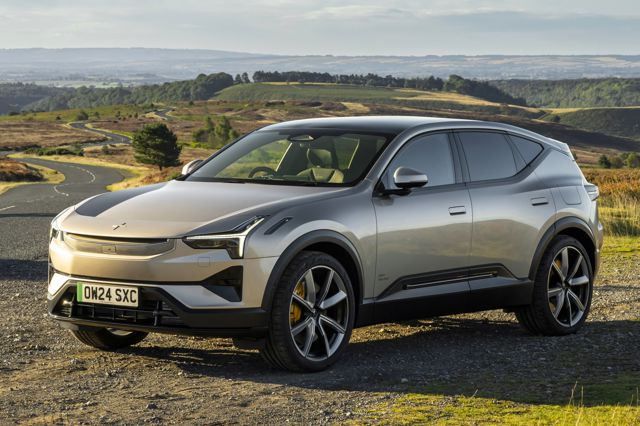
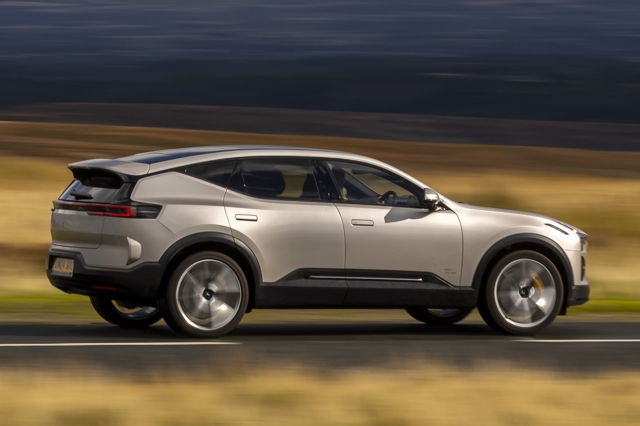
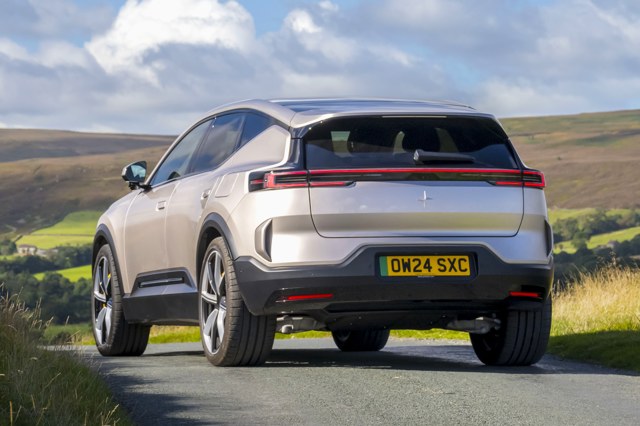
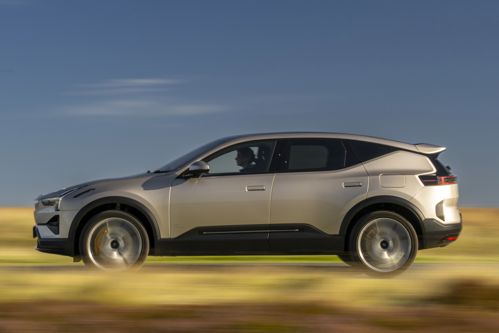
While we don’t usually discuss cars’ styling in depth, there’s a subtle radicalness about how the Polestar 3 looks which is noteworthy for two reasons.
One key strand is that gently eradicates any obvious Volvoness. Yes, there’s a similarity to the daytime-running lights with the Thor’s Hammer design found on the Volvo EX90 with which it shares its underpinnings, yet the Polestar interpretation is far more expressive.
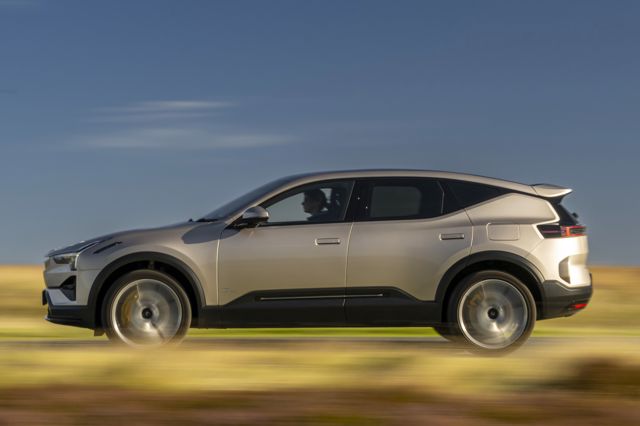
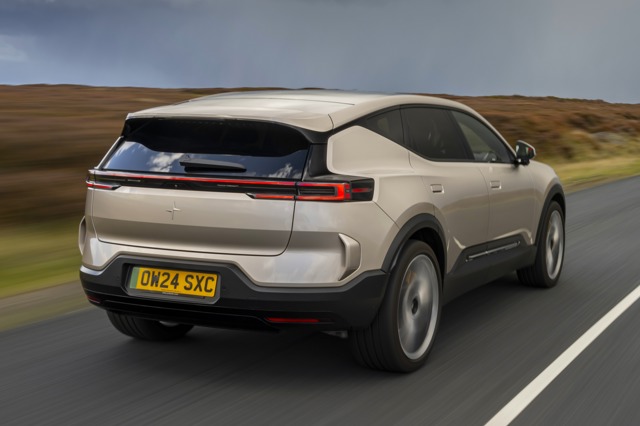
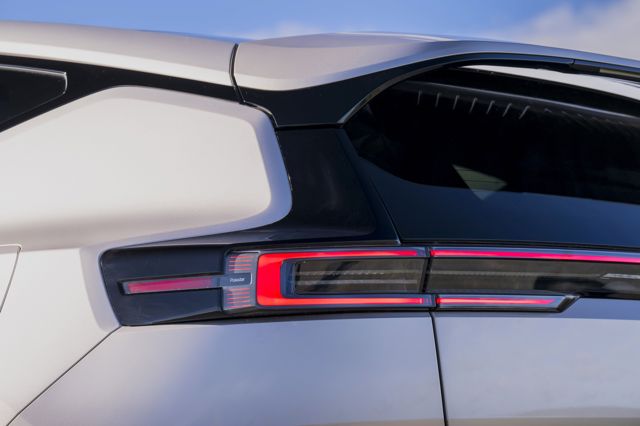
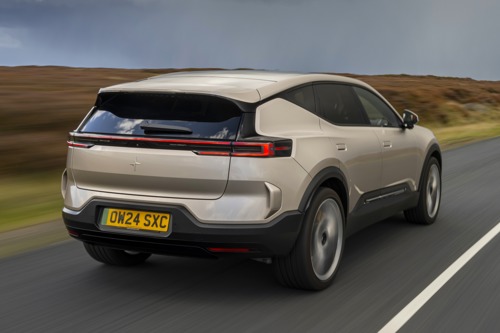
They are, somewhat ironically, the only vaguely showy aspect of the Polestar 3’s exterior, which is hallmarked by being self-confidently restrained and unadorned with unnecessary creases or decor. Sure, there’s an air duct between the headlights and a corresponding one at the top of the tailgate but they serve an aerodynamic purpose, not styling for the sake of it.
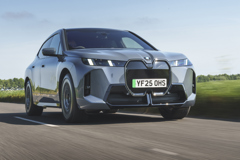
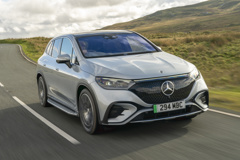
It’s an altogether different approach to those taken by two of the Polestar’s key rivals — the curious confection that is the BMW iX and the comparatively amorphous Mercedes EQE SUV. Completing the familiar German brand triumvirate is the slightly smaller Audi Q6 e-tron. Like the Polestar, the Q6 is more understated although given Audi’s homogenised styling it lacks much in the way of distinctiveness.
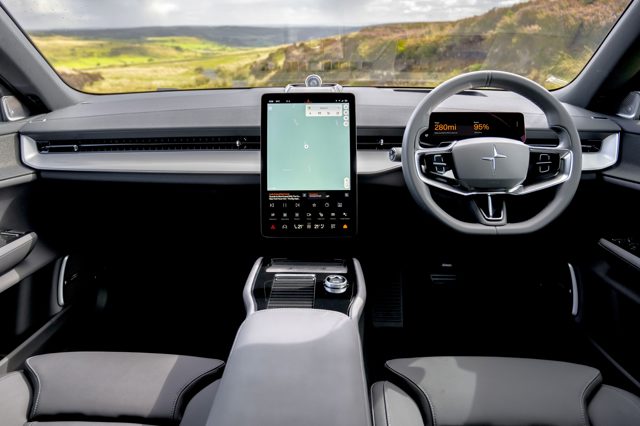
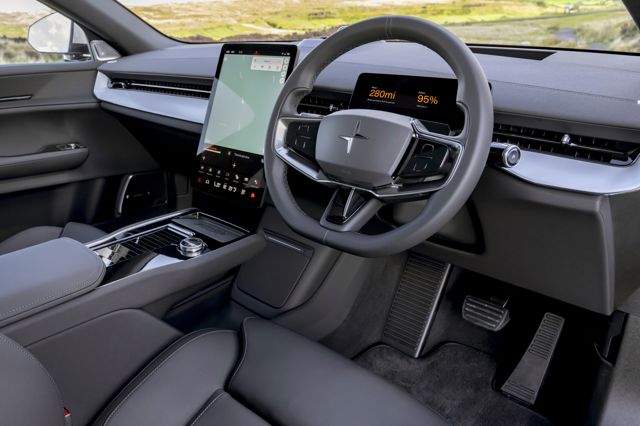
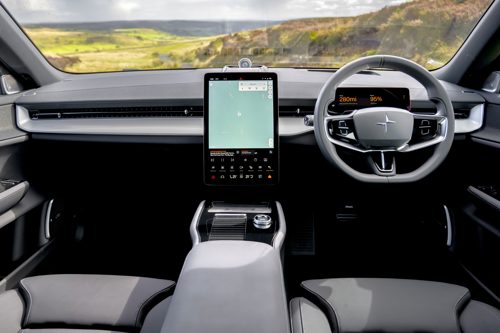
Undiminished in Polestar’s new era are the 3’s sense of robustness and solidity, while the combination of materials and textiles used to fit-out its interior remain far more interesting than its immediate alternatives — here comes the ‘but’ — but due to the pared-back minimalism of its dashboard, it conspires to look basic, especially in darker colours. Glossy black plastic trims do the opposite of helping.
Unfortunately, Polestar’s desire to shun Volvo’s interior buttons and controls has resulted in it not replacing them with designs of its own but amalgamating almost everything within the touchscreen- and voice-controlled multimedia system.
This is far from ideal, particular functions which require frequent adjusting, such as the climate control temperature, yet even altering the door mirror positions — stylishly frameless as they are — is done via the touchscreen.
More positively, there’s a colossal amount of space inside for five adult-sized passengers and 484 litres of boot space with the rear bench in place. That’s usefully large, although it trails the capacities of its Germanic rivals.
Available with three levels of electric-only power, there are two sizes of battery for the Polestar 3, the smaller exclusively available with the entry-level 333PS Rear Motor version. Not that a car costing a whisker away from £70k and capable of darting from a standstill to 60mph in 6.3 seconds befits ‘entry-level’ connotations.
Quickest of the Polestar 3 line-up is the Performance model, packing two motors, all-wheel drive traction and 680PS of power for a sub-4.0-second 0-60mph time, all for a shade below £92,000 before optional extras are factored in.
And factored in they will be because the 3 follows Polestar’s established format of not offering a trim level hierarchy in the conventional sense but instead, a range of equipment packs — Prime, Pilot, Plus and Climate — to augment the already generous equipment levels.
Oh, in case you were wondering why it’s called 3, Polestar’s naming strategy is simply to title its cars in the chronological order they went on sale rather than using the numeral to indicate size in the usual Audi and BMW mould. That’s why the newer Polestar 4 nestles between the 2 and 3 size-wise.
Polestar 3: Range and charging times
| Polestar 3 Rear Motor | 375 miles |
| Polestar 3 Dual Motor | 394 miles |
| Polestar 3 Performance | 368 miles |
Just the rear-wheel drive Polestar 3 Rear Motor is fitted with the smaller — relatively speaking — 92kWh battery, with an official WLTP Combined cycle driving range of 375 miles, more than sufficient for most families’ needs.
Both the Polestar 3 Dual Motor and Performance, each of which has drive sent to all four wheels, benefit from the increased capacity of a 106kWh battery upgrade. That ensures the Dual Motor version’s driving range is officially stretched to 394 miles, while the Performance’s extra pace trims it down to a still-generous 368 miles.
Rather than quoting the UK norm of a 7.4kW AC charging rate when using a domestic wallbox, only 11kW figures are provided. Using those as a guide, we estimate a total recharge using a 7.4kW hook-up will take 14 to 15 hours for the 92kWh battery and 16 to 17 hours for the 106kWh alternative.
When you have no option but to use expensive public DC charge points, there’s a further difference as the two batteries don’t rely on the same on-board chargers. Supplying the 92kWh version is a 310kW on-board DC charger which enables a 10-80% replenishment in 22 minutes.
That’s the same duration quoted for the larger 106kWh battery because its on-board charger can handle an energy flow of 350kW DC allowing it to top the reserves up at a faster rate.
Reviews for Polestar 3's top 3 rivals

Polestar 3 handling and engines
Polestar 3 2026: Handling and ride quality
Everything about how the Polestar 3 drives has been configured around the remit of it providing comfortable family transport, while making the driver feel as unruffled as possible after a long journey.
In this regard it meets its brief well, particularly the higher grade versions fitted with an air suspension system in place of the Rear Motor model’s more conventional coil springs. With the air set-up, the 3 glides extraordinarily well over rutted, uneven surfaces, deftly ironing-out the majority of road imperfections as though they don’t exist.
That it manages this feat without generating that sickness-inducing floatiness which can blight air-sprung cars is welcome, not least because it promotes stability under harder braking as well as minimising body lean through sweeping bends.
Grip is a strong suit of the all-wheel drive-equipped versions, bestowing a surprising sense of nimbleness for what’s ultimately a large car, faithfully tracking your intended arc through corners without frequent micro-corrections at the wheel.
There’s not a huge degree of feedback through said steering wheel, though, as though providing such communication to your hands might feel at odds with the Polestar 3’s comfort focus. While that’s not going to sate enthusiasts, that it behaves as you expect soon allows you to build confidence in its predictability.
Further reassurance is generated by the Polestar 3’s braking and acceleration characteristics, with both pedals proving easy to modulate, the latter being especially welcome for avoiding sudden jolts of unintended pace with prodigious levels of power at your right foot’s disposal.
Polestar 3 2026: Engines
A trio of electric drive systems are available across the Polestar 3 range, each employing an automatic transmission which is located on the left side of the steering column.
Starting point for the range is the Polestar 3 Rear Motor, the name indicating which end of the car its electric power unit is installed, sending drive to the rear wheels only. Its outputs are healthy at 333PS and 480Nm of torque, sufficient for a 6.3-second 0-60mph time before running on to an electronically governed 130mph top speed. In real-world terms, these figures are more than ample.
Thanks to its second motor under the bonnet providing all-wheel drive traction and an enlarged capacity battery providing the longest driving range in the line-up, the 3 Dual Motor will be the version many buyers are tempted by.
With two electric motors, its statistics swell to 544PS and 740Nm, with an elevated — but still capped — 140mph top speed. The familiar standstill to 60mph yardstick time? A sportscar humbling 4.5 seconds.
Should you feel the need for even more pace, then there’s the Polestar 3 Performance, although its additional speed feels of little tangible benefit on the road. There are significant increases for both power and torque at 680PS and 870Nm respectively, resulting in a 0-60mph drop to 3.8 seconds — the Performance’s top speed remains unchanged.
You need to be really swayed by the additional features fitted to the 3 Performance, as outlined below in the Specifications section, to opt for it over the Dual Motor, let alone the Rear Motor model.
Polestar 3 2026: Safety
Those crash-testing experts at Euro NCAP got to grips with the Polestar 3 in 2025 and gave it a glowing five-star rating.
Scoring for the four individual elements comprised 90% for adult occupant protection, 93% when it came to child occupant safety, 79% in relation to vulnerable road users and 83% for the Polestar 3’s driver assistance systems.
Talking of which, the standard-fit gear includes Adaptive Cruise Control, Blind Spot Information with Steer Assist, Driver Monitoring System, Lane-Keeping Aid and Trailer Stability Assist when you’re towing.
Further optional features are integral to the Pilot Pack which is described in detail below.
Polestar 3 2026: Towing
Specify the extra-cost option of an automatically folding tow bar and you can use the Polestar 3 to haul along a trailer.
With a maximum braked capacity of 1500kg, the 3 Rear Motor is restricted to lighter duties than either the Dual Motor or Performance models, both of which can pull up to 2200kg of braked load.
| Engine | MPG | 0-62 | CO2 |
|---|
Polestar 3 interior
| Dimensions | |
|---|---|
| Length | - |
| Width | - |
| Height | - |
| Wheelbase | 2985 mm |
Polestar 3 2026: Practicality
Think Scandinavian design and ‘minimalism’ usually springs to mind, so it’s no surprise that such a mantra’s been employed for the interior of the Polestar 3. What is surprising is the extent to which it’s been pared-back, which few physical buttons or controls.
Yes, almost everything — climate control included — is operated via the multimedia touchscreen or using the label-less, multi-role haptic panels on the steering wheel spokes. Even finding the ideal driving position involves using both as electrically adjusting the steering column and door mirrors using both.
Getting the front seats just where you want them is partially managed using a control on the side of the seat base, albeit with on-screen instructions. This doesn’t feel like progress.
Once you are where you want to be there’s a generous sense of space around you with fine visibility in all directions in spite of the roof pillars’ girth. An array of external sensors, cameras and radar successfully inform you of what else is going on around you that you may not be able to see directly.
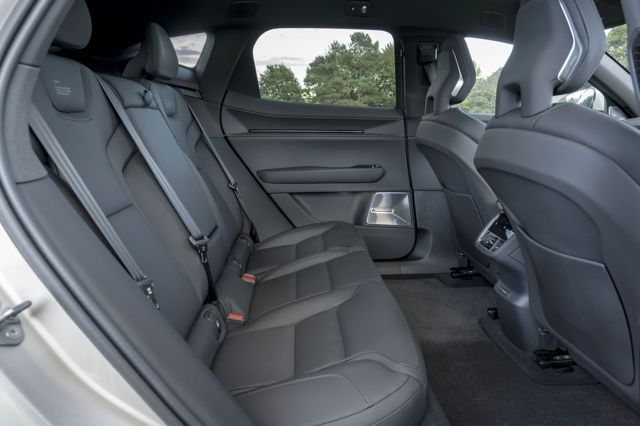
Space on the rear bench is generous enough to allow three adults to sit abreast comfortably, with the centre position only being slightly narrower than the outer two. Head and elbow room are more than ample while the space allotted to legs is positively palatial.
Further helping matters for those sat in the back is the Polestar’s flat floor, ensuring no compromises for the central passenger straddling a large lump and battling with those alongside them for somewhere to slot their feet.
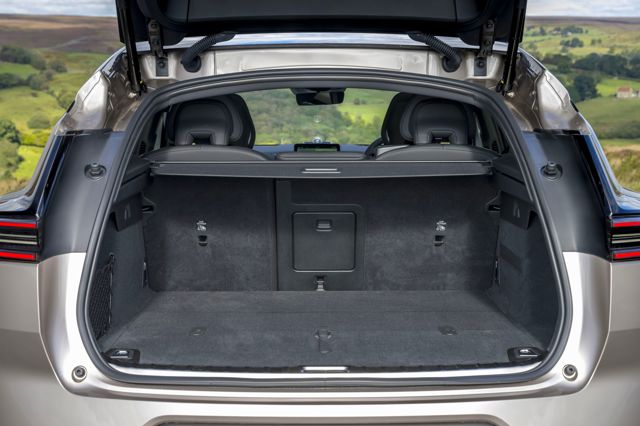
Access to the Polestar 3’s 484-litre boot is via a conventional top-hinged tailgate, although its highest point is lower than it appears to be from the outside due to the roof itself sloping down ahead of it to form an air duct — something to bear in mind when loading tall cargo.
That 484-litre figure includes the volume of a 90-litre well below the boot floor, a generously sized space that will accommodate more than the Polestar’s charging cables. Nevertheless, it lags behind its key rivals when it comes to carrying capacity.
BMW’s iX swallows 500 litres in its boot, a figure trumped by the Mercedes EQE SUV’s 520-litre capacity. Besting that by a further six litres is Audi’s Q6 e-tron, while the Polestar’s cousin — the admittedly larger Volvo EX90 — can carry 697 litres in five-seater mode.
Unlike others mentioned, the Polestar 3’s rear bench only folds in a 60/40-split configuration rather than the more useful 40/20/40, but to compensate, there is a ski hatch through the rear armrest slot, which permits long, slender items to be transported.
When they’re folded over the rear seatbacks don’t lie quite on the same plane as the boot floor, but it isn’t a step between them so large, heavy loads should slide over the surfaces easily.
With the rear seats down, the Polestar 3’s comparative slinkiness impinges on its outright luggage capacity when loading to ceiling height. It’s volume measures 1411 litres, compared with 1750 litres for the BMW, 1675 litres in the Mercedes, a more modest 1529 litres for the Audi and a cavernous 2135 litres should you opt for the larger, pricier Volvo relation.
Specify your 3 with the Plus Pack and additional practicality is found with a portion of the boot floor which folds vertically upwards to divide the space into two, helping prevent items from sliding around too much. There’s an further 23.8-litre stowage area under the front bonnet.
In-car storage is good without being noteworthy, with the familiar array of spacious door bins, a decent glovebox, a wireless smartphone charging pad, a small cubby below the front armrest, cupholders with a sliding vanity panel when not required and a deeper well on the floor below the elevated centre console.
Reverse-park celebrants can rejoice at learning that the Polestar 3's charging port is at the back, located on the nearside rear wing. When using public charge points and their heavy, tethered cables, reversing in is often more preferable.
Polestar 3 2026: Quality and finish
Save for the unappealing panel of glossy black plastic — the antithesis of prestige — on the Polestar 3’s centre console, that it otherwise employs a mixture of textures and upholsteries which aren’t especially common in car interiors adds to its appeal.
What detracts from it will depend on personal preferences, but with the minimalist style of its screen-dominated dashboard, the displays of which are predominantly black, the overall effect can be to make the cabin seem less plush, even a tad downmarket, when finished in darker trim choices.
Some interior materials, especially those on the door panels, also seemed prone to leaving marks behind from apparently clean hands and rainwater — both of which were perhaps more apparent due to the dark grey colouring.
Elsewhere, the build quality feels impressive, the interior was free of squeaks and rattles and there’s a sense of the ensemble being fit to last the rigours of family life, despite its upmarket price positioning.
Polestar 3 2026: Infotainment
Stood proud and dominantly from the Polestar 3’s dash is its Android Automotive-powered 14.5-inch portrait-aspect multimedia touchscreen.
It’s a slick to use and responsive system, just one we’d rather wasn’t required to control almost the entirety of the car’s other functions. Having it angled towards the driver, even slightly, would enable features accessed on the left side of the screen to feel just that bit comfier.
Neatly integrated within the Android operating system are various Google Apps including the Assistant voice control package and Maps, together with third-party content such as Spotify.
Unlike with the Polestar 2, the 3 is compatible with Android Auto and Apple CarPlay without needing to use a cable, helping preserve the interior’s minimalist look even when it’s being used.
Containing all of the key data relevant for the driver is a 9.0-inch screen visible through the steering wheel. Its letterbox-like proportions mean that the graphics it displays aren’t especially large, but they are clear.
On models fitted with the optional Plus Pack it’s augmented by an 9.0x3.0-inch pixel head-up display (HUD) which is projected onto the inside of the windscreen. Neatly, it follows the same font styles and colours as the other displays, with a sharp resolution that appears to be even larger than the primary display screen.
Once again, Polestar is using the 3 to tempt would-be audio-junkies its way with the optional Bowers & Wilkins for Polestar audio upgrade, including a 1610-Watt amplifier and 25 — yes, twenty-five — speakers, two of which are integrated into the front seats’ headrests.
It’s a feast for the ears, but for those who don’t feel they’d benefit from such a package, the standard 300-Watt 10-speaker package is unlikely to generate many complaints.
Polestar 3 value for money
Polestar 3 2026: Prices
Prices for the line-up start at £69,990 for the Polestar 3 Rear Motor, with a chunky £8k step from there to the Dual Motor’s improved performance and driving range to the larger battery at £77,990.
For the range-topping Polestar 3 Performance, although there are some key equipment differences as described below, it’s difficult to determine what the additional £14k you need spend for its £91,990 asking price actually gets you that’s of daily benefit.
Of course, all upmarket electric SUVs from brands that are deemed to have a desirable cachet are expensive. Take the Audi Q6 e-tron, which is not quite as big as the Polestar — it costs upwards of £60,515, but for a similar amount of range and performance to the 3 you need to fork out at least £64,015.
On the other hand the least expensive BMW iX has more oomph than the Polestar but can’t match its range — it will set you back at least £75,405. Closer for both metrics is the gateway model in the Mercedes EQE SUV range yet that’s even more at £76,870.
And if you think buying the Volvo EX90 might be a convenient way of getting Polestar pace and range with a larger, seven-seater body for less money, then think again. The Single Motor version of it with the smaller 92kWh battery will drain your coffers to the tune of £82,660.
Polestar 3 2026: Reliability and running costs
In order to minimise running costs for the Polestar 3 it is imperative to have a home wallbox charger installed, if at all possible. Having one will enable to you take advantage of a range of cheaper, EV-friendly tariffs from a range of energy suppliers, lowering costs down to around 7p/kWh.
Public rapid charging is pricey and something we recommend using as infrequently as possible. Thankfully, the 3’s long driving ranges make that possible for all but the longest of road trips, which most people only tackle a handful of times per year. Remember that public ultra-rapid chargers aren’t a financially viable alternative to domestic wallboxes.
Since April 2025 electric cars have no longer been excused from VED car tax — their drivers are now required to shell out £195 annually from the first anniversary of the car being registered. They are also liable for the Expensive Car Supplement, when they cost in excess of £40,000. All Polestar 3s do, by some margin, which at current rates means an extra £425 to pay annually from years two to six of ownership.
Company car drivers appreciate that EVs are something of a no-brainer for them thanks to their irresistible 3% Benefit-in-Kind (BiK) taxation rates. The Polestar 3 represents an awful lot of car for a low monthly deduction.
Satisfaction Index
 What is your car like to live with?
We need your help with our latest Satisfaction Index, so that we can help others make a smarter car buying decision. What's it like to live with your car? Love it? Loath it? We want to know. Let us know about your car - it will only take a few minutes and you could be helping thousands of others.
Help us with the Honest John Satisfaction Index nowPolestar 3 models and specs
As is familiar with its other models, there’s nothing like a conventional trim level structure for the Polestar 3 line-up, although unlike its siblings, the Performance version is a standalone model rather than an option pack, sitting above the nameless standard range.
Below the standard equipment lists, we explore the contents of the main equipment bundles you can choose to specify.
Standard features for the Polestar 3 Rear Motor and Dual Motor include:
- 20-inch Aero diamond cut and gloss black finish alloy wheels
- Coil spring suspension with passive dampers — Rear Motor only
- Dual-changer active air spring suspension with adjustable damping — Dual Motor only
- Automatic LED daytime-running, head and tail lights
- Automatic main beam
- Automatic windscreen wipers
- Panoramic, laminated glass roof
- Frameless, auto-dimming, heated, electrically adjustable and folding door mirrors
- Ground lighting in all four exterior door handles
- Flush exterior door handles
- Keyless un/locking and starting/stopping
- Electrically operated tailgate
- 12 front, side and rear parking sensors
- Front radar system
- Rear-view camera with automatic cleaning system
- 9.0-inch driver's display screen
- 14.5-inch multimedia touchscreen interface
- Integral Google Play apps including Google Assistant, Google Maps and Spotify
- DAB digital radio
- Bluetooth and Wi-Fi device connectivity
- Wireless Android Auto and Apple CarPlay smartphone mirroring
- High-performance audio system with 300-Watt amplifier and 10 speakers
- 15-Watt wireless smartphone charging pad
- 4x USB-C sockets, two each front and rear
- Heated, 10-way electrically adjustable sports comfort front seats with multi-directional lumbar adjustment
- Comfort rear seats
- Bio-attributed MicroTech upholstery in Charcoal
- Black seatbelts — Rear Motor only
- Black seatbelts with Swedish gold stripe — Dual Motor only
- Repurposed aluminium deco interior theme
- Tri-zone climate control with air filtration system
- Laser-etched interior light line in white or Swedish gold
- Adaptive Cruise Control
- Lane Departure Warning
- Lane Keeping Aid
- Driver Alert Control
- Rear Collision Warning and Mitigation
Additional equipment for the Polestar 3 Performance includes:
- 22-inch Performance machine finished and gloss black forged alloy wheels
- Brembo brake upgrade with Swedish gold-painted calipers
- Performance software upgrade
- Swedish gold seatbelts
Polestar 3 option packs
Opting for the Climate Pack adds:
- Heated front windscreen wiper blades
- Heated outer rear seats
- Heated steering wheel
Choose the Plus Pack if you fancy:
- Electrically powered flush exterior door handles
- Soft-close doors
- Electrically adjustable steering column
- 9.0x3.0-inch head-up display
- Bowers & Wilkins for Polestar 1610-Watt, 25-speaker sound system
- CleanZone air quality system with particulate filters
- Liftable boot floor partition
Go for the Pilot Pack to add:
- Pilot Assist
- Lane Change Assist
- Curve Speed Assist
- Five exterior cameras for 360-degree display
For further convenience, the Prime Pack comprises:
- Dark-tinted rear privacy windows
- Climate Pack
- Plus Pack
- Pilot Pack
With additional comfort in mind is the Nappa Upgrade consisting of:
- Heated, ventilated, 12-way electrically adjustable sports comfort front seats with multi-directional lumbar adjustment and five massage settings
- Bridge of Weir Nappa leather upholstery in Zinc or Charcoal
- Black Ash deco interior theme
| Dimensions | |
|---|---|
| Length | - |
| Width | - |
| Height | - |
| Wheelbase | 2985 mm |
| Miscellaneous | |
|---|---|
| Kerb Weight | - |
| Boot Space | - |
| Warranty | |
| Servicing | - |
| Costs | |
|---|---|
| List Price | £83,145–£88,745 |
| Insurance Groups | - |
| Road Tax Bands | A |
| Official MPG | - |
| Euro NCAP Safety Ratings | |
|---|---|
| Adult | - |
| Child | - |
| Pedestrian | - |
| Overall | - |
| SUV | |||
|---|---|---|---|
| Version | List Price | MPG | 0-62 |
| Pilot Plus Long Range 489 Electric Dual Motor 111kWh Auto 5dr | £83,145 | - | - |
| Pilot Plus Performance Long Range 517 Electric Dual Motor 111kWh Auto 5dr | £88,745 | - | - |
| Plus Long Range 299 Electric Single Motor 111kWh Auto 5dr | £83,145 | - | - |
Model History
- October 2022: Polestar 3 unveiled
- June 2024: Polestar adds Polestar 3 Long range Single motor, prices start at £69,900
- October 2025: 2026 Polestar 3 gets significant changes, prices start at £69,990
October 2022
Polestar 3 unveiled
Polestar officially reveals the Polestar 3 electric performance SUV. The Polestar 3 premieres a new aerodynamic profile where a strong focus has been placed on retaining the hallmarks of an SUV, including a powerful and wide stance.
This has been led by subtle yet effective aerodynamic optimisation – including a front aero wing integrated into the bonnet, an aero wing integrated into the rear spoiler, and rear aero blades.
Polestar 3 is the first car from Polestar to feature centralised computing with the NVIDIA Drive core computer, running software from Volvo Cars. Serving as the AI brain, NVIDIA’s high-performance automotive platform processes data from the car’s multiple sensors and cameras to enable advanced driver-assistance safety features and driver monitoring.
The infotainment system is powered by a next-generation Snapdragon Cockpit Platform from Qualcomm Technologies, Inc. As a central component of the Snapdragon Digital Chassis – a comprehensive set of open and scalable cloud-connected automotive platforms – the Snapdragon Cockpit Platform will be utilised to provide immersive in-vehicle experiences with its high-performance capabilities to deliver high-definition displays, premium quality surround sound and seamless connectivity throughout the vehicle.
Polestar 3 includes the latest interior radar sensors that can detect sub-millimetre movements in the interior of the car, to help protect against accidentally leaving children or pets inside. The system is also linked to the climate control system to avoid heat stroke or hypothermia.
Further collaborations with industry-leading safety technology partners like Zenseact, Luminar and Smart Eye, provide Polestar 3 with cutting-edge ADAS (Advanced Driver Assistance System) technology that integrates seamlessly thanks to the centralised computing power.
As standard, Polestar 3 features a total of five radar modules, five external cameras and twelve external ultrasonic sensors to support numerous advanced safety features. The SmartZone below the front aero wing collects several of the forward-facing sensors, a heated radar module and camera, and now becomes a signature of Polestar design. Inside, two closed-loop driver monitoring cameras bring leading eye tracking technology from Smart Eye to a Polestar for the first time, geared towards safer driving. The cameras monitor the driver’s eyes and can trigger warning messages, sounds and even an emergency stop function when detecting a distracted, drowsy or disconnected driver.
Android Automotive OS is the in-car operating system, co-developed with Google and fronted by a 14.5-inch centre display. It is an evolution of the technology first launched in Polestar 2 – the first car in the world with Google built-in – and a revolution of functionality and design for the large SUV segment. Over-the-air (OTA) updates are included to allow for continuous software improvement and the introduction of new features without the need to visit a service point.
Polestar 3 launches with a dual-motor configuration and a power bias towards the rear. The standard car produces a total of 360 kW (489 hp) and 840 Nm of torque. With the optional Performance Pack, total output is 380 kW (517 hp) and 910 Nm. Adjustable one-pedal drive is included, as well as an electric Torque Vectoring Dual Clutch function on the rear axle – an evolution of what was first developed for Polestar 1. A decoupling function is also available for the rear electric motor, allowing the car to run only on the front electric motor to save energy under certain circumstances.
Advanced chassis control is provided by dual-chamber air suspension as standard, allowing Polestar 3 to adapt between comfort and dynamic suspension characteristics, and the car can adjust its active damper velocity electronically once every two milliseconds (500 Hz).
A 111 kWh battery pack provides Polestar 3 with generous driving range of up to 379 miles WLTP(preliminary). The lithium-ion battery features a prismatic cell design housed in a protective aluminium case with boron steel reinforcement and liquid cooling. A heat pump is included as standard, helping Polestar 3 utilise ambient heat for climate and battery pre-conditioning. Polestar 3 is also equipped for bidirectional charging, enabling future potential for vehicle-to-grid and plug-and-charge capabilities.
As with Polestar 2, the list of standard equipment in Polestar 3 is extensive, with few options for easy configuration and simplified production logistics. All versions include air suspension, a full-length panoramic glass roof, all-LED lighting inside and out, retractable door handles with proximity sensing, and 21-inch alloy wheels. The Plus Pack and Pilot Pack are fitted as standard for the first model year and include a raft of premium, luxury and convenience features like a 25-speaker audio system from Bowers & Wilkins with 3D surround sound and Dolby Atmos capability, soft-closing doors, a head-up display and Pilot Assist.
Available to order from the second quarter of 2023, the optional Pilot Pack with LiDAR from Luminar will add an additional control unit from NVIDIA, three cameras, four ultrasonic sensors and cleaning for the front- and rear-view cameras, providing accurate real-time data about the car’s surroundings especially in the long-range field. This enables enhanced 3D scanning of the car’s surroundings in greater detail and helps prepare the car for autonomous driving.
The optional Performance Pack sharpens driving dynamics even further and includes the maximum power and torque output (380 kW, 517hp and 910 Nm), along with performance optimisation for the air suspension, unique 22-inch forged alloy wheels and additional signature ‘Swedish gold’ details.
Polestar 3 is the first car on a new all-electric technology base developed by and shared with Volvo Cars. Production for initial launch markets[3] is planned to begin in Volvo Cars’ facility in Chengdu, China, in an incremental ramp-up phase[2] from mid-2023, with first deliveries expected in the fourth quarter of 2023.
Additional manufacturing at Volvo Cars’ Ridgeville, South Carolina facility in the United States, is expected to follow towards the middle of 2024 – from which point supply to North American and other markets is planned to switch from China to the US. Initial deliveries from this factory are expected around the middle of 2024.
At launch, the Polestar 3 Long range Dual motor (360 kW, 489hp, 840 Nm) is available with an indicative launch price of £79,900.
June 2024
Polestar adds Polestar 3 Long range Single motor, prices start at £69,900
Polestar has introduced a Long range Single motor variant to the Polestar 3 line-up, priced from £69,900 and available to order now.
The new model becomes the entry level Polestar 3, and uses the same 111kWh battery pack as the Dual Motor version, offering the same 250kW peak charging capability for a 30-minute 10-80% charge on DC.
Despite being the entry point in the Polestar 3 range, the new model also has the longest range, offering a claimed 403 miles.
The Polestar 3 Long range Single motor is rear-wheel drive, and its motor produces 220kW and 490Nm of torque. The car can sprint from 0-62mph in 7.8 seconds, while braking is taken care of by the same Brembo braking system as the rest of the Polestar 3 range.
October 2025
2026 Polestar 3 gets significant changes, prices start at £69,990
Polestar has announced a major update to the 3 EV. The new 2026 version of the car is priced from £69,990 and switches from a 400V to 800V electrical architecture, gets a new motor design and features an upgraded core computer.
The new architecture allows a peak charging rate of 350kW. This means a 10-80% DC charge takes 22 minutes, cutting DC charging times by 25%.
New batteries from supplier CATL are also introduced. The Rear motor version has a 92kWh battery and the Dual motor and Performance variants get a 106kWh pack.
A new rear motor design has been introduced, which allows up to 680PS in the Performance model.
The last major change is an upgrade from the NVIDIA Xavier processor to the DRIVE AGX Orin chip, which is eight times faster. This will be offered as a free upgrade to existing cars in addition to being fitted to new Polestar 3 models.
New trim levels are part of the changes, with the Polestar 3 Rear motor, Dual motor, and Performance marked out by black, black and gold or gold seatbelt colours respectively.
2026 Polestar 3 prices
3 Rear motor £69,990
3 Dual motor £77,990
3 Performance £91,990
