
Omoda 7 Peview: Price, specs and boot space
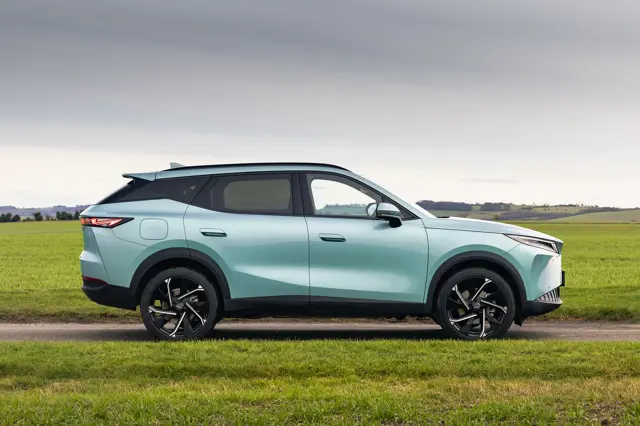
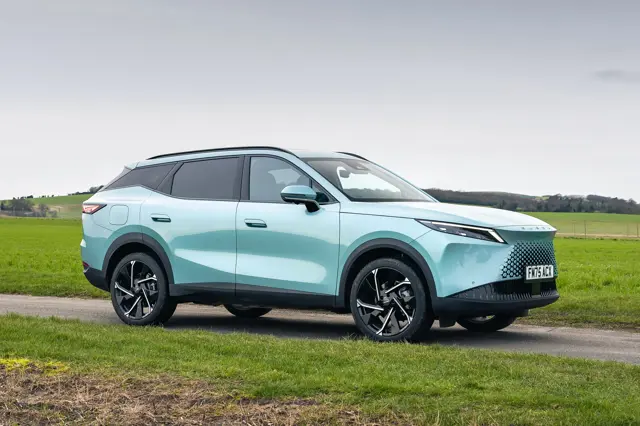

Omoda 7 Verdict

 Excellent value for money. More practical and stylish than related Jaecoo 7. Decent electric-only range from PHEV.
 Poor fuel economy from 1.6 petrol. Ride is too firm. On-board technology can be fiddly and irritating.
Find out more about the Omoda 7
|
 Driven, tested and rated by:
 Omoda 7 at a glance:
- Body type: SUV
- Price range: £29,915 - £35,000
- MPG: 47.1mpg
- Number of seats: 5 (3 Isofix)
- Boot capacity: 540-639 litres
- Insurance groups: 32
Omoda 7: Everything you need to know
If there's any car that signals the arrival of the Chinese car industry as a force to be reckoned with in the UK, it's the Jaecoo 7. More than 26,000 were sold here in 2025, making it one of the most popular new cars on sale. It even outsold the Nissan Qashqai at points. So now that it has a corporate sibling in the form of the Omoda 7, rivals ought to be worried.
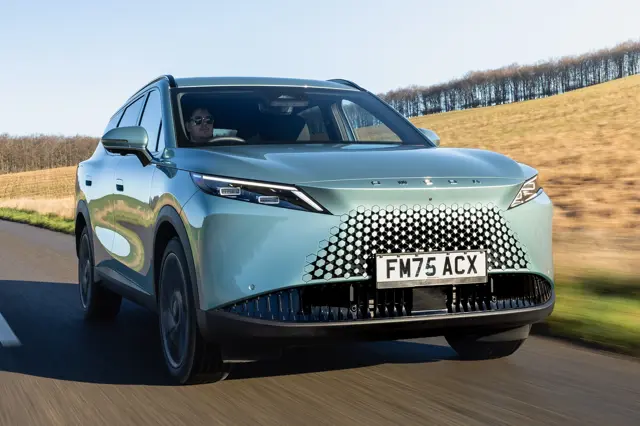
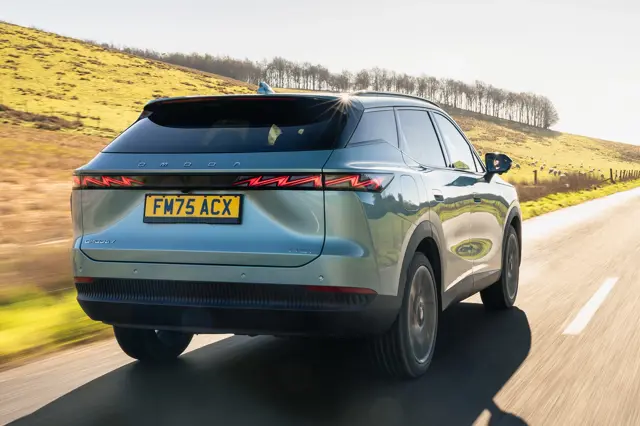
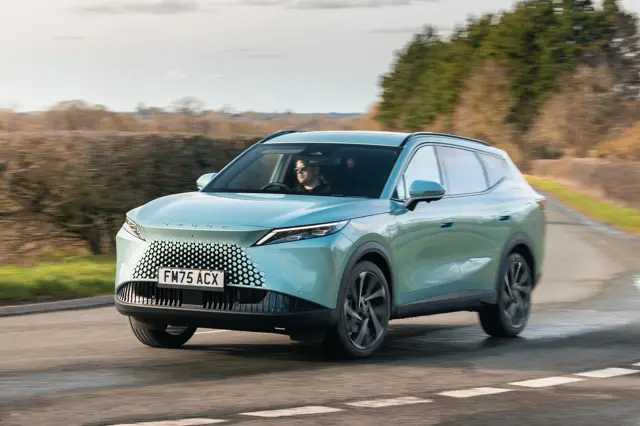
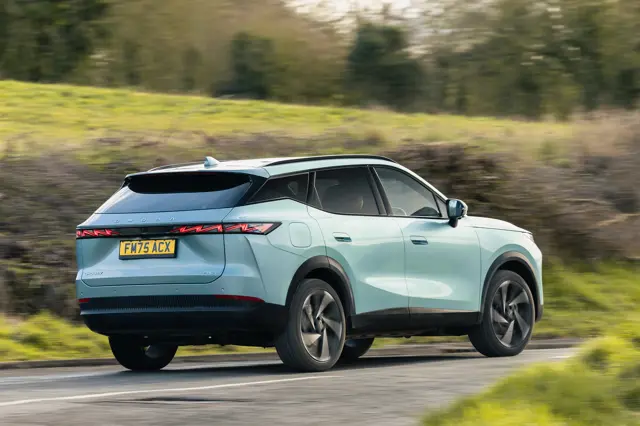
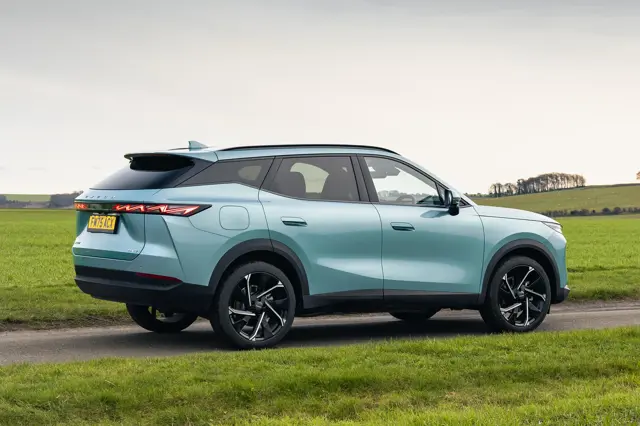
The Omoda version of the 7 is much the same under the skin; it even has the same 1.6-litre petrol engine and a plug-in hybrid. It looks quite different from the outside, though, with a distinct interior design to set it apart from the Jaecoo.
It also has a marginally less silly brand name. Jaecoo, if you're not aware, is supposed to be a combination of 'jaeger' (the German word for hunter) and 'cool', while Omoda is supposed to stand for 'oxygen' and 'moda' (the Italian word for fashion). The 7 is its third car to reach the UK, after the Omoda 5 and Omoda 9.
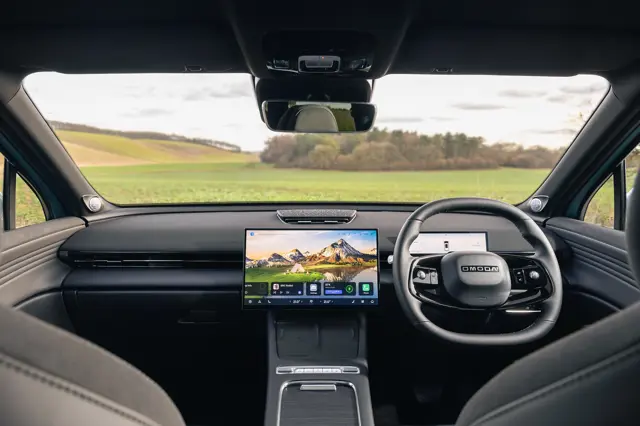
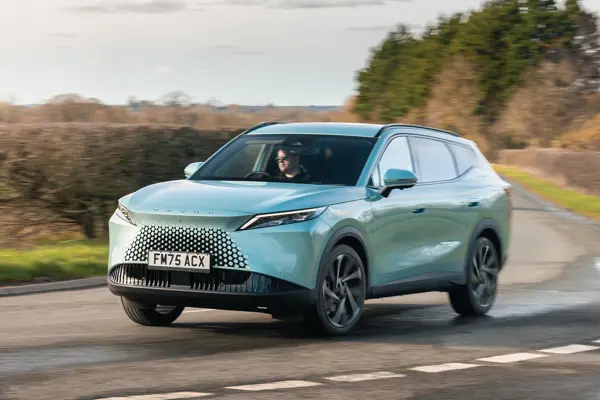
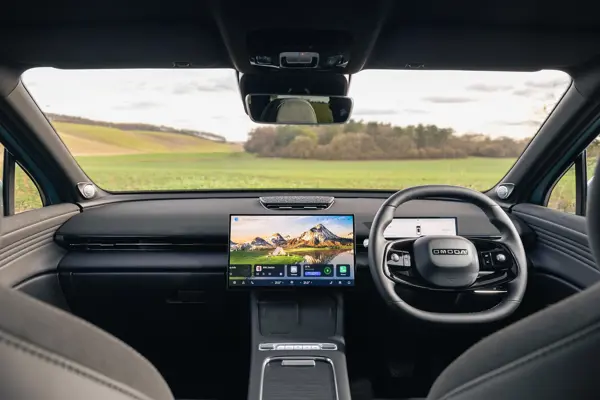
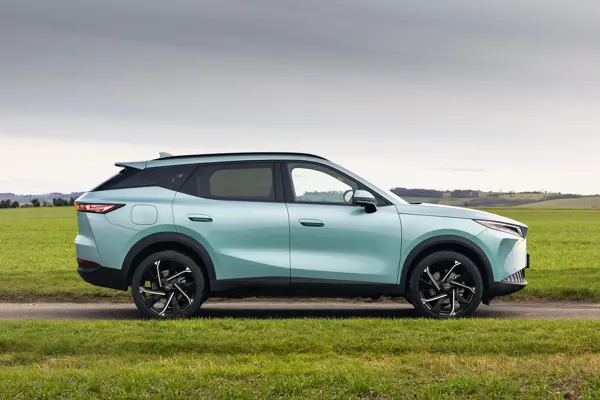
It probably makes sense, then, that the Omoda 7 is the sleeker of the two, while the Jaecoo is chunkier and looks like it's trying to imitate a Land Rover of some sort (it's earned the nickname 'Temu Range Rover' on social media). The Omoda is stylish on the inside, too, with a very minimalistic interior that's dominated by a massive central touchscreen.
Starting at just under £30,000, the Omoda 7 doesn't look like the high-value proposition you might expect from an emerging Chinese brand, but the devil's in the detail. Compared to entry-level versions of the 7's more established rivals, you're getting a lot more gear here.
Speaking of alternatives, there are many. The aforementioned Nissan Qashqai, for example, is one of Britain's most popular cars. There's also the Kia Sportage, the Hyundai Tucson, the Skoda Karoq and the Volkswagen Tiguan, to name a few more, and the 7 also has some domestically built rivals to worry about.
Close to home, there is, of course, the Jaecoo 7, plus the Tiggo 7 from the Chery brand, which sits above Omoda and Jaecoo in a corporate family tree. The Geely Starray, meanwhile, has a plug-in hybrid powertrain yet costs the same as the basic petrol Omoda 7 in Knight trim.
If you don't mind spending a bit more, there's also the SHS (Super Hybrid System) version, which is available in both Knight and Noble trims.
How we tested the Omoda 7
We drove the Omoda 7 in SHS-S Noble form on a wide variety of roads, including urban, twisting country roads and dual-carriageways. The road surfaces ranged from smooth to rough, with potholes and speed bumps giving a good test of the car's suspension.
We tried the 7 in all its driving modes, while also trialling its refinement at cruising speeds, the way it handles winding roads and the ease with which it can be manoeuvred. The car was generally driven with all the assistance systems turned on, but we did switch the lane assistance feature off for a short while.
We also had a deep dive into its infotainment system, having a good look through all the menu systems and altering the customisable swipe-down menu.
To test the practicality, we tried out the rear seats, checking both the head and legroom. We looked at every single one of the 7's various storage areas, including, of course, the boot.
In that time, we found the ride to be quite firm, although the car generally has a decent amount of composure. We didn't much like the way the throttle responded in the Normal mode, but on the plus side, the engine part of the PHEV system is very quiet.
The infotainment system is certainly impressive in its size and is very responsive, but its positioning on the dashboard could be better. The settings sub-menu is bafflingly complex, meanwhile, and having to use the screen to adjust or fold the mirrors is just needless faff.
The driving assistance features can be a little intrusive, too. The lane assistance is over-eager (albeit better resolved on other Omoda and Jaecoo models we've tried, suggesting a fast rate of improvement), and the driver attention monitor very easy to set off.
"The Omoda 7's exceptional value makes it easier to overlook the car's less-good elements, including its firm ride and sometimes annoying tech"
|
Is the Omoda 7 a good car?
The Omoda 7 is one of the stronger options amongst its compatriots, and it undercuts the likes of the aforementioned Sportage and Tiguan enough that you can overlook the many ways in which it's simply not as good.
These are mostly focused on the way it drives, plus its fiddly and at times annoying on-board tech. Should you be interested in the savings, though (and we wouldn't blame you if you are), these are all things you should be able to learn to live with.
Omoda 7 SHS: Range
| Omoda 7 SHS | 56 miles |
According to the WLTP Combined official figure, you'll get up to 56 miles of electric-only running out of a plug-in hybrid (PHEV) Omoda 7, which is called the SHS.
This looks like a very healthy figure when you consider that a Hyundai Tucson PHEV manages a more modest 43 miles with its battery fully charged. It's slightly ahead of the 51 miles offered by the base version of the Geely Starray, although you can spec that car with a larger battery, which offers a whopping 84 miles of electric-only running.
Omoda 7: Charging times
You can, should you wish, top the battery up at a rapid charger thanks to 40kW charging capability. That wouldn't be a very economical thing to do, though, with some rapid chargers now costing as much as 90p per kWh. If you must use one, Omoda quotes 20 minutes for a 30% to 80% top up.
Ideally, you'll keep your Omoda 7 SHS charged at home. Using a 7.4kW domestic wallbox, this will take about two and a half hours. It'll be two or three times that if charging from a three-pin plug – something that generally isn't recommended, as your home electricity supply probably won't be designed for such a sustained, high output.
Reviews for Omoda 7's top 3 rivals
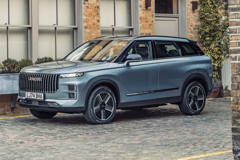

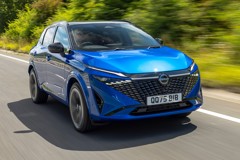
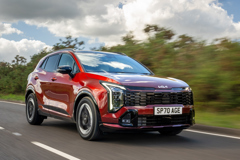
Omoda 7 handling and engines

Omoda 7 2026: Handling and ride quality
The Omoda 7 has an annoying habit of thumping over imperfections in the road surface with little grace, sending shudders through the cabin. It does at least settle well after going over potholes, speedbumps and the like, but the damping definitely lacks the suppleness of an (admittedly more expensive) rival like the Volkswagen Tiguan or Kia Sportage.
It's nothing you couldn't learn to live with, though, and we like that the 7 stays composed in the corners and when navigating roundabouts, not leaning excessively even as the speeds rise. The steering is numb, though, giving little idea of what the front wheels are up to.
Traction could be better, as well. Pull out of a side turning quickly, even if you're not using full throttle, and the front wheels will spin up. The traction control briefly intervenes before the wheel spin comes back, a cycle which can happen two or three times.
You can turn the traction control off, which we wouldn't recommend – this results in the inside front tyre getting completely overwhelmed with wheelspin if you're not too careful with the throttle.
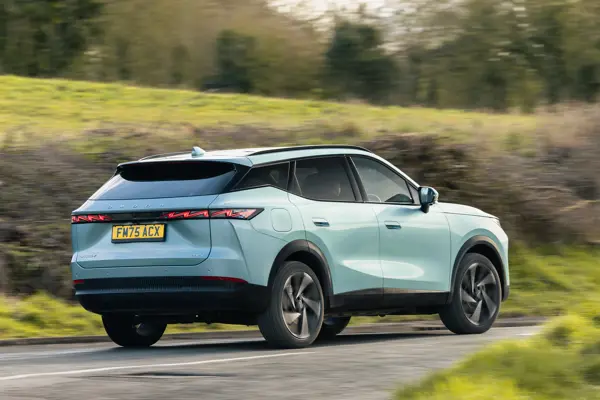
Refinement at cruising speeds is acceptable enough. Wind noise is kept to a relatively low level, but you do get some low-frequency rumble from the wheels and tyres, particularly when you're going over broken-up bits of road.
Omoda 7: Batteries and motors
There's a choice of two engines in the Omoda 7, and they're the same engines as those found in the closely related Jaecoo 7. The first is a 1.6-litre, four-cylinder petrol engine producing 147PS and 275Nm, enough for a modest but perfectly acceptable 0-62mph time of 10.4 seconds. The top speed is 118mph, and it's exclusively combined with a seven-speed automatic gearbox, with no manual available.
We haven't been able to try a 7 with this engine just yet, but in the Jaecoo 7, we found the same engine to be noisy when worked hard to extract its modest performance.
The second engine is what Omoda refers to as the SHS (Super Hybrid System). It's based around a 1.5-litre four-cylinder petrol engine, joined by two electric motors and an 18.3kWh battery pack. Power rises to 204PS while the torque goes up to 365Nm, trimming the 0-62mph time to 8.4 seconds despite the car being more than 300kg heavier thanks to its big battery. The top speed is a little lower, though, at 112mph.
The petrol engine can charge the battery via one of the motors, with the second motor used to power the front wheels. Under hard acceleration, the engine can more directly drive the wheels via a three-speed automatic gearbox.
Sounds complicated, but in reality, you often don't really feel what the system is up to. A lot of the time, the car just drives like an EV, and that's to say, smoothly and quietly. Even when the engine does join the party, you can barely hear it.
We're not so keen on what happens when you lift off the accelerator pedal, though. The throttle takes a long time to shut off when you do so, giving a disconcerting feeling of the car still surging forward for a moment, even though your foot is off the gas. This is curtailed in the Sport mode, at least.
Omoda 7 2026: Safety
The Omoda 7 hasn't yet been assessed by independent safety organisation Euro NCAP, but the Jaecoo 7, which features the same structure as the Omoda, was awarded the full five stars when it was tested. Although this isn't a guarantee that the Omoda will get the same, it's reassuring in the meantime.
All versions come with a plethora of safety systems, including autonomous emergency braking, lane assistance, a driver attention monitor, rear collision warning and a surround-view parking camera. Upgrading to Noble trim adds a driver knee airbag.
The lane assistance system isn't as aggressive as other Omoda and Jaecoo models we've tested, but you can still feel it working away in the background when it really doesn't need to. Our preference is still to turn it off, which is made more difficult by the fact that you can't add a shortcut to it in the customisable drop-down window on the touchscreen.
Meanwhile, the driver attention monitor is very sensitive (you can set it off by merely scratching your nose), but the warning is so quiet that it won't really bother you much.
Omoda 7 2026: Towing
The braked towing capacity is the same for both engine options at 1250kg. That'll be enough for a lighter caravan, but is some way behind the 1650kg managed by certain versions of the Hyundai Tucson.
Omoda 7 interior
Omoda 7 2026: Practicality
Boot volume is impressive at 639 litres with the rear seats in place. That's a good chunk better than the Kia Sportage's 581 litres, and a lot healthier than the slightly meagre 505 litres of space found in the boot of a Nissan Qashqai.
The volume drops if you spec the plug-in SHS, due to the packaging of its high-voltage battery, but at 590 litres, the PHEV is still better than the Kia and Nissan. It's also worth pointing out that the Kia takes a boot space hit in PHEV form too, dropping to 540 litres.
The rear seats fold in a 60:40 split. This gives a total of 1417 litres of load space, which might sound low considering Kia quotes 1780 litres for a Sportage configured the same way, but Omoda's figure is based on loading to the windowline rather than to the roof, the latter being the norm.
In terms of storage space away from the boot, there's a deep cubby under the front central armrest, in front of which you'll find two cupholders and a thin slot, which might be handy for a chocolate bar if you're on a long enough drive to require a snack partway through, we suppose.
The centre console features an open area underneath with a storage tray at the bottom, but it's not very deep, making it of limited use.
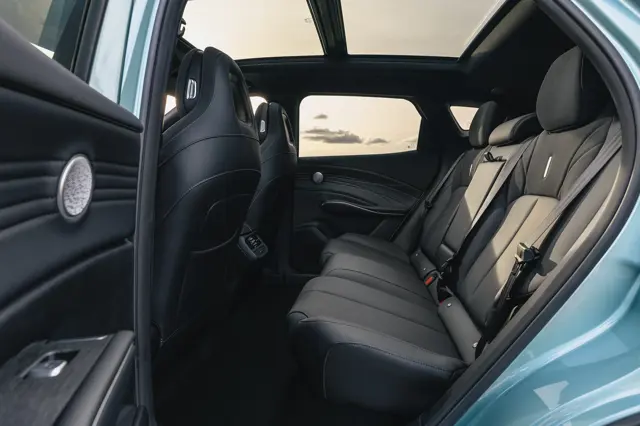
The rear bench features three top-tether ISOFIX child seat mounting points, although we haven't had the chance to test these yet. We have tried out the rear legroom and headroom, though, which is very generous on both counts. Even if you're putting adults over six-feet tall back there, you won't get any complaints.
Omoda 7 Dimensions:
The 7 is 4660mm long, 1875mm wide not including the mirrors (we haven't seen a figure with them included just yet) and 1670mm high. This makes it quite a bit longer than its rivals – a Kia Sportage, for example, is 4540mm long. It's still a fair way off most options from the class above (think the Skoda Kodiaq and cars of its ilk), though, and isn't so large that it'll be difficult to park.
Omoda 7 2026: Quality and finish
Given the Omoda 7's low price, you might expect this to be reflected in the interior quality, but the initial impressions when you step aboard say otherwise. The materials used feel surprisingly plush, and although we're not entirely sure what Omoda means about the seats being 'gaming inspired', they do look undeniably good.
Things aren't so rosy lower down, where cheaper-looking, hard-touch plastics take over. This is pretty common, mind you, but with Omoda being such a new brand, we are left with question marks over how well a lot of this stuff will wear after several years and thousands of miles of use. It's also worth noting that there was a light creaking noise coming from somewhere below the driver's seat of the example we tested.
Omoda 7 2026: Infotainment
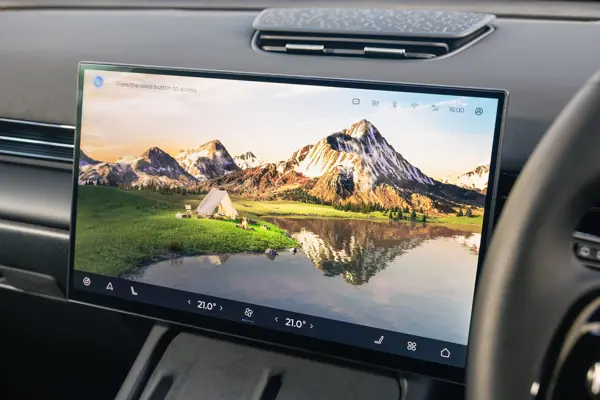
The cabin's centrepiece is a massive, landscape-oriented touchscreen measuring an impressive 15.4 inches, although it sits a fair way below your eyeline. An optional technology pack, joining the configurator later in 2026, will give the display a feature that allows it to electronically slide over to the passenger side. We can't help but think this sounds like a gimmick, much like BYD's rotating screens, which, incidentally, the Omoda rival is already phasing out.
Also, we'd happily take a smaller screen if it gave room for some physical climate controls. Like so many cars, the Omoda 7 requires you to use the screen for this, but there is at least a permanently displayed bar along the bottom with shortcuts for the temperature of each of the two climate zones.
You'll also need to use the screen to switch on the seat heating and ventilation, and even to adjust or fold the electric mirrors. The former involves going into the settings and enabling the adjustment mode, at which point the angle of each mirror can be adjusted on the steering wheel button pads. Yes, you can (and should) add a shortcut for this on a customisable, swipe-down menu, but we'd prefer there to be a proper physical control for this.
Thankfully, the touchscreen is responsive, and the system itself is quick to load up different functions and sub-menus. The main menu system is an easy-to-understand smartphone-style layout with clickable tiles, although the settings sub-menu is bewilderingly complicated and could do with giving more prominence to the stuff you're likely to want to fiddle with more often.
Wireless Android Auto and AppleCarPlay connectivity is included as standard. There's a wireless charging pad wide enough to accommodate two smartphones, with the right one featuring a cooling vent linked to the car's air conditioning circuit.
There's a pair of USB ports in the front and a pair in the back, but only one of each is the modern USB-C type, joined by the largely obsolete USB-A. This doesn't seem like a massive deal given the double wireless charging pad, though.
Knight-trimmed cars come with a six-speaker Sony sound system, upgraded to a 12-speaker setup on the Noble grade. It's wasted on the car's DAB tuner, though, the quality of which is one of the poorest we've heard in a modern car.
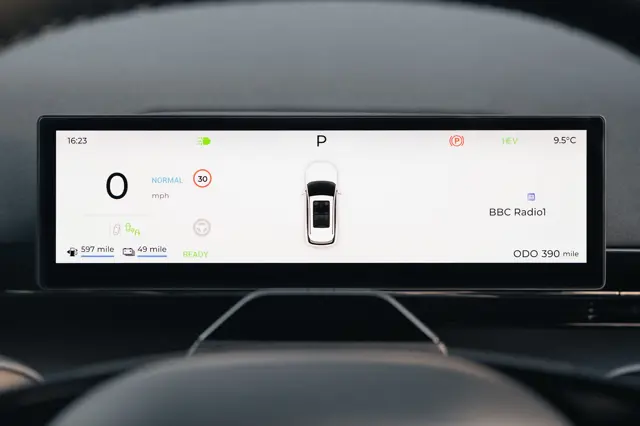
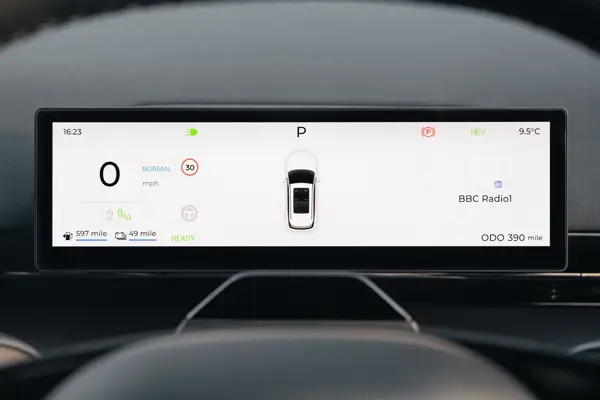
To the side of the infotainment screen is a digital instrument cluster measuring 8.8 inches. That sounds like a decent size, but it's a letterbox sort of shape, meaning there isn't actually a great deal of screen real estate, and there's a lot, possibly too much, crammed into that small space.
The central portion is taken up by a digital representation of the road ahead, showing cars and lorries that have been picked up by the 7's various sensors. Given that it's merely replicating what you can see with your eyes, we don't see the point, beyond being a flashy demonstration of the car's safety systems working. We'd rather the speed be displayed in the middle, but instead, it's shoved to the side.
Omoda 7 value for money
Omoda 7 2026: Prices
These are the launch prices for the Omoda 7, correct as of March 2025. New car prices can fluctuate, so please use these as a guide and check with the manufacturer for up-to-date figures.
| Omoda 7 Knight petrol | £29,915 |
| Omoda 7 Knight SHS | £32,000 |
| Omoda 7 Noble SHS | £35,000 |
Is the Omoda 7 good value compared to rivals?
That starting price is ever-so-slightly more than a Jaecoo 7's, and a bit less than a Nissan Qashqai. You're only getting a basic Qashqai for just over £30,000, though, whereas the Omoda 7 is generously loaded up with kit even on the entry-level model.
The SHS looks like especially good value given how much Omoda's more established rivals charge for such systems in their cars. Plug-in hybrid versions of the Hyundai Tucson, for example, start at £39,410, which is pretty typical for a PHEV from a better-known brand.
The Geely Starray offers plug-in hybrid power for £29,995, but we think the Omoda 7 is a better car overall. Even though the driving experience is flawed, it's better behind the wheel than the Geely, with slightly better resolved handling and a far quieter drive system. Although this is subjective, we think it looks better, too.
You might well end up spending less than those already tempting list prices, with the Omoda brand known for offering chunky discounts on in-stock cars. Meanwhile, the SHS version enjoys a BiK (Benefit-in-Kind) tax rate of 9%, which will make for low monthly payments if running as a company car.
Omoda 7 2026: Reliability and running costs
VED car tax will be at the standard rate – currently £195 a year – and with all versions comfortably under the £40,000 threshold for the government's expensive car tax supplement, there'll be no additional stings in the tail.
Where you might find some financial pain is at the fuel pumps. WLTP fuel-economy figures for the petrol Omoda 7 weren't available at the time of writing, but they're unlikely to be far off the Jaecoo 7's, given that they're the same engines powering a similar-sized car.
With that in mind, we can expect around 37mpg from the entry-level petrol engine, which is underwhelming when competitors tend to be well into the 40s and in some cases nudging 50mpg. The SHS is rated at 47.1mpg, although what you get will vary wildly depending on how the car is used.
Mind you, with an electric-only range of 56 miles, you might rarely need to kick the engine into life on a lot of shorter journeys. Keep it charged at home and on an EV electricity tariff with cheaper off-peak periods, and it'll be a very cheap way to get around. A full charge on a more standard tariff still won't be too expensive, coming in at just under a fiver.
It's too early to tell how the long-term reliability of a new car from a fresh brand like this might fare, but it's reassuring that the Omoda 7 comes with a much-better-than-average seven-year, 100,000-mile warranty. The high-voltage battery in the SHS comes with eight years and 100,000 miles of separate coverage, as is now mandatory.
Omoda 7: Frequently Asked Questions
Is the Omoda 7 a seven-seater?
The Omoda 7 is not a seven-seater – it's a five-seater car. If you're wondering which Omoda is a seven-seater, the answer is none of them, at the time of writing. Omoda sister brand Jaecoo will soon be bringing the seven-seater Jaecoo 8 here, while the parent company Chery also has the Chery Tiggo 8 and Tiggo 9 for anyone wanting to seat seven.
When is the Omoda 7 coming to the UK?
The Omoda 7 is already available in the UK. SHS plug-in hybrid versions will be available first, followed by a petrol model.
What's the difference between the Omoda 7 and Omoda 9?
The Omoda 9 is longer than the 7, about £13,000 more expensive, and has a very different interior layout. It's also only available with a plug-in hybrid drive system, and one that puts out a lot more power than the 7's.
Satisfaction Index
 What is your car like to live with?
We need your help with our latest Satisfaction Index, so that we can help others make a smarter car buying decision. What's it like to live with your car? Love it? Loath it? We want to know. Let us know about your car - it will only take a few minutes and you could be helping thousands of others.
Help us with the Honest John Satisfaction Index nowOmoda 7 models and specs
The Omoda 7 is offered in two trim levels called Knight and Noble (no, we're not sure why there's a medieval theme either), although the latter is only available on the SHS plug-in hybrid version.
The Omoda 7 Knight comes with the following equipment as standard:
- 19-inch alloy wheels
- LED headlights
- Dark-tinted rear side windows
- Wireless Apple CarPlay/Android Auto
- Wireless phone charging pad
- Keyless entry and start
- Panoramic parking camera
- Heated leather steering wheel
- Six-way electrically adjustable front seats
- 8.88-inch digital instrument cluster
- 15.6-inch touchscreen infotainment system
- Six-speaker Sony sound system
- Two-zone climate control
Upgrading to the Omoda 7 Noble upgrades the above specification with the following equipment:
- Electric driver seat lumbar support
- Heated and ventilated front seats
- Electric panoramic sunroof
- Fragrance system
- Auto-dimming rear-view mirror
- Powered tailgate
- 12-speaker Sony sound system
