
Autumn Budget 2025: What it means for car owners

Thu, 27 Nov 2025
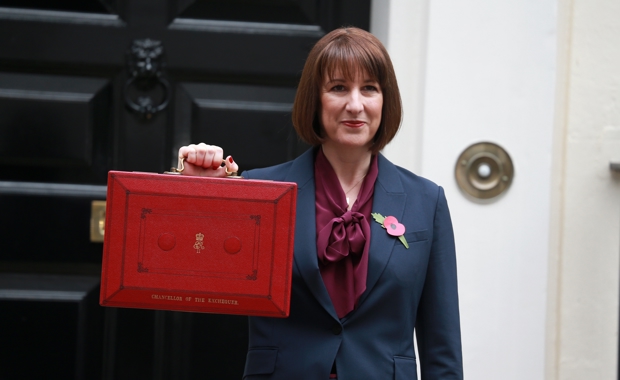
EV pay per mile from 2028, fuel duty frozen until September next year and an extension to the Electric Car Grant are the big news stories for car owners from the 2025 Budget.
The hotly-anticipated 2025 Budget has been the subject of months of speculation, with car owners primed for some pivotal announcements, if rumours and leaks were to be believed.
Sure enough, the Chancellor has acted – by confirming sure-to-be-controversial plans to introduce pay-per-mile road charging for electric cars will come into effect from April 2028.
The automotive industry is sure to react forcefully to the announcement and we’ll bring you reaction as it comes in – scroll to the bottom for the latest.
But, for now, the details: exactly what has the Chancellor announced in the House of Commons?
EV pay-per-mile from 2028
Rachel Reeves has confirmed it – from April 2028, there will be pay-per-mile charges for electric cars and, even more dubiously, plug-in hybrid cars.
As HonestJohn.co.uk has already explained, this simply couldn't immediately go live, as primary legislation is required for such an upheaval. Hence the planned implementation in three years' time, from 2028.
Electric cars will be charged 3p a mile, and plug-in hybrids will be charged 1.5p a mile. For the average driver covering 8500 miles a year, they will be charged £255 in 2028-29. “This is roughly equivalent to half the rate of fuel duty tax paid per mile by drivers of petrol and diesel vehicles,” says the OBR.
The rates will increase annually in line with inflation, and will be charged alongside existing VED car tax. The new tax will be called Electric Vehicle Excise Duty, or eVED.
The introduction of the new EV charge “will offset around one-quarter of the 0.6% of GDP in revenue set to be lost from fuel duty by 2050 due to the transition to electric vehicles”. The OBR says it will raise £1.1bn in 2028-29, rising to £1.9bn in 2030-31.
Notably, no details have yet been announced on how it will be implemented. There has previously been speculation it could involve owners declaring their mileage on an online portal each year, and others close to the government have insisted it will not involve black box-style vehicle trackers.
The automotive industry, already under severe pressure because of the Zero Emissions Vehicle Mandate, is sure to be up in arms. There’s the very real risk already-fragile demand for EVs could be shattered entirely.
Indeed, the OBR itself recognises this. “The government’s Zero Emission Vehicle Mandate requires EVs to make up an increasing minimum proportion of total manufacturers sales over the next five years… this new charge is likely to reduce demand for electric cars as it increases their lifetime cost.
“To meet the mandate, manufacturers would therefore need to respond through lowering process or reducing sales of non-EV vehicles. Overall, as a result of this measure, we estimate there will be around 440,000 fewer electric car sales across the forecast period”.
But the Chancellor argues that, with growing numbers of electric cars on our roads, the time is right to make them pay their way.
The reaction amongst both the public and MPs in the coming days may prove pivotal to the success of the scheme.
The Chancellor has attempted to placate the automotive industry with one electric car-related move, though…
Electric Car Grant extended
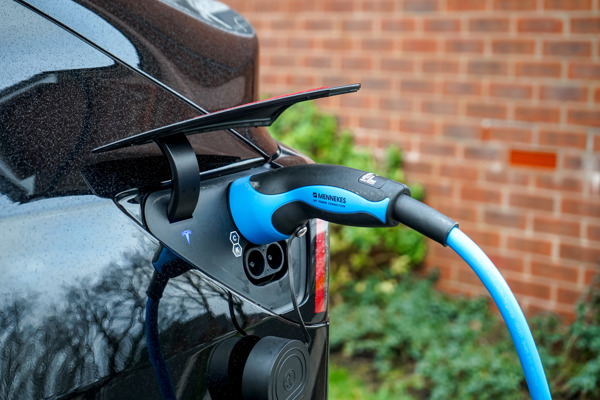
The Electric Car Grant, which offers either £1500 or £3750 off the price of new electric cars, has been extended. An extra £1.3bn cash injection will see it through to 2030. Around 35,000 UK motorists have already taken advantage of it. The Chancellor has also allocated another £200m to EV charge points.
But will it be enough to stem fury around electric car pay-per-mile charges?
Fuel duty frozen until 2026
Since 2012, fuel duty has been frozen at 52.95p per litre. And since 2022, a 5p a litre cut has been in place, after being imposed by former Chancellor Rishi Sunak to help with the cost of living in light of the Ukraine war.
Although commentators (but few actual motorists) believe it’s now time to review fuel duty the Chancellor has surprisingly extended the fuel duty freeze for a further five months, to September 2026, and maintained the 5p a litre cut until then, too.
After September 2026, the temporary 5p cut will be “unwound in three stages”. The OBR puts the cumulative cost of a freeze in fuel duty and the temporary 5p a litre cut at a cumulative £120bn.
Expensive car tax threshold increased for EVs
Since April 2025, electric cars have no longer been exempt from VED road tax. This is an irritating expense… but even more frustrating is the fact that, because so many cost more than £40,000, they’re liable for the Expensive Car Supplement (ECS) on top.
It means lots of electric cars are forced to pay an extra £425 a year in VED road tax between years two to six.
The government has already recognised the £40k barrier is too low for electric cars, which generally cost more than an equivalent petrol or diesel car. The Chancellor has therefore acted, and will raise the expensive car supplement threshold for EVs to £50,000 from April 2026.
Changes to Motability scheme
There was speculation of big changes to the Motability scheme, including reducing the VAT relief that Motability cars benefit from.
The chancellor has not gone quite so far, but has moved to impose VAT on additional payments, which customers can pay to upgrade into a larger or higher-spec car. Insurance premium tax will also be charged on vehicles leased from the Motability scheme, which is expected to raise around £300m.
Ahead of the Budget, Motability announced ‘premium’ brands, such as BMW, Audi and Mercedes-Benz, would immediately no longer be available on the scheme, something the Chancellor recognised in her Budget address. It also made a commitment to buy more British vehicles and speed up plans to go electric.
Budget 2025 reaction
Society of Motor Manufacturers and Traders
The introduction of a new electric vehicle excise duty is "the wrong measure at the wrong time," says SMMT chief executive Mike Hawes. "The pressure to deliver the world’s most ambitious zero emission vehicle sales targets – whilst maintaining industry viability – is intense.
"With even the OBR warning this new tax will undermine demand, government must work with industry to reduce the cost of compliance and protect the UK’s investment appeal."
AA
"We recognise that fuel duty revenue is declining as drivers switch to electric vehicles," says AA president Edmund King. “Getting the timing right is crucial, and there will be concerns that should pay-per-mile for EVs be introduced too soon it may slow down the switch to electric cars.
"Drivers will naturally have questions about such a scheme, which is why the AA will lead the charge for a fair and transparent system which is easy to understand.”
RAC
"The government will be aware that taxing all plug-in vehicles per mile from 2028 could slow down the transition to electric vehicles," says RAC head of policy Simon Williams. "That is no doubt why it has expanded the Electric Car Grant. The implementation will be critical, so the devil is very much in the details."
EVA England
"This is completely the wrong time to be taxing EV drivers when they still make up only 5% of vehicles on UK roads,” says EVA England CEO Vicky Edmonds. "A pay-per-mile scheme in two years is unnecessarily rocking the boat at such a pivotal point for the market. We are willing to work with Government to ensure EV drivers pay their fair share, but this must be introduced sensibly to avoid slamming the brakes on the transition to electric vehicles."
Be.EV
Asif Ghafoor, CEO of EV charge point operator Be.EV, called the pay-per-mile tak "a new hurdle to adoption that we can’t afford after years of slow, hard-won progress bringing EVs into the realm of affordability. This is a market that already suffers from a real gap between ‘haves’ and ‘have nots’, particularly in terms of how those without driveways are reliant on public charging while those with driveways benefit from cheap at-home off-peak rates.
"Adding extra costs to that group is regressive and short-sighted."
Car dealer Simon Bailes
"The winter Budget leaves us questioning what the government truly wants," says Simon Bailes Peugeot MD Simon Bailes. “On one hand, retailers are under pressure to meet strict EV-to-ICE sales ratios, yet on the other, measures like the new pay-per-mile tax make electric vehicles less appealing to customers.
"How can we plan effectively when the details are unclear and the long-term strategy feels inconsistent? Encouraging more charging points is welcome, but it’s meaningless if consumer confidence in EVs continues to erode. If the goal is to accelerate the transition to electric, policies need to align, not contradict each other."
AlixPartners
"Today’s Budget delivers a complex mix of measures for an automotive industry already navigating intense disruption,” says Andrew Bergbaum of consulting firm AlixPartners.
"The Budget falls short of the boost many had hoped for. A significant rise in Vehicle Excise Duty brings bad news for consumers and the industry alike, while the proposed ‘pay-per-mile’ scheme risks tempering momentum in EV sales at a time when the UK market remains fragile and the industry is striving to meet Net Zero targets."
