
Toyota RAV4 Review: Price, specs and boot space


Toyota RAV4 Verdict

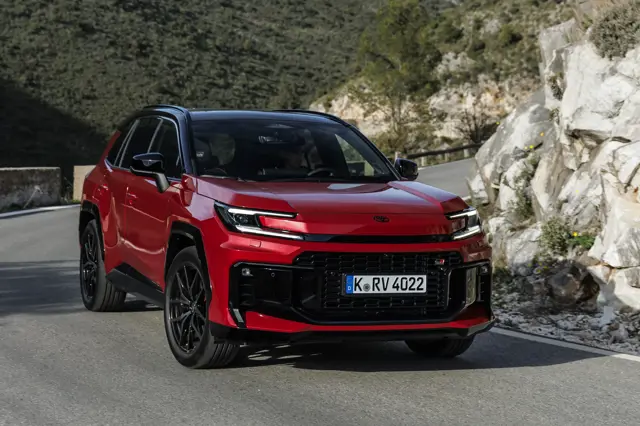
 Bold styling stands out amidst SUV hordes. Increased electric-only range compared to old version. Good to drive.
 Only available as a plug-in hybrid. Some interior trim feels cheap. Boot space is underwhelming.
Find out more about the Toyota RAV4
|
 Driven, tested and rated by:
 Toyota RAV4 at a glance:
- Body type: SUV
- Price range: £43,845 - £52,045
- MPG: 131 - 217mpg
- Number of seats: 5
- Boot capacity: 446 litres
- Insurance groups: TBC
Toyota RAV4: Everything you need to know
The RAV4 was a true innovator when it first came out around three decades ago, being an SUV that's designed primarily to be driven on the road rather than off it. Now, that's the most common type of car there is, but even amidst all those rivals emerging since the original RAV4 launched, the Toyota has remained popular, racking up some 15 million sales worldwide.
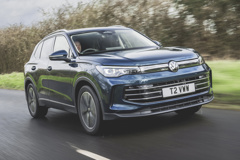
In the UK, it doesn't get as big a slice of the SUV pie, outsold significantly by cars like the Volkswagen Tiguan. Now, though, there's a new and quite striking version which might just tempt more people into Toyota dealerships.
Well, we do have to caveat that 'new' bit, because the 2026-on Toyota RAV4 sits on the same TNGA-K platform as the old one, and the dimensions are all near enough the same. But enough has changed that Toyota considers it a new, sixth-generation RAV4.
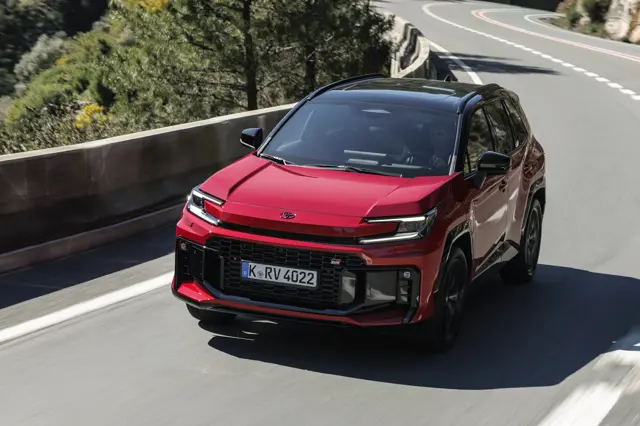
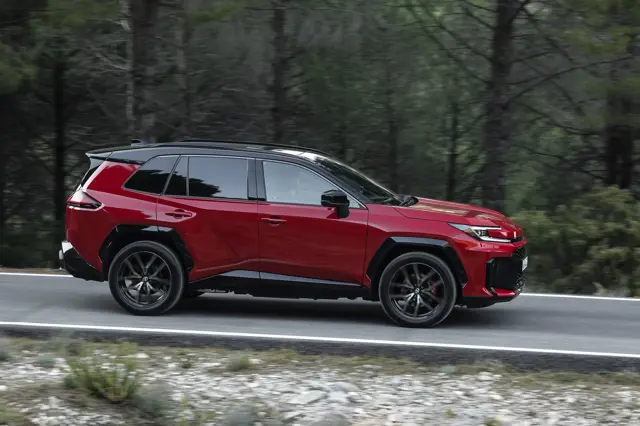
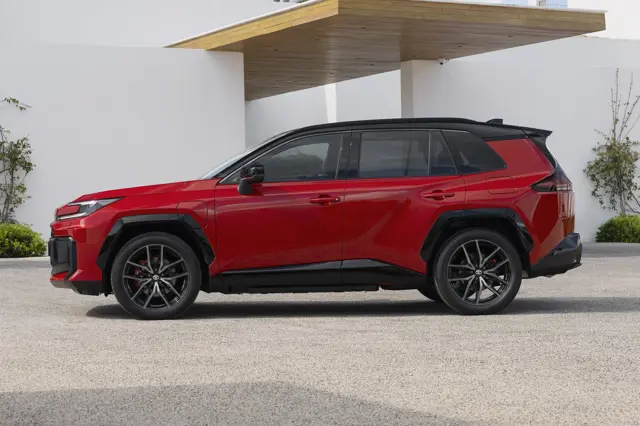
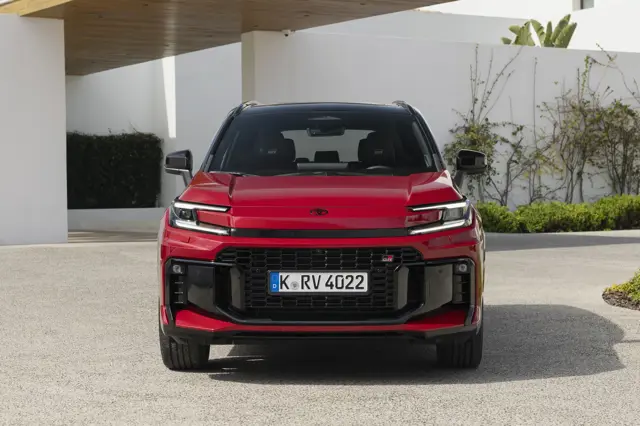
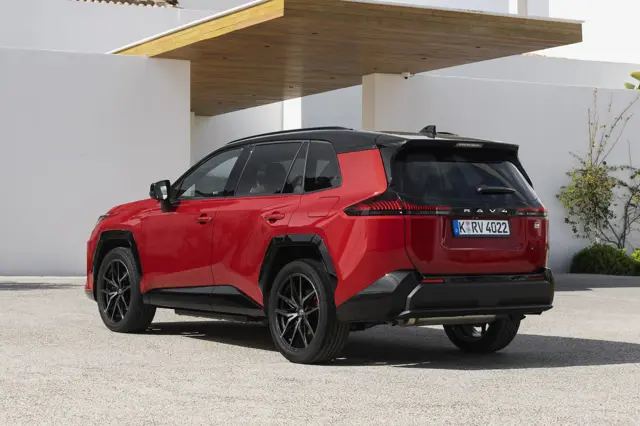
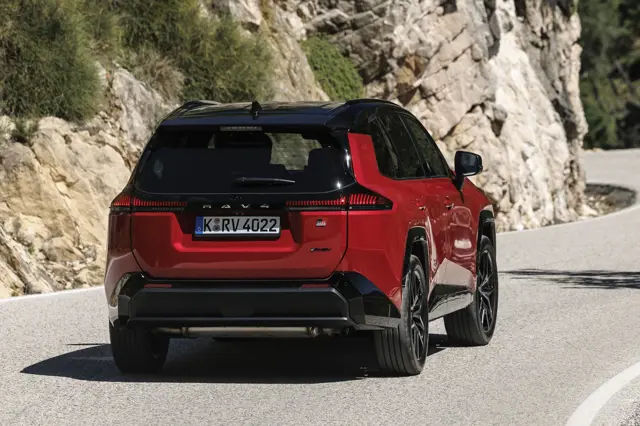
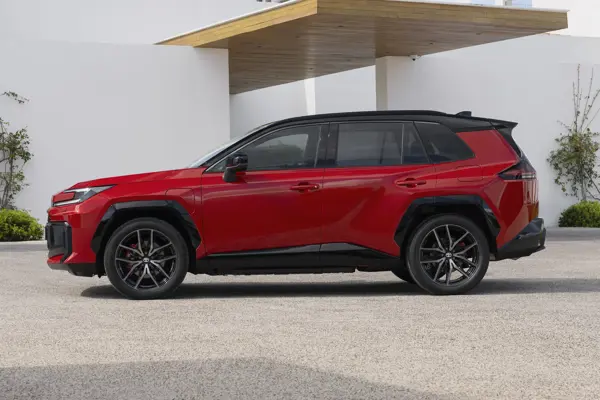
Known to aficionados as the XA60, the Mk6 Toyota RAV4 is the boldest-looking version yet. Its bodywork features an array of dramatic creases and sheer surfaces that combine to give it a much tougher appearance than the outgoing model, the result resembling a cross between Toyota’s C-HR and Land Cruiser ranges. Based on the photos released so far, it’s a successful melding of themes. The sportier GR Sport looks great, too, and comes with some suspension upgrades to improve its handling.
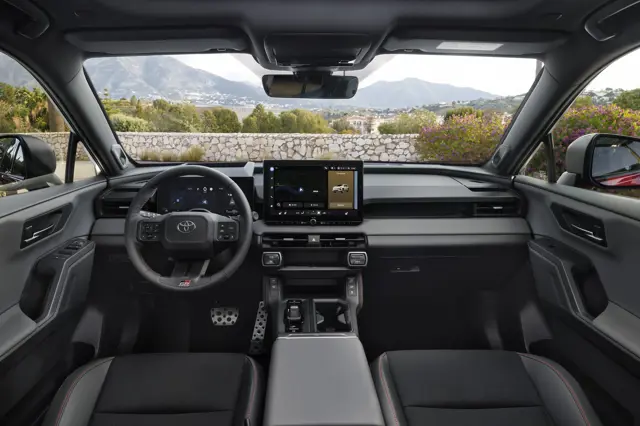
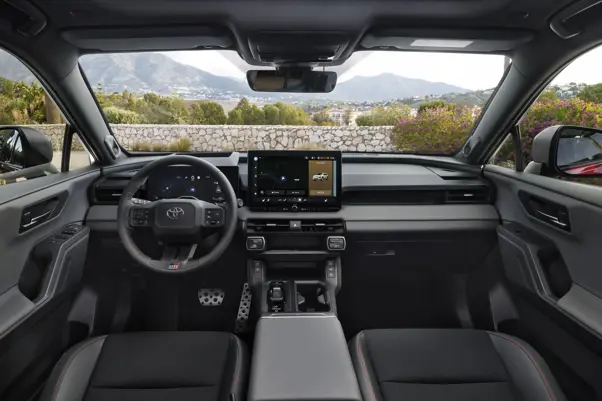
A similar approach has been taken inside this five-seater, the dashboard in particular being home to a variety of chunky fixtures and fittings, with two separate screens in a manner similar to Toyota’s other recent models, although the Arene software running the various functions is making its debut in the latest RAV4.
It's now only possible to buy the RAV4 in the UK as a plug-in hybrid. Other countries still get a self-charging hybrid, but Toyota isn't bringing it here. The PHEV is based around a 2.5-litre, four-cylinder engine available in front-wheel drive and all-wheel drive flavours. The electric-only driving range has increased to an impressive 62 miles.
Given the popularity of family-focused SUVs of this size, the new Toyota RAV4 won’t be able to rest on the laurels of its past glories in order to succeed against a wide array of alternatives, including the highly regarded Honda CR-V.
Despite its age and likely replacement in 2026, the Ford Kuga continues to sell strongly, as do the Hyundai Tucson and Kia Sportage cousins.
Another regular name to pop-up in the UK’s best-selling cars charts is the Volkswagen Tiguan, and we suspect it won’t be long before other PHEV-equipped rivals such as the BYD Seal U and Jaecoo 7 also start climbing up the order.
Another rival is a replacement for today’s Suzuki Across – it’s essentially a RAV4 Plug-in with some mild styling modifications.
How we tested the Toyota RAV4
We drove the new RAV4 on a variety of different roads, ranging from twisting rural roads to speed bump-festooned urban routes, motorways and even unpaved roads, even if the latter seems like an unlikely environment for many owners to find themselves in. We've also driven all of the RAV4's main rivals, helping put us put the car in context. We drove both front-wheel drive and all-wheel drive versions, the latter being in the GR Sport guise.
During our testing, we found the RAV4 comfortable and straightforward to drive. The more powerful all-wheel drive version is noticeably quicker, but it's not like the front-wheel drive car ever feels sluggish. Plenty of electric-only running also makes the RAV4 relaxing to drive, and it's only if you have your foot down and the revs rapidly rise that things do get a little bit noisy.
The GR Sport does feel a touch sharper than other versions of the RAV4, with a slight reduction in body roll. Comfort doesn't significantly suffer, though.

We had a good look around the various functions of the infotainment system, and used both its in-built navigation and connected a smartphone to test out its Android Auto connectivity. It's an easy system to use, but quite a basic-looking one.
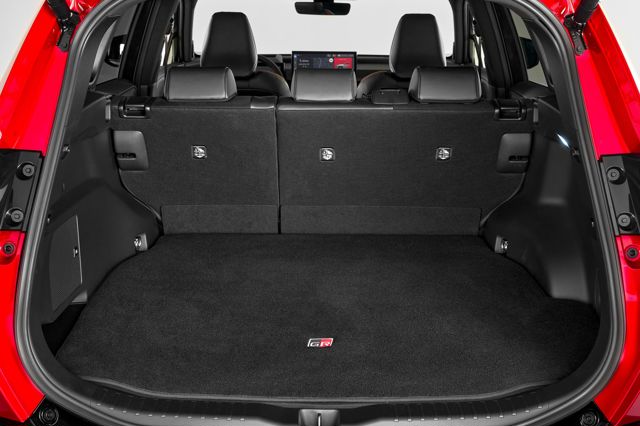
Sitting in the rear, we found the legroom to be decent, but not outstanding, and the headroom is healthy, even for occupants over six feet tall. The boot space isn't spectacular, though, and we did notice quite a bit of ingress from the wheel arches towards its far end.
Is the Toyota RAV4 a good car?
We consider the RAV4 a good car, but not a great one. It has no shortage of rivals, and it doesn't have a clear edge against any of them, perhaps aside from its striking looks and Toyota's reliability record.
The latter will be important for many, though, and on that front, Toyota is hard to beat, usually ranking as one of the best manufacturers for reliability in the HonestJohn.co.uk Satisfaction Index.
Toyota RAV4: Range
| Toyota RAV4 | 62 miles |
Nestling under the latest RAV4 PHEV’s passenger space is a 22.7kWh lithium-ion battery pack, which provides a provisional claimed electric-only driving range of 62 miles when tested to the WLTP Combined cycle standards. Such figures are usually a bit optimistic, but somewhere between 40-50 miles should be easily achievable.
Toyota RAV4: Charging times
As well as having an AC on-board charger capable of managing a flow rate of 11kW, the sixth-generation Toyota RAV4 can also be connected to a faster DC connection with a 50kW on-board charger. That same 10%-80% recharge is tackled in sub-30 minutes, enabling speedy top-ups on longer journeys. Given the cost of public charging in the UK, though, you'd be better off just running the car with a depleted battery until you're able to plug in at home.
The most common way people will charge the car is using a 7.4kW wallbox. Plugged into one, it'll take about three hours to fully charge the battery from empty.
Reviews for Toyota RAV4's top 3 rivals


Toyota RAV4 handling and engines
Toyota RAV4 2026: Handling and ride quality
There's a clear focus on comfort in the way the RAV4 drives. It glides over most imperfections in the road surface nicely, and although it feels composed and stable in the corners, you do get a reasonable degree of body roll if you drive around a corner or a roundabout quickly.
The GR Sport has 15mm lower suspension and a wider track, and it does feel noticeably flatter during more dynamic driving. Don't be fooled by the car's name and its looks, though – this is not a particularly spicy car to drive, and comfort is still high on the agenda.
You do notice the increase in traction when switching from the front-wheel drive model to the all-wheel drive, with the former having a tendency to scrabble its front tyres if you're emerging from a side turning with a bit of enthusiasm. Most of the time, though, you won't really notice the difference.
In terms of refinement, the RAV4 is OK, but wind noise at speed is more vocal than we'd like.
Toyota RAV4 2026: Engines
While the outgoing RAV4 has been on sale in both self-charging and plug-in hybrid guises, as with the sleek Toyota Prius, only the PHEV option will make it to the UK market this time around. Toyota says it's a question of popularity – when both were available in the previous-generation model, the PHEV outsold the regular hybrid by over four times.
As the plug-in has been the more expensive option, in order to make the latest RAV4 as financially accessible as possible, it's also available in front-wheel drive format, as well as the present AWD-i all-wheel drive guise.
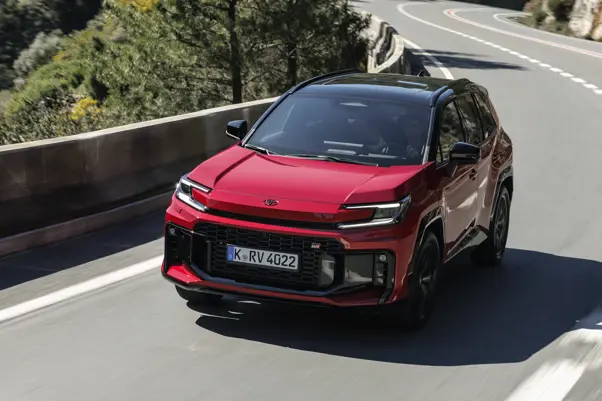
The former has a total petrol and electric combined output of 268PS, while the AWD-i version is the punchier of the two with 304PS overall. The latter dispatches the 0-62mph sprint in 5.8 seconds, and sure enough, it does feel pretty pokey when you put your foot down. Although the front-wheel drive car looks a lot slower on paper, hitting 62mph in 7.5 seconds, it doesn't feel sluggish by comparison.
Either way, you get a 2.5-litre, four-cylinder engine backed up by a 22.7kWh battery pack and an electric motor. The setup involves what's known as a 'continuously variable transmission' or CVT, rather than a conventional automatic with individual gears, and that means the revs can noisily spike when you put your foot down. Most of the time, though, it's an easy, relaxing system to use. The transitions between electric-only and hybrid running are generally very smooth.
Toyota RAV4 2026: Safety
The new Toyota RAV4 has yet to be tested by independent safety organisation Euro NCAP. Toyota has a strong record for safety, and all of its current cars have a four or five-star rating, so we'd expect the same for the RAV4.
Toyota RAV4 2026: Towing
You'll be wanting the all-wheel drive model if you intend to tow with your RAV4, because its 2000kg braked capacity eclipses the meagre 800kg offered by the front-wheel drive model.
Toyota RAV4 interior

Toyota RAV4 2026: Practicality
The RAV4's plug-in hybrid-only setup means cargo space isn't anything special – that's just the reality of sticking a load of battery cells under the boot floor. In the context of similar-sized PHEVs, though, it still disappoints. You get 446 litres, which looks poor compared to the 558 litres offered by a Hyundai Tucson PHEV.
It's also not an entirely rectangular shape, with rear wheel arch ingress meaning the boot narrows towards the end. Meanwhile, if you fold the rear seats, a total of 1690 litres of boot space opens up. It's a shame the rear seats only fold in a 40/60 split, rather than a more versatile 40/20/40.
The rear legroom is fine, but nothing amazing. A tall roof means headroom is good, with someone just over six feet tall fitting in just fine.
Under the central heater vents is a storage tray, which becomes a wireless smartphone charger on Design models and above. There's another open cubby just below, and a double cupholder further back. There's the usual storage area under the central armrest, too.
Toyota RAV4 dimensions
The RAV4 is 4600mm long, 1695mm high and 1855mm wide. Sound familiar? Those figures are very similar to the previous-generation RAV4, which is built on the same platform.
The GR Sport is slightly longer at 1880mm – it has a different wheel offset, giving a wider track, plus extended wheel arches.
Toyota RAV4 2026: Quality and finish
Everything inside the RAV4 feels solid, but a lot of it doesn't scream 'premium'. There are plenty of cheaper-feeling plastics, which seems like a shame considering the RAV4's price. Everything's put together well, though, as you'd expect in a Toyota.
Toyota RAV4 2026: Infotainment
Scrutinising the new RAV4's interior reveals that immediately ahead of the driver is a 12.3-inch 3D-replicating display for key information, while the centrally mounted 12.9-inch touchscreen is for the integrated navigation and more granular level aspects of the climate control and driver assistance aids. Positively, there are groups of easily accessible physical buttons and switches for operating more frequently required aspects, such as altering the interior temperature.
The infotainment system responds quickly to touch and is logically laid out. The graphic design isn't exactly flashy, though – there's a lot of blank, white backgrounds.
The in-built navigation works well enough, but it's a bit laggy, and isn't as clear as something like Google Maps or Waze. Thankfully, Android Auto and Apple CarPlay are included as standard, so you can easily use your preferred mapping app instead.
Toyota RAV4 value for money
Toyota RAV4 2026: Prices
These are the latest On The Road (OTR) prices for the new Toyota RAV4 as of April 2026 – prices can change, so please use these as a guide before checking Toyota's latest price lists.
| Toyota RAV4 Icon | £43,845 |
| Toyota RAV4 Design | £45,745 |
| Toyota RAV4 Excel | £50,045 |
| Toyota RAV4 GR Sport | £52,045 |
Is the Toyota RAV4 good value compared to rivals?
Based purely on its size, the RAV4 might look expensive when rivals, including the Hyundai Tucson and Volkswagen Tiguan, can be bought for many thousands less. However, start looking at the plug-in hybrid versions of such vehicles, and the RAV4's price looks about right.
The cheapest Tiguan PHEV, for example, is around £43,000. Standard equipment is strong even in the entry-level model, and the electric-only range is high enough to mean a 9% Benefit in Kind (BiK) company car tax rate, leading to low monthly payments.
Toyota RAV4 2026: Reliability and running costs
As with all plug-in hybrids, if you rely on the battery and do mostly short journeys, your running costs will plunge because electricity is generally cheaper than petrol, especially if you can get on a special EV tariff and time your charging sessions to coincide with cheaper off-peak periods. However, those doing longer journeys and leaning more on the petrol engine will find their fuel bills rocketing quickly.
According to the official WLTP figure, the RAV4 returns up to 217mpg, but that's not a particularly helpful figure, given that what you'll actually get depends on how much charge you had when you started, how far you're going and how you're driving.
All versions of the RAV4 are over £40,000. This means that, along with the usual £200 VED car tax payment, you'll need to stump up £425 annually from years two to six for the government's expensive vehicle tax supplement.
Toyota offers a standard three-year, 60,000-mile warranty on all its new cars. However, if you service it at an approved Toyota dealer, that can be extended up to 10 years or 100,000 miles.
Toyota RAV4: Frequently asked questions
How long is the new Toyota RAV4?
The sixth-generation RAV4 is 4600mm long.
How much does the Toyota RAV4 cost?
Prices for the new RAV4 start at just under £42,000, rising to around £52,000.
Is the Toyota RAV4 a hybrid?
In the UK, the Toyota RAV4 is only available as a plug-in hybrid. In other countries, there's also a self-charging hybrid available.
Satisfaction Index
 What is your car like to live with?
We need your help with our latest Satisfaction Index, so that we can help others make a smarter car buying decision. What's it like to live with your car? Love it? Loath it? We want to know. Let us know about your car - it will only take a few minutes and you could be helping thousands of others.
Help us with the Honest John Satisfaction Index nowToyota RAV4 models and specs
There are four trim levels for the new Toyota RAV4 – Icon, Design, Excel and GR Sport. Along with its extra equipment, the GR Sport also features a different suspension setup.
The Toyota RAV4 Icon is the entry-level model, and features:
- 18-inch alloy wheels
- 12.8-inch touchscreen infotainment sytem
- 12.3-inch digital instrument cluster
- Digital key
- Adaptive cruise control
- Powered boot lid
- Heated steering wheel
- Electrically adjustable driver's seat
Upgrade to the Toyota RAV4 Design and you'll also get:
- 20-inch alloy wheels
- Two-tone paint
- Wireless phone charger
- Synthetic leather and suede seats
- Heated and ventilated front seats
- Electrically adjustable front passenger seat
- Kick sensor for boot lid
The Toyota RAV4 Excel adds further equipment, including:
- 20-inch black machined-face alloy five-spoke wheels
- Leather seats
- Power-adjustable front seats with memory
- JBL sound system
- Fast 50kW DC charger
- Head-up display
- Two wireless phone chargers
- Heated rear seats
- Front windscreen wiper de-icer
- 50kW charging capability
The Toyota RAV4 GR Sport has all the same equipment as the Design, plus:
- GR Sport exterior styling
- 20-inch black alloy wheels
- Two-tone paint
- Synthetic leather and suede seats
- JBL sound system
- Head-up display
