
Toyota C-HR+ Review: A solid EV with a confusing name

Toyota C-HR+ Verdict

 Stylish looks. More fun to drive than you might think. It's a Toyota, so it's well built and should be reliable.
 Rear-seat space is a bit tight. Some rivals offer better value for money. We're a bit confused by the name,
Find out more about the Toyota C-HR+
|
 Driven, tested and rated by:
 Toyota C-HR+ at a glance:
- Body type: SUV
- Price range: £34,495 - £40,995
- Battery range: 284-376 miles
- Number of seats: 5
- Boot capacity: 416 litres
- Insurance groups: TBC
Toyota C-HR+: Everything you need to know
Toyota hasn't done itself any favours with the name of this car. You might think it's an offshoot of the Toyota C-HR, perhaps a more practical version, given that the seven-seater Toyota Prius+ was once a thing. But no – it's a completely different car underneath that shares more in common with the Toyota bZ4X. It's built on the same 'TGNA' electric vehicle platform, and we'd say it looks much more like the bZ4X than the regular C-HR.
It's all to do with Toyota binning its daft 'bZ' naming convention (it stands for 'beyond zero', in case you're wondering) and using existing model names instead, as we've already seen with the Toyota Urban Cruiser. That's a name from the past, though – to use and very slightly change an existing model name is a curious one.
We'll not get too caught up in that, though, as the C-HR+ is an interesting proposition that shows Toyota is starting to get the hang of the whole EV thing. While the bZ4X disappointed initially for its modest range figure and high price tag, that car has gotten a lot better with its mid-life update, and being so closely related, the C-HR+ reaps the benefits.
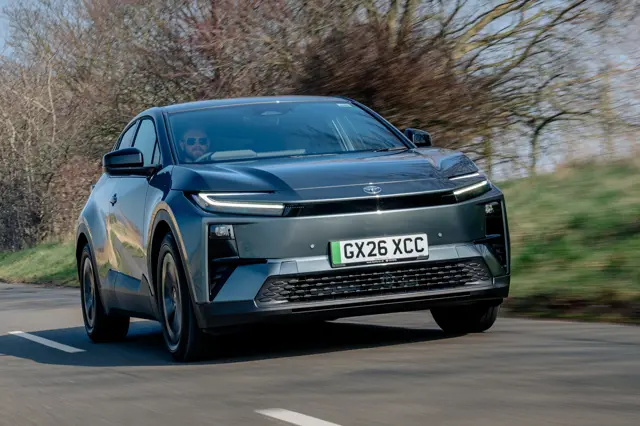
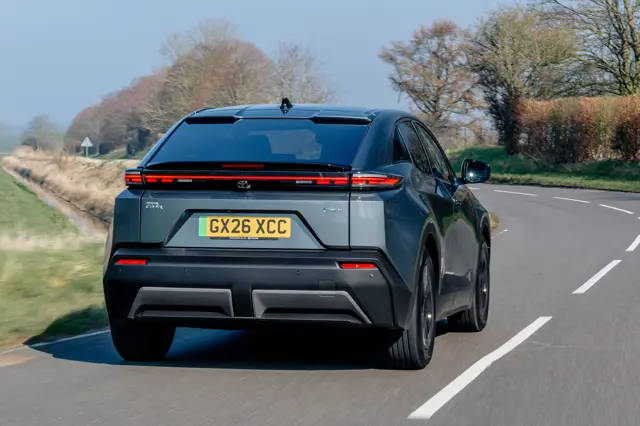
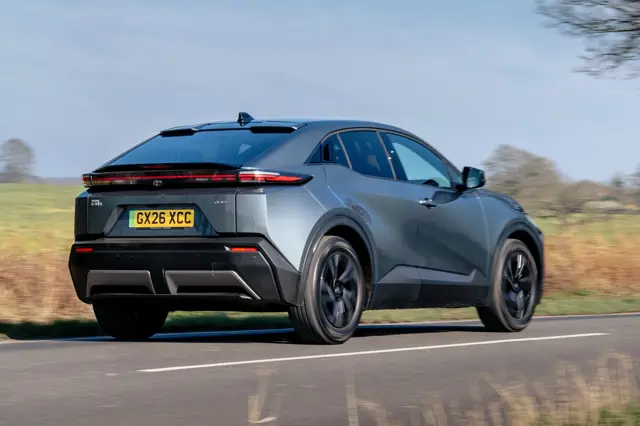
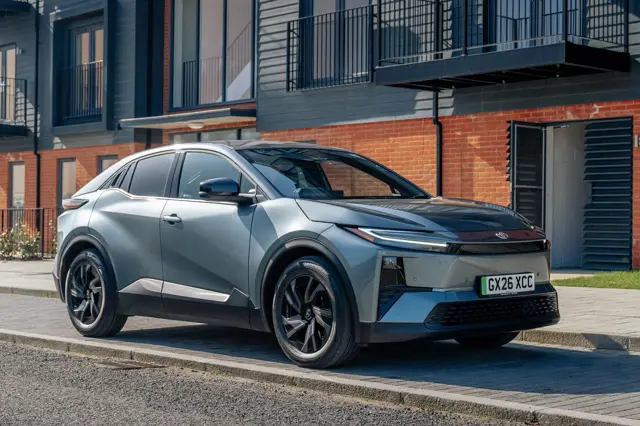
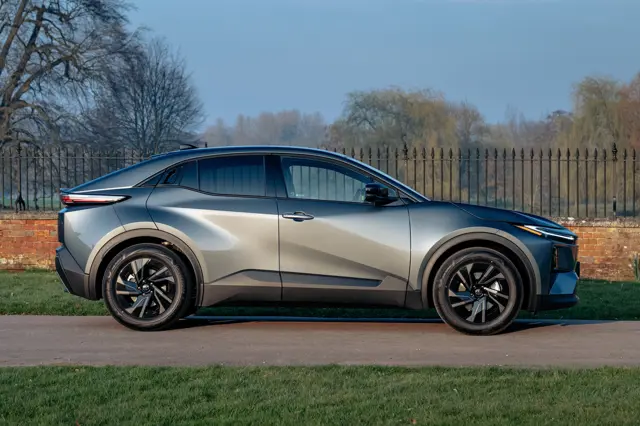
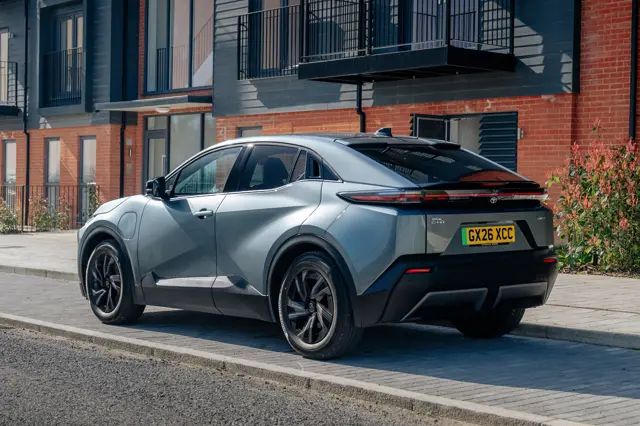
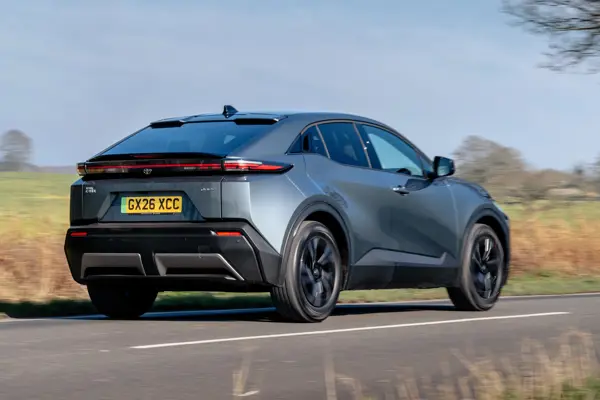
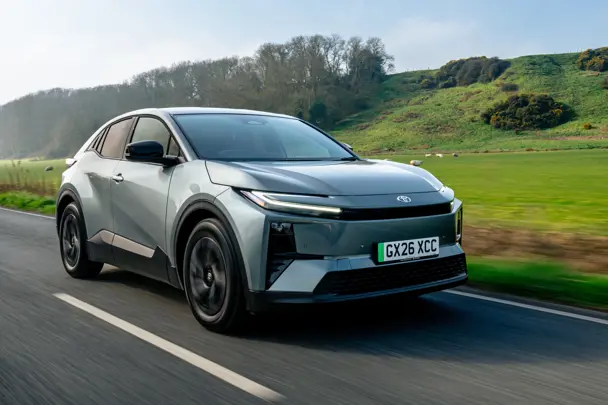
It's a stylish thing, too, and dare we say it, a better-looking car than the actual C-HR. We're just not sure how we'd describe the shape of it. It's too tall to be a hatchback, but quite low-slung for an SUV, and its sloping roofline suggests it wishes it were a coupe.
The C-HR+ is reasonably well priced at £35,495, a figure which pitches it into battle with all sorts of well-established and very good rivals, including the Skoda Elroq, Kia EV3 and Renault Scenic E-Tech. There's also the option of the Subaru Uncharted, which is scarcely different from the C-HR+, because it's made via a joint venture between Toyota and Subaru.
There's a choice of two battery packs, although your choice might be made for you depending on which trim level you choose. The size of the battery also determines the motor output, although with the most powerful version making 224PS, there's no such thing as a blisteringly quick C-HR+. At least, not in the UK – other countries are getting an all-wheel drive version punting out 374PS for a 0-62mph time just over five seconds.
How we tested the Toyota C-HR+
We tried the C-HR+ on a variety of different roads, encompassing motorways, twisting country roads and urban areas full of potholes and speed bumps. We sampled both the single-motor front-wheel drive version that's coming to the UK and the all-wheel drive version we're being denied, to see what we're missing out on.
We had a lot more fun behind the wheel of the C-HR+ than we expected. It sits a lot lower than the bZ4X on shorter travel springs, which does mean it's marginally less comfortable, but quite handy in the corners. Up to a point, at least – if you're tackling a lot of undulations, the suspension can get overwhelmed.
In terms of performance, we rarely felt wanting for more with the single-motor version. Yes, the dual motor is noticeably quicker, but for most, the front-wheel drive car is more than adequate. We're not too upset about the all-wheel drive not being shipped here (at least for now).
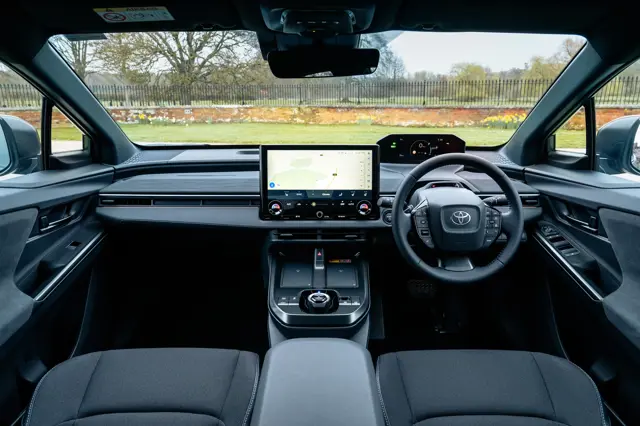
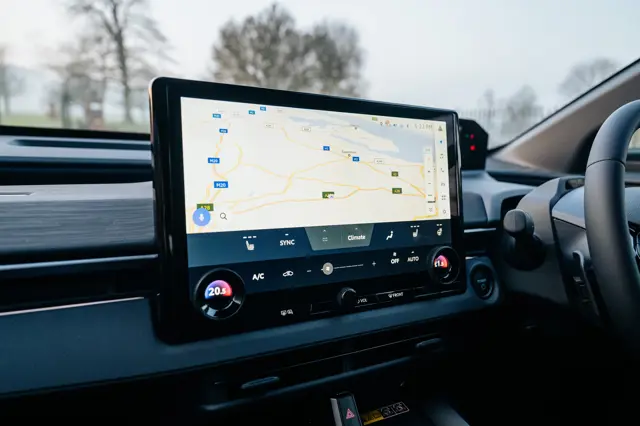
The interior tech was easy to get along with, although the C-HR+'s infotainment screen isn't the flashiest around, and the instrument cluster is on the small side. We also struggled to get a comfortable driving position that gave a completely clear view of the latter.
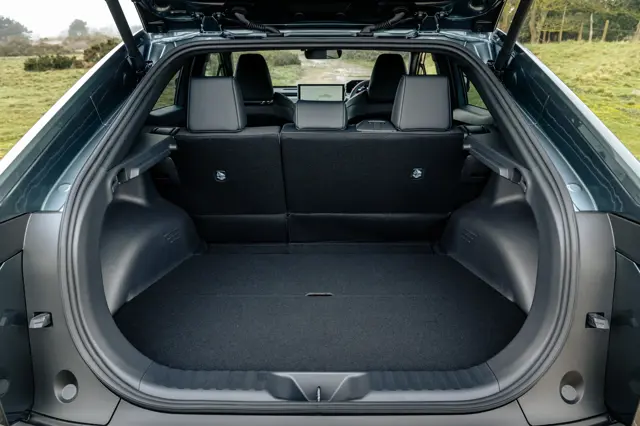
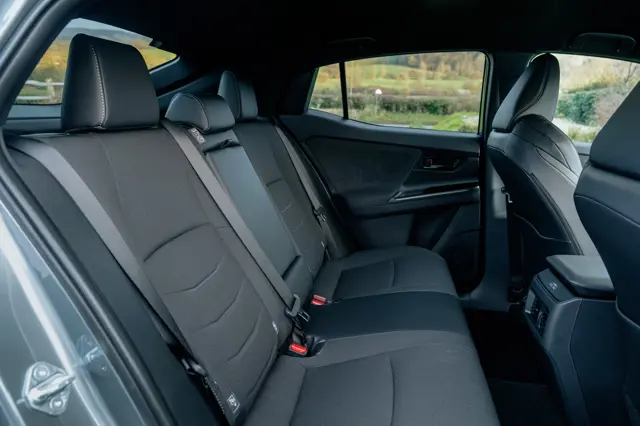
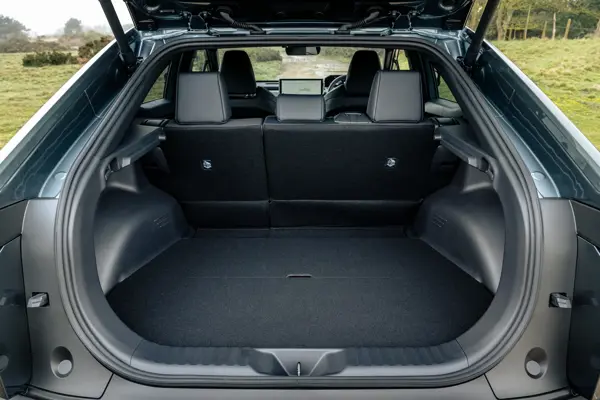
Having a good look around the Toyota C-HR+, we were underwhelmed with the rear-seat space and the shape of the boot, which narrows towards the far end. Not helpful when in terms of overall capacity, it's already a bit behind the pace.
"After a shaky start with the bZ4X, the efficient and fun-to-drive C-HR+ shows Toyota is starting to get the hang of EVs"
|
Is the Toyota C-HR+ a good car?
The Toyota C-HR+ is best described as 'solid'. It doesn't do anything particularly badly, but at the same time, it doesn't do much to stand out amidst the competition. For the price, it is probably the most fun-to-drive EV, but that won't be high up on the agenda of many.
Things like practicality, range, charging and value are more important, and it's in these areas that the C-HR+ looks fairly average and in some instances behind its rivals, of which there are many. Perhaps the real draw isn't in the car itself, but the company – Toyota has a great dealer network and an excellent reliability record, making the C-HR+ a very safe bet.
Toyota C-HR+ Range
| Toyota C-HR+ 57.7kWh | 285 miles |
| Toyota C-HR+ 77kWh | 377 miles |
With the smaller-battery Toyota C-HR+ managing 285 miles and the larger-battery version covering up to 377 miles, the Toyota is about where it should be. That's a little more than an entry-level Kia EV3 for the 57.7kWh model, and slightly behind for the 77kWh C-HR+. The Renault Scenic does better than both, though, offering up to 381 miles.
It's also worth pointing out that the 377-mile figure is only possible with the 18-inch wheels fitted. Go for the 20s, and there's a chunky 46-mile penalty according to the WLTP Combined figure.
Toyota C-HR+ Charging
The Toyota C-HR+ can accept a DC rapid charging rate of 150kW, which is behind the Skoda Elroq's 175kW capability, exactly the same as what the Renault Scenic E-Tech can manage, and slightly ahead of the 135kW you offered by the Kia EV3.
Assuming conditions are optimal and you've pre-conditioned the battery beforehand, it'll take 28 minutes to recharge the 77kWh version from 10-80%. We haven't seen a figure for the 57kWh C-HR+ just yet.
Bank on it taking just over 10 hours to fully charge the 77kWh battery from empty using a 7.4kWh wallbox, while it should be possible to do the same for the 57kWh C-HR+ in just under eight.
Reviews for Toyota C-HR+'s top 3 rivals



Toyota C-HR+ handling and engines
Toyota C-HR+ 2026: Handling and ride quality
The C-HR+ sits some 25mm lower than the bZ4X on shorter travel suspension springs, and this really does pay dividends. You can take it up a twisting mountain road, and it'll lap it up, remaining level and happily being chucked around, a task made easier by the reasonably quick and well-weighted steering.
There is a slight compromise in terms of comfort, but while erring on the firmer side of the equation, the C-HR+ doesn't crash over lumps and bumps in the road surface. The suspension can get a bit overwhelmed by particularly rough surfaces, though.
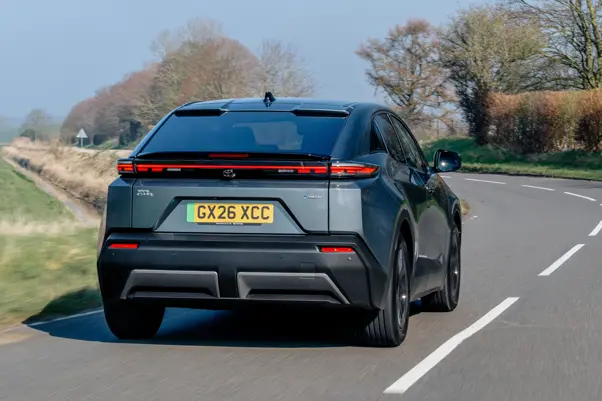
There's plenty of traction from the front-wheel drive model, and although there's the occasional scrabble from the front wheels, it's nothing lurid. Inevitably, the all-wheel drive version is better in this regard, but that's not hugely relevant for the time being, as it's not been confirmed for the UK.
Wind noise at speed is a little more vocal than we'd like, and you do get some road noise creeping into the cabin.
Toyota C-HR: Batteries and motors
There are two battery sizes available in the C-HR+, which also dictate the output of the motor. The 57kWh option, only available on the entry-level Icon grade, produces 167PS and 268Nm of torque for a perfectly respectable 0-62mph time of 8.4 seconds.
We haven't tried this model yet, but we have spent plenty of time in the 77kWh version, which ups the output of the front-mounted motor to 224PS, with the torque remaining the same. This drops the 0-62mph time to 7.3 seconds.
It feels plenty brisk, and we were never left wanting for more power, apart from a particularly demanding uphill stretch of mountain road, which did result in a warning message about the drive system overheating and the power being restricted. We don't think this issue will arise for many C-HR+ drivers, though, unless you commute to work up a mountain and don't like to hang around.
Other countries get the option of a 374PS all-wheel drive C-HR+, which trims the 0-62mph time to just 5.2 seconds. It's certainly quick, but we're not that sad it isn't coming to the UK – most will get on perfectly fine with the 224PS front-wheel drive model.
Toyota C-HR+ 2026: Safety
The Toyota C-HR+ has not yet been assessed by Euro NCAP. Although it's no guarantee the C-HR+ will get the same rating, it's reassuring that the bZ4X on the same platform managed the full five stars when it was assessed.
All models get a blind spot monitor, lane assistance, a driver attention monitor and adaptive cruise control. The Excel grade adds front cross-traffic alert and lane change assistance.
Toyota C-HR+ 2026: Towing
The towing capacity of the C-HR+ isn't great. The smaller-battery Icon model isn't rated to tow at all, while all others are capped at just 750kg.
Toyota C-HR+ interior
Toyota C-HR+ 2026: Practicality
The C-HR+'s 416 litres of boot space is disappointing when a Skoda Elroq has 470 litres, and a Renault Scenic has a considerably more impressive 545 litres. The boot is an awkward shape, as well, narrowing at the far end. You'll also need to set the variable height boot floor in its lowest setting to get the full 416 litres, giving a high boot lip for your items to clear.
The rear seats fold in a 60/40 split rather than a more useful 40/20/40. We haven't seen a figure for the total cargo space this opens up just yet.
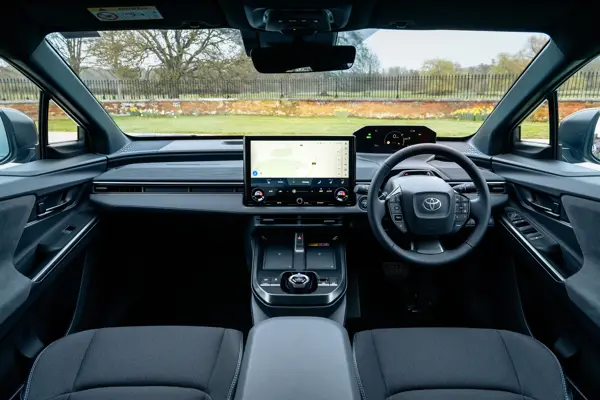
Up front, there's the usual storage area under the central armrest, and a storage tray under the centre console. There's a dual wireless smartphone charging tray on the top, but it doesn't do a good job of holding devices steady. If you accelerate quickly, expect your phone to be ejected dramatically.
Considering the C-HR+'s size, we expected more in the way of rear legroom, which will feel tight for taller passengers. Headroom is only just about adequate thanks to the sloping roofline.
Toyota C-HR+ Dimensions
The Toyota C-HR+ measures 4530mm in length, 1870mm in width and 1595mm in height. This makes it shorter than the bZ4X, but longer with its C-HR partial namesake. It's also slightly longer than the Skoda Elroq, which stretches out to 4488mm.
Toyota C-HR+ 2026: Quality and finish
The Toyota C-HR+ feels nicely plush inside, with plenty of soft-touch materials and a general feeling of solidity. Some of the plastics lower down don't feel quite so premium, but that's pretty common. What's more important is that most of the stuff in your eyeline and that you're likely to come into contact with feels expensive, and it mostly does. There's also minimal use of our least favourite car interior material – shiny, scratch-prone black plastic.
Toyota C-HR+ 2026: Infotainment
All versions of the Toyota C-HR+ get a sizeable 14-inch touchscreen infotainment screen. It responds well to touch and switches between its various functions quickly enough, and is one of the most straightforward systems we've used. It shouldn't take you long at all to get to grips with it. There's not much in the way of graphic design, though – just a lot of white.
The native navigation system works OK, but as ever, it's not as good as something like Google Maps or Waze. You can easily use either, because wireless Android Auto and Apple CarPlay are fitted as standard. We were able to quickly and easily connect our device using the former.
You do have to use the touchscreen for some climate control functions, including the fan speed, but there are physical dials for the two temperature zones.
In contrast to the C-HR+'s massive infotainment screen, the digital instrument cluster is a more modest size at only seven inches. It gives you all the information you might need, but we did struggle to get a driving position we were happy with that didn't block some of the lower portions of the screen.
Toyota C-HR+ value for money
Toyota C-HR+ 2026: Prices
These are the latest On The Road (OTR) prices for the new Toyota C-HR+ as of March 2026 not including the government electric car grant. Prices can change, so please use these as a guide before checking Toyota's latest price lists.
| Toyota C-HR+ Icon | £34,495 |
| Toyota C-HR+ Design | £36,995 |
| Toyota C-HR+ Excel | £40,995 |
Is the Toyota C-HR+ good value compared to rivals?
The C-HR+ is priced similarly to a Skoda Elroq, and slightly undercuts the Renault Scenic, so it's right where it needs to be. It's not a bargain, but it's not overpriced either, and all models are eligible for the lower level of the government electric car grant (£1500) to sweeten the deal.
It helps the C-HR's cause that even the base grade is well equipped, and the upgrade to the mid-level Design with its bigger battery is perfectly reasonable.
Toyota C-HR+ 2026: Reliability and running costs
EVs are no longer exempt from paying VED car tax, so it'll be the same £205 to shell out from year two onwards as any other petrol/diesel/hybrid car. The threshold for the expensive car tax supplement is £50,000 for EVs rather than the usual £40,000, though, so the Excel escapes an extra £425 that would have been slapped on top of the bill from years two to six before the rules changed.
Toyota is consistently near the top of the HonestJohn.co.uk Satisfaction Index ownership survey for reliability, which is reassuring. Toyota also extends its three-year warranty up to 10 years and 100,000 miles if you keep coming back to its dealers for servicing, and also offers up to one million kilometres (just over 600,000 miles) and 10 years of coverage for the battery if you opt for an annual 'EV Health Check'.
The latter guarantees 70% state of charge remaining in the battery, and goes well beyond the mandated coverage of eight years and 100,000 miles.
Based on the current price cap for electricity in the UK, it should be around £14 to fully charge the 57kWh battery from empty, and £20 for the 77kWh pack. We always recommend trying to get yourself on an EV tariff, though, because if you can time your charging sessions to coincide with cheaper off-peak periods, those aforementioned costs will be slashed.
Toyota C-HR+: Frequently Asked Questions
What's the difference between a Toyota C-HR and C-HR+?
Pretty much everything, is the answer. The C-HR is a hybrid and plug-in hybrid SUV, while the C-HR+ is a fully electric car using a completely different platform. It's much more closely related to the bZ4X than the C-HR.
How much does the Toyota C-HR+ cost?
Prices start at £34,495, rising to £40,995, before the government electric car grant is taken into account.
Is the Toyota C-HR+ all-wheel drive?
There is an all-wheel drive version of the C-HR+, but it's not coming to the UK. All versions sold here are front-wheel drive for now.
Satisfaction Index
 What is your car like to live with?
We need your help with our latest Satisfaction Index, so that we can help others make a smarter car buying decision. What's it like to live with your car? Love it? Loath it? We want to know. Let us know about your car - it will only take a few minutes and you could be helping thousands of others.
Help us with the Honest John Satisfaction Index nowToyota C-HR+ models and specs
The Toyota C-HR+ is offered in three trim grades, also seen on many other Toyota models, called Icon, Design and Excel.
The Toyota C-HR+ Icon comes with the following equipment fitted as standard:
- 18-inch alloy wheels
- Front/rear LED lights
- Heated front seats
- Heated steering wheel
- 14-inch touchscreen infotainment system
- Seven-inch digital instrument cluster
- Keyless entry
Along with its larger battery, the Toyota C-HR+ Design builds on the above spec with:
- Tinted rear side windows
- Powered tailgate
The top-spec Toyota C-HR+ Excel adds:
- 20-inch alloy wheels
- Two-tone exterior
- Electrically adjustable driver's seat
- Suede and synthetic leather upholstery
- Panoramic parking camera
- Front wiper de-icer
- 22kWh charging capability
More articles you might be interested in:


Model History
December 2025
Toyota C-HR+ specs confirmed, prices start at £34,495
The Toyota C-HR+ is available to order from 6th January, priced from £34,495. First deliveries are expected in March 2026.
Three trim levels are offered - Icon, Design and Excel. Icon models use a 57.7kWh battery for a range of 284 miles, while Design and Excel models have a 77kWh battery, giving 376 miles of range. All models are front-wheel drive.
Icon models include 18-inch black alloy wheels, an 11kW onboard charger, seven-inch digital combimeter, 14-inch multimedia touchscreen, combination fabric and synthetic leather upholstery and a heated steering wheel. Two wireless smartphone chargers feature, plus wireless Apple CarPlay or Android Auto.
In addition to the larger 77kWh battery, Design trim adds a power-operated tailgate and rear privacy glass, plus the option of 20-inch alloys.
Top of the range Excel models come with a 22kW onboard charger, power driver’s seat adjustment, headlight cleaners, and a Panoramic View Monitor.
An optional Premium Pack includes a JBL audio system and panoramic roof; a grey interior trim can also be specified.
Although it borrows the name of Toyota's hybrid C-HR, the C-HR+ is built on the same eTNGA platform as the larger Toyota bZ4X, meaning it has a 106-litre larger boot than a C-HR.
Toyota C-HR+ prices
C-HR+ Icon £34,495
C-HR+ Design £36,995
C-HR+ Excel £40,995
