
All-new electric Mercedes GLB promises 392-mile range

Mon, 08 Dec 2025
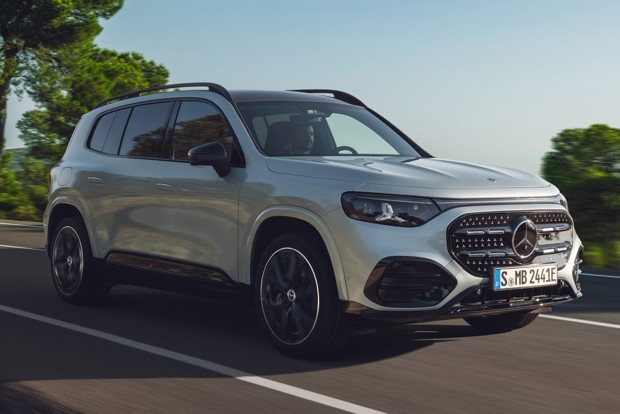
- Second-generation Mercedes GLB unveiled in full
- Compact SUV seats five or seven
- Battery range of up to 392 miles
- UK specs and prices will be announced soon
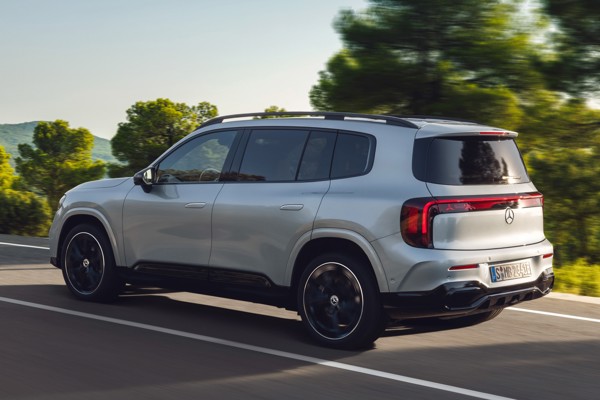
The all-new, second-generation Mercedes GLB has been revealed in full. Looks-wise, it's very much an evolution of the original car, with a boxy shape that can house up to seven people despite its compact proportions.
The big change is in power – the new GLB is fully electric to start with, though hybrid models will follow.
Mercedes says the new car will offer more headroom than the current Mercedes GLB and seven-seat versions will have third rows that are easier to access.
When it goes on sale in 2026, the new Mercedes GLB will be a rival for other premium compact SUVs like the Audi Q3, the BMW X1 and the popular Volvo XC40, as well as the seven-seat Land Rover Discovery Sport.
2026 Mercedes GLB prices and release date
No on-sale date has been announced for the new Mercedes GLB yet, nor have we seen any UK prices or specs. More details will be announced ahead of a 2026 on-sale date. The current Mercedes GLB is priced from £40,540.
2026 Mercedes GLB styling, interior and technology
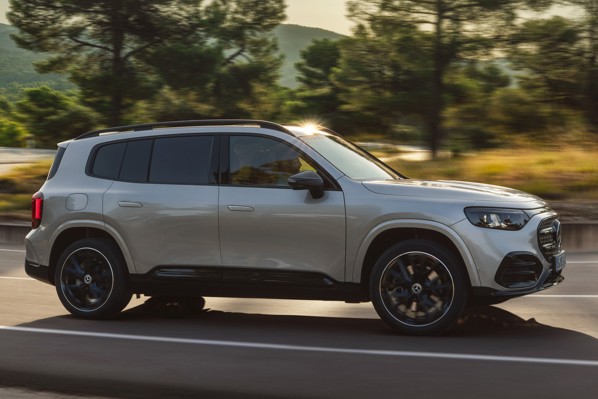
It's a familiar look for the GLB with its boxy, upright profile with short overhangs – a design that maximises interior space. The design sees wheel-arch cladding over the standard 20 inch wheels, underbody protection and the front-end gets a new radiator grille with 94 individually animated LED stars. That's only for the electric model – the combustion models will have a more classic grille with a chrome star pattern and an illuminated frame.
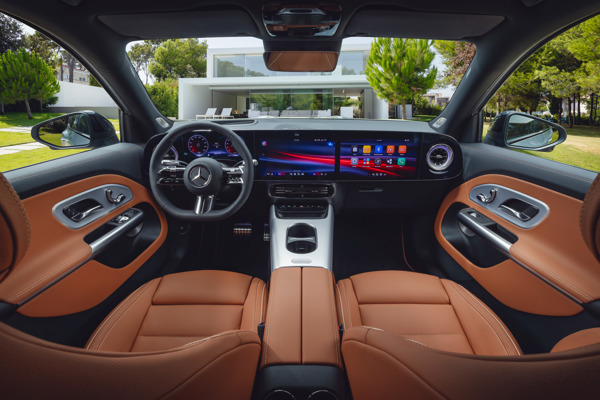
The new Mercedes GLB will come with a choice of five or seven seats and with the option of the MBUX Superscreen seen in the image above.
This covers the whole width of the dashboard and, like the new Mercedes CLA with which it shares its platform, only enhances the futuristic vibe that the Mercedes designers have gone for. It also has circular air vents, designed to appear to float, much like the centre console.
There's a smartphone storage compartment with optional wireless charging plus a new steering wheel designed to be more ergonomic. This adds a rocker switch for the limiter and adaptive cruise control – something customers have apparently been hankering for rather than touch-sensitive pads. A panoramic roof is standard, with adjustable transparency.
Customers will be able to choose between five- and seven-seat layouts. The second row will slide to prioritise passenger or luggage space while the third row can be folded into the floor for extra boot space. Speaking of boot space, you'll get 540 litres in the five-seat model and 480 litres in the seven-seater, expandably to 1715 or 1605 litres respectively with all back seats folded.
There's also a frunk under the bonnet of the electric model with an additional 104 litres of space, which Mercedes says is enough for a crate of drinks, a small tent, or three footballs.
Families will be a particular target for the new GLB and you'll be able to fit up to five child seats in – two each in rows two and three and another in the front passenger seat.
2026 Mercedes GLB engines, performance and fuel economy
At launch, the Mercedes GLB is an electric car, but there will also soon be a range of at least three mild-hybrids based around a 1.5-litre petrol engine with both front- and four-wheel-drive versions.
The first models are, to give them their full names, the Mercedes-Benz GLB 250+ with EQ technology and the GLB 350 4MATIC with EQ Technology. The former is a front-wheel-drive car with an 85kWh battery and 392 miles of range accoriding to official figures.
The latter is four-wheel drive and uses the same battery. Mercedes hasn't quoted the range, but expect it to be slightly less due to the extra power it develops. How much power? Well, they haven't quoted that either, but it will be more than the 250+.
Charging wise, both electric GLBs share an 800-volt platform that means fast charging at up to 320kW using a suitable DC charger. That should give you a 162-mile boost in around 10 minutes. AC charging is at up to 22kW.
A smaller battery option will be announced soon, giving customers a lower entry price.
