
Kia EV3 Review: Price, range & boot space

Kia EV3 Verdict

 Very impressive driving ranges. Spacious interior and commodious boot. High levels of equipment for the money.
 Won’t satisfy the most enthusiastic of drivers. Some equipment is restricted to the priciest model. Only one version available with the smaller battery.
Find out more about the Kia EV3
|
 Driven, tested and rated by:
 Kia EV3 at a glance:
- Body type: SUV
- Price range: £33,055 - £43,955
- Battery range: 270-375 miles
- Number of seats: 5 (2 Isofix)
- Boot capacity: 460 litres
- Insurance groups: 34-38
The Kia EV5: Everything you need to know
If you’re shopping for a small electric SUV, then it won’t have escaped your attention how bafflingly broad the choice is: it seems almost every car manufacturer has at least one to tempt you, if not several. Allow us to significantly speed up your selection process, because this family-friendly compact EV is crushingly complete in several key areas, so much so that we can see it becoming the default choice among cars of this type. Find out why with our comprehensive full Kia EV3 review.
Few brands have enjoyed the image metamorphosis that Kia has. Okay, Skoda comes very close, but bear in mind that the Czech brand entered the UK market in the 1950s: Kia’s done all of its hard work since the early 1990s.
Successive generations of improved models, such as the Kia Sportage, added desirability to the brand’s appeal, while the transition to full electrification opened up the brand to an even wider audience. That allure has been amplified over time with the sleek and sophisticated Kia EV6 and Tonka-tough styling of the Kia EV9 ranges, but their high prices ensure they remain the preserve of more affluent customers.
That changed with the Kia EV3’s arrival. This is a much smaller electric SUV at a much smaller price, starting at a smidge over £33,000. Serving as a replacement for the Kia Soul EV, not only is the EV3 one of the less expensive cars of this kind, its impressive driving range and boot space also trump those of most rivals.
Listing all of the EV3’s competitors would be a significant feat in itself given how many there are, so we’ll stick to the main core of them: their names alone further illustrating how far Kia has come.
Among the newest of them are the excellent Skoda Elroq and the fine-handling Ford Puma Gen-E, both of which major on driver appeal. Also fresh on the compact electric SUV scene is the MINI Aceman, the first of the new-era models from the marque that trades almost entirely on modernity rather than retro charm.
Two more alternative choices to Kia EV3 both tread new ground for their respective brands and have been co-developed to reduce costs, those being the Smart #1 and the Volvo EX30.
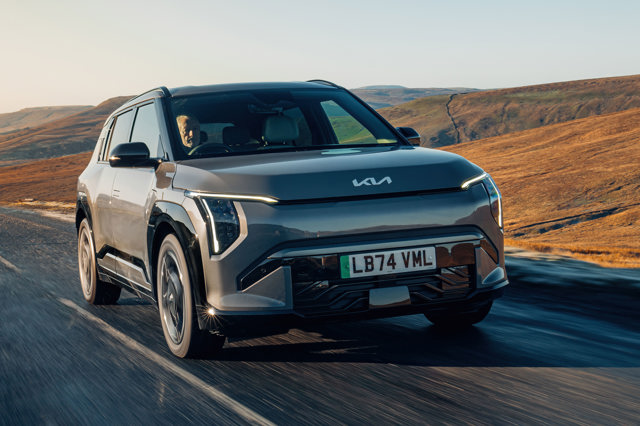
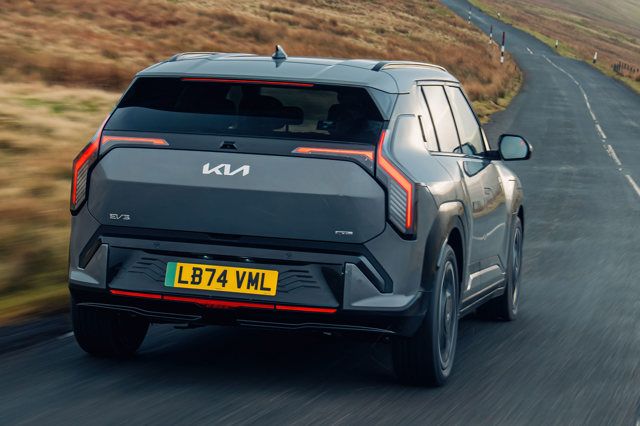
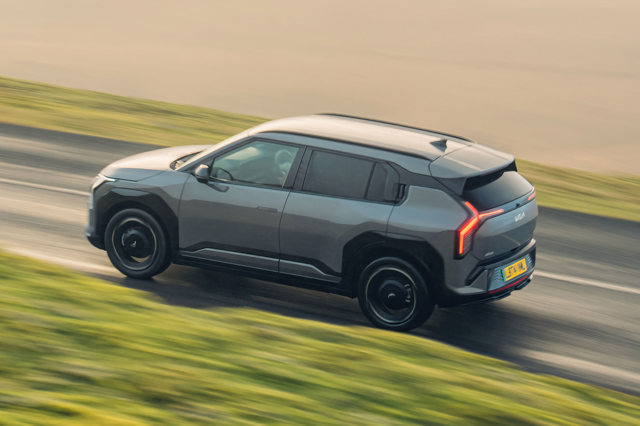
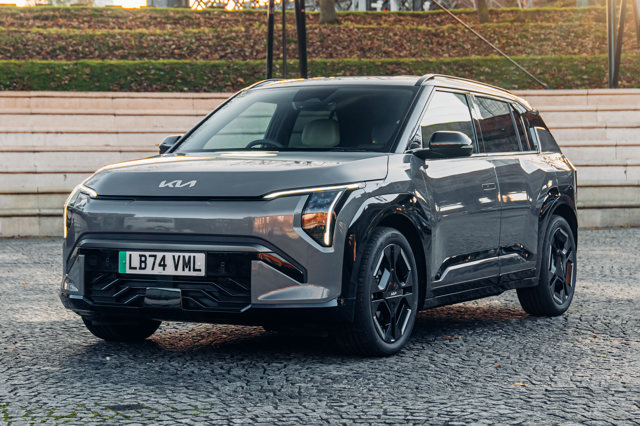
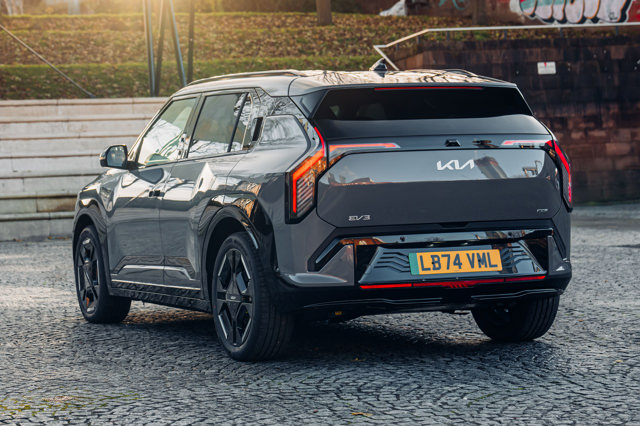
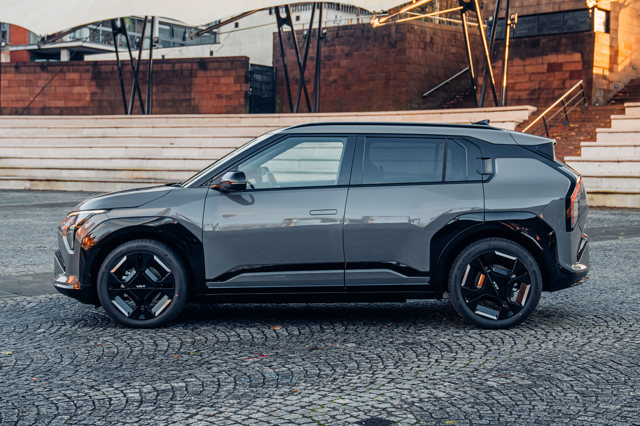
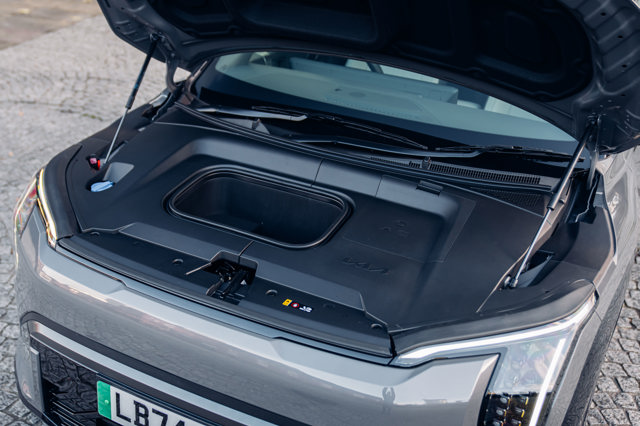
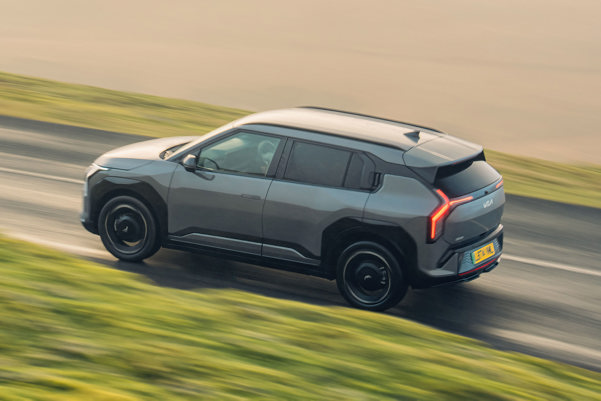
So, how does the Kia EV3 compete? Firstly, just look at it: fresh, bold and quirky without being especially divisive on the outside; slick, modern and impressively spacious inside. At the back is one of the largest boots among compact electric SUVs at 460 litres with the rear seats in use, while under the bonnet is a further storage space despite the motor also nestling under there.
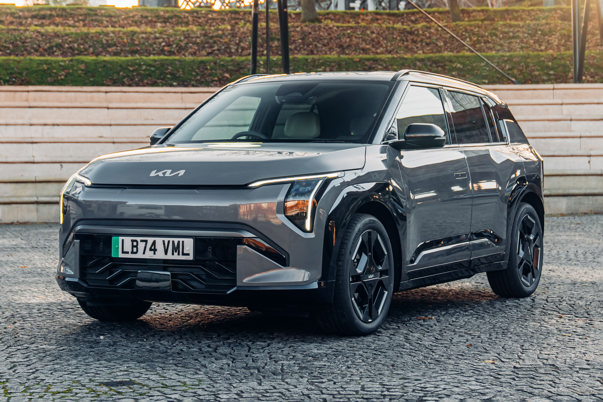
It’s a punchy performer as all EV3s feature a 204PS motor — which Kia refers to as 201bhp — powering the front wheels via a single-speed automatic transmission. All versions are capable of completing the 0-62mph benchmark acceleration test in a sub-8.0-second time.
Two battery sizes are available, although the smaller 58.3kWh version is only available with entry-level Air specification. It offers a WLTP Combined range of 270 miles — very impressive for a relatively modest battery — and thanks to its 102kW on-board DC charger can be zapped from 10-80% battery capacity in 29 minutes.
Also available in Air guise, plus the more upscale GT-Line and GT-Line S trim levels, is the 81.4kWh battery, which requires 31 minutes of plug in time for the same 10-80% recharge thanks to a quicker 128kW on-board DC charger. Stick to Air specification with its 17-inch wheels and the Combined cycle range is 375 miles, dropping to around 367 miles on the pricier versions due to their 19-inch rims.
All Kia EV3s come equipped with LED head and tail lights, front and rear parking sensors, a reversing camera, dual-zone climate control, heated front seats plus wireless Android Auto and Apple CarPlay smartphone connectivity.
Add in the reassurance of the standard seven-year/100,000-mile warranty and it’s difficult to argue why you shouldn’t choose the Kia EV3 over its rivals.
How we tested the Kia EV3
We've tested the Kia EV3 on a number of occasions, regularly revisiting the car to stay on top of the various battery and trim level options. We've brought our families along for the ride where possible, to see how the car deals with the greatest challenge of all: family life.
"The Kia EV3 is a exceptionally competent car in a vast variety of areas, making it a terrific all-rounder"
|
Is the Kia EV3 a good car?
The Kia EV3 is a exceptionally competent car in a vast variety of areas, making it a terrific all-rounder. Sensible pricing, strong value-for-money and a brilliant warranty also help make it even more more of a sensible buy.
Kia EV3 Range
| Air 58.3kWh 201bhp | 270 miles |
| Air 81.4kWh 201bhp | 375 miles |
| GT-Line 81.4kWh 201bhp | 367 miles |
| GT-Line S 81.4kWh 201bhp | 362 miles |
| GT-Line S 81.4kWh 201bhp (heat pump) | 361 miles |
Under the obligatory WLTP testing methodology, the Kia EV3 Air with the 58.3kWh battery has a Combined cycle driving range of 270 miles. In the same specification with the larger 81.4kWh battery pack, the official figure grows to an impressive 375 miles.
Due to the fitment of larger 19-inch alloy wheels, GT-Line and GT-Line S models are limited to a WLTP Combined cycle maximum of 367 miles and 362 miles, respectively, despite using the same 81.4kWh battery. Add a heat pump to the latter as an optional extra, and the official figures say that you'll lose a mile of range, which we'd say rather defeats the object if that turns out to be true in the real world.
Kia EV3 Charging times
Kia quotes AC charging speeds of 5 hours 20 minutes for the smaller battery, and 7 hours 15 minutes for the larger one (that's for a 10%-80% charge). However, that's a bit misleading as it assumes a connection speed of 11kW, which in fairness, the car can accept.
However, most UK homes don't have the three-phase electrics needed for that sort of connection, meaning that your average home wallbox charger can only muster a connection speed of up to 7.4kW. Plugged into a connection like that, you'll be looking at more like 9 hours on the smaller battery and 11 hours on that larger one.
When charging at their fastest flow rates using a DC public charging facility, a 10-80% replenishment for the 58.3kWh battery takes 29 minutes, while the same increase for the 81.4kWh alternative requires 31 minutes. This is a very expensive way of charging, though. DC charging is done through the car's CCS port, which has become the industry-standard type of connector.
Reviews for Kia EV3's top 3 rivals


Kia EV3 handling and engines

Kia EV3 2026: Handling and ride quality
If you’re looking for a small electric SUV that’s also a hoot to drive just for the hell of it, the Kia EV3 isn’t the model you’re looking for. That role’s very much the domain of the Ford Puma Gen-E with the Alfa Romeo Junior Elettrica waiting in the wings as its understudy.
That’s far from saying that the EV3 is dynamically incapable, though, because Kia’s engineers have struck a sensible balance between its handling and ride capabilities.
Point it along your favourite undulating and winding B-road, and the EV3 will respond faithfully to your steering inputs, just without telling you much about what the front wheels are experiencing grip-wise. You soon develop trust in what it’s doing even without that dialogue back to your hands, allowing you to maintain momentum.
That confidence is reinforced by the Kia’s body control, ensuring that you and your passengers aren’t rocked to and fro under hard braking or acceleration, with body lean kept in check through sweeping bends. Its high-voltage battery pack, mounted beneath the EV3’s floor, helps here, ensuring the car's centre of gravity is close to the ground.
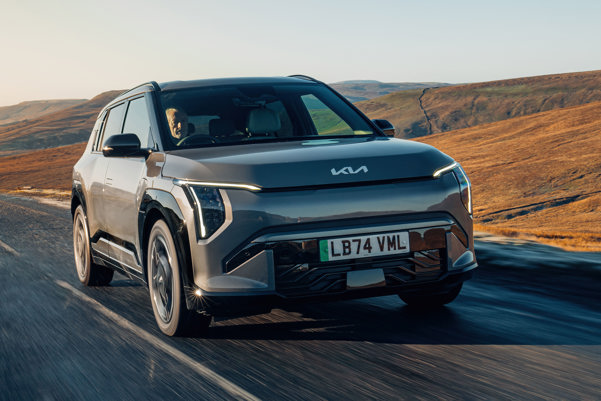
Comfort was more at the forefront of Kia’s engineers’ minds when developing the EV3, although not to the extent that it feels floaty in the way that can induce travel sickness. That connected feeling to the road transmits surface changes to passengers’ posteriors, but without feeling harsh: the dampers do a fine job rounding-off sharp-edged ruts and ridges, even on models fitted with 19-inch wheels.
It's only over particularly bad road surfaces at urban speeds where the Kia EV3 feels like it could warrant a little more honing to its suspension set-up. In those circumstances, it somehow conspires to feel as though its happier bobbling over the surface rather than doing much in the way of absorbing the worst of it.
Kia EV3: Motors and batteries
While there are two batteries of 58.3kWh and 81.4kWh available in the Kia EV3, there's only one electric motor. Its mounted under the bonnet and drives the front wheels-only: all-wheel drive isn’t available on this car. As per electric car norms, a single-speed transmission is fitted, which is essentially operated like a conventional automatic gearbox.
At its peak the EV3 produces 204PS of power with its rich 283Nm seam of torque available instantaneously all the way up to 5000rpm. The upshot of those numbers is that from no and low speed, the Kia scampers away really briskly, but when you bury the accelerator at higher speeds — such as when overtaking another vehicle travelling only slightly slower — there’s less of a burst of alacrity to help see you quickly make the pass.
Despite its compact footprint the Kia EV3 is a portly wee thing, with the high-voltage batteries being the main culprit in this regard. Versions with the 58.3kWh pack weigh 1845kg while those with the larger 81.4kWh alternative are 1930kg.
That heft dulls the EV3’s ultimate performance potential despite the punchiness of its motor. Sure, all versions crack the 0-62mph benchmark in under 8.0 seconds, yet to drive the Kia never feels especially rapid. What power there is can be easily modulated with the accelerator pedal, enabling gentle driving when required, rather than the throttle replicating an on-off switch.
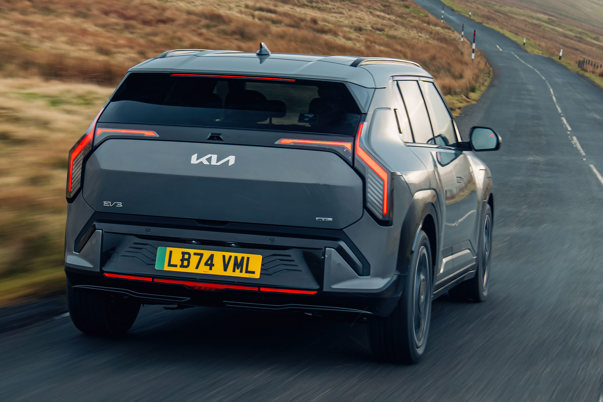
For the record, the lighter 58.3kWh model darts from 0-62mph in 7.5 seconds, with the heavier 81.4kWh versions taking 7.7 seconds in Air specification and 7.9 seconds in GT-Line and GT-Line S trims. All EV3s have an electronically governed top speed of 105mph.
Selectable driving modes are available via a physical button on the steering wheel, although the steps between them don’t feel as pronounced as they do in some other EVs.
Braking can also feel like an unusual experience in several electric cars, but with the Kia that’s not true, with the pedal feel and modulation being akin to a typical combustion-engined car. You can choose to vary the level of brake energy recuperation using the paddles behind the steering wheel: our experience was that it felt most natural and relaxed in its mildest setting.
Kia EV3 2026: Safety
Euro NCAP awarded the Kia EV3 its full five-star rating when its crash-worthiness and safety kit was assessed in 2025.
Regardless of specification level, all EV3s are fitted with Forward Collision Avoidance Assist, Highway Driving Assist, Lane Keep and Lane Follow Assist, adaptive Smart Cruise Control, Blind Spot Collision Avoidance Assist, Driver Attention Warning and an electronic parking brake with auto-hold as standard.
Kia EV3 2026: Towing
You can tow with a Kia EV3 although its maximum capacities will ensure you’re not hauling anything substantial, especially with the smaller-batteried version.
While 81.4kWh pack versions can two a braked trailer weight up to 1000kg, the 58.3kWh model is limited to just 500kg.
Kia EV3 interior
Kia EV3 2026: Practicality
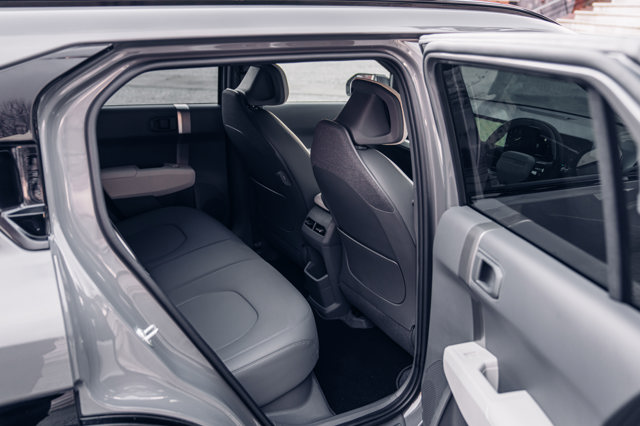
Sitting in the front or rear, four tall adults will experience plenty of space inside the Kia EV3, with ample room for limbs and space above their heads so they don’t feel constricted that way. Adding a fifth passenger to the rear bench’s centre seat will inevitably make it feel more snug back there, but it’s unlikely to prove uncomfortably so.
Visibility for front and rear passengers is good with large side windows ensuring it doesn’t feel claustrophobic inside, despite the chunky rear roof pillars and narrow tailgate glass. A panoramic roof would further help in this regard but no EV3s are fitted with one: only the GT-Line S has an opening sunroof and that’s above the front passengers.
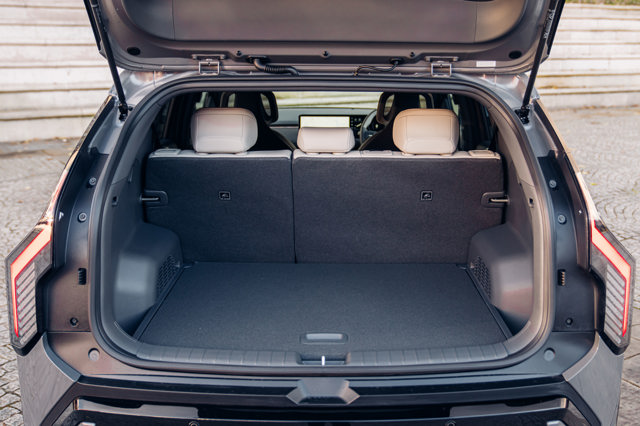
Behind the 60/40 split-folding rear seats is a 460-litre boot space with a retractable roller-blind-style luggage cover to keep its contents out of sight from prying eyes. While that’s easily beaten by the 574 litres available in the Ford Puma Gen-E, the Kia’s still comfortably more commodious than most rivals.
When the rear seatbacks are tumbled forwards they don’t lie completely horizontally, but sliding longer, heavier objects along the floor shouldn’t prove tricky. Loaded to the ceiling the Kia will then swallow 1250 litres of cargo: the EV3’s boxy shape reducing the shortfall to the Puma Gen-E to just 33 litres.
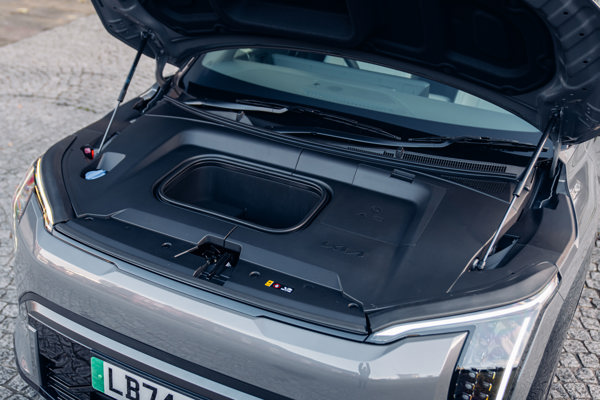
Pop the EV3’s bonnet, and on top of the motor is a modest 25-litre storage well, which is sufficient for accommodating the charging cables. Be aware if considering placing expensive items in there that the bonnet itself forms the sealed lid, so opening it on a wet day may cause the contents to get a soaking.
Passenger area storage solutions are plentiful with large door bins, a generously sized glovebox, mouldings on the backs of the front seats to hang jackets upon and — because the drive selector’s mounted on the steering column — a large open storage area between the front seats, which includes a slot for a smartphone and two pop-out cupholders.
Above that is an armrest on top of the centre console plinth, which — on GT-Line and GT-Line S models — can be extended forwards to create a small table, ideal for in-car dining or potentially to rest a laptop on when working at a charge point.
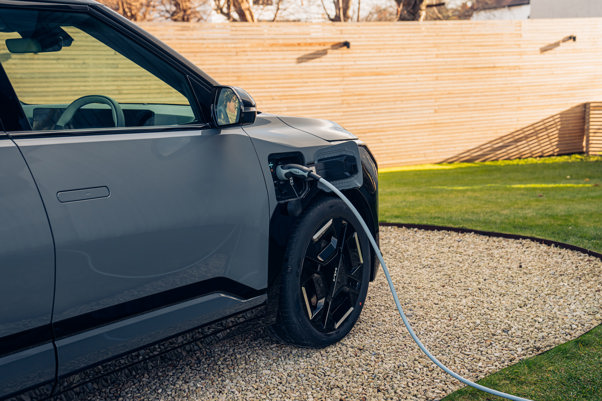
Talking of charging, the Kia EV3’s socket is mounted on the driver’s side front wing, saving the cost and weight of extending the cables to our preferred position on one of the rear wings. Not a major issue, certainly, but it can be an inconvenience when using public facilities as you’re likely to be forced to drive in forwards when charging.
Kia EV3 buyers choosing the range-topping GT-Line S specification have an additional bonus feature when it comes to charging: not only are its front seats electrically adjustable and ventilated, they have a one-touch relaxation setting allowing them to be fully reclined, perfect for a power nap when powering up.
Kia EV3: Dimensions
The size of the Kia EV3 differs ever so slightly depending on which version you go for. If it's the entry-level air, the car is 4,300mm long and 1,560mm tall. Go for the GT-Line or GT-Line S versions, meanwhile, and chunkier bumpers take the length up to 4,310mm, while bigger wheels take the height up to 1,570mm. Either way, the car's width is 1,850mm, while its wheelbase is 2,680mm.
Is the Kia EV3 big enough for a family? Boot space and interior room
Yes, it should be, provided your family isn’t too big. The passenger compartment is surprisingly roomy for such a compact car, and four tall occupants will sit comfortably. Things will inevitably feel more snug when you squeeze in a fifth, but they should just about fit. The boot has 460 litres of space, which isn’t class-leading, but it’s still pretty good.
Kia EV3 2026: Quality and finish
While the Kia EV3 isn’t a cheap car in the strictest sense of the term, it is at the less expensive end of the pricing scale, so you might expect its interior to feel downmarket. Not a bit of it.
Okay, your hands aren’t going to encounter several square metres of satisfyingly squidgy soft-touch plastics, but the firmer materials used in the EV3 feel substantial and interestingly textured. Even the panel of electric window switches on the doors have a slightly rubbery finish to them, uplifting the sense of overall quality.
Elsewhere you’ll spot metallic-look switches and décor panels, with a broad swathe of grey fabric adorning the dashboard. These are all touches Kia didn’t have to do — and most manufacturers don’t — but for a few extra quid per car they make it feel that bit more special than it might otherwise be.
All of the physical controls, buttons and switches — and rejoice because there are plenty of them — have satisfying actions even if they’re not damped to the nth degree. There’s a quality substance to everything your hands encounter, which in turn reinforces your confidence that the EV3’s a car built to last.
Kia EV3 2026: Infotainment
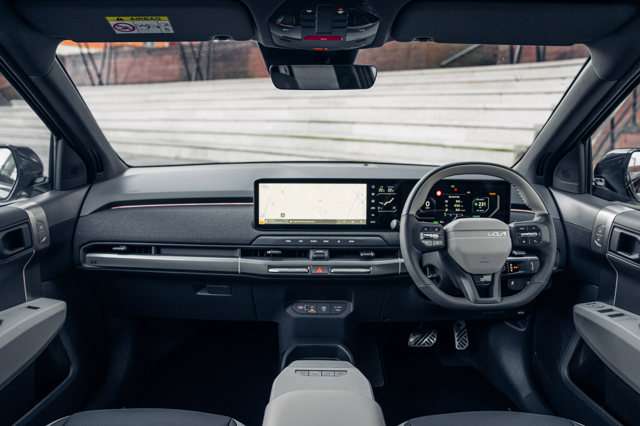
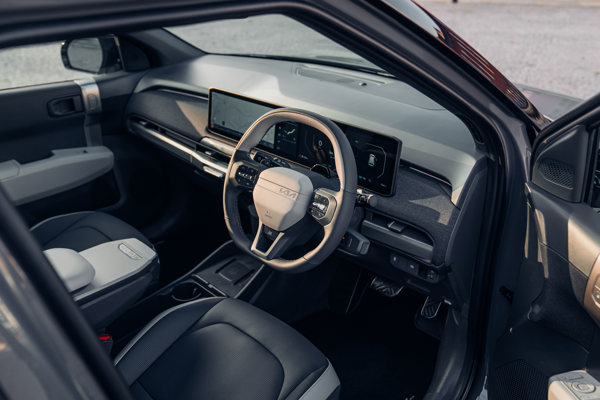
Given it’s a modern EV, it’s no surprise that when you sit in the Kia EV3’s driver’s seat, you're faced with an ultra-wide digital display. In total it stretches almost 30 inches end-to-end and includes a 12.3-inch driver’s display, a 5.0-inch climate control panel and a 12.3-inch multimedia touchscreen.
This includes LG’s Web OS including streaming technology, meaning users can play arcade games inside the new Kia EV3, which the kids (and big kids) will love.
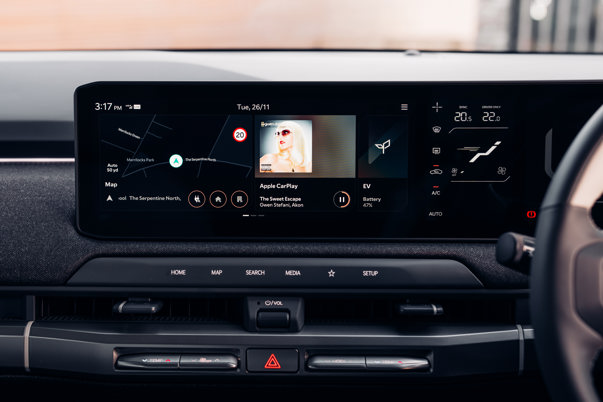
Another first for the brand, the EV3 uses Kia’s AI Assistant technology. This uses generative artificial intelligence to comprehend complex voice commands through natural language understanding. Kia says it will be able to ‘converse naturally with users’. In reality, it worked very well during our tests, although it wasn’t an appreciable leap over rivals’ systems.
For those who are not so keen to chat with their car, the new Kia EV3 also includes a row of physical buttons, including rocker switches to adjust the climate control temperature.
There’s an inherent slickness to the operation of the screen-based functions, with little lag and easily understandable menus. The integral navigation graphics could do with some more love but given most people will simply connect their smartphone using the standard wireless Android Auto and Apple CarPlay and pick a mapping app on there, it’s understandable why Kia hasn’t done so.
Kia EV3 value for money
Kia EV3 2026: Prices
This review was last updated in March 2026, and the table below contains Kia's latest prices at that time. Do bear in mind, however, that prices change very frequently, so please use these merely as a guide before checking Kia's website for yourself for the EV3's very latest pricing.
| Air 58.3kWh 201bhp | £33,055 |
| Air 81.4kWh 201bhp | £36,055 |
| GT-Line 81.4kWh 201bhp | £39,455 |
| GT-Line S 81.4kWh 201bhp | £43,055 |
| GT-Line S 81.4kWh 201bhp (heat pump) | £43,955 |
Is the Kia EV3 good value compared to rivals?
In isolation the Kia EV3’s pricing suggests it isn’t one of the cheapest compact electric SUVs available, but that’s only part of the story.
There are indeed rivals, such as the MINI Aceman and Smart #1, that can be had for significantly less than the Kia, but these have entry-level battery options with quite a lot less range than even the entry-level Kia. Prices become much closer if you upgrade those rivals to larger-batteried variants that get closer for range, but again, even the entry-level Kia has most of them beaten on the latter score.
Some rivals don't get that close on either score: the Alfa Romeo Junior Elettrica costs significantly more while providing significantly less range. And if you want the Kia with its larger battery option, there aren't too many rivals that can get near it for range at any price.
Factor in the generous amount of standard kit you're getting for your money with the Kia, and the EV3 starts to look like even better value. And when you then factor in the warranty cover you're also getting, you'll probably start to feel rather smug.
Kia EV3 2026: Reliability and running costs
To make EV running costs as low as possible, you need have a wallbox charger installed at home and the Kia EV3 is no exception to this rule. Such equipment gives you access to cheaper, electric car-friendly tariffs of around 7p per kWh, although you will need to shop around with energy suppliers to achieve this. It's worth doing, because the national average cost of power in the UK is around 28p per kWh, which gives you some idea of the amount you'll be saving. It'll also slash charging times compared to if you rely on a standard three-pin domestic plug: it'll take hours rather than days.
Public rapid charging is very expensive: we advise that these are only used when absolutely necessary, and for as short a time as possible. If it’s not possible to have a wallbox installed at home, public chargepoints are highly unlikely to be a cost-effective solution, and may even prove more expensive than running a petrol- or diesel-engined car.
As of April 2025, EVs are no longer exempt from VED car tax, facing the same £195 annual bill as all other cars from year two onwards, regardless of how much CO2 they produce. They’re also liable for the Expensive Car Supplement — the so-called luxury car tax — when they cost £40,000 or more, inclusive of the price of optional extras. Only Air versions of the EV3 are comfortably below that figure.
Low Benefit-in-Kind (BiK) taxation for electric cars means they are highly sought-after by company car drivers who are able to take advantage of their 4% taxation rate for 2026/27.
Insurance groupings run from 34 to 38 (out of 50) depending on the variant.
Kia EV3: Frequently asked questions
What is the real-world range of the Kia EV3?
With official WLTP range figures of up to 267 miles with the smaller 58.3kWh battery, and up to 372 miles with the larger 81.4kWh battery, we’d expect average returns of around 200 miles and 300 miles, respectively, from the Kia EV3.
How much does the Kia EV3 cost in the UK?
The Kia EV3 starts at around £33,000 for the car with the smaller battery, while the cheapest version with the larger battery costs around £36,000. Prices rise to around £44,000 at the very top of the range.
Does the Kia EV3 have a heat pump?
The Kia EV3 does not have a heat pump as standard. One is available as an optional extra, but only on the range-topping GT-Line S model.
Satisfaction Index
 What is your car like to live with?
We need your help with our latest Satisfaction Index, so that we can help others make a smarter car buying decision. What's it like to live with your car? Love it? Loath it? We want to know. Let us know about your car - it will only take a few minutes and you could be helping thousands of others.
Help us with the Honest John Satisfaction Index nowKia EV3 models and specs
There are three levels of specification available for the Kia EV3 range: Air, GT-Line and GT-Line S.
Standard equipment for the Kia EV3 Air includes:
- 17-inch alloy wheels
- LED head, rear and daytime-running lights
- Body-coloured door mirror housings
- Electrically adjustable, heated and folding door mirrors
- Flush exterior door handles
- Keyless entry and starting
- Matte black side sills, wheelarches and window surrounds
- Automatic windscreen wipers
- Front and rear parking sensors
- Reversing camera
- Grey cloth seat upholstery
- Heated front seats
- Heated, faux leather steering wheel
- Electric front windows
- Dual-zone automatic climate control
- Wireless Android Auto and Apple CarPlay phone connectivity
- Five USB-C charging points
- Six-speaker audio system
- Adaptive Smart Cruise Control
- Electronic parking brake with auto-hold
Upgrading to the Kia EV3 GT-Line additionally nets you:
- 19-inch alloy wheels
- GT-Line-specific exterior styling
- Gloss black door mirror housings, side sills, wheelarches and window surrounds
- Small Cube design LED headlights
- Automatically opening and retracting exterior door handles
- Digital key
- Dark-tinted rear privacy glass
- Two-tone faux leather upholstery
- Electrically operated driver’s seat lumbar support
- Alloy pedals
- Sliding centre console
- Customisable interior LED ambient lighting
- Wireless smartphone charging pad
Extra equipment fitted to the range-topping Kia EV3 GT-Line S includes:
- Electrically operated tilting and sliding glass sunroof
- Electrically operated tailgate
- Ventilated and electrically adjustable front Premium Relaxation seats with memory function for driver’s seat
- Heated outer rear seats
- Electric front and rear windows
- Interior 3-pin plug socket
- Vehicle-to-load (V2L) adapter for the car’s charging socket
Kia EV3 Air vs GT-Line: Which trim level should you choose?
We’d say that the cheaper entry-level Air trim will have more than enough standard kit to satisfy most buyers. It has alloy wheels, dual-zone climate control, automatic wipers, front- and rear parking sensors, a reversing camera, heated front seats and steering wheel, adaptive cruise control and wireless Apple CarPlay and Android Auto. The upgrades of GT-Line trim are largely cosmetic, but you might also like the two-tone faux-leather upholstery and wireless smartphone charging pad.
More articles you might be interested in:


Model History
July 2024
Kia EV3 specs confirmed, prices start at £32,995
Kia has confirmed pricing and specifications for the Kia EV3. Prices start at £32,995 and pre-orders are open from 1 August. Three trim levels are available - Air, GT-Line and GT-Line S - and first deliveries will be in late 2024.
The EV3 Air comes with a front-mounted 204PS electric motor and a choice of 58.3kWh or 81.4kWh batteries, giving a range of 270 and 375 miles respectively. GT-Line and GT-Line S models use the same motor and come with the larger battery only, and have ranges of 367 and 362 miles respectively, as they come with larger wheels.
All models include a high level of equipment as standard, including three interior screens - a 12.3-inch driver display, 5.3-inch climate control touchscreen and 12.3-inch touchscreen navigation - plus wireless Apple CarPlay and Android Auto, heated front seats and steering wheel, reversing camera and a 25-litre frunk.
Air models add 17-inch alloys and LED headlights, GT-Line includes 19-inch alloys, wireless phone charging and flush door handles, and GT-Line S gets you an eight-speaker Harmon Kardon audio system, head-up display, sunroof, electric front seats, heated rear seats and a smart power tailgate.
Kia EV3 prices
EV3 Air 58.3kWh £32,995
EV3 Air 81.4kWh £35,995
EV3 GT-Line 81.4kWh £39,495
EV3 GT-Line S 81.4kWh £42,995
EV3 GT-Line S 81.4kWh with Heat Pump £43,895
