
Cupra Born Review: Price, range and boot space
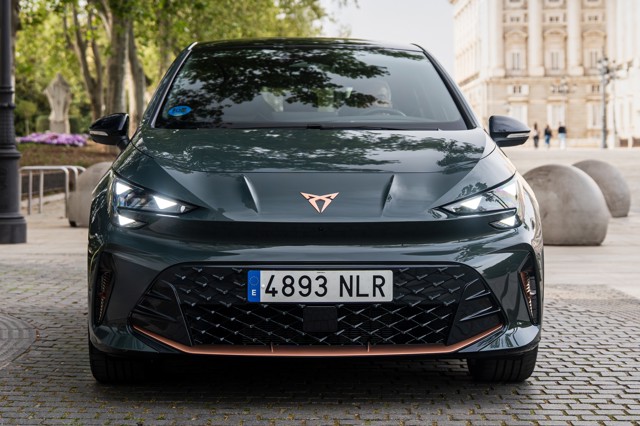

Cupra Born Verdict

 Striking exterior look and slightly more appealing cabin than ID.3. Long range and fast charging for the money. Spacious for passengers. Sharp to drive and yet still comfortable.
 Not quite a true hot hatch even in VZ form. Some areas of cabin feel cheaper than we’d like. Touch-sensitive wheel and screen buttons are frustrating.
Find out more about the Cupra Born
|

Cupra Born at a glance:
- Body type: Hatchback
- Price range: £35,995 - £45,995
- Electric range: 257 - 392 miles
- Number of seats: 5 (2 Isofix)
- Boot capacity: 385 litres
Cupra Born: Everything you need to know
The Cupra Born was the second model from the standalone sporty Spanish brand not to have a cheaper SEAT-badged equivalent but there's a very good reason why this EV hatchback looks more than slightly familiar.
That’s because the Cupra Born is based on the same underpinnings as the Volkswagen ID.3. Early and first-facelift models, released before the summer of 2026, even share much of the same bodywork and interior panels. That's hardly ideal for Cupra as it stakes its claim to be perceived as a brand that appeals to both heart and mind, so it's just as well that the latest facelift gives it much more of its own identity.
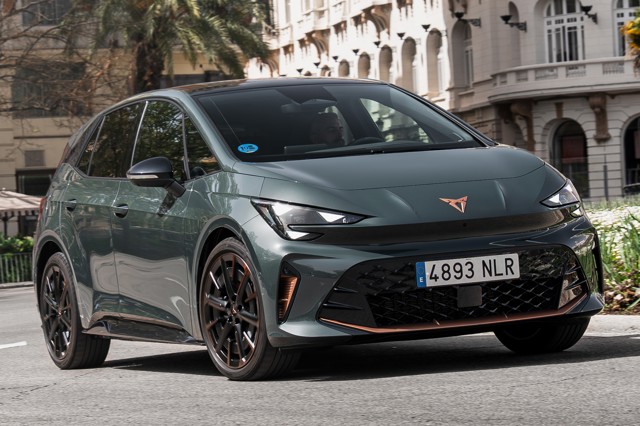
Inevitably, the Born and ID.3 share broadly similar dimensions, with a wheel-at-each-corner stance, short bonnet, similar glasshouse and bluff rear end. While VW went a curvy, unthreatening styling approach (that itself will be tweaked with the arrival of the ID.3 Neo), the Born – named after a neighbourhood in Barcelona – was tweaked to look decidedly more aggressive and edgy.
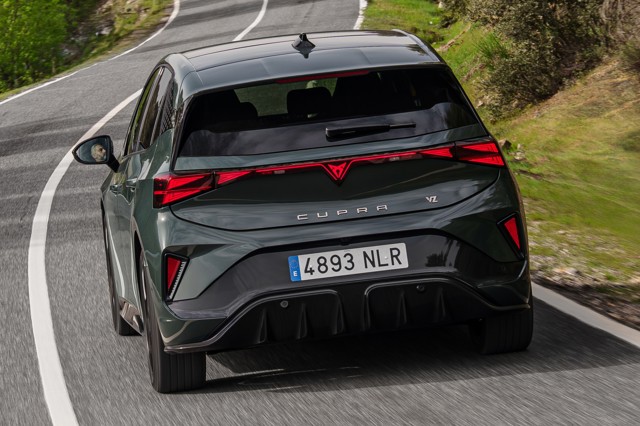
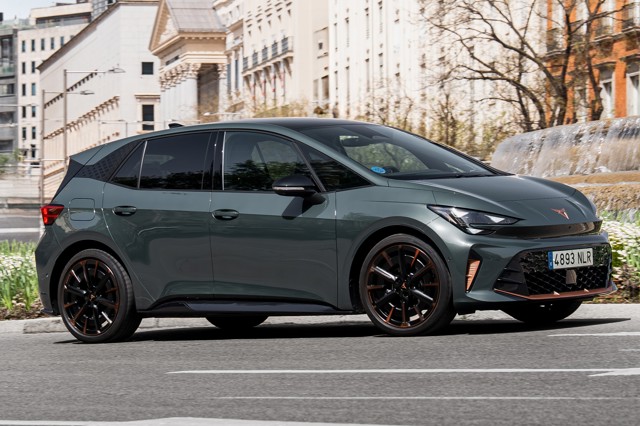
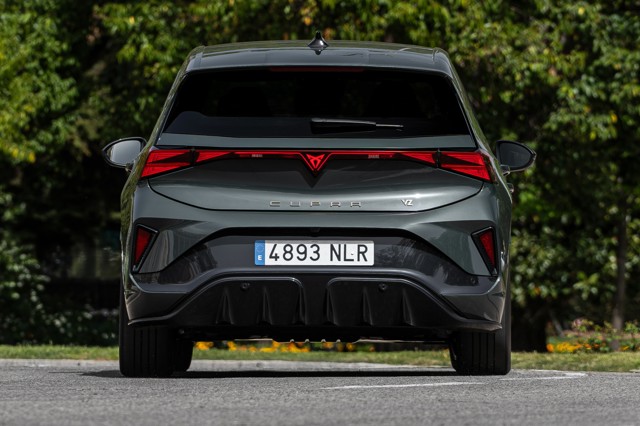
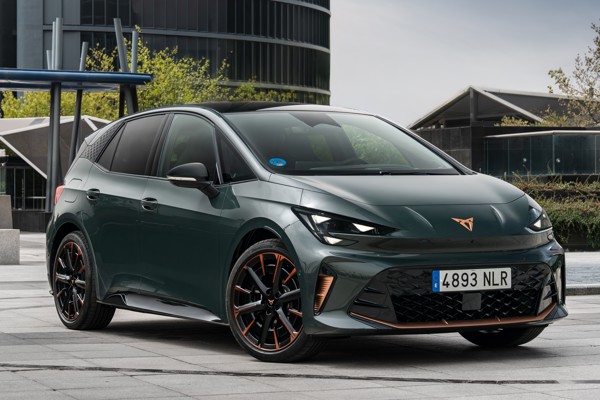
That look was tweaked in 2024 and again with the 2026 facelift, which brought more of the vibe of more recent Cupras, such as the Tavascan, with a "shark-nose" front end that has new bumpers, matrix LED headlights and revised rear lights with an illuminated logo. There's a new rear diffuser too – more for aesthetics than function, but it does help with the sportier look.
Cupra's also ensured that the Born also sits lower to the ground than the ID.3, with a more handling-focused tune, complete with bigger wheels and wider tyres.
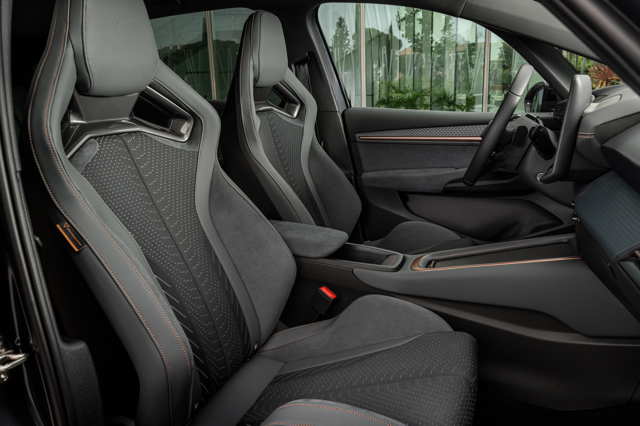
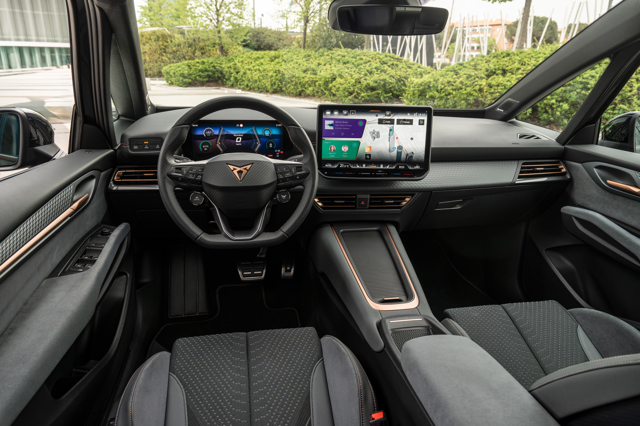
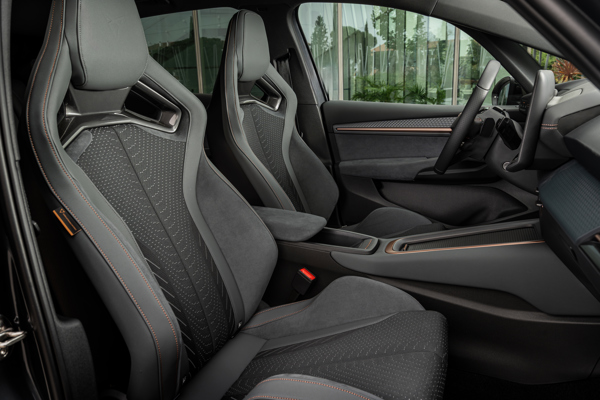
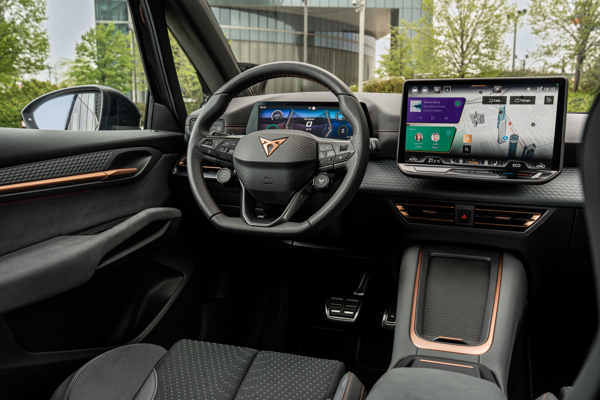
Inside, you can again see a similar basic architecture to the ID.3, but with a slightly classier feel thanks to upmarket materials and copper-coloured detailing. In terms of the overall technology and practicality the Born is just as modern and spacious as its sibling. Again, the 2026 facelift brought further improvements, with new tech and revised interior materials, including various recycled upholstery choices.
There’s familiarity with the electric motor and battery choices, too. The initial launch versions of the Born were available with either 204PS or 231PS, the latter badged e-Boost, with power from both going through the rear wheels only. Later, the 204PS option was dropped and a 326PS VZ model was added to the line-up.
Today the 231PS models come with a 58kWh battery pack, enough for a very competitive maximum claimed range of up to 265 miles.
If that isn’t enough, though, the V3 version was also offered with a bigger 77kWh battery, which promises up to 343 miles in pre-facelift models. That’s sufficient to give the larger, pricier Tesla Model 3 saloon a run for its money. The VZ gets an even larger 79kWh unit offering up to 372 miles. The facelift boosted the VZ range to 392 miles, and ditched the V3 model, while bringing in a 190PS version in the V1.
Sticking with electrically powered hatchbacks, besides the ID.3 key rivals for the Cupra Born include the good value MG4 EV, the impressive Renault Megane E-Tech and the stylish Vauxhall Astra Electric among others.
Plus it's inevitable that many would-be buyers will also compare the Born with the more expensive and SUV-like Kia EV6 and award-winning Hyundai Ioniq 5.
We reckon the Cupra Born is an excellent affordable electric car and in some ways it’s better than the Volkswagen on which it’s based. Read on to find out why.
How we tested the Cupra Born
We've tested the pre-facelift Cupra Born on several occasions, both on the launch event and with a test car that stayed with us for a week, where we were able to drive it on all types of road and use it in our everyday lives.
We've also had a short blast in the facelifted model on the international launch event, although it wasn't the most dynamic of driving opportunities, mostly limited to the urban roads in and around Madrid. Still, it gave us ample time to see how the various aesthetic and comfort upgrades have improved the car.
"Since the facelift, it's nicer inside and with fewer annoying interface quirks, too" |
Is the Cupra Born a good car?
Yes, it's really rather decent. If the ID.3/ID.3 Neo just isn't sporty enough for you, the Born is an excellent alternative, with a vim and vigour to it that the VW can't offer. Since the facelift, it's nicer inside and with fewer annoying interface quirks, too. It may also be better to drive than the pre-facelift model, although we'll have to give it a go on UK roads to confirm it. Still, our initial experience suggests it's certainly no worse, and it was pretty darn good to start with.
Cupra Born: Range
| Cupra Born 204PS 58kWh to 2024 facelift | 233-265 miles |
| Cupra Born 230PS 58kWh to 2024 facelift | 231-262 miles |
| Cupra Born 230PS 77kWh to 2024 facelift | 307-343 miles |
| Cupra Born 230PS 59kWh from 2024 facelift | 226-265 miles |
| Cupra Born 230PS 77kWh from 2024 facelift | 302-348 miles |
| Cupra Born 326PS 79kWh from 2024 facelift | 315-372 miles |
| Cupra Born 190PS from 2026 facelift | 279 miles |
| Cupra Born 231PS from 2026 facelift | 372 miles |
| Cupra Born 326PS from 2026 facelift | 372 miles |
The latest Cupra Born will give you a very decent range of up to 372 miles from its 79kWh battery, although the entry-level 190PS model, with a smaller 58kWh battery, drops that to 279 miles. Still, that's plenty of miles between charges for the vast majority of people.
Cupra Born charging times
Cupra quotes a charging time for the larger 79kWh battery of 8h 30min for a full AC charge at 11kW, although a typical home charger will only charge at 7kW, so it will be slower than that. A DC fast charge at up to 185kW should take between 26 and 30 minutes from 10% to 80% capacity, using a suitable charger.
The 58kWh battery will take 6h30m at 11kW and 26 minutes for a 10% to 80% charge at a DC charger at 105kW.
Reviews for Cupra Born's top 3 rivals

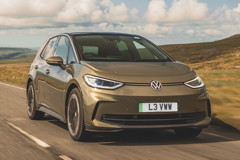
Cupra Born handling and engines
Cupra Born 2026: Handling and ride quality
Cupra is a sporty brand, so it shouldn’t come as a surprise that the Born gets a few key changes over the Volkswagen ID.3 on which it’s based to make it feel more aligned with those aspirations. For a start, it has a reduced ride height (10mm lower at the front, 15mm at the rear) with a specific tune for the optional adaptive dampers.
Wider tyres specifically developed for the Born also feature – and they go wider still, to 235mm, on the 2026 update – while the wheels go up to a larger diameter than they do on the VW with 19 or 20-inch options. There’s also a Sport mode for the stability control. None of these are huge changes, but they do make the Born feel a bit keener on turn-in and more able to control its fairly hefty kerbweight – the least-portly model is 1841kg on the early cars and 1899kg on the 2026-onwards models.
Well-weighted and accurate steering combined with loads of grip also means you can get into an enjoyable rhythm on a twisty road.
We’ll stop short of calling it a hot hatchback, though – at least for the pre-facelift model. For starters, despite it being rear-wheel drive, it doesn’t allow for any sort of playfulness in a bend, staying completely neutral. And there’s neither the feel nor the sharpness a good hot hatch, such as Cupra’s own Leon, can offer.
Having said that, the Born is a lot less wallowy than most small EVs. Because it retains most of the ID.3’s excellent refinement and comfortable ride, it’s a great daily driver. It’s superb around town with a tight turning circle and short overhangs, while out on the motorway it’s nicely controlled and not too firm.
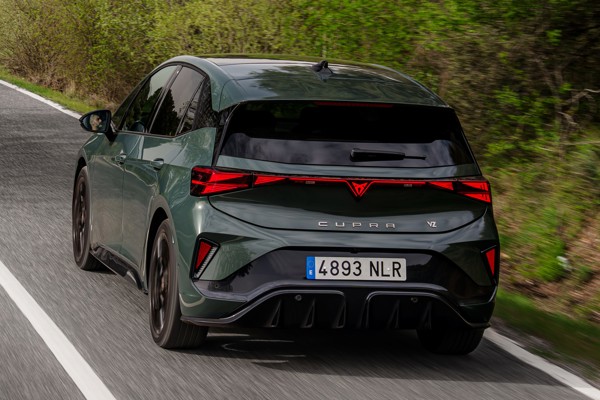
Cupra has tweaked things for the facelift, with wide tyres and revised suspension settings. But the test route on the international launch event in Spain was bafflingly urban-focused, and we were only able to drive the top-spec VZ version, so we haven't been able to really test out the changes across the range. We'll get another UK test model in once it arrives on our shores.
The Born also has more natural-feeling brakes than a number of EVs, meaning it’s easier to stop with confidence. In default drive mode, there’s not a lot of regenerative effect, but select Sport and it ups it a bit to simulate engine braking. Select B mode and you get the full regen, which is strong without being neck-snapping. Full one-pedal mode was added in 2026, meaning you can drive most of the time withlut using the brake pedal.
The Born VZ has upgraded suspension and tweaked steering, making it feel by far the sportiest one of the lot. There's barely any body roll but the flip-side of this is that the ride is quite firm. It's just about acceptable when the adaptive dampers are set to their softest mode but otherwise, the VZ ends up being too choppy on all but the smoothest bits of tarmac.
Because it's so much more powerful than other versions of the Born, yet remains rear-wheel drive, the car can move around at the back under power, helping the VZ feel more exciting without being intimidatingly tail-happy. The traction control is ready and waiting to step in if things get too silly.
It's by far the most exciting Cupra Born drive but it still can't quite compete for the thrill of a petrol-powered hot hatchback.
Cupra Born: batteries and motors
In pre-2024 facelift form, we only drove the 204PS version of the Cupra Born. It puts out 310Nm of torque, and although neither of those figures is generous for a car of this weight, instant torque and response mean it feels pretty nippy most of the time.
If you're buying a new Cupra Born, the lowest-powered version you can buy develops 230PS, although the torque output is unchanged. It'll sprint from 0-62mph in a very reasonable 6.7 seconds with the 59kWh battery, although the heavier 77kWh alternative dulls that to 7.1 seconds.
Should you want to go faster, your only option is the Born VZ, which was launched in 2024. It's by far the most expensive version, but also the most powerful, with a 96PS advantage over its siblings at 326PS.
With and 545Nm of near-instantly delivered torque, the VZ feels potent off the line, even if it starts to feel a little less dramatic once you reach 40mph or so – 0-62mph arrives in 5.6 seconds and the electronic speed limiter comes in at 124mph compared with 99mph in other Borns.
Cupra Born 2026: Safety
Safety body Euro NCAP awarded the Cupra Born its maximum five stars for safety – not a huge surprise as the Volkswagen ID.3 was also handed five stars when it was tested back in 2020. When it was re-tested in 2025 to Euro NCAP's more stringent standards it once again attained the full five stars.
Every Cupra Born comes with autonomous emergency braking, adaptive cruise control, lane assist, a dynamic road sign display and drowsiness detection. What’s more, all-round parking sensors and a rear-view camera will help you avoid parking scrapes.
Cupra Born 2026: Towing
If you need to go on the pull, look elsewhere. The Cupra Born is not rated for towing. You can specify a tow bar on cars from 2026 onwards, but it's strictly for bike carriers, not caravans.
| Engine | MPG | 0-62 | CO2 |
|---|---|---|---|
| 45kWh | - | 8.9 s | - |
| 58kWh | - | 7.0–7.3 s | - |
| 77kWh | - | 7.0 s | - |
Cupra Born interior
- Boot space is 385 litres
| Dimensions | |
|---|---|
| Length | 4322 mm |
| Width | 2070 mm |
| Height | 1540 mm |
| Wheelbase | 2766 mm |
Cupra Born 2026: Practicality
There's plenty of space inside the Born, particularly up front with no bulky transmission tunnel getting in the way of your knees. In some ways it almost feels like an MPV, with a really light and airy feel and room for even the tallest or broadest of drivers to get comfortable.
There’s plenty of adjustment in the seats and wheel, with a slightly raised driving position and a low dashboard giving a great view forwards. Just bear in mind that the VZ's sportier Cup bucket seats have some particularly chunky side bolsters, so broader framed folk might feel a bit squeezed. They're firmer than we'd like, too.
Six-footers will find plenty of room in the back for their heads and legs, at least on the outer seats. The floor isn’t all that high compared with some EVs with the batteries mounted under the floor, meaning there is some space to slide your feet under the seat in front.
The middle rear seat position is raised and a bit narrow, but again, the lack of a transmission tunnel leaves room for your feet, while the doors open nice and wide to enable easy access for fitting child seats.
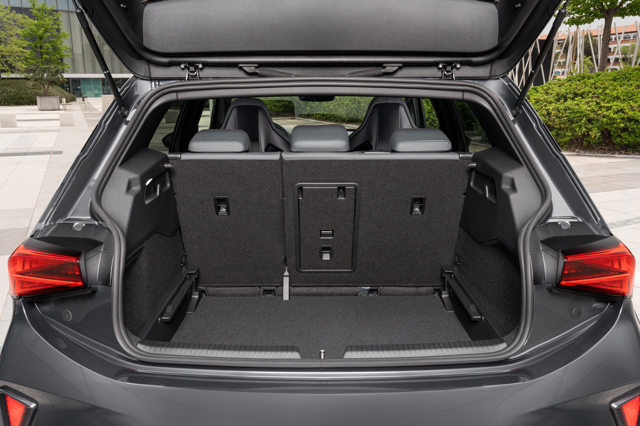
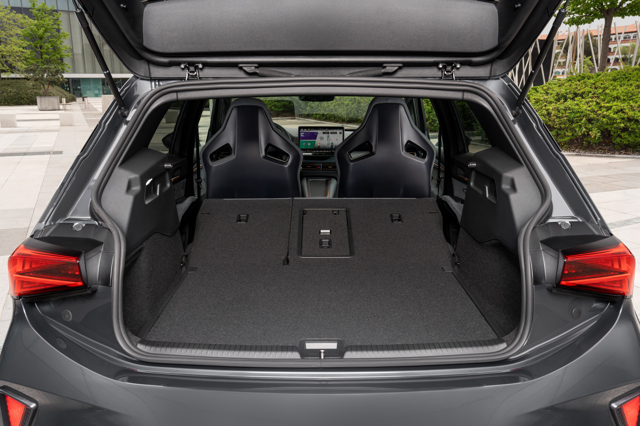
The boot is the least impressive part of the Born in terms of space. At 385 litres it’s decent enough for a modestly sized hatchback and trumps the MG4 EV's 363-litre capacity and the Vauxhall Astra Electric's 352 litres, yet it lags behind the Renault Megane E-Tech's 440-litre volume. The Cupra's lack of a front boot to boost practicality further is a pity.
Still, the opening is fine, and the boot is a nice square shape, but the seats only folds in a 60:40 split and there’s no ski hatch.
Cupra Born: dimensions
Just as the VW ID.3 is similar in size and positioning to a Golf, the Cupra Born occupies a similar footprint to a Cupra Leon.
The Born is actually slightly smaller in terms of dimensions, at 4322mm long, 1908mm wide and 1537mm tall. But because there’s no engine up front, the wheelbase – the distance between the front and rear wheels – is more than 130mm longer than the Leon's.
Cupra Born 2026: Quality and finish
Just like the VW ID.3, the Cupra Born’s interior quality was, in pre-facelift cars, a bit of a mixed bag, but it's improved considerably with the 2026 facelift.
There are areas on the original car where it looked and felt nicer than the Volkswagen – in particular we liked the copper-coloured detailing, the stitching on the soft-touch upper dash panel and the fabric-covered door and centre armrests.
That contrasted, though, with hard and scratchy plastics elsewhere on the doors, as well as on the lower parts of the dash and centre console. It was certainly nicer overall than the MG4 inside but it wasn’t on the same level for perceived quality as the Megane E-Tech.
Little cost-cutting touches such as the lack of dedicated rear window switches in the driver's door panel disappointed, too.
Thankfully, an interior overhaul has, by and large, sorted everything out. The perceived material quality is much better, with new door panels, new materials and upholsteries – many of which are recycled – a revised steering wheel with proper buttons and dials, and four window switches.
Overall, both versions feel solid and built to last but the facelifted version has a definite lift in quality.
Cupra Born 2026: Infotainment
Every Cupra Born comes with the same suite of infotainment and display tech. This differs from the ID.3 where some versions come with a smaller screen.
In both pre- and post-2026 facelift models of the Born, you get a 12.9-inch central touchscreen mounted within your line of sight and skewed towards the driver. That’s complemented by a digital driver display mounted on the steering column meaning it moves when you adjust the wheel position. In the pre-facelift version it's rather small, but it doubles in size from 2026 with a 10.25-inch unit that's much more reasonable.
The infotainment screen itself is decent enough, with a crisp, bright display. The pre-facelift model's system has not too much in the way of lag and a fairly sensible menu layout, but there's an all-new system for 2026, powered by Android, which would seem to be much faster and up to date. We've not had a huge amount of time to play with it so far, but it looks good and responds quickly.
Integral navigation, Apple CarPlay and Android Auto are all standard on all models. That’s welcome, but what takes some getting used to is that you rely on the screen so heavily, especially in the pre-facelift model which has no separate, physical climate control adjusters.
What’s more, Cupra copies VW by insisting on using touch-sensitive haptic pads for absolutely everything — from the light switches to the volume dials. It's slightly better in the facelifted model, with haptic pads for sliding up and down the air-con temperature and volume, but we'd still prefer buttons or dials.
Most egregious of all is the process for lowering the electric windows in the pre-facelift model. You only get one pair of switches to control all four on the driver's door. Switching between front and rear window control involves pressing one of those touch-sensitive buttons. You're never really sure if you've pressed it or not without looking down. We can guarantee you'll accidentally lower a rear window when you meant it to be a front, or vice versa. Thankfully, this is fixed entirely in the facelifted model with old-school individual pull switches for each window.
As in other Volkswagen Group products, the touch panel below the screen bafflingly wasn't backlit on pre-facelift models, so was tricky to use when driving at night. The newer system is definitely an improvement, not just because of this fact — plus it's also more responsive and a bit bigger — but it still frustrates. The volume switches, which you have to massage with your thumbs up and down are utterly infuriating. Again, it's much better from the 2026 facelift.
On the plus side, the 10-speaker Sennheiser audio system is excellent. It's a paid-for pption on all versions apart from the range-topping VZ, which gets the setup as standard.
Cupra Born value for money

Cupra Born 2026: Prices
We haven't had the full breakdown of prices for the revised Born, but we know they'll start at £35,995 for the entry-level 190PS V1 and rise to £45,995 for the top-spec VZ. That's up slightly over the pre-facelift version, but obviously those older models still available for less as used cars.
In comparison, the Volkswagen ID.3 starts at £30,860, although that includes a discount courtesy of the Government Electric Car Grant. The MG4 EV starts at just £29,995, although it feels considerably less premium than either the VW or the Cupra.
Cupra Born 2026: Reliability and running costs
With 3% Benefit-in-Kind (BiK) company car taxation and what should be affordable servicing, it’s a very cheap way to do the miles for user choosers.
Private motorists need to remember that EVs are now liable for Vehicle Excise Duty (VED or road tax), which means you'll pay the same £200 annual fee as petrol- and diesel-powered cars from the second year onwards.
Electric cars no longer get out of the government's premium car tax either, but the cut-off is now £50,000 for electric vehicles rather than £40,000, which means every new Born from April 2026 is exempt. However, Borns that cost more than £40,000 including options and were registered before April 2026 are still subject to the charge, so be prepared to cough up an extra £440 annual charge from years two to six of ownership.
Satisfaction Index
 What is your car like to live with?
We need your help with our latest Satisfaction Index, so that we can help others make a smarter car buying decision. What's it like to live with your car? Love it? Loath it? We want to know. Let us know about your car - it will only take a few minutes and you could be helping thousands of others.
Help us with the Honest John Satisfaction Index nowCupra Born models and specs
The pre-2026 Cupra Born line-up consisted of four trim levels labelled V1, V2, V3 and VZ.
The entry-level Cupra Born V1 includes standard equipment such as:
- 18-inch alloy wheels
- Automatic lights and wipers
- LED lights all-round
- Adaptive cruise control
- Remote control pre-heating and cooling
- Front and rear parking sensors and a rear-view camera
- Ambient interior lighting
- Keyless start
- Front sports seats
- Heated steering wheel
- 11kW AC charging capability
Upgrading to the Cupra Born V2 only gets you a few extra niceties including:
- 19-inch alloy wheels
- Dark-tinted rear windows
- Heated front seats
- Heated windscreen washer nozzles
- Augmented reality head-up display
The Cupra Born V3 upgrades include:
- 20-inch alloy wheels
- Dinamica faux suede upholstery
- 12-way electrically adjustable front seats with massage function
The Cupra Born VZ is the new flagship version which adds:
- Hip-hugging Cup bucket front seats
- 10-speaker Sennheiser sound system
From summer 2026, the V3 will be dropped, meaning the line-up will be V1, V2 and VZ. The full details of these revised trims hasn't yet been announced, but we'll update this article when they are. We don't expect them to be radically different to what you see above.
| Dimensions | |
|---|---|
| Length | 4322 mm |
| Width | 2070 mm |
| Height | 1540 mm |
| Wheelbase | 2766 mm |
| Miscellaneous | |
|---|---|
| Kerb Weight | 1708–1961 kg |
| Boot Space | 385 L |
| Warranty | 3 years / 60000 miles |
| Servicing | 20000 miles |
| Costs | |
|---|---|
| List Price | £31,000–£43,680 |
| Insurance Groups | 25 |
| Road Tax Bands | A |
| Official MPG | - |
| Euro NCAP Safety Ratings | |
|---|---|
| Adult | - |
| Child | - |
| Pedestrian | - |
| Overall | - |
On sale until May 2025
| Hatchback | |||
|---|---|---|---|
| Version | List Price | MPG | 0-62 |
| V1 204 58kWh Battery Auto 5dr | £33,735 | - | 7.3 s |
| V1 230 e-Boost 58kWh Battery Auto 5dr | £35,440 | - | - |
| V2 204 58kWh Battery Auto 5dr | £34,190 | - | 7.3 s |
| V2 230 e-Boost 58kWh Battery Auto 5dr | £39,150 | - | 7.0 s |
| V2 230 e-Boost 77kWh Battery Auto 5dr | £36,800 | - | 7.0 s |
| V2 Edition 230 e-Boost 58kWh Battery Auto 5dr | - | - | - |
| V3 204 58kWh Battery Auto 5dr | £37,375 | - | 7.3 s |
| V3 230 e-Boost 58kWh Battery Auto 5dr | £38,960 | - | 7.0 s |
| V3 230 e-Boost 77kWh Battery Auto 5dr | £43,680 | - | 7.0 s |
| V3 Edition 230 e-Boost 58kWh Battery Auto 5dr | - | - | - |
On sale until July 2022
| Hatchback | |||
|---|---|---|---|
| Version | List Price | MPG | 0-62 |
| V1 150 45kWh Battery Auto 5dr | £31,000 | - | 8.9 s |
Model History
- May 2021: Cupra Born revealed
- December 2021: Cupra Born priced from £33,735
- February 2024: Cupra Born VZ announced
- July 2024: Cupra Born VZ opens for order in the UK, priced from £44,625
- March 2026: Cupra Born gets design updates and more range
May 2021
Cupra Born revealed
There’s a choice of 150PS 45kWh battery with a range of 211 miles, a 204PS 58kWh battery and an up to 231PS 58kWh battery with ‘e-Boost’, both with a 260 mile range, as well as an up to 231PS 77kWh battery with ‘e-Boost’ with a 335 mile range.
Fast recharging (125kW) is also possible, with 62 miles of additional range delivered in as little as seven minutes (77kWh battery only).
Cupra says the performance is matched by its stimulating design. The front end’s character is defined by the styling cues taken from headlamps, the creases in the bonnet and the framing of the CUPRA badge.
The dynamic character continues inside. The focus is placed towards the driver’s seat, but the cabin is designed to accommodate all occupants in style and comfort, all with an environmentally-friendly twist.
The interior is upholstered in a range of materials that deliver a premium, quality feel, including the standard bucket seats that use SEAQUAL Yarn, made from upcycled marine plastics. The optional Dinamica bucket seats are also made from recycled materials.
The high-performance EV is ready for the increasingly digital world, integrating the latest-generation infotainment system, access to online services, an eco-system full of downloadable apps, safety and service features, as well as remote access.
Everything is accessed simply and intuitively from the standard, high-definition 12-inch ‘floating’ infotainment screen, or if you’ve stepped away from the vehicle, via the newly-developed Cupra Connect smartphone application.
In line with the demands of a new generation of drivers and to ensure a more efficient and sustainable sales model for the brand, a new distribution strategy will be launched which focuses on customer experience. Cupra Born will herald the start of a new ‘agency’ model, a disruptive system that will reinforce the brand’s online presence as well as make life easier for customers.
As well as traditional sales, the CUPRA Born will be offered under subscription contracts, with a monthly fee that will include the use of the vehicle and other related services.
UK pricing for CUPRA Born will be announced in quarter four 2021 with deliveries starting at the beginning of 2022.
|
Maximum power |
Battery |
Maximum |
Electric range |
0-62mph |
|
150PS |
45kWh |
310Nm |
211 miles (340km) |
8.9 secs |
|
204PS |
58kWh |
310Nm |
260 miles (420km) |
7.3 secs |
|
Up to 231PS |
58kWh |
310Nm |
260 miles (420km) |
6.6 secs |
|
Up to 231PS |
77kWh |
310Nm |
335 miles (540km) |
7.0 secs |
December 2021
Cupra Born priced from £33,735
Cupra UK has today announced the price of the brand’s first all-electric performance hatchback, Born, with first deliveries expected towards the end of Q1 2022.
With an advanced powertrain and extensive standard equipment list, CUPRA Born will be available in four battery outputs and three trims. The 58kWh 204PS model will be the first to be available from retailers and delivered to UK customers, with additional batteries following soon thereafter during 2022.
‘On the road’ prices for the 58kWh 204PS (150kW) model start from £33,735. This will be followed soon after by the 45kWh 150PS (110kW) derivative, which will be sold at a lower price point. The remaining batteries – 58kWh 231PS (170kW) e-Boost and 77kWh 231PS (170kW) e-Boost – will be available later in 2022, with pricing to be announced in due course.
|
Model |
CO 2 (g/km, WLTP) |
BiK (2021/22) |
Price (OTR RRP) |
|
V1 |
0 |
1% |
£33,735 |
|
V2 |
0 |
1% |
£34,190 |
|
V3 |
0 |
1% |
£37,375 |
Customers will be able to choose from three highly specified trim levels: V1, V2 and V3. The 45kWh 150PS powertrain will be available exclusively in V1 trim, while customers will be able to specify all three trim levels with the 58kWh 204PS powertrain.
Alongside the three trim levels there will also be a choice of six paint colours for CUPRA Born: non-metallic Vapor Grey metallic Glacial White, Geyser Silver, Quasar Grey or Rayleigh Red and premium metallic Aurora Blue. On the inside, the Dinamica ® seat trim on V3 models can be specified in either Granite Grey or Aurora Blue. All other trims get the eco-conscious Black SEAQUAL ® Yarn seats as standard.
The CUPRA Born can be equipped with a range of options including three different alloy wheel designs (one 19” and two 20” options), Dynamic Chassis Control), upgraded Beats Audio TM sound system heat pump skyline panoramic sunroof a cargo pack) (double boot floor and mode 2 charging cable), Pilot (L) pack) (adding travel assist, side assist, rear traffic alert, exit warning, emergency assist, top view camera and intelligent park assist) and Tech (L) pack (featuring KESSY advanced keyless entry with illuminated door handles, wireless phone charging and intelligent park assist).
CUPRA Born V1 trim includes a generous level of specification as standard, featuring:
- 18” ‘Cyclone’ alloy wheels
- Electrically adjustable, folding and heated door mirrors
- Rain sensing wipers
- Acoustic windshield
- Full LED headlights and taillights with welcome home and adverse weather functions
- 12” infotainment system with navigation, wireless Full Link smartphone integration and CUPRA Connect (including remote access to battery charge, climatisation, profiles and timers)
- 5.3” digital cockpit display
- adaptive cruise control
- Front light assist
- Rear view camera
- Dynamic road sign display
- Lane assist
- Front and rear park distance control
- Drive profile selection (Range, Comfort, Performance, and Individual)
- Tiredness recognition system
- Emergency steering support with turn assist
- Multi-coloured interior ambient lighting
- Keyless-Go central locking
- Front bucket seats in SEAQUAL ® Yarn
- Leather multi-function heated sports steering wheel
- 11kW AC charging capability
- Mode 3 charging cable
In addition to or in place of V1 trim, CUPRA Born V2 trim adds:
- 19” ‘Typhoon’ alloy wheels
- Dark tinted rear windows
- Heated washer nozzles
- Augmented reality head-up display
- Heated front seats
In addition to or in place of V2 trim, range-topping CUPRA Born V3 trim features:
- 20” ‘Hurricane’ alloy wheels
- Granite Grey Dinamica ® bucket seats with 12-way electrically adjustable front seats, which are heated and include a massage function
February 2024
Cupra Born VZ announced
The all-electric Cupra Born has gained a new high-performance addition to the line-up in the form of the Born VZ.
The Cupra Born VZ features an output of 326PS – a 40% increase over the e-Boost version. This means that the VZ can complete the 0-62mph sprint in 5.7 seconds – one second faster than the e-Boost version. Top speed is also increased and now limited to 124mph – 25mph more than the e-Boost version.
To back up the performance improvements, the Cupra Born VZ also has new sports suspension, upgraded steering hardware and software, and improving braking technology.
However, performance hasn't been achieved by sacrificing efficiency, and the Cupra Born VZ is able to travel up to 335 miles thanks to the fact that the battery pack has been improved and now offers 79kWh of net capacity (+2kWh).
To complement the upgrades, buyers get the choice of two new colours: Dark Forest and Midnight Black, plus new wider 20-inch alloys.
Inside, the CUPRA Born VZ gets bucket seats borrowed from the Cupra Formentor VZ5 and Cupra Leon VZ Cup. There's also a new and larger floating 12.9-inch infotainment system, plus the option of a 10-speaker Sennheiser audio system.
The CUPRA Born VZ will be launched in the third quarter of 2024. Pricing and UK specification will be confirmed in the summer.
July 2024
Cupra Born VZ opens for order in the UK, priced from £44,625
The high performance Cupra Born VZ has opened for order in the UK, priced from £44,625.
The Cupra Born VZ features an all-electric powertrain that develops 326PS and 545Nm of torque – 75% more than any other Born version. The Born VZ also includes DCC Sport suspension, and can complete the 0-62mph sprint in 5.6 seconds and hit a limited top speed of 124mph.
An improved battery with 79kWh net capacity (+2kWh) gives a claimed range of 372 miles. The battery can then be recharged at home using a 11kW AC system or at a DC 185kW fast-charging point, with a fast charge from 10% to 80% taking just 26 minutes.
Enceladus Grey CUP bucket seats feature as standard, as does a Sennheiser Premium Audio sound system, keyless entry (KESSY advanced), Car 2X intelligent vehicle networking and a wireless phone charger.
On the exterior, the new model gets 20-inch Thunderstorm alloy wheels and the option of an exclusive Dark Forest paint finish.
March 2026
Cupra Born gets design updates and more range
Cupra has announced a host of changes to its Born EV. The facelifted model goes on sale later this year, and features a revised look and more electric range.
Exterior changes include new front and rear bumpers, triangular Matrix LED lights and an illuminated Cupra logo integrated into the rear light. Wheel sizes have changed too, and are now 20mm wider to improve handling, plus there's a new Timanfaya Grey exterior colour to choose from.
Inside, there's a new steering wheel which includes physical controls, while new suede-covered door panels, a 10.25-inch rather than 5.3-inch digital dial screen and augmented reality head-up display also feature. The sound system has also been upgraded with Sennheiser Contrabass technology.
As for powertrains, the Born V1 and V2 models come with a 58kWh or 79kWh battery as before, but the former's 190PS motor is 14PS less powerful than before to increase range from 264 miles to 279 miles, although this figure could change once the car is WLTP tested.
The 231PS motor and 79kWh battery gives a range of 372 miles, up from 346 miles before. The Born VZ has the same battery and range figure, but is powered by a 326PS motor.
