
Mercedes-Benz C-Class Review 2026

Mercedes-Benz C-Class At A Glance

 Real mini S-Class look and feel. Impressive technology and cabin ambience. Excellent ride and refinement.
 A BMW 3 Series is more fun to drive. Some fiddly cabin controls. A few cheap-feeling bits in the cabin let the side down.
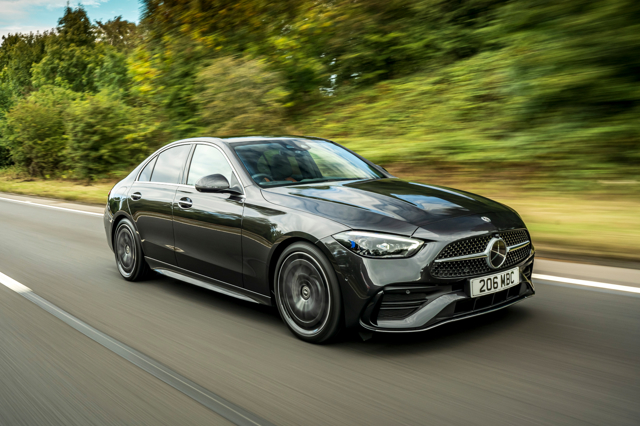
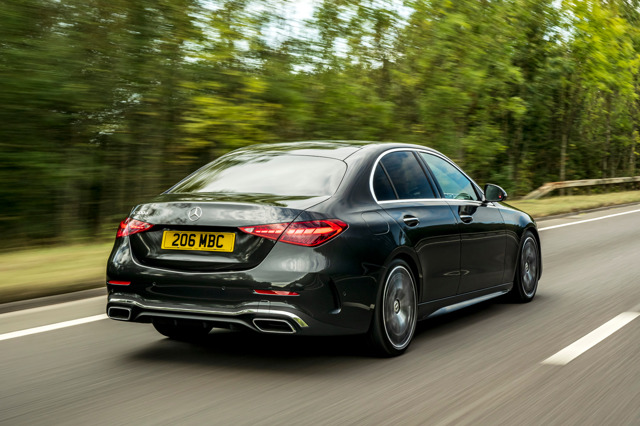
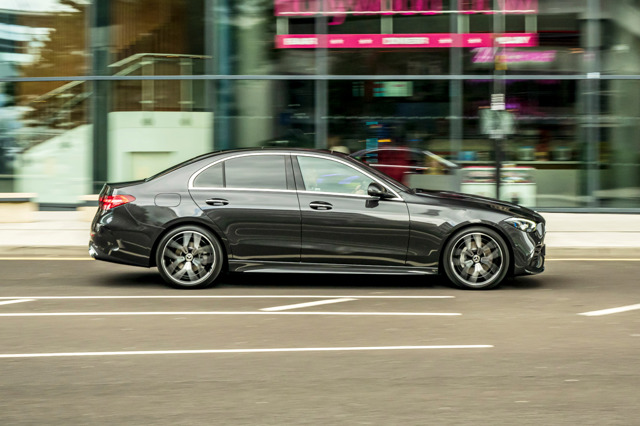
The Mercedes-Benz C-Class is a paid-up member of the small saloon elite, enjoying decades of success as a shrunken-down, more affordable sibling to the all-conquering Mercedes-Benz S-Class. The latest, fifth-generation version is the most high-tech yet, but is it the best? Find out with our Mercedes C-Class review.
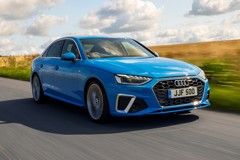
The Mercedes-Benz C-Class has for many years been one of the go-to small premium models, sharing that aspirational limelight with its closest rivals, the BMW 3 Series and Audi A4. That appeal has lasted for decades, but times are changing.
Compact saloons (even the most desirable ones) are losing out in the sales charts to SUVs that offer the same premium look and feel, but with greater practicality and a lord-it-over-everyone-else driving position. The Tesla Model 3 saloon might be one of the biggest-selling electric cars, for example, but as soon as the taller, more rugged-looking Model Y arrived, it played second fiddle.
In some ways, then, the Mercedes C-Class's main rivals are the brand's own GLC and GLC Coupe, sharing much with them under-the-skin. But the C-Class clearly still matters to Mercedes-Benz, and this fifth-generation version has plainly had plenty of investment from its maker. Behind that classy shrunken S-Class body are huge advances in technology, with all sorts of clever features and driver assistance features that you would've found only in the flagship saloon a few years ago.
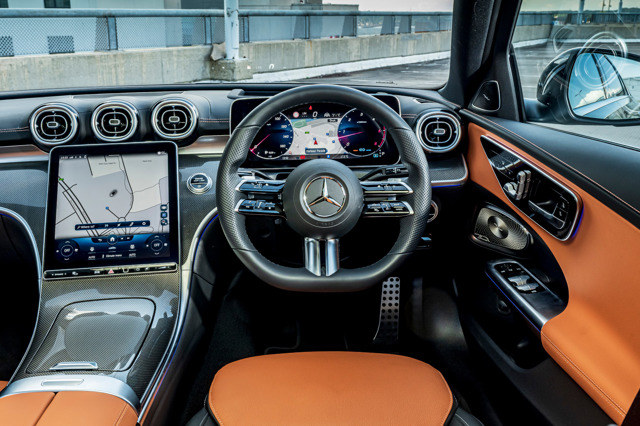
Inside, you get that trademark elegant design and a similarly large, portrait-angled touchscreen as in the S-Class. Of course, it's not a luxury limo that lets you lie down with your legs out in the back, but the Mercedes C-Class is still pretty roomy for four adults and their luggage.
On the road, comfort is clearly the priority, with the C-Class not quite offering the agile sports-saloon feel of the BMW 3 Series. But many buyers will be happier with its ability to waft along serenely, while powerful engines and handling that's still very tidy won't put anyone off.
Speaking of engines, the current Mercedes C-Class range offers something for every taste, unlike many rivals that have slimmed down their powertrain offerings to just a handful. There's a pair of petrols, a pair of diesels (unlike rivals such as the BMW 3 Series and Volvo S60, diesel options remain in the Merc), and there are also a pair of plug-in hybrid options using either petrol or diesel.
Reviews for Mercedes-Benz C-Class's top 3 rivals


.jpg?width=240&height=160&rmode=crop)
Mercedes-Benz C-Class handling and engines

- Engines range from C 200 Automatic to C 300 Automatic
- Readers report Real MPG to be between 51–57 mpg
Mercedes-Benz C-Class 2026: Handling and ride quality
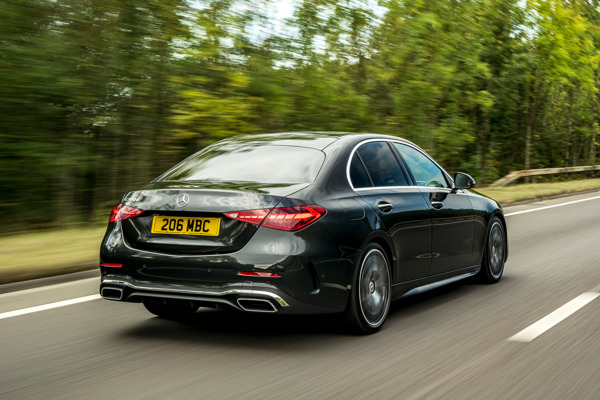
As is the Mercedes way, there is a variety of suspension setups available on the C-Class, ranging from a softer-sprung standard fitment to a sportier tune with adaptive dampers. Our test car came equipped with sports suspension with selective damping, riding 15mm lower than the standard setup.
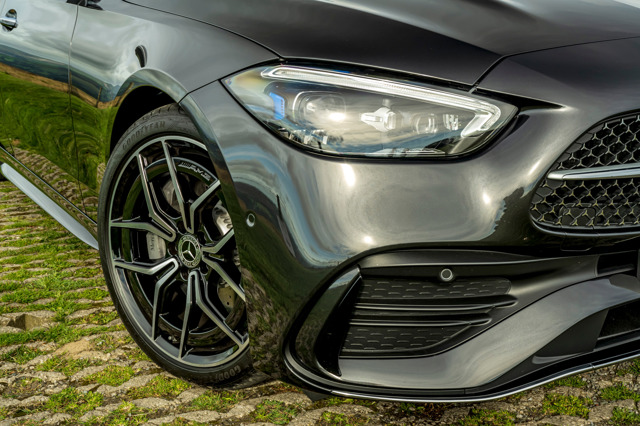
Usually, this type of suspension is best avoided for a small executive saloon as comfort is compromised, but most of the time, the C-Class felt composed and comfortable, especially at high speeds where it positively eats up the miles. There was some thumping at lower speeds on rough roads, but much of that can be blamed on the large 19-inch wheels of our test car.
That compromise results in an extremely stable yet still plush-riding motorway car. Refinement is pretty strong, too, despite a bit of road noise (again, blame the big wheels). And although the C-Class doesn't manage the sports saloon agility and tightness of a 3 Series, it's none too shabby on a twisty road.
There's some body movement and a touch of floatiness, but the steering is precise and has decent weight to it. You can get into a nice flow in a series of bends, even if we wouldn't exactly call it fun. We've not yet driven the C300e, which has air suspension at the rear to help offset the battery weight.
Mercedes-Benz C-Class 2026: Engines
The engine range of the latest Mercedes C-Class isn't as extensive as the previous model, which could be had with four, six and eight-cylinder power. All engines are now four-cylinder-only, with either mild- or plug-in hybrid assistance.
The engine range kicks off with the 204PS C200 1.5-litre petrol, which we've yet to try, but will be adequate for most with a 0-62mph time of 7.3 seconds.
Is 'adequate' enough for a premium model, though? We see why you might upgrade to the 258PS 2.0-litre C300, which is barely less efficient on paper yet manages 0-62mph in a more effortless six seconds flat.
The 197PS C220d 2.0-litre diesel is just as fast as the C200 petrol on paper, but that torquier diesel makes your pace feel more effortless. When you consider the impressive efficiency, it should be all the car you need, even if it isn't as potent as a BMW 320d.
Noticeable extra shove comes from the C300d, which we've spent the most time in. This has the same 2.0-litre diesel engine as the C220d, but uprated to 265PS. It feels pretty rapid even loaded up with people, and although you do miss the cultured six-cylinder engine note of a 330d, the engine remains decently refined.
The nine-speed automatic gearbox is smooth and fast-acting most of the time. We say most of the time, because sometimes when you want a decisive gear change (when pulling onto a busy roundabout, for example) it dithers for that little bit of time it takes to be irritating. That's common with the Audi A4, too, although the 3 Series manages to react more quickly.
The C-Class is a rare car in that it's available with two plug-in hybrid powertrains, one petrol called the C300 e, and one diesel called the C300 de. Both combine a 2.0-litre engine with an electric motor to deliver a combined power output of 313PS, along with an electric-only range of around 70 miles.
The sportiest C-Class models also use four-cylinder engines these days. In the case of the C43, it has mild hybrid assistance for an output of 421PS, and a 0-62mph sprint time of 4.3 seconds.
Meanwhile, the C63 is a petrol plug-in hybrid (to the horror of C63 purists who adore V8 power) with a combined output of 680PS. Its electric-only range is just seven miles, but it's more about the 3.4-second 0-62mph time.
Mercedes-Benz C-Class 2026: Safety
The Mercedes C-Class was awarded the maximum five-star rating by Euro NCAP in crash testing.
All versions have automatic emergency braking, blind spot monitoring and active lane assist, plus a plethora of airbags (even one between the front seats). The Driving Assistance Package Plus also brings another level of active safety alongside adaptive cruise control, steering aids and blind spot collision avoidance.
Mercedes-Benz C-Class 2026: Towing
Regardless of engine, all versions of the C-Class are rated to tow a braked trailer of up to 1800kg.
| Engine | MPG | 0-62 | CO2 |
|---|---|---|---|
| C 200 Automatic | - | 7.3 s | 146–154 g/km |
| C 220 d Automatic | - | 7.3 s | 119–127 g/km |
| C 300 Automatic | - | 6.0 s | 152–159 g/km |
| C 300 d Automatic | - | 5.7 s | 133–139 g/km |
| C 300 e | - | 6.1 s | 12–14 g/km |
| C 43 MHEV AMG | - | 4.6 s | 203–210 g/km |
| C 63 S e PHEV AMG | - | 3.4 s | 156 g/km |
Mercedes-Benz C-Class interior
- Boot space is 455 litres
| Dimensions | |
|---|---|
| Length | 4686–4842 mm |
| Width | 2020–2033 mm |
| Height | 1437–1448 mm |
| Wheelbase | 2865–2875 mm |
Mercedes-Benz C-Class 2026: Practicality
Six-footers can get very comfortable in the front of the Mercedes-Benz C-Class, with plenty of seat and steering wheel adjustment, plus legroom to spare.
The panoramic sunroof option does rob you of a bit of headroom, but even so, even tall drivers won't feel hemmed in. The sports seats aren't the most figure-hugging around, but they are comfortable for long distances.
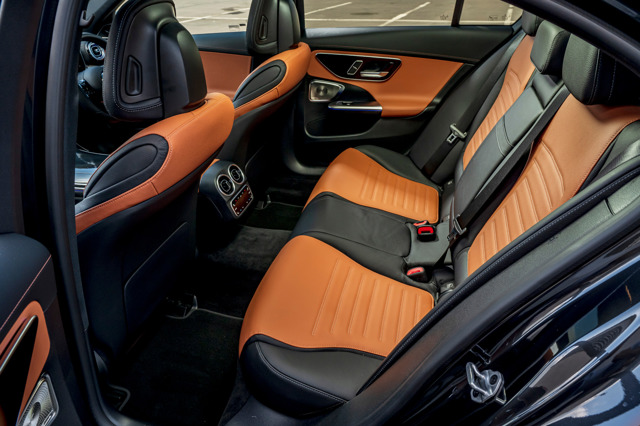
In the back, you'll again find tighter headroom if you spec the sunroof, but it's not cramped by any means. Certainly, legroom is more generous than in some small saloons, while the seats themselves are nicely sculpted and comfortable. There is a large central tunnel in the floor, though, so a middle-seat occupant won't be hugely happy on longer journeys.
Happily, that rear bench splits in a useful 40/20/40 three-way action, making it more useful than the majority of its rivals for loading long items. The C-Class also detects that the seat has been folded and (if electric seats are fitted) will bring the front chairs forward automatically.
With the seats up, the Mercedes C-Class's boot capacity is 455 litres, which is acceptable but not class-leading, and no better than the old car. The saloon's opening is pretty wide, though, while there are also hooks and tie-down points.
That boot capacity drops significantly in the C300e plug-in hybrid to just 315 litres, a capacity more akin to a small car.
Mercedes-Benz C-Class 2026: Quality and finish
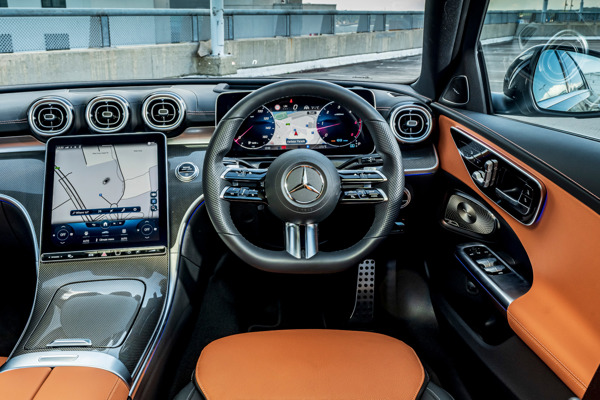
Taken at face value, you'd say the C-Class has a very posh cabin, with lots of neat details, cool ambient lighting and metal-look finishes. But when you start poking around, you realise that some elements aren't quite setting the standard for quality.
While there are nice touchpoints on the doors and major controls, there are some cheaper-feeling plastics around the lower parts of the dashboard and centre console, and in some places on the upper dash. What's more, we noticed the odd creak and rattle over certain bumps (something we've also experienced in the A-Class-sized models).
We're not saying it's flimsy or downmarket: far from it. But with the very high standards set by BMW, Audi, and Volvo, it isn't quite as solid or as consistent as you might like. It seems Mercedes-Benz has focused on design form over solidity.
Mercedes-Benz C-Class 2026: Infotainment
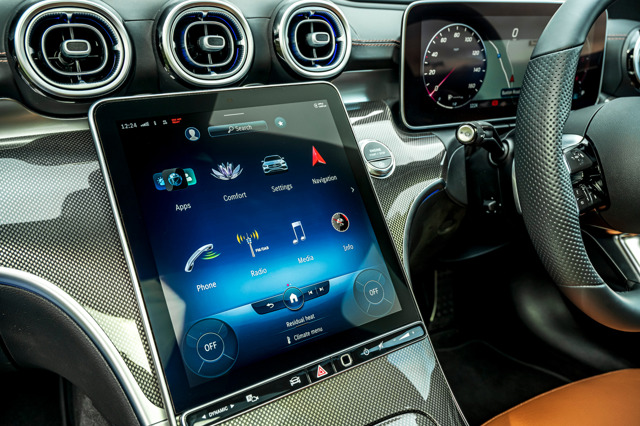
Whichever version of the Mercedes C-Class you go for, it'll come with a big 11.9-inch portrait-angled touchscreen dominating the centre of the dashboard. That's paired with a 12.3-inch digital instrument display.
Using the brand's latest 'MBUX' software, the bright and super-sharp centre screen is really responsive. There are some physical controls below the screen for key features, but you can also operate the screen via Mercedes' advanced voice control. It's very good, although BMW's iDrive rotary controller is easier to get on with while driving.
More fiddly, though, are the C-Class's steering wheel controls. Mercedes has ditched physical buttons for touchpads, where you have to swipe your finger or thumb in the direction you want the touchscreen or instrument display to go. In our experience, it would often go the wrong way, switching between menus when all we wanted to do was skip a song. It's frustrating, particularly when traditional wheel buttons are an absolute doddle.
Still, we can't argue with the sheer amount of tech features available, particularly on high-spec models, including a clever head-up display that projects navigation arrows down the road you need to turn down, while the main display shows a camera image and further arrows (it's known as augmented reality).
Of course, there's Android Auto and Apple CarPlay, plus USB-C sockets and a wireless phone charging pad. High-end versions can also have an impressive 13-speaker Burmester sound system.
Mercedes-Benz C-Class value for money
Mercedes-Benz C-Class 2026: Prices
You wouldn't expect a swanky Mercedes saloon car to be cheap, and the C-Class most assuredly isn't. The price list kicks off at around £46,000 at the very bottom of the range, with the most expensive mainstream version costing around £59,000. If you want one of the desirable plug-in hybrids, you'll be paying around £51,000 as a minimum. If you want one of the most powerful Mercedes-AMG models, the C43 will set you back around £70,000 at least, while if you must have the most powerful C63 version, you'll pay upwards of £100,000.
The used car market holds the key to much lower prices, as always. Preowned examples of this version of the C-Class start at around £23,000. These will be C200 petrols or C220d diesels in a fairly humble trim level from 2022 or thereabouts, with mileages ranging from around 15,000 miles to 45,000 miles. You don't have to spend a vast amount more for one of the PHEVs, but the mileage is likely to be punchier.
Mercedes-Benz C-Class 2026: Running Costs
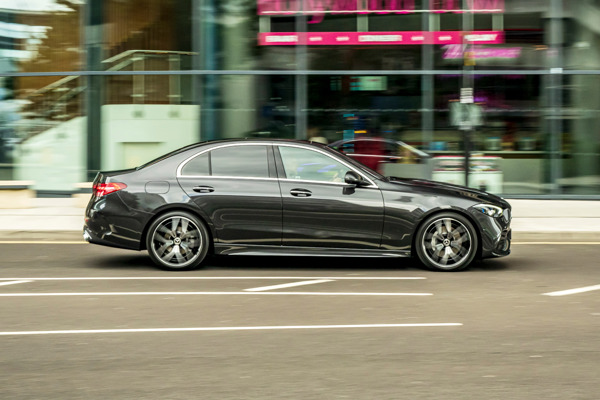
This is a premium car with a premium price, so it's good to know that the Mercedes C-Class is really efficient in every version. The C200 and C300 petrols manage up to 45mpg and 42mpg on the combined WLTP cycle, respectively, which is very competitive.
The diesels are the star of the show here, though, with the C220d managing upwards of 60mpg, and the C300d managing around 55mpg. These returns should be fairly achievable in the real world, too, especially if you do regular long motorway runs.
The figures for the plug-in hybrids are even better, but these are to be treated with a healthy amount of scepticism. Cars with such powertrains are always flattered to an unrealistic degree by the official tests: for proof that the official figures sit on shaky ground, you just have to look at the fact that the petrol PHEV's earlier official figure of 470mpg has more recently been throttled back to a figure of around 135mpg. For comparison, the diesel PHEV's latest figure stands at around 177mpg.
In both cases, expect really low running costs if you keep your battery topped up (a full charge takes around three hours on a 7kW home wallbox charger) and your regular journeys are short enough that they can be dealt with by the car's electric-only range (around 70 miles in both cases). When the combustion engines are called into action, though, the additional weight of the battery will make fuel consumption rather punchy.
In terms of insurance groups, the most powerful versions of the C-Class are obviously group 50 (out of 50) cars, so premiums are about as expensive as these things get. At the bottom of the range, groupings go as low as group 33, which is still higher than with some equivalently powered rivals.
These days, all brand new C-Classes cost more than £40,000, and so command the 'luxury car surcharge' for VED road tax. So, on top of the £195-per-year regular flat rate, you'll also pay another £425 per year between years two and six of the car's life.
Satisfaction Index
 What is your car like to live with?
We need your help with our latest Satisfaction Index, so that we can help others make a smarter car buying decision. What's it like to live with your car? Love it? Loath it? We want to know. Let us know about your car - it will only take a few minutes and you could be helping thousands of others.
Help us with the Honest John Satisfaction Index nowMercedes-Benz C-Class models and specs
One upon a time, the entry-level Mercedes C-Class Sport was the entry-level version. This came equipped with standard kit including:
- 17-inch alloy wheels
- The full infotainment screen and digital dials
- Lowered 'Agility Control' suspension
- LED headlights
- Drive mode selection
- LED cabin lighting
- Keyless start
- parking package with a reversing camera and 'Urban Guard' vehicle protection
These days, the entry-level version is the Mercedes C-Class Urban Edition. It's not the cheapest version because it's only available with the relatively expensive PHEV powertrains, but it does come with less standard kit than the other versions. However, you still get most of the same stuff as before, plus:
- 18-inch wheels
- Privacy glass
- AMG styling
- Ambient lighting
- Wireless phone charging
- Heated front seats
After that, the next step up is the Mercedes C-Class AMG Line, which adds:
- Lowered sports suspension
- Power front seat adjustment
- Premium ambient lighting
- Vegan 'leather' upholstery
Upgrading further to the Mercedes C-Class AMG Line Premium brings:
- 19-inch multi-spoke alloys
- Adaptive highbeam assist with matrix LEDs
- Panoramic sunroof
- Keyless entry
- Powered bootlid
- Augmented reality navigation
- 360-degree camera system
And finally, the Mercedes C-Class AMG Line Premium Plus adds extra kit such as:
- Head-up display
- Heated and cooled front seats
- Burmester 3D stereo sound
| Dimensions | |
|---|---|
| Length | 4686–4842 mm |
| Width | 2020–2033 mm |
| Height | 1437–1448 mm |
| Wheelbase | 2865–2875 mm |
| Miscellaneous | |
|---|---|
| Kerb Weight | 1575–2165 kg |
| Boot Space | 455 L |
| Warranty | 3 years / Unlimited miles |
| Servicing | 10000 miles |
| Costs | |
|---|---|
| List Price | £42,650–£102,805 |
| Insurance Groups | - |
| Road Tax Bands | A–K |
| Official MPG | - |
| Euro NCAP Safety Ratings | |
|---|---|
| Adult | - |
| Child | - |
| Pedestrian | - |
| Overall | - |
Currently on sale
On sale until July 2025
| Saloon | |||
|---|---|---|---|
| Version | List Price | MPG | 0-62 |
| AMG Line C300e 313 9G-Tronic Auto Start/Stop 25.4kWh EQ Power 129hp/95kW 4dr | £44,895 | - | 6.1 s |
| AMG Line Premium C300e 313 9G-Tronic Auto Start/Stop 25.4kWh EQ Power 129hp/95kW 4dr | £47,645 | - | 6.1 s |
| AMG Line Premium Plus C300e 313 9G-Tronic Auto Start/Stop 25.4kWh EQ Power 129hp/95kW 4dr | £51,095 | - | 6.1 s |
| C43 AMG Premium Plus AMG C43 4Matic 9G-Tronic Auto Start/Stop MHEV 4dr | £69,645 | - | 4.6 s |
| Urban Edition C300e 313 9G-Tronic Auto Start/Stop 25.4kWh EQ Power 129hp/95kW 4dr | £49,805 | - | 6.1 s |
On sale until May 2024
| Saloon | |||
|---|---|---|---|
| Version | List Price | MPG | 0-62 |
| Exclusive Luxury C200 9G-Tronic Auto Start/Stop MHEV EQ Boost 4dr | £48,670 | - | 7.3 s |
| Exclusive Luxury C220d 9G-Tronic Auto Start/Stop MHEV EQ Boost 4dr | £50,110 | - | 7.3 s |
On sale until April 2023
| Saloon | |||
|---|---|---|---|
| Version | List Price | MPG | 0-62 |
| AMG Line C300 9G-Tronic Auto Start/Stop MHEV EQ Boost 4dr | - | - | 6.0 s |
| AMG Line C300d 9G-Tronic Auto Start/Stop MHEV EQ Boost 4dr | - | - | 5.7 s |
| Sport C200 9G-Tronic Auto Start/Stop MHEV EQ Boost 4dr | - | - | 7.3 s |
| Sport C220d 9G-Tronic Auto Start/Stop MHEV EQ Boost 4dr | - | - | 7.3 s |
Model History
July 2021
New Mercedes-Benz C-Class priced from £38,785
The Mercedes-Benz C-Class is now on sale, with prices starting from £38,785 for the entry-level C 200 Sport Saloon. The range-topping C 300 d AMG Line Premium Plus costs £52,125.
Every engine in the new C-Class range features a 48v Integrated Starter Generator (ISG) mild hybrid system. The mild hybrid system features an energy recovery function and the ability to ‘glide’ with the engine switched off to boost efficiency, while supplying an additional 20PS and 200Nm to the car’s overall output.
The C 200 features a 1.5-litre four-cylinder petrol engine which generates 204PS and 300Nm. Depending on specification, the C 200 can deliver between 41.5 and 44.1 combined mpg and emits between 146 and 154 g/km (151-159 g/km) of CO 2 .
Powered by a petrol 2.0-litre four-cylinder unit, the C 300 can produce up to 258PS and 400Nm of torque, with an additional 20PS and 200Nm available from the ISG. It can deliver between 40.4 and 42.2 mpg and emits between 152 and 159 g/km.
The diesel-powered C 220 d – currently the best-selling C-Class engine – uses a 2.0-litre four-cylinder engine with an output of 200PS and 440 Nm. The ISG produces an additional 20PS and 200Nm. It can deliver between 58.9 and 61.4 mpg (56.5-60.1 mpg) and emits between 120 and 127 g/km (124-131 g/km).
The top-of-the-range C 300 d has a 3.0-litre four-cylinder diesel engine which can generate 265PS and 550Nm, with an additional 20PS and 200Nm from the ISG. The C 300 d can deliver between 53.3 and 55.4 mpg (52.3-54.3 mpg), and emits 133-139 g/km (136-143 g/km) of CO 2 .
Every C-Class engine is mated to a 9G-Tronic nine-speed automatic transmission.
Starting from £38,785, the Sport model line – on C 200 and C 220 d only – includes the latest generation MBUX media system, including a high-resolution 11.9-inch central media display; 12.3-inch digital driver display; ‘Hey Mercedes’ virtual assistant; 17-inch five-spoke alloy wheels; Agility Control comfort suspension; LED high performance headlights with Adaptive Highbeam Assist; Active Lane Keeping Assist; Active Blind Spot Assist; Parking package with reversing camera; heated front seats and wireless smartphone charging.
For another £1,380, AMG Line models add 18-inch AMG 5-spoke design, alloy wheels; privacy glass; AMG bodystyling; multifunction sports steering wheel finished in nappa leather and visible twin exhaust pipes.
In addition to the above, the Premium equipment line features 19-inch AMG multi-spoke alloy wheels; Adaptive Highbeam Assist Plus; Digital Light; ambient lighting; illuminated door sills; KEYLESS GO comfort access, Memory package, including electrically adjustable front seats, steering column and exterior mirrors; MBUX augmented reality for navigation and Parking package with 360° camera. Premium models are available for an additional £2,750 over AMG Line.
Starting from £46,700, Premium Plus adds 19-inch AMG five-double-spoke alloy wheels; panoramic sliding sunroof; head-up display; and Thermotronic four-zone automatic climate control.
On Premium Plus models only, Driving Assistance Package Plus is also available for £1,695 with the very latest driving assistance systems including Active Distance Assist Distronic; Active Steering Assist; Traffic Sign Assist; Active Lane Keeping Assist, Active Evasive Steering Assist; Active Brake Assist with cross traffic function; Active Emergency Stop Assist; and Active Blind Spot Assist.
