
Best EV Tariffs 2026: Compare the cheapest home charging rates
Looking for the best EV tariffs for charging your electric car at home? Our guide is here to help you save money whenever you plug in your electric car or van.
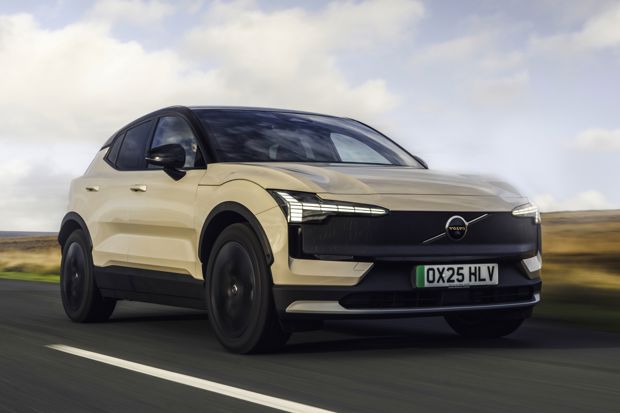
Whether you have already made the switch to an electric vehicle or you're planning to do so in the near future, choosing a home energy tariff that takes the sting out of recharging costs is one of those unexciting life tasks that will instantly reward your efforts.
Switching to a more favourable tariff could potentially save you hundreds of pounds each year when charging your electric car at home, a benefit that becomes greater the more miles you drive.
Not every energy provider's EV-friendly tariffs are the same, of course, with some suiting your needs better than others. To help you choose the right one for you we've rounded-up the best EV tariffs currently on offer so that you can make an informed decision more easily.
Ofgem sets the price caps energy suppliers can charge for both the unit rate — the cost for each kWh of electricity — and standing charges. Both of these figures vary depending on which region of Britain you live in, with the caps for 1 January to 31 March 2026 set at:
- Unit rate — 26.69p/kWh in the Yorkshire region to 29.09p/kWh in the North Wales and Mersey region
- Daily standing charge — 45.70p in the Southern region to 71.01p in the North Wales & Mersey region
Across the British regions, those average out at 27.69p/kWh and 54.75p/day respectively.
Best EV tariffs content guide |
If you've not yet chosen what your next next EV will be, take a look at our guide to which models are currently eligible for the government's Electric Car Grant (ECG) of a minimum £1500 discount.
EV Tariff Best Buys — January to March 2026
| Energy company | Product | Best for |
| Octopus | Intelligent Go | Cheapest Standing Charge |
| Octopus | Intelligent Go | Lower Mileage Drivers |
| Octopus | Intelligent Go | Lowest Overnight-specific Rate |
| OVO | Charge Anytime | Higher Mileage Drivers |
You may also like
- Buying an electric car: your complete guide
- From CHAdeMO to CCS: chargers explained
- Electric Car Grant: how to apply
Best EV tariffs
These are the best EV-friendly tariff rates we've found on the market right now. Here you can compare different providers' prices and determine which will save you the most money when charging your electric car or van.
Note that this page is updated quarterly to reflect changes in tariff rates.
Intelligent Octopus Go
|
|
Day Rate: 27.99p-30.51p* Night Rate: 7.00p Standing Charge: 43.82p-68.34p/day* Off peak hours: 23:30-05:30 *varies depending on region |

Get the Intelligent Octopus Go EV tariff
What is Intelligent Octopus Go?
Stated to be the UK's most popular EV-friendly tariff, Intelligent Octopus Go gives you six hours of super-cheap electricity every night, which you can use to charge your electric car and any other appliances that use power overnight.
Who is the Intelligent Octopus Go tariff best for?
Although a popular choice for many EV drivers, the Intelligent Octopus Go tariff isn't compatible with all electric cars and vans, let alone every wallbox charger, so it's vital to confirm your set-up works before making the switch. Also consider whether six hours' charge is going to be sufficiently long enough charging period to top your batteries back up if you frequently cover high daily mileages.
Approximate costs to fully charge the Volkswagen ID.4's 77.0kWh battery over an 11-hour period:
|
OVO Charge Anytime
|
|
Day Rate: 26.02p-28.07p* Night Rate: N/A Standing Charge: 54.30p-75.14p* Off peak hours: N/A PAYG Rate: 14.00p *varies depending on region |

Get the OVO Charge Anytime EV tariff
What is OVO's Charge Anytime?
OVO's Charge Anytime changed from 4 November 2025, with a quintet of financial plans designed to suit the needs of different EV drivers.
For those who typically cover around 8000 miles per year, the Standard plan costs £27.50. Alternatively, the Premium plan at £37.50 is better-suited to those who cover 12,000 miles each year. Both include £120 of public charging vouchers in their cost that can be used with Allego, FastNed, Instavolt, Ionity, MFG, Osprey and TotalEnergies.
Standard Plus at £59.50 per month is aimed at 16,000 miles per annum motorists, while at £79.50 the Premium Plus bundle targets EV drivers covering 24,000 each year. These plans also include £240 of public charging vouchers.
For those who don't want a montly plan, the Pay as you go (PAYG) plan allows you to take advantage of OVO's smart charge anytime scheme, where cheaper electricity is made available potentially at any time of day at 14p/kWh.
Who is the OVO Charge Anytime tariff best for?
The PAYG OVO tariff is ideal for the EV owner who is a low electricity user in the home and uses their car infrequently. Each plan requires a compatible electric car or van plus charger and the low rate is available for your EV only — you cannot use the cheaper electricity for any other appliances, unlike some rival suppliers' tariffs.
Approximate cost to fully charge the Volkswagen ID.4's 77.0kWh battery over an 11-hour period:
|
British Gas EV
|
|
Day Rate: 29.88p-32.94p* Night Rate: 9.00p Standing Charge: 51.12p-71.90p* Off peak hours: 00:00-05:00 *varies depending on region |

What is the British Gas EV tariff?
It's the British Gas EV tariff created specifically for charging EVs overnight. It works with any EV and charger, plus other electrical devices that you might use to benefit from cheaper rates, although you are restricted to five hours per night — and at 9p/kWh it's one of the pricier options.
Who is the British Gas EV tariff best for?
With one of the cheapest standing charges, a lower overnight rate and five full hours of charging, this British Gas EV tariff is one of the better tariffs for higher overall energy consumers, regardless of how much car charging they undertake. Given there are no restrictions relating to the wallbox type or electric car or van being charged, it's a much simpler solution than other tariff choices.
Approximate cost to fully charge the Volkswagen ID.4's 77.0kWh battery over an 11-hour period:
|
E.ON Next Drive
|
|
Day Rate: 32.46p-34.76p* Night Rate: 7.50p Standing Charge: 45.70p-60.00p* Off peak hours: 00:00-06:00 *varies depending on region |

What is E.ON Next Drive?
Called E.ON Next Drive, this tariff is an overnight off-peak rate aimed at EV drivers charging overnight rather than households looking to reduce their electricity bills on domestic appliances. You need a smart meter but it works with any EV and charger.
Certain wallbox and EV combinations could also be eligible for E.ON's Next Drive Smart, which sees the overnight rate drop from 7.5p to 6.5p/kWh.
Who is the E.ON Next Drive tariff best for?
While E.ON's Next Drive tariff used to have a longer overnight off-peak charging window than other providers, it's recently been reduced by an hour as well as the cost for using it increasing. Ease of connection remains a strong point with no complications by requiring a specific wallbox or a compatible electric car or van.
Approximate cost to fully charge the Volkswagen ID.4's 77.0kWh battery over an 11-hour period:
|
Good Energy EV Charge Tariff
|
|
Day Rate: 31.84p-34.82p* Night Rate: 8.00p Standing Charge: 54.57p-75.40p* Off peak hours: 00:00-05:00 *varies depending on region |

What is the Good Energy EV Charge tariff?
The Good Energy EV offers an off-peak rate of 8p/kWh from midnight until 5.00am and you will need a smart meter to access the off-peak rates. As a version of the company’s Standard Variable Tariff (SVT) the tariff is variable rather than fixed so costs can go up as well as down
Good Energy is the currently the UK's only B Corp-certified energy supplier. This means that it's been independently verified by B Lab to meet the highest standards of social and environmental performance, transparency and accountability.
Who is the Good Energy EV Charge tariff best for?
While the off-peak cheaper charging window is smaller than most other suppliers, the Good Energy EV tariff still gives five hours of cheaper charging time, so it's ideal for smaller capacity EVs or if you keep your EV regular topped up and don't cover long distances.
There's a £50 exit fee so be sure you're ready to commit to Good Energy before signing up.
Approximate cost to fully charge the Volkswagen ID.4's 77.0kWh battery over an 11-hour period:
|
Our EV recharging cost calculation explained
In order to make make comparisons between different energy suppliers tariffs easier to digest while also ensuring the recharging costs are as realistic as possible, we've simplified parameters ever so slightly.
Each recharge is based on using the same Volkswagen ID.4 fitted with with a 77.0kWh battery pack.
For each energy supplier, we have used both the lowest and highest quoted prices per kWh for their peak-time rates, but we have not included the daily standing charge within the calculations as the proportion of that cost allocated to EV charging will depend upon factors that differ between households.
Using a 7.4kW domestic wallbox charger, a full 0-100% recharge would take approximately 11 hours. Although the recharging rate isn't constant, especially at the beginning and end of the charge, we've taken the liberty of assuming it is for the estimated recharge prices listed above.
We've also assumed that the on/off-peak mixed rates and the entirely peak-time recharges are full and would be done in a plug-in single session. For instance, five off-peak hours at the cheapest price per unit would still require six further hours of charging at the higher unit cost.
Only the low-rate off-peak tariffs are calculated to only use those cheaper hours and consequently will take two charges for most of the tariffs for the battery to reach a 100% state of charge.
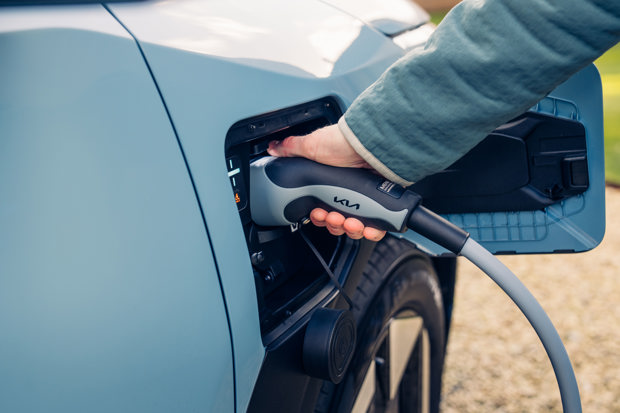
Charging an electric car or van at home
Most domestic properties in the UK use single-phase mains electricity, supplied at 220-240 volts and rated for a maximum current of 32 amps on a circuit.
This limits your charging capability to 7.4kW, although to access that maximum energy flow rate of charging you need a professionally installed fused spur and charging wallbox.
If you don’t have a wallbox, you can charge from a conventional three-pin domestic socket rated for 13 amps. This is something we only advise doing occasionally and if no better option exists. For most EVs on sale today a full recharge using this method will likely take around 24 hours.
Wallbox chargers designed for three-phase mains supplies are not significantly more expensive to buy and install than those for single-phase connections. Where the cost is massively higher is in upgrading to a three-phase supply in the first place — expect that cost between £3,500 and £15,000 before any regulatory upgrades to existing wiring are considered.
For houses with solar or other off-grid generation systems direct-current charging, paired with Vehicle-to-Grid (V2G) technology — where your car’s battery becomes a storage system to power the home as well — is available in the UK, albeit expensively so.
The concept ties the national grid, home electricity generation, battery-style domestic energy storage and EVs into one cohesive energy system. Not only does this use batteries on the property to store solar, wind and other off-grid power, it can recharge an EV at up to 120kW rates via DC charging, although it will be many years before such setups are commonplace in Britain.
In the meantime you can get home chargers that monitor solar-based generation and optimise charging times to save costs. Realistically, these are still better suited to technology enthusiasts right now, rather than those seeking easy convenience.
EV tariff FAQs
What is an EV-friendly tariff?
Instead of using a flat-rate tariff for all hours of the day, EV-friendly alternatives offer cheap unit rates — that's the price per kWh — for off-peak periods, usually a six-hour overnight window.
Which energy providers offer tariffs for EVs?
Various energy providers offer EV-friendly tariffs with the leading suppliers being British Gas, E.ON, Good Energy, OVO and Octopus.
Is it worth moving to an EV tariff?
Nine times out of 10, yes. Energy suppliers tend to increase the unit rate for the other times of offset the EV discount. That still works out cheaper overall for most people but for households where people are largely at home during the day most of the time it may work out more cost-effective by not switching. For those who can make it work, EV-friendly tariffs are a very cheap way of charging an electric car or van, with rates starting way under 10p/kWh.
