
DS No7 Review 2026

DS No7 Verdict

 Rides reasonably well. Interior and exterior styling help it stand out. Impressive range from bigger battery EV version.
 Daft steering wheel shape. Infotainment system far from the best. 1.2 petrol engine doesn't feel especially premium.
Find out more about the DS No7
|
 Driven, tested and rated by:
 DS No7 at a glance:
- Body type: SUV
- Price range: £38,920 - £66,690
- Battery range: 337 - 421 miles (No7 E-Tense)
- Fuel economy: 52.3mpg
- Number of seats: 5
- Boot capacity: 575 litres
- Insurance groups: TBC
DS No7: Everything you need to know
The No7 is the latest car in DS's ground-up range refresh. Unlike the No4, which is merely a lightly tweaked DS4 with a new badge to coincide with the brand's new naming convention, the DS No7 is an all-new car, as was the case with the DS No8.
DS has existed as a standalone thing for 12 years now, considerably longer than it existed as a Citroen sub-brand for cars like the Citroen DS3. And yet, many are still probably unaware of it, particularly in the UK, where sales have struggled.
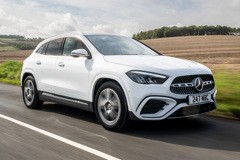
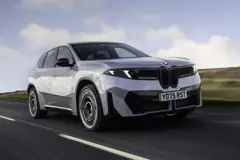
The DS No7 is particularly important in turning the tide, because it's the brand's biggest seller worldwide. If anything is going to convince people to abandon better-established premium alternatives like the Audi Q3, BMW X1 and Mercedes GLA, it's the No7. The No7 is available as an E-Tense EV, as well, so if we take the entire line-up, the pool of rivals expands to things like the BMW iX3 and Audi Q4 E-Tron.
That's a pretty strong list, and the No7 has its work cut out for it, using the same platform and many of the same components as some rather less premium cars from its Stellantis owners, including the Vauxhall Grandland and Citroen C5 Aircross.
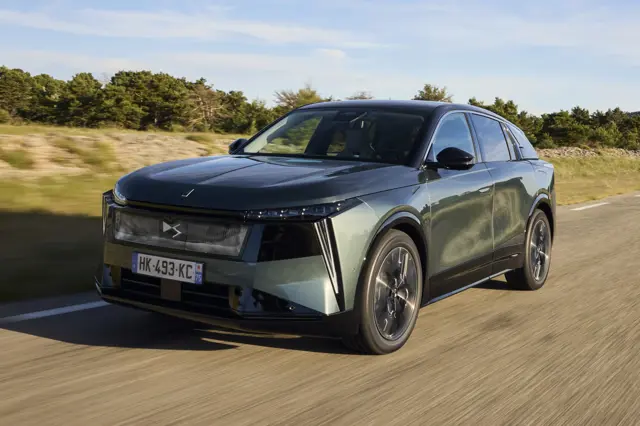
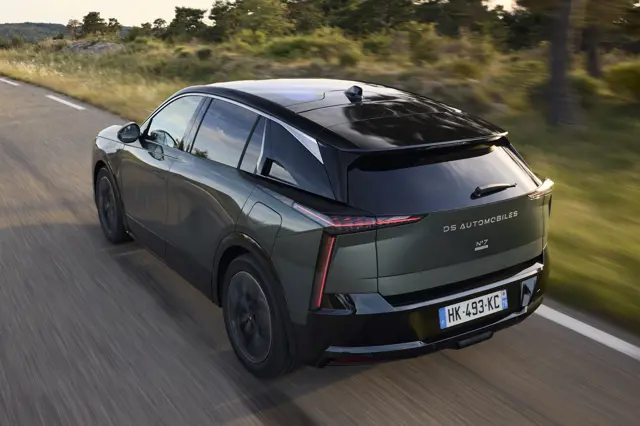
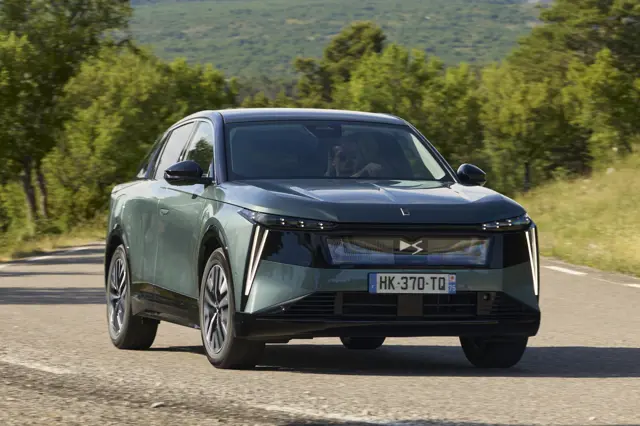
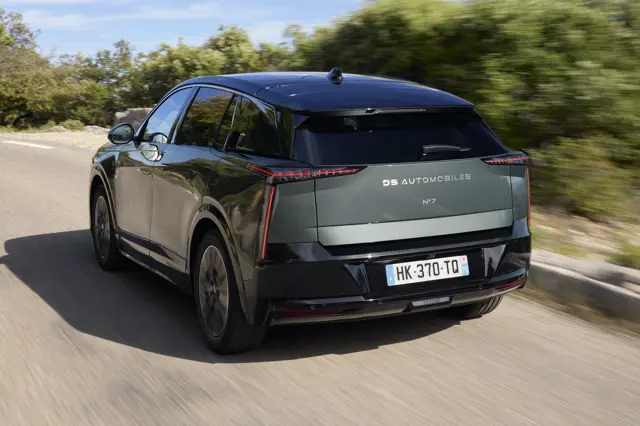
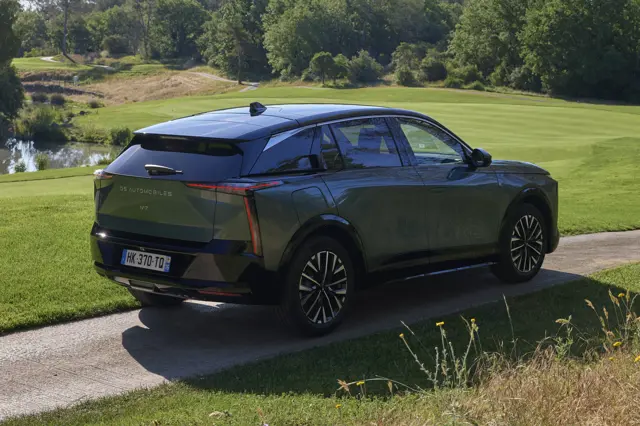
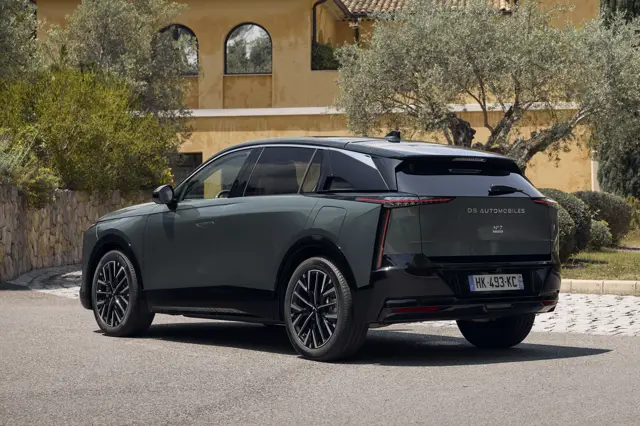
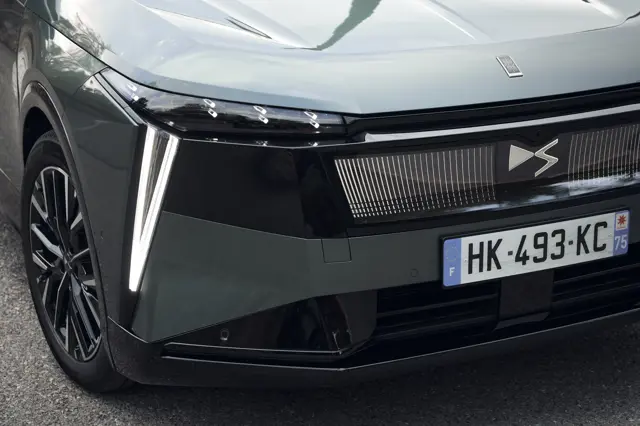
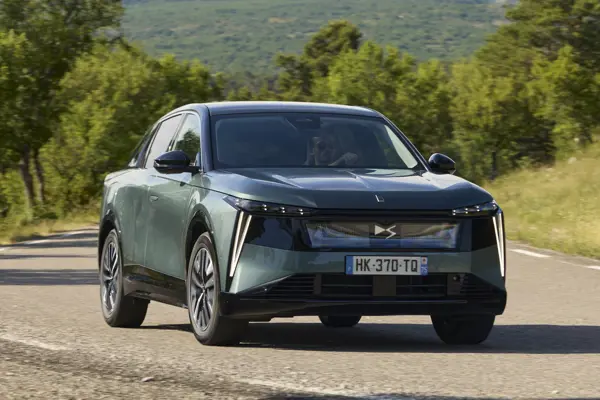
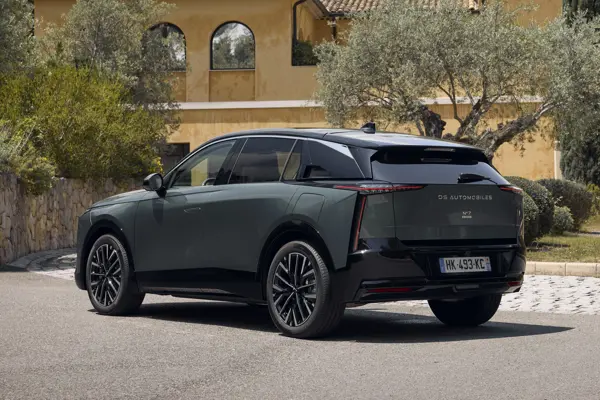
The No7 does a good job of distinguishing itself, though. It looks quite different from its cousins from the outside, and quite striking if a two-tone finish is specced, although it's quite a 'busy' car from a styling perspective. Inside, meanwhile, there's an interesting blend of materials that make the No7 feel premium, but a different kettle of fish from those aforementioned alternatives.
How we tested the DS No7
We drove both E-Tense and 145 Hybrid versions of the No7 on a variety of roads ranging from urban streets to twisting mountain roads and smooth motorways. We've also driven several versions of its DS7 predecessor plus all of the No7's main rivals, helping us put the car in context.
Is the DS No7 a good car?
There's something refreshingly different about the No7, even if it's made from a lot of familiar bits and pieces. Even though the styling is fussy in places, it'll certainly stand out, and inside, DS has made a decent fist of rivalling the established high-end players, and in some places bettering them.
The ride isn't quite as smooth as we expected, though, and there's something distinctly un-premium about the three-cylinder 145 Hybrid engine, which passes vibrations in the cabin and makes quite a racket when you want to make good progress. It's sluggish, too.
The E-Tense fits better with the No7's premium aspirations, and the range of the larger battery model is very impressive, but the latter is quite expensive. It's a hard sell against the BMW iX3, which is similarly priced but better in most areas. And there's no questioning that for most buyers, the badge appeal of a BMW (or an Audi or Mercedes) trumps that of DS.
If you really want to stand out and be different, the DS does make a case for itself. It could just do with being a stronger one. And ditching the X-shaped steering wheel, which is daft.
DS No7 E-Tense: Range
| DS No7 E-Tense FWD | 337 |
| DS No7 E-Tense FWD Long Range | 460 |
| DS No7 E-Tense AWD Long Range | 421 |
The longest-legged version of the No7, the FWD Long Range, manages up to 460 miles according to the WLTP combined schedule, which is impressive, but not quite enough to match the 500 miles offered by a BMW iX3 50 xDrive. Interestingly, DS has supplied a motorway driving range figure of 279 miles for the FWD Long Range – that's a handy thing to know, because EVs typically struggle in terms of efficiency if sat at 70mph.
DS No7 E-Tense: Charging times
The No7's rapid charging capacity of 160kW looks underwhelming compared to the up to 400kW you get from a BMW iX3, but it is closer to the Audi Q4 E-Tron's 185kW maximum. Assuming conditions are optimal, the battery has been preconditioned, and you're hooked up to a fast enough charging unit, it'll take about half an hour to charge the No7 from 20 to 80%.
Using a home wallbox, it'll take about 12 and a half hours to fully charge the Long Range battery from empty, and about 10 for the standard pack.
Reviews for DS No7's top 3 rivals



DS No7 handling and engines
DS No7 2026: Handling and ride quality
How the No7 drives is dictated by the spec. The entry-level Pallas rides on conventional suspension, which is geared towards comfort while doing a decent job of keeping the car relatively level in the corners. Even on the 19-inch wheels, though, the car can thump over imperfections in the road surface. While you can spec a No7 with 20 and 21-inch wheels and low-profile tyres, we're not sure that's a good idea – the 19s we tried already felt like they needed a bit more give in the taller sidewalls.
From the Etoile trim level and up, the DS No7 has Active Scan suspension, with a camera that scans the road ahead and adjusts a set of adaptive dampers as necessary. The result is a car that feels more floaty, but also one that can lollop around through its suspension travel with a lack of grace. While firmer and, in theory, less comfortable, the passive setup on other No7s does a better job of settling down after bumps in the road surface, so it's in some ways more comfy.
However set up, the No7 feels like it's not at all interested in being sporty, which will suit many drivers down to the ground, and is quite refreshing when some competitors get a bit too focused on the 'sports' bit of 'sports utility vehicle' and compromise comfort as a consequence.
Regardless, the No7 grips well in the corners, and there's plenty of traction when putting down the power. The steering is well-weighted, meanwhile, but the assistance feels inconsistent, and the X-shaped steering wheel – first seen in the No8 – is downright odd to use.
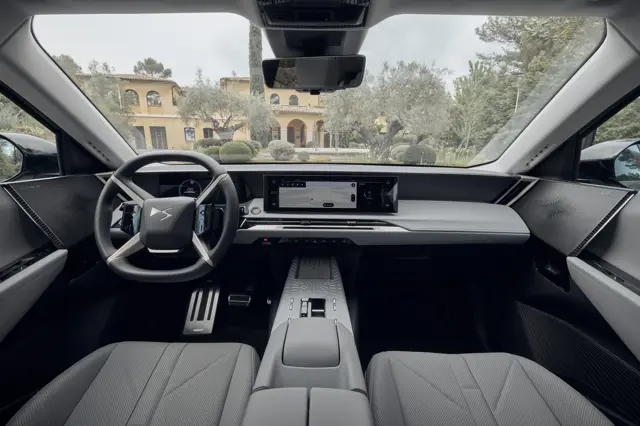
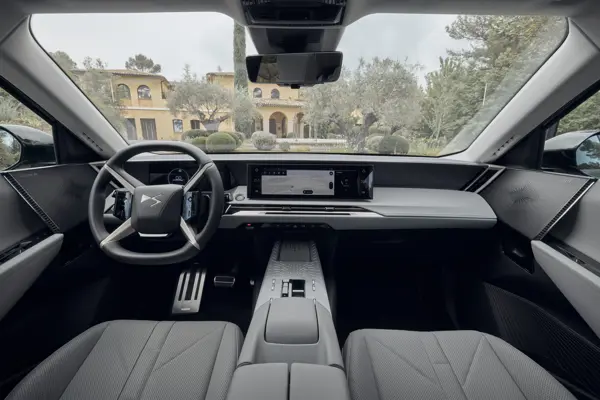
You might get used to it in time, but why should you have to? We're not sure why DS is quite literally reinventing the wheel for no perceived gain other than aesthetics. There are shaped areas for you to grip at the 3 and 9 o'clock positions, but you still don't feel like you have enough leverage, and end up naturally trying to grab the upper spokes at 10 and 2. We're predicting that DS will quietly ditch this setup when it's time for the car to be facelifted.
DS No7 2026: Engines
Although some of the cars on the same platform as the No7 feature the option of a plug-in hybrid, there's no such car just yet. If you don't want an E-Tense electric version (more on those below), your only option is the Hybrid. It's a bit of a stretch to call it that, with a small enough battery and such limited electric-only running that it could be considered a 'mild-hybrid'.
Anyway, the combination of that little battery, and also very small motor and a 1.2-litre, three-cylinder petrol engine is 145PS and a somewhat underwhelming 230Nm of torque. In such a large, relatively heavy car, the 0-62mph ends up being leisurely at 10.4 seconds.
We'd be fine with that if the Hybrid didn't make such a big deal about getting you there in that time. The three-cylinder engine lacks refinement compared to the four-cylinder units used by rivals, passing more vibrations into the cabin than we'd like, while both feeling and sounding strained at full throttle.
Meanwhile, the six-speed dual-clutch gearbox is clunky in its operation and seems to take an eternity to kick down when you want a bit of performance. It's a poor pairing.
DS No7 E-Tense: Batteries and motors
There are two battery packs available. There's a 73.7 kWh battery, which can only be combined with a single front motor producing 230PS and 343Nm of torque, which briefly goes up to 260PS in the car's boost mode. The 0-62mph time for this version is 7.7 seconds.
The DS No7 Long Range bumps up the capacity to 97.2kWh while increasing the power of the front-mounted motor to 245PS, or 280PS in boost mode, with the torque remaining the same. The 0-62mph time drops slightly to 7.8 seconds. That sounds reasonable enough, but we found that this version never really felt that quick.
The answer could come in combining the Long Range battery with the all-wheel drive setup, which adds an extra motor at the rear axle. This bumps the power out to 350PS, or 375PS in boost, while the torque swells to 509Nm. The 0-62mph time duly drops to 5.4 seconds, although we've not tried this version just yet, so we're not sure how brisk it'll feel in reality.
DS No7 2026: Safety
The No7 has a Euro NCAP score despite not being crash tested by the safety body – instead, the No8 is so similar structurally that its rating has been carried over. That rating is four stars, which is decent enough, but underwhelming when five-star results are so common nowadays.
DS No7 interior

DS No7 2026: Practicality
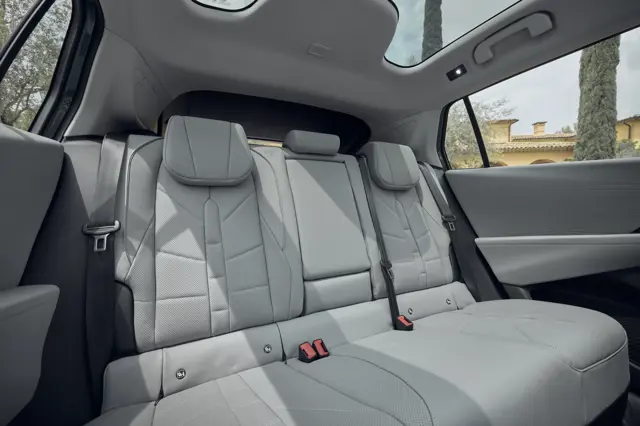
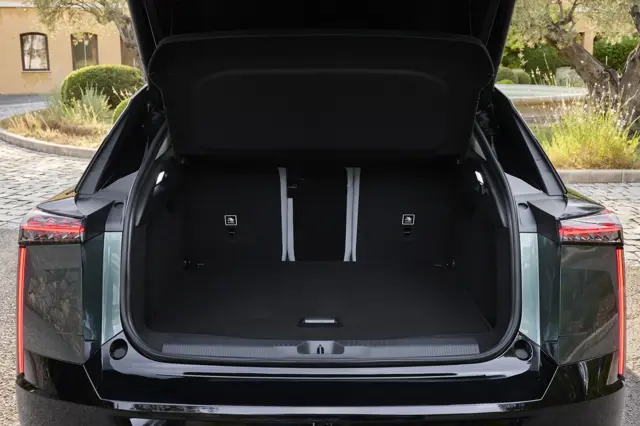
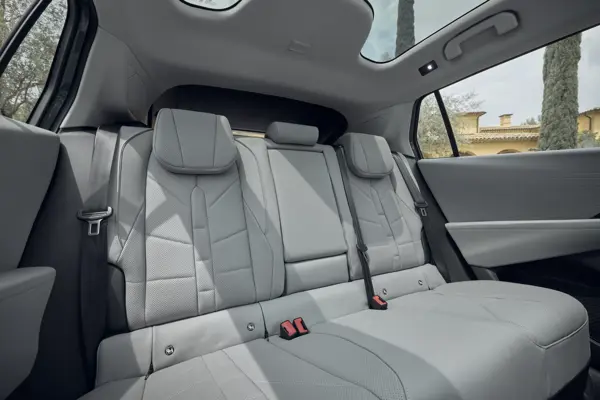
The No7 has 560 litres of boot space (500 litres in the E-Tense AWD), which the Audi Q3 betters ever-so-slightly at 575 litres, but only if that car's sliding rear seat bench is pushed all the way forwards, sapping legroom. The No7's rear seats fold in a 40/20/40 split, providing 1,570 litres of luggage space. The rear bench also reclines.
DS No7 2026: Quality and finish
All the important bits you're likely to come into contact with frequently feel nicely plush, and there are some neat touches available, including the brushed aluminium speaker grilles on the door, which can be switched for wood. Either way, the holes for the speakers underneath are laser-etched. There's the usual lower-rent, harder plastics lower down, but they're well out of sight.
DS No7 2026: Infotainment
The 16-inch touchscreen infotainment system is one of the No7's weaker points. Although that might sound like a good size, it's in an ultra-widescreen format, and large sections of each end are taken up by climate temperature zone shortcuts. That doesn't leave you with much usable screen real estate.
You can see the screen responding quickly to touch inputs, but it's frustratingly laggy when switching between different functions. The in-built navigation system is a bit sluggish in keeping up with the car's position, as well – we preferred to ditch it and use Google Maps through the smartphone connectivity. Both wireless Android Auto and Apple CarPlay are included as standard.
Audiophiles will enjoy the Focal Electra audio system, which has 14 speakers, including, unusually, two on the roof. It offers a great sense of space when listening to your favourite tracks.
DS No7 value for money
DS No7 2026: Prices
These are the latest On The Road (OTR) prices for the new DS No7 as of June 2026 – prices can change, so please use these as a guide before checking DS's latest price lists.
| DS No7 Hybrid 145 | From £38,920 |
| DS No7 E-Tense FWD | From £49,190 |
| DS No7 E-Tense FWD Long Range | From £53,090 |
| DS No7 E-Tense AWD Long Range | From £61,190 |
Is the DS No7 good value compared to rivals?
The No7 isn't exactly stellar value for money. The pricing is best described as 'confident', pitting the No7 against things like the Audi Q3 (around £39k and up), and for the E-Tense version, the excellent BMW iX3. The latter gets particularly expensive, topping out at £66,690 – that's more than a range-topping iX3 50 M Sport Pro.
Up-front prices aren't hugely relevant these days, especially when many will be tempted to get the No7 E-Tense as a company car and make the most of its low BiK (Benefit in Kind) tax rate, but still, as our easiest point of comparison with other players, the numbers are eyebrow-raising. It doesn't help that many of the No7's platform mates from brands like Vauxhall and Citroen cost many thousands less yet drive similarly. A C5 Aircross is nearly £9,000 less.
DS No7 2026: Reliability and running costs
It's the usual £200 to tax any version of the No7 regardless of powertrain type. Many will also be hit by the government's expensive vehicle tax, adding an extra £440 annually from years two to six of ownership. The threshold is £40,000 for petrol, diesel and hybrid cars, meaning only the entry-level Pallas Hybrid sneaks under, and it is possible to push it over £40k with options.
The threshold for EVs is higher at £50,000, but the E-Tense has a much more expensive RRP than the Hybrid. Only the cheapest Pallas FWD version escapes it, but again, it's close enough that a few options will nudge it over.
The Hybrid engine is decent in terms of economy, with a WLTP Combined figure of 52.3mpg. We've driven many different cars with this unit, and have found that it's generally possible to get close to the official number.
DS's warranty is what we'd consider the bare minimum, lasting 60,000 or three years, whichever comes first.
Satisfaction Index
 What is your car like to live with?
We need your help with our latest Satisfaction Index, so that we can help others make a smarter car buying decision. What's it like to live with your car? Love it? Loath it? We want to know. Let us know about your car - it will only take a few minutes and you could be helping thousands of others.
Help us with the Honest John Satisfaction Index nowDS No7 models and specs
Initially, the DS No7 will be available in three forms – as a DS No7 Pallas, DS No7 Etoile or DS No7 La Premiere.
The DS No7 Pallas includes the following equipment as standard:
- 16-inch touchscreen infotainment system
- Powered tailgate with hands-free function
- Front/rear parking sensors
- Rear Parking camera
The DS No7 Etoile builds on the above with:
- Neck warmer
- Illuminated grille
- DS Drive Assist (driving assistance system)
- 360-degree parking camera
- Digital rear-view mirror
- DS Active Scan suspension
The DS No7 La Premiere adds:
- Nappa leather
- Aluminium trim
- Heated steering wheel
- Focal 14-speaker sound system
- Head-up display
- Night vision
