
Eurotunnel LeShuttle guide 2026: How to take your car to France
Content guide
- How does the Eurotunnel work?
- New EU entry rules 2026
- How long does it take?
- What are the differences between Eurotunnel, LeShuttle and Eurostar?
- Taking an EV on the Eurotunnel
- How do you book a crossing?
- How early do you need to arrive for a Eurotunnel crossing?
- How do you board LeShuttle at the Eurotunnel terminals?
- Can I use the Eurotunnel if I have a roofbox?
- What are the advantages of using the Eurotunnel?
- FAQs
- Ask HJ: Expert advice
Although plans for a Channel Tunnel were first drawn-up during Napoleonic times, people who wanted to cross between the UK and mainland Europe without traveling by sea or air had to wait until 1994 when the Eurotunnel first became operational.
With passenger terminals in the UK at Folkestone and in France at Calais, the Eurotunnel is a conduit for train services, rather than for vehicles to drive along, such as the northwards Dartford Crossing.
Even as late as the 1970s after the agreement to physically join the UK and France together had been signed, a road tunnel was being actively considered, as was a massive suspension bridge across the Channel. Eventually a rail tunnel was decided upon for its ability to combine high speeds in a confined environment with a lower accident risk.
Over half a billion people have crossed the Channel using the Eurotunnel in the 30 years since it opened although many who haven’t don’t understand how it all works.
This guide explains everything you need to know about using LeShuttle to take your across under the Channel using the Eurotunnel.
You may also like
- Do you need a Crit'Air sticker if driving in France?
- Your guide to child car seats
- Are there clean air zones in the UK?
How does the Eurotunnel work?
In many regards, it’s not dissimilar from using a car ferry to cross a body of water. You arrive at the terminal, check in and go through immigration and customs, before waiting in a designated area for the next part of your journey.
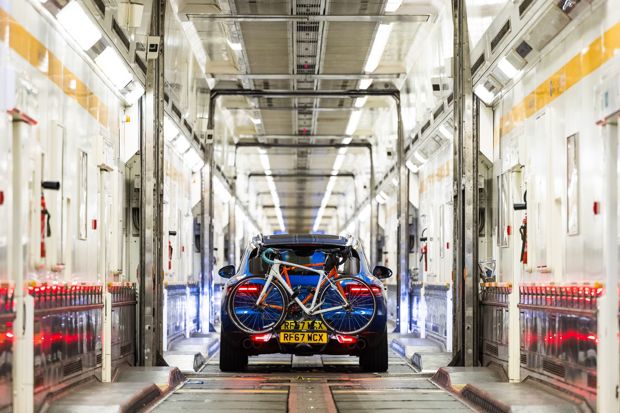
The similarities don’t end there, either, because like a ferry you are directed to a point where you board a LeShuttle carriage near the back of the train, driving your car inside towards the front, stopping at the point where a member staff instructs you to.
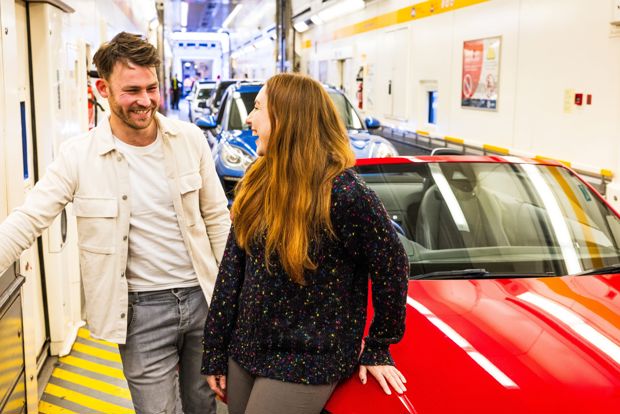
Unlike a ferry, because LeShuttle services are comparably quick, they have no restaurants or duty free shops on board - although Eurotunnel does provide those at its terminals so you can buy provisions before you drive into the train. However, you can get out of your car to stretch your legs once on board, plus there are toilet facilities in each carriage.
Once the LeShuttle arrives at the opposite Eurotunnel terminal, the doors of one of the front carriages will open and staff will direct you out. And that’s pretty much it - no further border checks or anything of that nature.
It’s worth noting that within a very short distance you are driving on public roads, so ensure you are on the correct side - on the right for mainland Europe, the left in the UK.
New EU entry rules 2026: EES border checks and biometric registration
Starting in April 2026, the European Union’s new Entry/Exit System (EES) is fully operational at the Folkestone and Calais terminals. This replaces traditional passport stamps with a digital record that captures your biometric data (facial images and fingerprints).
Because these checks take place at the UK border (before you board the LeShuttle train), it is vital to factor in extra time for your journey.
2026 EU Border Checklist (EES)
Before you set off for the terminal, ensure every passenger in your vehicle is ready for the following process:
- Valid Biometric Passport: Your UK passport must be less than 10 years old and have at least 3 months of validity remaining from your date of exit from the EU.
- First-Time Registration: If this is your first trip to the EU since the EES launch, every passenger (over the age of 12) must provide:
-
Four fingerprints from their right hand.
-
A high-quality facial photograph.
-
- The "Two-Minute" Check: Once your digital record is created, it remains valid for three years. For subsequent trips, the process is much faster (a quick facial scan and passport swipe), typically taking about two minutes per person.
- The Frontex App: Check if you can use the official EU travel app to pre-register your personal data before you arrive at the terminal. While fingerprints must still be taken in person at the dedicated booths, pre-filling your details can save significant time.
- 90-Day Rule compliance: The EES automatically calculates your stay. Remember, UK citizens can only spend 90 days in any 180-day period within the Schengen Area.
Where do the EES checks happen?
At LeShuttle’s Folkestone terminal, dedicated biometric kiosks have been installed in a redesigned pre-check-in area. You will be guided by signage to a booth where all passengers in the car will need to scan their documents and provide biometrics simultaneously.
What about ETIAS?
Later in 2026, the EU plans to introduce ETIAS (the European Travel Information and Authorisation System). This is a separate digital "visa-waiver" (similar to the US ESTA) that will cost €7 and be required in addition to the EES biometric registration.
How long does the Eurotunnel take?
From the moment LeShuttle departs the Eurotunnel terminal at one end and stops when it reaches the opposite one, the journey will have taken 35 minutes.
Consider the total time that if you arrived at the terminal an hour before departure and the train departed on time, give or take a short period of time for disembarking at the opposite side it’s possible to be driving on public roads again before two hours has passed.
Taking an electric car (EV) on LeShuttle: charging and safety rules
Unlike some ferry operators, who have occasionally introduced restrictions on EV battery levels or charging, LeShuttle (formerly Eurotunnel) is fully EV-friendly and offers infrastructure specifically designed for electric drivers.
Is it safe to take an EV on LeShuttle?
Yes. In fact, LeShuttle is arguably safer for EVs than traditional ferries. Because the transit is only 35 minutes and cars are parked on a stable rail carriage rather than a moving ship, there is less risk of vehicle movement.
However, there is one strict rule. While battery electric vehicles (BEVs) and Plug-in Hybrids (PHEVs) are welcomed, vehicles powered by flammable gas (LPG or Hydrogen) are strictly prohibited from the tunnel. If your EV is a pure electric or a standard petrol/diesel hybrid, you are 100% clear to travel.
Charging at the Terminals
One of the biggest perks of using LeShuttle is the access to dedicated charging "hubs" at both the Folkestone and Calais terminals.
- Folkestone (UK): The terminal features a massive Tesla Supercharger hub (open to all EV brands via the Tesla app) and several Universal chargers (Type 2).
- Calais (France): Similarly, the French terminal hosts a large charging area, ensuring you can top up before heading off into the French motorway network.
- Pro-Tip: Don't rely on charging on the train. There are currently no charging points inside the LeShuttle carriages. Ensure you have enough range to clear the 35-minute transit and reach your first destination or the terminal chargers.
Important Safety Rules for 2026
- Battery condition For safety reasons, you must notify staff if your EV has any known battery faults or has been involved in a recent collision where the battery casing might be compromised.
- Charging during transit You are not permitted to use "V2L" (Vehicle-to-Load) features to power external devices (like a coffee machine or laptop) while the train is in motion.
- Alarm systems: Like all cars, ensure your interior motion sensor is disabled if your EV’s alarm is sensitive to the train's movement, although the LeShuttle transit is generally very smooth.
EV ticket pricing
When booking, you will be asked to specify your fuel type. While there is currently no EV surcharge, ensuring your car is correctly registered as an electric vehicle helps LeShuttle manifest the train correctly for safety and weight distribution.
How do you book a LeShuttle crossing?
Booking a Channel crossing using LeShuttle's online system is nice and straightforward.
You will be asked to confirm you're booking one-way or return travel, whether your starting point for each journey is the UK or France and dates you would like to travel on.
Next, you will be asked to confirm the number of people who'll be in the car for each crossing as this may differ on return bookings. Details of pets travelling with you can be added later on in the process.
After that you'll be asked for your vehicle's details, including the fuel/energy it uses. While petrol, diesel, hybrid and electric cars are all fine to use LeShuttle, those which also run on flammable gas such as LPG, are not. You will also be asked to confirm whether or not you intend to tow a trailer or caravan for your journey.
When you book your ticket you will be asked about your vehicle’s size — this determines whether it will be catergorised as Medium & Small or Large. Be aware that tickets for Large vehicles are more expensive because they inevitably require more carriage space than smaller ones.
Although the metal kerbs along the internal carriage walkways are low, it’s still possible to damage your car’s wheels against them. If you want to minimize this risk and don’t mind paying extra for the privilege, you can buy a Large vehicle ticket regardless of your car’s size.
From that point you're presented with a grid of ticket price options for the various LeShuttle departure times as well how much flexibility you would like to vary your journey times and whether you would like access to an exclusive pre-travel lounge.
You are restricted to travelling with a maximum of five pets in your car while using LeShuttle, which must be dogs, cats or ferrets with the requisite Animal Health Certificate for those residing in the UK.
How early should I arrive at the Eurotunnel terminal?
Travelling between the UK and France requires a valid passport, so these and any other customs-related checks need to be completed before you are permitted to board the train.
Eurotunnel recommends that you arrive at least one hour before your scheduled LeShuttle train but no more than two hours.
Up to nine passengers can travel in one car, while pets can also be taken along providing they have the required documentation. There are pet exercise areas at the terminals as well as an air-conditioned pet reception to help keep them cool and calm.
Once through security, there are large parking areas close to the shops and other Eurotunnel facilities at the terminal, including charging stations for electric vehicles. Off-site filling stations for petrol and diesel vehicles are located close to the exit terminals in both France and the UK.
If you want more of a VIP experience with reduced waiting time in queues before boarding LeShuttle, Eurotunnel operates a premium-priced service called Flexiplus.
Does a roofbox make my Eurotunnel ticket more expensive?
You can take roofboxes as well as roof tents and cycle racks on top or behind your car. Even if you have already made a booking, this can be amended before your crossing if you decide later to carry something on the roof.
Be aware that doing so will almost definitely mean your car exceeds 1.85m in height. This is the maximum height before your car would require a Large vehicle booking for a single-storey LeShuttle carriage, which is usually more expensive and with less availability.
How do you board LeShuttle at the Eurotunnel terminals?
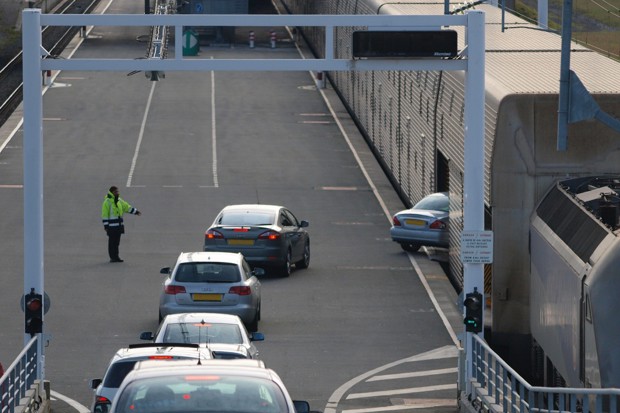
Boarding begins 25 minutes before LeShuttle’s scheduled departure time, so by then you will need to be in your car and following the direction signs to your train. Eventually, you will be on what’s essentially the platform and drive onto the train.
If you have booked a ticket for a Medium & Small car you will be directed to double-height LeShuttle carriages, with ramps inside the train to reach the upper deck — the experience is similar to using ramps to change levels in multi-storey car parks.
LeShuttle carriages for Large vehicles have no upper deck and the walkways in the carriage are modified so that there’s more space for wider vehicles.
Eurotunnel vs LeShuttle: What is the difference in 2026?
For those new to the service, the different names can be confusing but once you understand which is which, it all makes more sense.
- Eurotunnel — this is the brand name relating to the infrastructure of the terminals at the British and French sides of the facility plus the three tunnels themselves. The outer tunnels are used for the rail services provided by LeShuttle and Eurostar.
- LeShuttle — this is the rail service for people who want to take their vehicles to mainland Europe and back and which we are concentrating on with this guide.
- Eurostar — for those who simply want to catch a conventional, high-speed train to a number of different European cities, this is the service to use.
How long is the Eurotunnel?
Linking terminals at Folkestone in the UK and Calais in France, the 32-mile-long Eurotunnel actually consists of three separate tunnels. The two larger ones are for the LeShuttle and Eurostar train services, with a smaller service tunnel nestled between them.
Of the Eurotunnel’s total length, 25 miles is submerged beneath the Channel's bedrock making it the world’s longest undersea tunnel.
What are the advantages of using the Eurotunnel?
Compared with a cross-Channel ferry service, using Eurotunnel and driving your car onto a LeShuttle train, the process is significantly quicker, meaning you have more flexibility in your journey times either side of the terminals.
Unlike the ferry, they are not affected by adverse weather either, so often while ferries may be cancelled in storms or rough seas, the Eurotunnel will keep running.
Not only that, LeShuttle trains are fully electric and produce no carbon dioxide (CO2) while they are in operation.
However, 75% of the electricity required to power the train is generated by renewable methods, meaning that in total a car crossing the Channel via the Eurotunnel will have emitted 52-times less CO2 than if the journey had been made using a fossil fuel-burning ferry.
FAQs
How long is the Eurotunnel crossing?
The LeShuttle crossing takes exactly 35 minutes from platform to platform. Including the time needed for check-in, security, and boarding, the total "terminal-to-road" time is typically around 90 minutes to 2 hours. This makes it significantly faster than the quickest ferry, which takes roughly 90 minutes for the crossing alone.
Can I stay in my car on the Eurotunnel?
Yes, you stay with your vehicle for the entire duration of the journey. Once you have driven into the LeShuttle carriage and parked, you simply turn off your engine and apply the handbrake. You are free to stretch your legs within the carriage or use the onboard toilet facilities, but there is no need to move to a separate passenger lounge as you would on a ferry.
Is the Eurotunnel cheaper than the ferry?
Generally, the ferry is cheaper than LeShuttle, especially if you book in advance or travel at off-peak times (like early morning or late night). However, LeShuttle offers much better value through flexibility.
- Time Savings: You save at least an hour each way compared to the ferry.
- Frequency: With up to four departures per hour, it is much easier to catch an earlier or later train if your plans change.
- No Hidden Fees: Prices are per car, including up to nine passengers, whereas some ferry routes or foot passenger options can add up.
- Weather-Proof: LeShuttle is never cancelled due to high seas or bad weather, saving you the potential cost of last-minute hotel stays or missed connections.
