
Saab 9-3 X Sportwagon (2009 – 2011) Review



Saab 9-3 X Sportwagon (2009 – 2011) Verdict

 Saab's alternative to the Volvo XC70. Good ride quality. Usefully large boot space.
 Four-wheel drive only available with thirsty petrol engine. Diesel only front-wheel drive.
Find out more about the Saab 9-3 X Sportwagon (2009 – 2011)
Believe it or not, there was a time before SUVs ruled the land. And if you wanted something with a bit more ground clearance that didn’t take up two parking spaces on your drive, there were manufacturers who were prepared to sell you a jacked-up version of a conventional hatch or estate.
Some were more successful than others - the Volvo XC70, Audi Allroad and Skoda Scout models certainly nailed the formula - but one of the more obscure offerings in the genre was the Saab 9-3X.
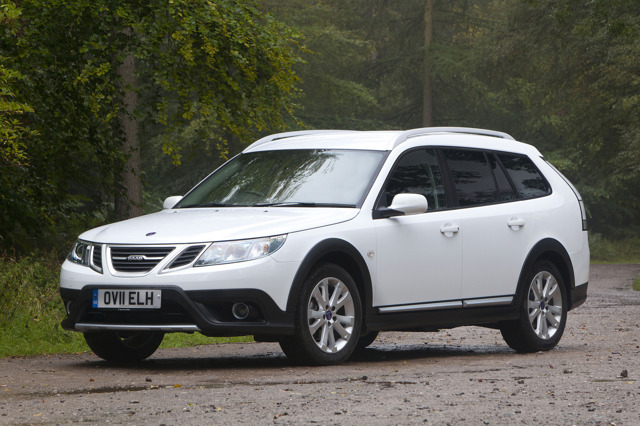
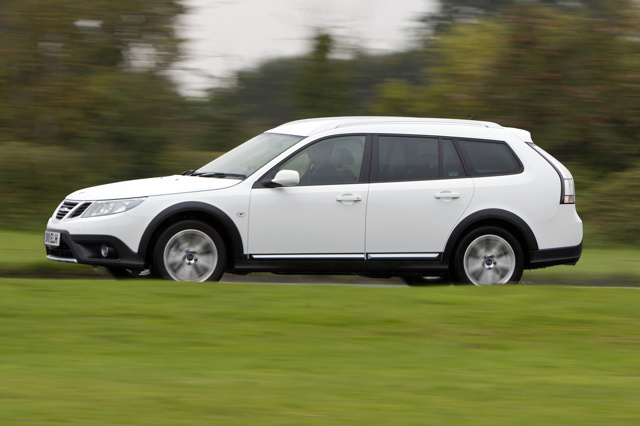
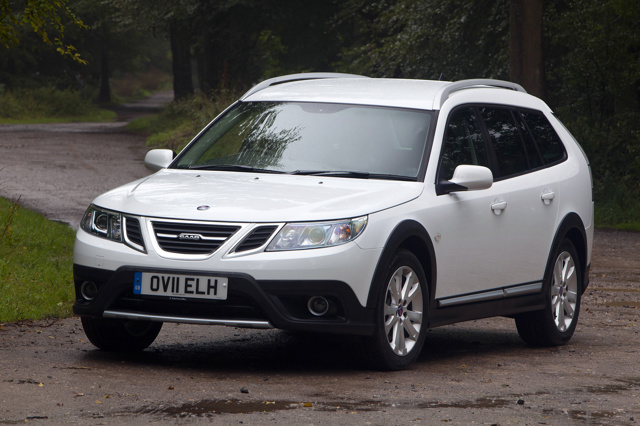
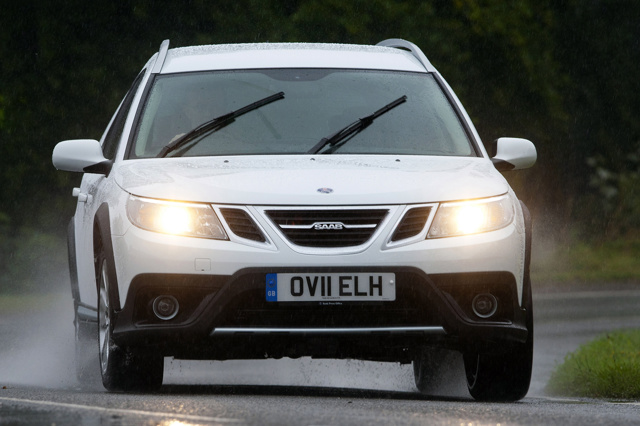
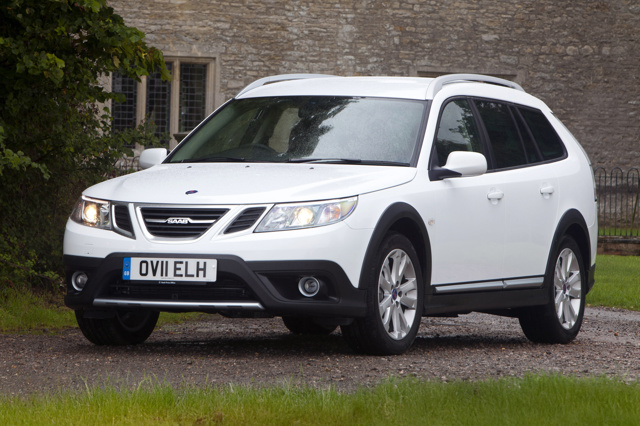
Starting with a conventional 9-3 Sportwagon, the X added some chunky design features with grey plastic cladding around the sills and bumpers, dashes of aluminium-like trim and perhaps most importantly, ride height raised by 35mm providing the necessary dose of ‘lifestyle’.
It wasn’t just for show either. The 9-3X received Saab’s Cross Wheel Drive (XWD) tech underneath, which meant Haldex four-wheel-drive and a limited-slip differential, so the system can divert power between all four wheels depending on the grip levels. The suspension also received some minor tweaks, with softer springs and revised damper settings.
It wasn’t all good news however, because only the 2.0-litre 210PS petrol version got XWD, while the 1.9-litre 190PS diesel option had to make do with regular front-wheel-drive. Fine if it’s just about the looks, but in truth the extra ground clearance won’t help much with only the front wheels doing the pulling.
Regardless, the 9-3X wasn’t a rip-roaring success and was dropped from the line up by 2011, so there’s only three years of production which means limited numbers on the used market. There are examples out there however and as with the regular 9-3 Sportwagon and 9-3 saloon reliability is mostly dependent on how well it has been cared for.
As a used prospect there’s a case for choosing the more simple two-wheel-drive diesel version over the XWD version which may not have always had the maintenance it needs.
Typical problem areas include electronics and suspension, and with diesel engines it’s worth being mindful of potential headaches like DPFs and turbochargers.
Reviews for Saab 9-3 X Sportwagon (2009 – 2011)'s top 3 rivals
.jpg?width=240&height=160&rmode=crop)

.jpg?width=240&height=160&rmode=crop)

.jpg?width=240&height=160&rmode=crop)
Saab 9-3 X Sportwagon (2009 – 2011) handling and engines
- Engines range from 1.9 TTiD to 2.0T XWD Automatic
- Readers report Real MPG to be between 42–47 mpg
As you might expect, there isn’t a huge difference in the driving experience between the Saab 9-3X and a regular Sportwagon, although in some ways the tweaks to the suspension are actually for the better.
Never featuring in the top ten handling cars in its class, the Saab 9-3 was always better suited to chewing through the miles with little fuss and keen drivers would find the relatively numb steering something of a disappointment. But with softer springs and a raised ride height it’s better equipped to deal with rotten roads while the extra traction of the XWD version is reassuring in really poor weather.
The 9-3X gets the pick of the four cylinder engine options, so whichever one you go for you’re unlikely to find it short of power. With a manual gearbox both the petrol and diesel can crack 0-62mph in just over eight seconds, although inevitably the diesel is far more economical which might just swing your decision.
However, it’s worth bearing in mind that, with only the petrol getting four-wheel-drive, it’s much better equipped to lay down all that performance and avoids the flashes of traction control and torque steer that affect the two-wheel-drive version when you start hitting the throttle.
| Engine | MPG | 0-62 | CO2 |
|---|---|---|---|
| 1.9 TTiD | 55 mpg | 8.7 s | 135 g/km |
| 1.9 TTiD Automatic | 47 mpg | 8.9 s | 159 g/km |
| 2.0T XWD | 34–35 mpg | 6.9 s | 186–195 g/km |
| 2.0T XWD Automatic | 28–31 mpg | 9.1 s | 209–229 g/km |
Real MPG average for the Saab 9-3 X Sportwagon (2009 – 2011)

Real MPG was created following thousands of readers telling us that their cars could not match the official figures.
Real MPG gives real world data from drivers like you to show how much fuel a vehicle really uses.
Average performance
80%
Real MPG
42–47 mpg
MPGs submitted
4
Saab 9-3 X Sportwagon (2009 – 2011) interior
- Boot space is 419–1273 litres
| Dimensions | |
|---|---|
| Length | 4690 mm |
| Width | 1762 mm |
| Height | 1575–1576 mm |
| Wheelbase | 2675 mm |
There’s not much to tell the Saab 9-3X apart from other 9-3 models, so you get an interior that is functional and is logically laid out, but isn’t of the highest quality nor particularly generous in terms of space.
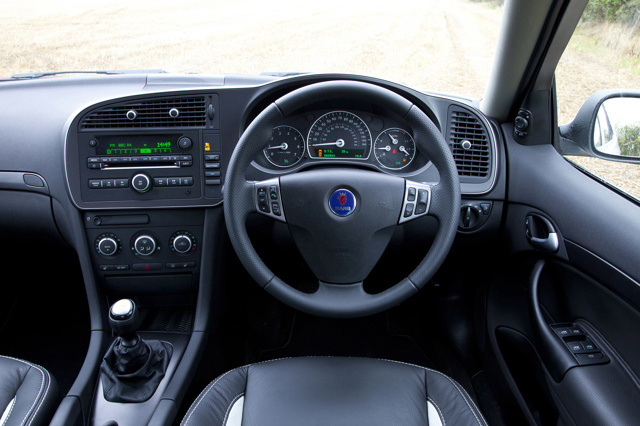
One thing that is unique to the X version is the seat trim - a pleasing grey with flashes of cream, which is nicer than it sounds - and the standard leather is smart. The front seats are also excellent, something of a Saab trademark, with excellent support and comfort. The raised ride height also means you have a slightly better view out, which is no bad thing either.
There are some nice design touches too, like the air vents that have a little joystick on them so you can direct the air wherever you want and the ‘night panel’ button that turns off the illumination on all but the key instruments. Unfortunately there’s some poor design too, like the GM parts bin mirror adjustment that’s mounted way up on the A-pillar and the handbrake lever that tries to trap your thumb.
As for space, it’s great up front and the generous seat adjustment helps, but in the rear it’s a bit more cramped that you might hope. The boot isn’t exactly generous either at 413 litres, which is quite a bit less than many alternatives at the time, but you can expand this to over 1200 litres if you drop the rear seats.
Saab 9-3 X Sportwagon (2009 – 2011) models and specs
| Dimensions | |
|---|---|
| Length | 4690 mm |
| Width | 1762 mm |
| Height | 1575–1576 mm |
| Wheelbase | 2675 mm |
| Miscellaneous | |
|---|---|
| Kerb Weight | 1745–1840 kg |
| Boot Space | 419–1273 L |
| Warranty | 3 years / 60000 miles |
| Servicing | 18000 miles |
| Costs | |
|---|---|
| List Price | £26,500–£29,155 |
| Insurance Groups | 27–30 |
| Road Tax Bands | E–L |
| Official MPG | 28.2–55.4 mpg |
| Euro NCAP Safety Ratings | |
|---|---|
| Adult | - |
| Child | - |
| Pedestrian | - |
| Overall | - |
On sale until February 2012
| Estate | |||
|---|---|---|---|
| Version | List Price | MPG | 0-62 |
| 1.9 TTiD 5dr | £26,500 | 55.4 mpg | 8.7 s |
| 1.9 TTiD Auto 5dr | £27,930 | 47.1 mpg | 8.9 s |
| 2.0T XWD 5dr | £27,640 | 33.6 mpg | 6.9 s |
| 2.0T XWD Auto 5dr | £29,155 | 31.4 mpg | 9.1 s |
On sale until March 2011
| Estate | |||
|---|---|---|---|
| Version | List Price | MPG | 0-62 |
| 2.0T XWD 5dr | £27,367 | 34.9 mpg | - |
| 2.0T XWD Auto 5dr | £28,746 | 28.2 mpg | - |
Model History
March 2009
Launched at Geneva Motor Show. Aimed at people with active outdoor lifestyles who don’t want a large crossover. Latest Saab XWD technology combined with all-round performance. Versatile Sport Wagon body, higher stance and advanced all-wheel drive technology, the 9-3X also offers excellent fuel efficiency and functional storage.
The 9-3X is available with either Saab’s 2.0 litre turbocharged petrol engine (210hp), combined with the technically advanced Cross Wheel Drive system (XWD), or the highly regarded 1.9 TTiD diesel engine (180hp) with front-wheel drive only. It is specifically designed for those who frequently use gravel or unpaved roads, without compromising the driving experience on Tarmac.
New front and rear bumpers feature a dark grey, grained finish that is also applied to the side sills and the edges of the wheel arches as a protective covering when the terrain becomes loose or muddy. This treatment is complemented by skid panels with a matt aluminum finish, curving up towards the door opening at the rear and adopting a wing form in the lip of the lower front bumper. These are matched by matt, aluminium-coloured lower door strips and roof rails with the same finish. Visible, twin round exhaust tailpipes are standard for both engine options. Front fog lights ringed with a chrome finish add yet another rugged accent.
With the addition of unique design, 5-spoke 17-inch alloy wheels, the 9-3X’s exterior character reflects its ability to handle mixed road conditions, whether rough or smooth, loose or paved. Inside, the 9-3X interior features a unique trim, adding a dark metallic finish to the door trims, glove box and gearbox surround. The unique sports seating features grey fabric inserts in the black leather upholstery.
XWD technology is an intelligent, active system that continuously distributes engine drive torque between the front and rear axles as required for optimum stability and traction in all conditions. To optimise traction the Saab XWD incorporates an innovative, pre-emptive engagement of the rear wheels. Unlike conventional all-wheel drive systems, this eliminates the need to detect front wheel slip before rear drive is activated. The hardware includes an electronically-controlled Torque Transfer Device (TTD), which varies power delivery between the axles. A valve increases or reduces hydraulic pressure on wet clutch plates inside the TTD to progressively engage or disengage the rear axle. The degree of ‘slip’ dictates how much drive is transmitted to the rear wheels. The standard fit rear limited slip differential (eLSD) operates on the same principle, splitting drive across the axle to whichever wheel has more traction.
The 2.0 Turbo petrol engine delivers 210hp and thus conforms to Saab’s right-sizing principal by producing the power of a larger engine but with the fuel economy and lower emission benefits of a smaller 2.0 litre capacity thanks to a turbo charger. This all-alloy engine also produces 221lb ft of torque (300Nm) between 2,500-4,000rpm and can accelerate the 9-3X from 0–60 mph in just 8.2 seconds. Both a six speed manual and automatic transmission are available.
The diesel variant, a 1.9 TTiD twin turbo engine produces an impressive 180hp and a punchy 295 lb ft (400Nm) of torque through the front wheels, but still keeps emissions low with 144 g/km. This engine, too, will be available with manual and automatic transmission.
The 9-3X is designed to make loading sports and leisure equipment easy: the rear cargo area with a low floor is surprisingly spacious and well-proportioned, and the compact design of the rear suspension allows a deep box-like space, free from intrusions, offering a useful rear seat up/down volume of 419/1287 litres (VDA).
The 60/40 split seat-back incorporates a ski-hatch and folds down without any need to move the fixed seat cushion. The fully carpeted rear load space is illuminated by two interior lights mounted on the inside of the D-pillars. It is accessed by a lightly-weighted tailgate that opens down to bumper level, its damper rods completely hidden in the roof to allow a clear, uncluttered opening. The flush-fitted, black moulded floor plate helps to protect against marks or scratches on the bumper during heavy use.
The 9-3X's TwinFloor stowage facility also helps keep luggage and equipment safe and tidy. The middle section of the floor hinges upwards transversely when the handle is pulled so that the front edge fits into two retaining slots.
There is also a 12-volt power socket in the main load area (for a hot or cool box) and a separate storage compartment at either side of the floor, one fitted with a moulded holder for large bottles.
May 2009
Price announced for 9-3X, from £24,995 OTR for the 1.9TTiD model. On sale from May 2009.
