
Porsche 718 Cayman review: Price, performance and handling
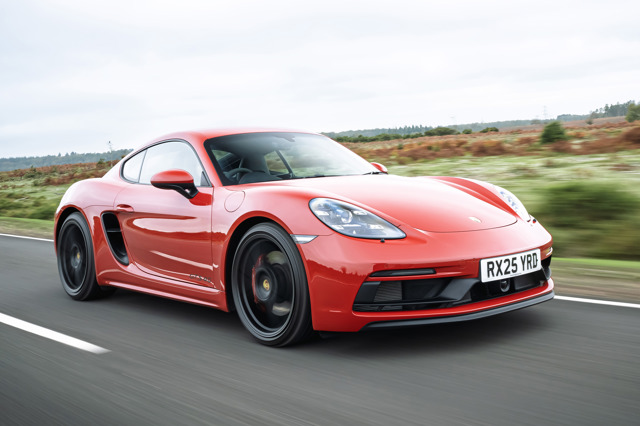
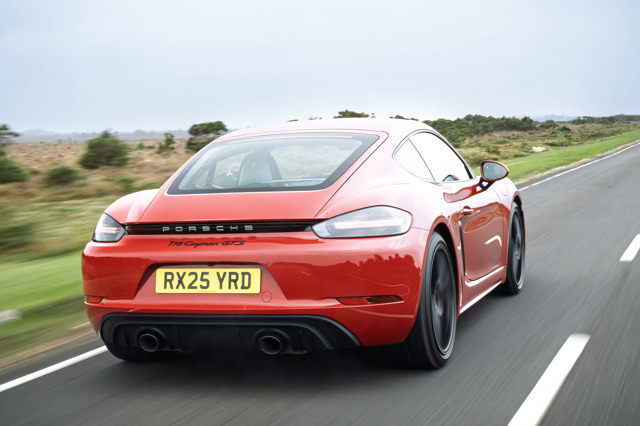
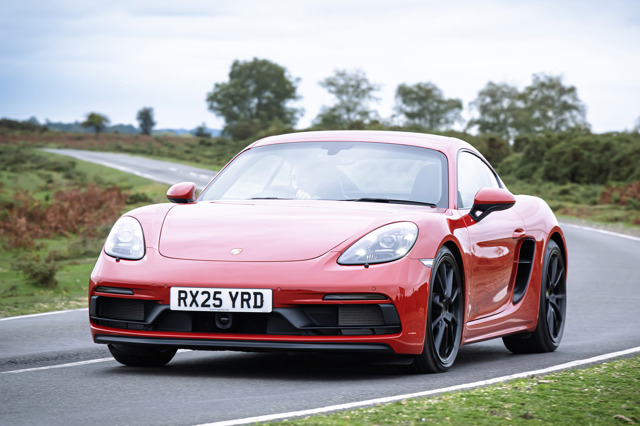
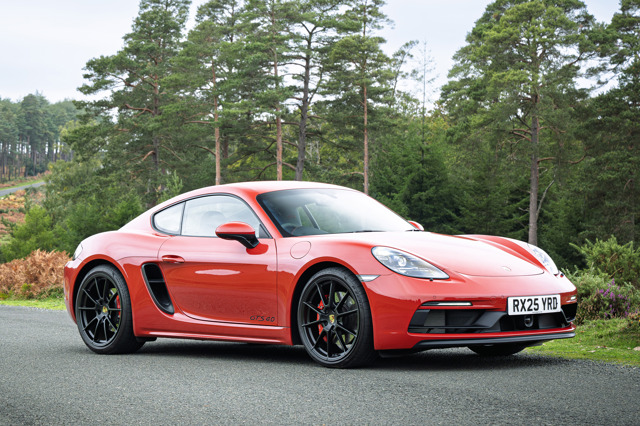

Porsche 718 Cayman (2016 – 2025) Verdict

 Unbeatable driving dynamics. GTS 4.0-litre engine is a treat for the ears. Very well built.
 Four-cylinder engines don't sound great. GTS 4.0 is an expensive used buy. Feeling dated now.
Find out more about the Porsche 718 Cayman (2016 – 2025)
Insurance Group 44
On average it achieves 98% of the official MPG figure
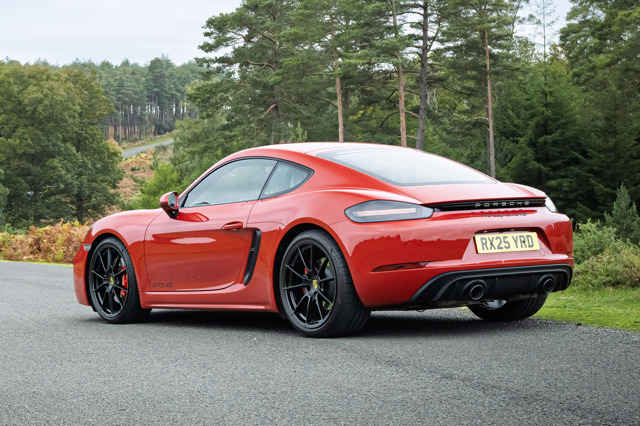
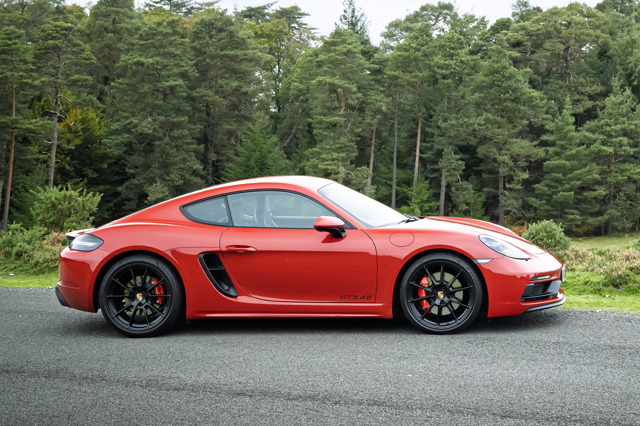
Best thought of as perhaps a baby Porsche 911, the Porsche 718 Cayman is a mid-engined sports car that remains unmatched in terms of handling and driver engagement, even thought it's now been discontinued. It's one of the best sports cars you can buy, as we'll explain in our full Porsche 718 Cayman review.
In some ways, it's surprising it took Porsche so long to create the Porsche Cayman. It's always been more than a fixed-roof version of the Porsche Boxster convertible - and yet that car was around for the best part of 10 years before the Cayman finally arrived in 2005.
At the time, it plugged the gap between the Porsche Boxster and the Porsche 911, sitting between the two in terms of performance and price. That changed over time though and with the most recent generation, the Porsche 718 Cayman, it's no more powerful than the Porsche 718 Boxster and (when still on sale) was actually a bit cheaper.
That makes a great deal of sense when the 718 Cayman doesn't have a complicated folding roof. And in its absence, it's always been considered the more focused, serious of the pair, even if in reality the cars drive as well as each other. And that's very well indeed – this is a high mark for sports cars.
'Generation' doesn't feel like quite the right word with the 718 Cayman, though. Despite Porsche giving it a new model designation (982, superseding the 981), it's structurally very similar to the pre-2016 version and also looks similar. There was one big difference when the 718 Cayman was initially launched, though – its engines.
Gone were the old 2.7-litre and 3.4-litre, naturally aspirated six-cylinder engines. In their place were all-new 2.0-litre and 2.5-litre turbocharged four-cylinder units. Yes, they stick to the traditional Porsche 'boxer' or 'flat' layout with horizontally opposed pistons and they're both more powerful and torquier than the old engines, but they always felt lacking in terms of soundtrack.
This was solved with the introduction of the limited-run 718 Cayman GT4 using an all-new 4.0-litre engine (yes, with six cylinders and very much without a turbo), a slightly detuned version of which was used for the excellent 718 Cayman GTS 4.0. This is easily the best 'normal' version of the 718 Cayman, but this is very much reflected in the used values.
Porsche wasn't done there, though. In 2021, it revealed the 718 Cayman GT4 RS, which borrowed an engine from the 911 GT3, complete with a 9000rpm redline and a 500PS output. It's as incredible to drive as you might expect, but all versions of the 718 Cayman are a joy to drive in a way that no rival can quite match.
The one that gets closest is probably the Alpine A110, which has ended up outliving the Cayman. The Jaguar F-Type is prettier meanwhile and available with theatrical-sounding V6 and V8 engines, but never feels quite as sharp. The same is true of the BMW Z4-derived Toyota GR Supra.
Both the current and previous-generation versions of the BMW M2 could be considered alternatives, but as neither was built from the ground up as a sports car, they feel like different propositions.
So it's a real shame that the Porsche 718 Cayman has been discontinued. And although we have heard murmurings of the next one being available with a petrol engine, the official line is that it will be exclusively powered by electricity. And in any case, it won't be here for a while yet.
The 718 Cayman was at least kept on sale in the UK a little longer than much of Europe, in a rare Brexit benefit related to EU cybersecurity rules. While most European countries said goodbye to the car part-way through 2024, you could order the Cayman in the UK as recently as 2025.
At the time of writing, there were still a few new ones in stock, but we wouldn't expect those to stick around for long...
Reviews for Porsche 718 Cayman (2016 – 2025)'s top 3 rivals


Porsche 718 Cayman (2016 – 2025) handling and engines
- Engines range from Cayman T to Cayman GT4 RS
- Readers report Real MPG to be between 20–40 mpg
Porsche 718 Cayman (2016 – 2025): Handling and ride quality
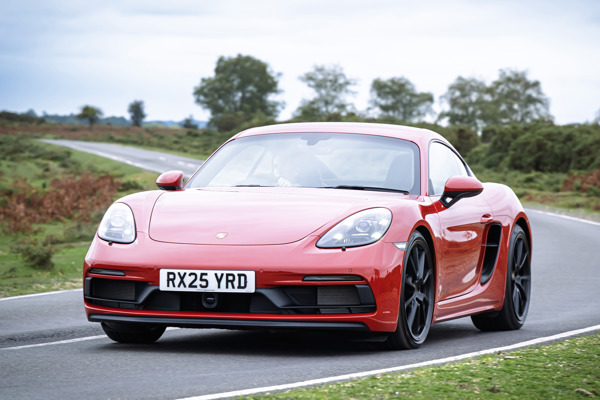
In a lot of ways, the Porsche 718 Cayman is better to drive than the bigger Porsche 911, thanks in large part to having the optimal mid-engine layout, rather than sticking it at the back. It's better balanced and has a sharper front-end, which will only wash wide if you go into a corner a little too hot.
As you'd expect for a sports car, it's quite firm, but not excessively so. You need to tackle things like speed bumps with a bit of care, but the ride settles with speed. Meanwhile, there's precious little body roll, even if you've specified the optional Porsche Active Suspension Management (standard on the GTS) and left it in the softest setting.
And on the subject of extras, you can add something called Porsche Torque Vectoring (again, that's standard on the GTS), which uses a limited-slip differential and light brake applications to sharpen things up in the corners further.
There's no bad aspect of the way the 718 Cayman handles, but we can just about pick out a highlight, and that's the steering. Few other electrically assisted setups feel quite so natural and laden with feedback to give you a perfect mental picture of what's happening underneath you.
There's bags of traction and it's only in damp conditions that you start to feel as though the Cayman is struggling to put its power down. In any case, the electronic stability control does a commendable job of keeping the rear of the car in check without feeling like the fun police.
What we really like about the Cayman is that it's oh-so satisfying to drive at any speed. It's a testament to just how well set up a sports car Porsche has made.
Porsche 718 Cayman (2016 – 2025): Engines
As much as we tried to keep an open mind when trying the 718 Cayman's initial range of four-cylinder engines, it was hard not to be disappointed with the gruff soundtrack.
Even though they're quite responsive for turbocharged units, helped by the 718 Cayman S having a clever variable vane geometry turbo, you still can't beat a naturally aspirated engine in that regard.
Still, they comprehensively best the old 2.7 and 3.4-litre engines they replaced in terms of raw numbers, making both more power and more torque. That torque is also available lower down the rev range, giving better flexibility. In other words, you don't have to rev the nuts off them to make decent progress...
In terms of those numbers, you're looking at 300PS at 6500rpm and 380Nm of torque from 2150rpm in the 718 Cayman's 2.0-litre engine, making for a 0-62mph time of 5.1 seconds in the six-speed manual version, 4.9 seconds in the PDK automatic and 4.7 seconds with that the PDK and Sport Chrono pack option. Either way, it tops out at 171mph.
The 718 Cayman S ups the ante with a 2.5-litre unit putting out 350PS and 420Nm of torque for a 0-62mph sprint of 4.6 seconds in the manual, 4.4 seconds with the PDK and 4.2 seconds with PDK and Sport Chrono. Top speed is 177mph.
For a little while, you could also get a GTS version of the 2.5 with a token 15PS power uplift, but this was taken off sale when Porsche replaced it with the magnificent GTS 4.0 in 2020. This introduced a slightly detuned version of the all-new six-cylinder engine it launched a year prior in the limited-edition 718 Cayman GT4.
In that car, it's good for 420PS, but the GTS isn't far behind with 400PS, while the torque figure is the same for both at 420Nm (430Nm when equipped with PDK).
Importantly, that 400PS is made at 7800rpm, at which point the naturally-aspirated unit lets out a glorious shriek. The only problem is, you won't be up there all that often if you have the six-speed manual, because the gearing is ridiculously long. Rev it out in second gear and you'll be doing 80mph.
The solution could be the PDK automatic, which has shorter gearing. The shifts are wonderfully smooth and fast, but even with the silly gearing, we prefer the engagement of the manual with its short, precise throw. The manual is a fair bit slower, requiring 4.5 seconds to get to 62mph versus four seconds dead in the PDK, but who cares? The top speed, meanwhile, is 179mph.
Porsche went one step further in 'making up' for those initial four-cylinder engines by stuffing a modified 911 GT3 engine into the car to create the ultra-focused 718 Cayman GT4 RS.
Just to make sure your earholes can enjoy as much of it as possible, the airbox protrudes into the cabin, making hitting the 9000rpm redline a real treat. The extra noise could become tiresome the rest of the time, though – these engines can sound quite clattery at certain revs.
Producing 500PS and 450Nm, the GT4 RS is by far the most powerful Cayman ever made. It can hit 0-62mph in just 3.2 seconds and on to a top speed of 196mph.
Porsche 718 Cayman (2016 – 2025): Safety
All Porsche 718 Cayman models are equipped with airbags, side impact protection, autonomous emergency braking and plenty of electronic systems. These include Porsche Stability Management, ABS, traction control, automatic lights and automatic wipers.
As is common with premium sports cars, the 718 Cayman wasn't ever crash-tested by Euro NCAP.
Porsche 718 Cayman (2016 – 2025): Towing
The centrally mounted tailpipes of the exhaust system put paid to any hope of towing something, even in the unlikely event you wanted a Porsche 718 Cayman to haul your speedboat...
| Engine | MPG | 0-62 | CO2 |
|---|---|---|---|
| Cayman | 38 mpg | 5.1 s | 168 g/km |
| Cayman GT4 | - | - | 249 g/km |
| Cayman GT4 PDK | - | 4.4 s | 242 g/km |
| Cayman GT4 RS | - | - | 299 g/km |
| Cayman GTS | 31 mpg | 4.5–4.6 s | 205–247 g/km |
| Cayman GTS PDK | 33 mpg | 4.3–4.5 s | 186–230 g/km |
| Cayman PDK | 36–41 mpg | 4.9 s | 158 g/km |
| Cayman S | 35 mpg | 4.6 s | 184 g/km |
| Cayman S PDK | 39 mpg | 4.4 s | 167 g/km |
| Cayman T | - | - | 186–208 g/km |
| Cayman T PDK | - | - | 180–212 g/km |
Real MPG average for the Porsche 718 Cayman (2016 – 2025)
Real MPG was created following thousands of readers telling us that their cars could not match the official figures.
Real MPG gives real world data from drivers like you to show how much fuel a vehicle really uses.
Average performance
98%
Real MPG
20–40 mpg
MPGs submitted
18
Porsche 718 Cayman (2016 – 2025) interior

- Boot space is 120–270 litres
- Euro NCAP rating of five stars
| Dimensions | |
|---|---|
| Length | 4379–4456 mm |
| Width | 1994 mm |
| Height | 1267–1295 mm |
| Wheelbase | 2475–2484 mm |
Porsche 718 Cayman (2016 – 2025): Practicality
For a two-seat sports car, the Porsche 718 Cayman offers fairly decent practicality. It will easily accommodate tall adults and there’s a reasonable amount of adjustment on the seats.
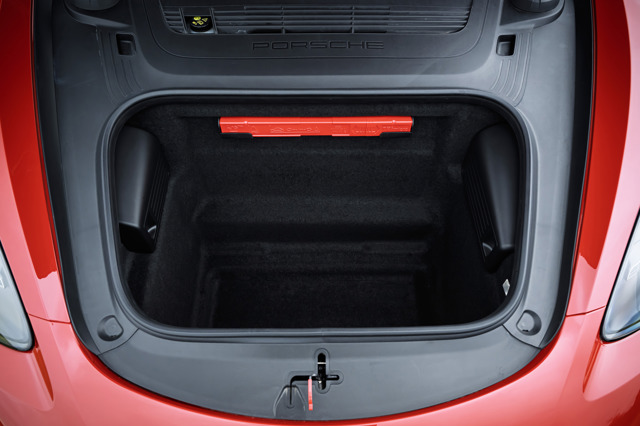
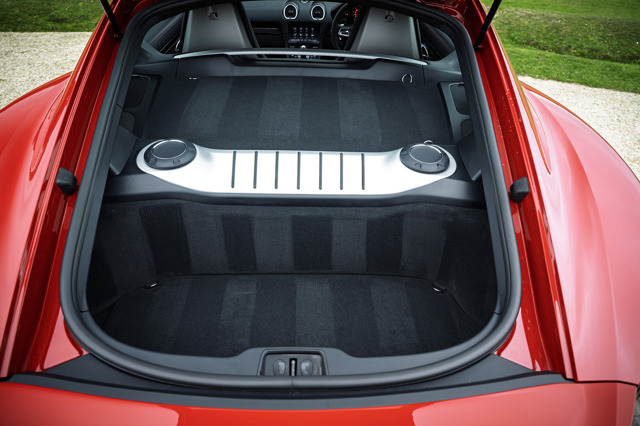
With 275 litres of space in the boot and a further 150 litres under the bonnet, there’s enough luggage room for a weekend getaway.
Unfortunately, there isn’t a lot of storage in the cabin, with barely enough space in the door pockets for a magazine. There are storage spaces behind the seats, but you won’t even get a laptop bag in there.
You do at least get a pair of neat, fold-out cup holders which emerge from a flap above the glovebox. Larger beverage receptacles do feel a bit perilously placed in them, mind.
Porsche 718 Cayman (2016 – 2025): Quality and finish
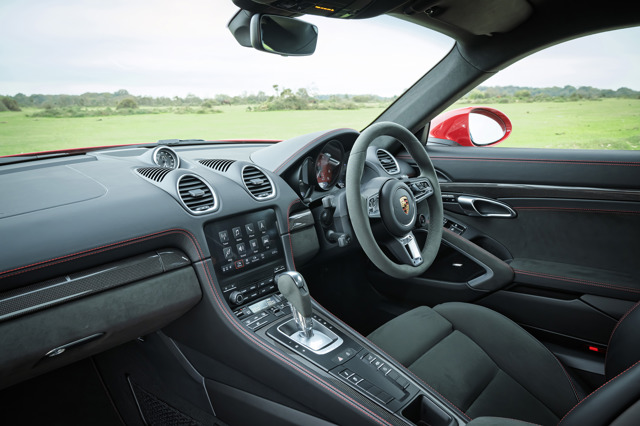
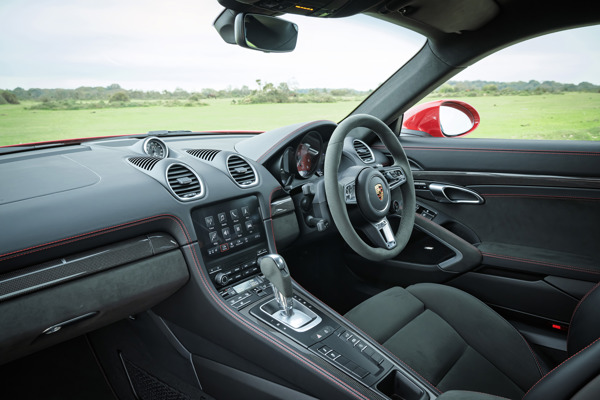
You’d expect the finish to be good inside a Porsche – and the Porsche 718 Cayman certainly delivers on this front. The Race-Tex fabrics (similar to Alcantara) have a sporty feel and the leather is of a high quality.
There’s a mixture of harder and soft-touch plastic surfaces, all of which fit neatly together, showing the importance placed on manufacturing precision.
The buttons all provide good feedback and while you might find trendier trim options in rivals, it’s clear that the focus here is very much on the driving experience.
Porsche 718 Cayman (2016 – 2025): Infotainment
The Porsche Communication Management (PCM) infotainment system is well laid out and easy to use, with a few physical controls and the rest within the touchscreen. It's fairly small by modern standards at seven inches.
Large and clear icons ensure you won’t be struggling to hit the right one while on the move. Thankfully it doesn’t have lots of complicated menus and sub-menus, making it a logical and straightforward system to use.
You can also control it using voice commands, but don’t expect to find buttons on the steering wheel to access the infotainment. Those are an extra-cost option.
All models offer navigation, Porsche Connect services, Apple CarPlay, DAB radio and phone pairing for calls and audio streaming. It's only wired rather than wireless CarPlay, though, while Android Auto isn't offered at all. There are two USB ports – one in the glovebox and the other under the armrest. Both are the older-style USB-A-style socket.
What the Porsche 718 Cayman does have is a 4.6-inch digital display in the instrument cluster, which you can scroll through using a stalk to see a map, directions, audio choices, trip computer and more. The rest of the cluster involves physical dials, which further date the car, but we don't mind at all – they look great.
Porsche 718 Cayman (2016 – 2025) value for money
Porsche 718 Cayman (2016 – 2025): Prices
We've seen early four-cylinder 718 Caymans going for under £30,000. If you want a GTS 4.0, it's going to cost you a lot more, for two reasons. Firstly, that car wasn't introduced until 2020, so the derivative has not had as long to depreciate and these are much more sought after than the four-pot cars.
As such, you'll need over £50,000 to bag one. If you'd rather grab one of the few remaining new cars in stock, prices vary wildly depending on specification, starting at just over £80,000 and knocking on the door of £100,000 at the pointy end.
When it was still possible to order from the factory, you could load these cars up with over £10,000 of options surprisingly easily. Standard specification is modest, with items you might expect to be fitted charged at hefty prices as optional extras while personalisation options further inflate the price.
You'll need about £70,000 or more to secure a 718 Cayman GT4 and more like £120,000 for the super-special GT4 RS.
Porsche 718 Cayman (2016 – 2025): Reliability and running costs
It’s a Porsche, so running costs are commensurate with the badge and the performance of a German-engineered sports car.
The Porsche 718 Cayman has a combined fuel consumption figure of 30.4mpg for the manual, 31.7mpg with the PDK automatic. The manual version of the Porsche 718 Cayman S offers a combined figure of 28.0mpg, or 29.4mpg with the PDK.
The numbers change for the switch to six-cylinder power in the Porsche 718 Cayman GTS 4.0, with a figure of 25.9mpg for the manual and 28.0mpg for the PDK. The even greater performance of the Porsche 718 Cayman GT4 RS takes the average down to 21.4mpg. Check out our Real MPG figures to see how these figures stack up with owners’ experiences.
It's the same £195 flat rate of tax for the 718 Cayman as any other car, although as the original RRP for all versions is well over the £40,000 threshold for the government's expensive vehicle tax, it incurs an extra £425 annually from years two to six.
All models have a three-year warranty and servicing is needed every two years or 20,000 miles. Service and maintenance costs will vary immensely depending on where you take it, but Porsche does offer a number of service plans through its dealerships.
Satisfaction Index
 What is your car like to live with?
We need your help with our latest Satisfaction Index, so that we can help others make a smarter car buying decision. What's it like to live with your car? Love it? Loath it? We want to know. Let us know about your car - it will only take a few minutes and you could be helping thousands of others.
Help us with the Honest John Satisfaction Index nowPorsche 718 Cayman (2016 – 2025) models and specs
In its final years, the car was available in the following forms: as a 718 Cayman and 718 Cayman Style Edition with the 2.0-litre engine, as a 718 Cayman S with the 2.5, and as the 718 Cayman GTS 4.0.
Towards the end of its life, the car was offered as a base-spec Boxster or Boxster Style Edition with the 2.0-litre engine, as a 2.5-engined Boxster S, or as a Boxster GTS 4.0. The Spyder RS and the earlier Spyder were more models in their own right rather than derivatives of the standard car.
The Porsche 718 Cayman comes with the following fitted as standard:
- 18-inch alloy wheels
- Heated seats with electrically adjustable backrest
- Seven-inch touchscreen infotainment system
- Apple CarPlay
- Air conditioning
The Porsche 718 Cayman Design Edition upgrades that spec with:
- 20-inch alloy wheels
- Decorative sticker set
- Black exterior styling details
- Automatically dimming interior/exterior mirrors
- Two-zone climate control
The Porsche 718 Cayman S uses the Boxster's equipment list as a starting point and adds:
- 19-inch alloy wheels
- Front and rear parking sensors
- Cruise control
The range-topping Porsche Cayman GTS 4.0 adds:
- 20-inch satin black alloy wheels
- Porsche Active Suspension Management
- Porsche Torque Vectoring
- Sport Chrono Package
- Heated 'Race-Tex' covered steering wheel
| Dimensions | |
|---|---|
| Length | 4379–4456 mm |
| Width | 1994 mm |
| Height | 1267–1295 mm |
| Wheelbase | 2475–2484 mm |
| Miscellaneous | |
|---|---|
| Kerb Weight | 1335–1495 kg |
| Boot Space | 120–270 L |
| Warranty | 3 years |
| Servicing | 10000–20000 miles |
| Costs | |
|---|---|
| List Price | £41,800–£113,700 |
| Insurance Groups | 44 |
| Road Tax Bands | G–M |
| Official MPG | 31.4–40.9 mpg |
| Euro NCAP Safety Ratings | |
|---|---|
| Adult | - |
| Child | - |
| Pedestrian | - |
| Overall | 5 |
Currently on sale
| Coupe | |||
|---|---|---|---|
| Version | List Price | MPG | 0-62 |
| Coupe 2.0 300ps 2dr | £42,897 | 38.2 mpg | 5.1 s |
| Coupe 2.0 300ps Pdk 2dr | £41,800 | 35.8 mpg | 4.9 s |
| Coupe 2.5 350ps S 2dr | £48,834 | 34.9 mpg | 4.6 s |
| Coupe 2.5 350ps S Pdk 2dr | £50,756 | 38.7 mpg | 4.4 s |
| Coupe 4.0 400ps Gts 2dr | £66,700 | - | 4.5 s |
| GT4 RS T 500 PDK Auto Start/Stop 2dr | £113,700 | - | - |
| GTS T 400 PDK Auto Start/Stop 2dr | £75,832 | - | 4.5 s |
| Style Edition T 300 PDK Auto Start/Stop 2dr | £58,199 | - | - |
| Style Edition T 300 Start/Stop 2dr | £56,000 | - | - |
On sale until August 2024
| Coupe | |||
|---|---|---|---|
| Version | List Price | MPG | 0-62 |
| Coupe 2.0 300ps T 2dr | £52,055 | - | - |
| Coupe 2.0 300ps T Pdk 2dr | £54,358 | - | - |
| Coupe 4.0 420ps GT4 2dr | £75,780 | - | - |
| GT4 T 420 PDK Auto Start/Stop 2dr | £77,780 | - | 4.4 s |
On sale until July 2020
| Coupe | |||
|---|---|---|---|
| Version | List Price | MPG | 0-62 |
| Coupe 2.5 365ps Gts 2dr | - | 31.4 mpg | 4.6 s |
| Coupe 2.5 365ps Gts Pdk 2dr | £61,852 | 33.2 mpg | 4.3 s |
On sale until April 2017
| Coupe | |||
|---|---|---|---|
| Version | List Price | MPG | 0-62 |
| Coupe 2.0 300ps 2dr | £40,233 | 38.2 mpg | - |
| Coupe 2.0 300ps Pdk 2dr | £42,040 | 40.9 mpg | - |
| Coupe 2.5 350ps S 2dr | £49,244 | 34.9 mpg | - |
| Coupe 2.5 350ps S Pdk 2dr | £51,111 | 38.7 mpg | - |
Model History
April 2016
New 718 Cayman launched
The latest and fourth generation of the mid-engined, two-seater sports coupé is distinguished by a distinctive athletic and purposeful appearance, with new flat-four turbocharged 'boxer' engines delivering upwards of 300PS beating at its heart.
The same new four-cylinder 'boxer' engines with turbocharging that first debuted in the 718 Boxster are shared with the 718 Cayman. As a result, coupé and roadster Porsche models offer identical engine outputs for the first time. The 718 Cayman derivative is powered by a 300PS 2.0-litre engine.
The 718 Cayman S features a 350PS 2.5-litre engine. This represents 25 hp more power compared to the prior models, with NEDC fuel economy also increasing to 34.9 - 40.9 mpg Combined.
The tremendous thrust from the new engines promises rewarding levels of responsiveness even at low revs. The 2.0-litre engine of the 718 Cayman produces up to 380Nm (plus 90Nm) of torque, generated between 1,950 - 4,500 rpm.
The 2.5-litre engine of the 718 Cayman S features a turbocharger with variable turbine geometry (VTG). This technology has been hitherto used exclusively in the 911 Turbo, and is unique to Porsche in petrol engine applications.
In the 718 Cayman S, the VTG turbocharger additionally has a wastegate. The engine delivers up to 420Nm (an extra 50Nm) between 1,900 and 4,500 rpm. For the driver, this means improved torque across all engine speeds. This translates into especially dynamic performance; the 718 Cayman with PDK and optional Sport Chrono Package sprints from zero to 62 mph in 4.7 seconds. The 718 Cayman S completes this sprint in 4.2 seconds. The top speed of the 718 Cayman is 170 mph, and the 718 Cayman S can reach a speed of 177 mph.
The comprehensively retuned chassis of the 718 Cayman has increased dynamic responsiveness and cornering grip; springs and anti-roll bars have been designed to be firmer and the tuning of the shock absorbers has been revised. The steering, which has been configured to be ten per cent more direct, enhances agility and consequently increases driving pleasure further still. The rear wheels, which are half an inch wider, in combination with the re-developed tyres result in an increased lateral force potential and hence greater cornering grip.
Driving dynamics options such as the Sport Chrono Package and the Porsche Torque Vectoring (PTV) electronically-controlled rear limited slip differential allow the sporting character of the 718 Cayman to be further custom-tailored to suit individual preferences. Another available option is Porsche Active Suspension Management (PASM) with -10 mm lower ride height. Additionally, in the S model, PASM sport suspension combined with a - 20 mm lower ride height is offered for the first time.
The Sport Chrono Package can be adjusted via the mode switch on the steering wheel. Supplementing the previous settings of 'Normal', 'Sport' and 'Sport Plus' is the 'Individual' programme, which is able to call up previously programmed individual settings for various systems.
On account of the new car's greater driving performance capabilities, stronger brake systems are now in use with 330 mm brake discs in front and 299 mm discs at the rear. The 718 Cayman features the brake system that was previously used in the Cayman S. The 718 Cayman S in turn uses the four-piston callipers of the 911 Carrera, combined with 6 mm thicker brake discs.
Behind the wheel, subtle revisions are apparent in both the 718 Cayman and the 718 Boxster. The upper part of the dash panel including air vents is new. The new sports steering wheel in '918 Spyder' design as well as the extensive connectivity options have now been added to the 718 cockpit, along with the Porsche Communication Management (PCM) as a standard feature. Mobile phone preparation, audio interfaces and the 150-watt Sound Package Plus are all part of this standard.
The 718 Cayman is priced from £39,878.00 RRP, and the 718 Cayman S costs from £48,834.00 RRP.
