
MoT blunder: The number one reason for MoT failures revealed

Thu, 28 May 2026
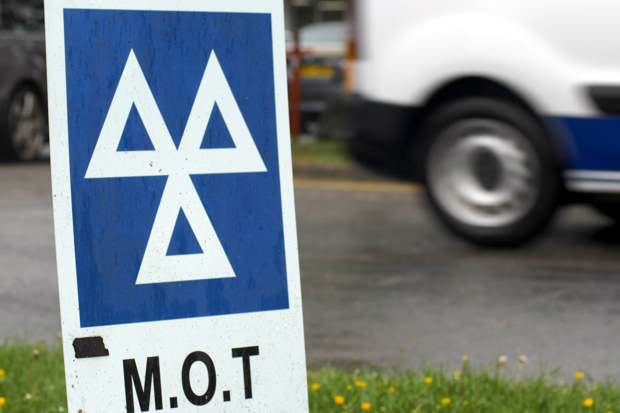
The number-one reason for cars failing their MoT isn't a complex mechanical disaster – it's illegal tyre tread.
Cargarages.co.uk, which allows you to compare local garages and check you car for model-specific problems, has analysed over 559 million UK MoT test records from the DVSA, covering every test from 2005 to 2024.
Tyres top the chart
Tyre tread depth came out as the single most common reason that cars fail their MoT, with 8% of all failures. That equates to a staggering 33 million cars over the past 20 years caught for the same fix.
A garage will give you an advisory on your MoT once the tread depth reaches 3mm, with the minimum required tread depth to pass being at least 1.6mm deep within the central three-quarters of the breadth of tread and around the entire outer circumference of the tyre.
Coming in runners-up spot is worn suspension joints and bushes, which are responsible for 32 million MoT failures over the last two decades – and are something most driver will never check.
Rounding out the top three is sub-standard wiper blades, which are cheap fix but have still caused 26 million cars to fail their MoTs.
Top 10 reasons cars fail the MoT
- Tyre tread depth below limit 8.05%
- Suspension joint or bush worn 7.77%
- Wiper blades deteriorated 6.27%
- Number plate lamp not working 5.66%
- Tyre condition 5.51%
- Stop lamp not working 4.69%
- Brake performance below minimum 4.41%
- Brake hydraulic component worn 4.01%
- Windscreen washer not working 3.46%
- Brake pads or linings worn 3.35%
MoT fails falling
Despite the numbers of cars failing MoTs over the past 20 years being significant, the failure rate is actually improving. DVSA data suggests that 2009 was the worst year on record, with 40.5% of the 26.4 million cars tested failing to pass, falling to 28.4% of the 34.2 million cars tested in 2024 not making the grade.
