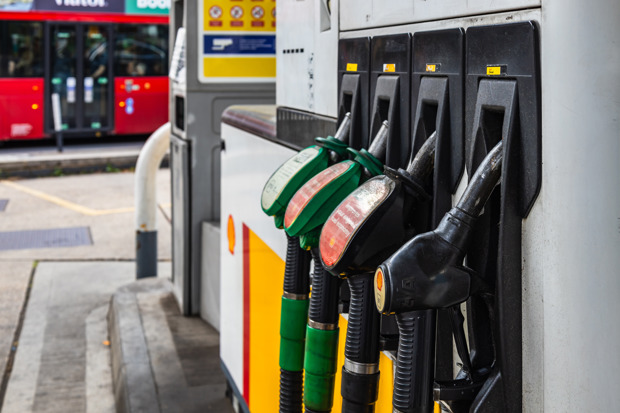
How a 60% surge in fuel forecourt theft is quietly hiking your pump prices
Drivers fleeing petrol forecourts without paying is on the up, with East London, Glasgow, Manchester, Leeds and Birmingham proving the most common for drive-offs.
While petrol and diesel costs are finally showing signs of a retreat from their mid-April peaks, law-abiding motorists are being warned they’ll still foot the bill, as retailers hike margins to claw back the cost of stolen fuel.
Data from Pay My Fuel shows that stealing fuel is up 62% compared with a year ago, with rising fuel prices caused by the US-Israel war with Iran central to the rise.
Pay My Fuel has monitoring systems on 1400 UK forecourts and says that the number of weekly thefts from an average forecourt is up from 2.1 in March 2025 to 3.4 in March this year. The average value of the fuel taken has risen by 46% over the same period.
Anyone witnessing fuel theft has been encouraged to contact the police, as long-term rises in fuel drive-offs are likely to lead to further increases in fuel prices as garages account for losses.
With drive-offs on the rise, more retailers are switching to 'Pre-Pay' after dark. Don't take it personally if the pump doesn't click on immediately — it’s a symptom of a wider crisis that is costing the average forecourt thousands every month.
Fuel prices starting to fall
When the war began on 28th February, RAC figures show the average price of a litre of petrol in the UK was 132.83p, with diesel costing 142.38p. This figure peaked on the 15th April at 158.31p for petrol - up 19.2% - and 191.54p for diesel - an increase of 34.5%.
However, the days of paying £15-£30 more for a tank of fuel could be on the turn, depending on how the conflict evolves, with prices dropping slightly to 157.66p for petrol and 190.48p for diesel as of 20th April.
"The RAC's analysis of wholesale data shows that the drop ought to accelerate this week, as more retailers buy in new supply at lower costs," says RAC head of policy Simon Williams.
EV sales on the up
March 2026 was the best month yet for new EV registrations. Of the 380,627 cars registered,196,059 were PHEVs, hybrids or EVs.
A combination of strong finance incentives and the cost of fuel means full EV sales were up 24.2% to 86,120 in March.
However, the EV market share is 22.4% year-to-date, which is short of the 33% demanded for the government's ZEV mandate for 2026.
Industry experts are calling for an urgent review of the mandate, as figures show battery costs are more than 30% higher than expected in 2026. Industrial energy prices are also around 80% above 2021 levels, while public charging can cost over 140% more than five years ago.
Ask HJ
Should I buy petrol, diesel or electric?
I am confused. I am looking to change my nearly 10 year old petrol Kia Venga but am not too sure which route to take.
With the current issues in the world fuel at my local petrol stations is out of stock many days. I have also read that in London soon it might not be possible to purchase diesel fuel due to diesel vehicles not entering London.
So I personally feel I am being pushed to electric vehicles only. Do you have any ideas/advice of what route the country is going?
It is completely understandable that you feel pushed toward an EV. Between shifting government deadlines and the current spikiness in fuel supplies, the landscape for a petrol car owner has become quite stressful. There is no official ban on selling diesel fuel in London. However, you aren't imagining things — industry reports in early 2026 suggest that as demand for diesel cars collapses (due to ULEZ and high fuel prices), some smaller urban forecourts are starting to phase out diesel pumps simply because they aren't profitable to maintain.
Diesel isn't banned but it is becoming harder to find in the capital. For a petrol Kia Venga driver this shouldn't affect you directly, but it does signal a shift in how the industry views fossil fuels. The out of stock signs you’re seeing at your local stations in early 2026 are largely due to temporary supply chain disruptions caused by the ongoing conflict in the Middle East, rather than a permanent shortage of petrol itself. While prices have spiked (petrol often sitting above 150p and diesel near 177p), the supply is technically stable.
The UK is currently in a transition decade. 2030 will see the ban on the sale of new purely petrol and diesel cars returns (reinstated from the 2035 delay). In 2035 the ban on new hybrid cars comes into force. Post-2035 you can still legally drive and buy second-hand petrol cars. They aren't going to be taken off the road overnight
Since you’re coming from a Kia Venga (a practical, high-riding small car), if you are looking for a reliable transition, the safe hybrid route offers no range anxiety and requires no plugging in — cars like the Toyota Yaris Cross or Honda Jazz use petrol but are much more efficient than your current Venga.
If you want to bridge the gap you can go for a PHEV option, such as the Kia Niro PHEV, which can cover 40–60 miles on electric power for local trips while retaining a petrol engine for longer journeys. Alternatively, you could take the full jump EV with a Kia EV3 or Hyundai Kona Electric, but only if you can charge from home.
Our advice? You don't have to go 100% electric yet, especially if the upfront cost or charging at home is a concern. We'd go for a hybrid like the Honda Jazz or Toyota Yaris Cross.
Answered by David Ross
More Questions