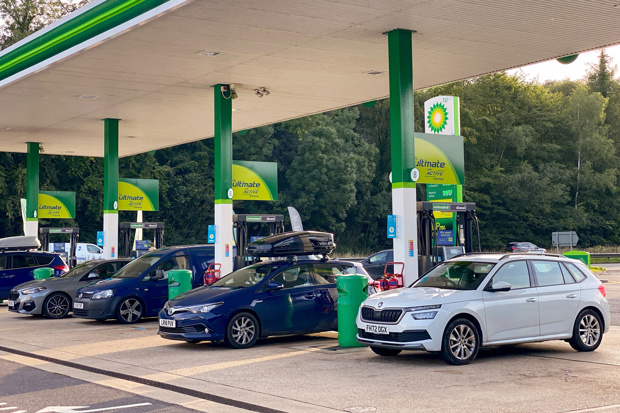
Fuel price pain: 43 days of hikes finally stall as diesel hits 191.5p
After a record-breaking 43 straight days of price hikes at the pumps, UK drivers might finally be getting a breather.
Data from the RAC shows that the relentless upward march of fuel costs is finally losing momentum. Since the end of February, motorists have watched helplessly as the cost of a standard fill-up spiraled out of control.
Unleaded has jumped from 132.83p on February 28th to 158.27p today — a 25p-per-litre sting in just six weeks.
Diesel is even bleaker, especially for high-mileage drivers, with prices sky-rocketing from 142.38p to a staggering 191.50p over the same period.
However, Simon Williams, head of policy at RAC, says while pump prices have technically risen for a record 43 straight days, the increases have almost ground to a halt. However, prices are still subject to fluctuate, based on the evolving situation in the Middle East:
"With dated Brent crude under $100 a barrel for the last three trading days, there's now scope to see prices finally starting to go the other way.
"But, as always, it's a highly volatile situation with much depending on what happens with the Strait of Hormuz. And, if the oil price was to go back up again this week, any hopes of slight forecourt reductions will inevitably disappear."
While the national average tells one story, the reality on the ground remains fractured. Research indicates a widening gap between supermarket forecourts and branded motorway service stations.
Supermarket fuel still cheaper, but only just...
On average, supermarkets remain around 5p per litre cheaper than the national average, though this margin has tightened significantly since the 2025 fuel duty adjustments.
For diesel drivers, the situation is particularly acute. The nearly 33p-per-litre premium over petrol is one of the largest gaps ever recorded, driven largely by the UK's reliance on imported middle-distillate fuels which have been heavily impacted by recent shipping disruptions in the Red Sea.
The Strait of Hormuz factor is the wildcard. If tensions escalate further, analysts warn that £2.00 per litre for diesel is no longer a doomsday scenario but a distinct possibility by the summer.
However, if Brent Crude stays under the $100 mark, the lag in wholesale pricing should finally reach the pumps by next week, offering a long-overdue, if slight, reduction.
Ask HJ
Should I buy petrol, diesel or electric?
I am confused. I am looking to change my nearly 10 year old petrol Kia Venga but am not too sure which route to take.
With the current issues in the world fuel at my local petrol stations is out of stock many days. I have also read that in London soon it might not be possible to purchase diesel fuel due to diesel vehicles not entering London.
So I personally feel I am being pushed to electric vehicles only. Do you have any ideas/advice of what route the country is going?
It is completely understandable that you feel pushed toward an EV. Between shifting government deadlines and the current spikiness in fuel supplies, the landscape for a petrol car owner has become quite stressful. There is no official ban on selling diesel fuel in London. However, you aren't imagining things — industry reports in early 2026 suggest that as demand for diesel cars collapses (due to ULEZ and high fuel prices), some smaller urban forecourts are starting to phase out diesel pumps simply because they aren't profitable to maintain.
Diesel isn't banned but it is becoming harder to find in the capital. For a petrol Kia Venga driver this shouldn't affect you directly, but it does signal a shift in how the industry views fossil fuels. The out of stock signs you’re seeing at your local stations in early 2026 are largely due to temporary supply chain disruptions caused by the ongoing conflict in the Middle East, rather than a permanent shortage of petrol itself. While prices have spiked (petrol often sitting above 150p and diesel near 177p), the supply is technically stable.
The UK is currently in a transition decade. 2030 will see the ban on the sale of new purely petrol and diesel cars returns (reinstated from the 2035 delay). In 2035 the ban on new hybrid cars comes into force. Post-2035 you can still legally drive and buy second-hand petrol cars. They aren't going to be taken off the road overnight
Since you’re coming from a Kia Venga (a practical, high-riding small car), if you are looking for a reliable transition, the safe hybrid route offers no range anxiety and requires no plugging in — cars like the Toyota Yaris Cross or Honda Jazz use petrol but are much more efficient than your current Venga.
If you want to bridge the gap you can go for a PHEV option, such as the Kia Niro PHEV, which can cover 40–60 miles on electric power for local trips while retaining a petrol engine for longer journeys. Alternatively, you could take the full jump EV with a Kia EV3 or Hyundai Kona Electric, but only if you can charge from home.
Our advice? You don't have to go 100% electric yet, especially if the upfront cost or charging at home is a concern. We'd go for a hybrid like the Honda Jazz or Toyota Yaris Cross.
Answered by David Ross
More Questions