
2026 Mercedes-Benz GLS: High-tech facelift for the ‘S-Class of SUVs’

Thu, 02 Apr 2026
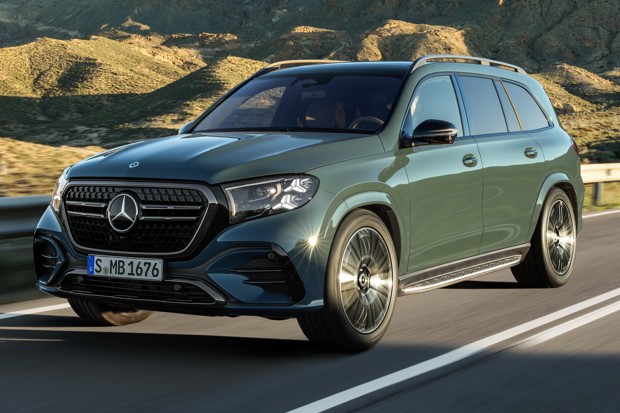
- Flagship large SUV gets a facelift
- Revised looks with larger grille
- Upgraded infotainment system
- Electrified engine line-up and new options
Mercedes-Benz has given its flagship large SUV, the Mercedes GLS, a facelift, with revised looks, uprated engines and even more luxury options. The GLS is essentially the SUV version of the S-Class limousine, and its update follows closely that of the saloon.
Upgrades include overhauled styling, electrification of the engine range to improve fuel economy and a boost in the already-very-high interior quality, with new materials and the latest Mercedes infotainment system.
All these improvements should keep the GLS competetive against other high-end large SUVs, like the BMW X7 and the Range Rover.
2026 Mercedes GLS price and release date
UK specifications for the new GLS haven't been confirmed yet and neither has pricing or a firm release date. We'd expect the car to land on these shores in the summer and prices are likely to stay broadly similar to the existing model, which starts at just under £111,000.
2026 Mercedes GLS styling, interior and technology
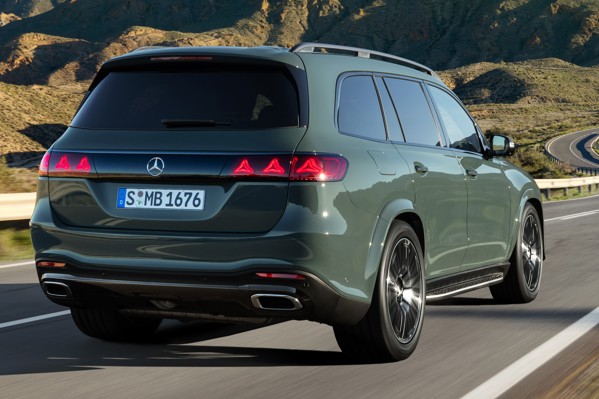
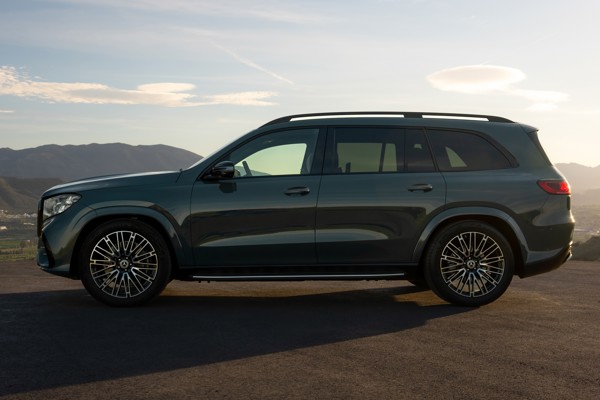
The 2026 Mercedes GLS features a revised exterior that emphasises its position as the "S-Class of SUVs". It has a larger radiator grille with a chrome frame and, as is de rigeur in 2026, contour lighting. An upright Mercedes-Benz star is mounted on the bonnet, with optional illumination available in certain markets. The bumper has also been redesigned.
The headlights have been upgraded with a 40% larger light field than the existing model while using half the energy. Customers can personalise the exterior with new paint finishes like Dark Petrol flat or Manufaktur Patagonia Red Metallic. The GLS also now comes standard with a large panoramic roof.
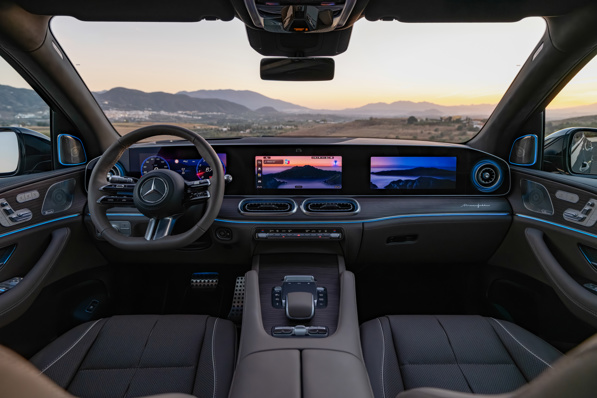
Inside, the latest MBUX Superscreen, which integrates three 12.3-inch high-resolution displays beneath a single glass surface, is included as standard across the range.
The system runs on MB.OS, which Mercedes describes as a supercomputer with artificial intelligence that enables the car to learn and evolve while staying updated via over-the-air software enhancements. There are a few design tweaks with round air vents instead of rectangular.
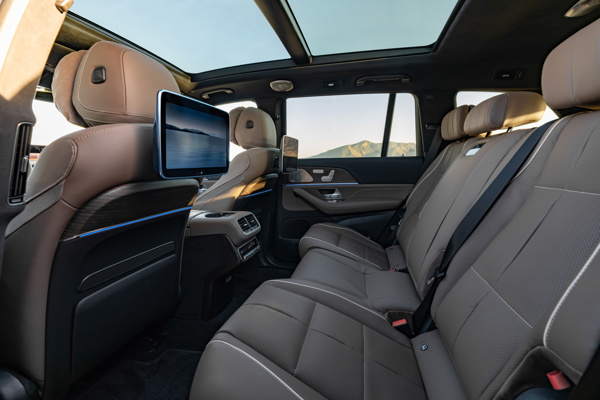
The GLS is a seven-seater as standard, with three rows of fully electrically adjustable seats. There's a new Beech Brown interior colour option plus new trims including open-pore walnut and light-coloured aluminium. An Energizing Air Control system features an electric cabin air filter that can renew the interior air every 90 seconds or so.
The front seats now include a vibration function for deep-tissue massage on the go. Passengers in the second and third rows might be interested in the new Rear Comfort Package Plus, which includes multi-contour seats with massage functions, electric sun blinds plus a dedicated five-zone air-conditioning system.
The rear also features the MBUX entertainment system with dual 11.6-inch screens and removable remote controls for adjusting vehicle settings. You can also use in-car video conferencing facilities thanks to built-in cameras.
Mercedes says that the third row will accommodate adults up to 1.94 metres tall. It includes its own USB charging ports and seat heating.
2026 Mercedes GLS engine, performance and fuel economy
As in the S-Class, Mercedes has leant heavily on electrification for the revised GLS, with a 48-volt mild-hybrid system attached to every engine in the range to save fuel.
The V8 engine in the GLS 480 4Matic (which may not come to the UK) has been modified for better efficiency and an improved response, with a resdesigned turbo and fuel injection system giving more power — up to 537PS and 750Nm of torque.
The six-cylinder GLS 450 4Matic has 12% more torque, up to 560Nm while the diesel models — the GLS 350d and the GLS 450d 4Matic — have an electrically heayted catalyst, which allows the exhaust system to get up to peak operating temperature much faster.
The engine block and head are made of aluminium to reduce weight and improve handling. Insulation throughout the running gear has also been improved.
There have also been changes to the car's drivability, with a new damper control system that works with the air suspension to automatically adjust damping to deal with hazards like road bumps, thanks to information from the cloud using Car-to-X communication from other vehicles.
A system called E-Active Body Control analyses the surroundings 1000 times a second and individually controls spring and damper forces on each wheel.
