
5 reasons the BMW i3 might be the EV you've been waiting for

Thu, 26 Mar 2026
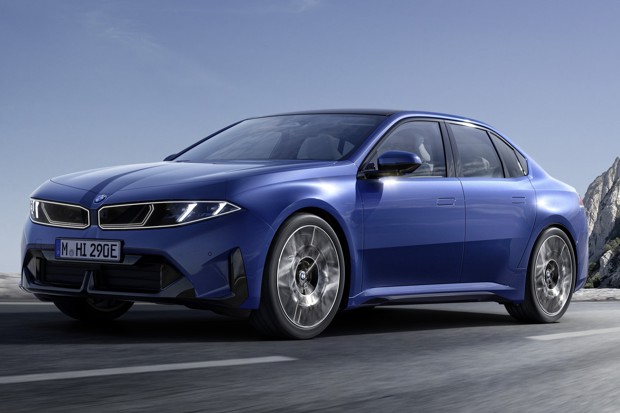
The new BMW i3 has landed, and the headline numbers are hard to ignore – 559 miles of range and 249 miles of charge in 10 minutes would make it one of the rangiest and fastest-charging cars on sale when it arrives on British shores.
But bold claims need substance behind them. We sat down with the engineers that have put the i3 together and dived deeper into the technology behind the new 2026 BMW i3. Here's why it could well deserve a place on your shortlist.
1. The range should hold up in the real world
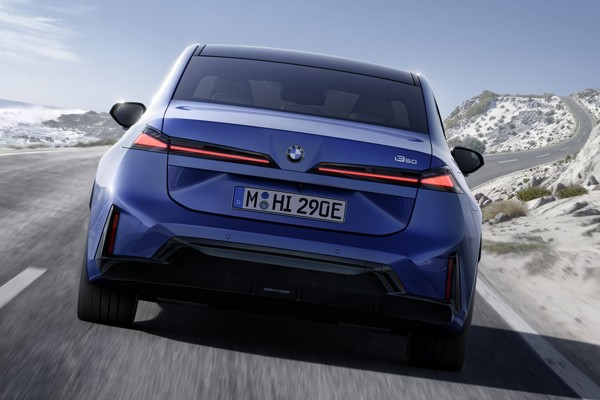
Official WLTP range figures can be notoriously flattering, and most electric car buyers know to treat them with scepticism. The BMW i3's 559-mile claim is no different – real-world results will vary depending on "speed, temperature, driving style, tyres, and many other factors," says Thomas Engelhardt, BMW's senior vice president of high-voltage battery development and charging.
But as Englehardt points out, a prototype version of the BMW iX3, with which the i3 shares BMW's Gen 6 eDrive battery technology, has already completed more than 620 miles on public roads, in real traffic, without stopping to charge. That's no lab result, it's a real car, on real roads, beating the official range figure, which on the iX3 is a "mere" 500 miles – less than the BMW i3. The technology clearly has headroom to spare, at least in certain situations.
For most UK drivers, the i3's range translates to chraging roughly once a week under normal use. Range anxiety, for the most part, should not be a concern.
2. Charging works like a fuel stop
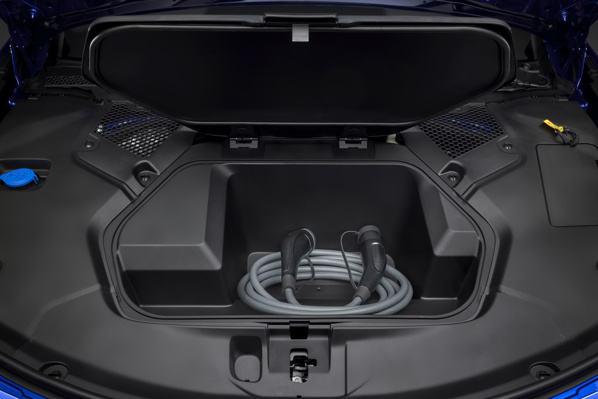
Even leaving the range aside, the charging story along would make the BMW i3 stand out. Adding 249 miles in 10 minutes is not just an impressive number, it has the potential to change the entire psychology of owning an electric car.
As Norman Wiebking, the BMW i3's project leader, says: "If you have good charging infrastructure and 249 miles in 10 minutes, that may be enough for a week's driving. It is like going to the fuel station." Pull in, grab a coffee, leave with a full week's worth of range. That's a fundamentally different proposition to the half-hour-plus charging stops that many current EV owners plan around.
BMW has also integrated charging directly into the i3's sat-nav, which predicts charger availability and plans your stops automatically. The idea is that you never have to think about it – the car does it for you.
3. The i3 drives like a BMW, not just an EV
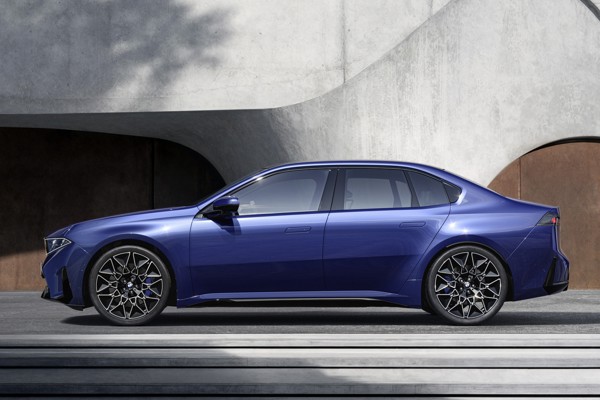
This is arguably the most important reason on the list, at least if you buy into BMW's "Ultimate Driving Machine" marketing. BMW are meant to be fun to drive, and the 3 Series has, over more than 50 years, built up a reputation to match the tagline.
Many electric cars are efficient, practical, and comfortable, but not that exciting to drive – even the ones with lots of straight-line oomph. The BMW i3 has been engineered specifically to avoid that.
The key is a system that BMW labels Heart of Joy, which uses the electric motors themselves as an active part of the handling. Rather than relying solely on brakes to manage cornering, the i3 uses its electric motors in a way no mechanical system could match for speed or precision.
"We use the motors as part of the driving dynamics system," Wiebking explains. "We can vary the torque distribution while driving through a corner so that the car always remains stable. It means it is not always necessary to use the brakes in the same way."
This isn't a system that can be retrofitted to a petrol car. As Wiebking confirms, Heart of Joy "is only possible in an electric car" – meaning the i3 is not just an electrified 3 Series, it should be, in at least one respect, a better driver's car than the petrol version.
4. There will be a version to suit your budget
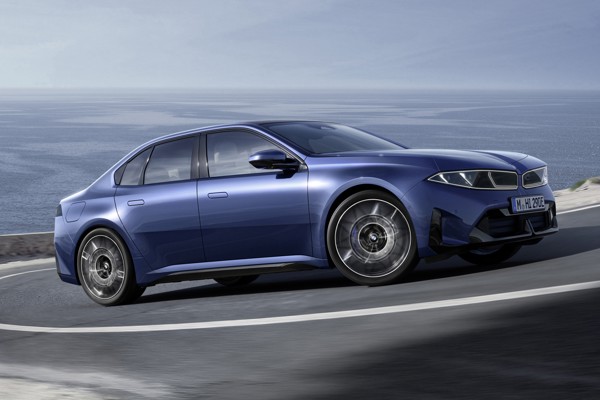
The BMW i3 launches in twin-motor, all-wheel-drive form, which will likely be one of the most expensive configuration. But that is not the whole story. Engelhardt explains that the battery housing is identical across all variants: "We can use different numbers of cells and different cell types," he says, meaning BMW can tune each version for a different balance of range, performance, and cost.
Wiebking confirmed that further powertrain options are coming, strongly hinting at a single-motor, rear-wheel-drive version that would bring the price down considerably. If you don't need 559 miles in one go, and would rather save money, there should be an BMW i3 for you, too.
The battery tech also means you're not buying a lesser car if you choose a lower-spec version, because the platform, the handling, the technology are all the same. Only the powertrain changes – any suspension upgrades aside.
5. The price gap with petrol is narrowing
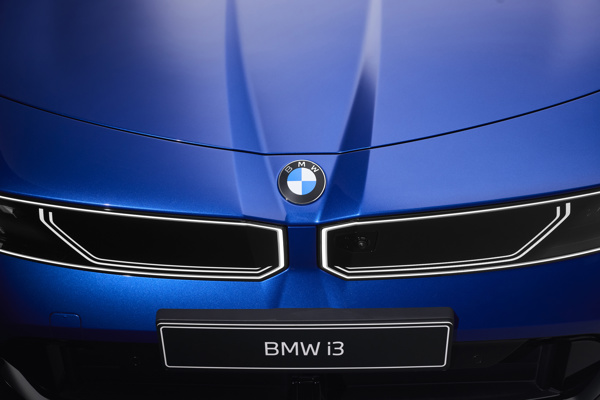
One of the biggest barriers to EV ownership remains cost. Electric cars usually carry a significant premium over their petrol equivalents, and for many buyers that gap is simply too wide. The i3 may not close it entirely, but there is genuine reason for optimism.
Because the i3 has been engineered from scratch as an EV – rather than adapted from an existing petrol platform like the current i4 – BMW has been able to strip out cost at a fundamental level. Wiebking will not be drawn on figures, but he is direct: "With the new technologies and the step forward we have made, I am pretty sure we are taking a good step into the future" on pricing.
It is not a promise of price parity, but it is an engineer's quiet assurance that things are moving in the right direction.
We won't have a chance to drive the BMW i3 for a while yet, and there are still plenty of unknowns about how it will function in the real world. UK pricing and delivery timelines have not been announced, though German deliveries are expected before the end of the year.
We'll pass final judgement on the i3 once we've got behind the wheel, but BMW's engineers suggest that they are very pleased with what they've achieved with the flagship version of the new 3 Series – the company's most popular car worldwide. If you're considering an EV purchase in the next year or two, the i3 is definitely one to keep a very close eye on.
