
Do these rally car shots show the new Toyota Celica?

Mon, 02 Mar 2026
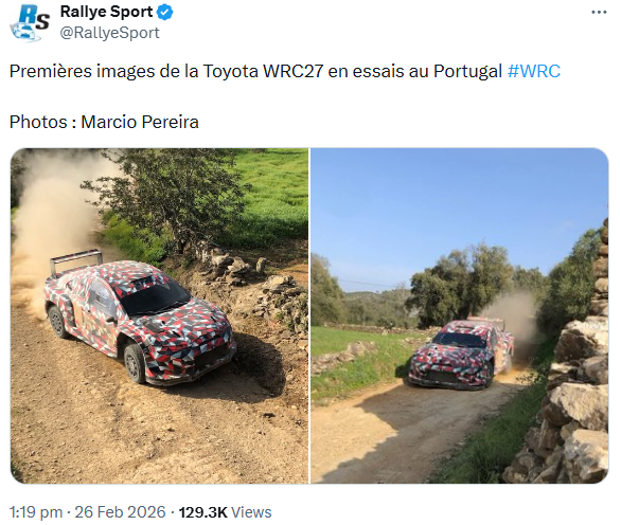
- Toyota's 2027 World Rally Championship car spotted testing in Portugal
- Coupe bodystyle hints at the look of the new Celica
- Toyota Celica won the WRC in 1993 and 1994
- Toyota has already confirmed that the Celica will return
Coud this camouflaged rally prototype give us our first glimpse of the forthcoming new Toyota Celica?
Toyota confirmed in 2024 that it would reintroduce the classic badge, and now photos published by French website Rallye-Sport.fr have shown a new coupe rally car testing in Portugal.
The all-new car is set to debut in the World Rally Championship next year, and it doesn't take a huge leap of faith to link the development of a new rallying coupe with the history of the Celica, which won the WRC in 1993 and 1994.
The photos, taken by Marcio Pereira, show the car in Toyota's testing livery, which disguises the bodywork somewhat with the usual rally arches, diffuser and big wing, but gives us a general idea of what a future production coupe could look like.
Nothing has been confirmed by Toyota yet, so this is pure (informed) speculation. But wouldn't it be nice to have a new Celica with bona-fide rally credentials back in showrooms?
We'll update this article with more information about the new Toyota Celica when it becomes available.
