Polestar 4 vs Porsche Macan Electric

Thu, 12 Feb 2026
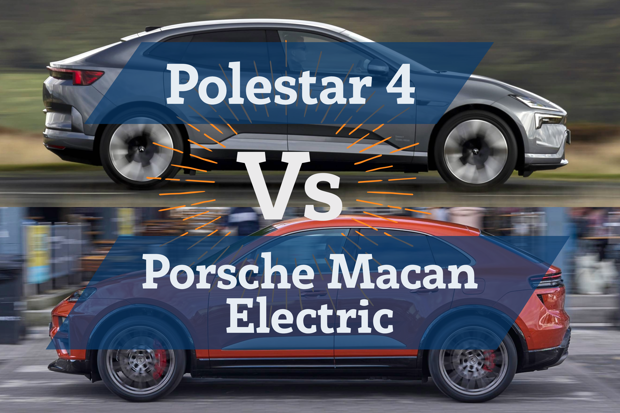
The Polestar 4 and the Porsche Macan Electric are two cars that arrive at similar destinations but come from very different directions.
They’re two premium electric SUVs with strong performance, long battery ranges and high-end interiors, but their priorities are streets apart. One is minimalist, design-led and aggressively priced for this type of car, while the other leans heavily on driving dynamics, exquisite engineering and brand cachet forged over decades.
If you’re a potential buyer of a premium electric vehicle (EV), the decision between a Polestar 4 and a Porsche Macan Electric could be an interesting one to make. So, how do they stack up once you start digging into the details?
Polestar 4 vs Porsche Macan Electric: Stats at a glance
| Polestar 4 | Porsche Macan Electric | |
| Battery range | Up to 385 miles | Up to 398 miles |
| Charging speed (from 10-80%) |
30 minutes | 21 minutes |
| Performance (0-62mph) |
Up to 3.7 seconds | Up to 3.3 seconds |
| Boot space | 526 litres | 540 litres |
| Dimensions | 4.8m long, 2m wide | 4.78m long, 1.95m wide |
| Pricing | £55,750 | £68,600 |
Polestar 4 vs Porsche Macan Electric: Motors and driving range
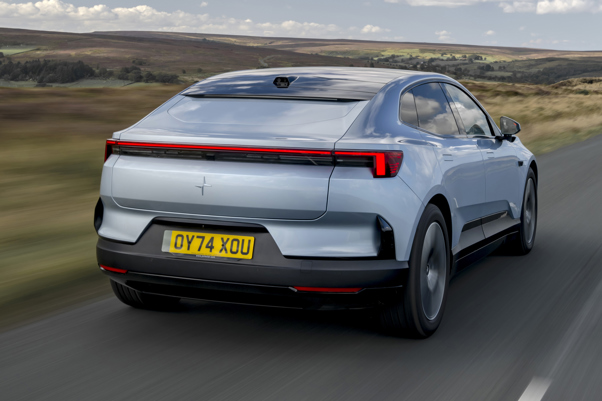
Both the Polestar 4 and the Porsche Macan Electric have impressive battery ranges, although there’s more to the story than just the headline figures.
The Polestar 4 uses a 100kWh battery (94kWh usable) across all versions. The most efficient model is the Long Range Single Motor, which drives only the rear wheels and, according to official WLTP figures, can give you up to 385 miles from a single charge. Step up to the Long Range Dual Motor and that range drops to 367 miles, while cars fitted with the Performance Pack sacrifice range for oomph, dropping the reach to 310 miles.
The Macan Electric also has a 100kWh battery, of which 95kWh is usable, but the range varies less dramatically depending on the variant. You’ll get up to 398 miles in the entry-level, rear-wheel-drive model, while adding all-wheel-drive with the Macan 4 drops that to 379 miles. The more powerful Macan 4S manages 376 miles, the Macan GTS up to 362 miles and the range-topping Macan Turbo S promises up to 366 miles or range.
With all that factored in, then, the Macan is the stronger performer across all variants, but the clear message is that if you value range above all else, go for the more entry-level models to maximise your mileage.
Polestar 4 vs Porsche Macan Electric: Charging times
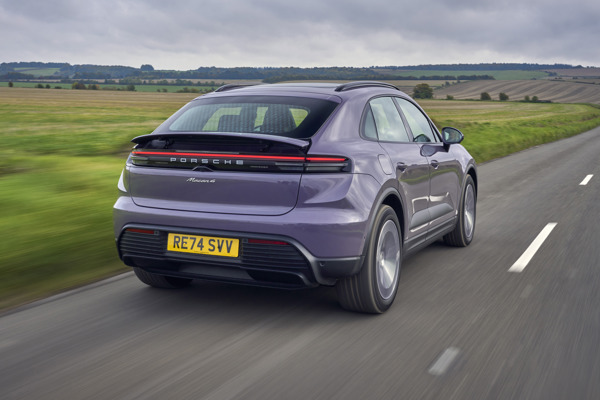
This is one of the clearest technical differences between the Polestar 4 and the Porsche Macan Electric.
The Polestar 4 is built on a 400-volt electrical architecture, and supports DC rapid charging at up to 200kW. That’s quick – you’ll get a 10% to 80% charge in around half an hour with a suitable charger. For AC charging, the Polestar 4 supports 11kW as standard and up to 22kW when you specify the Plus Pack.
In contrast, the Macan Electric rides on an 800-volt architecture, which allows faster rapid charging at up to 270kW. Porsche quotes the 10% to 80% charge in 21 minutes, which puts it right up with the fastest-charging SUVs currently on sale. However, its AC charging is only rated at 11kW.
In practical terms, both cars are easy to live with, but the Porsche’s faster peak DC charging will appeal to drivers who regularly rely on public rapid chargers.
Polestar 4 vs Porsche Macan Electric: Practicality
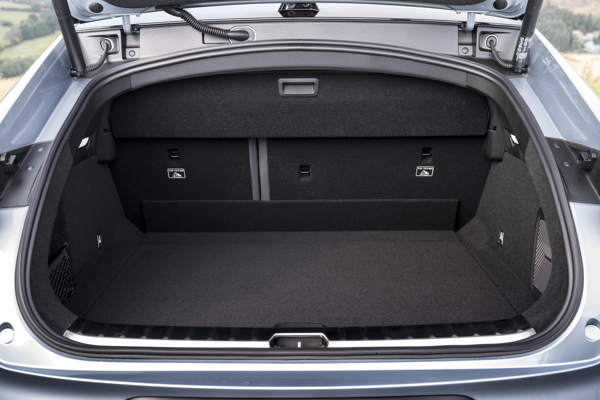
Despite its coupe-SUV styling and lack of a rear window, the Polestar 4 is impressively spacious inside. Boot capacity stands at 526 litres, and rear passenger space is generous thanks to the long wheelbase and flat floor. Headroom feels slightly more enclosed than in a traditional SUV, but not restrictive.
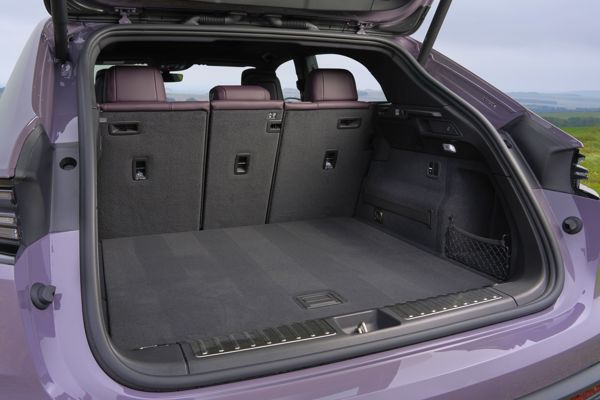
The Macan Electric has a more conventional SUV shape and edges ahead on outright practicality. Boot capacity is 540 litres, and the more upright rear design gives a slightly airier feel in the back seats. It also offers more flexibility in rear seat folding configurations. Both cars feature front storage compartments, but the Porsche’s is significantly bigger – 84 litres compares to 15 litres in the Polestar – which adds extra everyday convenience.
Neither car feels compromised as a family vehicle, but the Macan’s packaging gives it a small advantage if space is a top priority.
Polestar 4 vs Porsche Macan Electric: Quality
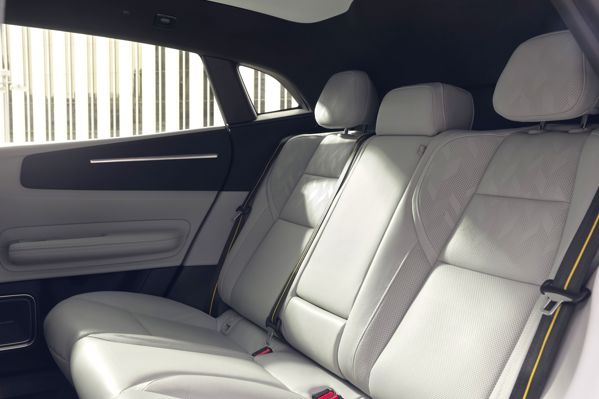
The interior quality of these cars highlights the philosophical divide between them.
The Polestar 4 majors on minimalism and sustainability, with a clean, uncluttered dashboard and extensive use of recycled and bio-based materials. It’s modern, well-assembled, with a calming, design-led atmosphere. Some surfaces prioritise texture and appearance over actual softness, but the overall quality is consistent with a car at this price point. It looks the part, even if it doesn’t quite feel as sumptuous.
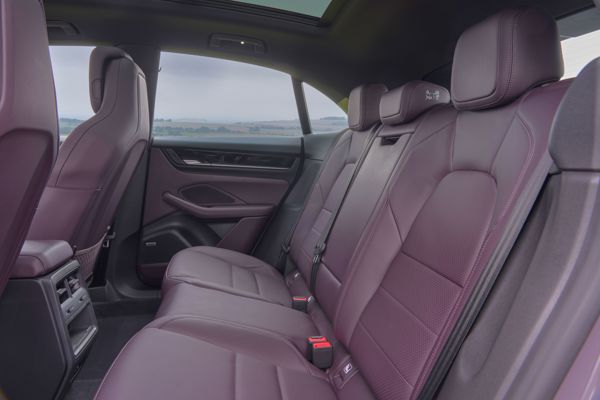
The Macan Electric has a more traditional premium feel, with materials that are richer to the touch, switchgear that feels heavier and more substantial, and the overall fit and finish is unmistakably Porsche. It lacks the futuristic, stand-out design of the Polestar 4, but feels more overtly expensive when you interact with it.
In short, if you want style and modernity then the Polestar 4 has the edge, but for solidity and a higher sense of perceived luxury, the Porsche is the one to go for.
Polestar 4 vs Porsche Macan Electric: Infotainment
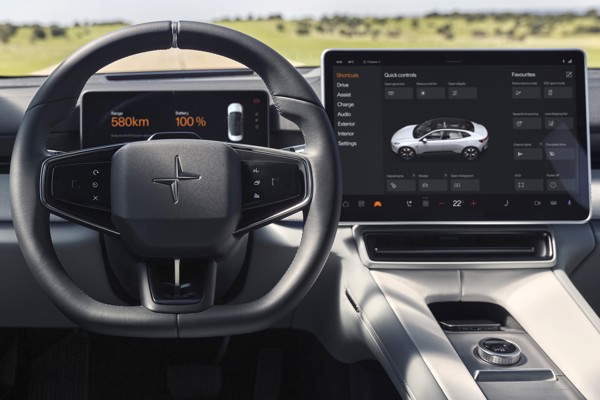
Most of the Polestar 4’s functions are controlled through a large, landscape-mounted touchscreen running Android Automotive, with Google Maps and various native apps built in. It’s got a clean, fast and visually impressive interface, but it relies heavily on the screen with very few physical controls.
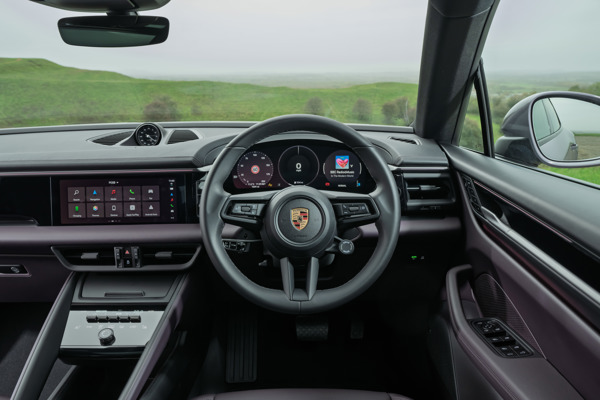
Porsche takes a more layered approach in the Macan Electric, with a central touchscreen and instrument cluster (plus an optional passenger display), but with more physical controls for key functions. The Porsche system feels polished and intuitive, and the actual controls mean it’s easier to operate on the move than the Polestar’s more minimalist setup.
All that said, both systems are very good, but they suit different tastes. The Polestar 4 nails it for visual simplicity, while the Porsche Macan Electric is the best option for ergonomics.
Polestar 4 vs Porsche Macan Electric: Performance
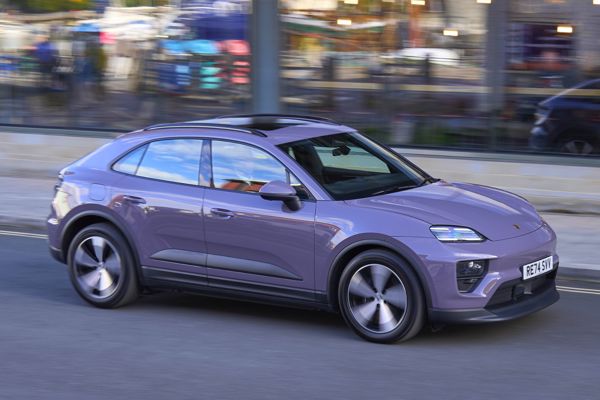
This is the area that the Macan Electric – and indeed Porsche generally – plays its ace. It’s by some margin the more dynamically accomplished car in terms of the driving experience. The steering is sharper, body control is tighter, and there’s more of a sense of driver involvement.
The base rear-wheel-drive (RWD) Porsche Macan Electric produces 360PS and reaches 62mph in around 5.7 seconds. The Macan 4 improves traction and cuts that to about 5.2 seconds, while the Macan 4S delivers 516PS and a 4.1-second sprint. Above that, the GTS and Turbo versions move into genuinely rapid territory, with the Turbo managing around 3.3 seconds to 62mph.
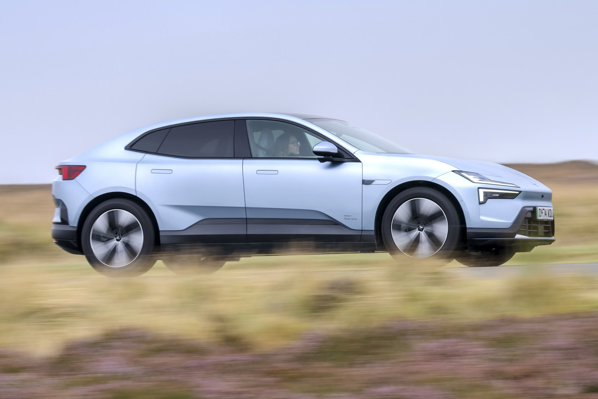
The Polestar 4 offers fewer variants, but still spans a wide performance range. The Single Motor RWD version focuses on efficiency, with around 272PS and a 0 to 62mph time of roughly 7.1 seconds. The Dual Motor AWD version is dramatically quicker, producing 536PS and sprinting to 62mph in around 3.7 seconds. It’s fast, for sure, and stable and confident through the corners, but it doesn’t feel alive like the Macan.
Polestar 4 vs Porsche Macan Electric: Size
The Polestar 4 is one of the larger vehicles in its segment in terms of footprint, even if it doesn’t look like a traditional SUV. It’s 4,840 mm long, 2,008 mm wide (without mirrors) and 1,534 mm tall, and its coupe-like profile means it’s lower than many rivals. This improves aerodynamics and visual impact but can make it feel a fraction less commanding from the driver’s seat than a more upright SUV.
By contrast, the Porsche Macan Electric is a bit shorter and taller, in conventional SUV form. Its 4784mm long, 1954mm wide and 1623 high, giving it a slightly smaller footprint than the Polestar, while the taller stance gives it a more familiar SUV seating position.
Polestar 4 vs Porsche Macan Electric: Trims and variants
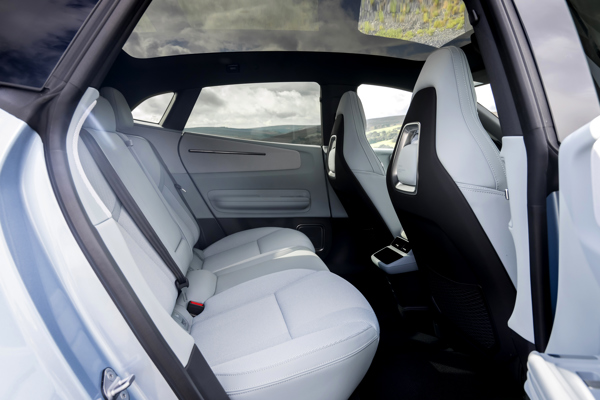
The two brands take different approaches to equipment and versions. If you’re buying a Polestar 4, you choose your level of power – essentially Single Motor or Dual Motor – and then tailor the car with option packs.
With the Macan Electric, the trim walk is essentially a ladder of increasingly powerful (and expensive) versions, with the equipment and chassis hardware ramping up as you climb.
On the Polestar 4, packs include the Pilot Pack with its various driver assistance systems, and the Plus pack with its Harman Kardon sound system and head-up display. The Pro pack adds 21-inch wheels with gold valve caps and striped seat belts, while the Performance Pack features 22-inch wheels, Brembo brakes and upgraded suspension, as well as gold seatbelts. The Prime pack bundles together the Pilot and Plus packs at a small discount, and adds rear tinted windows.
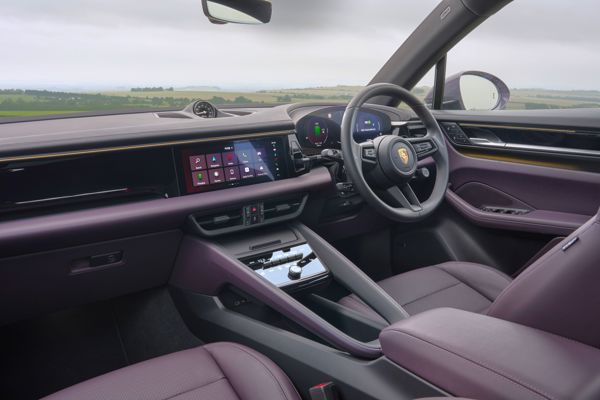
The Porsche range starts with the base Macan Electric and jumps up to the 4, with all-wheel-drive, and the 4S with more advanced air suspension. The GTS and Turbo models have the likes of sport air suspension with Porsche Active Suspension Management (PASM), Porsche Torque Vectoring Plus and a 10mm lower ride height for seriously enhanced handling.
Porsche also offers myriad individual options to customise your car, from upgraded seats, wheels and upholsteries to styling packs, or even the Lux Package, which adds a Bose surround sound system, matrix LED headlights, panoramic roof and more. Such is the range of the options, the “standard” car is actually rather miserly in its features, but you can add just about anything you want. As long as you pay.
Polestar 4 vs Porsche Macan Electric: Pricing
Now, here’s the crux. Based on what you’ve read above, you’ll likely (and rightly) conclude that the Porsche Macan is the better car. But it starts at £68,600 for the rear-drive model, with the Macan 4 at £71,900 and higher-performance versions climbing rapidly beyond that. You’ll likely want to tick at least a few options boxes, and well-specified GTS and Turbo models can push far into six-figure territory.
The Polestar 4 starts at £55,750, with Dual Motor versions rising into the mid-£60,000s depending on options. Are those considerable savings worth the pay off? It’s not like the Polestar 4 is a bad car, it’s just that the Macan Electric is better. But is “better” worth potentially tens of thousands of pounds? That’s a question you’ll have to answer yourself.
Which one should you buy?
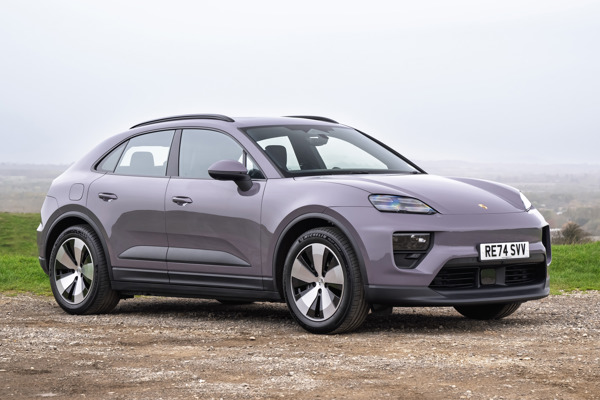
As is often the case with these comparisons, the answer to this question is “ it depends”. Both the Polestar 4 and the Porsche Macan Electric are excellent cars. If you’re a driving enthusiast, or value brand cachet, or you want the fastest possible charging speed, or simply have to have the best interior quality, then the Porsche Macan is the car to go for. It really is superb.
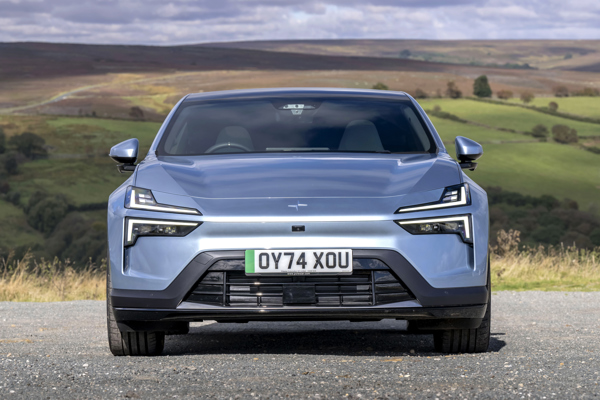
But there’s a lot to be said for the Polestar 4. For a start, it’s a large chunk more affordable, and has a bold design, excellent range and serious performance of its own. For the more value conscious, or those that like to consider the leftfield option, it’s very appealing.
More articles you might be interested in: