
BMW iX3 Review: Price, range and boot space

BMW iX3 Verdict

 Comfortable and fun to drive. Cabin is an impressive technological showcase. Driving ranges are the best we've yet seen.
 Could do with more physical buttons. Expensive options. Limited initial line-up.
Find out more about the BMW iX3
|
 Driven, tested and rated by:
 BMW iX3 at a glance:
- Body type: SUV
- Price range: £58,755 - £62,755
- Battery range: 421 - 500 miles
- Number of seats: 5 (2 Isofix)
- Boot capacity: 520 litres
- Insurance groups: 43-44
BMW iX3: Everything you need to know
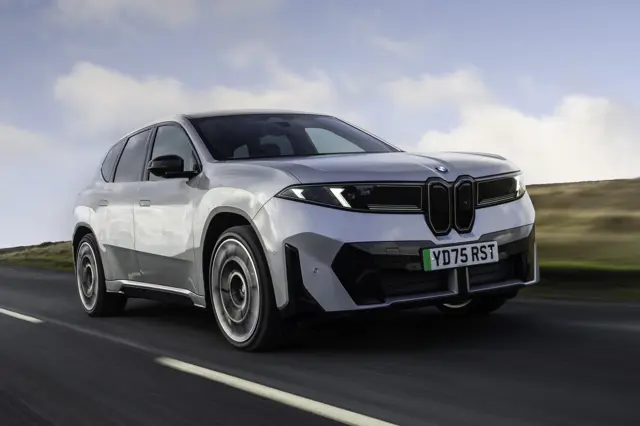
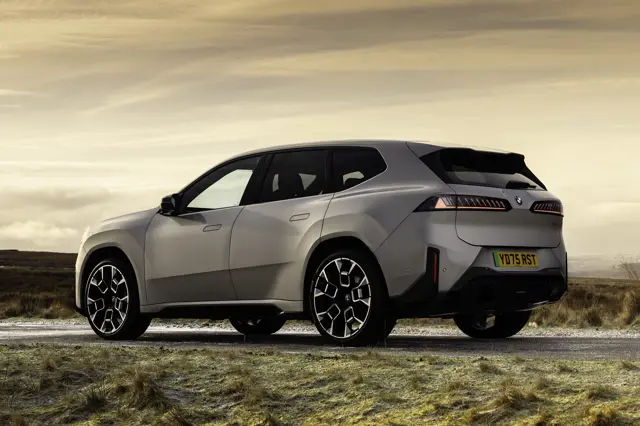
BMW calls the new iX3’s fresh styling theme Neue Klasse – "new class" to English speakers – paying homage to the brand’s reimagination of the same name back in the 1960s. That’s about the only aspect of this electric SUV that’s retrospective because everything else is designed to be of the moment, without being overtly divisive or glitzy.
In fact, there’s such a restraint to the way the BMW iX3 looks both inside and out, as to feel unlike a BMW of the past 20 years and more like those models wearing the blue and white roundel from before then when elegance was a watchword. An antidote to gaucheness if ever there was one.
It will sell alongside the still-young fourth-generation BMW X3 family SUV for the foreseeable, although given the radical appearance of the BMW iX3, we can’t help but wonder how swiftly demand for its combustion-engined sibling might tail off.
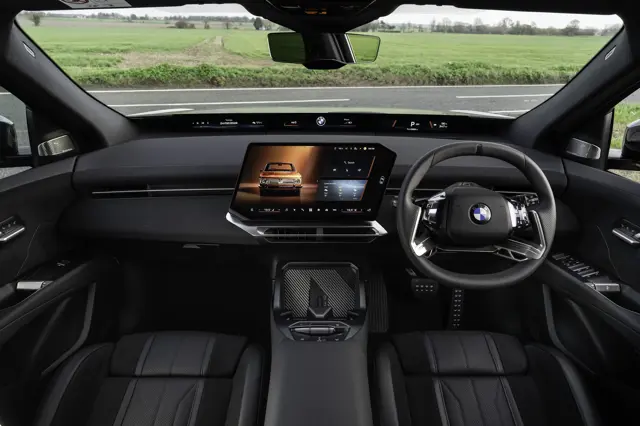
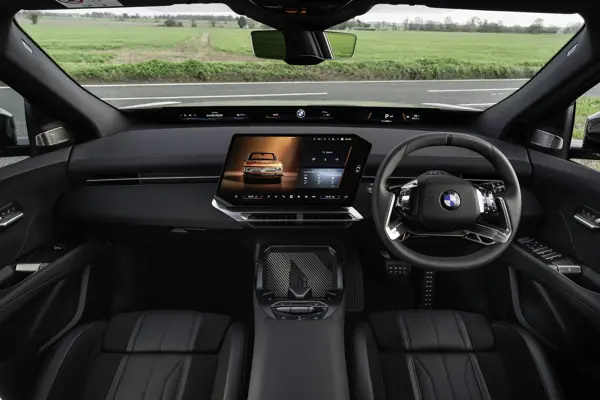
This theme continues inside the iX3, which doesn't look anything like any production BMW we've yet seen. It features BMW's new 'Panoramic Vision', which is a 40-inch screen stretching across the top of the dashboard and replacing a traditional instrument cluster.
Unlike the previous-generation BMW iX3 which was an EV version of the contemporary petrol- and diesel-fuelled X3, this Mk2 version rides on all-new, electric-car specific underpinnings with a different method for packaging the battery’s cells to enable them to store energy more densely.
How we tested the BMW iX3
We drove the BMW iX3 on a variety of roads in the UK, including urban areas, motorways and winding country lanes, with surfaces ranging from relatively smooth to significantly broken up.
We switched between the iX3's main driving modes and regenerative brake settings several times while testing the car, while also making the most of the available performance. We found the iX3 to be more fun to drive than we were expecting, while also remaining very comfortable. With 469PS available, it's also plenty fast.
We paid particular attention to the onboard technology, as it's so distinct from previous BMW models, and what you'll find in rival cars. We tried several different configurations for the Panoramic Vision screen, and also went through many of the submenus on the large central touchscreen.
Although all of the tech might seem bewildering to begin with, you do get on terms with everything pretty quickly. We didn't find the haptic pads on the steering wheel to be quite as easy to use on the move as real buttons, but again, we think you'll get used to them quite quickly.
Annoyances were limited. There's very little the BMW iX3 doesn't do well, and although elements of its onboard technology might look intimidatingly complicated at first, we think you'll get the gist of it in no time at all.
What is the BMW Neue Klasse?
That the firm has showcased the neue-Neue Klasse template with an SUV shouldn’t be a surprise, given the popularity of these high-rise models shows no signs of abating, as well as offering battery packaging advantages over low-slung cars. Yet, less tall models with a similar look will follow along in short order as 2026 will see the debut of the new BMW i3 Saloon, essentially the electric version of today's BMW 3 Series' replacement.
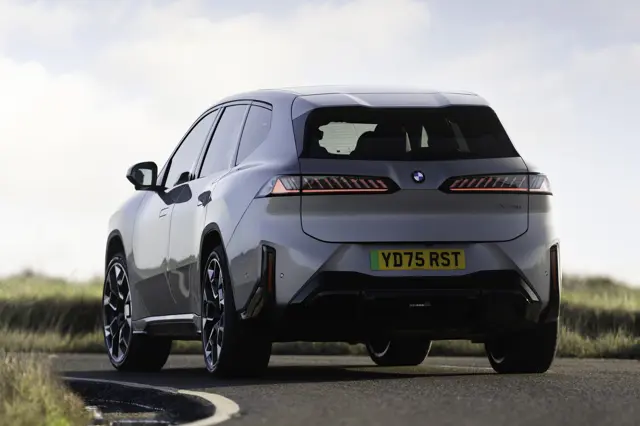
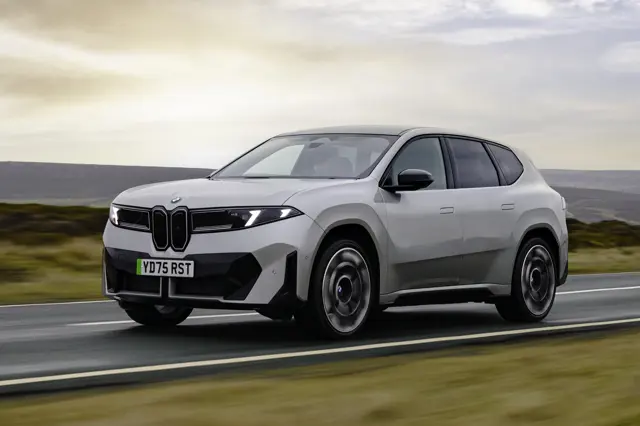
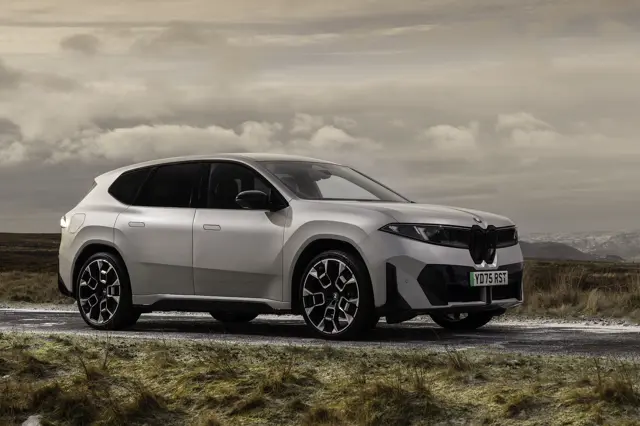
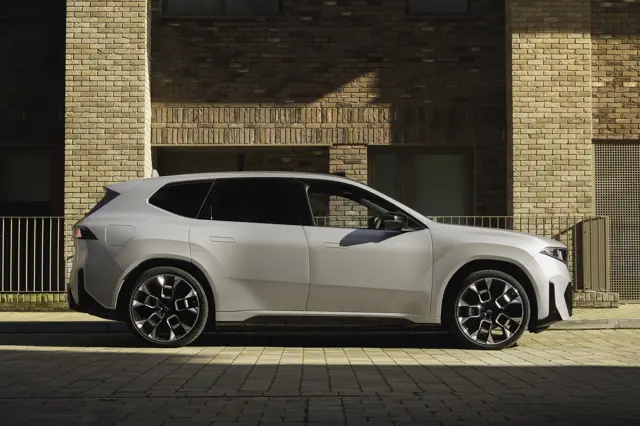
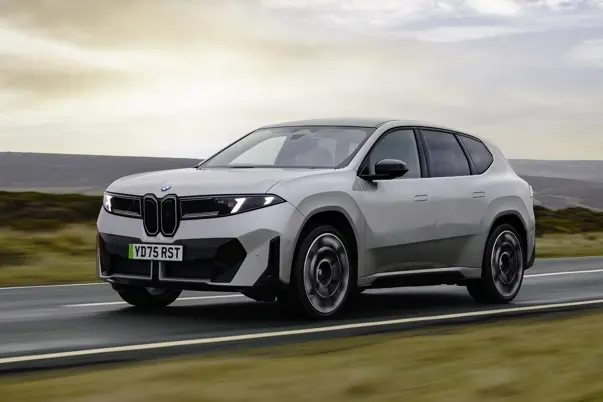
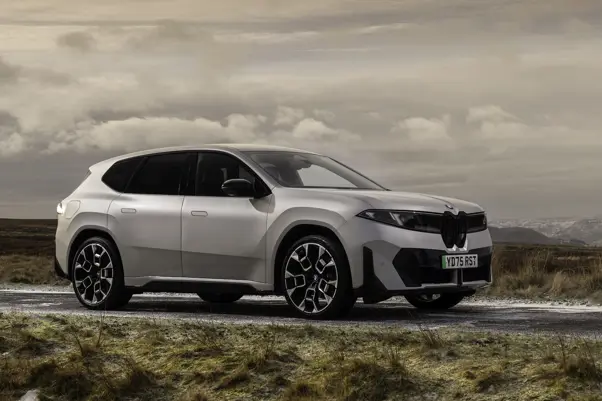
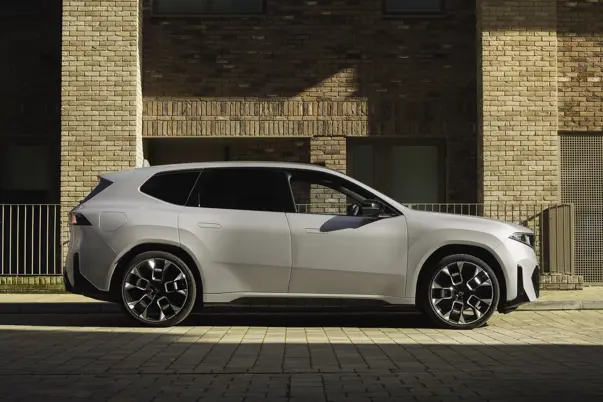
We won’t indulge too long in describing what you can see for yourself in the photos of the new BMW iX3, save to highlight how refreshingly unadorned its bodywork is, amplified by the smooth glazing linking the headlights to a modest reinterpretation of the marque’s famous double-kidney grille. It’s instantly recognisable as a BMW without looking like any model from its back catalogue.
That brand recognition is vitally important for car companies, especially in more expensive price brackets where there are intangibles such as status and image projection that are part and parcel of the ownership experience. If a passer-by who knows little about cars doesn’t recognise the new iX3 as a BMW, then it may as well wear any badge.
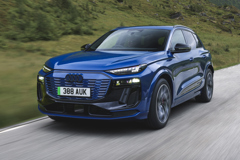
For rival manufacturers, there’s a real possibility that the latest BMW iX3 could dramatically dilute their collective wares’ appeal – stylistically as well as in technological terms. Take the Audi Q6 e-tron, which only has subtle design differences to separate it from the rest of the brand’s faux-by-fours, while the Mercedes EQE SUV’s amorphous shape must surely be a factor behind its lacklustre sales.
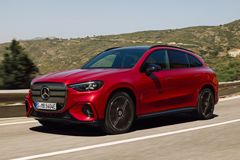
Note that the EQE SUV’s larger than the iX3, with a more direct alternative set to appear imminently in the guise of the Mercedes GLC with EQ Technology. That goes on sale this year, as does another rival with a name that trips off the tongue with greater ease, the forthcoming Volvo EX60.
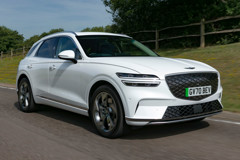
Less obvious rivals to the BMW include the recently updated Genesis Electrified GV70 as well as the Maserati Grecale Folgore.
"The BMW iX3 is a very good car, as reflected by our five-star rating – something we don't give out lightly"
|
Is the BMW iX3 a good car?
The BMW iX3 is a very good car, as reflected by our five-star rating – something we don't give out lightly. It's not just about the technology, which is very impressive, and the car's extensive electric-only range, but also because the iX3 nails the less flashy stuff too.
It's practical, comfortable and great to drive. It should also prove very desirable, with its distinctive design that's very recognisably BMW and not quite as divisive as some cars we've seen from the brand in recent years.
It's much more impressive than the Audi Q6 e-tron, which can't go anywhere near as far on a charge and has a disappointing interior. It's also a better car than those leftfield alternatives we mentioned from Genesis and Maserati.
We'll just have to wait and see how it compares to the incoming GLC EQ and Volvo EX60, which are similarly priced and have equally lengthy ranges on a full charge.
BMW iX3 Range
| BMW iX3 50 xDrive | 456-500 miles |
| BMW iX3 50 xDrive M Sport | 421-498 miles |
| BMW iX3 50 xDrive M Sport Pro | 421-497 miles |
Yes, you read that earlier range figure correctly before – five hundred miles on a single charge. The obvious caveat to shine a spotlight on is that while measured to WLTP Combined cycle standards, that figure’s yet to be homologated, so the impressive range figure for the BMW iX3 may well alter slightly in either direction.
It’s also the best-case scenario – high-specification versions loaded with optional extras and driven in full-fat performance mode reduce the tally to 421 miles. Still eye-openingly good, still provisional.
How is it so high for what’s hardly an immodestly proportioned family SUV? Wind-cheating aerodynamics, clever battery chemistry and that computerised wizardry eking out every last zap of energy efficiency.
It should be noted, though, that the iX3 is merely one car in a wave of new EV SUVs offering around 500 miles of range, along with the new Mercedes GLC with EQ Technology and Volvo EX60.
BMW iX3 charging times
Located beneath the BMW iX3’s floor, its 108.7kWh useable capacity battery can optionally be recharged at 22kW AC, with 11kW AC as standard. BMW indicates that a flat-to-full recharge at 11kW takes 11 hours, although that's only relevant in the UK for public charging. Domestic wallboxes here are generally rated to 7.4kW, which will bump the charge up to around 15 hours.
Using an ultra-rapid public charger will prove fast, if expensive, thanks to the BMW iX3’s DC on-board charger’s ability to manage an incredible 400kW flow rate. Find a device capable of feeding the car electricity at that rate, and a 10-80% top up will take just 21 minutes. BMW helpfully points out that plugging in for 10 minutes could potentially add 231 miles of range. 400kW capable chargers only started arriving in the UK near the end of 2025, though, so for the time being, there won't be many of them.
It’s also bidirectional, allowing other electric devices to be powered using a Vehicle-to-Load (V2L) adaptor plugged into the iX3’s charge port at a rate of 3.7kW or, for properties so equipped, a Vehicle-to-Home (V2H) connection at 11kW.
Reviews for BMW iX3's top 3 rivals


BMW iX3 handling and engines
BMW iX3 2026: Handling and ride quality
For all its technology and the way BMW likes to bang on about how the car is controlled by a computer called 'Hear of Joy' (we wish we were making that bit up), what we like best about the iX3 handles much in the same way that BMWs have for years.
Although the BMW iX3 50 xDrive we drove is, as implied by the last bit of the name, all-wheel drive, the rear motor is much more powerful than the front. This gives the iX3 a playful attitude, with a rear end that will gently move around, but without it seeming unnerving. It simply makes the front end seem all the more pointy.
Despite feeling sporty and mostly staying level in the corners, the BMW iX3 rides comfortably, effortlessly shrugging off rough parts of the road surface. There's a very light patter seemingly generated from the optional 22-inch wheels and low-profile tyres fitted to our test car (we'd recommend avoiding those, good though they might look), but in any case, it's nothing excessive.
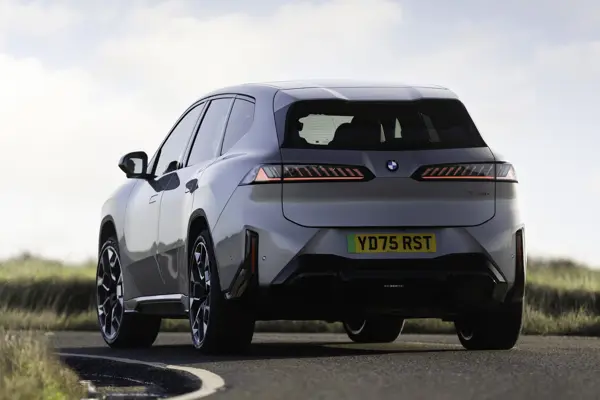
The car has no problem putting all its power down, delivering excellent traction, and its grip levels are impressive too. It's only in very tight corners that the front tyres start to get a bit upset about all the weight acting on them.
For the most part, though, you just don't notice the BMW iX3's bulk, which at 2285kg is considerable, if nothing out of the ordinary for a premium electric SUV. It helps that the steering feels very well judged in terms of speed and weight, and always feels predictable, making it easy to place the car exactly where you want it.
BMW iX3: Batteries and motors
From launch, the latest BMW iX3 is only available in one drive system combination, badged 50 xDrive. What this means hardware-wise is a pair of electric motors providing all-wheel drive traction using a single-speed automatic transmission, combined with a 108.7kWh battery pack. Total outputs are quoted at 469PS and 645Nm of torque.
Self-evidently not short of grunt, that’s sufficient for a 0-62mph benchmark of 4.9 seconds in a five-seater family car that weighs 2.3 tonnes. Somewhat sensibly, the top speed has been electronically pegged at 130mph. Less powerful versions of the iX3 will follow in due course, as will more powerful derivatives.
While we're very much keen on the prospect of the former, we're not sure the latter are strictly necessary. The iX3 actually feels a bit quicker than those figures suggest, thanks partly to its wickedly sharp throttle response.
Although electric motors are capable of producing instant torque, a lot of manufacturers soften the delivery, presumably to not catch drivers off guard, but BMW doesn't seem to have done a whole lot of that. The car is particularly and actually quite aggressively responsive in Sport mode.
There are multiple levels of brake regeneration available, ranging from a lighter setting that's barely perceptible to a mode which will eventually bring the car to a full stop. There's a 'B' one-pedal setting which can be selected by pulling back the drive selector one more time when you're in 'D'.
There's also an adaptive setting, which takes into account things like traffic and what the car's forward camera can pick up, and it works remarkably well, for the most part. It's only when you get onto a twisting country road that it seems to have a bit of trouble making up its mind, with the level of regeneration switching frequently.
Impressively, BMW claims that up to that up to 98% of the iX3’s braking activity could be performed by energy recuperation alone. Along with boosting efficiency, this should give the iX3's brake pads and discs a remarkably long lifespan.
BMW iX3 2026: Safety
The new BMW iX3 has yet to be tested by independent safety organisation Euro NCAP, but as BMW has consistently scored four or five stars out of five in recent years, we'd expect another similar performance when it's run through the latest criteria.
All models come with lots of standard safety features, including Driving Assistant Plus, a suite of systems that includes adaptive cruise contol, automatic speed limit assist and lane control assistance tech.
BMW iX3 2026: Towing
The BMW iX3 50xDrive can tow up to 2000kg braked when fitted with a towbar. An electronically retracting towbar is a £1025 option.
BMW iX3 interior
BMW iX3 2026: Practicality
Despite the tech-fest, BMW hasn’t lost sight of the iX3’s requirement to be a comfortable conveyance for up to five adults and their luggage. Plus, its bespoke electric platform (the old iX3 used the petrol and diesel-powered X3 as a starting point) gives more interior space – BMW claims it has X5 levels of cabin room in a much smaller footprint.
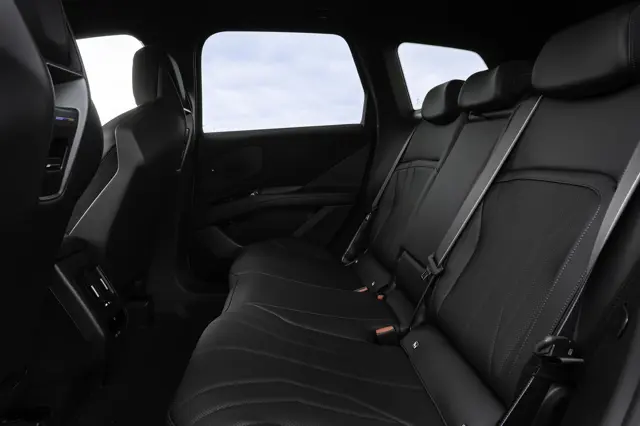
Sure enough, there's plenty of rear legroom, with rear-seat passengers potentially made happier still by the presence of a flat floor, with no pesky transmission tunnel to protrude into the cabin. Headroom is plentiful, too.
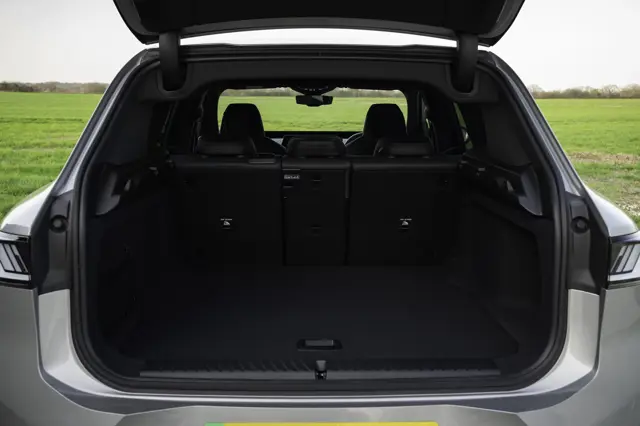
With the rear seats in place, its boot has 520 litres of space available – fold the 40/20/40-split seatbacks over, and that extends to 1750 litres. They don’t lie completely horizontally in this configuration but there’s no step from the boot floor height. Under the bonnet is a further 58 litres of stowage space.
BMW iX3 dimensions
The iX3 is 4782mm long, 1895mm wide (2093mm including mirrors) and 1635mm high. That makes it slightly shorter and lower than the Volvo EX60, but a little wider. It's also scarcely different from the old BMW iX3 (plus the current X3), so if you're making the switch, you don't need to worry about the new BMW iX3 being any more difficult to park.
BMW iX3 2026: Quality and finish
Pleasingly, BNW hasn't laden the iX3's cabin with vast swathes of scratch-prone piano black plastic, as is becoming so common in modern premium cars. Instead, there's a nice blend of high-quality materials, many of which are soft touch.
There are some cheaper-feeling plastics lower down, but that's quite common nowadays, and anyway, they're so low down, you won't really encounter them unless you've dropped something on the floor and need to pick it up.
Everything seems like it's put together correctly, with no loose trim or wonky joins that we could see, and you get the feeling that the cabin will last.
BMW iX3 2026: Infotainment
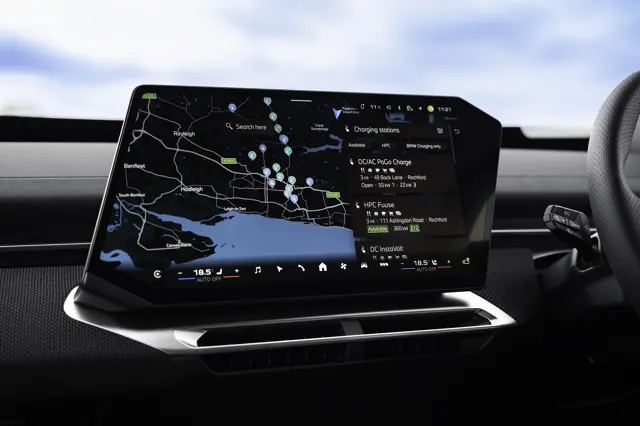
You'd think that the iX3's sizeable 17.9-inch touchscreen infotainment screen would be the most significant interior tech story for the car, but you'd be wrong. Instead, it's the Panoramic Vision display, which is a massive, 40-inch, ultra-widescreen panel stretching all the way across the bottom of the windscreen.
This forms the instrument cluster, placing key information like speed closer to your eyeline. There is still, though, a head-up display just above it.
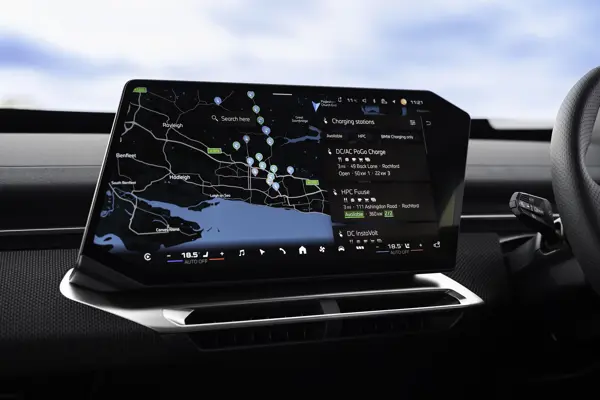
There are different preset layouts to choose from, or you can fully configure the display by changing various 'widgets'that stretch along its length. One thing you can't do, though, is display Android Auto or Apple CarPlay content, so you can't, for example, have Google Maps beamed into it.
That said, BMW's in-built navigation is one of the better ones out there. Although it's still not as good as Google Maps or Waze, we can see owners still using it, especially if it means having the map display come up in the Panoramic Vision and the head-up display.
We remain on the fence regarding the concept, though. Panoramic Vision is undoubtedly an impressive piece of technology, but it is bordering on gimmickry. We'd want to spend longer with the car and see what front-seat passengers make of it. As it stands, we're not sure it makes life behind the wheel any better, coming across as technology for technology's sake.
The classic rotary BMW iDrive controller has been nixed, which seems like a shame, but the touchscreen is so large and responsive that we didn't find ourselves missing it as much as we'd expect. The haptic pads on the steering wheel aren't as easy to use as proper buttons, though, and the right-hand side, which contains all the infotainment-related features, seems a bit cluttered. The left-hand pad is reserved for driver assistance and has fewer features on it, making it simpler to use.
Along with being very responsive, the central touchscreen is easy to navigate, helped by a range of clear shortcut keys along the bottom for things like navigation and phone connectivity. If you're diving into different driving settings, things do get quite complex, so we'd recommend doing so when you're stationary.
We particularly like the shape – a right-leaning hexagon – and the way that space is utilised. The display area faithfully follows the hardware’s border, rather than a cheaper rectangular screen with random redundant areas surrounding it.
BMW iX3 value for money

BMW iX3 2026: Prices
These are the latest On The Road (OTR) prices for the new BMW iX3 as of March 2026 – prices can change, so please use these as a guide before checking BMW's latest price lists.
| BMW iX3 50 xDrive | £58,755 |
| BMW iX3 50 xDrive M Sport | £61,255 |
| BMW iX3 50 xDrive M Sport Pro | £62,755 |
Is the BMW iX3 good value compared to rivals?
With the initial iX3 range starting at £58,755 and going to £62,755, it looks like good value compared to the Volvo EX60, which has a lower starting price of £56,860, but can cost as much as £70,360 if you go for the top trim level and the most powerful drive system. The Mercedes GLC EQ, meanwhile, costs anything from £60,350 to £73,350.
It's not quite as simple as that, however. From launch, the BMW iX3 range is much simpler than the EX60's and GLC's, offered in only one drive system with three trim levels. The Mercedes has more trim levels, while the Volvo has three motor layouts to pick from, with the pokiest of the lot offering much more performance than the iX3 50.
BMW also gives plenty of opportunities to inflate the price of the iX3 further. Even if you've opted for the M Sport Pro, you can add well over £10,000 of extras in the configurator, far more than is possible with a Volvo EX60 Ultra. It also seems pretty mean that even on the top-grade iX3, you still have to pay extra for a heated steering wheel.
Bearing all this in mind, the iX3 is priced about as we'd expect, offering similar value to its key competitors. Importantly, it's a good few thousand cheaper than its predecessor.
BMW iX3 2026: Reliability and running costs
Whatever version you buy, the BMW iX3 falls into the expensive car supplement bracket when it comes to paying Vehicle Excise Duty (car tax). This is £40,000 until April 2026, and then rises to £50,000, so all models will attract an extra charge between years two and six of registration. As we write, that's £205 plus an extra £425 per year.
BMW offers a three-year, unlimited-mileage warranty on all its cars, which is rather meagre compared to the likes of Kia, which offers seven years, but fairly par for the course in this premium section of the market.
Servicing and maintenance costs are likely to be more palatable than a petrol or diesel BMW, because there are fewer moving parts in an electric car. However, it's still a BMW with the associated premium labour costs of a premium brand. Service intervals are variable depending on how you use the car – they'll be every year or every two years, and the car will tell you when it needs to be looked at.
Insurance groups for the iX3 range from 43 to 44, depending on your chosen trim level. That's out of 50 groups, which suggests most people's premiums will be on the expensive side, although that's typical for a premium electric car.
BMW has a middling reliability record, recently placing 18th out of 33 manufacturers for reliability in the most recent HonestJohn.co.uk Satisfaction Index ownership survey. It works in the iX3's favour that it's an EV – it has fewer moving parts, meaning there's less to go wrong. Then again, it has a lot of very new and so-far unproven technology, and it's hard to say how all of that might pan out.
BMW iX3 Frequently Asked Questions
When does the new BMW iX3 come out?
The iX3 is available to order now, with UK deliveries starting imminently.
Is the new BMW iX3 based on a BMW X3?
While the last iX3 shared a platform and technology with the petrol, diesel and hybrid-powered X3, the new iX3 (designated 'NA5' by BMW) sits on the Neue Klasse platform, built specifically for electric cars.
Will the BMW iX3 replace the BMW X3?
The new BMW iX3 won't replace the current X3 any time soon. That car is still relatively fresh, having only been released in 2024. Instead, the two vehicles will be sold alongside one another for many years to come.
How much does the new BMW iX3 cost?
The initial range starts from £58,755 and rises to £62,755, before optional extras are taken into account. There will eventually be cheaper, slower models and faster, more expensive versions.
Satisfaction Index
 What is your car like to live with?
We need your help with our latest Satisfaction Index, so that we can help others make a smarter car buying decision. What's it like to live with your car? Love it? Loath it? We want to know. Let us know about your car - it will only take a few minutes and you could be helping thousands of others.
Help us with the Honest John Satisfaction Index nowBMW iX3 models and specs
Three versions of the new BMW iX3 are available at launch – standard, M Sport and M Sport Pro.
The BMW iX3 50xDrive, which is the base model, comes loaded with features, including:
- 20-inch alloy wheels
- Alpine White paint (other colours are a £875 option)
- Automatic boot lid
- Comfort Access System with BMW Digital Key Plus for smartphone or smartwatch
- LED headlights with high-beam assistant
- BMW Panoramic Vision screen under windscreen
- Two-zone automatic air conditioning
- Electric front heated seats with memory
- Grey fabric upholstery
- 15W wireless charger
Upgrade to the BMW iX3 M Sport and you'll get:
- Two-tone alloy wheels
- M Sport brakes with dark-blue callipers
- M Sport body styling
- Sports steering wheel
- Black interior design
- Interior lighting in BMW M colours
The top-spec BMW iX3 M Sport Pro gets:
- Double-spoke alloy wheels
- "Iconic Glow" exterior lighting
- M Sport brakes with red callipers
- Gloss black mirror caps
- M logo projection from door mirros
- Gloss black rear diffuser
- M Sport seats
- M Sport seatbelts
- M steering wheel
More articles you might be interested in:


Model History
September 2025
New BMW iX3 full UK specs revealed, prices start at £58,755
The BMW iX3 has been revealed. As the first series-production Neue Klasse model, the iX3 features a new design direction and a host of new technologies. Prices start at £58,755 and first deliveries are due to start on 7 March 2026.
Buyers will have three trim levels to choose from - iX3, iX3 M Sport and iX3 M Sport Pro. iX3 has heated front seats, wireless phone charging and dual-zone climate control.
The iX3 M Sport trim level adds 20-inch M light-alloy wheels and M Sport brakes, ambient lighting and an M interior trim design. Range-topping iX3 M Sport Pro adds 10-way electrically adjustable heated front M Sport seats, an M-specific steering wheel and Adaptive LED headlights.
Buyers can add the Technology Plus Package, which includes three-zone automatic climate control, the BMW 3D Head-Up Display and an acoustically-optimised Harman Kardon surround-sound system.
The iX3 is currently the longest-range electric car on sale in the UK, as the iX3 50 xDrive offers up to 500 miles on a charge. The car also features the sixth-generation of BMW's electric eDrive technology with an 800-volt architecture and the capability for 400kW rapid charging, theoretically adding up to 231 miles of range in 10 minutes.
On the inside, the iX3 debuts the BMW Panoramic iDrive with full-width windscreen display and the latest BMW Operating System X. Leather-free Econeer materials are used as standard helping to lower the car's carbon footprint by more than 30% over its life than its predecessor.
At launch, just the iX3 50 xDrive is available, priced from £58,755. Additional models, including an entry-level version are set to follow.
